
When and How to Perform Alcohol Septal Ablation
When and How to Perform Alcohol Septal Ablation Tuesday February 24 , 2015 2: 10 PM John S Douglas Jr MD FACC FSCAI Professor of Medicine Emory University School of Medicine
Disclosure Information When and How to Perform Alcohol Septal Ablation Speaker Name John S Douglas Jr MD I have no disclosures related to this presentation Off label use of products will be discussed in this presentation.
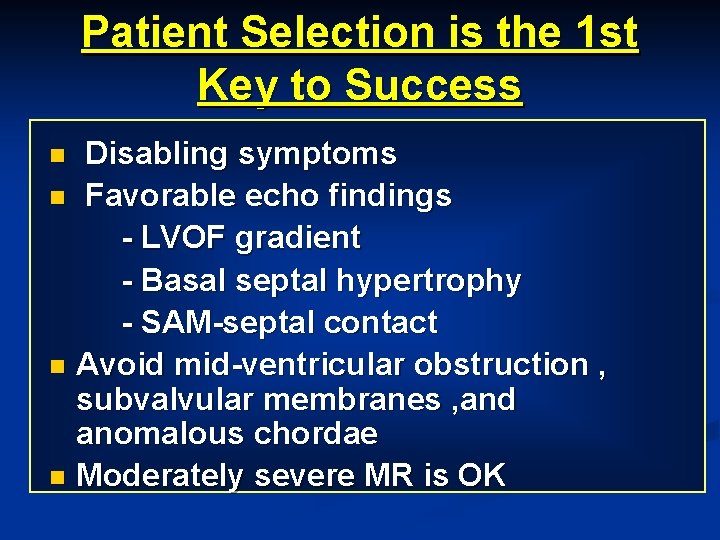
Patient Selection is the 1 st Key to Success Disabling symptoms n Favorable echo findings - LVOF gradient - Basal septal hypertrophy - SAM-septal contact n Avoid mid-ventricular obstruction , subvalvular membranes , and anomalous chordae n Moderately severe MR is OK n
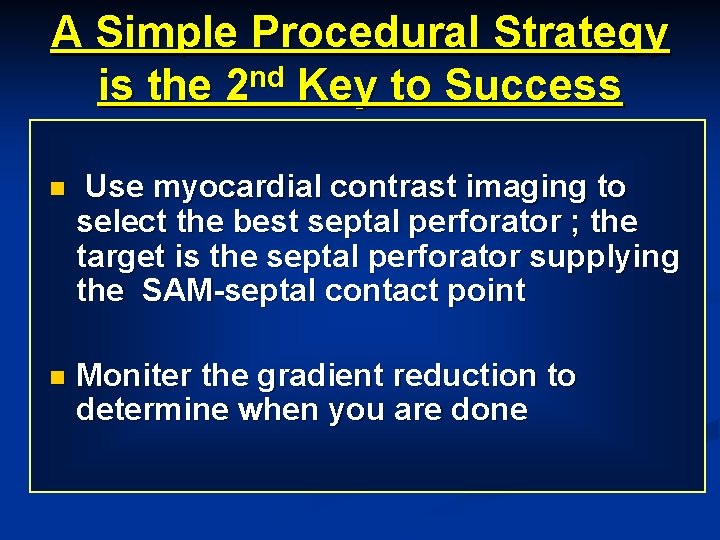
A Simple Procedural Strategy is the 2 nd Key to Success n Use myocardial contrast imaging to select the best septal perforator ; the target is the septal perforator supplying the SAM-septal contact point n Moniter the gradient reduction to determine when you are done

Tip #1 : Septal Perforator Selection With very large septal , subselective injection is frequently the best option 2009 ACC
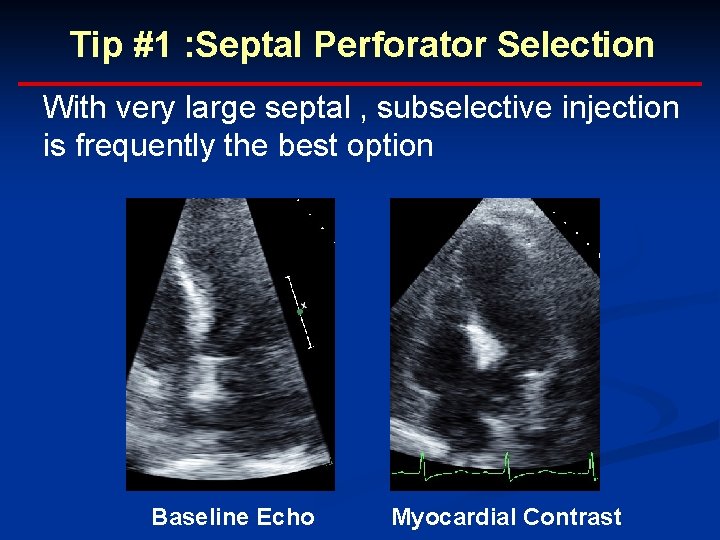
Tip #1 : Septal Perforator Selection With very large septal , subselective injection is frequently the best option Baseline Echo Myocardial Contrast
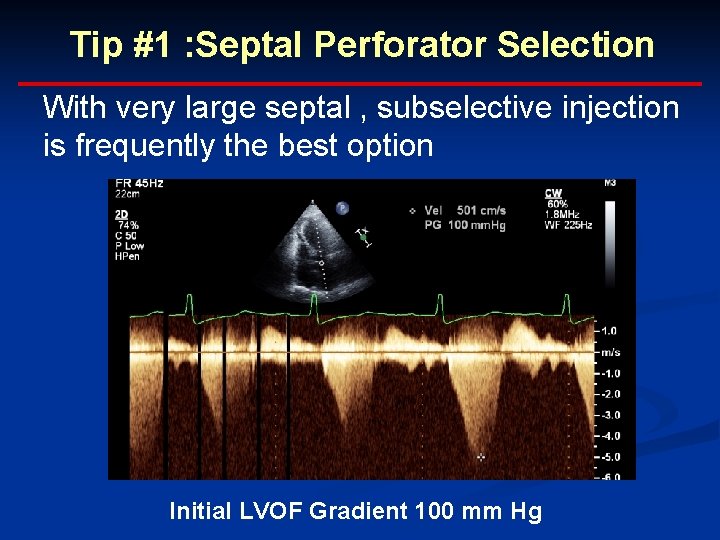
Tip #1 : Septal Perforator Selection With very large septal , subselective injection is frequently the best option 2009 ACC Initial LVOF Gradient 100 mm Hg
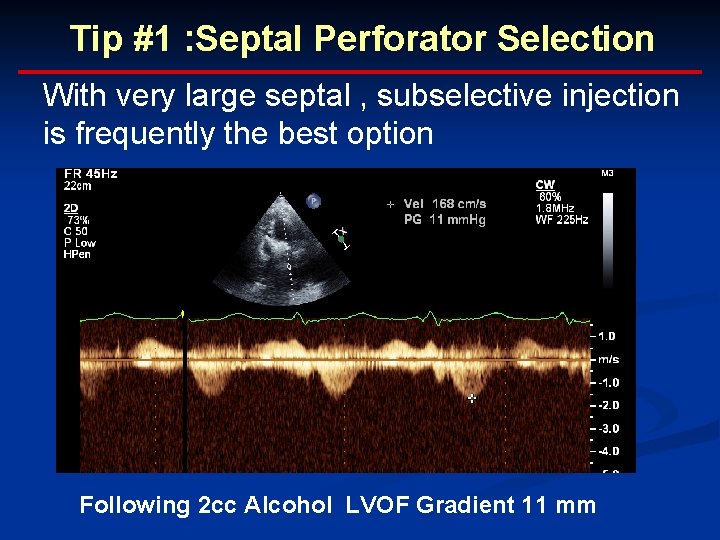
Tip #1 : Septal Perforator Selection With very large septal , subselective injection is frequently the best option Following 2 cc Alcohol LVOF Gradient 11 mm
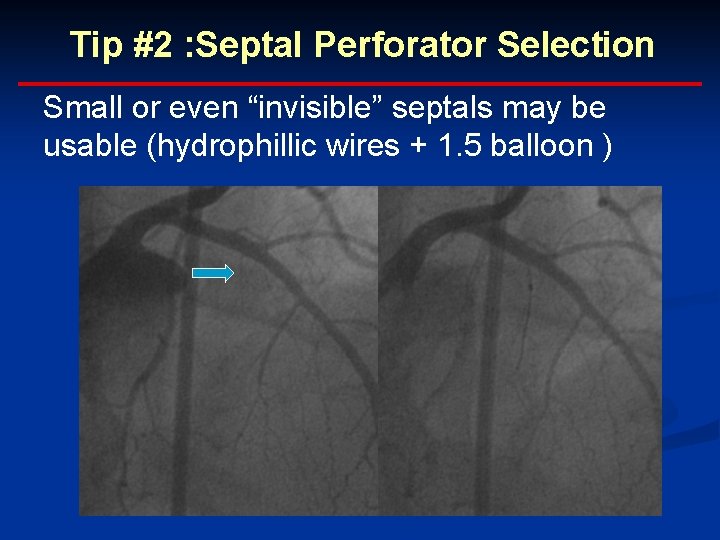
Tip #2 : Septal Perforator Selection Small or even “invisible” septals may be usable (hydrophillic wires + 1. 5 balloon ) Mize
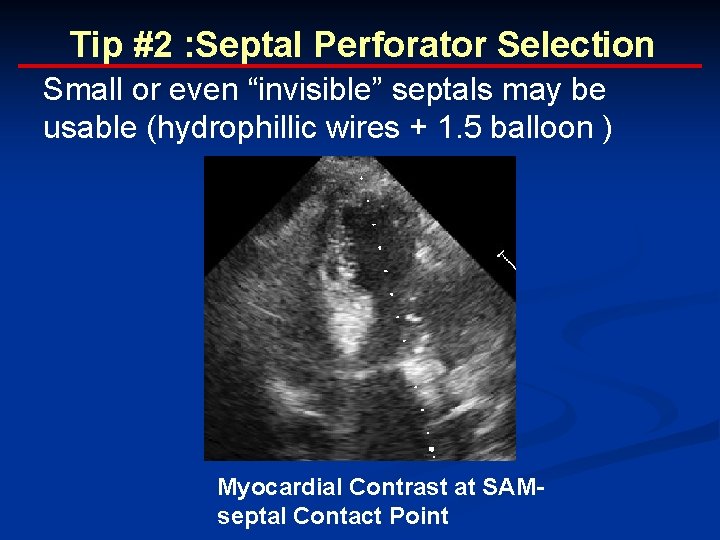
Tip #2 : Septal Perforator Selection Small or even “invisible” septals may be usable (hydrophillic wires + 1. 5 balloon ) Myocardial Contrast at SAMseptal Contact Point
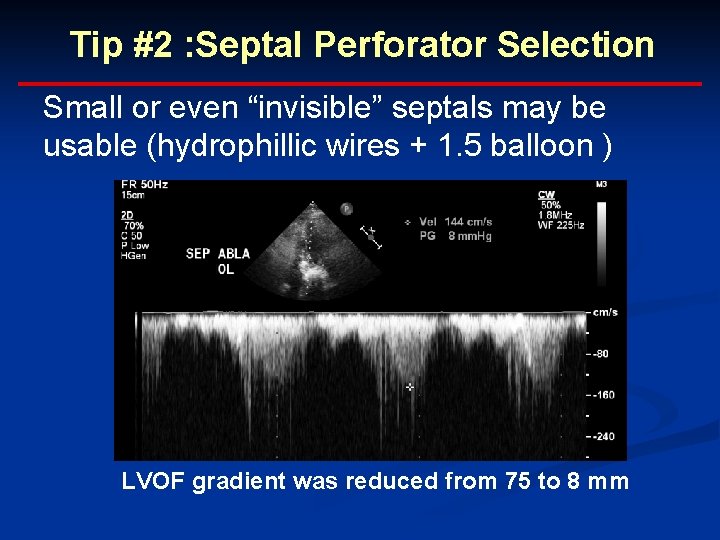
Tip #2 : Septal Perforator Selection Small or even “invisible” septals may be usable (hydrophillic wires + 1. 5 balloon ) LVOF gradient was reduced from 75 to 8 mm
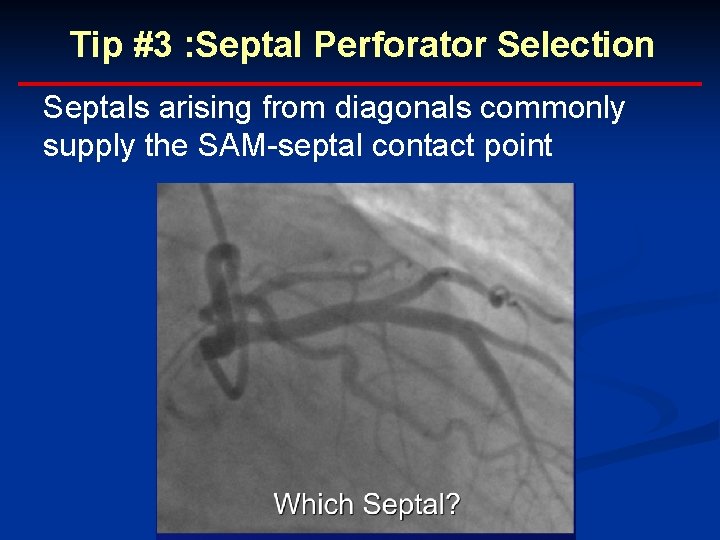
Tip #3 : Septal Perforator Selection Septals arising from diagonals commonly supply the SAM-septal contact point From tape
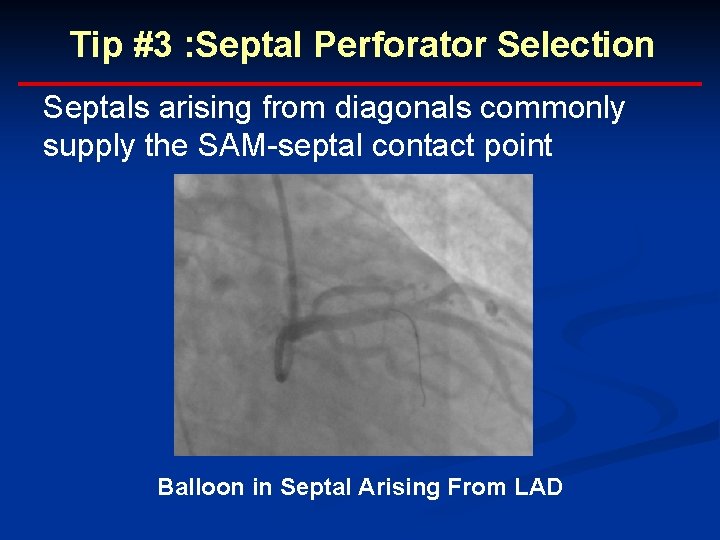
Tip #3 : Septal Perforator Selection Septals arising from diagonals commonly supply the SAM-septal contact point Balloon in Septal Arising From LAD
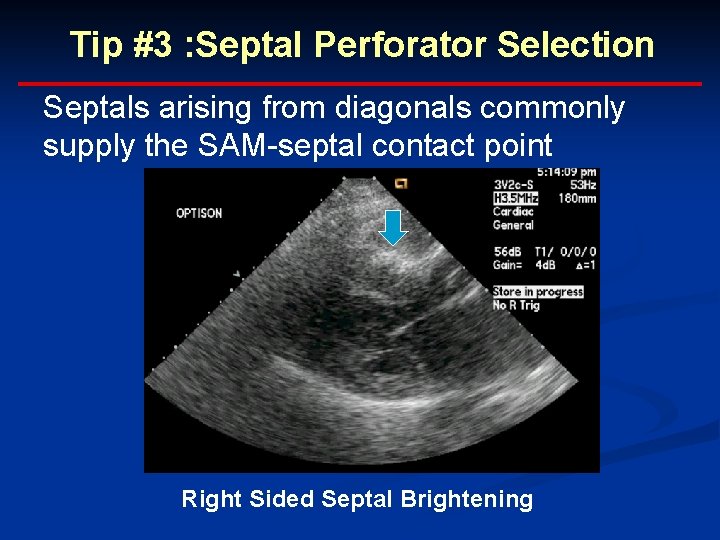
Tip #3 : Septal Perforator Selection Septals arising from diagonals commonly supply the SAM-septal contact point Right Sided Septal Brightening
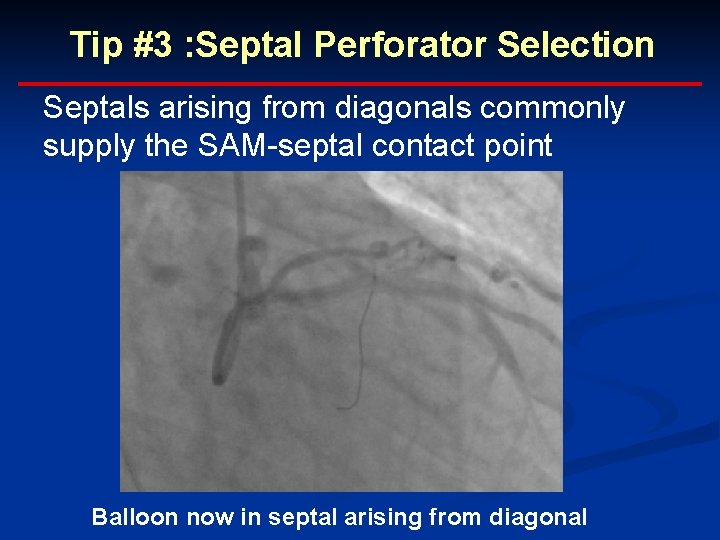
Tip #3 : Septal Perforator Selection Septals arising from diagonals commonly supply the SAM-septal contact point Balloon now in septal arising from diagonal

Tip #3 : Septal Perforator Selection Septals arising from diagonals commonly supply the SAM-septal contact point Left Sided Brightening at SAM-Septal Contact Point
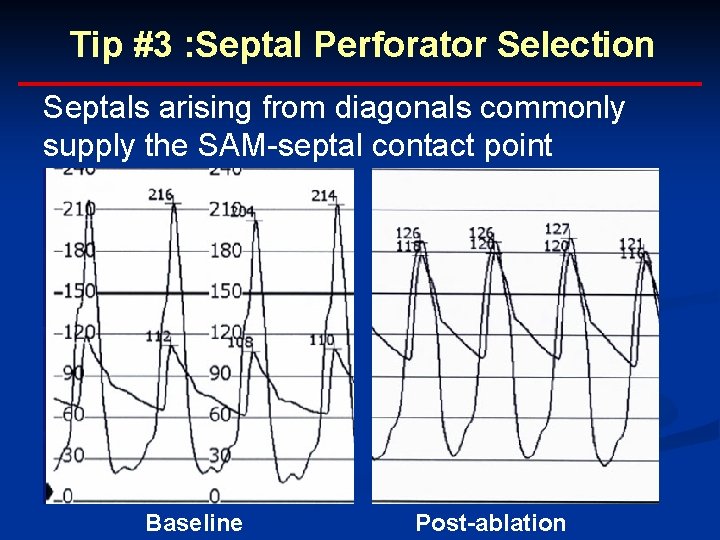
Tip #3 : Septal Perforator Selection Septals arising from diagonals commonly supply the SAM-septal contact point From tape Baseline Post-ablation
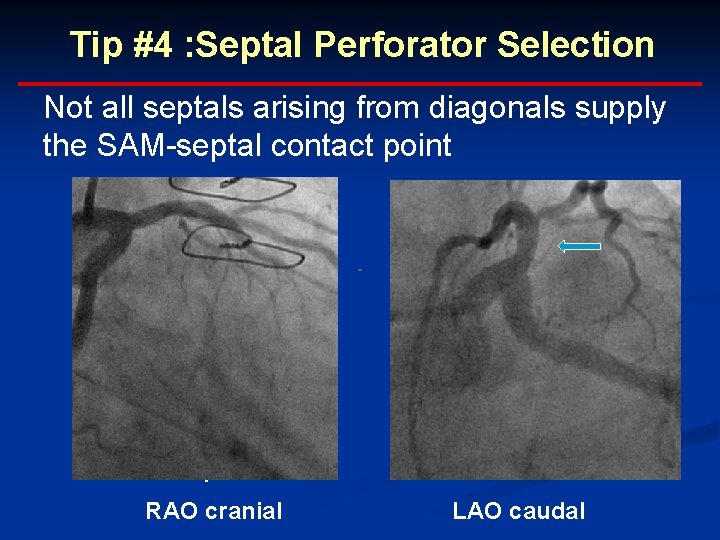
Tip #4 : Septal Perforator Selection Not all septals arising from diagonals supply the SAM-septal contact point From tape RAO cranial LAO caudal

Tip #4 : Septal Perforator Selection Not all septals arising from diagonals supply the SAM-septal contact point From tape LAO caudal Guidewire inserted
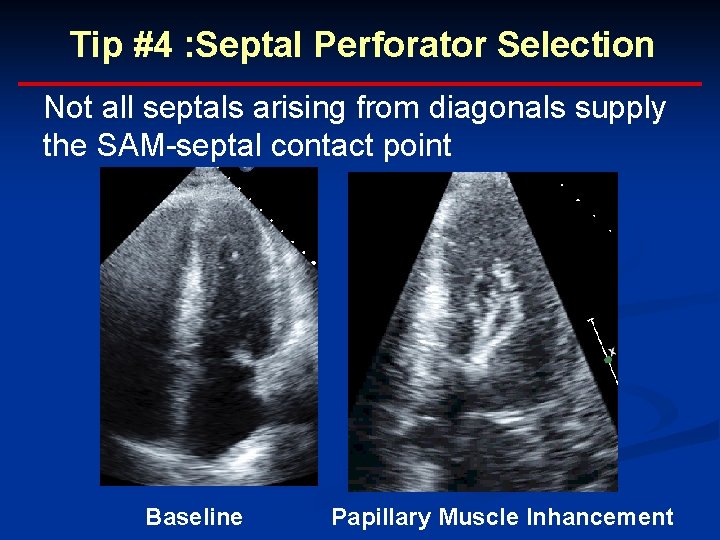
Tip #4 : Septal Perforator Selection Not all septals arising from diagonals supply the SAM-septal contact point James Mc. Lemore Baseline Papillary Muscle Inhancement
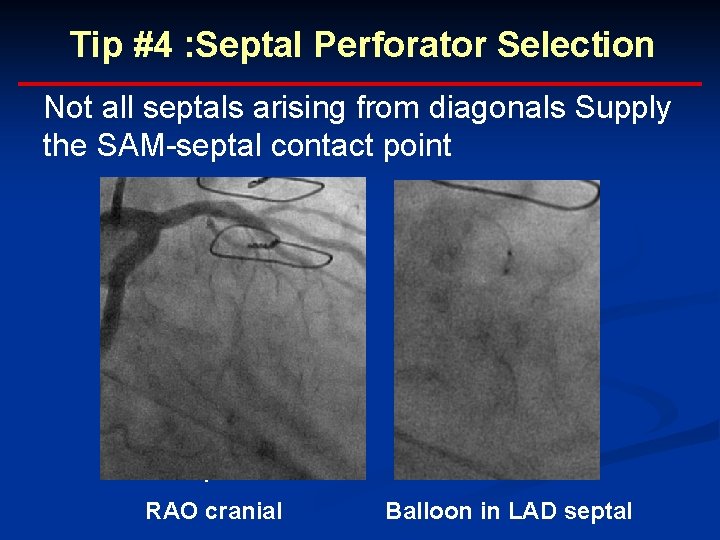
Tip #4 : Septal Perforator Selection Not all septals arising from diagonals Supply the SAM-septal contact point From tape RAO cranial Balloon in LAD septal
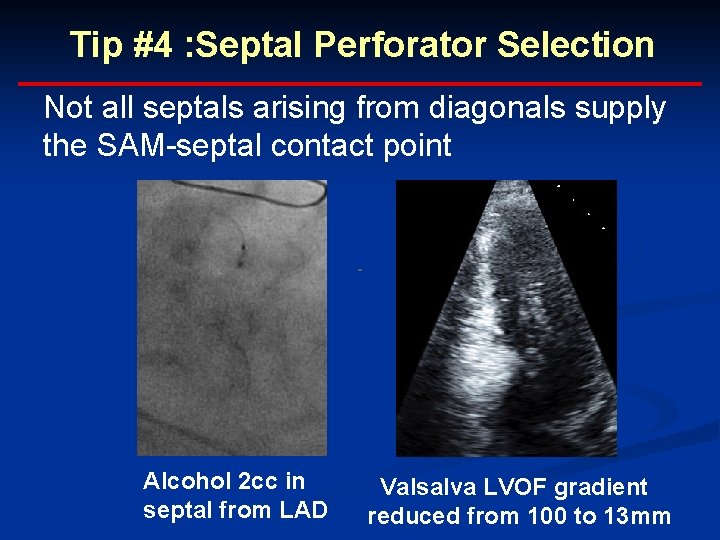
Tip #4 : Septal Perforator Selection Not all septals arising from diagonals supply the SAM-septal contact point Alcohol 2 cc in septal from LAD Valsalva LVOF gradient reduced from 100 to 13 mm
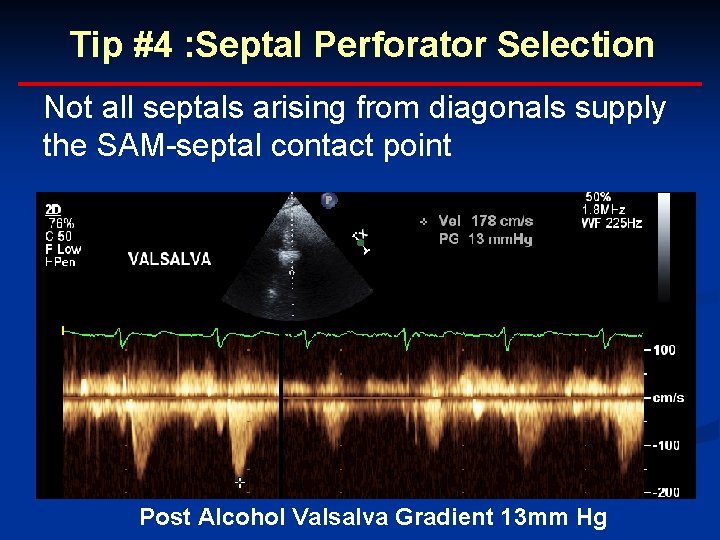
Tip #4 : Septal Perforator Selection Not all septals arising from diagonals supply the SAM-septal contact point James Mc. Lemore 5/12/10 Post Alcohol Valsalva Gradient 13 mm Hg

Tip #5 : Septal Perforator Selection Septals from ramus intermedius may supply the SAM-septal contact point Donald Featherstone 5/19/10 RAO Caudal View
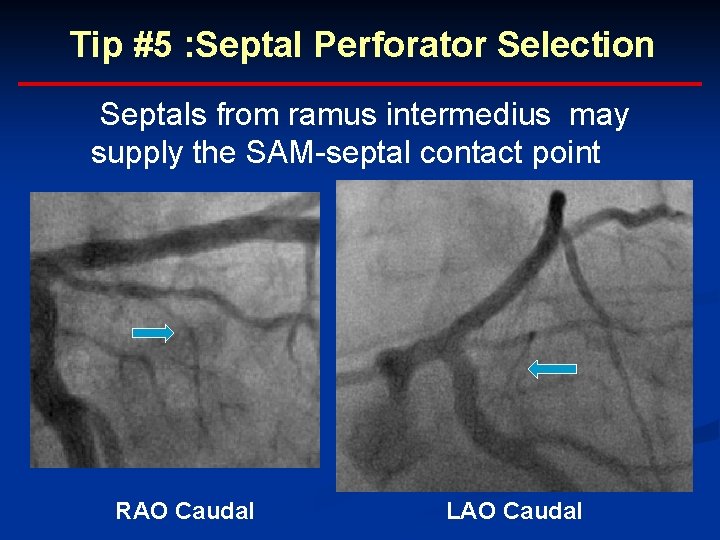
Tip #5 : Septal Perforator Selection Septals from ramus intermedius may supply the SAM-septal contact point Featherstone RAO Caudal LAO Caudal
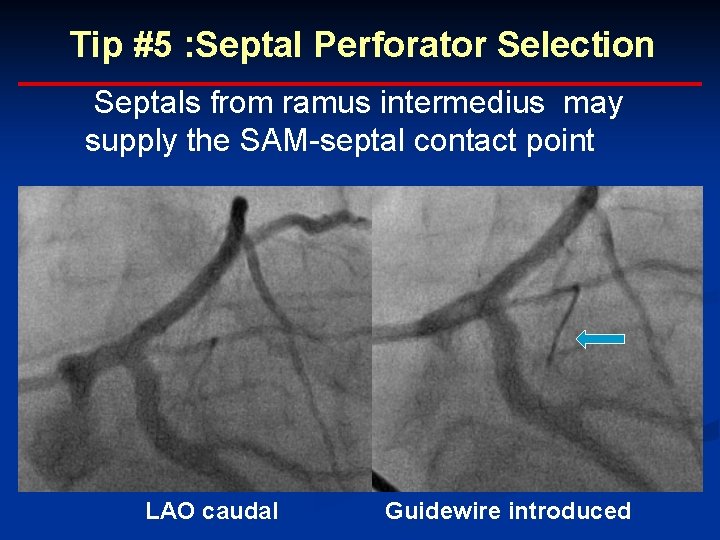
Tip #5 : Septal Perforator Selection Septals from ramus intermedius may supply the SAM-septal contact point Featherstone From tape LAO caudal Guidewire introduced
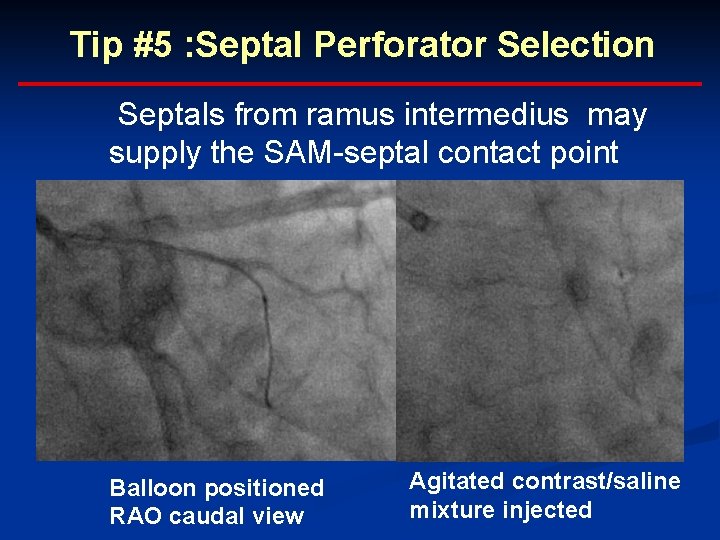
Tip #5 : Septal Perforator Selection Septals from ramus intermedius may supply the SAM-septal contact point Featherstone Balloon positioned RAO caudal view Agitated contrast/saline mixture injected
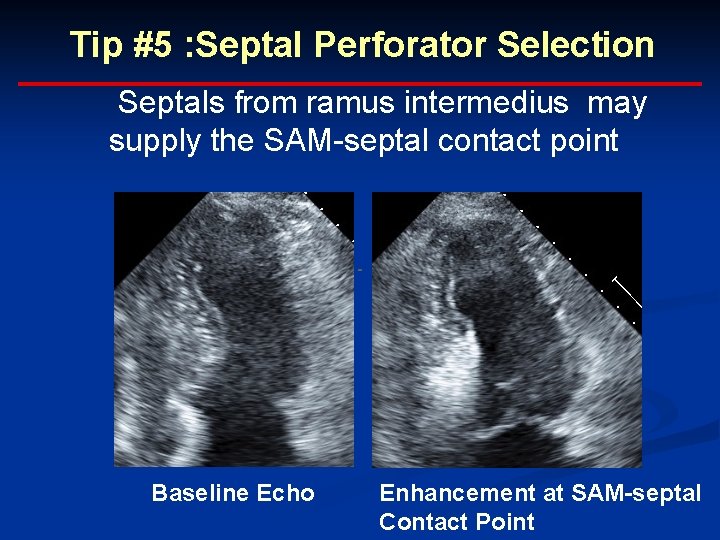
Tip #5 : Septal Perforator Selection Septals from ramus intermedius may supply the SAM-septal contact point Featherston 5/19/10 Baseline Echo A Enhancement at SAM-septal Contact Point
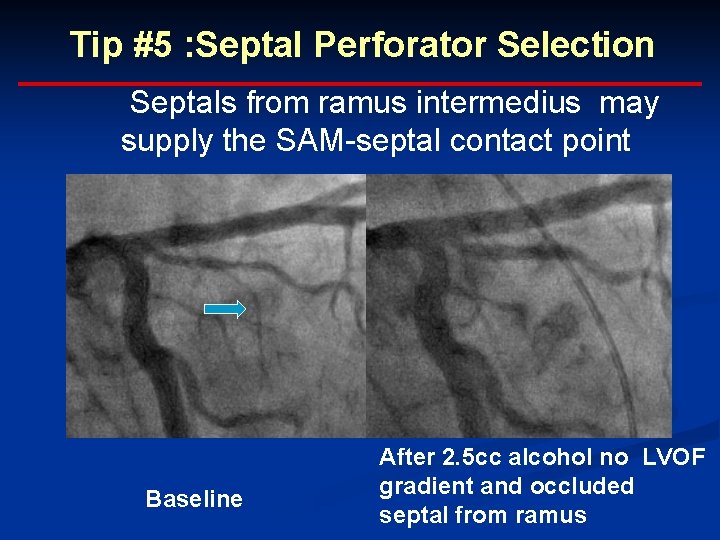
Tip #5 : Septal Perforator Selection Septals from ramus intermedius may supply the SAM-septal contact point Featherstone Baseline After 2. 5 cc alcohol no LVOF gradient and occluded septal from ramus
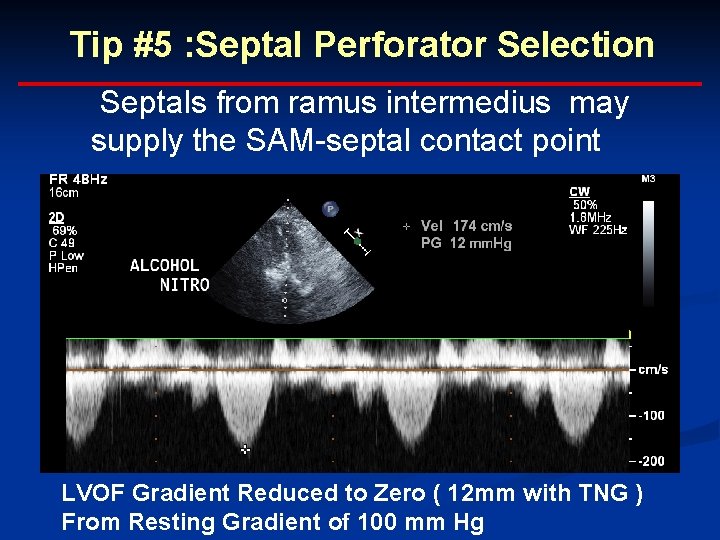
Tip #5 : Septal Perforator Selection Septals from ramus intermedius may supply the SAM-septal contact point Need Donald Featherston echo from 5/19/10 showing septal brightening and gradients and pressure gradients from cath lab if available LVOF Gradient Reduced to Zero ( 12 mm with TNG ) From Resting Gradient of 100 mm Hg
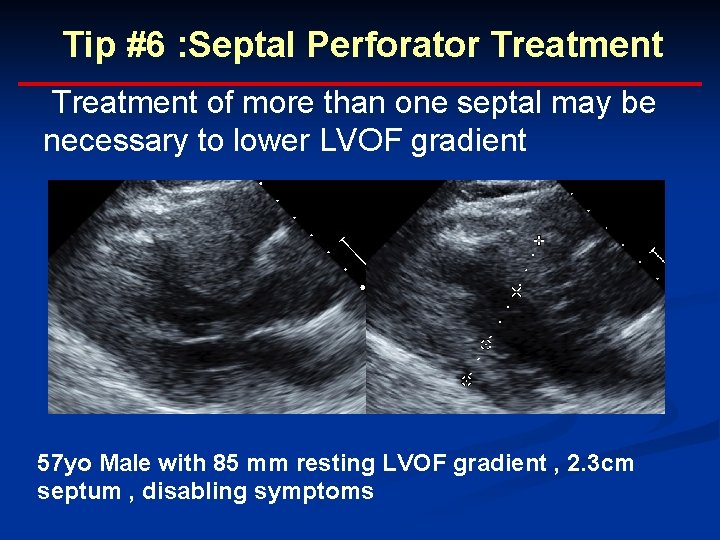
Tip #6 : Septal Perforator Treatment of more than one septal may be necessary to lower LVOF gradient Blackshear 7/27/10 57 yo Male with 85 mm resting LVOF gradient , 2. 3 cm septum , disabling symptoms
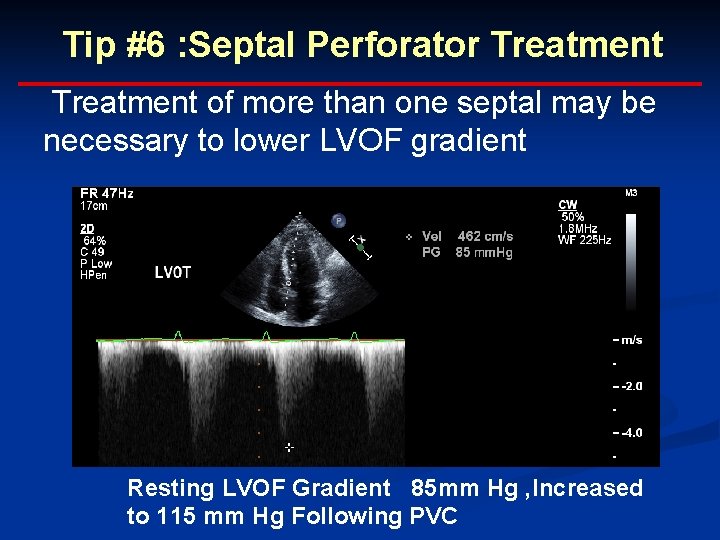
Tip #6 : Septal Perforator Treatment of more than one septal may be necessary to lower LVOF gradient Blackshear 7/27/10 Resting LVOF Gradient 85 mm Hg , Increased to 115 mm Hg Following PVC
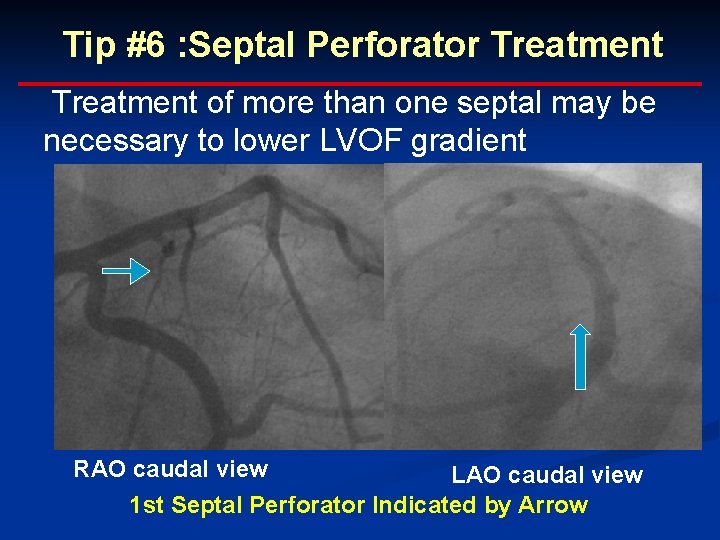
Tip #6 : Septal Perforator Treatment of more than one septal may be necessary to lower LVOF gradient Willie Blackshear 7/27/10 RAO caudal view LAO caudal view 1 st Septal Perforator Indicated by Arrow
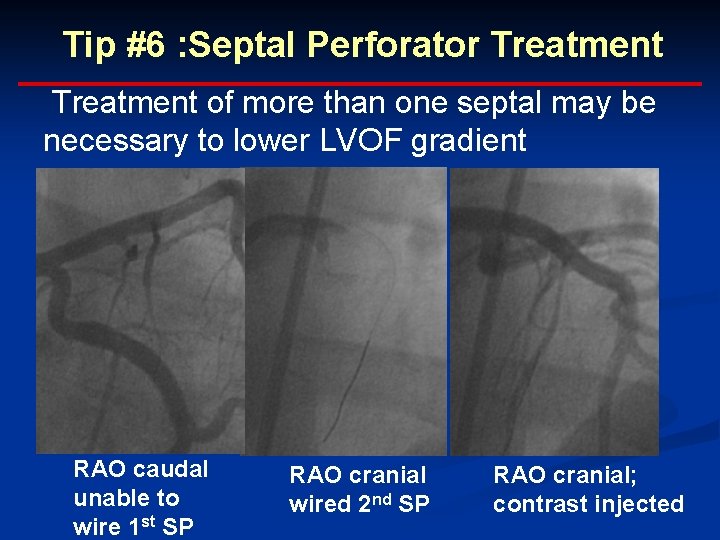
Tip #6 : Septal Perforator Treatment of more than one septal may be necessary to lower LVOF gradient Willie Blackshear 7/27/10 RAO caudal unable to wire 1 st SP RAO cranial wired 2 nd SP RAO cranial; contrast injected
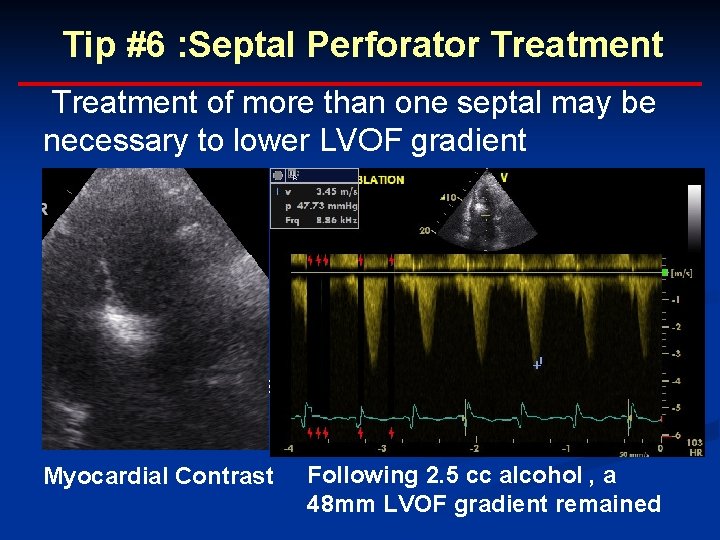
Tip #6 : Septal Perforator Treatment of more than one septal may be necessary to lower LVOF gradient Blackshear 7/27/10 Myocardial Contrast Following 2. 5 cc alcohol , a 48 mm LVOF gradient remained
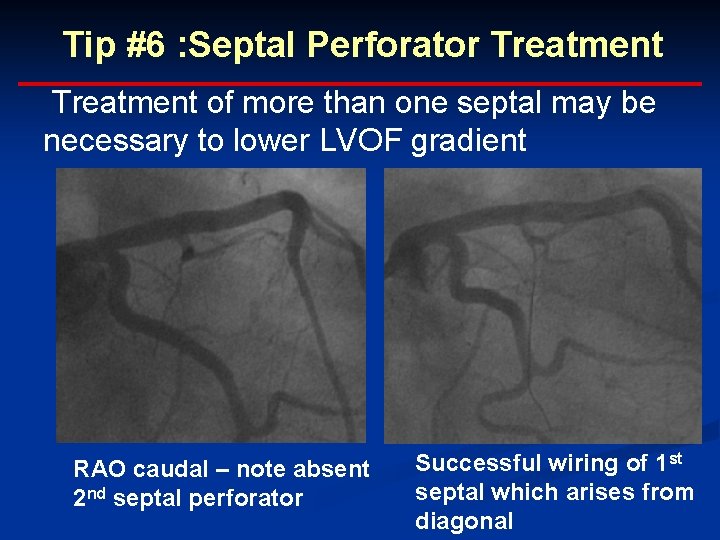
Tip #6 : Septal Perforator Treatment of more than one septal may be necessary to lower LVOF gradient Blackshear 7/27/10 RAO caudal – note absent 2 nd septal perforator Successful wiring of 1 st septal which arises from diagonal
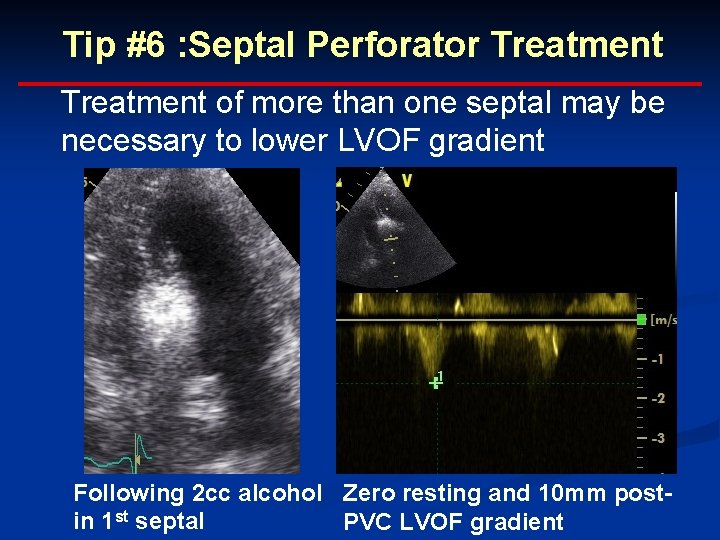
Tip #6 : Septal Perforator Treatment of more than one septal may be necessary to lower LVOF gradient Blackshear 7/27/10 Following 2 cc alcohol Zero resting and 10 mm postin 1 st septal PVC LVOF gradient
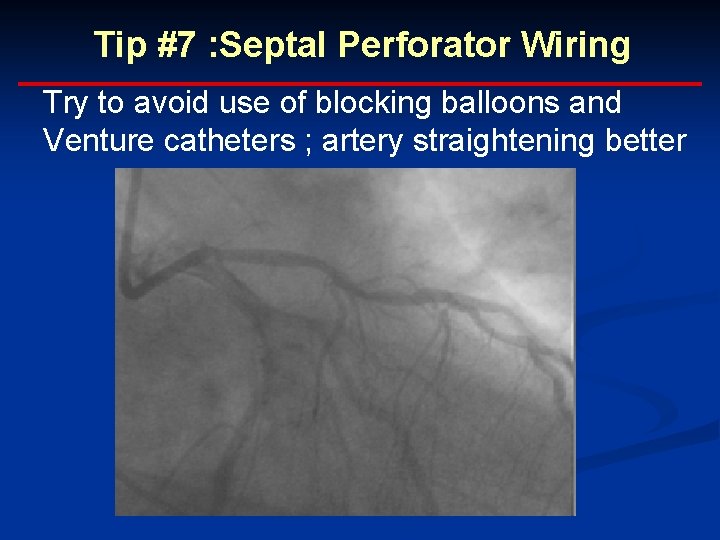
Tip #7 : Septal Perforator Wiring Try to avoid use of blocking balloons and Venture catheters ; artery straightening better
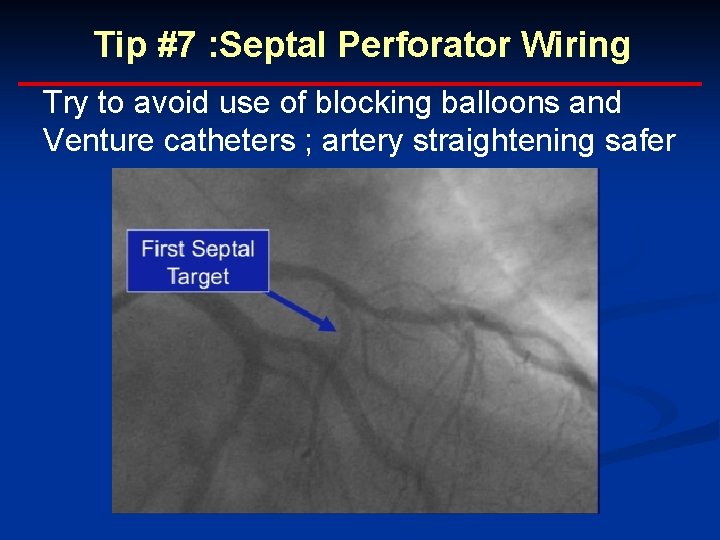
Tip #7 : Septal Perforator Wiring Try to avoid use of blocking balloons and Venture catheters ; artery straightening safer
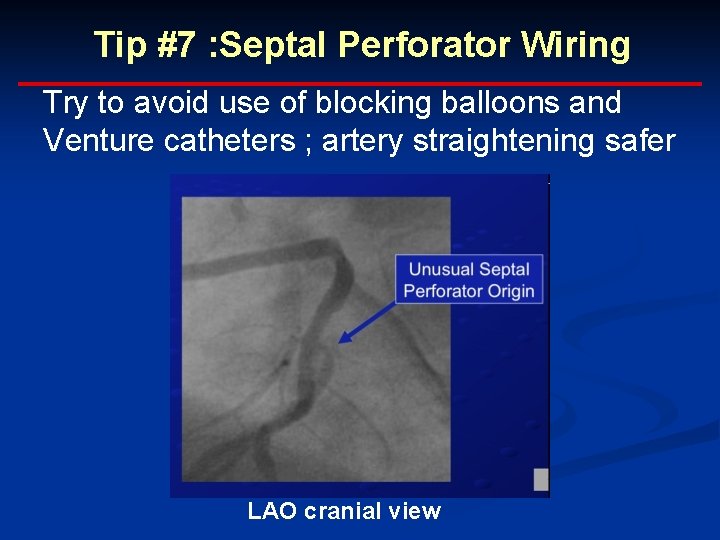
Tip #7 : Septal Perforator Wiring Try to avoid use of blocking balloons and Venture catheters ; artery straightening safer LAO cranial view
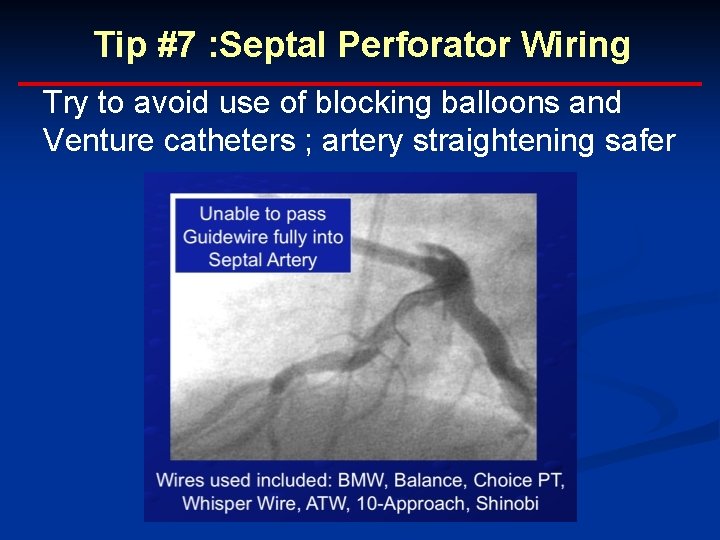
Tip #7 : Septal Perforator Wiring Try to avoid use of blocking balloons and Venture catheters ; artery straightening safer
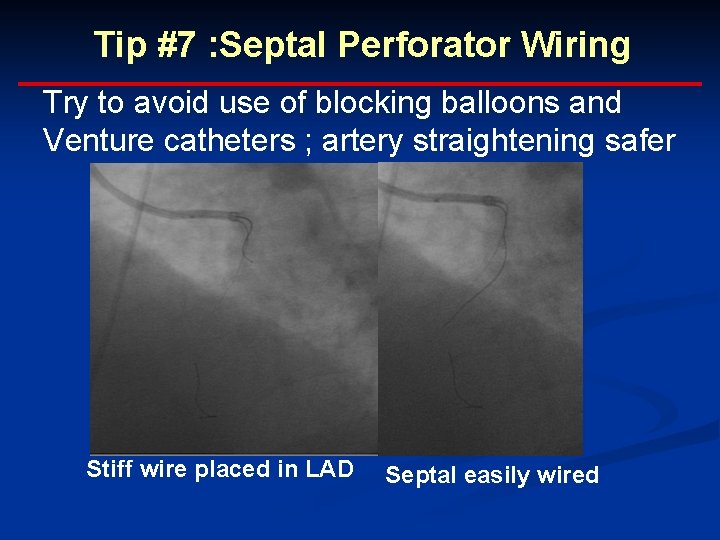
Tip #7 : Septal Perforator Wiring Try to avoid use of blocking balloons and Venture catheters ; artery straightening safer Stiff wire placed in LAD Septal easily wired
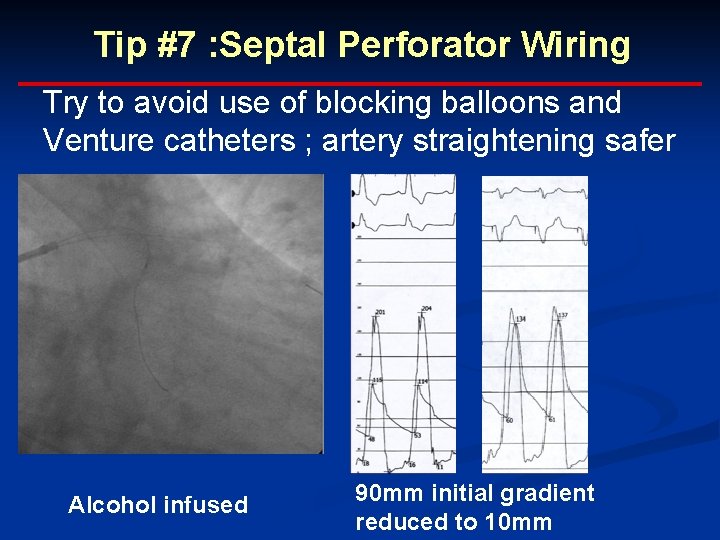
Tip #7 : Septal Perforator Wiring Try to avoid use of blocking balloons and Venture catheters ; artery straightening safer Alcohol infused 90 mm initial gradient reduced to 10 mm
Tip #8 : Alcohol Spillage Balloon sizing is critical : too small allows retrograde escape ; too large encourages “ melon seeding “. Frequent monitering of balloon position essential.
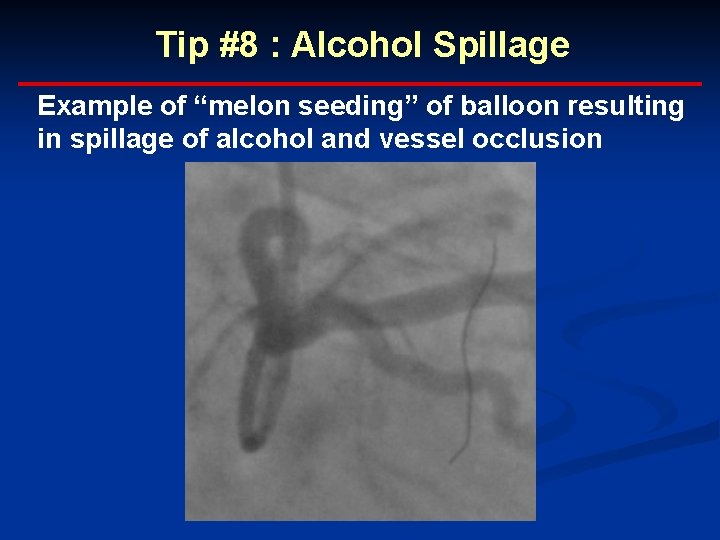
Tip #8 : Alcohol Spillage Example of “melon seeding” of balloon resulting in spillage of alcohol and vessel occlusion
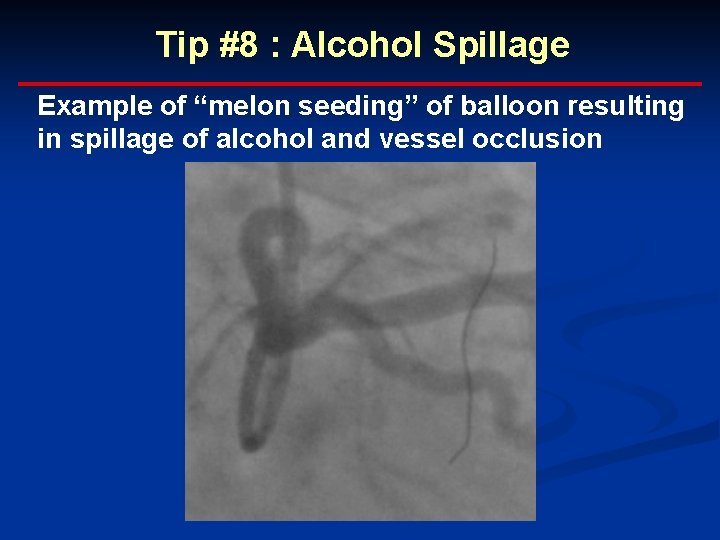
Tip #8 : Alcohol Spillage Example of “melon seeding” of balloon resulting in spillage of alcohol and vessel occlusion
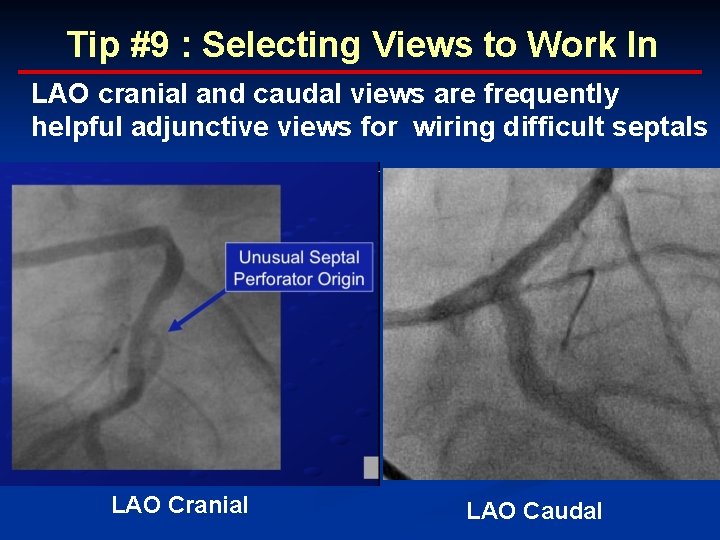
Tip #9 : Selecting Views to Work In LAO cranial and caudal views are frequently helpful adjunctive views for wiring difficult septals LAO Cranial LAO Caudal
Tip #10 : Monitering LVOF Gradient Consider placing pressure wire in LV in select circumstances to moniter LVOF gradient continously : mild-moderate aortic stenosis , poor echo windows , and to avoid biarterial access
In Conclusion n Treatment of drug-refractory HOCM with alcohol ablation continues to evolve n The difference is in the details

THANK YOU
- Slides: 50