
Wheel 1 A 4824 Transformable Design Methods Matthew

Wheel 1

A 4824 Transformable Design Methods Matthew Davis Tech Elective Thursday 11 am – 1 pm Avery 408

Design Principles Structure and Mechanism Structure: Mechanism: Force is resisted Force flows into movement

Design Principles Structure and Mechanism Possible Responses to Applied Force Structural Deflection Resistance (elastic or Inelastic) Kinematic deflection
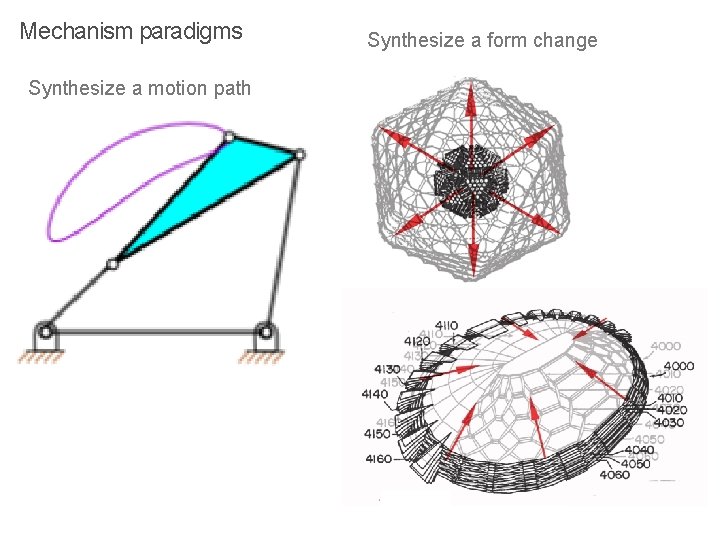
Mechanism paradigms Synthesize a motion path Synthesize a form change
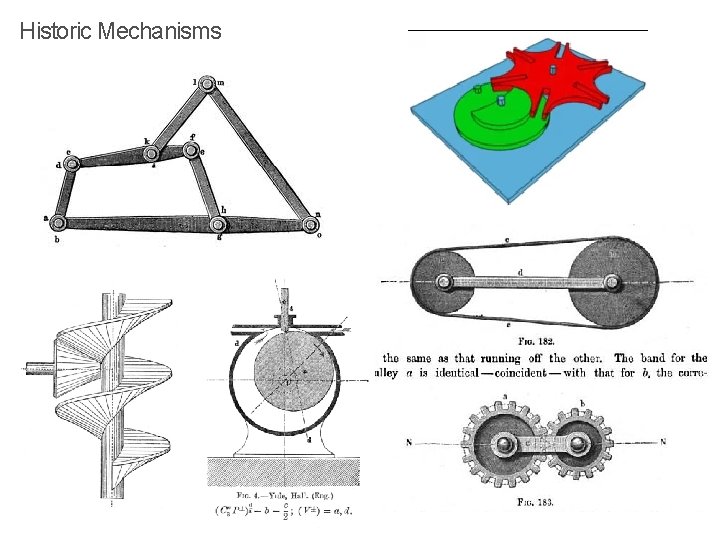
Historic Mechanisms
Definitions • Kinematics: the study of the motion of bodies without reference to mass or force • Links: considered as rigid bodies • Kinematic pair: a connection between two bodies that imposes constraints on their relative movement. (also referred to as a mechanical joint) • Ground: static point of reference • Degree of freedom (DOF): of a mechanical system is the number of independent parameters that define its configuration.
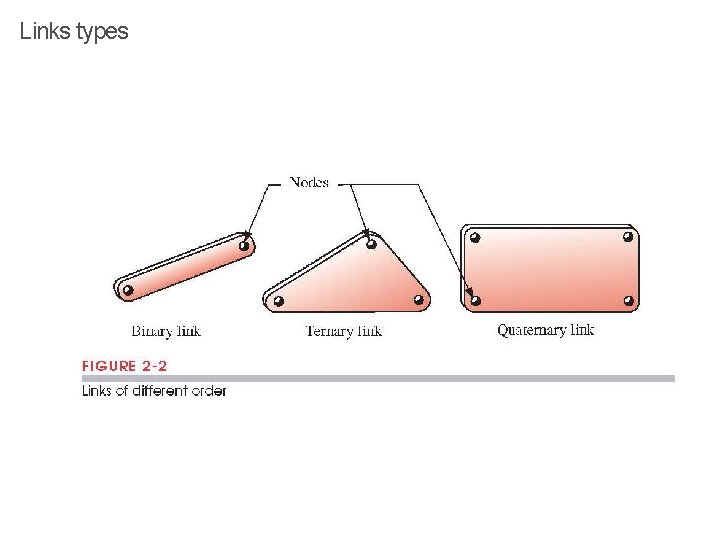
Links types
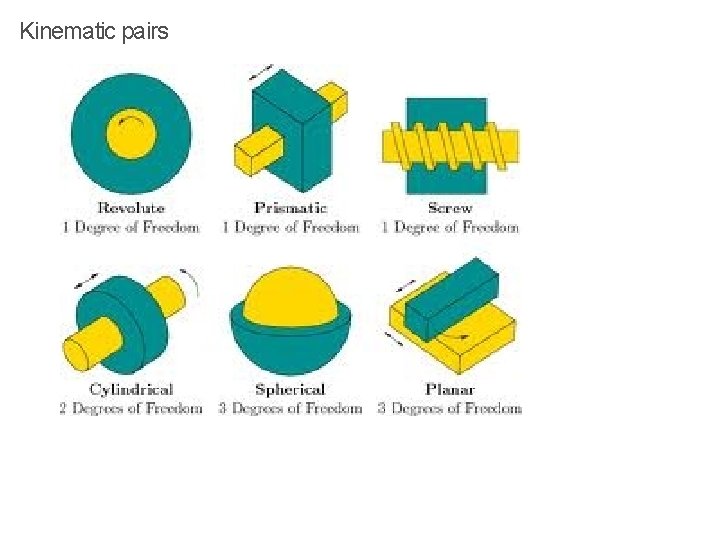
Kinematic pairs

Mechanical connections in the body
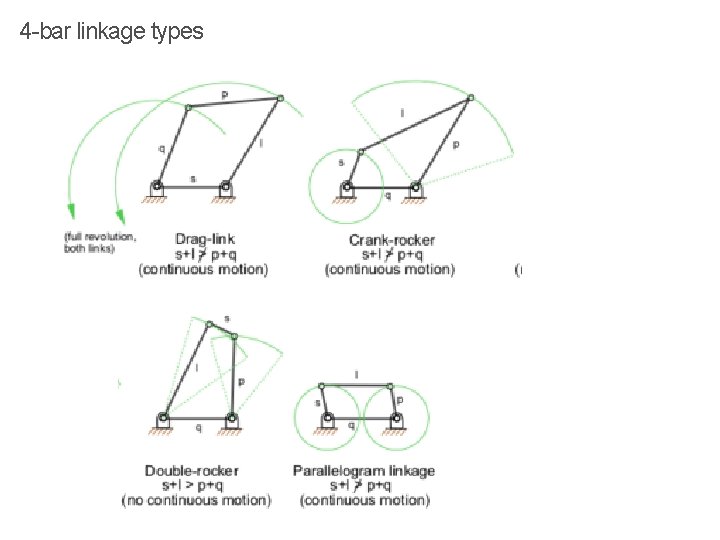
4 -bar linkage types
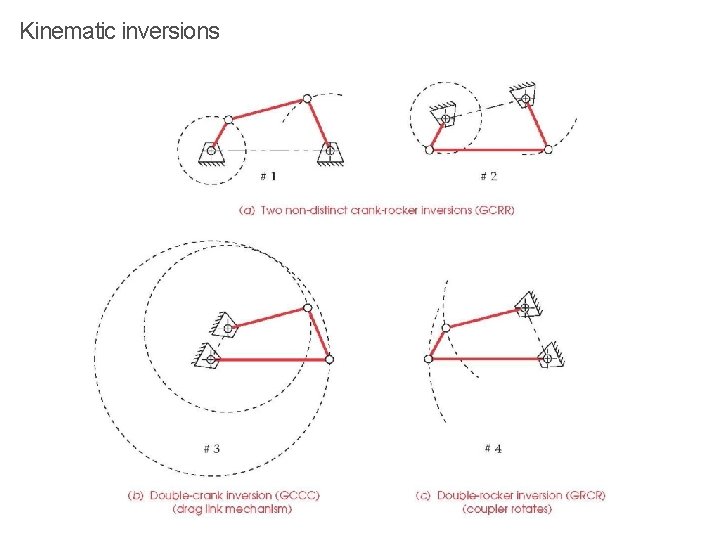
Kinematic inversions

Four-bar linkage examples Parallel 4 -bar Anti-parallel 4 -bar
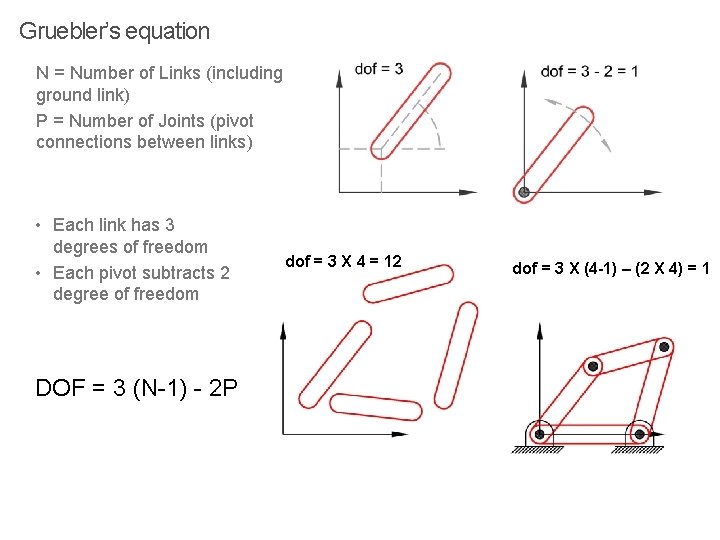
Gruebler’s equation N = Number of Links (including ground link) P = Number of Joints (pivot connections between links) • Each link has 3 degrees of freedom • Each pivot subtracts 2 degree of freedom DOF = 3 (N-1) - 2 P dof = 3 X 4 = 12 dof = 3 X (4 -1) – (2 X 4) = 1
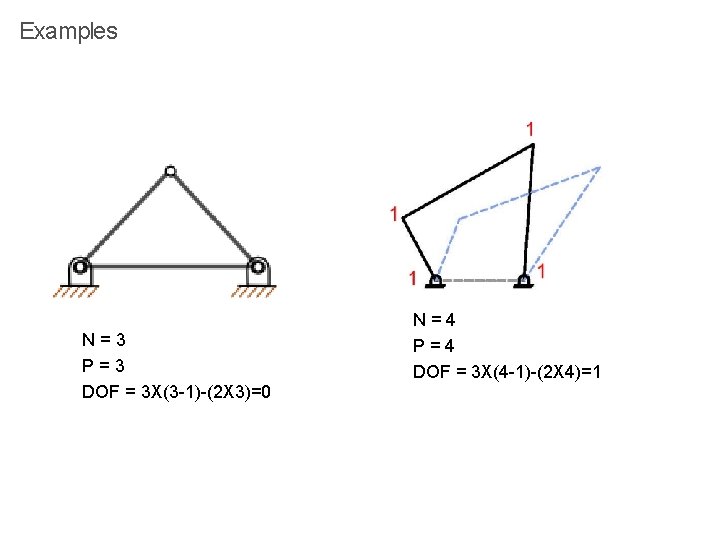
Examples N=3 P=3 DOF = 3 X(3 -1)-(2 X 3)=0 N=4 P=4 DOF = 3 X(4 -1)-(2 X 4)=1
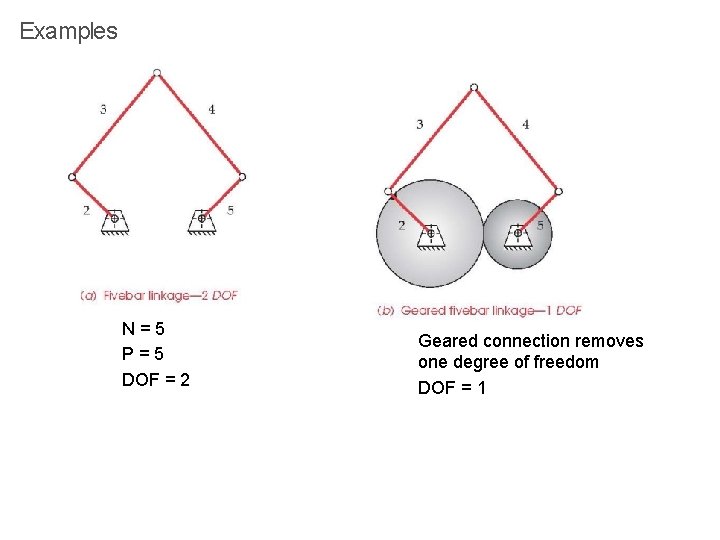
Examples N=5 P=5 DOF = 2 Geared connection removes one degree of freedom DOF = 1
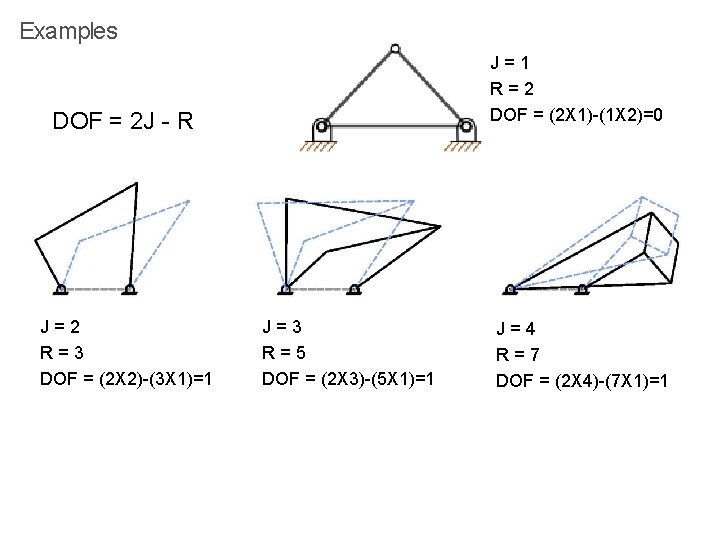
Examples J=1 R=2 DOF = (2 X 1)-(1 X 2)=0 DOF = 2 J - R J=2 R=3 DOF = (2 X 2)-(3 X 1)=1 J=3 R=5 DOF = (2 X 3)-(5 X 1)=1 J=4 R=7 DOF = (2 X 4)-(7 X 1)=1
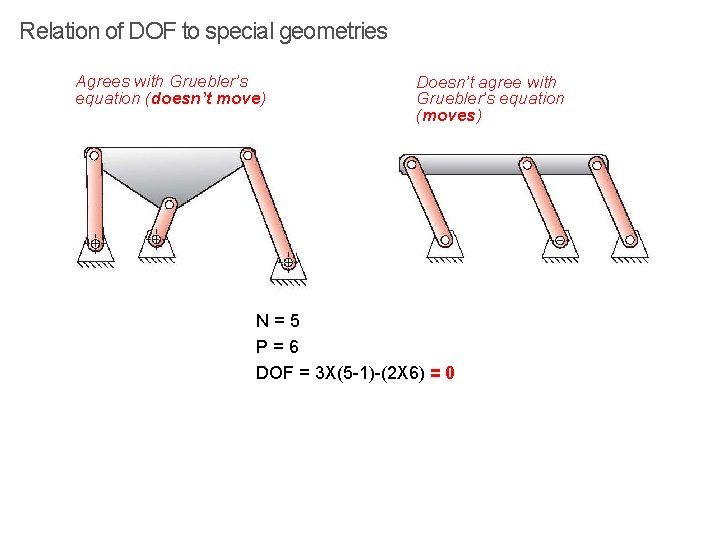
Relation of DOF to special geometries Agrees with Gruebler’s equation (doesn’t move) Doesn’t agree with Gruebler’s equation (moves) N=5 P=6 DOF = 3 X(5 -1)-(2 X 6) = 0

Graph of linkages DOF=3(N-1)-2 P

Scissor Linkages
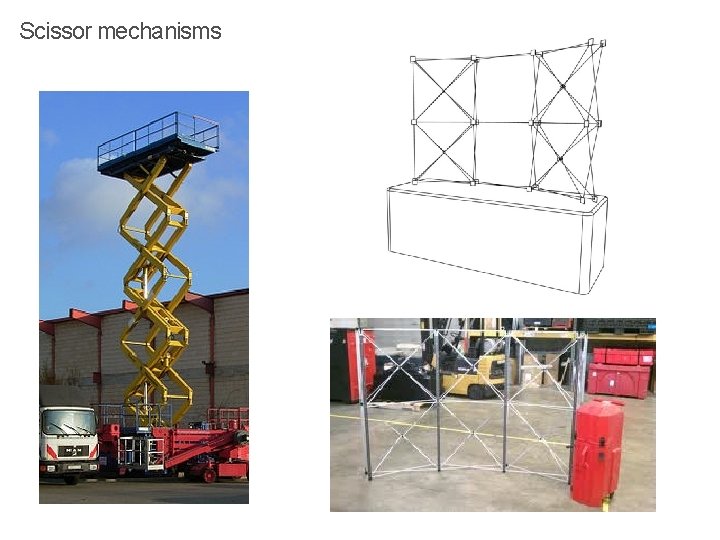
Scissor mechanisms
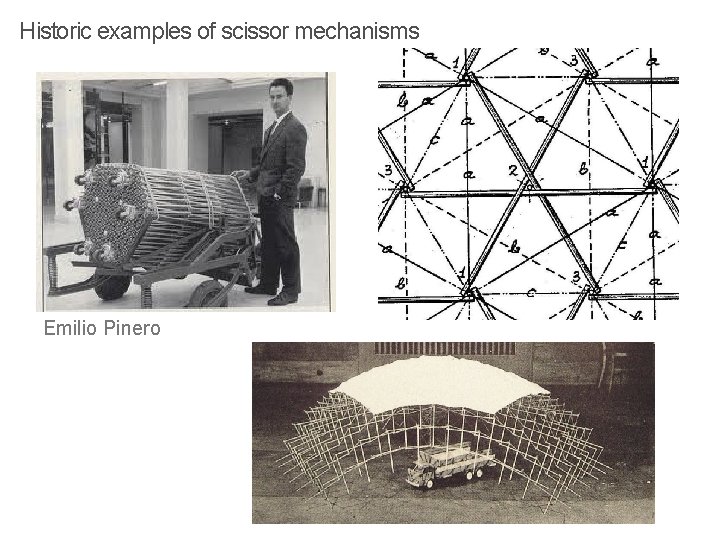
Historic examples of scissor mechanisms Emilio Pinero

Historic examples of scissor mechanisms Emilio Pinero
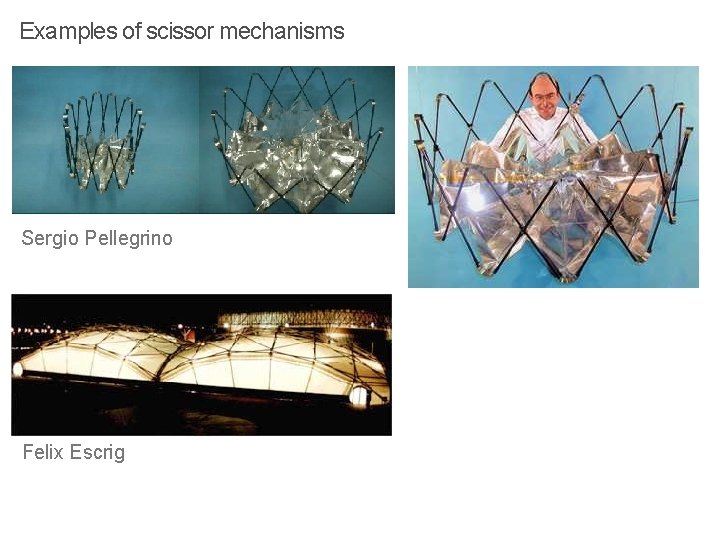
Examples of scissor mechanisms Sergio Pellegrino Felix Escrig
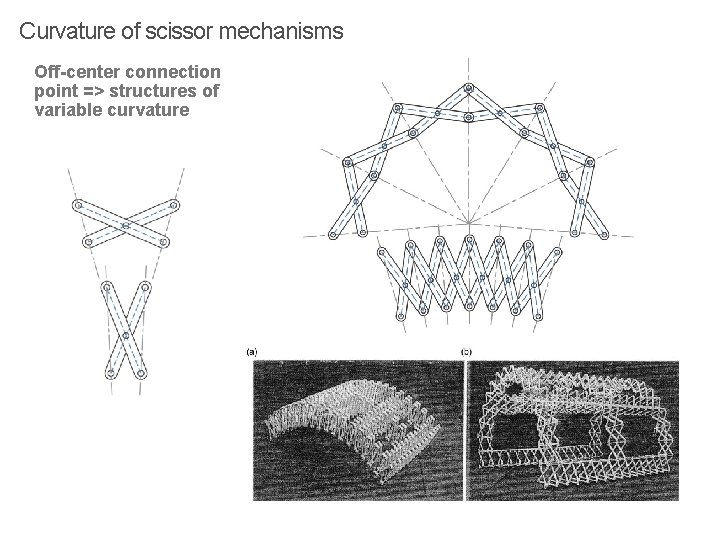
Curvature of scissor mechanisms Off-center connection point => structures of variable curvature

Scissor Types Parallel / symmetric Parallel / asymmetric No curvature Variable curvature Angulated Constant curvature

Angulated scissors Provides invariant angle during deployment

Angulated link: geometric construction 2 straight links Redraw links as 2 triangles Rotate triangles to angle of curvature Redraw angulated links
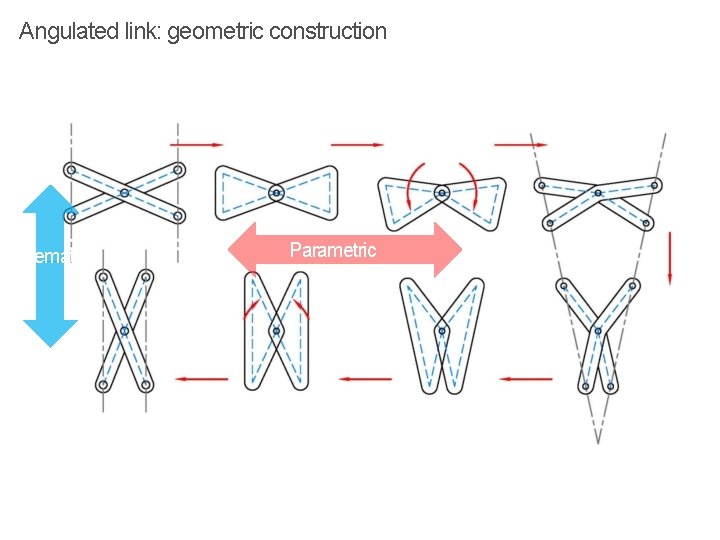
Angulated link: geometric construction Kinematic Parametric
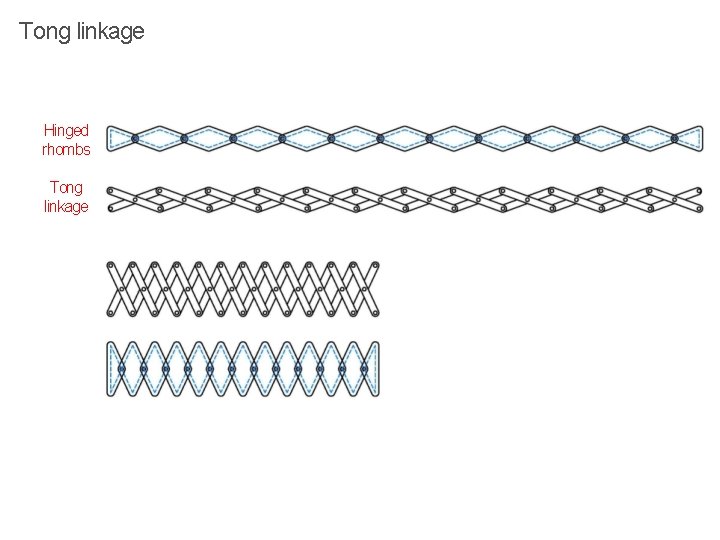
Tong linkage Hinged rhombs Tong linkage
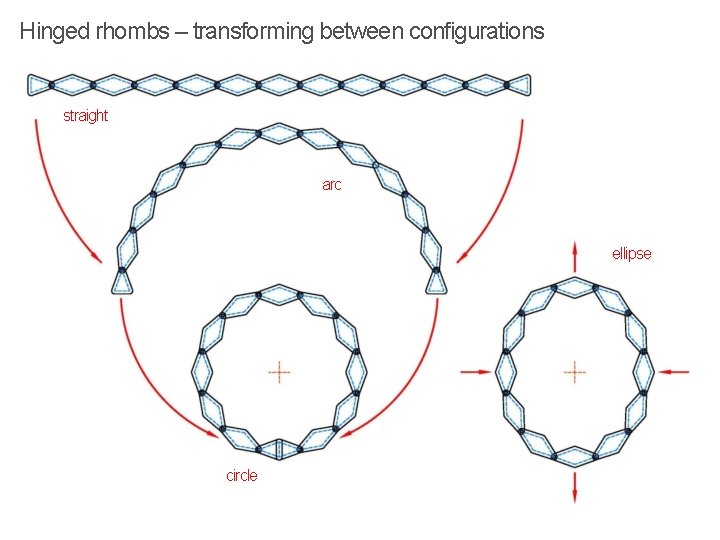
Hinged rhombs – transforming between configurations straight arc ellipse circle
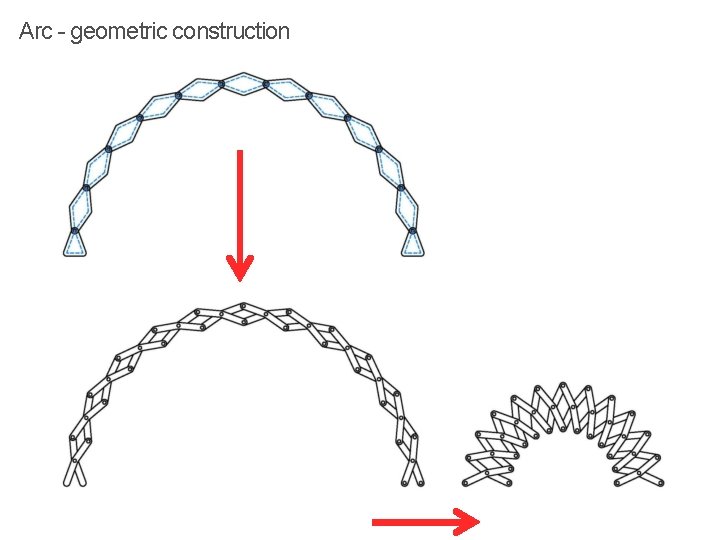
Arc - geometric construction
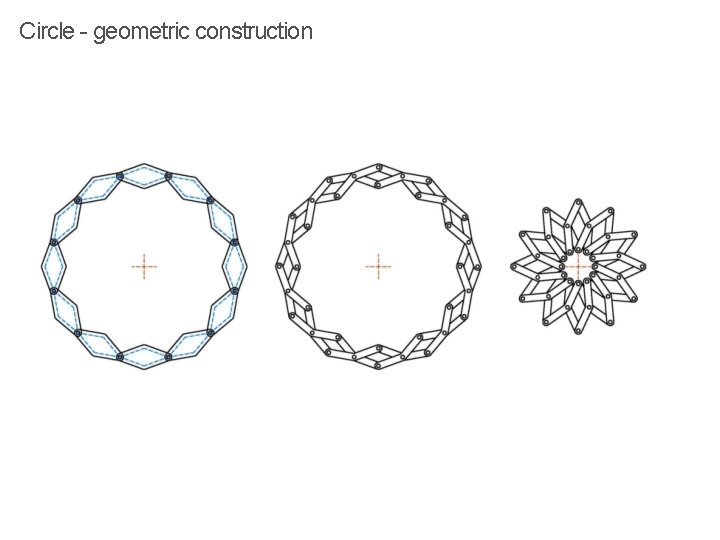
Circle - geometric construction
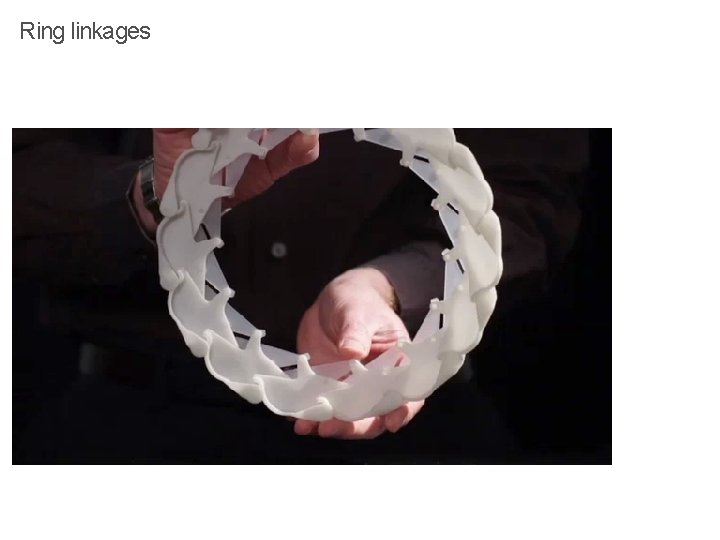
Ring linkages

Ellipse - geometric construction
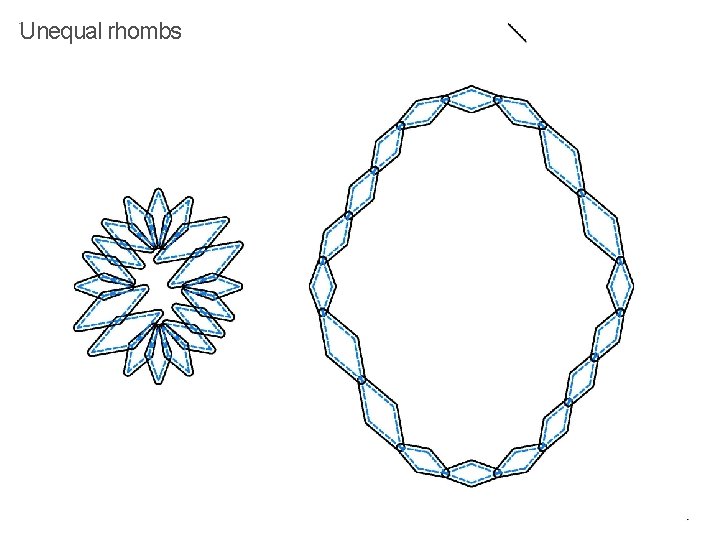
Unequal rhombs
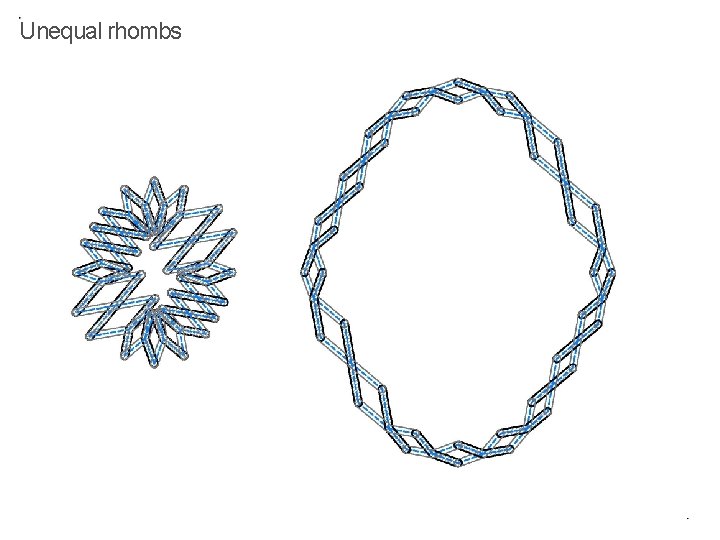
Unequal rhombs
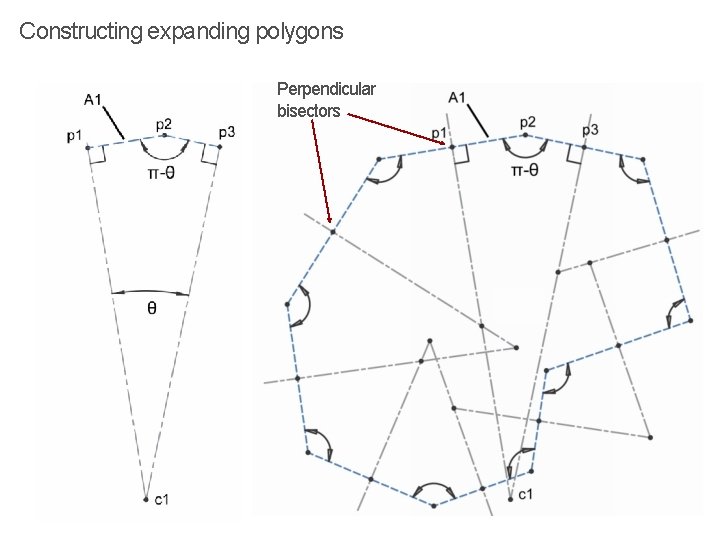
Constructing expanding polygons Perpendicular bisectors
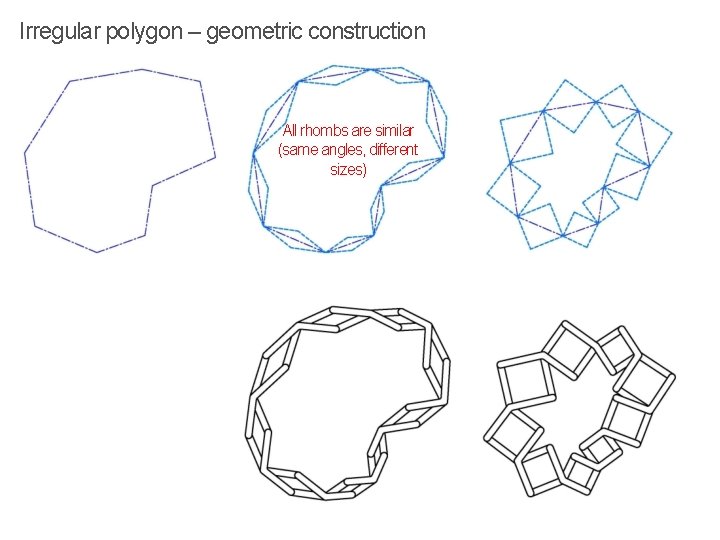
Irregular polygon – geometric construction All rhombs are similar (same angles, different sizes)
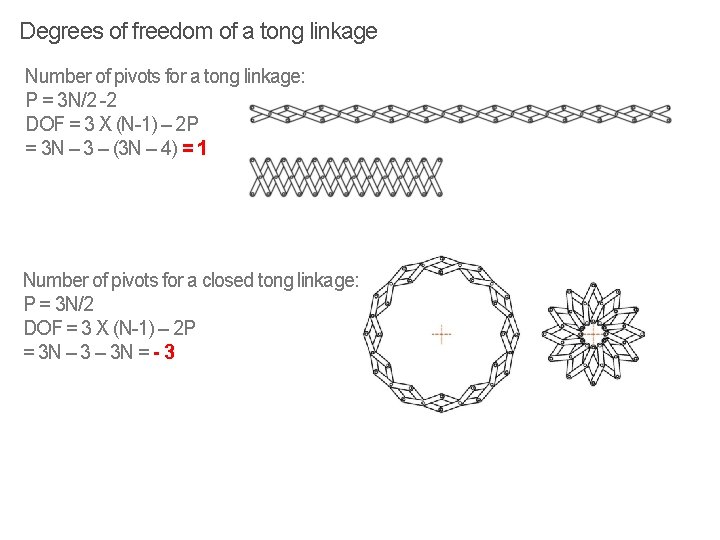
Degrees of freedom of a tong linkage Number of pivots for a tong linkage: P = 3 N/2 -2 DOF = 3 X (N-1) – 2 P = 3 N – 3 – (3 N – 4) = 1 Number of pivots for a closed tong linkage: P = 3 N/2 DOF = 3 X (N-1) – 2 P = 3 N – 3 N = - 3
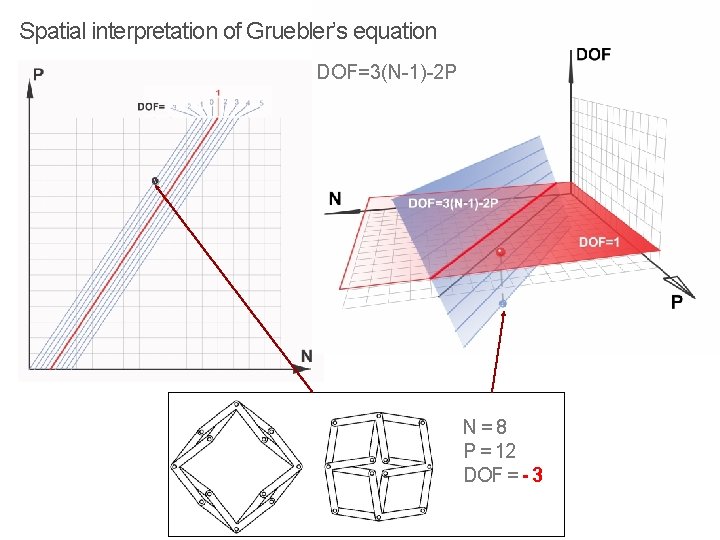
Spatial interpretation of Gruebler’s equation DOF=3(N-1)-2 P N=8 P = 12 DOF = - 3
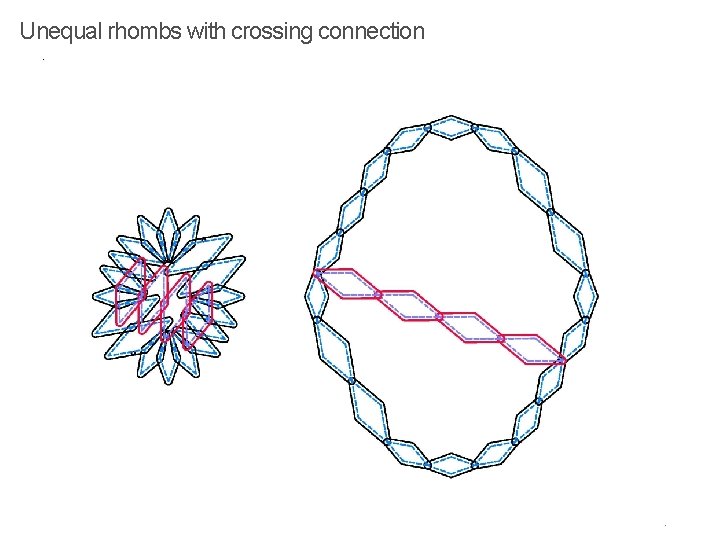
Unequal rhombs with crossing connection
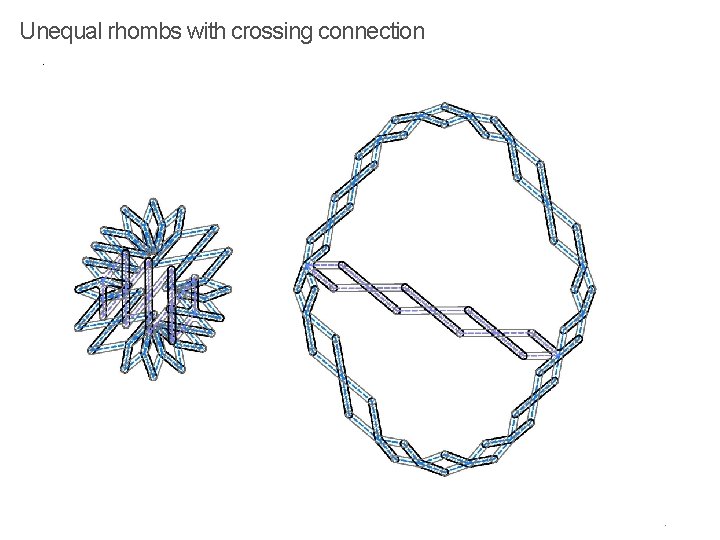
Unequal rhombs with crossing connection
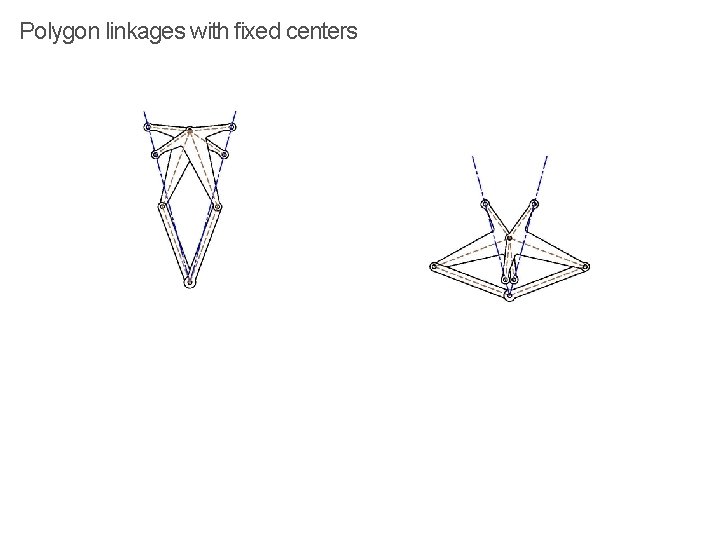
Polygon linkages with fixed centers
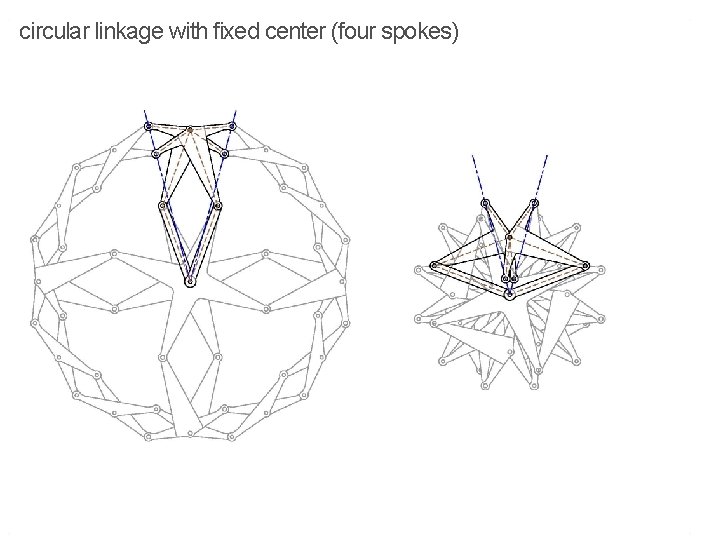
circular linkage with fixed center (four spokes)
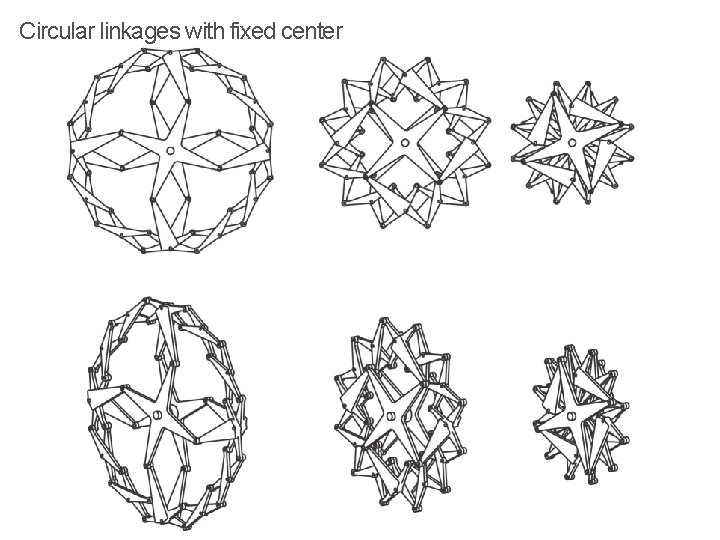
Circular linkages with fixed center
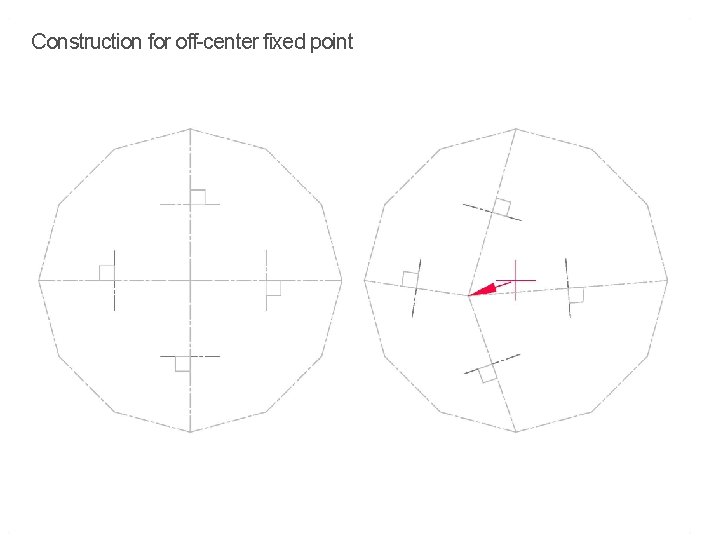
Polygon linkages with fixed centers Construction for off-center fixed point
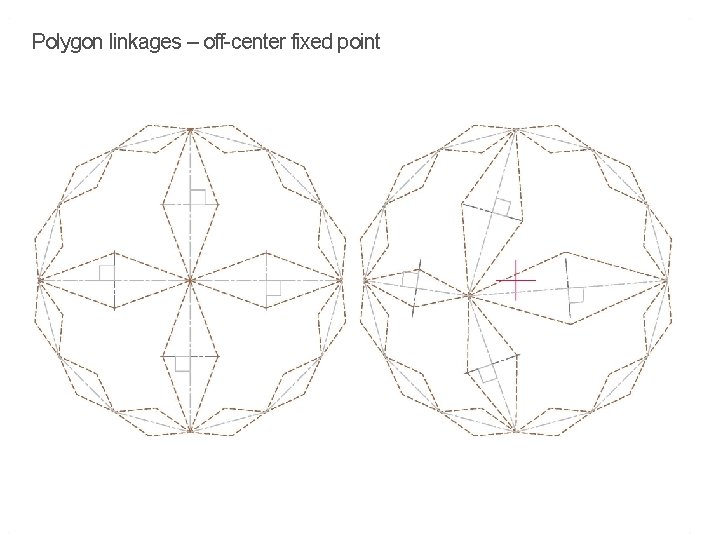
Polygon fixed centers Polygonlinkages –with off-center fixed point
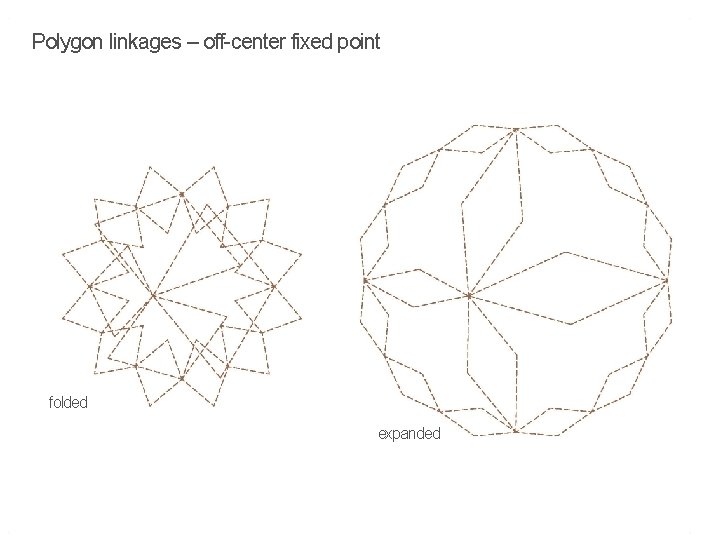
Polygon fixed centers Polygonlinkages –with off-center fixed point folded expanded
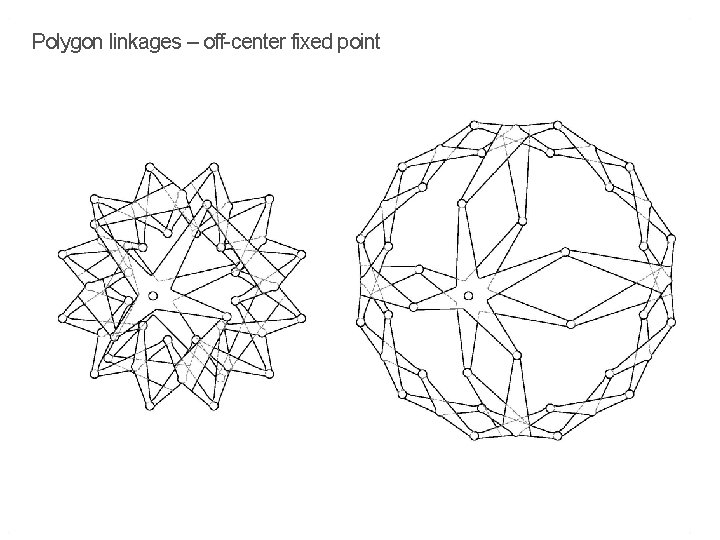
Polygon fixed centers Polygonlinkages –with off-center fixed point
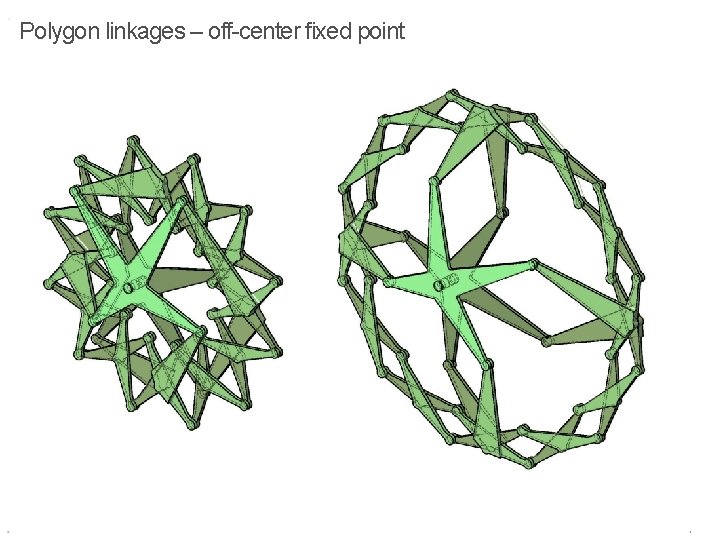
Polygon linkages – off-center fixed point
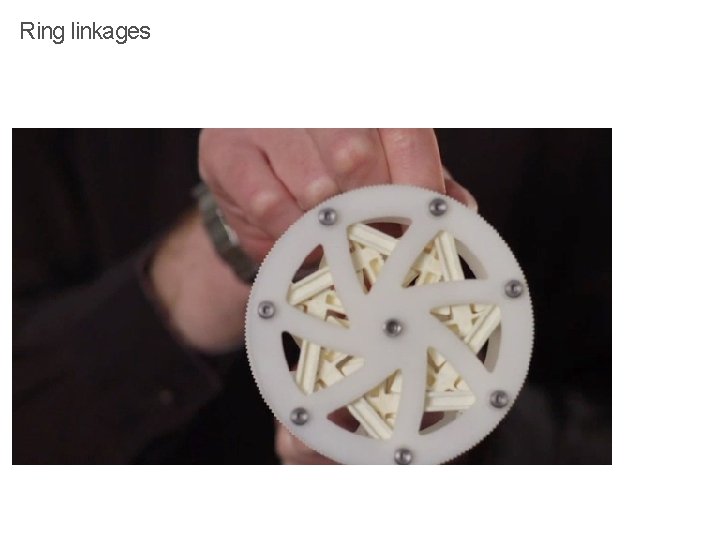
Ring linkages
Hardware / Construction Terms Components to reduce rotary friction • Bearing (rolling friction – uses balls or rollers) • Bushing (sliding friction – uses low coefficient materials) Tolerances – refers to closeness of fit between parts (usually pivot connections) • Slip fit (turns easily, but no side-to-side ‘jiggle’) • Press fit (parts are pressed into place against mechanical resistance – usually for a permanent connection) Design & assembly terms • Clearance – general term meaning no obstruction to either assembly or mechanical movement • Interference – obstructions to assembly or mechanical movement • Chamfer – providing angled edges to help align parts during assembly or guide movement
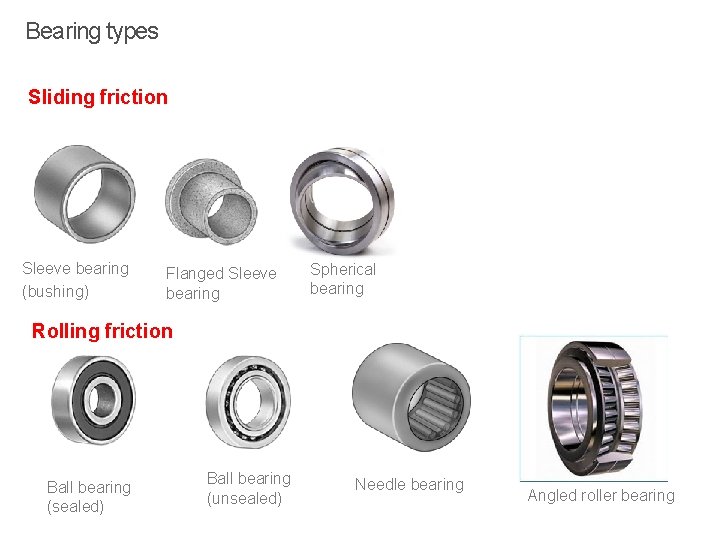
Bearing types Sliding friction Sleeve bearing (bushing) Flanged Sleeve bearing Spherical bearing Rolling friction Ball bearing (sealed) Ball bearing (unsealed) Needle bearing Angled roller bearing
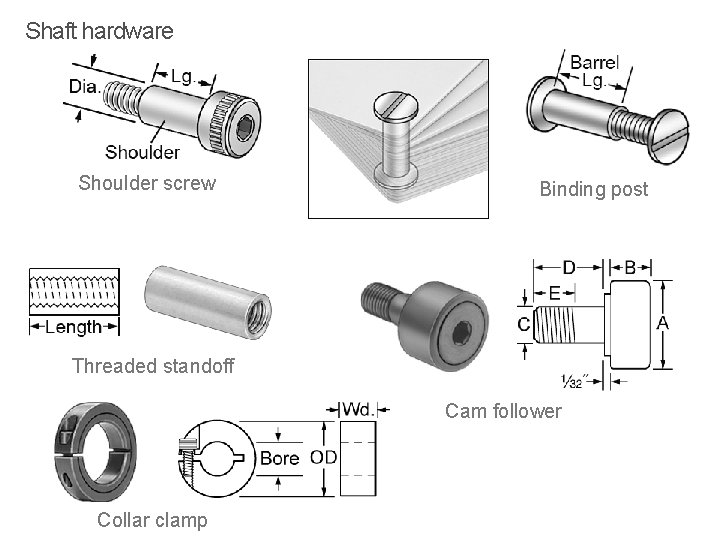
Shaft hardware Shoulder screw Binding post Threaded standoff Cam follower Collar clamp
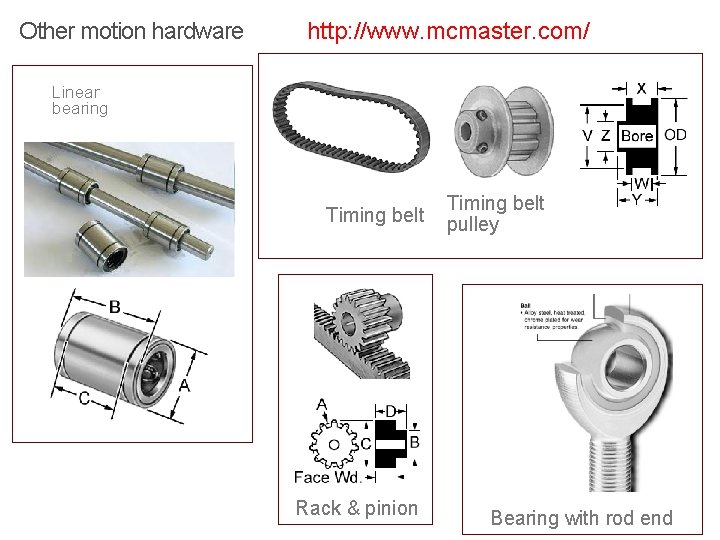
Other motion hardware http: //www. mcmaster. com/ Linear bearing Timing belt Rack & pinion Timing belt pulley Bearing with rod end

Pivot construction Binding post connection Mcmaster. com
- Slides: 57