
Whats the difference Argumentative Writing Persuasive Writing Whats




- Slides: 18
What’s the difference? Argumentative Writing Persuasive Writing
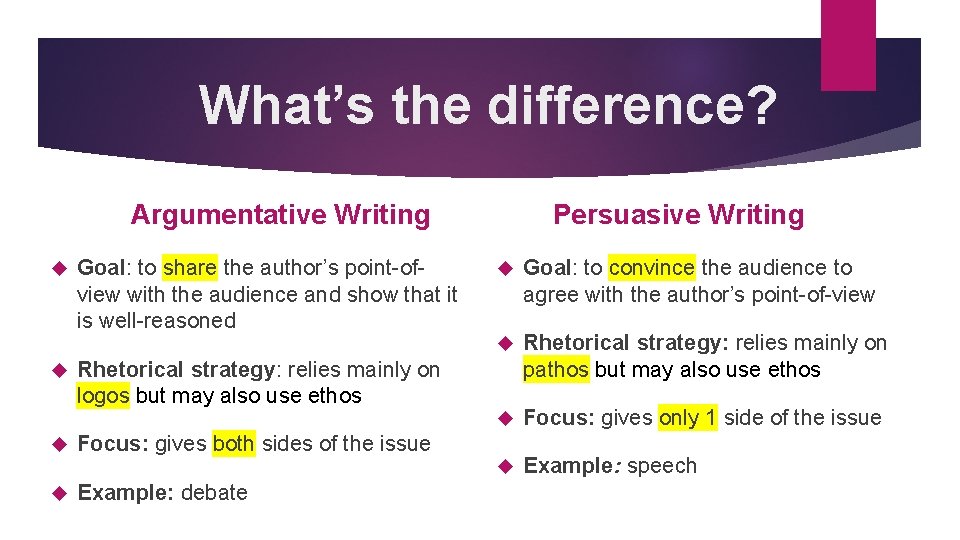
What’s the difference? Argumentative Writing Goal: to share the author’s point-ofview with the audience and show that it is well-reasoned Persuasive Writing Goal: to convince the audience to agree with the author’s point-of-view Rhetorical strategy: relies mainly on pathos but may also use ethos Focus: gives only 1 side of the issue Example: speech Rhetorical strategy: relies mainly on logos but may also use ethos Focus: gives both sides of the issue Example: debate
We’re going to be focusing on argumentative writing in this unit
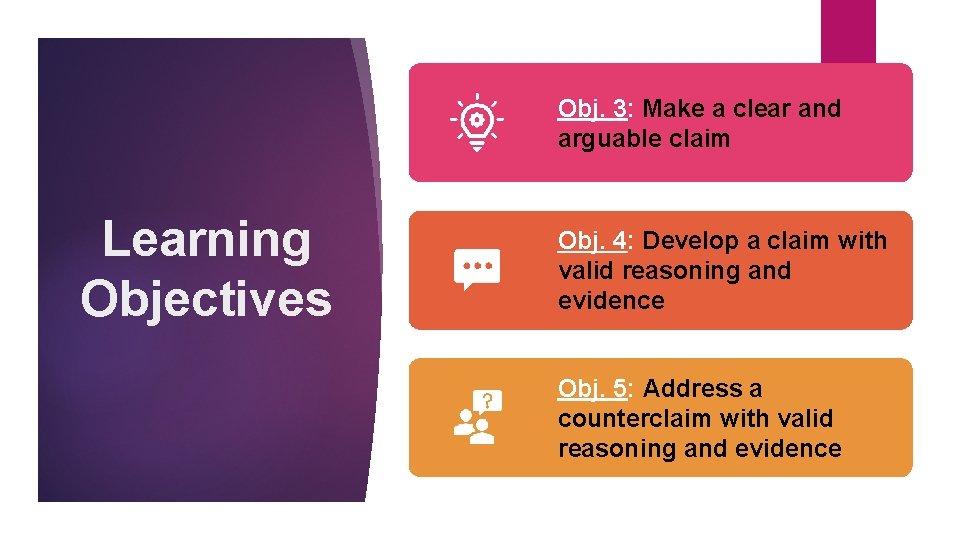
Obj. 3: Make a clear and arguable claim Learning Objectives Obj. 4: Develop a claim with valid reasoning and evidence Obj. 5: Address a counterclaim with valid reasoning and evidence
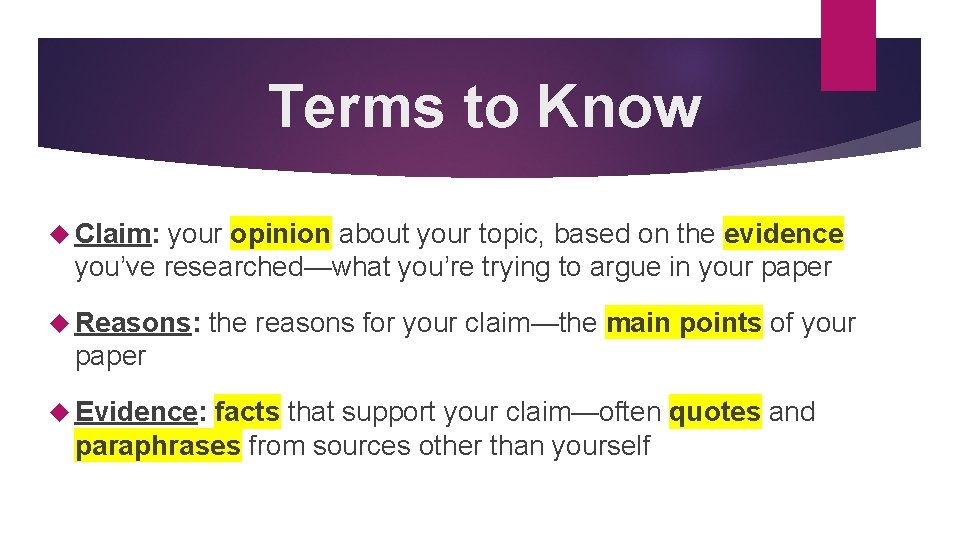
Terms to Know Claim: your opinion about your topic, based on the evidence you’ve researched—what you’re trying to argue in your paper Reasons: the reasons for your claim—the main points of your paper Evidence: facts that support your claim—often quotes and paraphrases from sources other than yourself
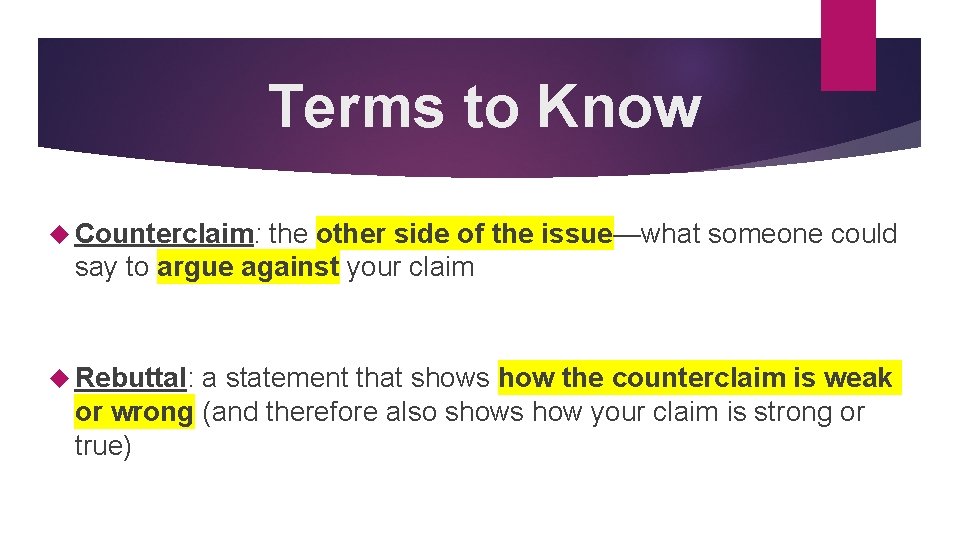
Terms to Know Counterclaim: the other side of the issue—what someone could say to argue against your claim Rebuttal: a statement that shows how the counterclaim is weak or wrong (and therefore also shows how your claim is strong or true)
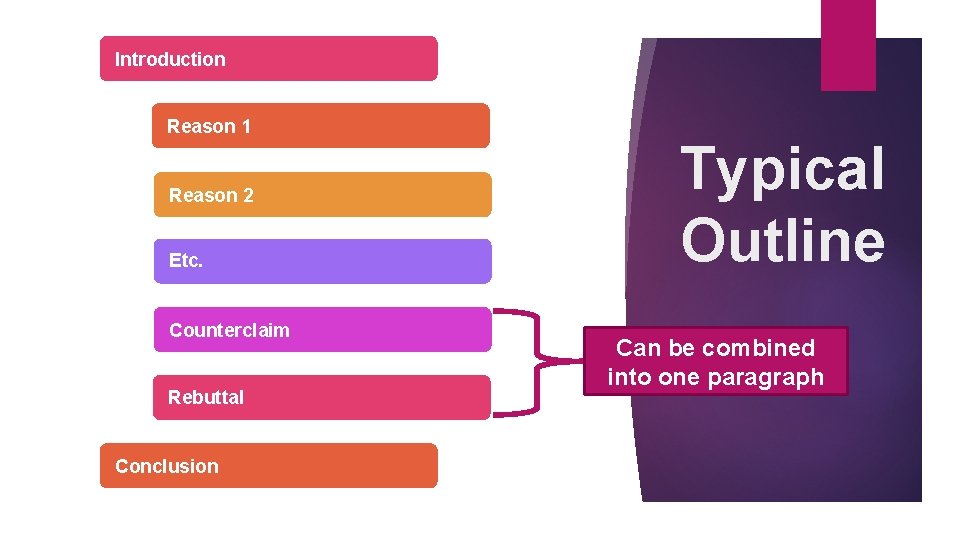
Introduction Reason 1 Reason 2 Etc. Counterclaim Rebuttal Conclusion Typical Outline Can be combined into one paragraph
Writing the Body
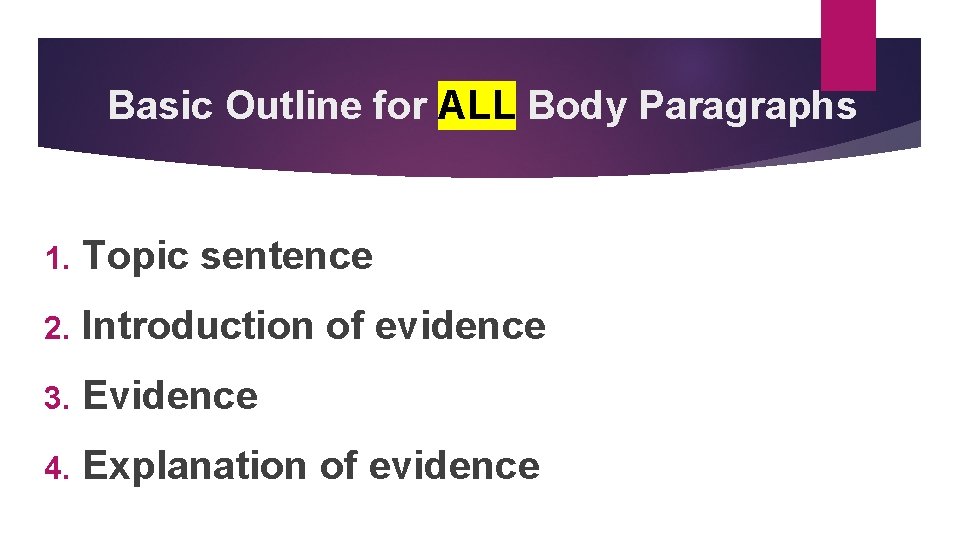
Basic Outline for ALL Body Paragraphs 1. Topic sentence 2. Introduction of evidence 3. Evidence 4. Explanation of evidence
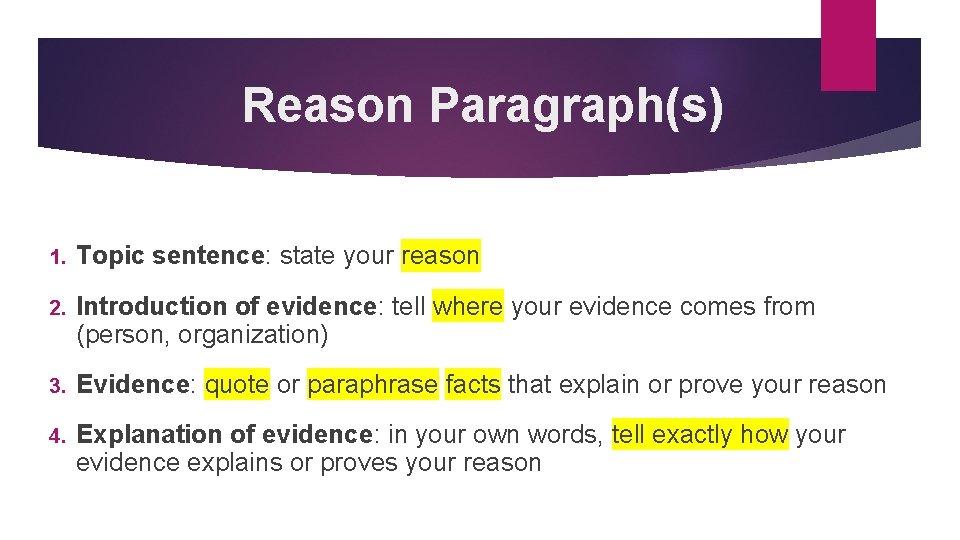
Reason Paragraph(s) 1. Topic sentence: state your reason 2. Introduction of evidence: tell where your evidence comes from (person, organization) 3. Evidence: quote or paraphrase facts that explain or prove your reason 4. Explanation of evidence: in your own words, tell exactly how your evidence explains or proves your reason
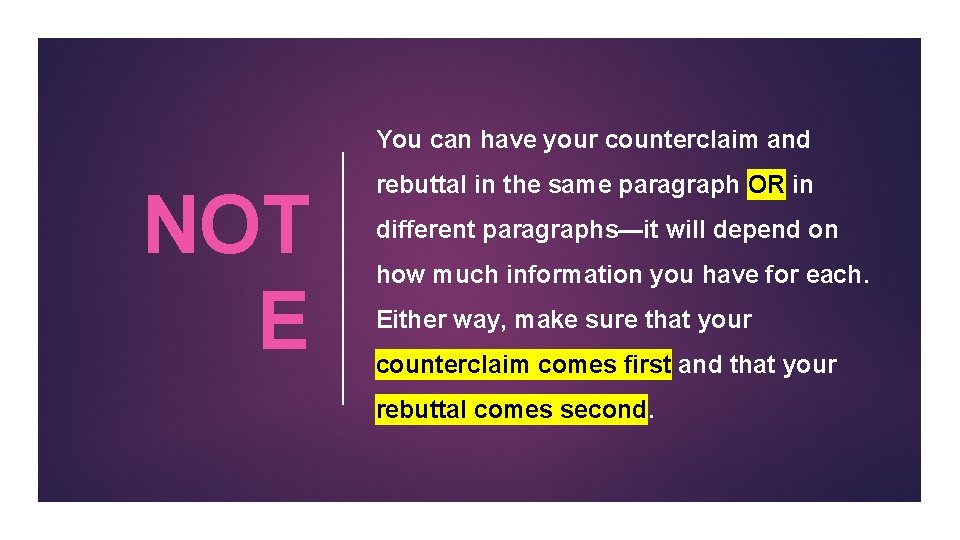
You can have your counterclaim and NOT E rebuttal in the same paragraph OR in different paragraphs—it will depend on how much information you have for each. Either way, make sure that your counterclaim comes first and that your rebuttal comes second.
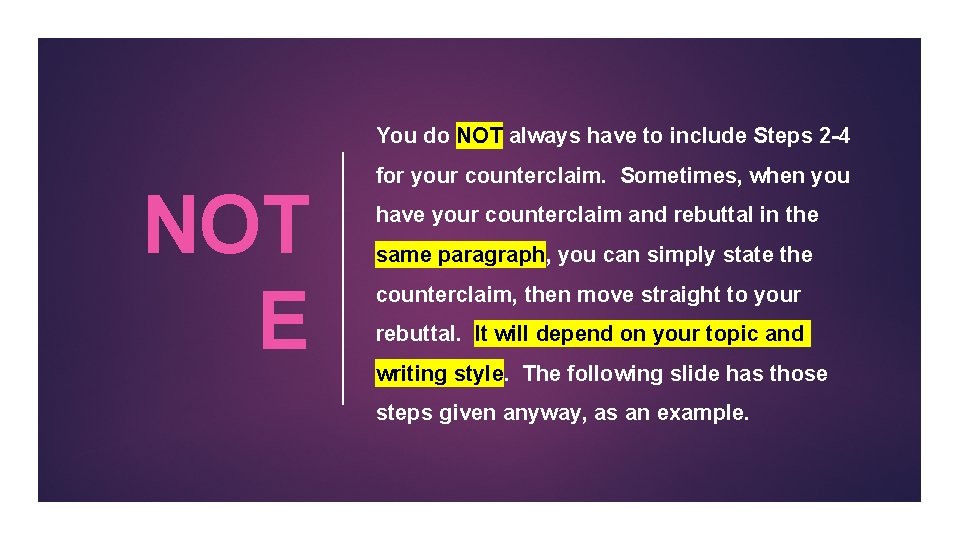
You do NOT always have to include Steps 2 -4 NOT E for your counterclaim. Sometimes, when you have your counterclaim and rebuttal in the same paragraph, you can simply state the counterclaim, then move straight to your rebuttal. It will depend on your topic and writing style. The following slide has those steps given anyway, as an example.
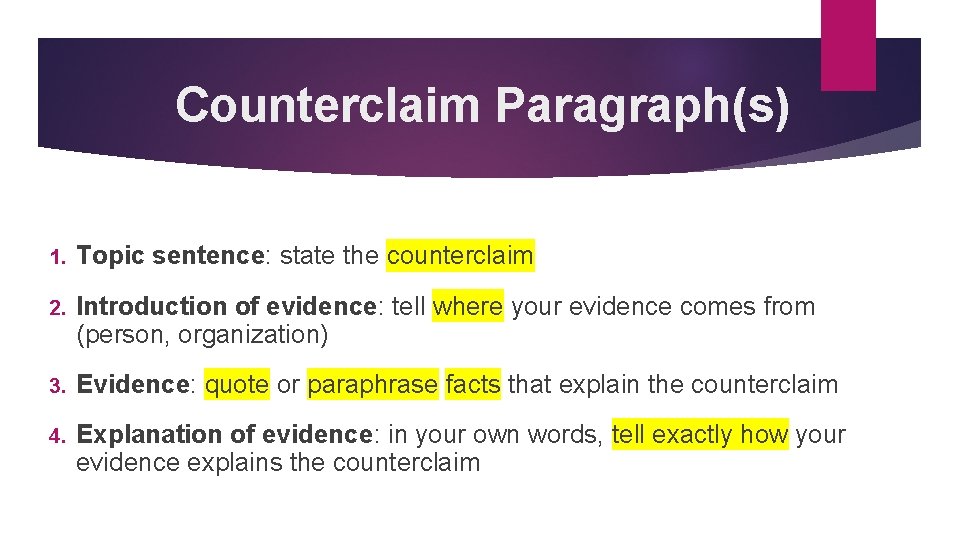
Counterclaim Paragraph(s) 1. Topic sentence: state the counterclaim 2. Introduction of evidence: tell where your evidence comes from (person, organization) 3. Evidence: quote or paraphrase facts that explain the counterclaim 4. Explanation of evidence: in your own words, tell exactly how your evidence explains the counterclaim
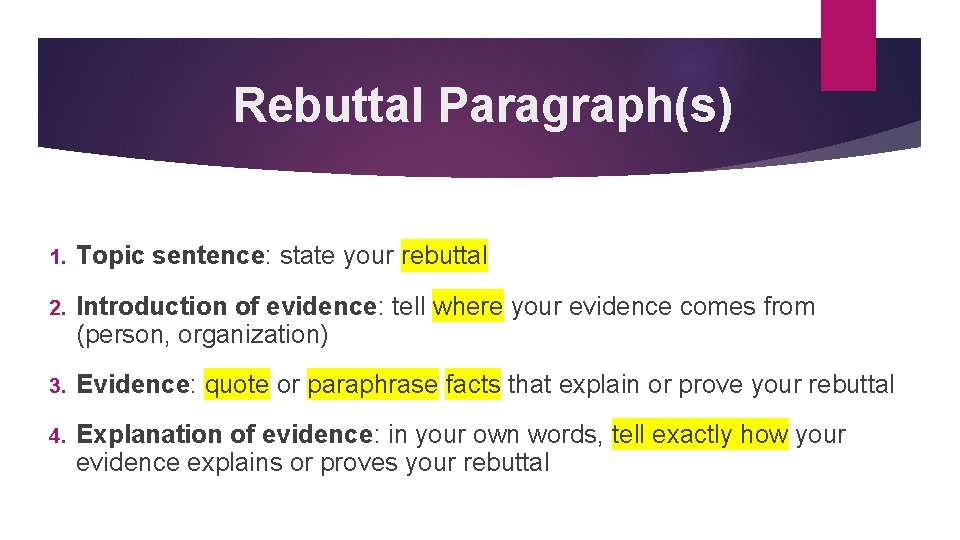
Rebuttal Paragraph(s) 1. Topic sentence: state your rebuttal 2. Introduction of evidence: tell where your evidence comes from (person, organization) 3. Evidence: quote or paraphrase facts that explain or prove your rebuttal 4. Explanation of evidence: in your own words, tell exactly how your evidence explains or proves your rebuttal
Writing the Introduction
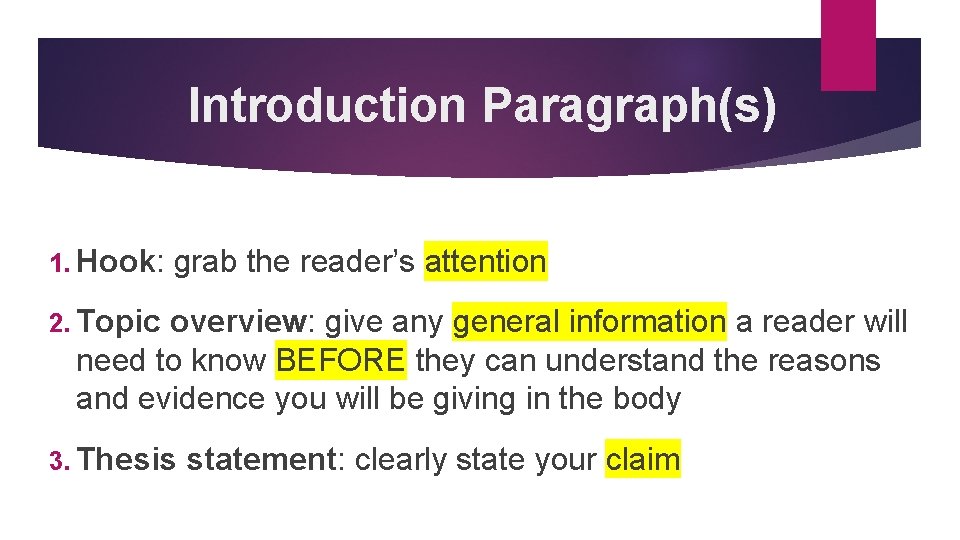
Introduction Paragraph(s) 1. Hook: grab the reader’s attention 2. Topic overview: give any general information a reader will need to know BEFORE they can understand the reasons and evidence you will be giving in the body 3. Thesis statement: clearly state your claim
Writing the Conclusion
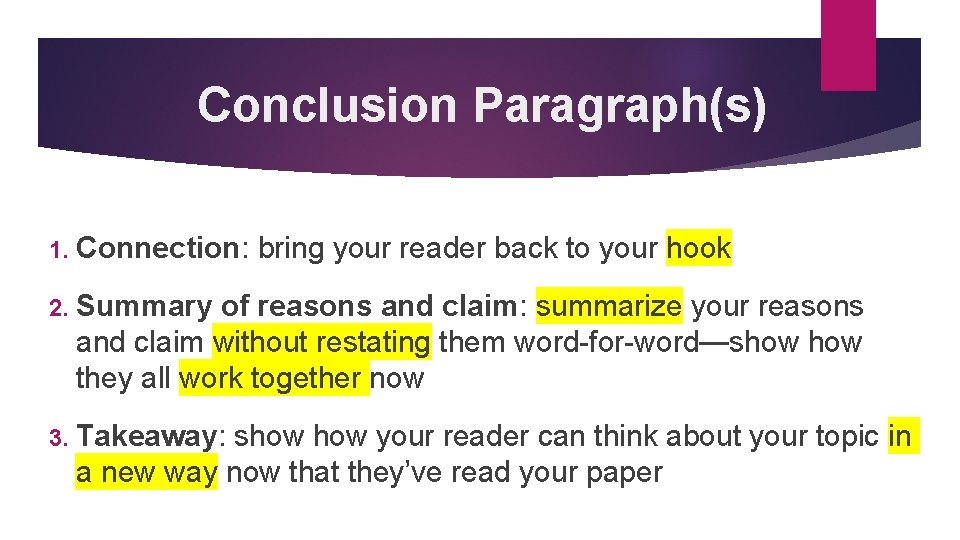
Conclusion Paragraph(s) 1. Connection: bring your reader back to your hook 2. Summary of reasons and claim: summarize your reasons and claim without restating them word-for-word—show they all work together now 3. Takeaway: show your reader can think about your topic in a new way now that they’ve read your paper