
Whats the Challenge Research methodology and scope What
- Slides: 23
• What’s the Challenge? • Research methodology and scope • What is a Profession? • Key values, knowledge & skills • Problems with present trainings All Photos: IRIN or Red. R
Professionalising the Humanitarian Sector 1. Little universally recognised qualifications 2. Diminishing individual professional integrity 3. Lack of systematic and applied learning 4. Unsystematic personal accountability 5. Shallow basis for state and employer trust
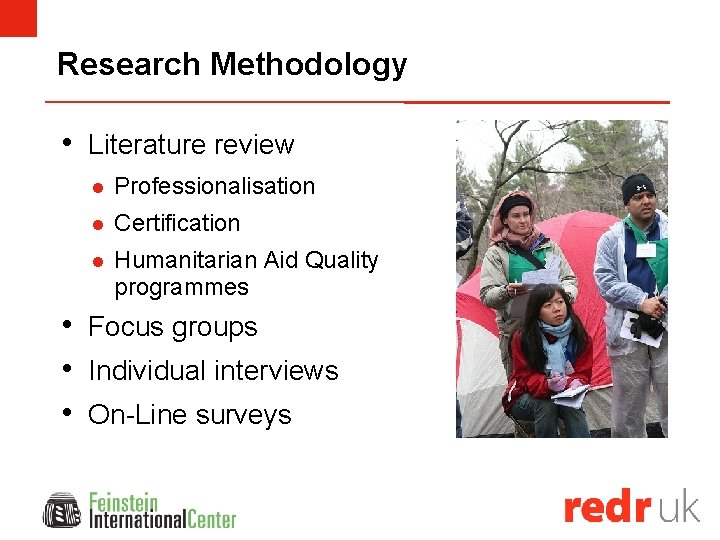
Research Methodology • Literature review l Professionalisation l Certification l Humanitarian Aid Quality programmes • Focus groups • Individual interviews • On-Line surveys
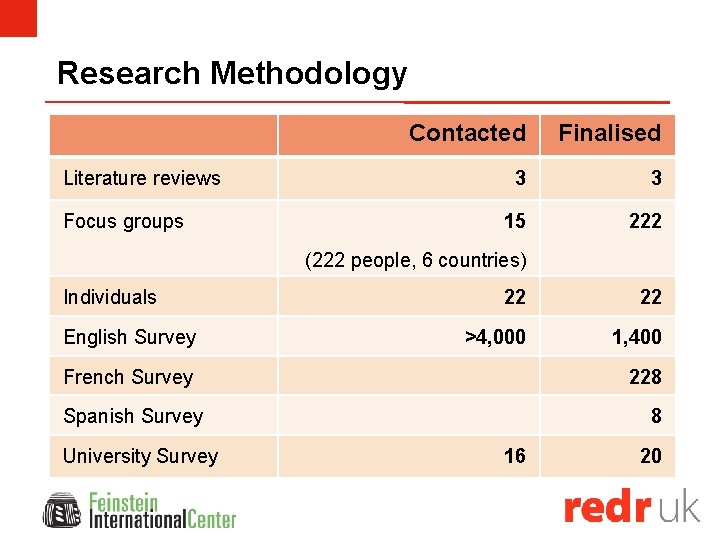
Research Methodology Literature reviews Focus groups Contacted Finalised 3 3 15 222 (222 people, 6 countries) Individuals English Survey 22 22 >4, 000 1, 400 French Survey 228 Spanish Survey University Survey 8 16 20
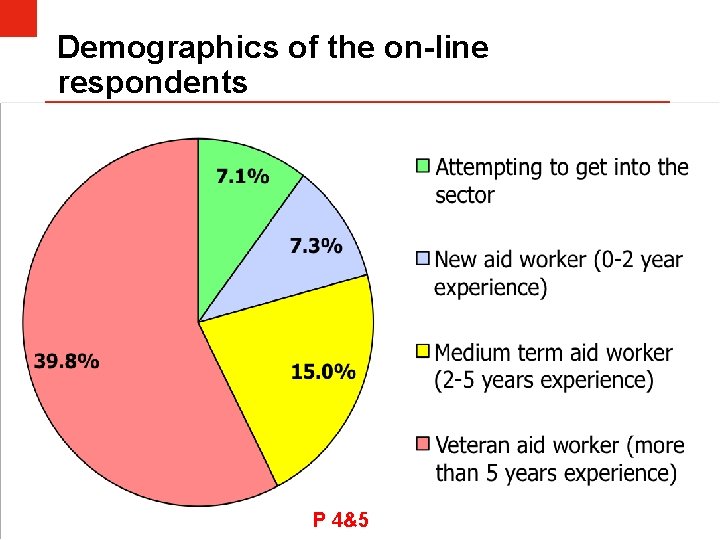
Demographics of the on-line respondents P 4&5
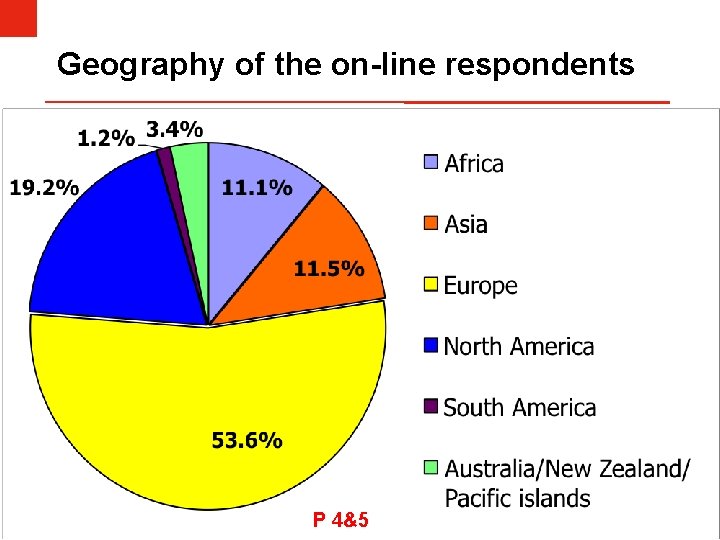
Geography of the on-line respondents P 4&5
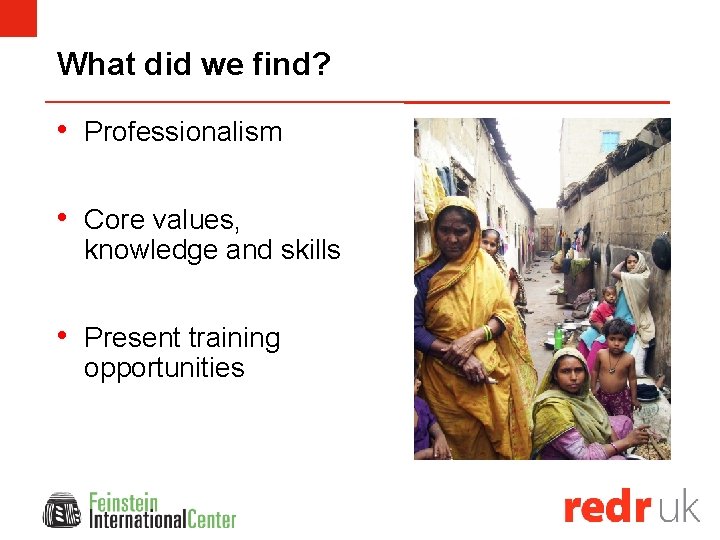
What did we find? • Professionalism • Core values, knowledge and skills • Present training opportunities
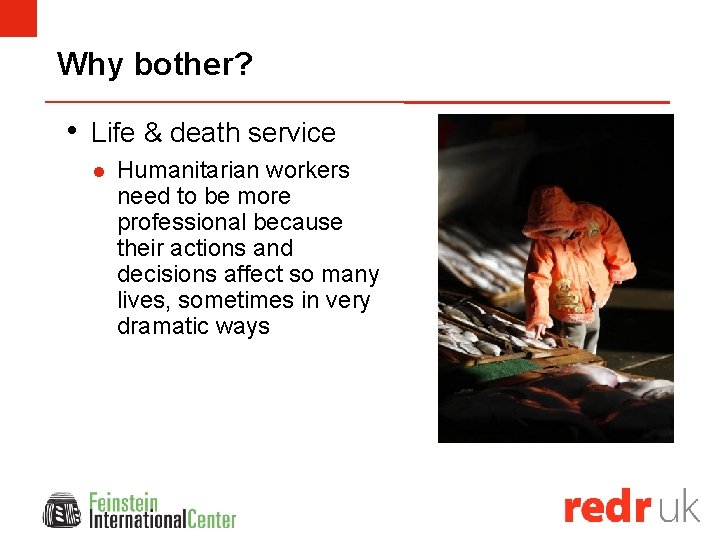
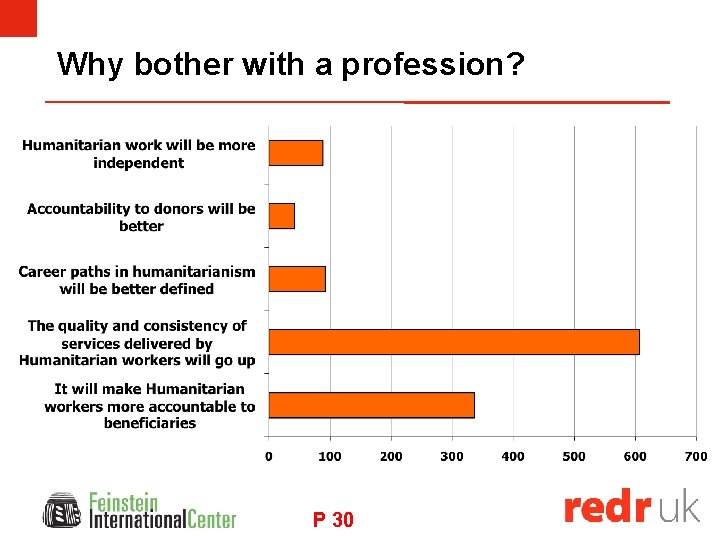
Why bother? • Life & death service l Humanitarian workers need to be more professional because their actions and decisions affect so many lives, sometimes in very dramatic ways
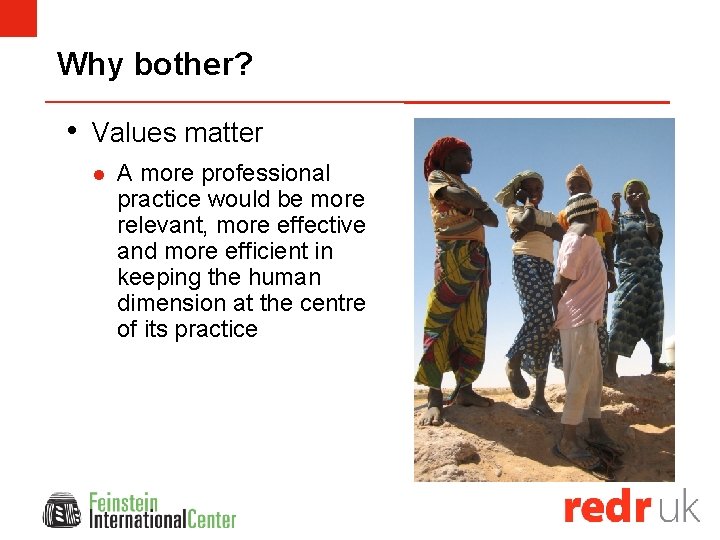
Why bother? • Values matter l A more professional practice would be more relevant, more effective and more efficient in keeping the human dimension at the centre of its practice
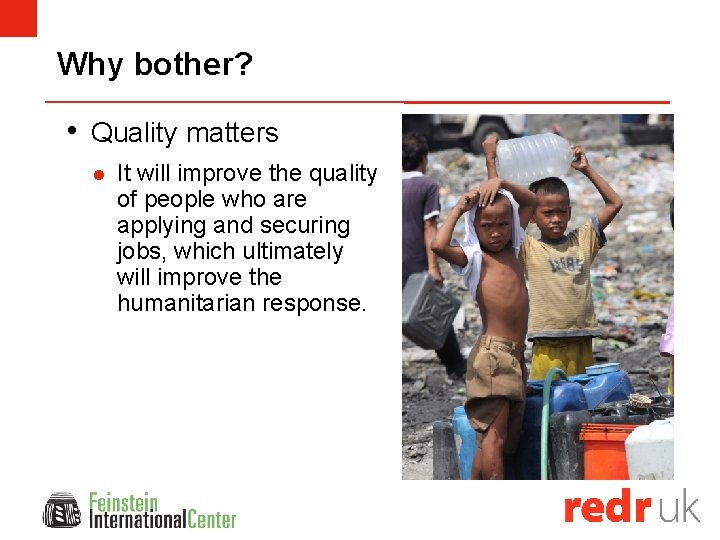
Why bother? • Quality matters l It will improve the quality of people who are applying and securing jobs, which ultimately will improve the humanitarian response.
Criteria for a modern profession 1. Monopoly on specialised knowledge 2. Knowledge used in an altruistic fashion 3. Therefore autonomy to self regulate 4. Responsibility to expand the Knowledge 5. Responsive to the users of the profession P 6
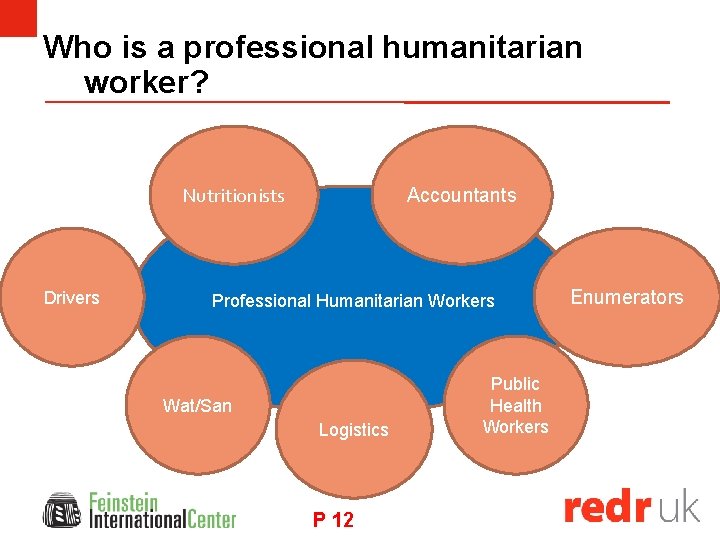
Who is a professional humanitarian worker? Nutritionists Drivers Accountants Professional Humanitarian Workers Wat/San Logistics P 12 Public Health Workers Enumerators
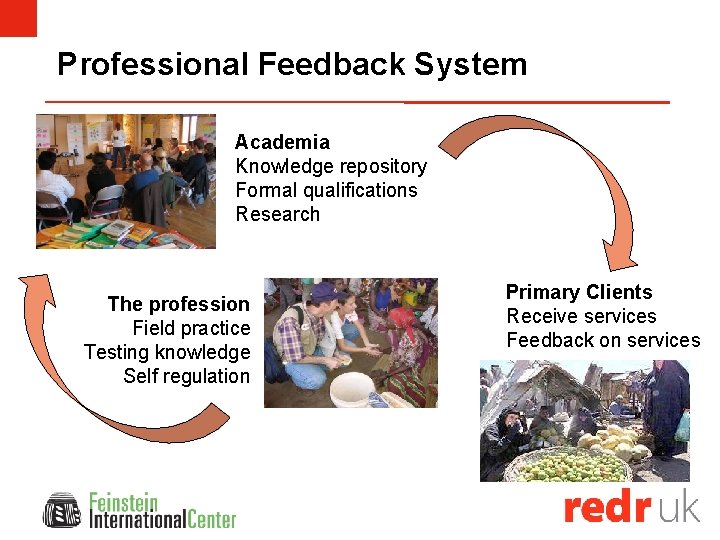
Professional Feedback System Academia Knowledge repository Formal qualifications Research The profession Field practice Testing knowledge Self regulation Primary Clients Receive services Feedback on services
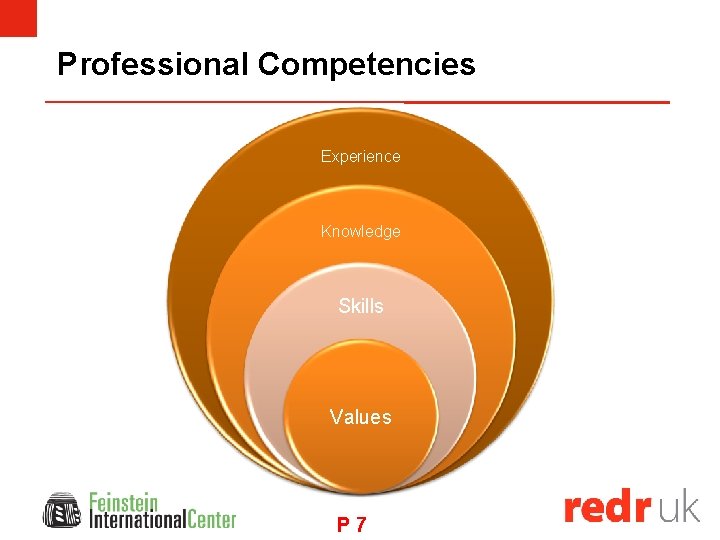
Professional Competencies Experience Knowledge Skills Values P 7
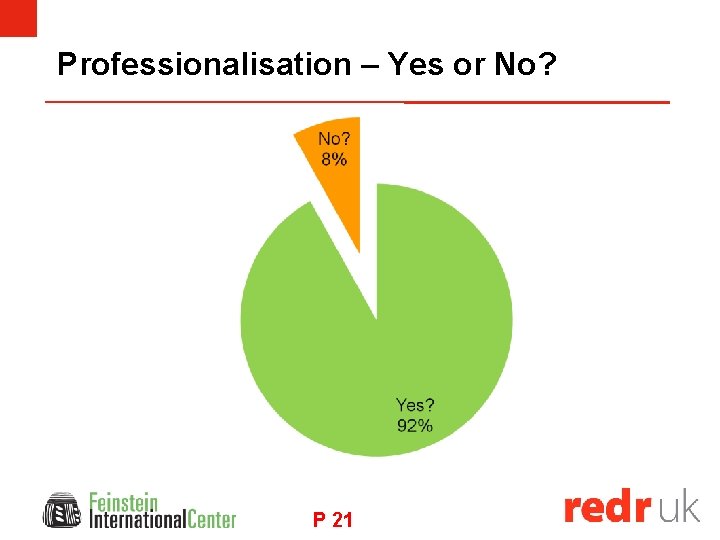
Professionalisation – Yes or No? P 21
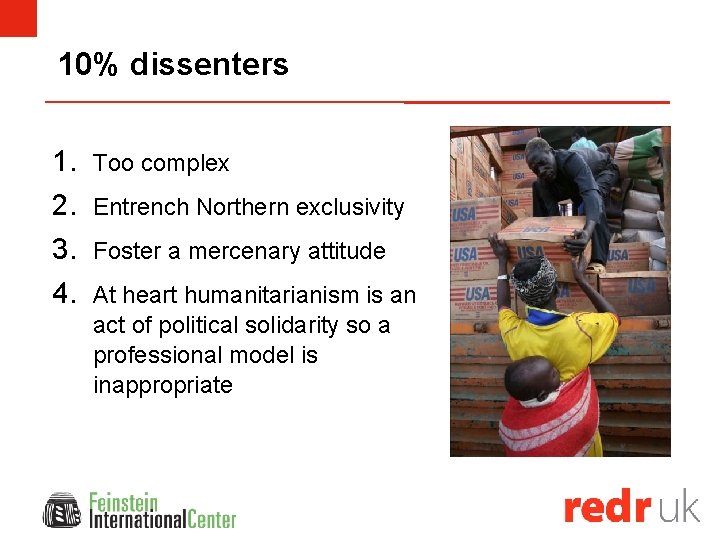
10% dissenters 1. Too complex 2. Entrench Northern exclusivity 3. Foster a mercenary attitude 4. At heart humanitarianism is an act of political solidarity so a professional model is inappropriate A woman with a child on her back getting her rations at Oromi IDP camp, Kitgum District in northern Uganda. Credit: Manoocher Deghati/IRIN
Why bother with a profession? P 30
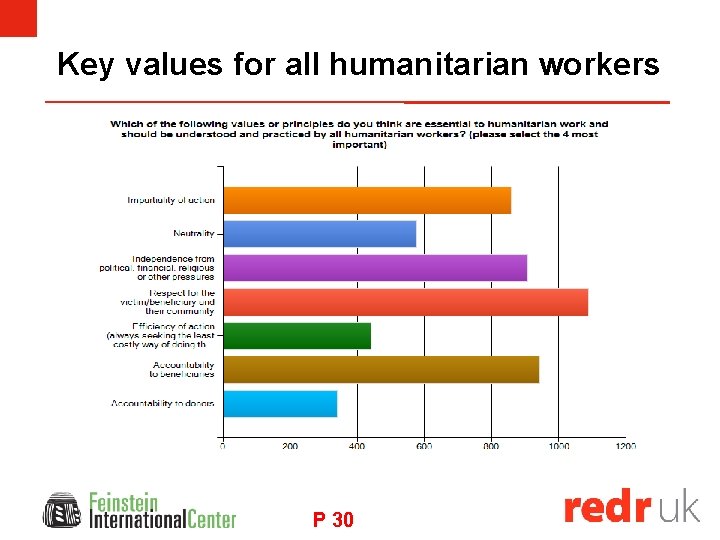
Key values for all humanitarian workers P 30
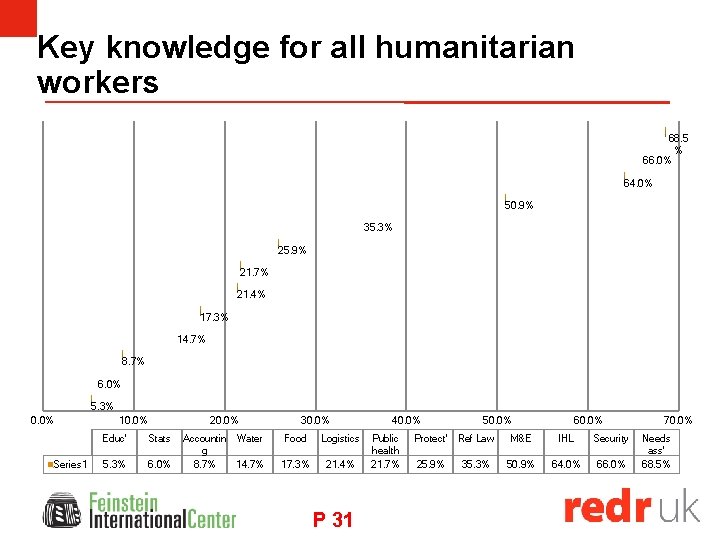
Key knowledge for all humanitarian workers 68. 5 % 66. 0% 64. 0% 50. 9% 35. 3% 25. 9% 21. 7% 21. 4% 17. 3% 14. 7% 8. 7% 6. 0% 5. 3% 0. 0% Series 1 10. 0% 20. 0% Educ' Stats 5. 3% 6. 0% Accountin Water g 8. 7% 14. 7% 30. 0% Food Logistics 17. 3% 21. 4% P 31 40. 0% Public health 21. 7% 50. 0% 60. 0% Protect' Ref Law M&E IHL Security 25. 9% 35. 3% 50. 9% 64. 0% 66. 0% 70. 0% Needs ass' 68. 5%
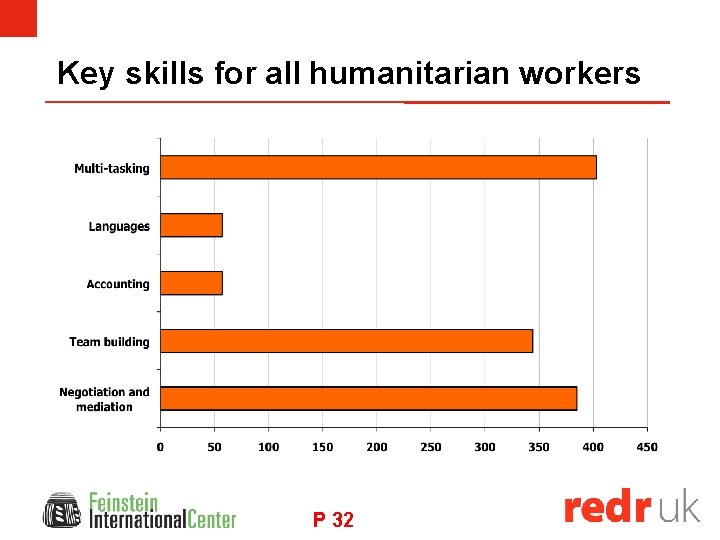
Key skills for all humanitarian workers P 32
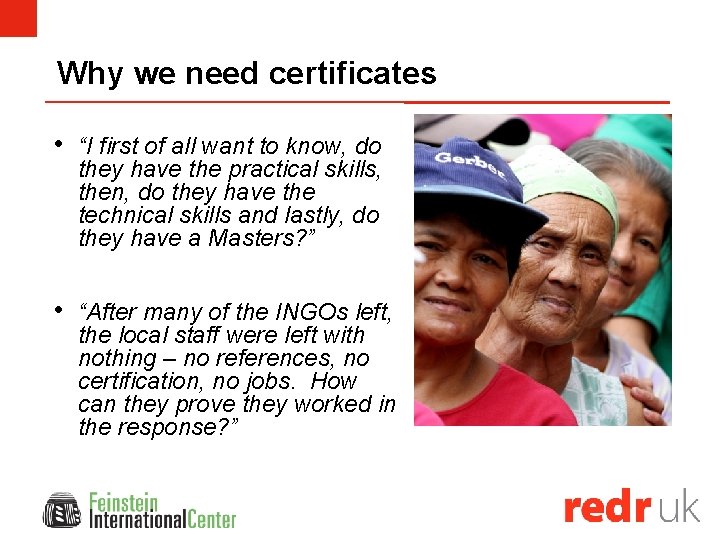
Why we need certificates • “I first of all want to know, do they have the practical skills, then, do they have the technical skills and lastly, do they have a Masters? ” • “After many of the INGOs left, the local staff were left with nothing – no references, no certification, no jobs. How can they prove they worked in the response? ”
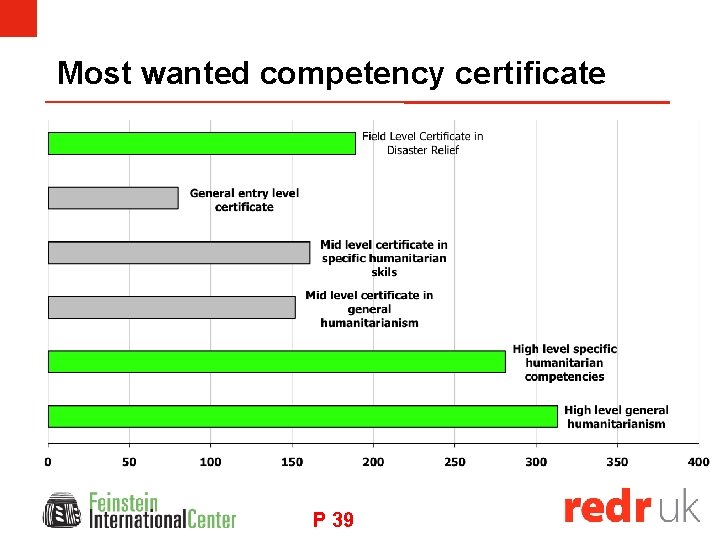
Most wanted competency certificate P 39
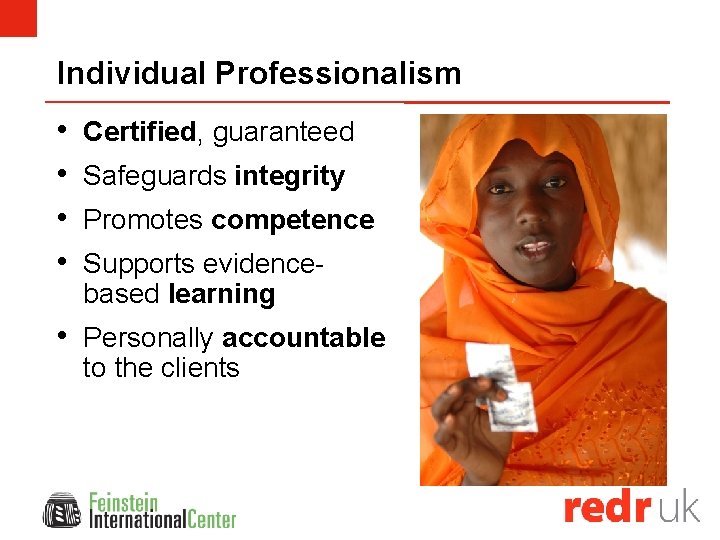
Individual Professionalism • • Certified, guaranteed Safeguards integrity Promotes competence Supports evidencebased learning • Personally accountable to the clients