
Whats the Big Deal about Phenomena in the
What’s the Big Deal about “Phenomena” in the NGSS? Craig T. Gabler KDSL Global - Science Consultant Centralia, Washington USA gablerct@gmail. com
Today’s Goal: • Develop an understanding of how phenomena can drive 3 -Dimensional learning.
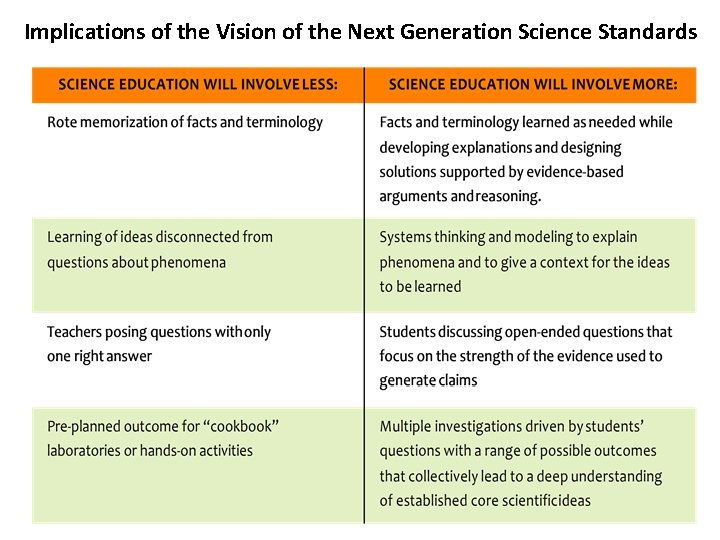
Implications of the Vision of the Next Generation Science Standards
“Learning About” or “Figuring Out” § Explanatory ideas are important so that students are figuring out phenomena and not just learning about facts and details. § Science and engineering practices build explanatory ideas.
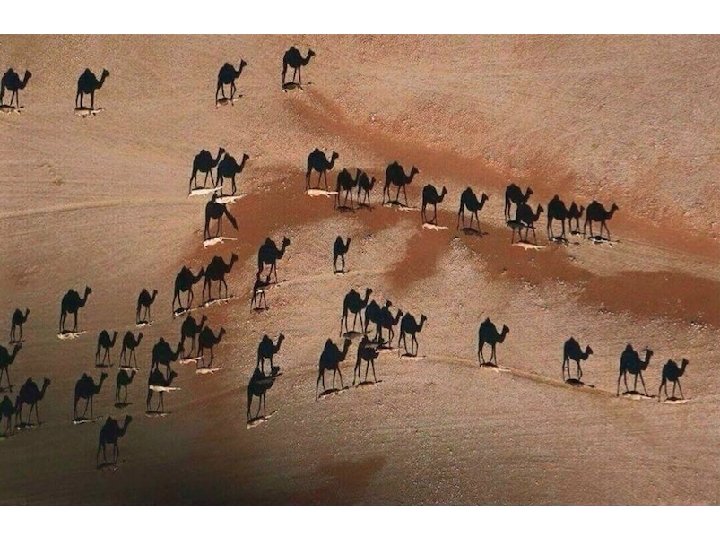
Shadows: How does this work? What are some questions you have about the shadows, eyes, vision and how we see? With those sitting near you, develop your own questions that would shape the unit. Place these Questions on Post-It notes.
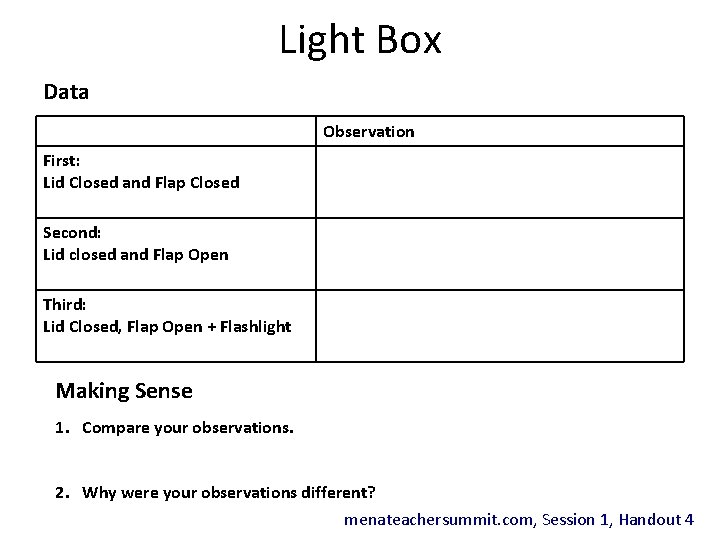
Light Box Data Observation First: Lid Closed and Flap Closed Second: Lid closed and Flap Open Third: Lid Closed, Flap Open + Flashlight Making Sense 1. Compare your observations. 2. Why were your observations different? menateachersummit. com, Session 1, Handout 4
Create a MODEL to help explain how we saw what we did in the 3 stages of the light box. Include: 1. Components (relevant parts) 2. Relationships (how they components interact) – What moves? What changes? 3. Connections (to big science ideas, processes, theories, or laws) menateachersummit. com, Session 1, Handout 5
PEs Supported by Light Box • 4 -PS 3 -2. Make observations to provide evidence that energy can be transferred from place to place by sound, light, heat, and electrical currents. [Assessment Boundary: Assessment does not include quantitative measurements of energy. ] • 4 -PS 4 -2. Develop a model to describe that light reflecting from objects and entering the eyes allows object to be seen. [Assessment Boundary: Assessment does not include knowledge of specific colors reflected and seen, the cellular mechanisms of vision, or how the retina works. ] • 4 -LS 1 -1. Construct an argument that plants and animals have internal and external structures that function to support survival, growth, behavior, and reproduction. [Clarification Statement: Examples of structures could include thorns, stems, roots, colored petals, heart, stomach, lung, brain, and skin. ] [Assessment Boundary: Assessment is limited to macroscopic structures within plant and animal systems. ] • 4 -LS 1 -2. Use a model to describe that animals receive different types of information through their senses, process the information in their brain, and respond to the information in different ways. [Clarification Statement: Emphasis is on systems of information transfer. ] [Assessment Boundary: Assessment does not include the mechanisms by which the brain stores and recalls information or the mechanisms of how sensory receptors function. ]
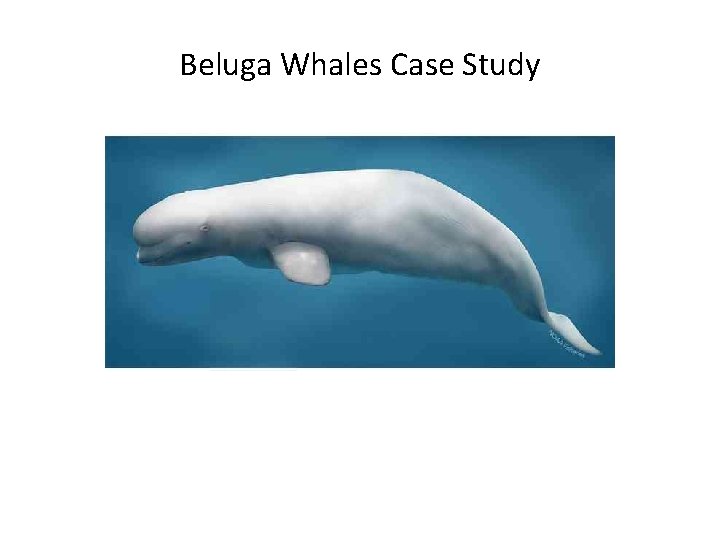
Beluga Whales Case Study
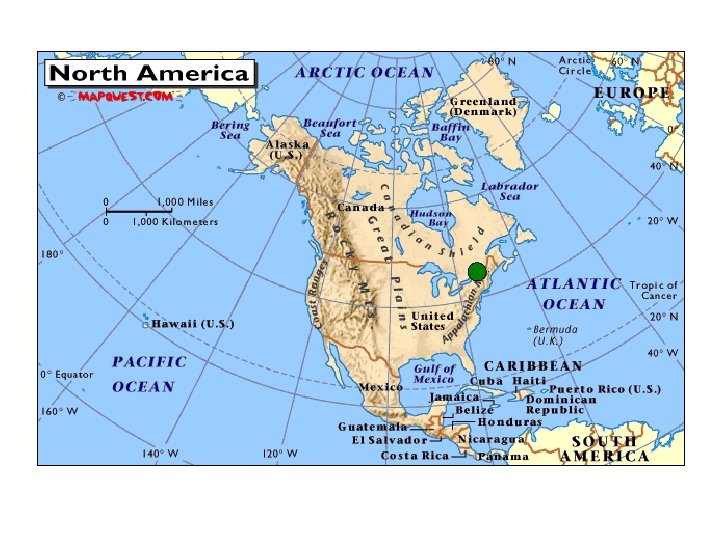
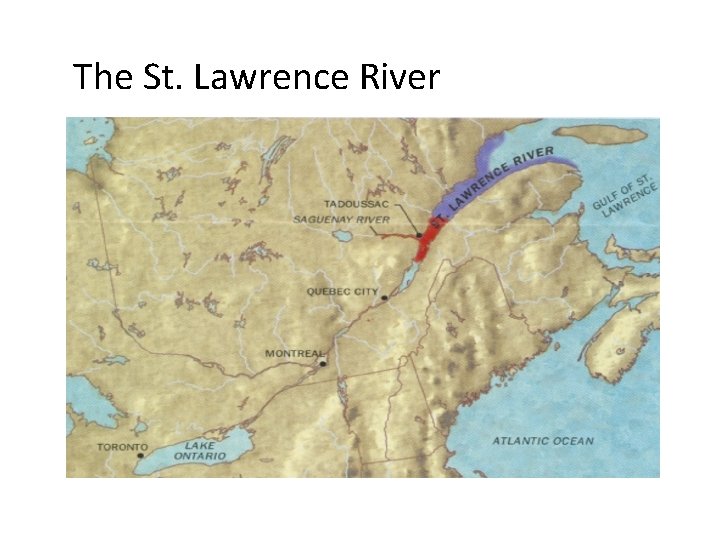
The St. Lawrence River
Passage One Menateachersummit. com, Session 1 Handout 1 • What questions do you have? • What is a question that would best guide a scientific investigation about why the population of whales does not increase? 13
Passage Two Handout 2 • Based on your understanding, were the original investigations adequate? Why or why not? • Did the scientists use appropriate tools and techniques to gather, analyze, and interpret data? How do you know? • What evidence did the scientists use to develop an explanation that the whales died because of pollutants? • What would be the best approach to design and conduct a scientific investigation that would demonstrate a cause-and-effect relationship? 14
Passage Three Handout 3 • How does the investigation of the beluga whales illustrate scientific inquiry? 15
PEs Supported by Beluga Whales • HS-LS 1 -2 Use mathematical representations to support and revise explanations based on evidence about factors affecting biodiversity and populations in ecosystems of different scales. [Clarification Statement: Examples of mathematical representations include finding the average, determining trends, and using graphical comparisons of multiple sets of data. ] [Assessment Boundary: Assessment is limited to provided data. ] • HS-LS 2 -4. Use mathematical representations to support claims for the cycling of matter and flow of energy among organisms in an ecosystem. [Clarification Statement: Emphasis is on using a mathematical model of stored energy in biomass to describe the transfer of energy from one trophic level to another and that matter and energy are conserved as matter cycles and energy flows through ecosystems. Emphasis is on atoms and molecules such as carbon, oxygen, hydrogen and nitrogen being conserved as they move through an ecosystem. ] [Assessment Boundary: Assessment is limited to proportional reasoning to describe the cycling of matter and flow of energy. ] • HS-LS 2 -6. Evaluate the claims, evidence, and reasoning that the complex interactions in ecosystems maintain relatively consistent numbers and types of organisms in stable conditions, but changing conditions may result in a new ecosystem. [Clarification Statement: Examples of changes in ecosystem conditions could include modest biological or physical changes, such as moderate hunting or a seasonal flood; and extreme changes, such as volcanic eruption or sea level rise. ] • HS-LS 2 -7. Design, evaluate, and refine a solution for reducing the impacts of human activities on the environment and biodiversity. * [Clarification Statement: Examples of human activities can include urbanization, building dams, and dissemination of invasive species. ]
PHENOMENA VS. ACTIVITIES IN THE RUBRIC (https: //www. rubicon. com/nsta-insights-the-ngss-equip-rubric/) The term “phenomena” has cropped up quite frequently in conjunction with NGSS, and while it may initially seem like another word for “activity”, don’t be fooled! Phenomena are puzzling situations where students must answer “how” and “why” real-life events occurs. “Learning About” or “Figuring Out” menateachersummit. com, Session 1, Handout 8 & 9

- Slides: 18