
Whats New with Beacon AACN National Teaching Institute

What’s New with Beacon? AACN National Teaching Institute May 2010 Washington D. C.
Today’s Topics • Brief history of Beacon • Beacon changes – Criteria – Review process – Scoring • New resources coming soon
A Little History • Established in 2003 • 42 questions in 6 categories • Available for Adult Critical Care, Progressive Care and Pediatric Critical Care only
Beacon Award Program Goals • Recognition of unit level excellence in practice and patient outcomes • Answer the question “What does an excellent critical care unit look like? ” • Share best practices from excellent units
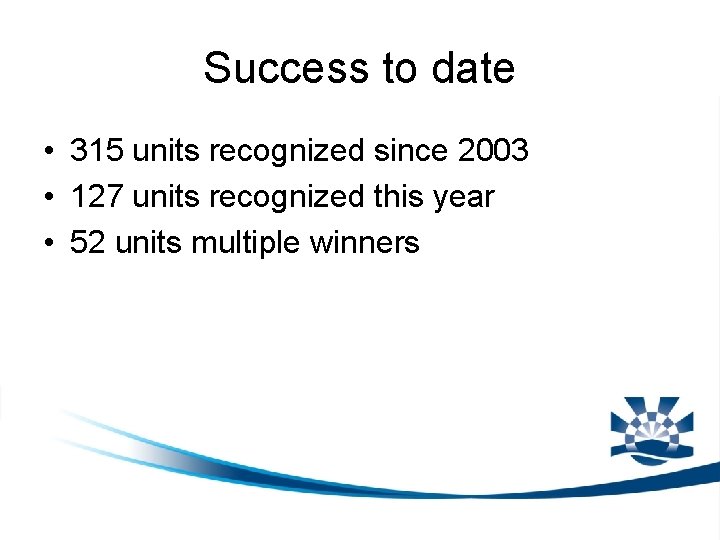
Success to date • 315 units recognized since 2003 • 127 units recognized this year • 52 units multiple winners
What We’ve Learned • Beacon award aligns with other nationally recognized quality programs – Baldrige – Magnet – National Quality Forum (NQF) – AACN Standards for Achieving and Sustaining a Healthy Work Environment
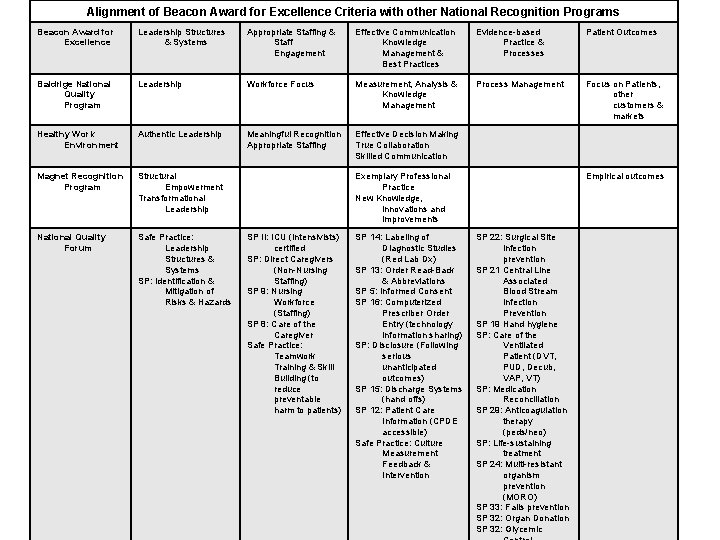
Alignment of Beacon Award for Excellence Criteria with other National Recognition Programs Beacon Award for Excellence Leadership Structures & Systems Appropriate Staffing & Staff Engagement Effective Communication Knowledge Management & Best Practices Evidence-based Practice & Processes Patient Outcomes Baldrige National Quality Program Leadership Workforce Focus Measurement, Analysis & Knowledge Management Process Management Focus on Patients, other customers & markets Healthy Work Environment Authentic Leadership Meaningful Recognition Appropriate Staffing Effective Decision Making True Collaboration Skilled Communication Magnet Recognition Program Structural Empowerment Transformational Leadership National Quality Forum Safe Practice: Leadership Structures & Systems SP: Identification & Mitigation of Risks & Hazards Exemplary Professional Practice New Knowledge, innovations and improvements SP II: ICU (intensivists) certified SP: Direct Caregivers (Non-Nursing Staffing) SP 9: Nursing Workforce (Staffing) SP 8: Care of the Caregiver Safe Practice: Teamwork Training & Skill Building (to reduce preventable harm to patients) SP 14: Labeling of Diagnostic Studies (Red Lab Dx) SP 13: Order Read-Back & Abbreviations SP 5: Informed Consent SP 16: Computerized Prescriber Order Entry (technology information sharing) SP: Disclosure (Following serious unanticipated outcomes) SP 15: Discharge Systems (hand offs) SP 12: Patient Care Information (CPDE accessible) Safe Practice: Culture Measurement Feedback & Intervention Empirical outcomes SP 22: Surgical Site infection prevention SP 21 Central Line Associated Blood Stream Infection Prevention SP 19 Hand hygiene SP: Care of the Ventilated Patient (DVT, PUD, Decub, VAP, VT) SP: Medication Reconciliation SP 29: Anticoagulation therapy (peds/neo) SP: Life-sustaining treatment SP 24: Multi-resistant organism prevention (MORO) SP 33: Falls prevention SP 32: Organ Donation SP 32: Glycemic
What We’ve Learned • Blind review didn’t provide sufficient context for evaluation • Review cycle too long • We need to be able to share best practices among units
What’s the Same? • Web-based application and feedback process • 360 degree evaluation of your unit • Independent review by trained reviewers • Tools and resources available on the Beacon website
What’s Different • Award extended from 1 to 3 years • Eliminated steps in the process – no more requests for additional information • Focus on “how”
What’s Different • Evaluation changed from “meets, does not meet, exceeds” to numerical scoring to allow units to measure improvement over time • Implemented 3 levels of award – bronze, silver and gold
What’s Better • Added unit profile to fully describe the relationships and structure of your unit • Expanded criteria to allow any unit where patients receive their principle nursing care after admission to apply • Addition of Executive Summary to feedback
2010 Beacon Criteria
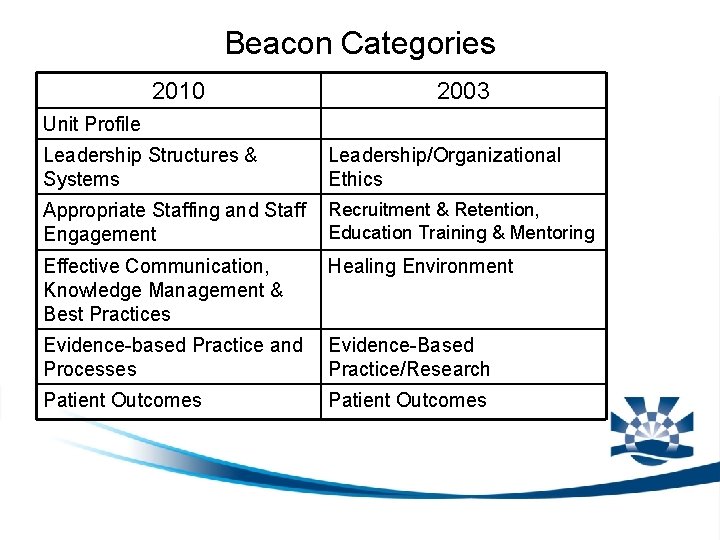
Beacon Categories 2010 2003 Unit Profile Leadership Structures & Systems Leadership/Organizational Ethics Appropriate Staffing and Staff Engagement Recruitment & Retention, Education Training & Mentoring Effective Communication, Knowledge Management & Best Practices Healing Environment Evidence-based Practice and Processes Evidence-Based Practice/Research Patient Outcomes
Unit Profile • Key characteristics that define your work group, unit or microsystem
Leadership Structures & Systems • How unit leaders ensure a healthy work environment that delivers the best care for patients and families • 150 points
Appropriate Staffing & Staff Engagement • How the unit engages, manages and develops staff? • 100 points
Effective Communication, Knowledge Management & Best Practices • How the unit ensures effective communication, staff competency and management of knowledge sharing • 100 points
Evidence-based Practice and Processes • How staff are engaged to achieve better patient outcomes, improve processes and stay current with evidence-based practice and research • 200 points
Patient Outcomes • The unit’s key nurse-sensitive patient outcome measures and results • 450 points
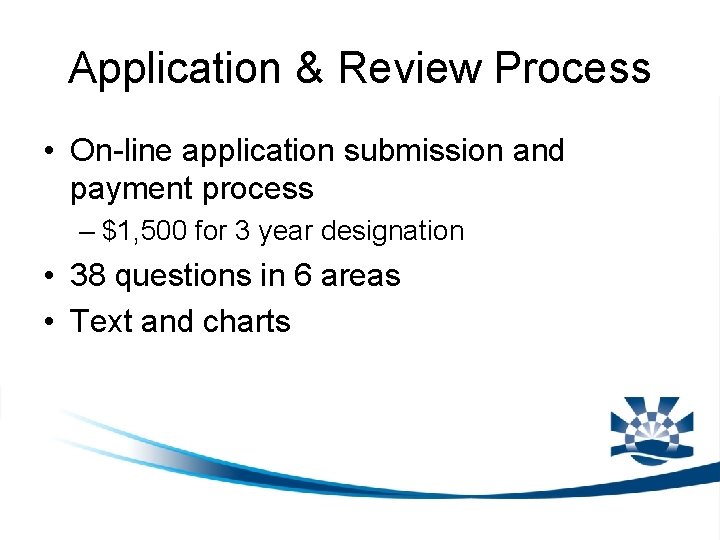
Application & Review Process • On-line application submission and payment process – $1, 500 for 3 year designation • 38 questions in 6 areas • Text and charts
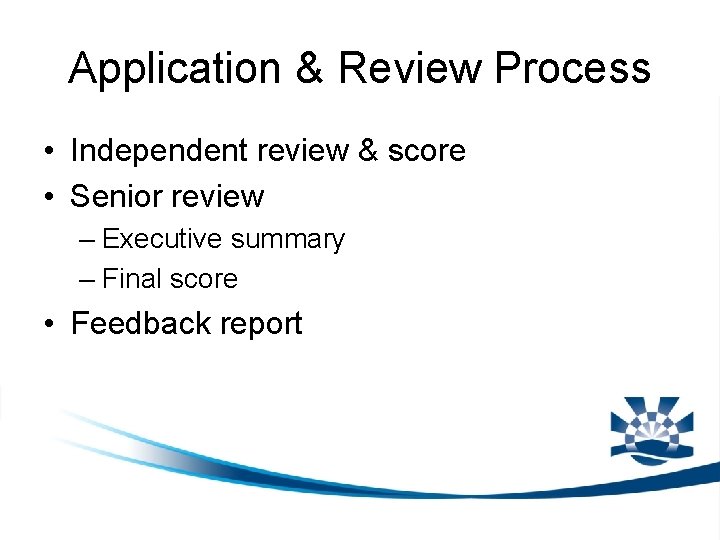
Application & Review Process • Independent review & score • Senior review – Executive summary – Final score • Feedback report
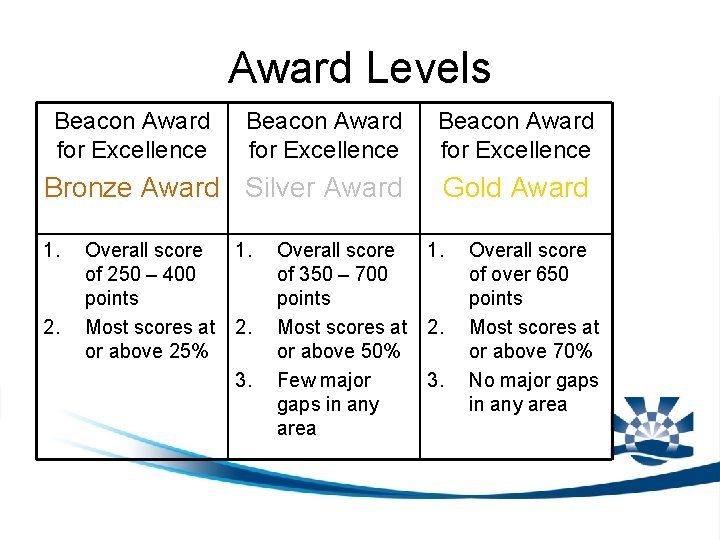
Award Levels Beacon Award for Excellence Bronze Award Silver Award Gold Award 1. 2. Overall score of 250 – 400 points Most scores at or above 25% 1. 2. 3. Overall score of 350 – 700 points Most scores at or above 50% Few major gaps in any area 1. 2. 3. Overall score of over 650 points Most scores at or above 70% No major gaps in any area
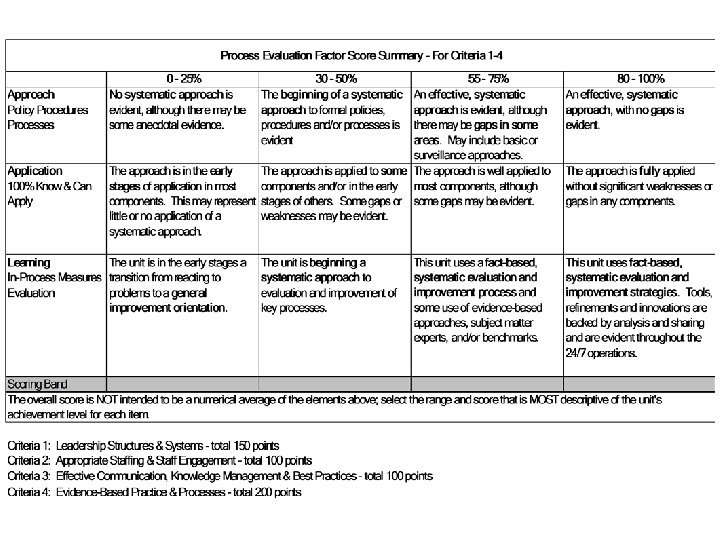
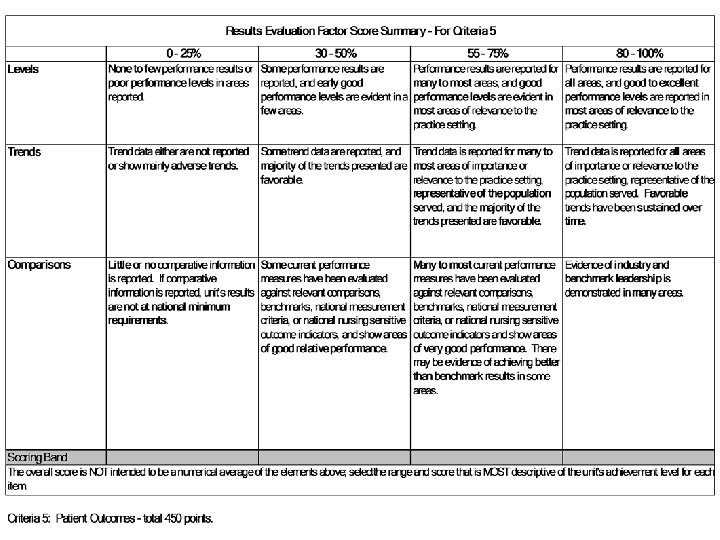
Scoring • Unit will receive a score for each area – Leadership Structures & Systems – Appropriate Staffing & Staff Engagement – Effective Communication, Knowledge Management & Best Practices – Evidence-based Practices & Processes – Patient Outcomes
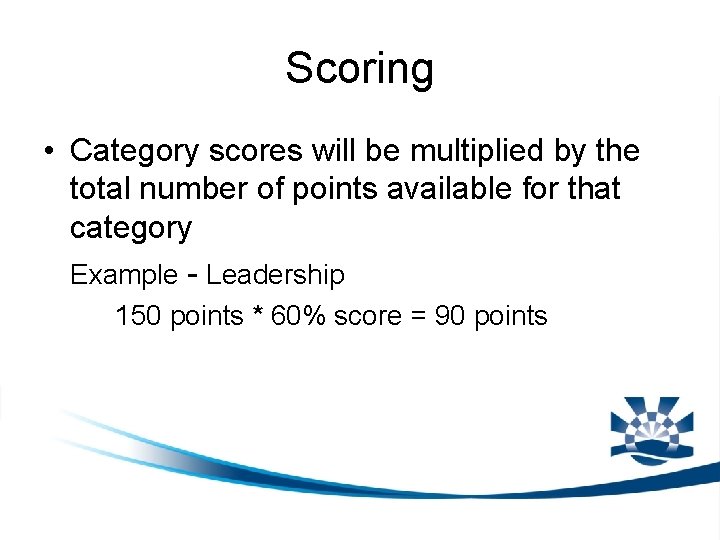
Scoring • Category scores will be multiplied by the total number of points available for that category Example - Leadership 150 points * 60% score = 90 points
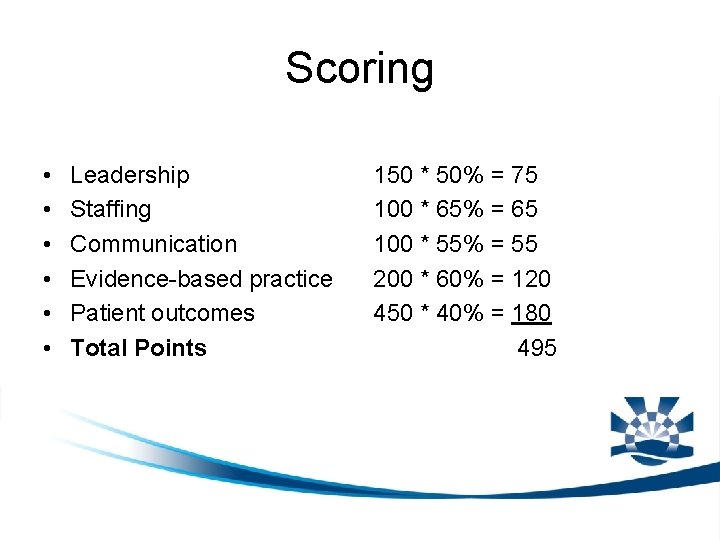
Scoring • • • Leadership Staffing Communication Evidence-based practice Patient outcomes Total Points 150 * 50% = 75 100 * 65% = 65 100 * 55% = 55 200 * 60% = 120 450 * 40% = 180 495
Resources • Beacon Criteria Brochure – May • Beacon Audit Tool - May • Applying for the Beacon Award for Excellence Webinar – July
Next Steps • Read the entire application booklet • Review the scoring system • Understand the meaning of key terms in the glossary • Prepare the unit profile • Complete the Beacon assessment tool • Develop & submit your application

Questions?
Thank you for pursuing excellence tracy. barron@aacn. org justine. medina@aacn. org


- Slides: 36