
Whats new in Stateful Stream Processing with Apache


![Data. Stream API val lines: Data. Stream[String] = env. add. Source(new Flink. Kafka. Consumer](https://slidetodoc.com/presentation_image_h/014a10174cf9c3be15acea039c885fc8/image-8.jpg "Data. Stream API val lines: Data. Stream[String] = env. add. Source(new Flink. Kafka. Consumer")



- Slides: 63
What’s new in Stateful Stream Processing with Apache Flink 1. 5 and beyond Nico Kruber nico@data-artisans. com June 11, 2018 1
Original creators of Apache Flink® d. A Platform Open Source Apache Flink + d. A Application Manager
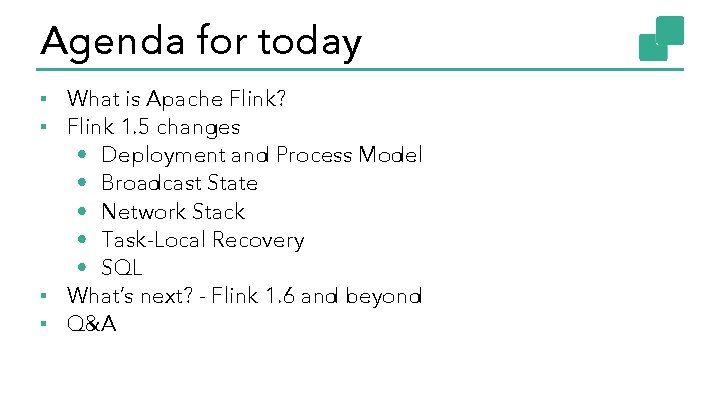
Agenda for today ▪ What is Apache Flink? ▪ Flink 1. 5 changes • Deployment and Process Model • Broadcast State • Network Stack • Task-Local Recovery • SQL ▪ What’s next? - Flink 1. 6 and beyond ▪ Q&A
What is Apache Flink?
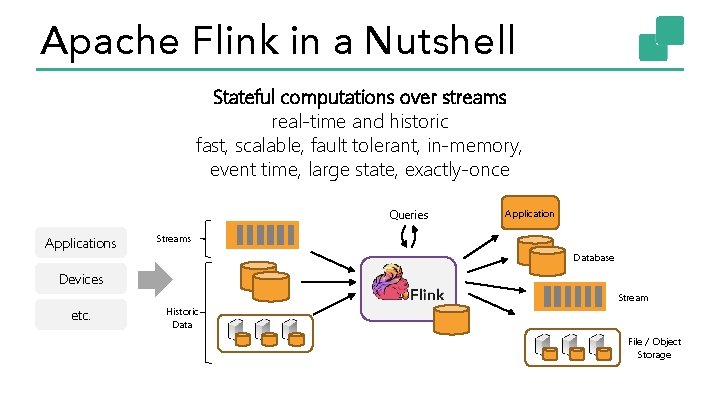
Apache Flink in a Nutshell Stateful computations over streams real-time and historic fast, scalable, fault tolerant, in-memory, event time, large state, exactly-once Queries Application Streams Database Devices Stream etc. Historic Data File / Object Storage
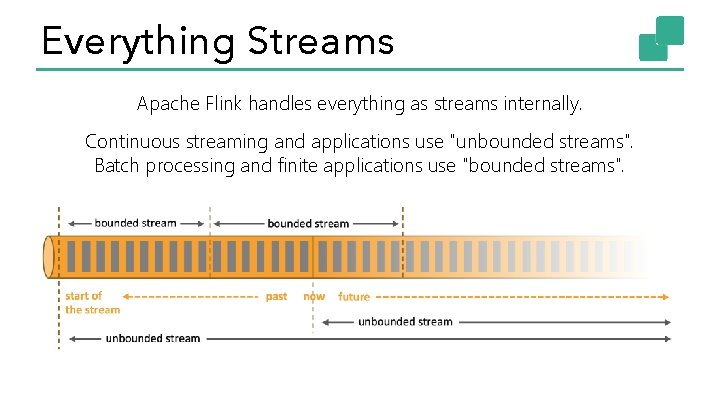
Everything Streams Apache Flink handles everything as streams internally. Continuous streaming and applications use "unbounded streams". Batch processing and finite applications use "bounded streams".
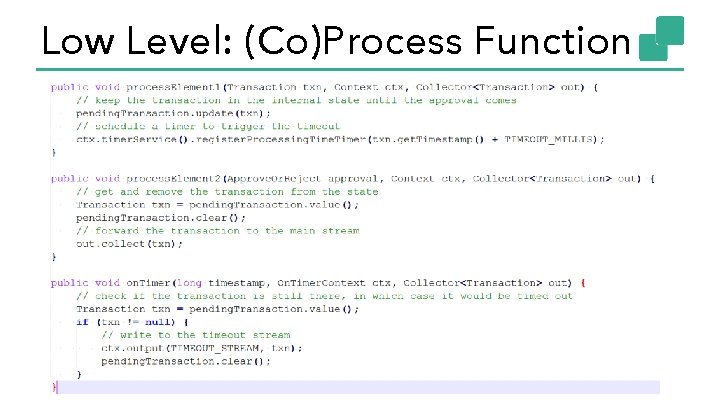
Layered abstractions Navigate simple to complex use cases High-level Analytics API Stream SQL / Tables (dynamic tables) Stream- & Batch Data Processing Data. Stream API (streams, windows) Stateful Event. Driven Applications Process Function (events, state, time) val stats = stream. key. By("sensor" ). time. Window(Time. seconds(5)). sum((a, b) -> a. add(b)) def process. Element(event: My. Event, ctx: Context, out: Collector[Result]) = { // work with event and state (event, state. value) match { … } out. collect(…) // emit events state. update(…) // modify state // schedule a timer callback ctx. timer. Service. register. Event. Timer(event. timestamp + 500) }
Data. Stream API val lines: Data. Stream[String] = env. add. Source(new Flink. Kafka. Consumer 011(…)) val events: Data. Stream[Event] = lines. map((line) => parse(line)) val stats: Data. Stream[Statistic] = stream. key. By("sensor" ). time. Window(Time. seconds(5)). sum(new My. Aggregation. Function()) Source Transformation Windowed Transformation stats. add. Sink(new Rolling. Sink(path)) Sink Streaming Dataflow Source Transform Window (state read/write) Sink
Low Level: (Co)Process Function
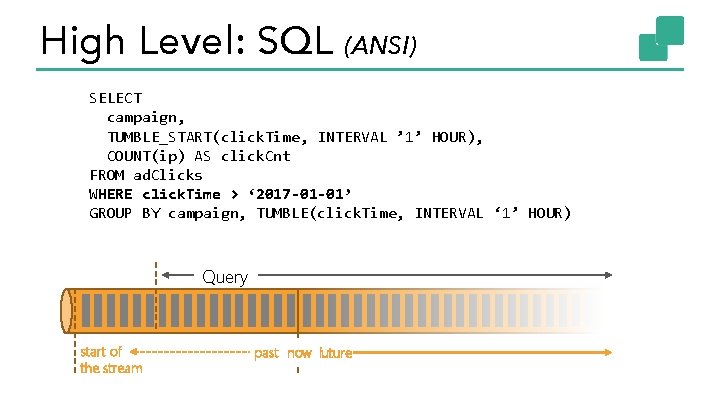
High Level: SQL (ANSI) SELECT campaign, TUMBLE_START(click. Time, INTERVAL ’ 1’ HOUR), COUNT(ip) AS click. Cnt FROM ad. Clicks WHERE click. Time > ‘ 2017 -01 -01’ GROUP BY campaign, TUMBLE(click. Time, INTERVAL ‘ 1’ HOUR) Query start of the stream past now future
How Large (or Small) can Flink get?
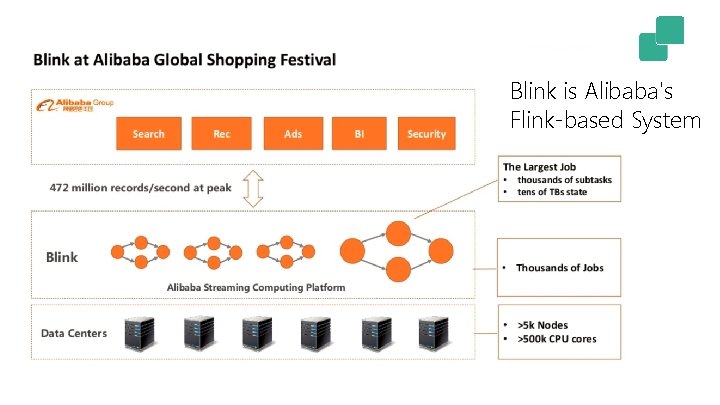
Blink is Alibaba's Flink-based System
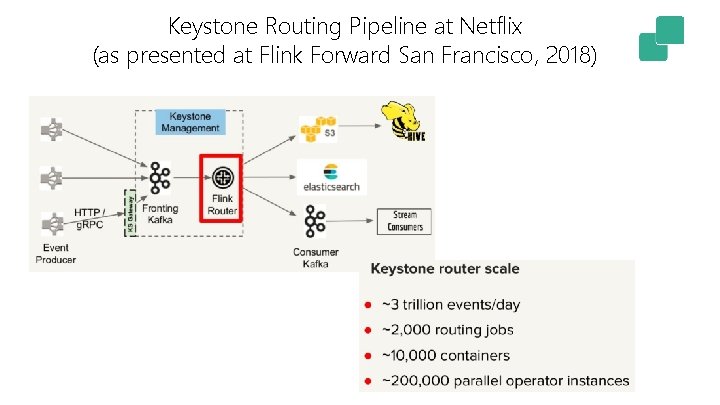
Keystone Routing Pipeline at Netflix (as presented at Flink Forward San Francisco, 2018)
Small Flink ▪ Can run in single process ▪ Some users run it on Io. T Gateways ▪ Also runs with zero dependencies in IDE
Flink 1. 5
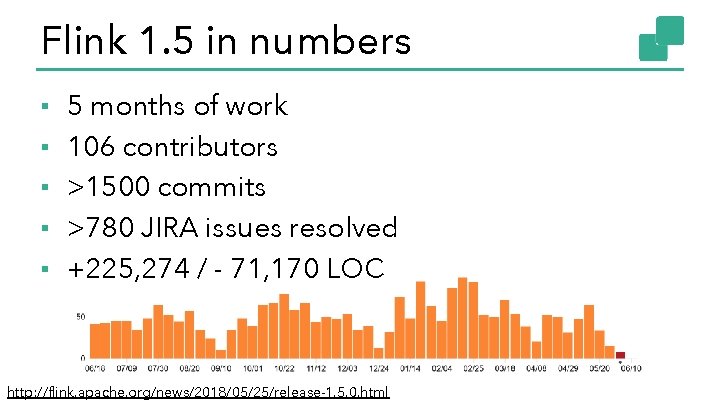
Flink 1. 5 in numbers ▪ ▪ ▪ 5 months of work 106 contributors >1500 commits >780 JIRA issues resolved +225, 274 / - 71, 170 LOC http: //flink. apache. org/news/2018/05/25/release-1. 5. 0. html
Deployment and Process Model
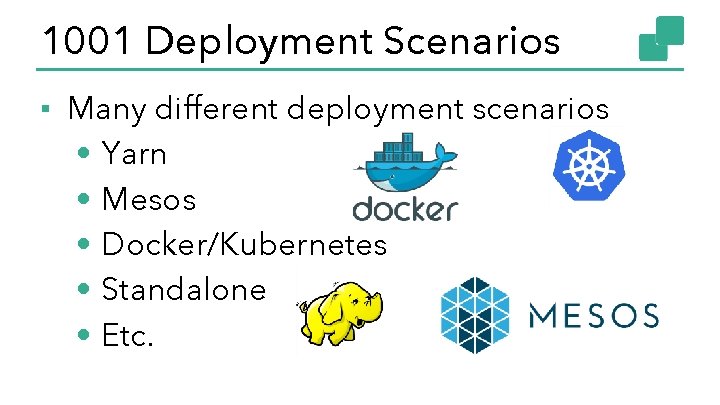
1001 Deployment Scenarios ▪ Many different deployment scenarios • Yarn • Mesos • Docker/Kubernetes • Standalone • Etc.
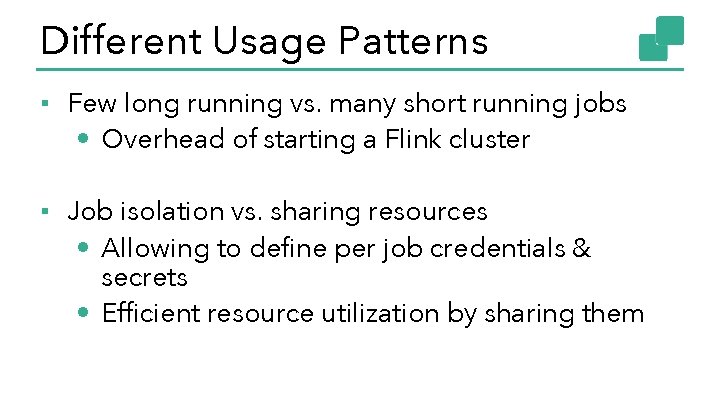
Different Usage Patterns ▪ Few long running vs. many short running jobs • Overhead of starting a Flink cluster ▪ Job isolation vs. sharing resources • Allowing to define per job credentials & secrets • Efficient resource utilization by sharing them
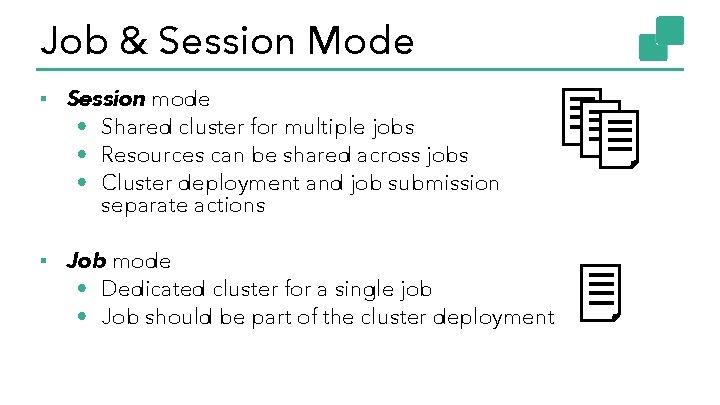
Job & Session Mode ▪ Session mode • Shared cluster for multiple jobs • Resources can be shared across jobs • Cluster deployment and job submission separate actions ▪ Job mode • Dedicated cluster for a single job • Job should be part of the cluster deployment
Flink Improvement Proposal 6 ▪ Introduce generic building blocks ▪ Compose blocks for different scenarios ▪ Effort started by: Flip-6 design document: https: //cwiki. apache. org/confluence/pages/viewpage. action? page. Id=65147077
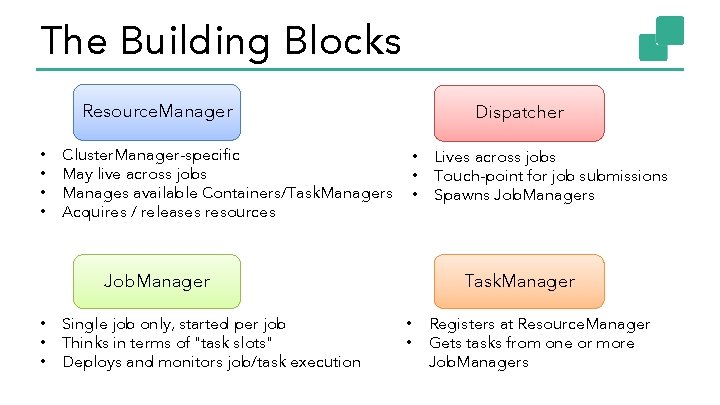
The Building Blocks Resource. Manager • • Cluster. Manager-specific May live across jobs Manages available Containers/Task. Managers Acquires / releases resources Dispatcher • • • Task. Manager Job. Manager • • • Single job only, started per job Thinks in terms of "task slots" Deploys and monitors job/task execution Lives across jobs Touch-point for job submissions Spawns Job. Managers • • Registers at Resource. Manager Gets tasks from one or more Job. Managers
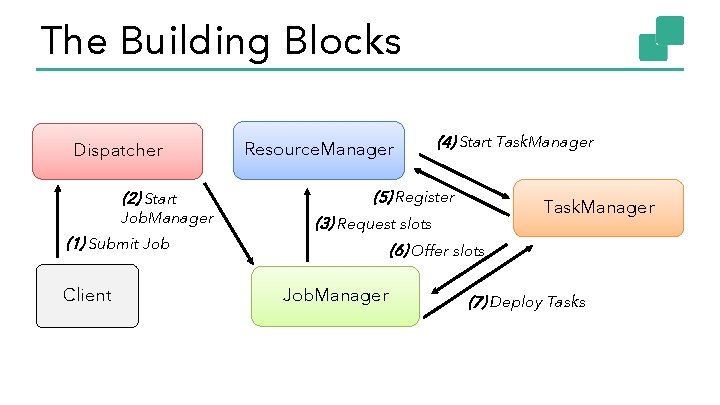
The Building Blocks Dispatcher (2) Start Job. Manager (1) Submit Job Client Resource. Manager (4) Start Task. Manager (5) Register Task. Manager (3) Request slots (6) Offer slots Job. Manager (7) Deploy Tasks
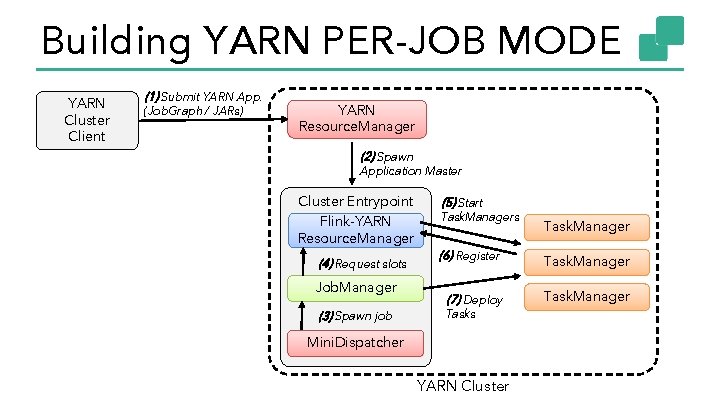
Building YARN PER-JOB MODE YARN Cluster Client (1) Submit YARN App. (Job. Graph / JARs) YARN Resource. Manager (2) Spawn Application Master Cluster Entrypoint Flink-YARN Resource. Manager (4) Request slots Job. Manager (3) Spawn job (5) Start Task. Managers Task. Manager (6) Register Task. Manager (7) Deploy Task. Manager Tasks Mini. Dispatcher YARN Cluster
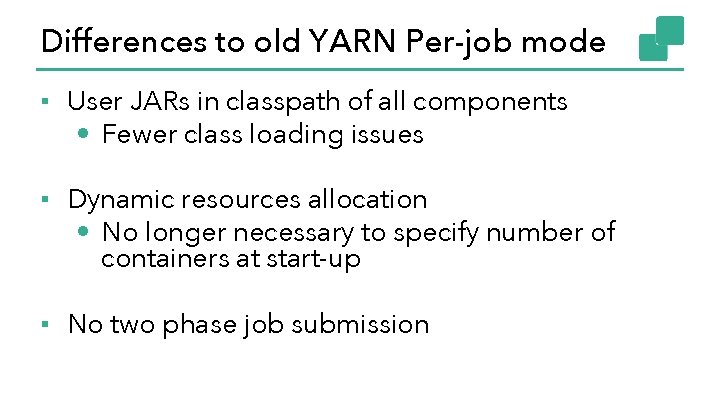
Differences to old YARN Per-job mode ▪ User JARs in classpath of all components • Fewer class loading issues ▪ Dynamic resources allocation • No longer necessary to specify number of containers at start-up ▪ No two phase job submission
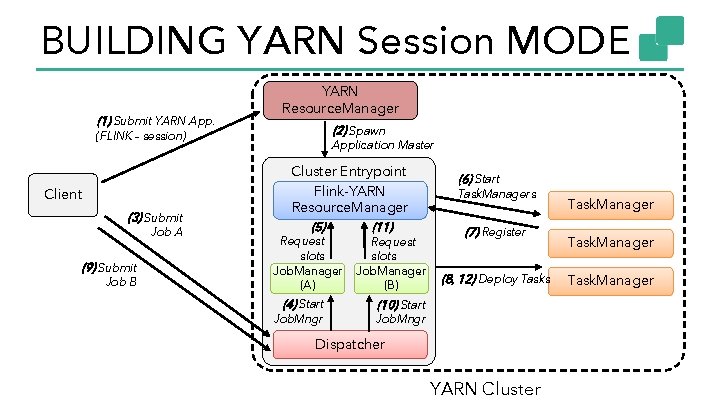
BUILDING YARN Session MODE (1) Submit YARN App. YARN Resource. Manager (2) Spawn (FLINK – session) Client (3) Submit Job A (9) Submit Job B Application Master Cluster Entrypoint Flink-YARN Resource. Manager (5) Request slots Job. Manager (A) (4) Start Job. Mngr (11) Request slots Job. Manager (B) (6) Start Task. Managers (7) Register (8, 12) Deploy Tasks (10) Start Job. Mngr Dispatcher YARN Cluster Task. Manager
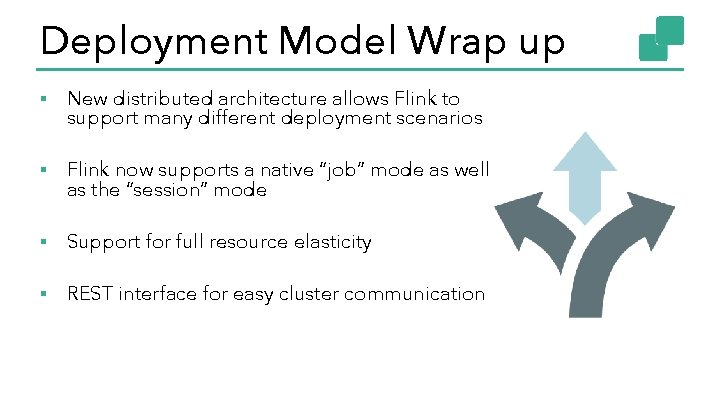
Deployment Model Wrap up ▪ New distributed architecture allows Flink to support many different deployment scenarios ▪ Flink now supports a native “job” mode as well as the “session” mode ▪ Support for full resource elasticity ▪ REST interface for easy cluster communication
Broadcast State
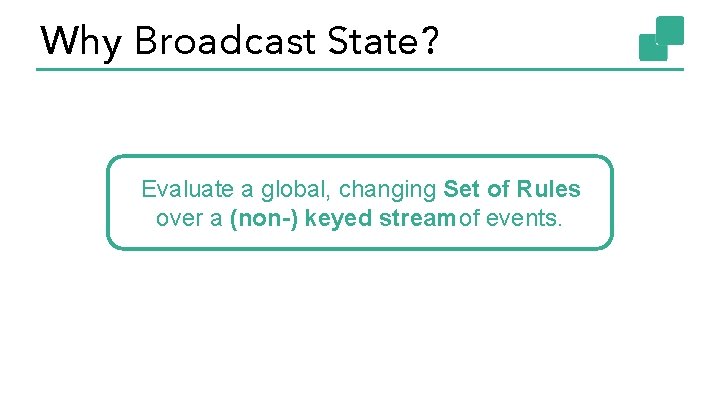
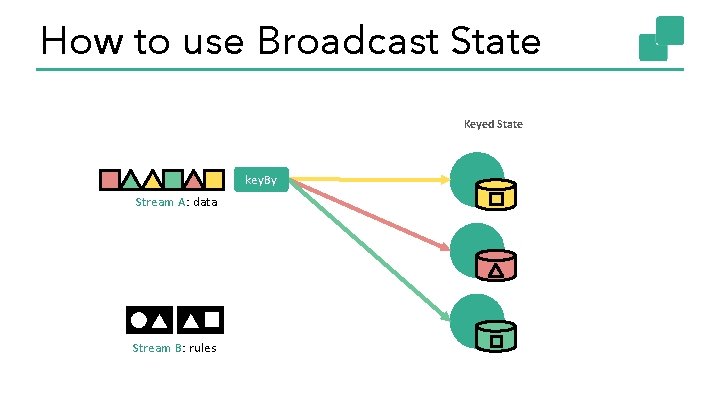
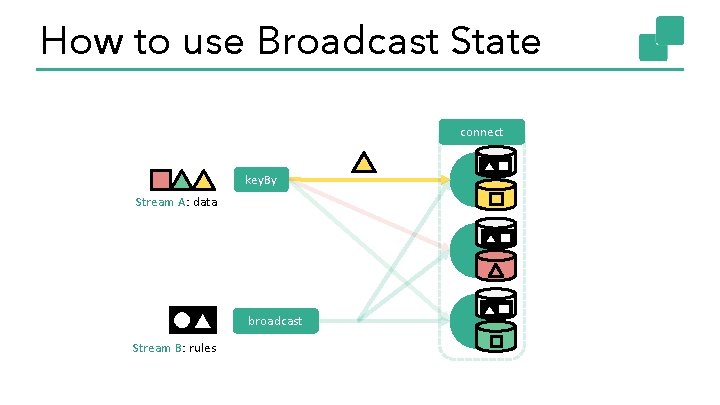
Why Broadcast State? Evaluate a global, changing Set of Rules over a (non-) keyed stream of events.
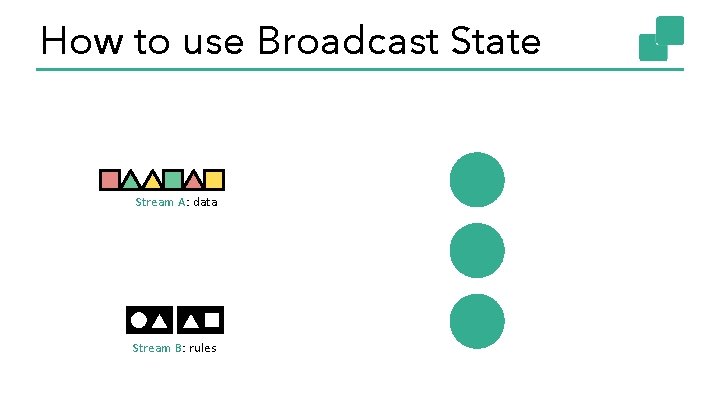
How to use Broadcast State Stream A: data Stream B: rules
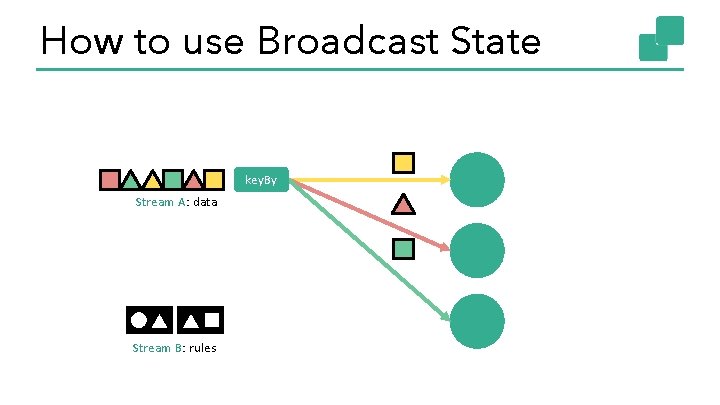
How to use Broadcast State key. By Stream A: data Stream B: rules
How to use Broadcast State Keyed State key. By Stream A: data Stream B: rules
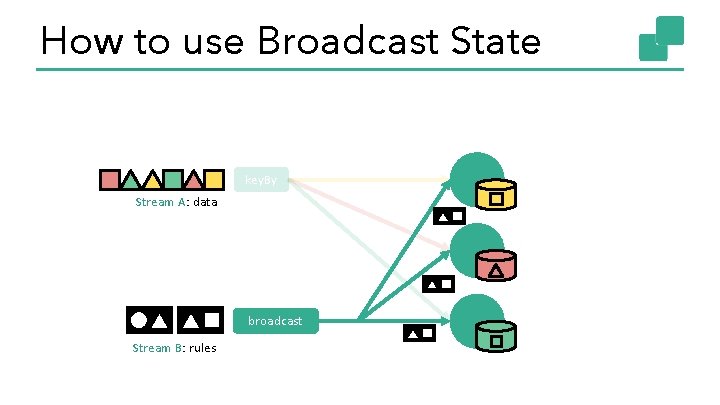
How to use Broadcast State key. By Stream A: data broadcast Stream B: rules
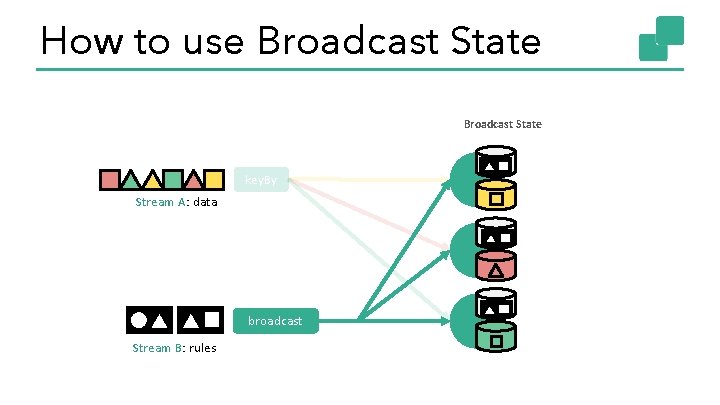
How to use Broadcast State key. By Stream A: data broadcast Stream B: rules
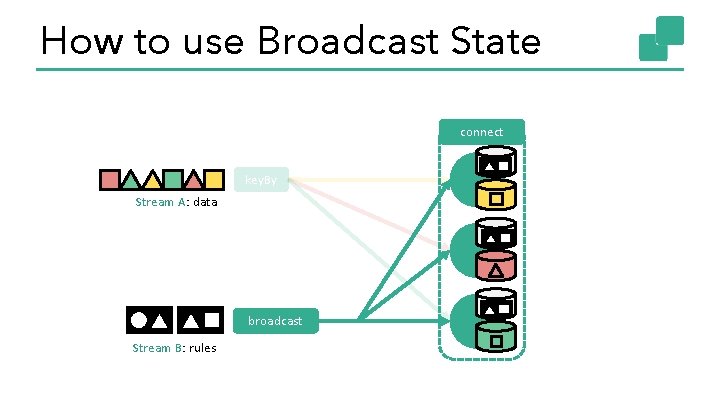
How to use Broadcast State connect key. By Stream A: data broadcast Stream B: rules
How to use Broadcast State connect key. By Stream A: data broadcast Stream B: rules
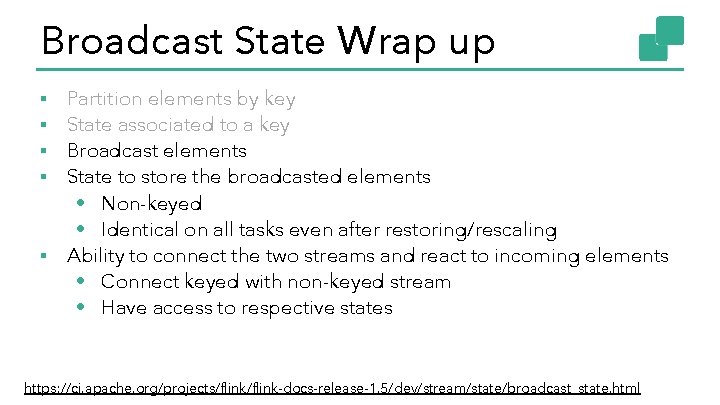
Broadcast State Wrap up Partition elements by key State associated to a key Broadcast elements State to store the broadcasted elements • Non-keyed • Identical on all tasks even after restoring/rescaling ▪ Ability to connect the two streams and react to incoming elements • Connect keyed with non-keyed stream • Have access to respective states ▪ ▪ https: //ci. apache. org/projects/flink-docs-release-1. 5/dev/stream/state/broadcast_state. html
Network Stack
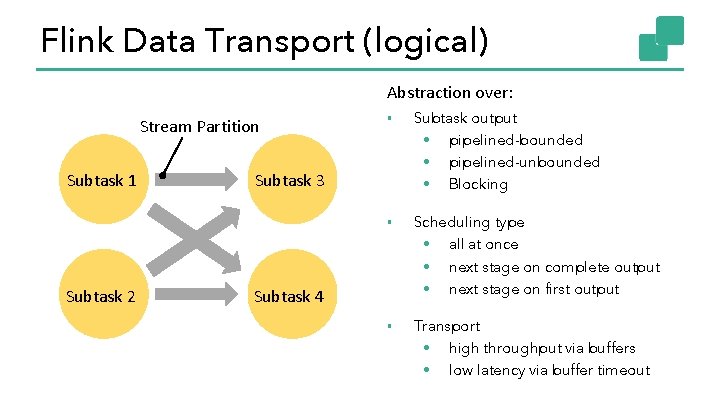
Flink Data Transport (logical) Abstraction over: Stream Partition Subtask 1 Subtask 2 ▪ Subtask output • pipelined-bounded • pipelined-unbounded • Blocking ▪ Scheduling type • all at once • next stage on complete output • next stage on first output ▪ Transport • high throughput via buffers • low latency via buffer timeout Subtask 3 Subtask 4
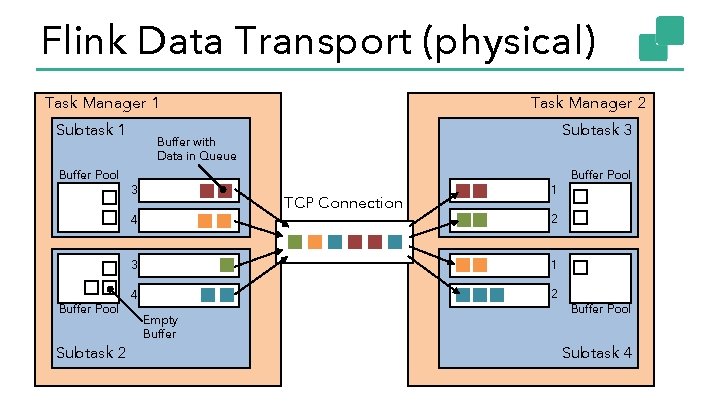
Flink Data Transport (physical) Task Manager 1 Subtask 1 Buffer Pool Subtask 2 Subtask 3 Buffer with Data in Queue 3 TCP Connection 4 Buffer Pool Task Manager 2 1 2 3 1 4 2 Empty Buffer Pool Subtask 4
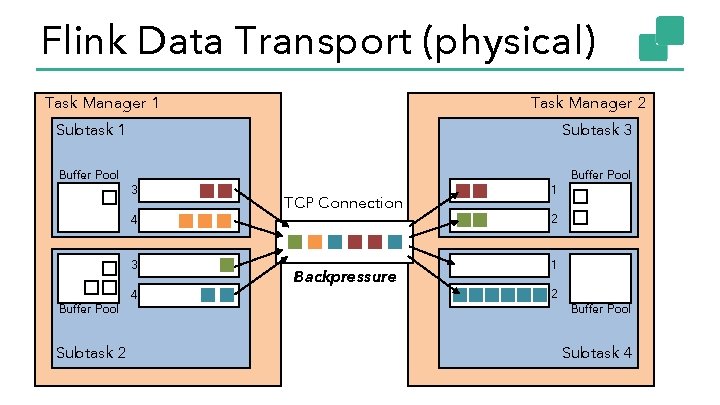
Flink Data Transport (physical) Task Manager 1 Task Manager 2 Subtask 1 Buffer Pool Subtask 3 3 4 3 Buffer Pool Subtask 2 4 TCP Connection Backpressure 1 Buffer Pool 2 1 2 Buffer Pool Subtask 4
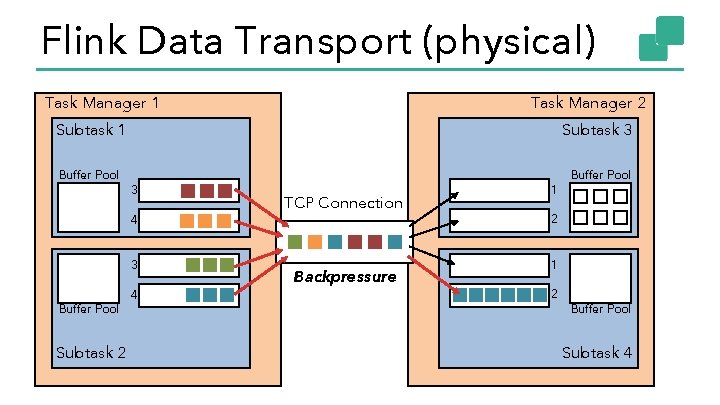
Flink Data Transport (physical) Task Manager 1 Task Manager 2 Subtask 1 Buffer Pool Subtask 3 3 4 3 Buffer Pool Subtask 2 4 TCP Connection Backpressure 1 Buffer Pool 2 1 2 Buffer Pool Subtask 4
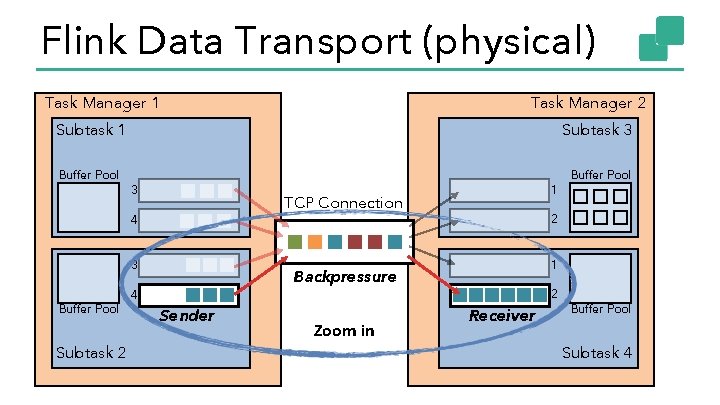
Flink Data Transport (physical) Task Manager 1 Task Manager 2 Subtask 1 Buffer Pool Subtask 3 3 TCP Connection 4 3 Buffer Pool Subtask 2 1 Backpressure 4 Sender Zoom in Buffer Pool 2 Receiver Buffer Pool Subtask 4
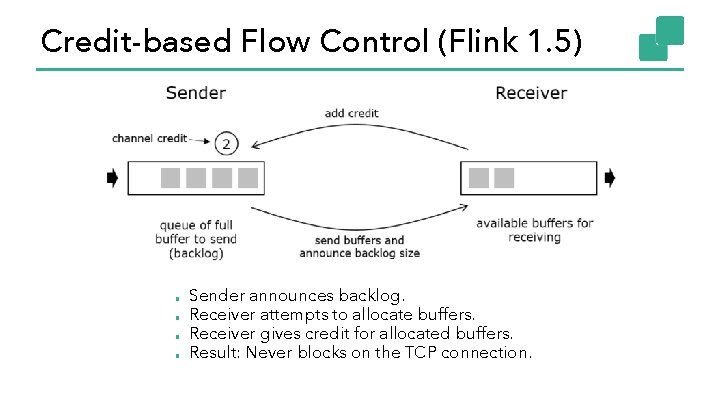
Credit-based Flow Control (Flink 1. 5) ■ ■ Sender announces backlog. Receiver attempts to allocate buffers. Receiver gives credit for allocated buffers. Result: Never blocks on the TCP connection.
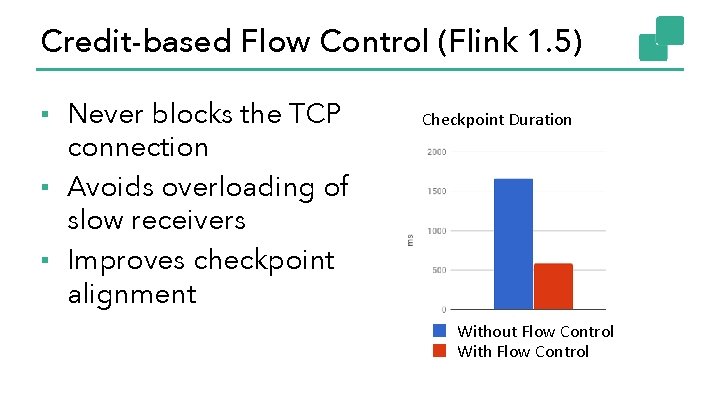
Credit-based Flow Control (Flink 1. 5) ▪ Never blocks the TCP connection ▪ Avoids overloading of slow receivers ▪ Improves checkpoint alignment Checkpoint Duration Without Flow Control With Flow Control
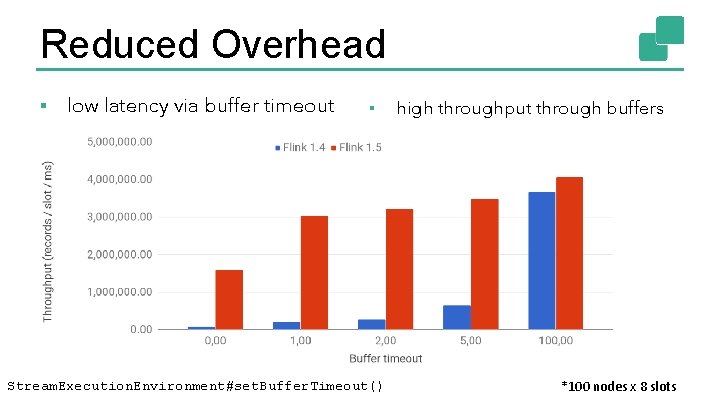
Reduced Overhead ▪ low latency via buffer timeout ▪ Stream. Execution. Environment#set. Buffer. Timeout() high throughput through buffers *100 nodes x 8 slots
Task-Local Recovery
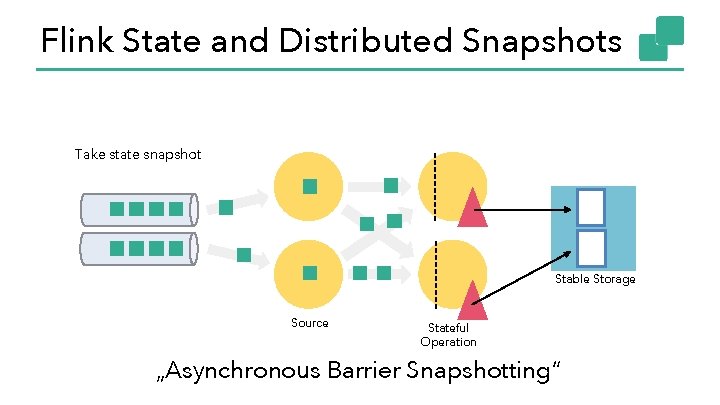
Flink State and Distributed Snapshots Take state snapshot Stable Storage Source Stateful Operation „Asynchronous Barrier Snapshotting“
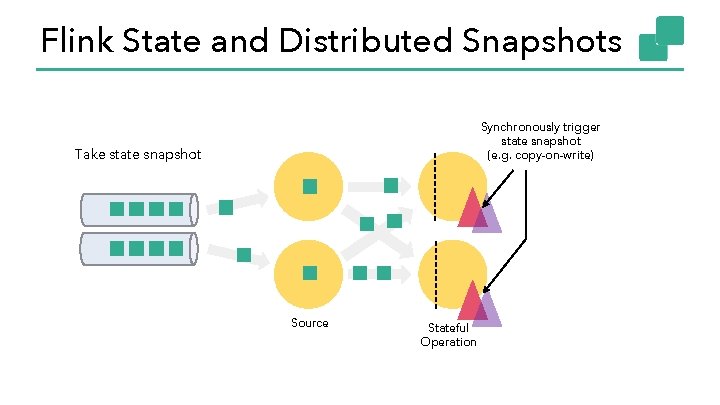
Flink State and Distributed Snapshots Synchronously trigger state snapshot (e. g. copy-on-write) Take state snapshot Source Stateful Operation
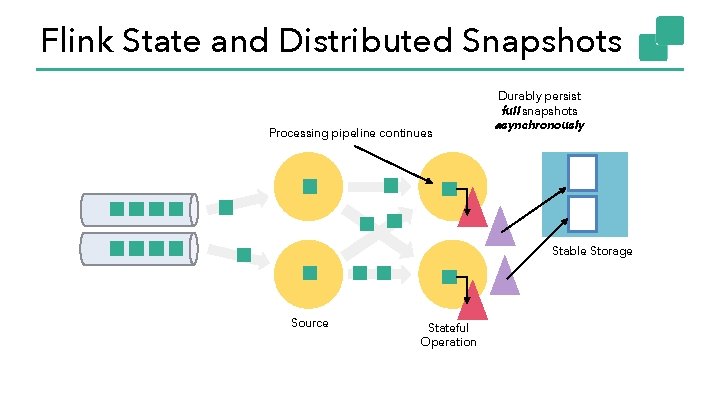
Flink State and Distributed Snapshots Processing pipeline continues Durably persist full snapshots asynchronously Stable Storage Source Stateful Operation
Recovery From Failure Stable Storage Source Stateful Operation
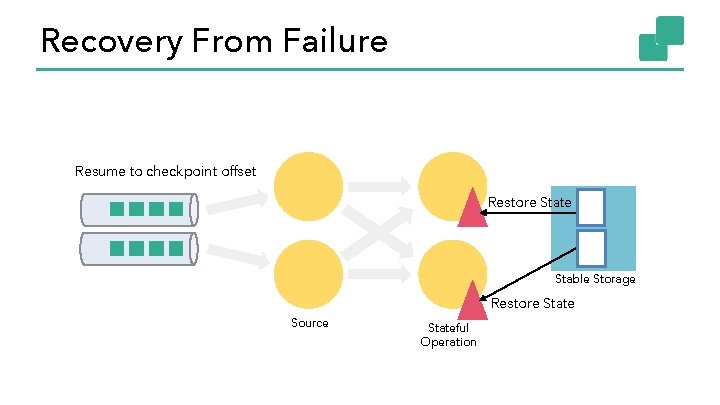
Recovery From Failure Resume to checkpoint offset Restore State Stable Storage Restore State Source Stateful Operation
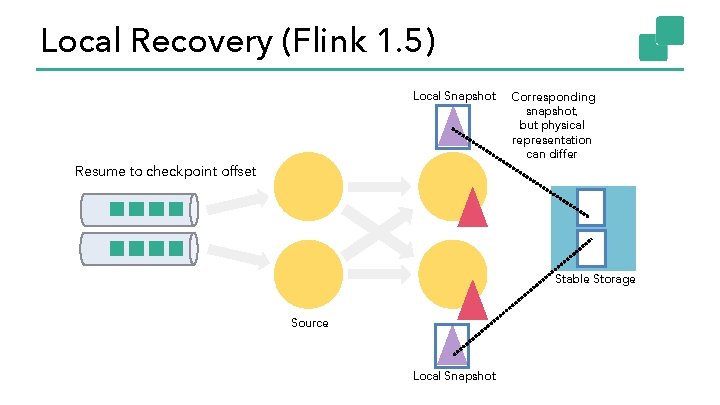
Local Recovery (Flink 1. 5) Local Snapshot Resume to checkpoint offset Corresponding snapshot, but physical representation can differ Stable Storage Source Local Snapshot
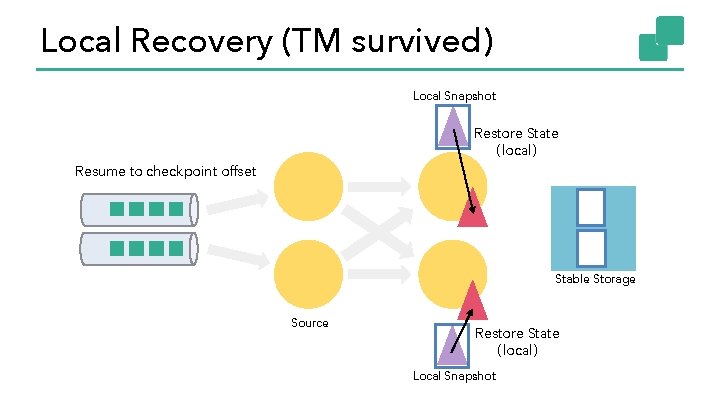
Local Recovery (TM survived) Local Snapshot Restore State (local) Resume to checkpoint offset Stable Storage Source Restore State (local) Local Snapshot
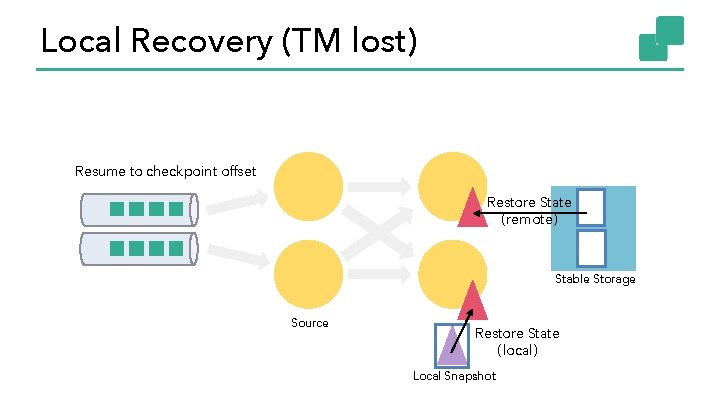
Local Recovery (TM lost) Resume to checkpoint offset Restore State (remote) Stable Storage Source Restore State (local) Local Snapshot
SQL
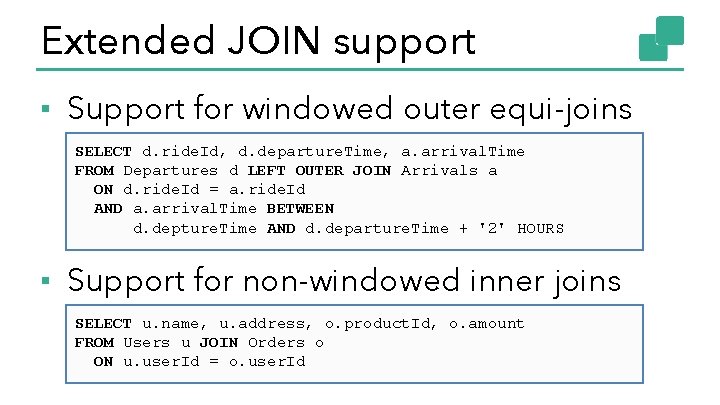
Extended JOIN support ▪ Support for windowed outer equi-joins SELECT d. ride. Id, d. departure. Time, a. arrival. Time FROM Departures d LEFT OUTER JOIN Arrivals a ON d. ride. Id = a. ride. Id AND a. arrival. Time BETWEEN d. depture. Time AND d. departure. Time + '2' HOURS ▪ Support for non-windowed inner joins SELECT u. name, u. address, o. product. Id, o. amount FROM Users u JOIN Orders o ON u. user. Id = o. user. Id
SQL Client
Flink 1. 6 and beyond What’s next?
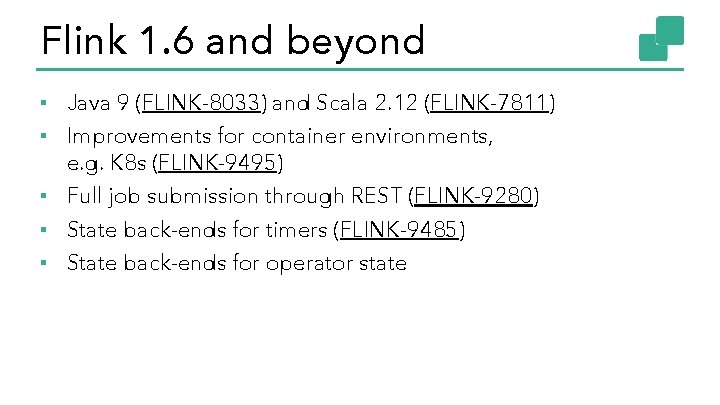
Flink 1. 6 and beyond ▪ Java 9 (FLINK-8033) and Scala 2. 12 (FLINK-7811) ▪ Improvements for container environments, e. g. K 8 s (FLINK-9495) ▪ Full job submission through REST (FLINK-9280) ▪ State back-ends for timers (FLINK-9485) ▪ State back-ends for operator state
Flink 1. 6 and beyond ▪ Bucketing. Sink with Flink file systems (including S 3) ▪ State evolution: support type conversion on snapshot restore ▪ Stream SQL: • support “update by key” Table Sources • more table sources and sinks (Kafka, Kinesis, Files, K/V stores) ▪ CEP • Integrate CEP and SQL via MATCH_RECOGNIZE (FLINK-7062) • Improve CEP performance of Shared. Buffer on Rocks. DB (FLINK-9418)
Questions?
We are hiring! data-artisans. com/careers