
Whats in your gamemaking teachers bag This workshop
What’s in your game-making teacher’s bag? This workshop shares some of Thiagi's most famous 'framegames' for participants to design their own games for class. "A framegame is a generic game shell or template. It allows you to plug in new content and create a new game - instantly!" (From Framegames by Thiagi, p. 1) Using a game template lets you include your class tasks and goal content while increasing involvement of participants to achieve the learning tasks. This workshop introduces instructional tools to set up games for your own classrooms. Example games will be shared. Game Making: Game Templates to Mix It Up in Class by Maria Lisak https: //koreamaria. typepad. com/gwangju/2020/01/game-making-game-templates-to-mix-it-up-in-class. html
Inspiration & Source http: //www. thiagi. com/thiagi-store/framegames-by-thiagi I get no money for endorsing this! Thiagi’s work: Training rather than language learning. But his pedagogy gamifies anything! He’s made games for: categorization analysis, problem solving, evaluation generic board games for multipurpose training games for interaction and involvement participatory brainstorming exploring interrelationships among ideas
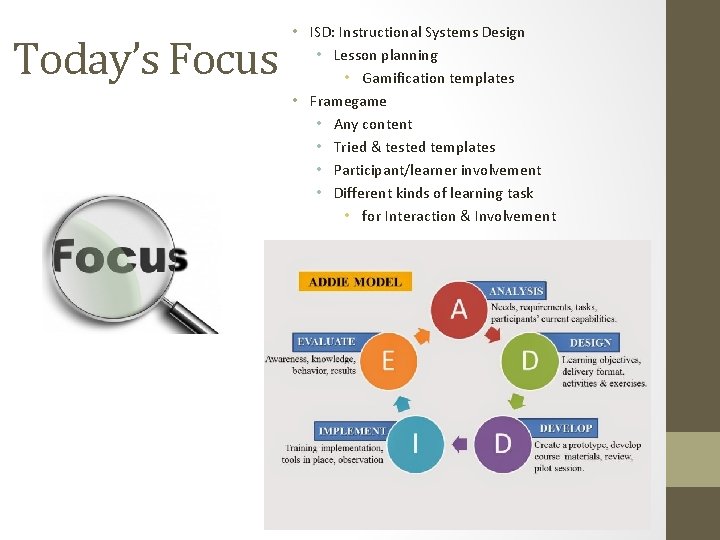
Today’s Focus • ISD: Instructional Systems Design • Lesson planning • Gamification templates • Framegame • Any content • Tried & tested templates • Participant/learner involvement • Different kinds of learning task • for Interaction & Involvement
Game Purposes • Instruction • To analyze a concept • To explore a controversy • To demonstrate diversity • Evaluation • To conduct a needs analysis • To establish a baseline • To obtain useful feedback • Teamwork • To analyze a problem • To forecast • To generate alternative solutions • To make decisions • To formulate policy
Game Design Checklist • • • • Specify your Purpose Design the Prompt Create a Name for the Game Time Requirement Materials Flow of the game Preparing the Materials Getting Started Instructions for Players Distributing Materials Managing the Flow Fostering Interaction Staging the End Recognition of Learning Accomplished
- Slides: 5