
What You Should Know about Intercultural Communication Cultural

What You Should Know about Intercultural Communication
Cultural Differences Contextual Legal and Ethical Social Nonverbal

Cultural Context High Context Decision Making Practices High Context Problem Solving Techniques Low Context Negotiating Styles Low Context

Low Context Swiss German Scandinavian American French British High Context Japanese Chinese Arab Greek Spanish Italian
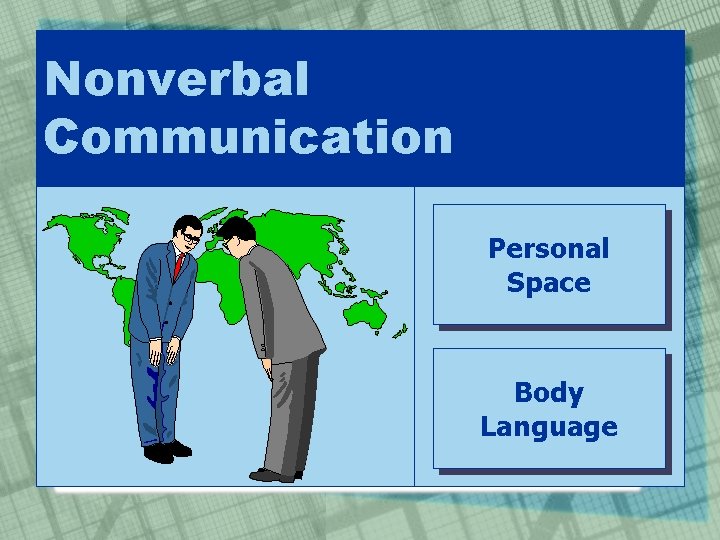
Nonverbal Communication Personal Space Body Language
Overcome Ethnocentrism Accept Distinctions Avoid Assumptions Avoid Judgments
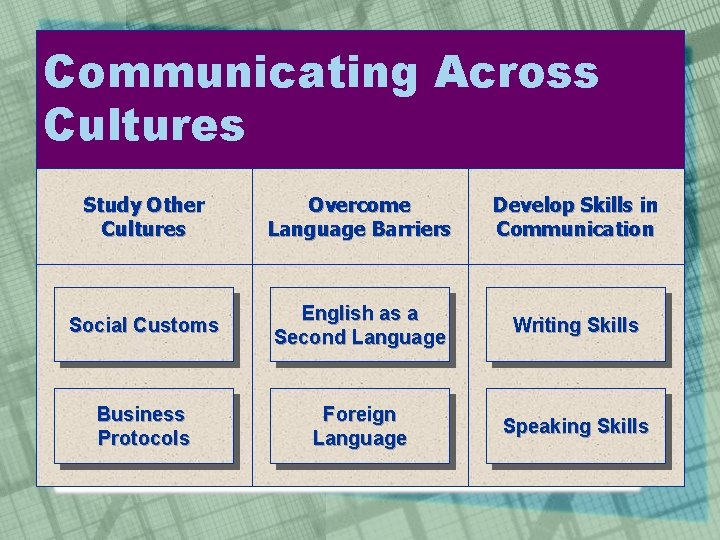
Communicating Across Cultures Study Other Cultures Overcome Language Barriers Develop Skills in Communication Social Customs English as a Second Language Writing Skills Business Protocols Foreign Language Speaking Skills
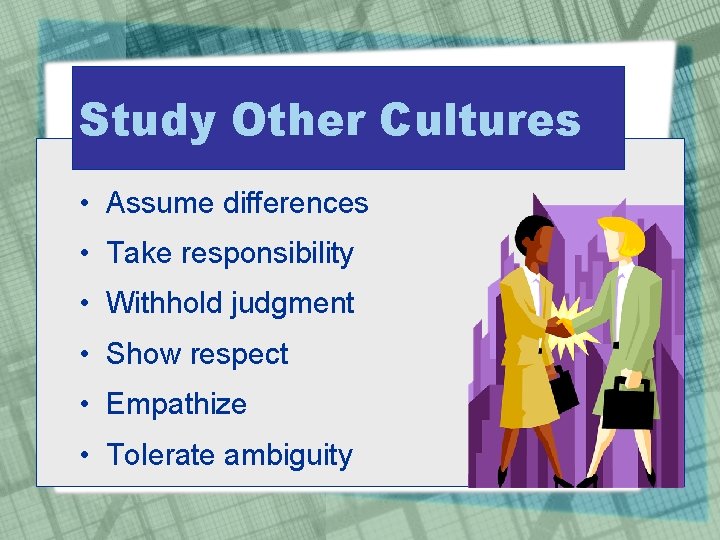
Study Other Cultures • Assume differences • Take responsibility • Withhold judgment • Show respect • Empathize • Tolerate ambiguity
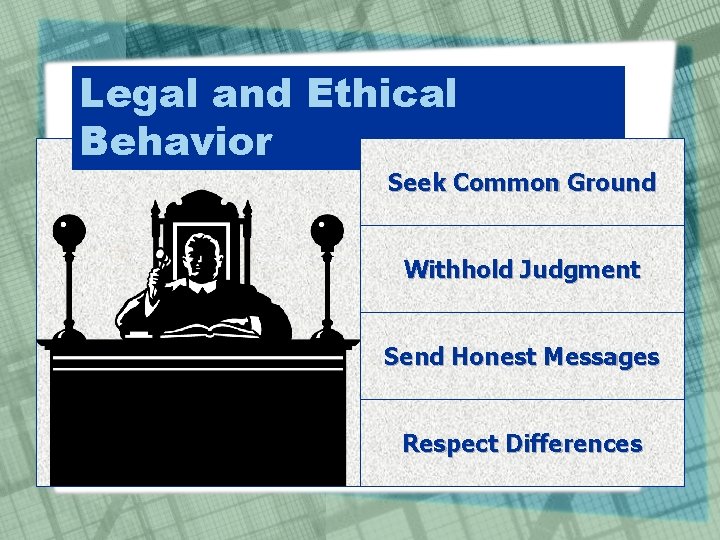
Legal and Ethical Behavior Seek Common Ground Withhold Judgment Send Honest Messages Respect Differences
Culture Shock The term “culture shock” describes the anxiety produced when a person moves to a completely new environment. This term expresses the lack of direction, the feeling of not knowing what to do or how to do things in a new environment, and not knowing what is appropriate or inappropriate. The feeling of culture shock generally sets in after the first few weeks of coming to a new place.
symptoms • • Sadness, loneliness, melancholy Preoccupation with health Aches, pains, and allergies Insomnia, desire to sleep too much or too little Changes in temperament, depression, feeling vulnerable, feeling powerless Anger, irritability, resentment, unwillingness to interact with others Identifying with the old culture or idealizing the old country Loss of identity • • Trying too hard to absorb everything in the new culture or country Unable to solve simple problems Lack of confidence Feelings of inadequacy or insecurity Developing stereotypes about the new culture Developing obsessions such as over-cleanliness Longing for family Feelings of being lost, overlooked, exploited or abused
Stages 1. Honeymoon 2. Discontent, impatience, anger, sadness, and feeling incompetent 3. Understanding 4. Balance and integration 5. Re-entry of old culture
Managing • Be patient with yourself • Be positive about what you are learning • Manage stress • Use resources • Maintain contact with ethnic group • Maintain contact with new culture

- Slides: 15