
What You Should Know About COPD Quick Facts
What You Should Know About COPD
Quick Facts • COPD stands for chronic obstructive pulmonary disease. • Currently the 4 th leading cause of death in the U. S. and accounts for nearly 160, 000 deaths per year. 1 Ref • More than 16 million people have been diagnosed with COPD and it is estimated that millions more have it but do not know it. 2 Ref • A leading cause of disability 3 and an estimated 1 in 5 adults, age 45 and over, suffers from COPD. 4 Ref 2
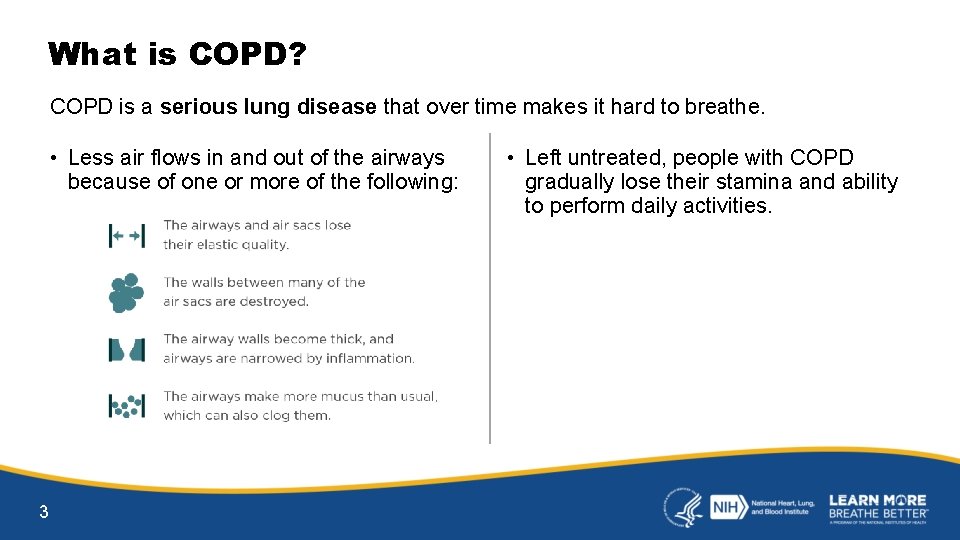
What is COPD? COPD is a serious lung disease that over time makes it hard to breathe. • Less air flows in and out of the airways because of one or more of the following: 3 • Left untreated, people with COPD gradually lose their stamina and ability to perform daily activities.

COPD Includes Two Main Conditions 4

Common Signs & Symptoms include… 5

Causes & Risk Factors 1 of 2 SMOKING • Smoking is responsible for roughly 8 out of 10 COPD deaths and it is the number one cause of COPD: 75% of COPD cases occur in people who have a history of smoking. 5 Ref • Roughly one-half of these cases are current smokers (38%), and one-half are former smokers (37%). 6 Ref • However, as many as 1 out of 4 people (25%) who have COPD have never smoked. 7 Ref 6
Causes & Risk Factors 2 of 2 LONG-TERM EXPOSURE TO LUNG IRRITANTS Long-term exposure to second-hand smoke and other lung irritants such as certain chemicals, dusts, or fumes from the environment or workplace can also increase risk for COPD. GENETIC CONDITION As many as 100, 000 Americans have alpha-1 antitrypsin, or AAT, deficiency. They can get COPD even if they have never smoked or had long-term exposure to harmful pollutants. 8 Ref 7

Who is at Higher Risk for COPD? • While COPD affects all Americans, some are more at risk than others: • Men vs. Women: • Women are 30% more likely to report having COPD than men. 2 Ref • Geographic Distribution: • Prevalence of COPD in rural areas (8. 2%) is almost twice as high compared to urban areas (4. 7%). 9 • Higher prevalence in the Southeast and areas of the Mississippi and Ohio River Valleys. 2 Ref • Racial/Ethnic Groups: • More than 1 in 10 American Indian/Alaska Natives have been diagnosed with COPD – a higher proportion than other racial/ethnic groups in the U. S. 12 Ref Who has COPD? 8 12% American Indians/ Alaska Natives 7% Whites 7% Non-Hispanic Blacks 4% Hispanics 3% Native Hawaiian/ Pacific Islander 2% Asian

Diagnosing COPD 1 of 2 • COPD diagnosis is based on signs and symptoms, personal and medical history, physical examinations, and lung function tests such as spirometry. 9
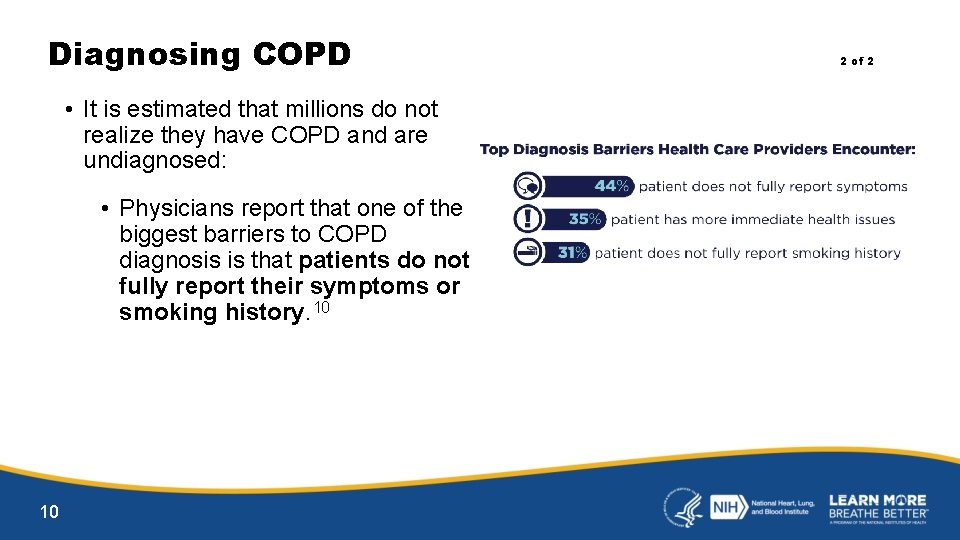
Diagnosing COPD • It is estimated that millions do not realize they have COPD and are undiagnosed: • Physicians report that one of the biggest barriers to COPD diagnosis is that patients do not fully report their symptoms or smoking history. 10 Ref 10 2 of 2

What is Spirometry? • It is a quick and simple breathing test that checks how well your lungs are working. • The test will show healthy your lungs are, if you have COPD and how serious it is. • Spirometry can help your provider know if you have COPD before you even have symptoms. 11
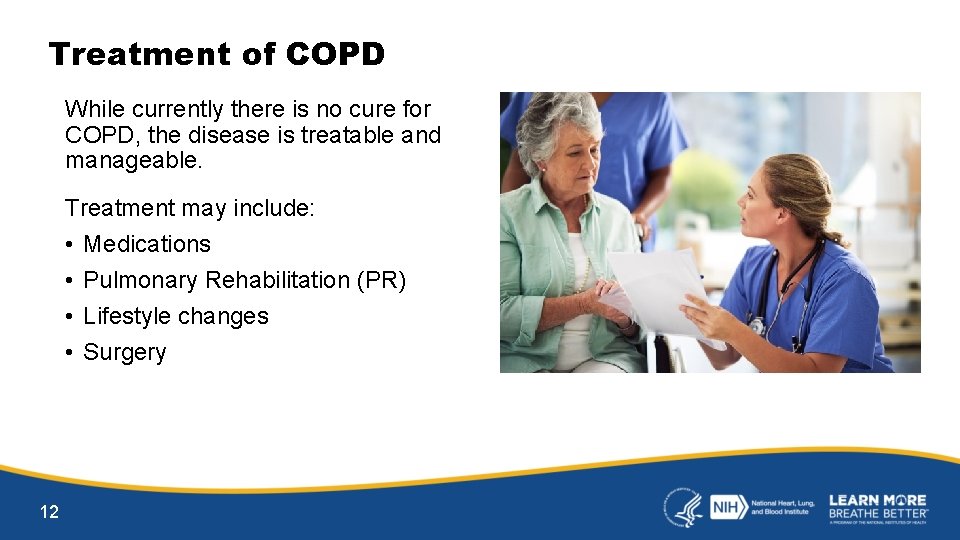
Treatment of COPD While currently there is no cure for COPD, the disease is treatable and manageable. Treatment may include: • Medications • Pulmonary Rehabilitation (PR) • Lifestyle changes • Surgery 12
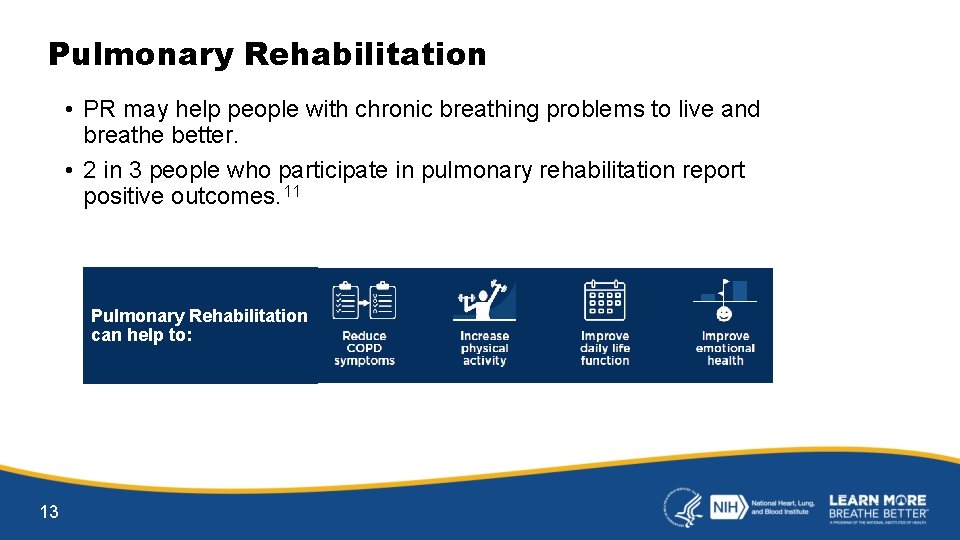
Pulmonary Rehabilitation • PR may help people with chronic breathing problems to live and breathe better. • 2 in 3 people who participate in pulmonary rehabilitation report positive outcomes. 11 Ref Pulmonary Rehabilitation can help to: 13
What is Pulmonary Rehabilitation? • Doctors and nurses help you better manage your COPD and avoid things that make it worse. • Respiratory therapists teach breathing strategies to open airways, expand lungs, and increase airflow. • Exercise specialists help improve endurance and muscle strength, giving you the stamina to carry out daily activities better. • Physical therapists teach energy-conserving techniques and ways to breathe easier. • Dieticians offer nutritional counseling and eating plans to help manage your weight and enhance muscle mass. • Psychologists help manage depression, anxiety, and overall mental health. 14
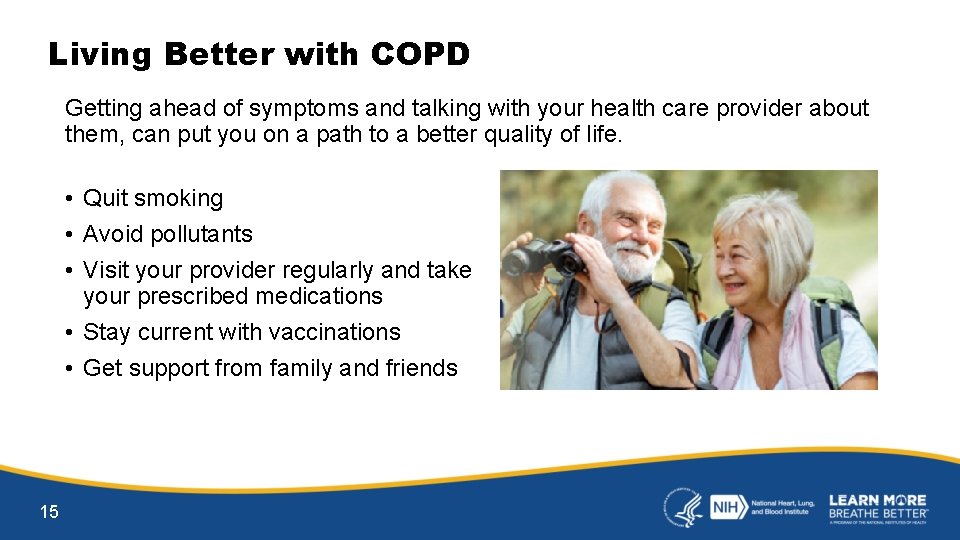
Living Better with COPD Getting ahead of symptoms and talking with your health care provider about them, can put you on a path to a better quality of life. • Quit smoking • Avoid pollutants • Visit your provider regularly and take your prescribed medications • Stay current with vaccinations • Get support from family and friends 15
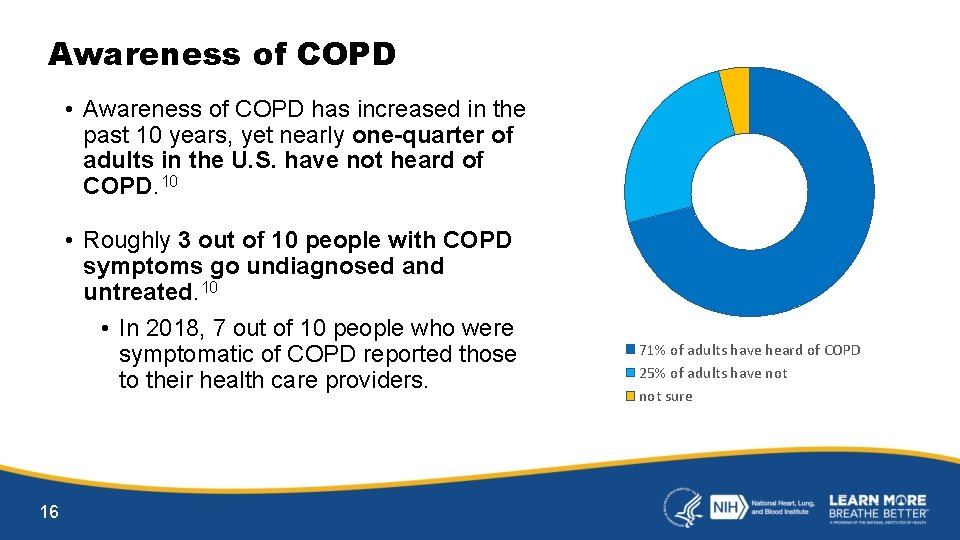
Awareness of COPD • Awareness of COPD has increased in the past 10 years, yet nearly one-quarter of adults in the U. S. have not heard of COPD. 10 Ref • Roughly 3 out of 10 people with COPD symptoms go undiagnosed and untreated. 10 • In 2018, 7 out of 10 people who were symptomatic of COPD reported those to their health care providers. Ref 16 71% of adults have heard of COPD 25% of adults have not sure
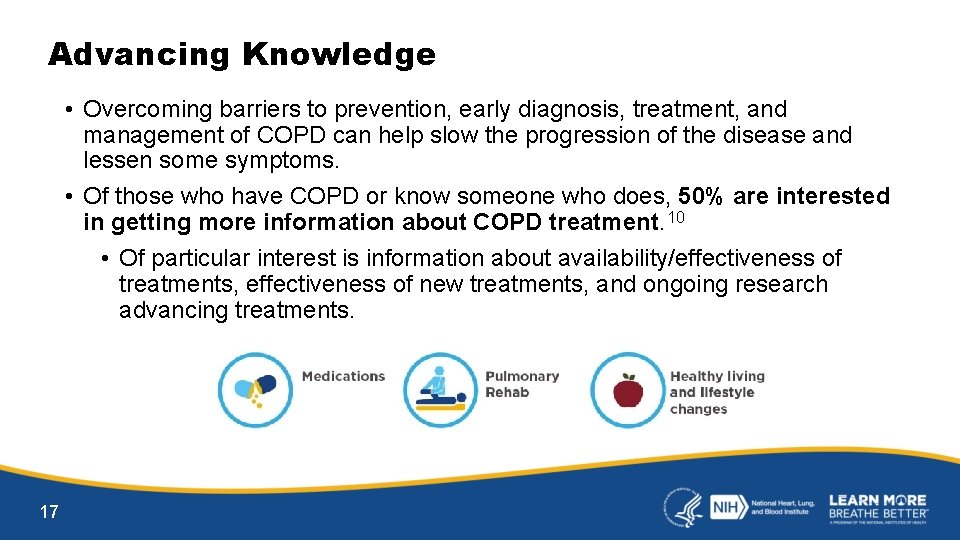
Advancing Knowledge • Overcoming barriers to prevention, early diagnosis, treatment, and management of COPD can help slow the progression of the disease and lessen some symptoms. • Of those who have COPD or know someone who does, 50% are interested in getting more information about COPD treatment. 10 • Of particular interest is information about availability/effectiveness of treatments, effectiveness of new treatments, and ongoing research advancing treatments. Ref 17
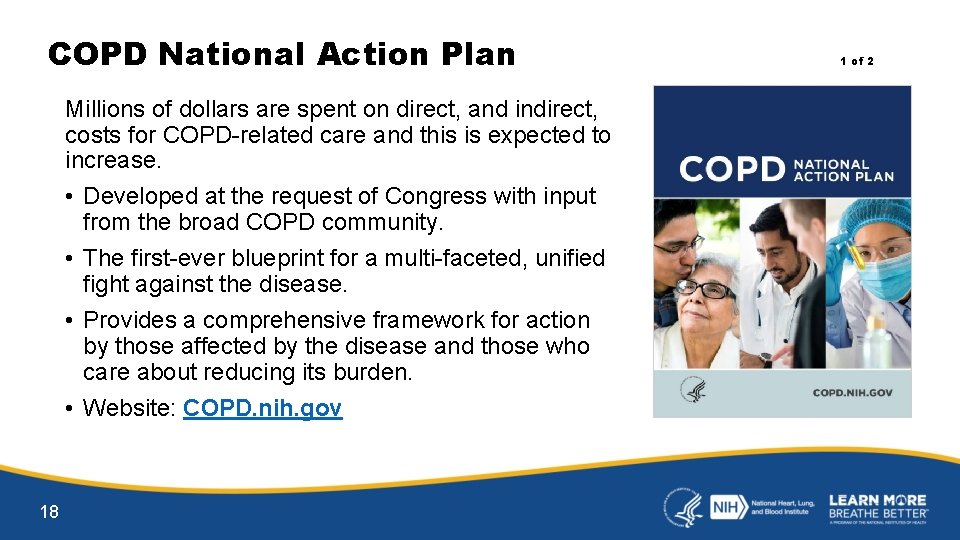
COPD National Action Plan Millions of dollars are spent on direct, and indirect, costs for COPD-related care and this is expected to increase. • Developed at the request of Congress with input from the broad COPD community. • The first-ever blueprint for a multi-faceted, unified fight against the disease. • Provides a comprehensive framework for action by those affected by the disease and those who care about reducing its burden. • Website: COPD. nih. gov 18 1 of 2
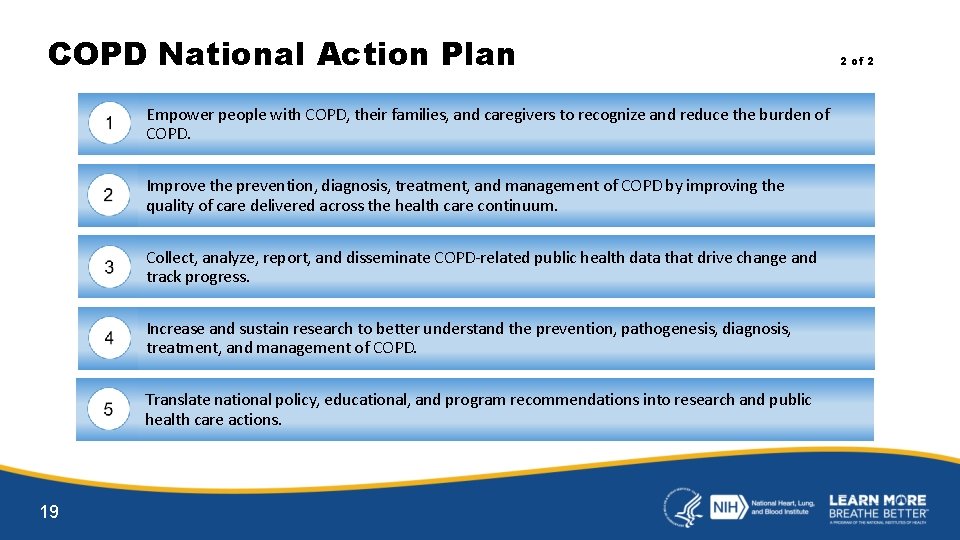
COPD National Action Plan Empower people with COPD, their families, and caregivers to recognize and reduce the burden of COPD. Improve the prevention, diagnosis, treatment, and management of COPD by improving the quality of care delivered across the health care continuum. Collect, analyze, report, and disseminate COPD-related public health data that drive change and track progress. Increase and sustain research to better understand the prevention, pathogenesis, diagnosis, treatment, and management of COPD. Translate national policy, educational, and program recommendations into research and public health care actions. 19 2 of 2
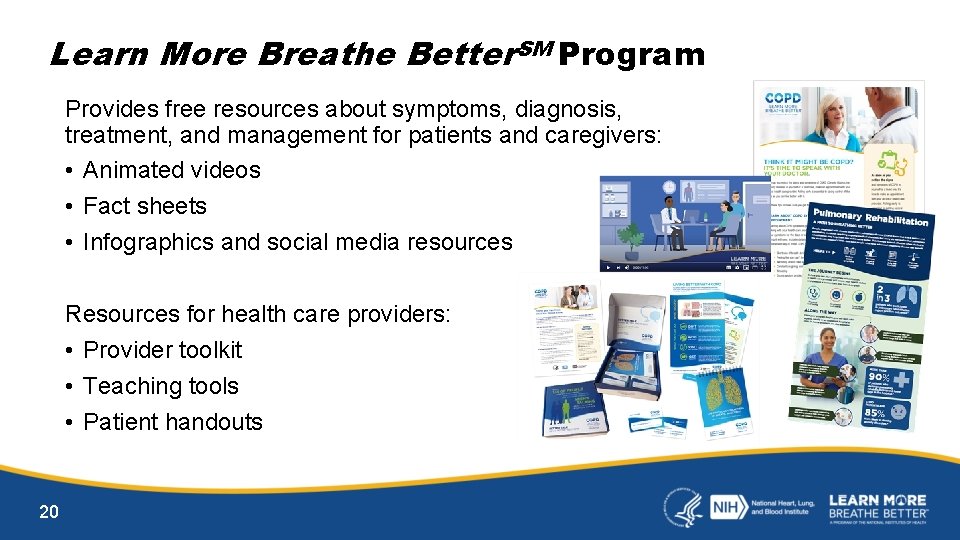
Learn More Breathe Better. SM Program Provides free resources about symptoms, diagnosis, treatment, and management for patients and caregivers: • Animated videos • Fact sheets • Infographics and social media resources Resources for health care providers: • Provider toolkit • Teaching tools • Patient handouts 20
Additional COPD Resources • For more information and resources, visit: • Learn More Breathe Better. SM website at COPD. nhlbi. nih. gov • COPD National Action Plan: COPD. nih. gov Join the conversations on social media @Breathe. Better 21
References 22 Ref 1. Kochanek KD, Murphy SL, Xu JQ, Arias E. Deaths: Final data for 2017. National Vital Statistics Reports; vol 68 no 9. Hyattsville, MD: National Center for Health Statistics. 2019. Ref 2. Ford ES, Croft JB, Mannino DM, Wheaton AG, Zhang X, & Giles WH. (2013). COPD surveillance—United States, 1999 -2011. Chest, 144(1), 284 -305. Ref 3. Brault MW, Hootman J, Helmick CG, Theis KA, & Armour BS. “Prevalence and most common causes of disability among adults—United States, 2005, ” MMWR Morb Mortal Wkly Rep. 58(16), 421 -426, Centers for Disease Control and Prevention (CDC) Ref 4. Age-adjusted Prevalence of COPD among adults aged ≥ 18 years—BRFSS, United States, 2015 Ref 5. Centers for Disease Control and Prevention (CDC). (2008). Smoking-attributable mortality, years of potential life lost, and productivity losses—United States, 20002004. MMWR Morb Mortal Wkly Rep. 57(45), 1226. Ref 6. Centers for Disease Control and Prevention (CDC). (2012). Chronic obstructive pulmonary disease among adults—United States, 2011. MMWR Morb Mortal Wkly Rep. 61(46), 938. Ref 7. Wheaton AG, Cunningham TJ, Ford ES, & Croft JB. (2015). Employment and activity limitations among adults with chronic obstructive pulmonary disease—United States, 2013. MMWR Morb Mortal Wkly Rep. 64(11), 289. Ref 8. Centers for Disease Control and Prevention. (2010). How tobacco smoke causes disease: The biology and behavioral basis for smoking-attributable disease: A report of the surgeon general. Ref 9. Croft JB, Wheaton AG, Liu Y, et al. Urban-rural and state differences in COPD prevalence, Medicare hospitalizations, and mortality—United States, 2015. MMWR Morb Mortal Wkly Rep. 67(7), 205– 211. Ref 10. National Heart, Lung, and Blood Institute. (2018). COPD: Tracking Perceptions of the Individuals Affected and the Providers Who Treat Them. Ref 11. Scott AS, Baltzan MA, Fox J, & Wolkove N. (2010). Success in pulmonary rehabilitation in patients with chronic obstructive pulmonary disease. 219 -223. Retrieved November 16, 2018. Ref 12. Wheaton AG, Liu Y, Croft JB, Van. Frank B, Croxton TL, Punturieri A, et al. Chronic Obstructive Pulmonary Disease and Smoking Status—United States, 2017, MMWR Morb Mortal Wkly Rep. 68(24), 533 -538.
- Slides: 22