
What you need to know CAPS Evaluation of
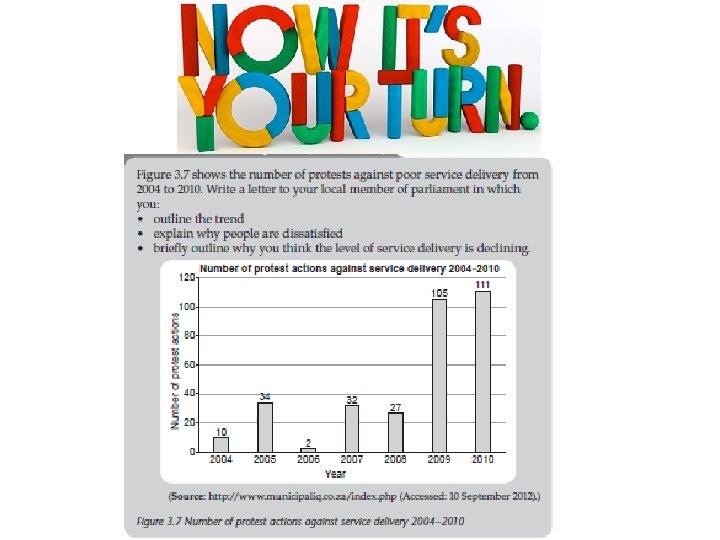
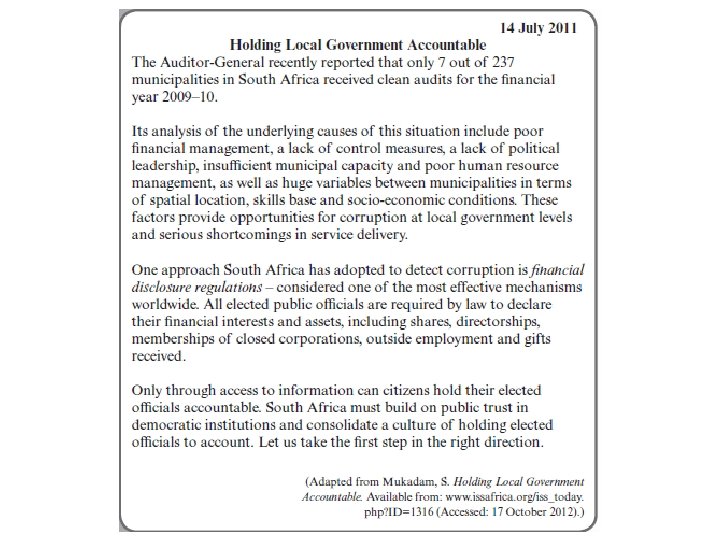
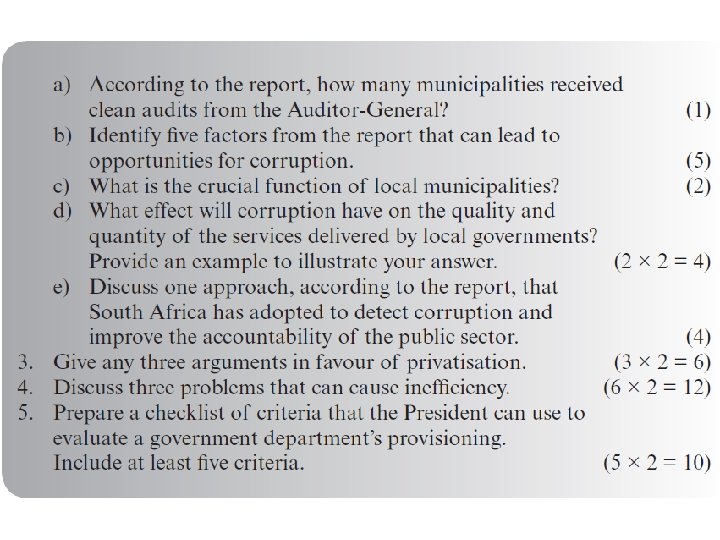
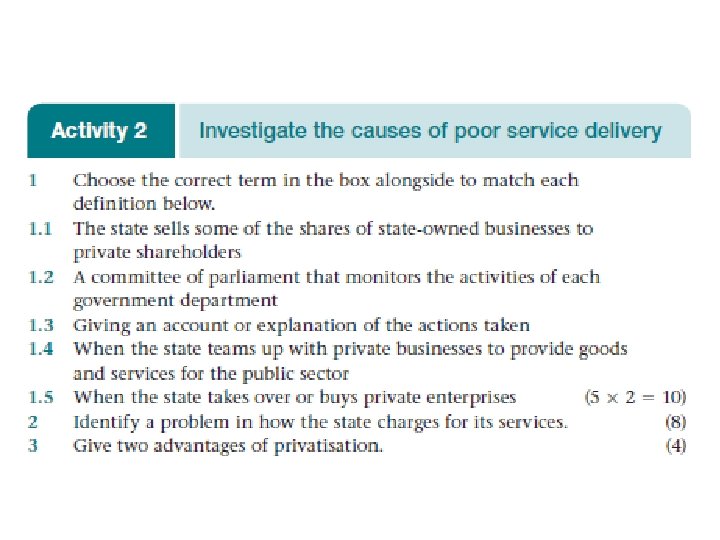




- Slides: 51
What you need to know (CAPS) • Evaluation of the role of the public sector in the economy with special reference to its socioeconomic responsibility in the South African context. • The composition and necessity of the public sector • Problems of public sector provisioning • Objectives of the public sector and its budgets • Fiscal policy (including the Laffer curve) curve • Reasons for public sector failure
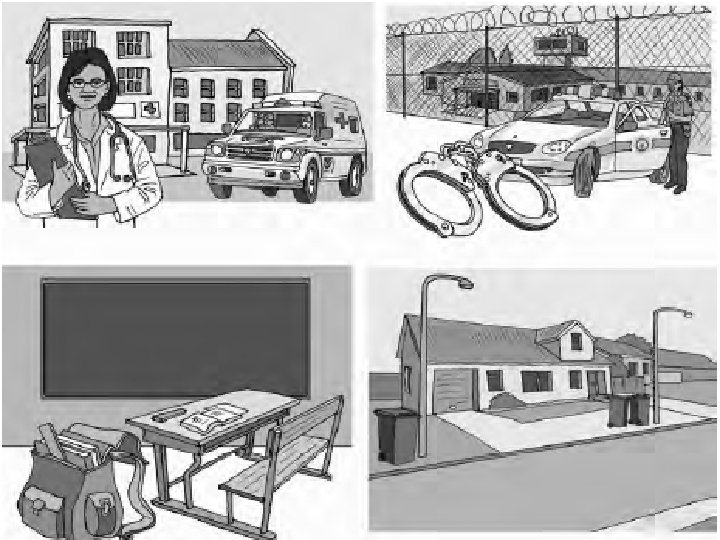
Necessity of the public sector Assists the private sector when there is market failure. Market failure: when free market unable to allocate resources and/or goods and services efficiently. Gov. has socio-economic responsibility that it must fulfil. Adam Smith (1723– 1790) identified responsibilities of gov. : • To protect its citizens against foreign threats • To maintain law and order • To provide certain essential goods and services.
Provide community (public) goods • Public goods are non-rival & non-excludable Reduce demerit goods • Drugs, pollution etc. Children's rights Compensation for human rights abuses in the past • Redressing inequalities of apartheid, reduce poverty & unemployment. Eg. BBBEE
Social security • Welfare grants to decrease poverty Protection of the environment Manage the economy • Fiscal & monetary policy Encourage Competition • Regulate monopolies & promote competition
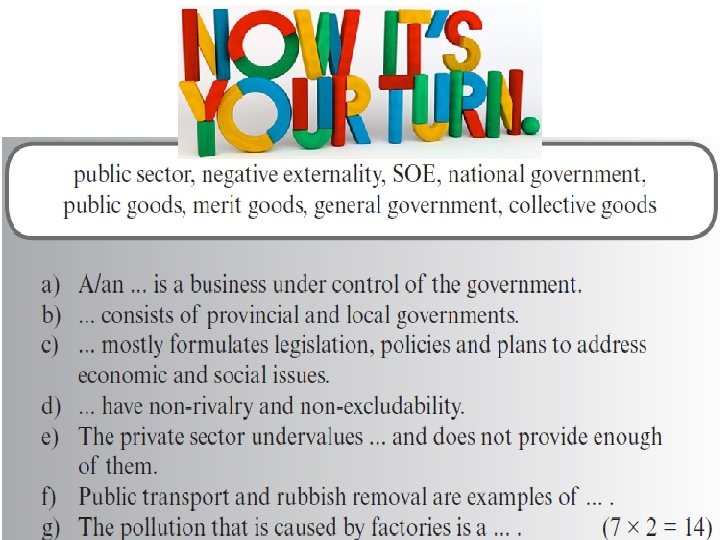
Public–private partnership (PPP): contract between gov. institution & private businesses where private organisation takes responsibility for some of the financial, technical and operational risks of the project. DO Challenge – pg 64
• Answer Activity 1 - pg 64 Q 1. 1 – 1. 4
Problems of public sector provisioning Accountability • Not driven by a profit motive • Monopolies in some cases • Leads to low productivity & lack of accountability In SA, accountability underpinned by… • Ministerial responsibilities • Parliamentary questioning by opposition party & regulators. • Treasury control –controls expenditure of gov. departments
Efficiency Necessities (health, education, policing etc) provided by public sector to even out social welfare imbalances. Pareto efficiency: providing goods and services in a way that no one can be made better off without making someone else worse off. Problems in achieving this… • Bureaucracy and red tape –procedure over individual needs. • Lack of training – civil servants not adequately trained. • Corruption – lower-than-average wages make corruption ‘acceptable’.
Assessing needs and correct planning Public enterprises do not operate under market conditions – not responding to demand (money votes). Problems… • undersupply of public goods • inefficient forecasting of future needs
Correct pricing • Lack of money should not exclude people from public goods - provided under cost or free. • Free services and goods are frequently abused • Eg, people employed in informal sector claiming unemployment benefits. • Means testing can solve problem Means test: investigation into finances of individuals/households to determine necessity of financial assistance
State-owned enterprises (parastatals) Inefficiency due to skills gap - private sector offer better pay and working conditions. Parastatals are created in one of two ways: • government starts an enterprise • an existing enterprise is nationalised.
Privatisation: sale of state-owned enterprises to private individuals. Problem: free market economics takes over. Public interest profit motive. Nationalisation: government takes over privately owned enterprise. Problem: Profit motive inefficiencies). public interest (can cause
Objectives of the public sector and its budgets Objectives of the public sector… • Economic growth • Full employment • Price stability • Exchange rate stability • Economic equity
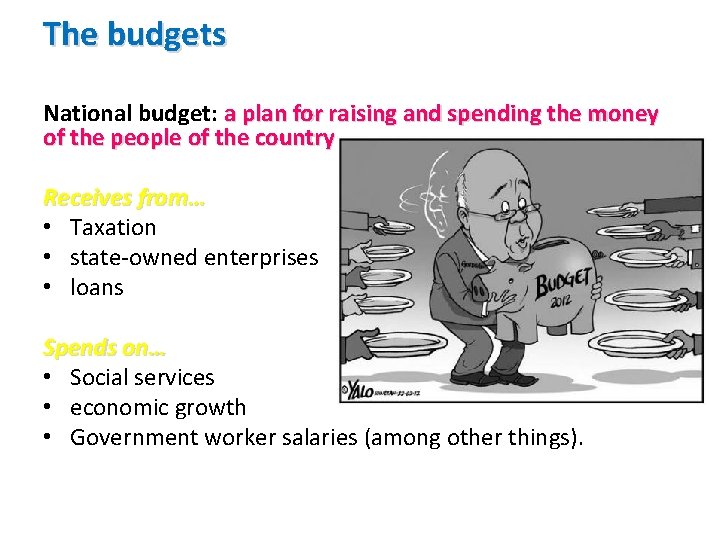
The budgets National budget: a plan for raising and spending the money of the people of the country. Receives from… • Taxation • state-owned enterprises • loans Spends on… • Social services • economic growth • Government worker salaries (among other things).
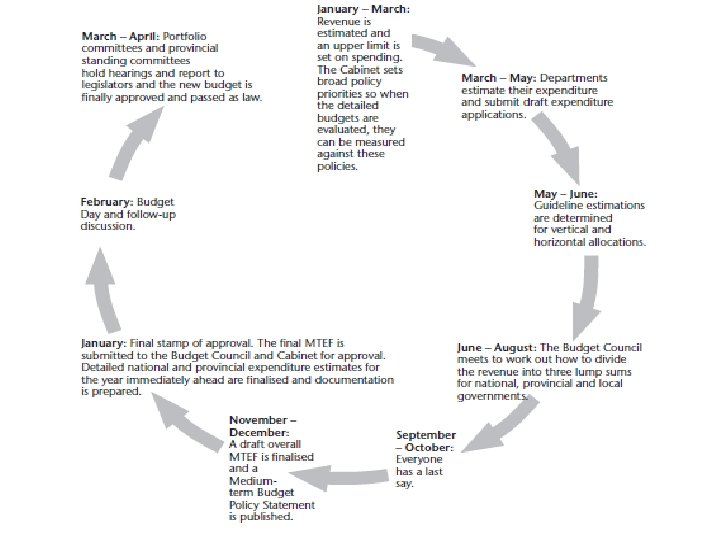
Medium-term budget policy statement (MTBPS) • Info about how government expects economy to perform over the next three years • How much tax is expected to be collected • Levels of government spending for next 3 years and government deficit • How revenue will be shared between national, provincial and local government • Delivered by Minister of Finance in last week of October.
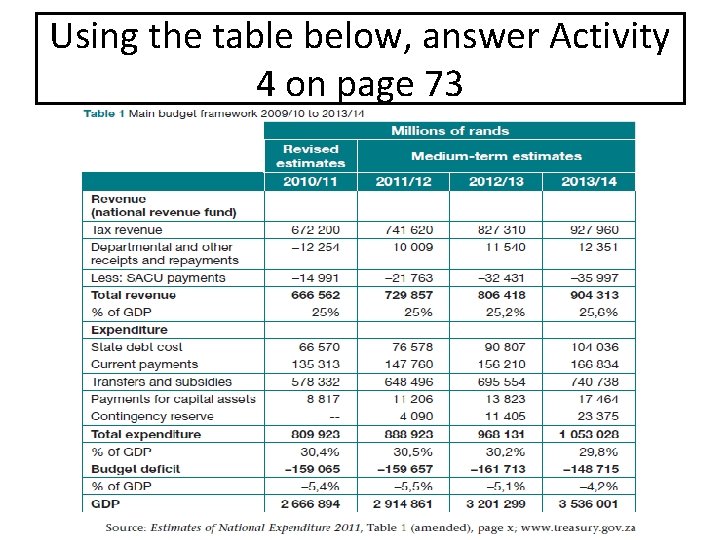
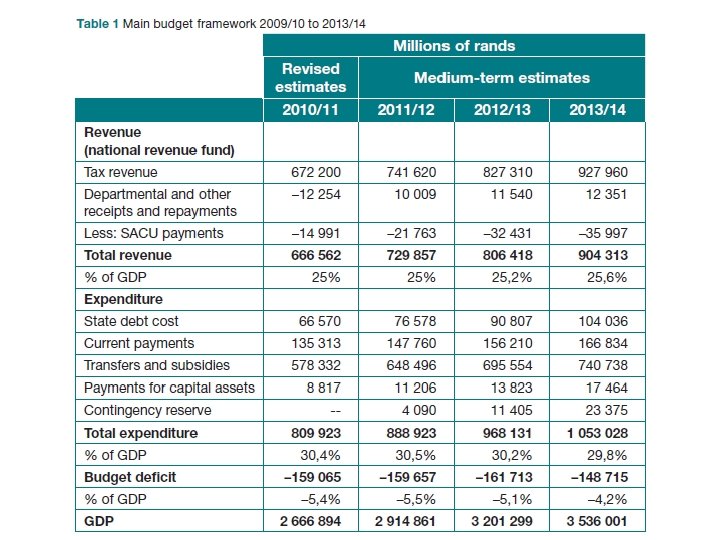
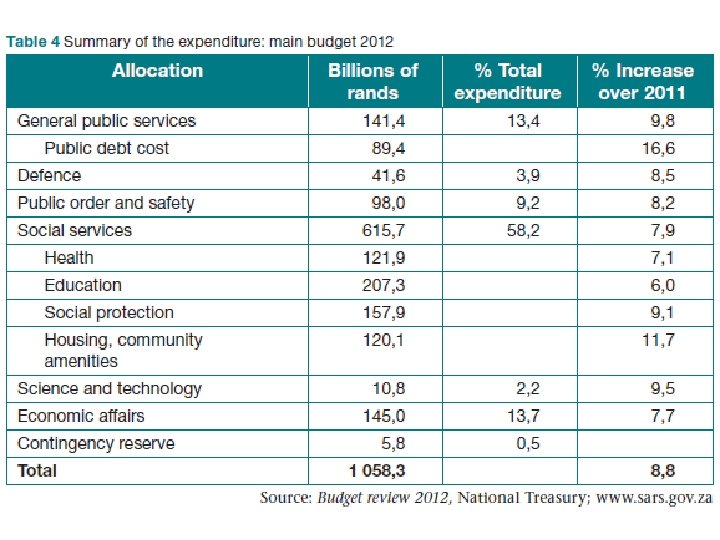
Using the table below, answer Activity 4 on page 73
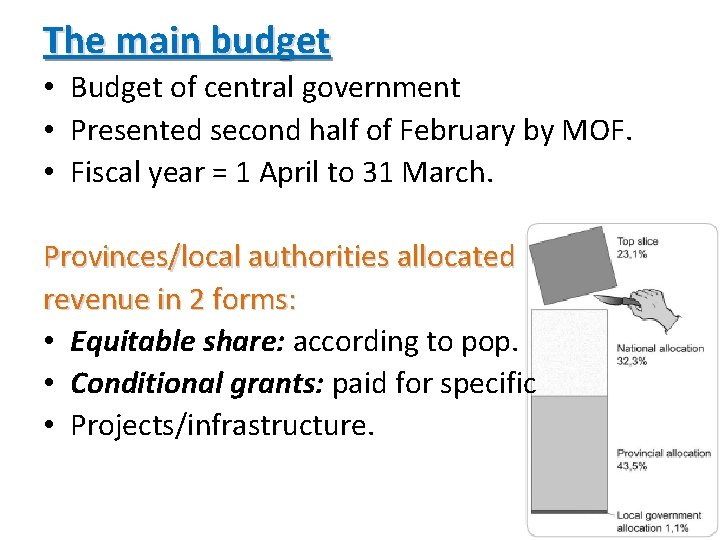
The main budget • Budget of central government • Presented second half of February by MOF. • Fiscal year = 1 April to 31 March. Provinces/local authorities allocated revenue in 2 forms: • Equitable share: according to pop. • Conditional grants: paid for specific • Projects/infrastructure.
Provincial and Local Budgets Provincial Budgets • Provinces raise some revenue - vehicle licences, duties and taxes; most from national budget • Provinces spending - education (40%), health (20%) & social welfare (18%).
Local government budgets • Municipal councils receive revenue through property rates, service fees for water and electricity, and fines. • Metros (largest municipalities) get portion of fuel levy. • Smaller councils rely central government grants.
Please complete Activity 5 on pages 77 & 78
Fiscal policy (including Laffer curve) Fiscal policy: how gov. raises money (forms of taxation) and spends money (expenditure). Fiscal policy is… • goal-bound –budgetary process used to determine economic and social goals • demand-based – main policy instrument in demand-side policies. • cyclical –business cycle affects fiscal policy.
Types of taxation Direct taxation • Person/organisation makes payment straight to the tax authority. – Standard Income Tax on Employees (SITE) and Pay As You Earn (PAYE)
Indirect taxation • Intermediary pays tax to authority. • Eg. VAT – customer pays their portion of VAT to shop – shop pays total VAT to SARS – shop serves as intermediary
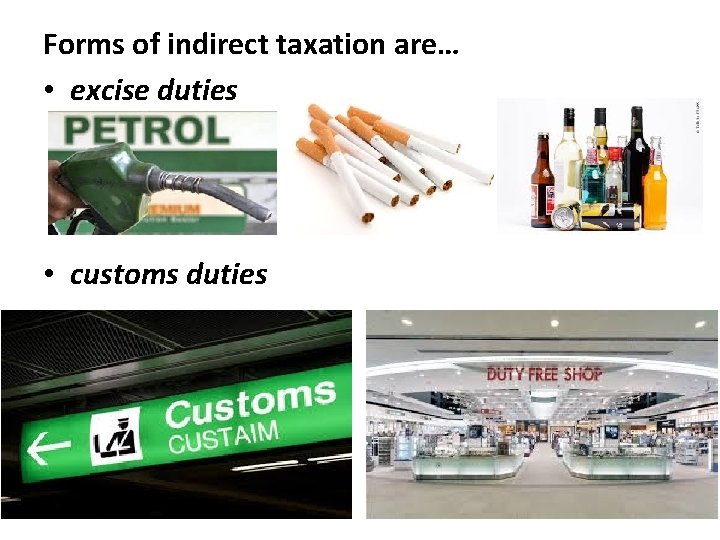
Forms of indirect taxation are… • excise duties • customs duties
• value-added tax – a 14% spending tax on value of most goods • capital gains tax –tax on gain from sale of certain assets • inheritance tax – tax on transfer of wealth at death or on gifts during lifetime
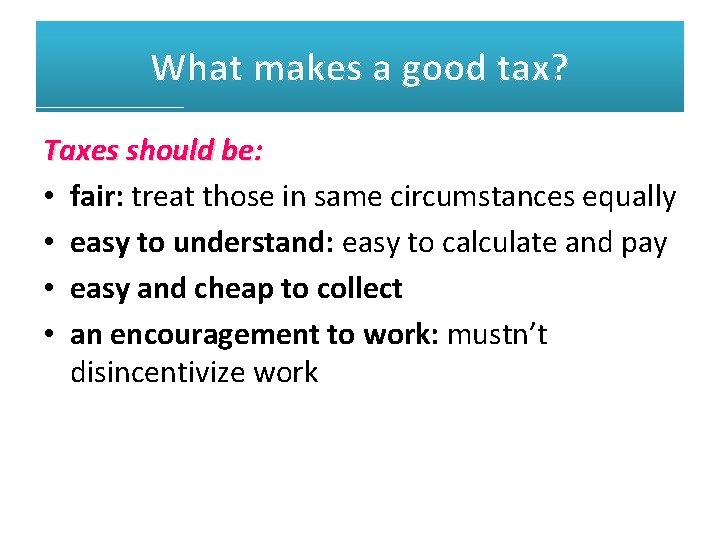
What makes a good tax? Taxes should be: • fair: treat those in same circumstances equally • easy to understand: easy to calculate and pay • easy and cheap to collect • an encouragement to work: mustn’t disincentivize work
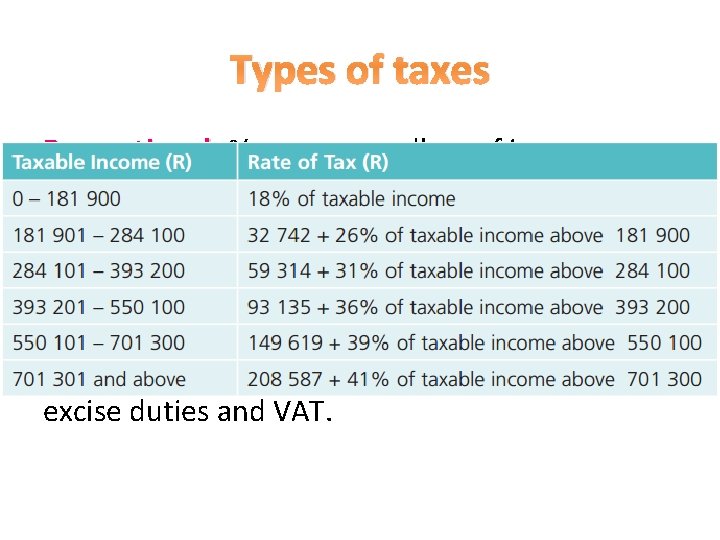
Types of taxes Proportional: % same regardless of income. Progressive: % increases as income increases Regressive: lower incomes pay higher % of income in taxes than do the rich, for example excise duties and VAT.
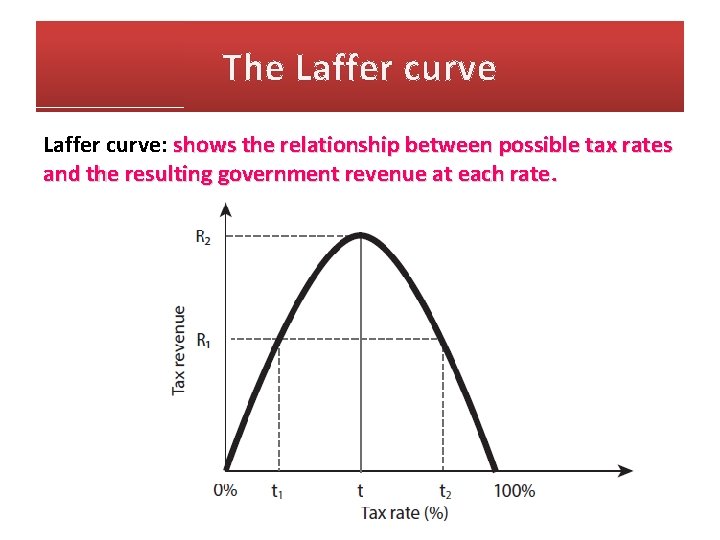
The Laffer curve: shows the relationship between possible tax rates and the resulting government revenue at each rate.
Reasons for Public Sector Failure Public sector failure: country’s resources mismanaged - welfare people not maximised & delivery of services ineffective and inefficient.
Lack of capacity Inability to perform services efficiently. • Lack of school facilities • Hospitals running out of medicines • Lack of proper sanitation Funds often not spent even when needed.
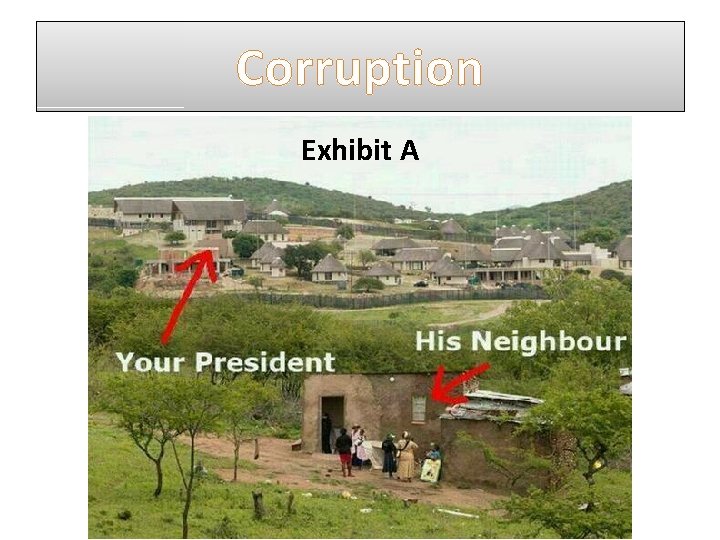
Corruption Exhibit A
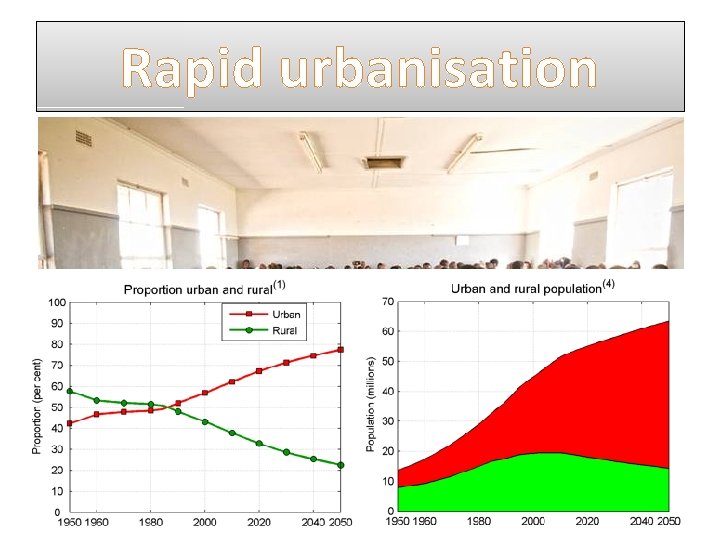
Rapid urbanisation Poverty in rural areas led to rapid rate of urbanisation Difficult to keep up with social services.
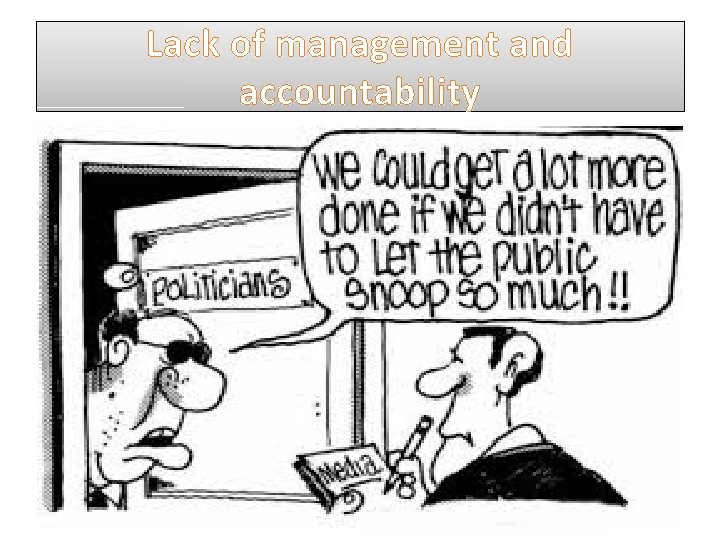
Lack of management and accountability Lack of leadership – lack of skilled leaders due to lower pay. Not directly accountable to taxpayers – little motivation. No incentives for efficient service delivery.
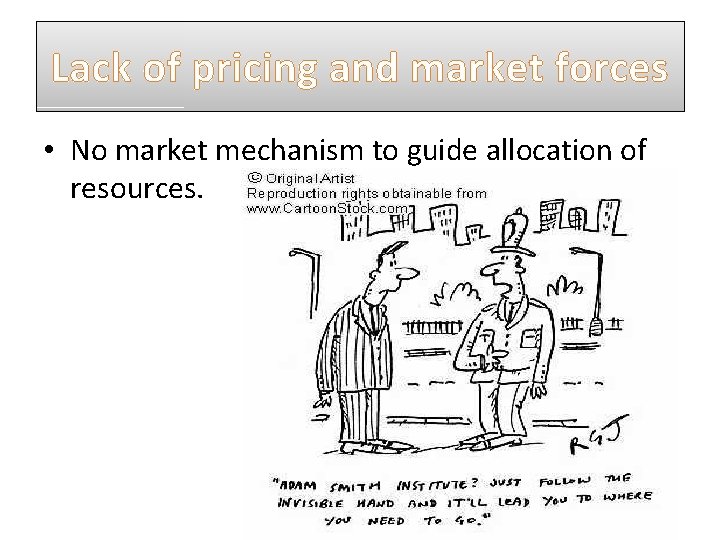
Lack of pricing and market forces • No market mechanism to guide allocation of resources.
Short-term solutions for long-term problems Political cycle = 5 years. Spending/taxation plans geared around reelection, not around best interests of citizens.
Unrealistic/unattainable objectives Macroeconomic objectives VERY difficult for government to influence with little tax collected and HUGE demands for state provision.
How much of Chapter 3 do you remember? ? ?