
What Would a Satisfactory Moral Theory Look Like
- Slides: 35
What Would a Satisfactory Moral Theory Look Like? PHIL 2525 Lec 22
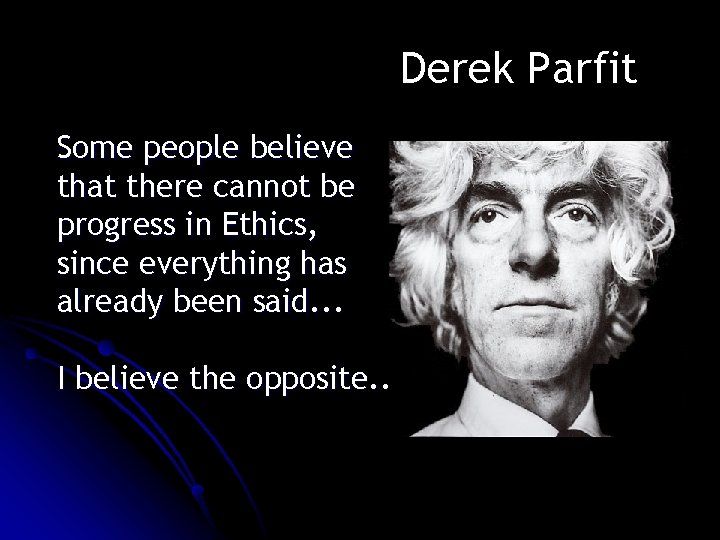
Derek Parfit Some people believe that there cannot be progress in Ethics, since everything has already been said. . . I believe the opposite. .
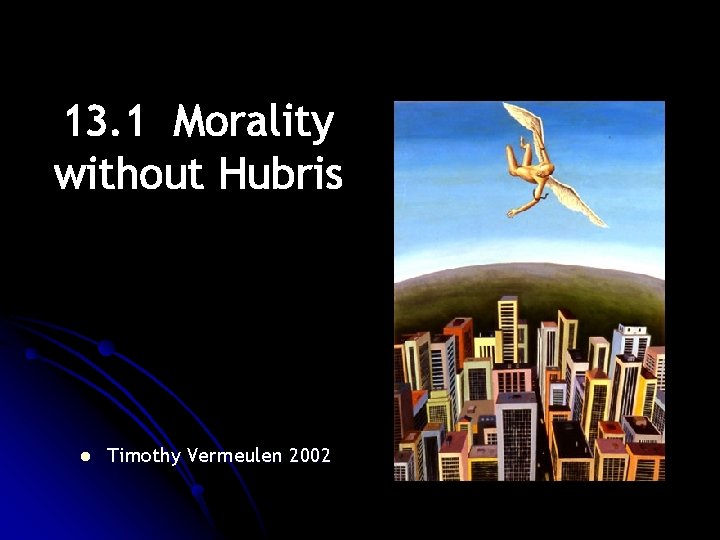
13. 1 Morality without Hubris l Timothy Vermeulen 2002
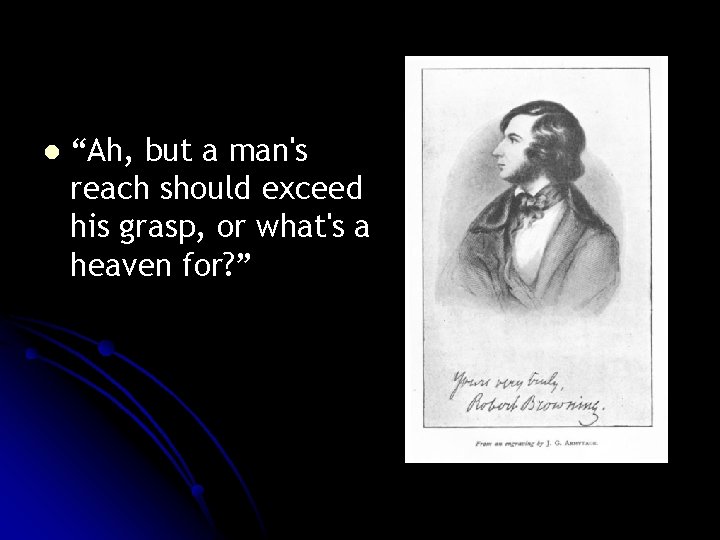
l “Ah, but a man's reach should exceed his grasp, or what's a heaven for? ”
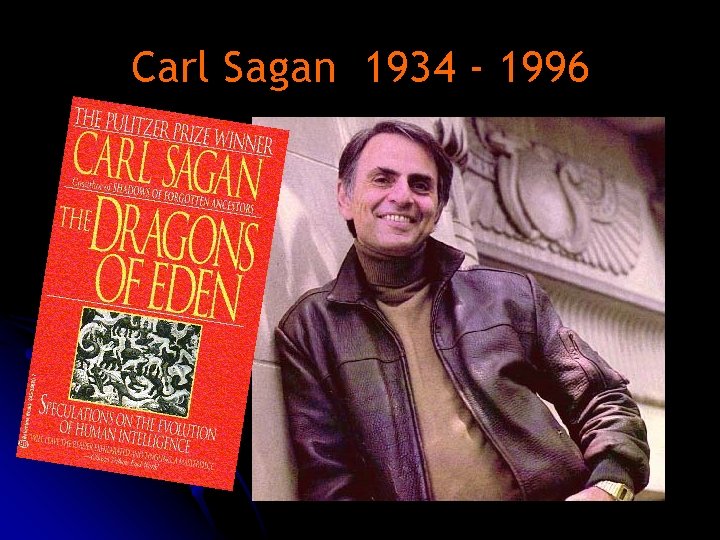
Carl Sagan 1934 - 1996
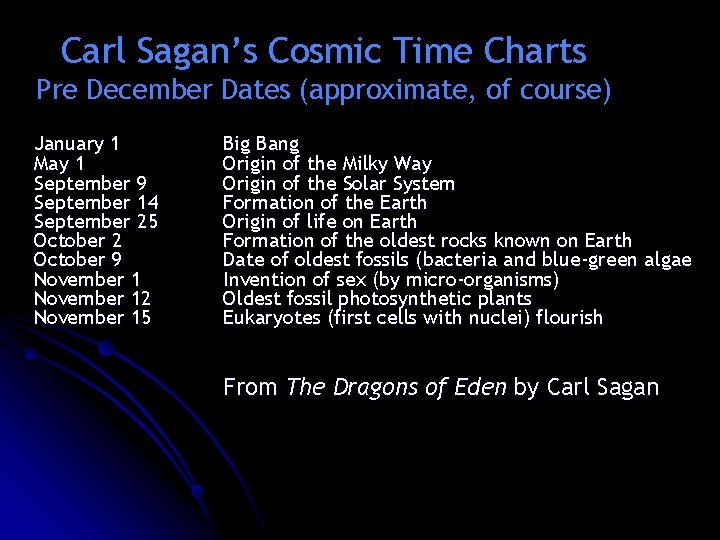
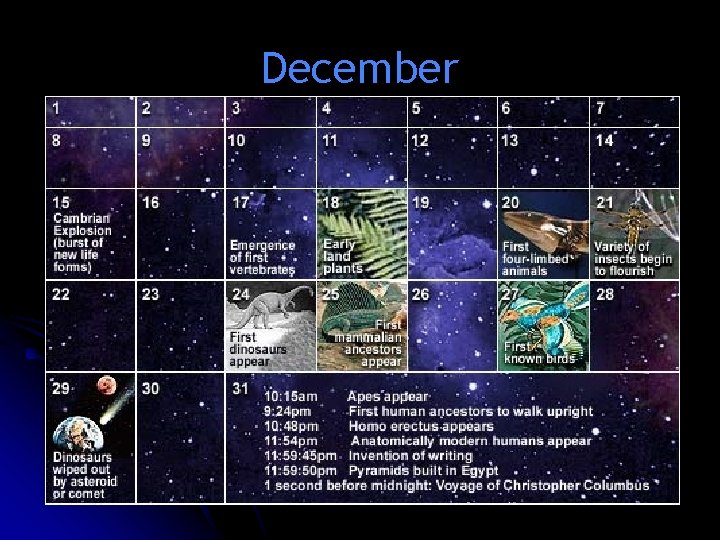
Carl Sagan’s Cosmic Time Charts Pre December Dates (approximate, of course) January 1 May 1 September 9 September 14 September 25 October 2 October 9 November 12 November 15 Big Bang Origin of the Milky Way Origin of the Solar System Formation of the Earth Origin of life on Earth Formation of the oldest rocks known on Earth Date of oldest fossils (bacteria and blue-green algae Invention of sex (by micro-organisms) Oldest fossil photosynthetic plants Eukaryotes (first cells with nuclei) flourish From The Dragons of Eden by Carl Sagan
December
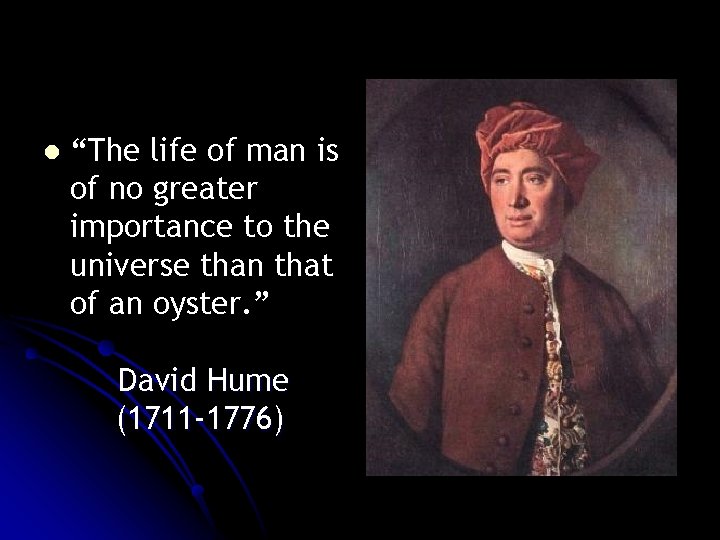
l “The life of man is of no greater importance to the universe than that of an oyster. ” David Hume (1711 -1776)
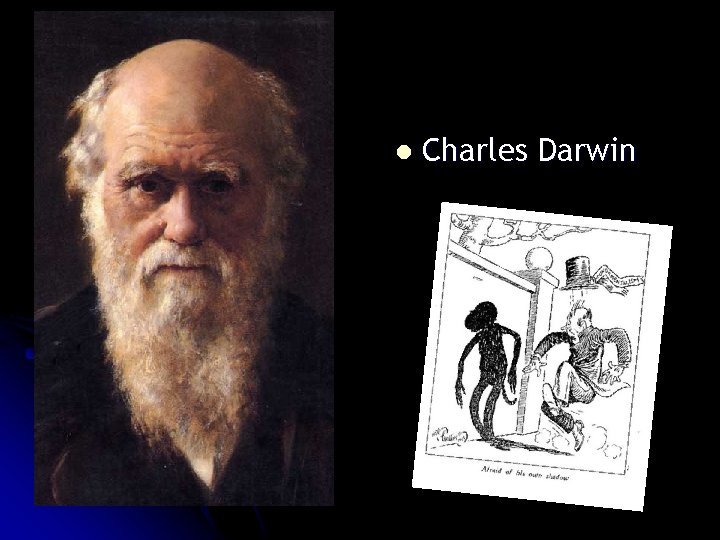
l Charles Darwin
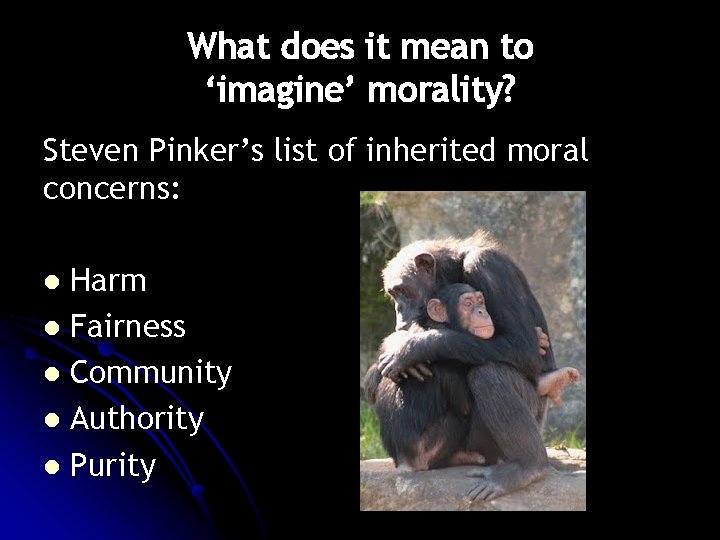
What does it mean to ‘imagine’ morality? Steven Pinker’s list of inherited moral concerns: Harm l Fairness l Community l Authority l Purity l
What does it mean to ‘imagine’ morality? Steven Pinker’s list of inherited moral concerns: Harm l Fairness l Community l Authority l Purity l
We are rational beings. . . We consider options l We weigh consequences l We choose to behave one way rather than another l We can articulate the reasons for our choices l
We are rational beings. . . l Consistency (not making an exception of yourself, or your group, or your gender, or your nationality…) l Impartiality (taking everyone’s interests into account…)
Ethical Egoism: l Psychological Egoism: l prescriptive descriptive
l Rachels says that psychological egoism is not true. . . we do not always act only for our own self interest.
P 175: Pleasing theoretical fit. . . l A) What reason requires: impartiality l B) What social living requires: the golden rule l C) Our natural inclination: concern for others Suggests that morality is natural for us. . .
13. 2 Treating People as They Deserve. . . l Remember Kant’s ‘respect for persons’ l If we don’t adjust our actions to reflect our judgments of others’ actions we may be denying their status as free agents. . . l But. . .
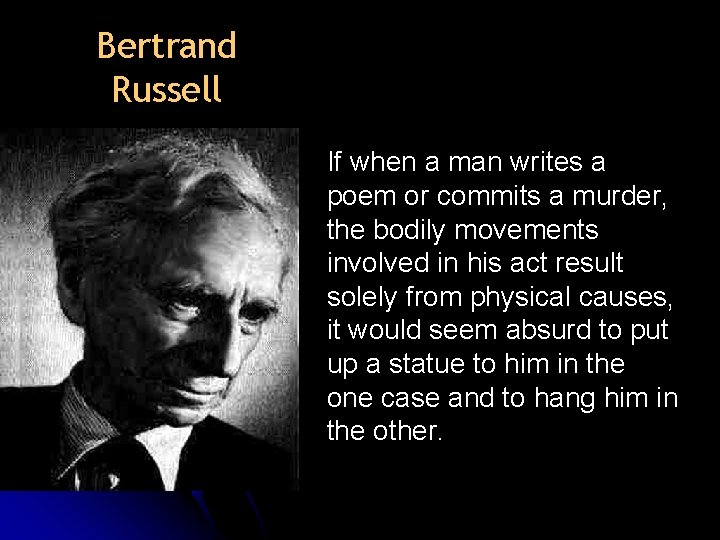
Bertrand Russell If when a man writes a poem or commits a murder, the bodily movements involved in his act result solely from physical causes, it would seem absurd to put up a statue to him in the one case and to hang him in the other.
Challenges to the existence of free will l The challenge from Logic l The challenge from Theology l The challenge from Science
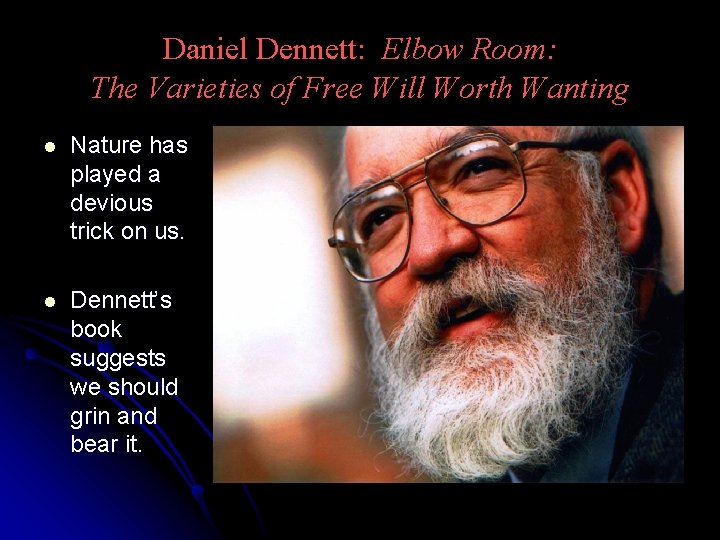
Daniel Dennett: Elbow Room: The Varieties of Free Will Worth Wanting l Nature has played a devious trick on us. l Dennett’s book suggests we should grin and bear it.
If we treat others badly when they’ve treated us badly… Are we just letting ourselves off easy? or… l Are we respecting them as free agents? l Are we teaching them something? and… l is that patronizing? l
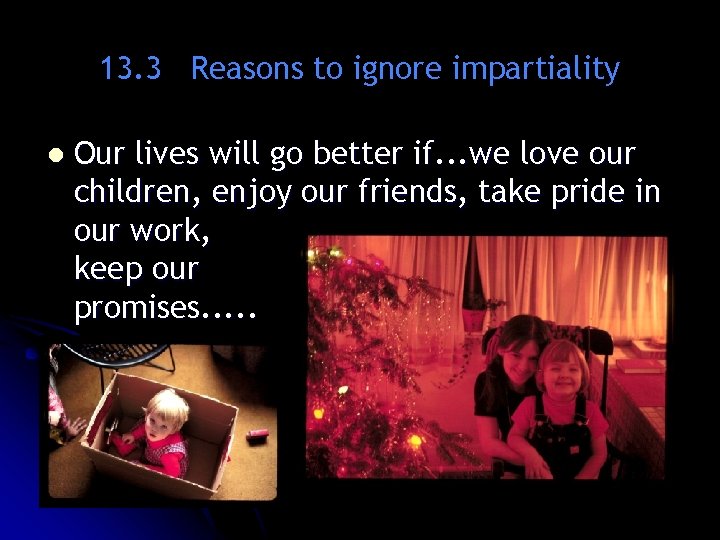
13. 3 Reasons to ignore impartiality l Our lives will go better if. . . we love our children, enjoy our friends, take pride in our work, keep our promises. . .
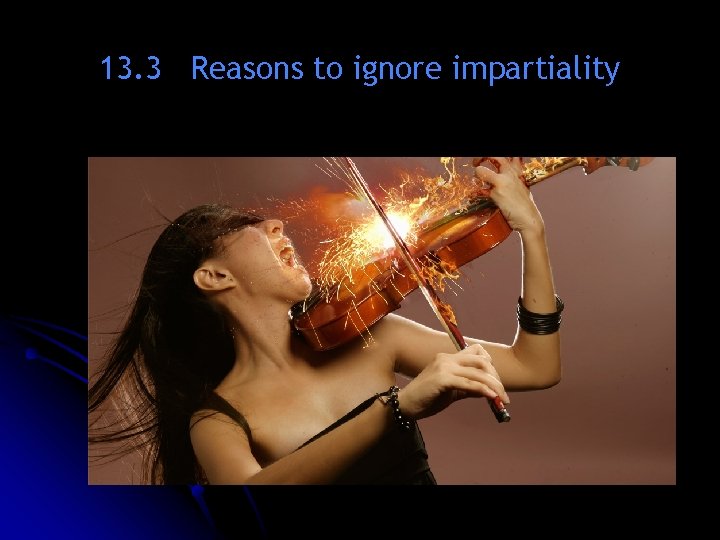
13. 3 Reasons to ignore impartiality
13. 4 Multiple-Strategies Utilitarianism Human welfare as a moral standard. . . Keep your promises (but not always) l Refrain from hurting people (but not always) l Never tell a lie (except sometimes) l Never put yourself first (except sometimes) l
13. 4 Multiple-Strategies Utilitarianism Acting in accordance with your BEST PLAN. . . Think about personalizing it: l Motives l Virtues l Decision-making strategies
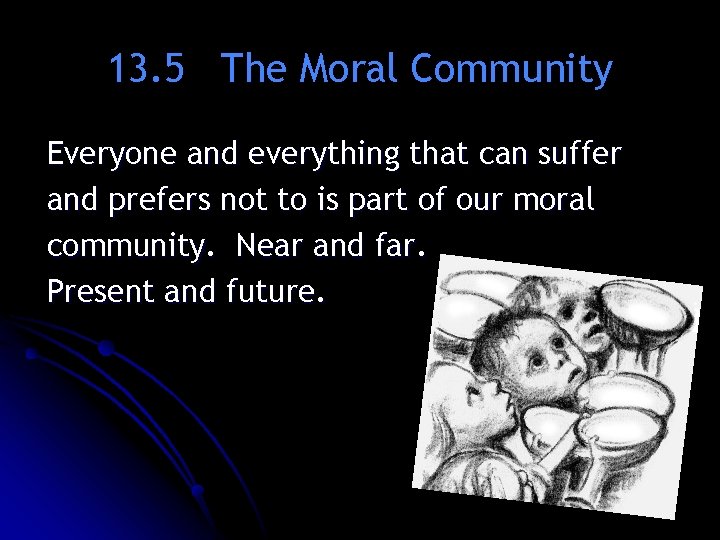
13. 5 The Moral Community Everyone and everything that can suffer and prefers not to is part of our moral community. Near and far. Present and future.
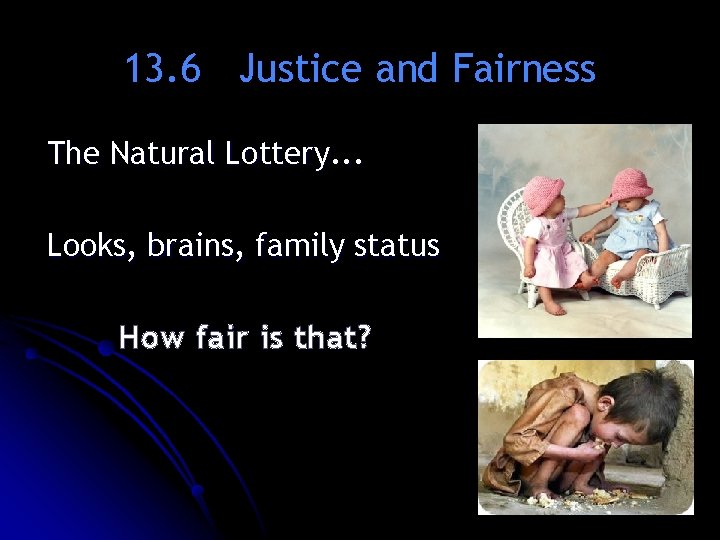
13. 6 Justice and Fairness The Natural Lottery. . . Looks, brains, family status How fair is that?
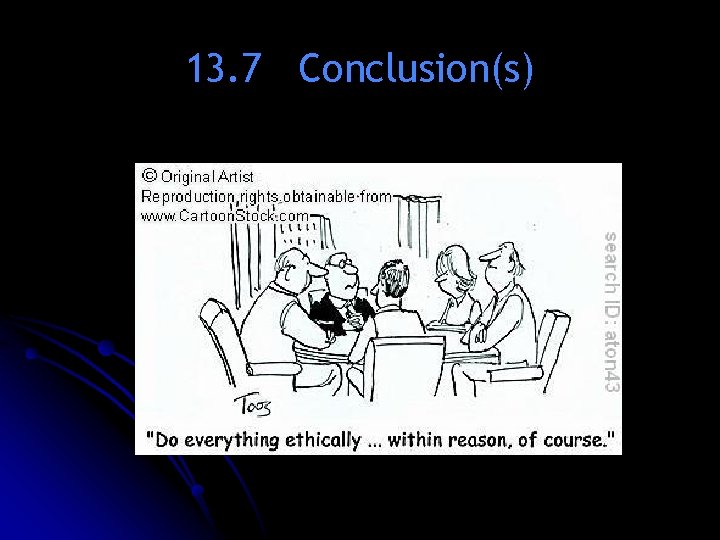
13. 7 Conclusion(s)
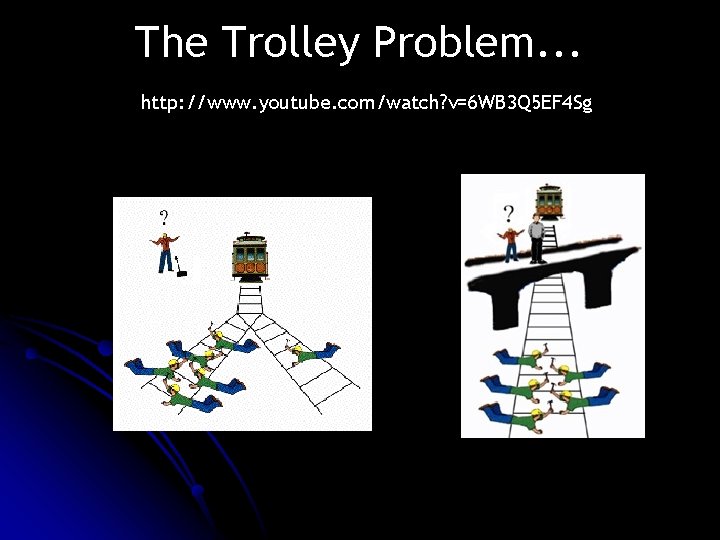
The Trolley Problem. . . http: //www. youtube. com/watch? v=6 WB 3 Q 5 EF 4 Sg
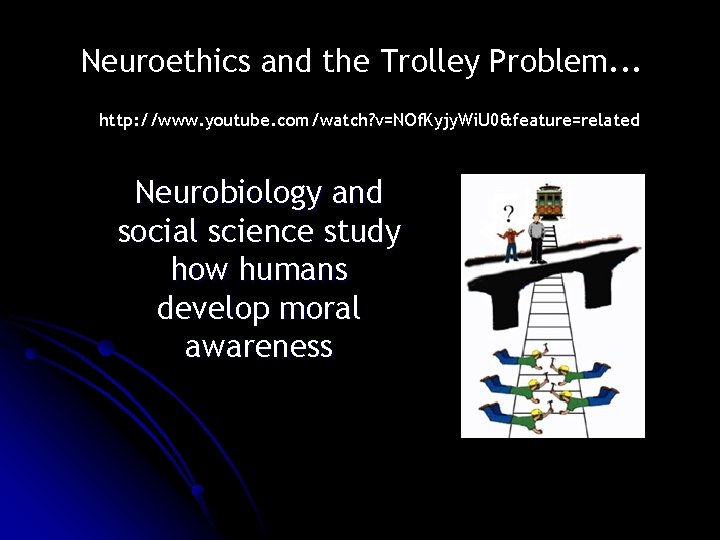
Neuroethics and the Trolley Problem. . . http: //www. youtube. com/watch? v=NOf. Kyjy. Wi. U 0&feature=related Neurobiology and social science study how humans develop moral awareness
Harvard’s Moral Sense Test
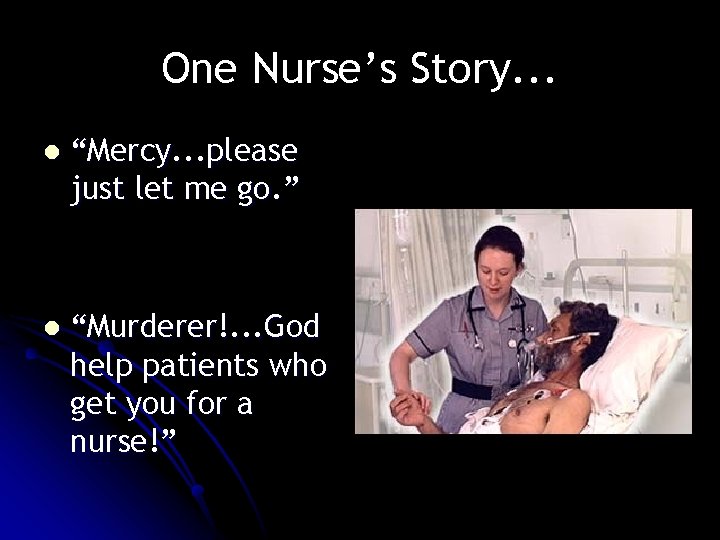
One Nurse’s Story. . . l “Mercy. . . please just let me go. ” l “Murderer!. . . God help patients who get you for a nurse!”
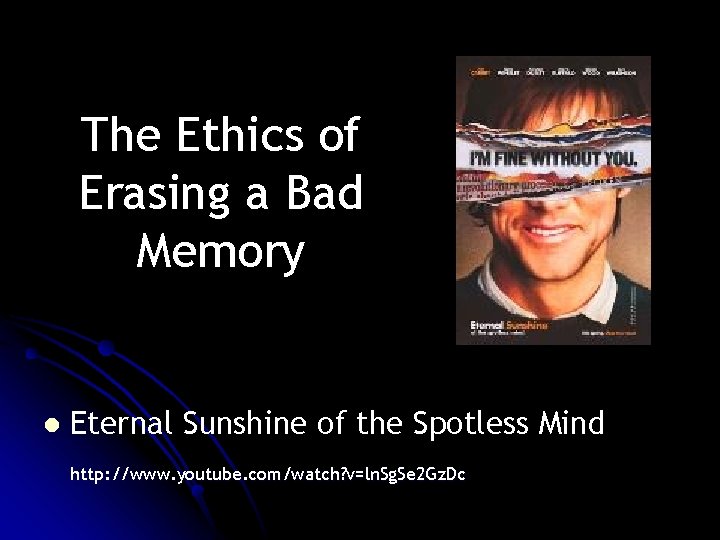
The Ethics of Erasing a Bad Memory l Eternal Sunshine of the Spotless Mind http: //www. youtube. com/watch? v=ln. Sg. Se 2 Gz. Dc
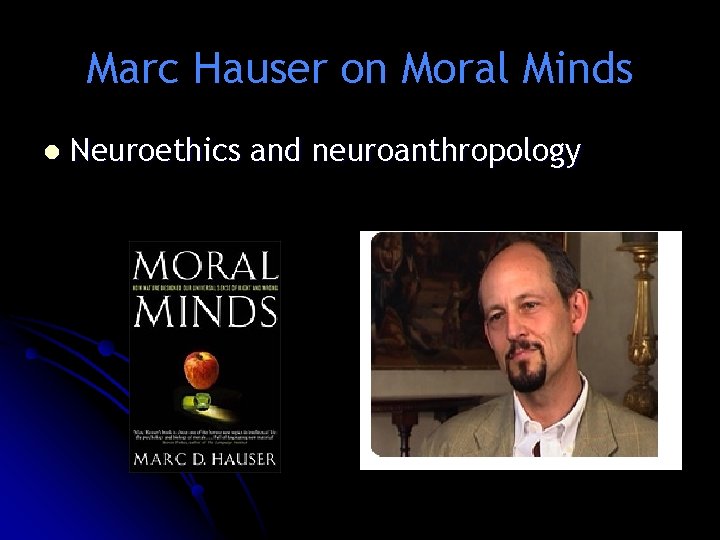
Marc Hauser on Moral Minds l Neuroethics and neuroanthropology
Barry Schwartz on Practical Wisdom l Jonathan Haidt o http: //www. ted. com/talks/barry_ schwartz_on_our_loss_of_wisd om. html