
What Works to Reduce Recidivism in Juveniles How
- Slides: 48
What Works to Reduce Recidivism in Juveniles
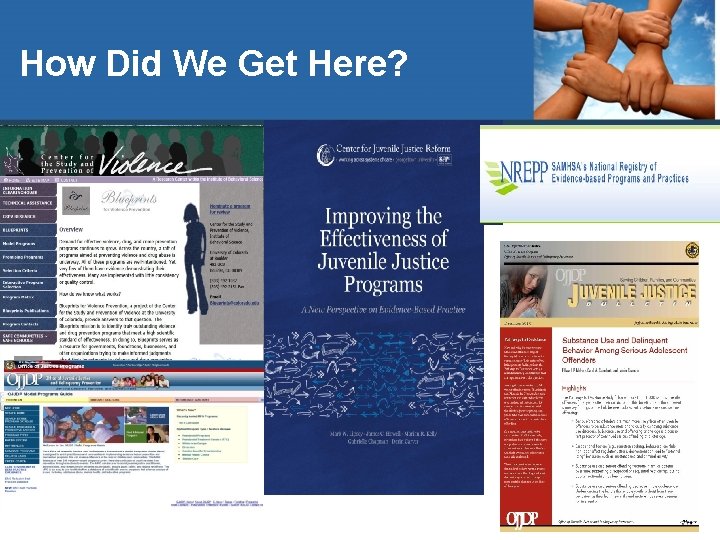
How Did We Get Here?
Levels of Research • Lowest level of evidence – Anecdotal evidence (Gut feeling) • Highest level of evidence – Empirical evidence (data based) • Need to examine a body of literature – Literature reviews – Ballot counting – Meta-analysis • Quantitative review of the research – A standardized way of examining research
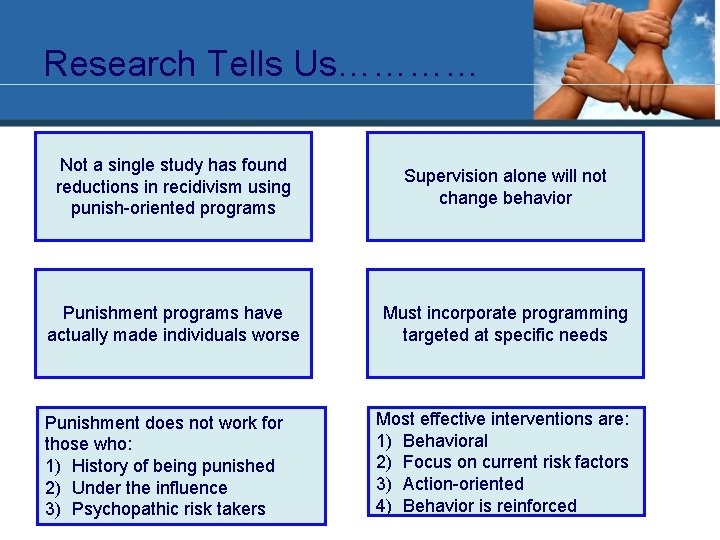
Research Tells Us………… Not a single study has found reductions in recidivism using punish-oriented programs Supervision alone will not change behavior Punishment programs have actually made individuals worse Must incorporate programming targeted at specific needs Punishment does not work for those who: 1) History of being punished 2) Under the influence 3) Psychopathic risk takers Most effective interventions are: 1) Behavioral 2) Focus on current risk factors 3) Action-oriented 4) Behavior is reinforced
What Do We Know? • Majority of studies have shown that correctional treatment interventions have reduced recidivism rates relative to various comparison • Average reduction in recidivism is approximately 10 percent • Now looking at characteristics of stellar programs versus mediocre programs
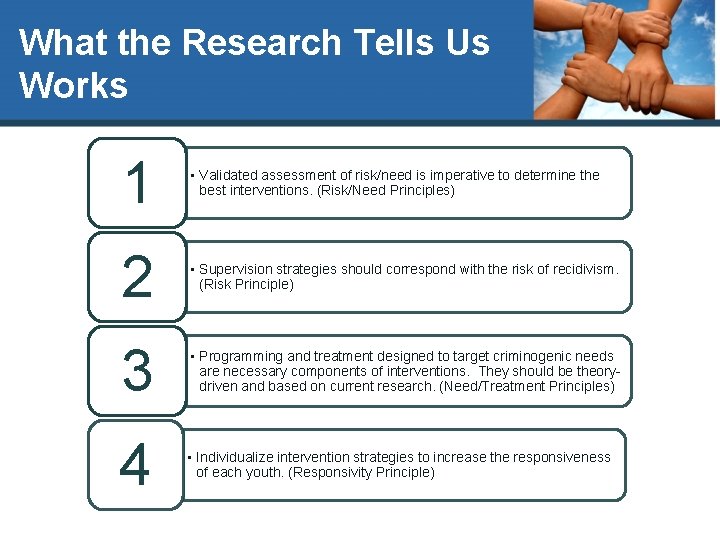
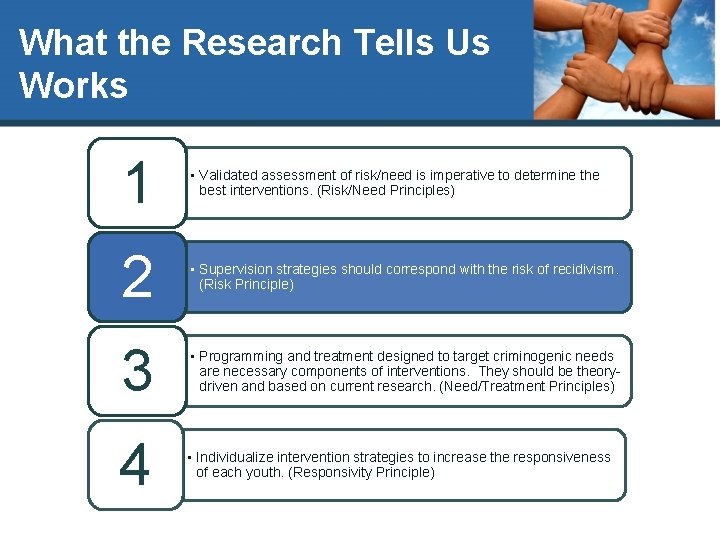
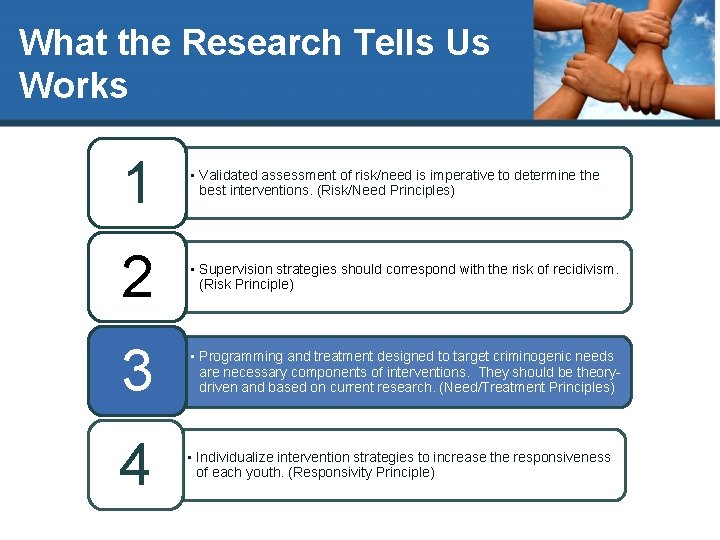
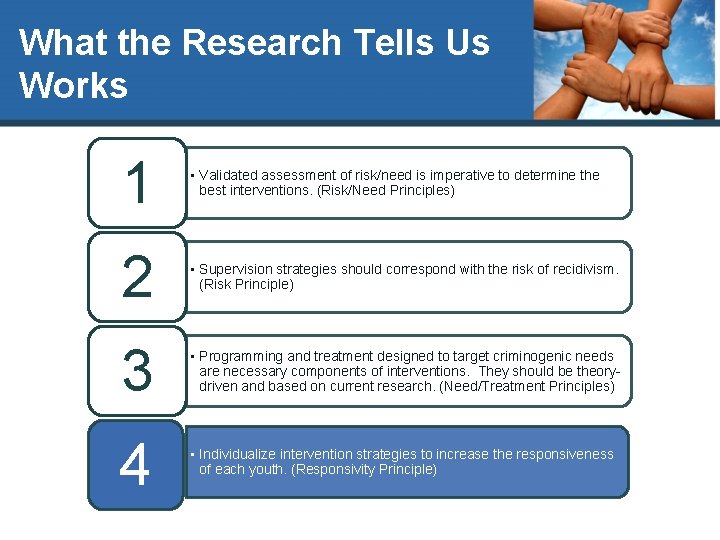
What the Research Tells Us Works 1 • Validated assessment of risk/need is imperative to determine the best interventions. (Risk/Need Principles) 2 • Supervision strategies should correspond with the risk of recidivism. (Risk Principle) 3 • Programming and treatment designed to target criminogenic needs are necessary components of interventions. They should be theorydriven and based on current research. (Need/Treatment Principles) 4 • Individualize intervention strategies to increase the responsiveness of each youth. (Responsivity Principle)
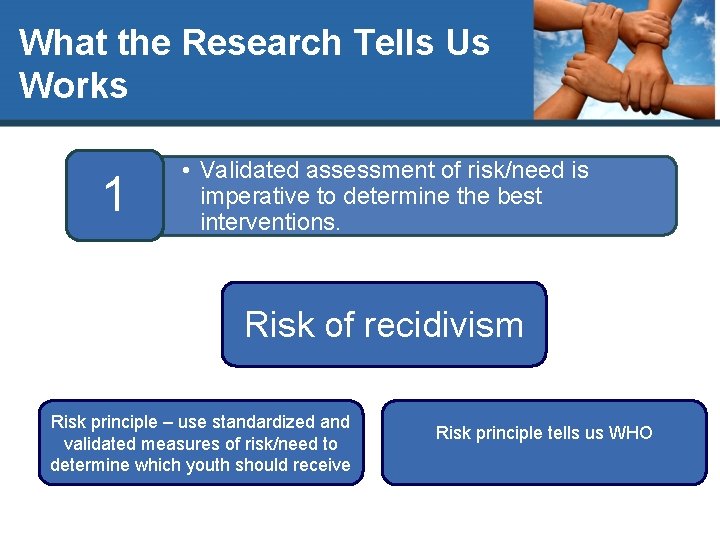
What the Research Tells Us Works 1 • Validated assessment of risk/need is imperative to determine the best interventions. Risk of recidivism Risk principle – use standardized and validated measures of risk/need to determine which youth should receive Risk principle tells us WHO
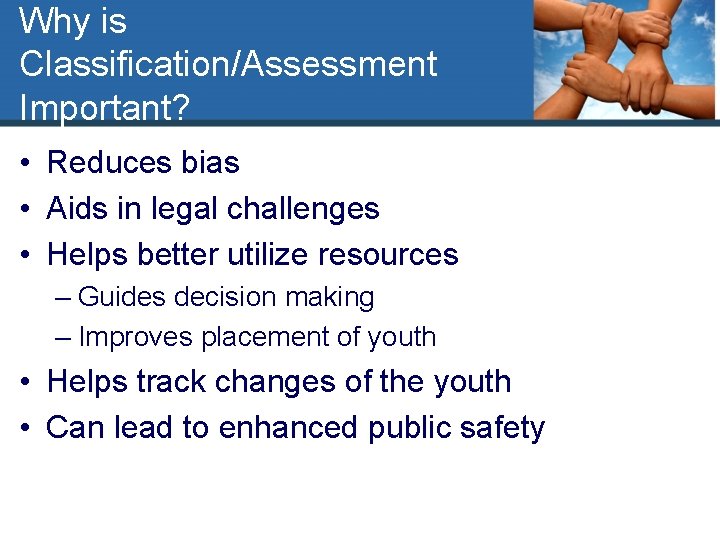
Why is Classification/Assessment Important? • Reduces bias • Aids in legal challenges • Helps better utilize resources – Guides decision making – Improves placement of youth • Helps track changes of the youth • Can lead to enhanced public safety
Common Problems with Assessment • Assessment instruments not validated or normed to the local youthful population • Youth are assessed then everyone gets the same level of programming – Put in the file and never used again • Errors occur even with the most efficient instrument • Choice of instrument does not reflect important organizational considerations
Major Risk Factors • • Antisocial attitudes Antisocial peers Antisocial personality History of antisocial behavior Family criminality and psychological problems in family origin Low levels of education/employment achievement Lack of participation in prosocial leisure activities Substance abuse
Antisocial Attitudes • Criminal attitudes have central role in major theories of criminality • Until recently, criminal attitudes have been virtually ignored in the mainstream assessment & treatment
Antisocial Attitudes • Attitudes, values, beliefs, rationalizations, cognitions, negative cognitive emotional states that support criminal behavior – – Rage Anger Defiance Criminal identity • What we think and believe affects what we do
Identifying Antisocial Attitudes: What to Listen For: • Procriminal attitudes are what people think (the content of the message) and not how people think • Negative expression about the law • Negative expression about conventional institutions, values, rules, & procedures; including authority • Negative expressions about self-management of behavior; including problem solving ability • Negative attitudes toward self and one’s ability to achieve through conventional means • Lack of empathy and sensitivity toward others
Neutralizations and Minimizations • Sets of verbalizations that serve to make it “ok” for behavior – Denial of Responsibility: Criminal acts are due to factors beyond the control of the individual, thus, the individual is guilt free to act. – Denial of Injury: Admits responsibility for the act, but minimizes the extent of harm or denies any harm – Denial of the Victim: Reverses the roles & blames the victim – “System Bashing”: Those who disapprove of the youth’s acts are defined as immoral, hypocritical, or criminal themselves. – Appeal to Higher Loyalties: “Live by a different code” – the demands of larger society are sacrificed for the demands of more immediate loyalties.
How to Address Antisocial Attitudes? • Use programming and techniques that: – Identify antisocial thinking – Use thought blockers – Changing the antisocial thinking
Influence of Peers • Elevated risk – Delinquent associations – Absence of prosocial associations • Based on social learning – Learn through interaction of others – Provide reinforcements
Reducing Peer Associations • Restrict associates • Set and enforce curfews • Ban hangouts • Teach youth to recognize & avoid negative influences (people, places, things) • Practice new skills (like being assertive instead of passive) • Teach how to maintain relationships w/o getting into trouble • Identify or develop positive associations: mentors, family, friends, teachers, employer, etc. • Train family and friends to assist youth • Set goal of one new friend (positive association) per month • Develop sober/prosocial leisure activities
Antisocial Personality Patterns: • • • Psychopathy Weak socialization Impulsivity Restless/aggressive energy Egocentricism Below average verbal intelligence A taste for risk Weak problem-solving Poor self regulation skills Hostile interpersonal interactions, lack of empathy 18
How Do We Address Antisocial Personality • Skill based programs – Anger management – Impulse control – Decision making – Problem solving – Thinking skills
History of Antisocial Behavior • The best predictor of future behavior is past behavior – Age of onset & escalation of offending – Variety of acts – Across settings • 40% of serious offenders commit their first criminal offense by age 12 • 85% of serious offenders have committed an offense by age 14
Family Factors • Include parental criminality and a variety of psychological problems in the family of origin – Low levels of affection, caring and cohesiveness – Poor parental practices • • Recognition of antisocial behaviors Parental supervision Discipline (none or too much) Neglect and abuse
Addressing Family Factors • • Family counseling to repair relationships Teach to recognize antisocial behavior Enhance supervision practices Enhance disciplinary practices
Education and Employment • Employment or education occupies time with a prosocial activity • Receiving rewards for participation in prosocial activity • Interacting with prosocial others • Factors include: – Low levels of personal educational/vocational achievement • Cumulative disadvantage
Leisure & Recreation • Low involvement in prosocial leisure and recreational activities • “Idle hands”
Substance Abuse • Activity is illegal itself • Use may lead to other criminal behaviors – Theft/robbery to get drugs – Lower inhibitions “beer muscles” • Buying drugs puts a person in contact with criminal others • Selling/buying drugs usually creates an environment that is conducive to other criminal behaviors
What the Research Tells Us Works 1 • Validated assessment of risk/need is imperative to determine the best interventions. (Risk/Need Principles) 2 • Supervision strategies should correspond with the risk of recidivism. (Risk Principle) 3 • Programming and treatment designed to target criminogenic needs are necessary components of interventions. They should be theorydriven and based on current research. (Need/Treatment Principles) 4 • Individualize intervention strategies to increase the responsiveness of each youth. (Responsivity Principle)
Example of the Risk Principle in Action:
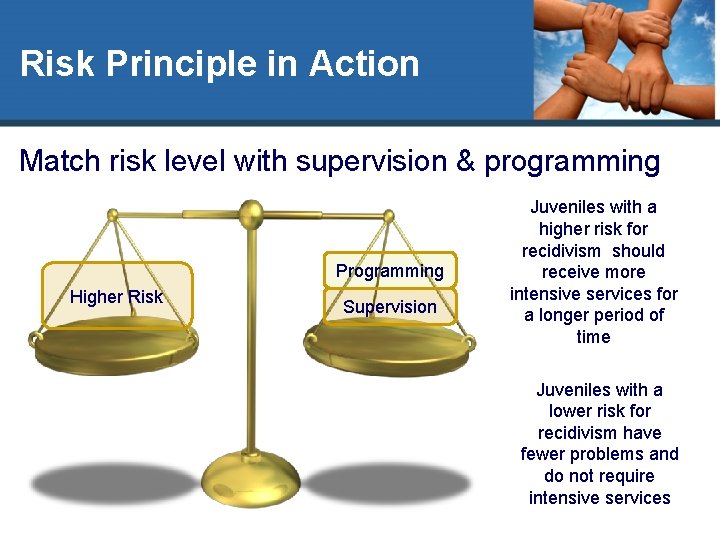
Risk Principle in Action Match risk level with supervision & programming Programming Higher Risk Supervision Juveniles with a higher risk for recidivism should receive more intensive services for a longer period of time Juveniles with a lower risk for recidivism have fewer problems and do not require intensive services
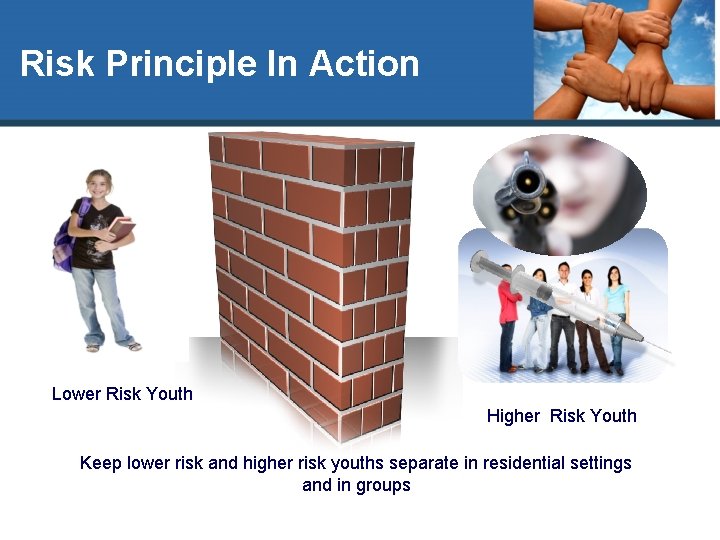
Risk Principle In Action Lower Risk Youth Higher Risk Youth Keep lower risk and higher risk youths separate in residential settings and in groups
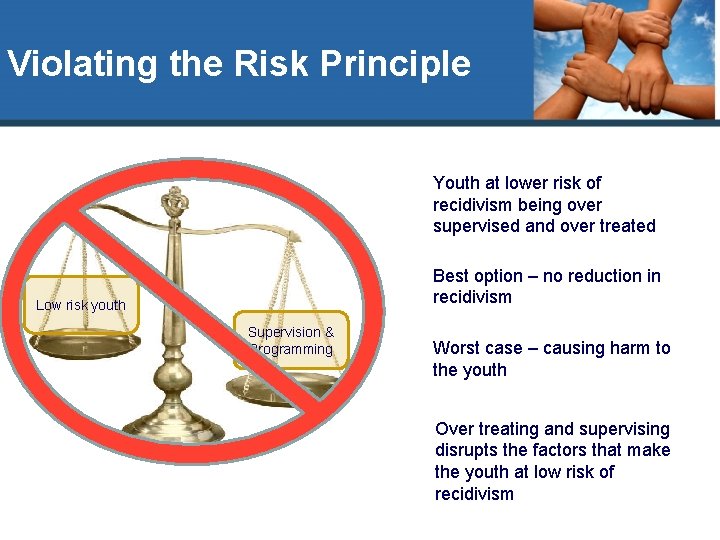
Violating the Risk Principle Youth at lower risk of recidivism being over supervised and over treated Best option – no reduction in recidivism Low risk youth Supervision & Programming Worst case – causing harm to the youth Over treating and supervising disrupts the factors that make the youth at low risk of recidivism
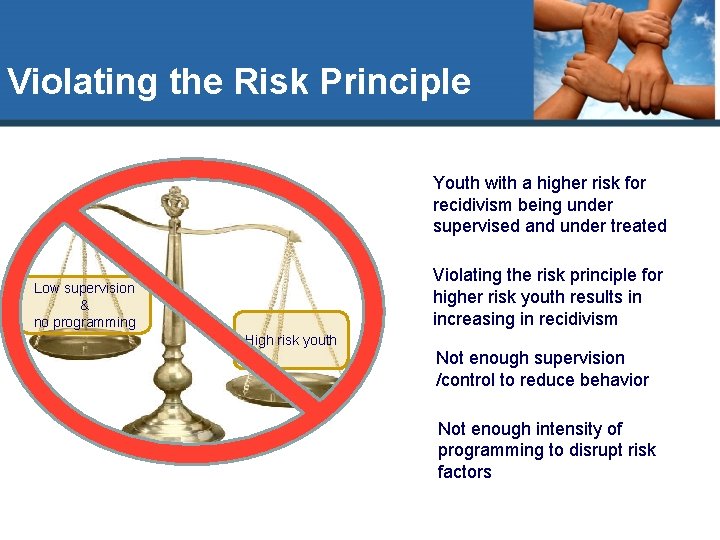
Violating the Risk Principle Youth with a higher risk for recidivism being under supervised and under treated Violating the risk principle for higher risk youth results in increasing in recidivism Low supervision & no programming High risk youth Not enough supervision /control to reduce behavior Not enough intensity of programming to disrupt risk factors
What the Research Tells Us Works 1 • Validated assessment of risk/need is imperative to determine the best interventions. (Risk/Need Principles) 2 • Supervision strategies should correspond with the risk of recidivism. (Risk Principle) 3 • Programming and treatment designed to target criminogenic needs are necessary components of interventions. They should be theorydriven and based on current research. (Need/Treatment Principles) 4 • Individualize intervention strategies to increase the responsiveness of each youth. (Responsivity Principle)
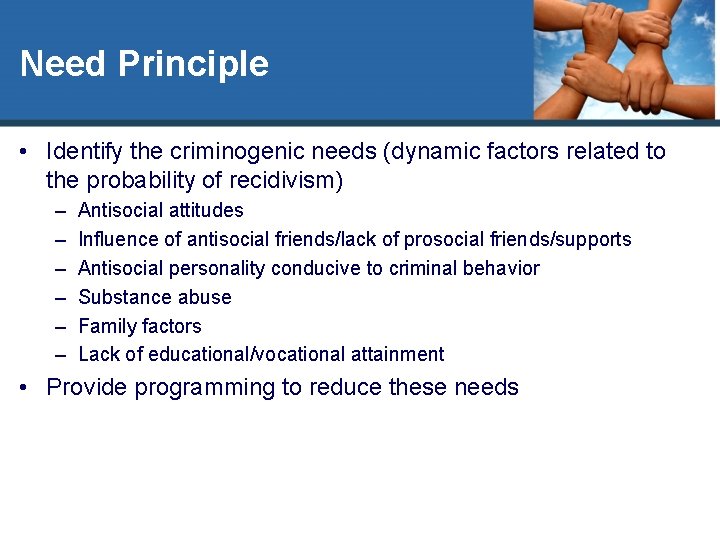
Need Principle • Identify the criminogenic needs (dynamic factors related to the probability of recidivism) – – – Antisocial attitudes Influence of antisocial friends/lack of prosocial friends/supports Antisocial personality conducive to criminal behavior Substance abuse Family factors Lack of educational/vocational attainment • Provide programming to reduce these needs
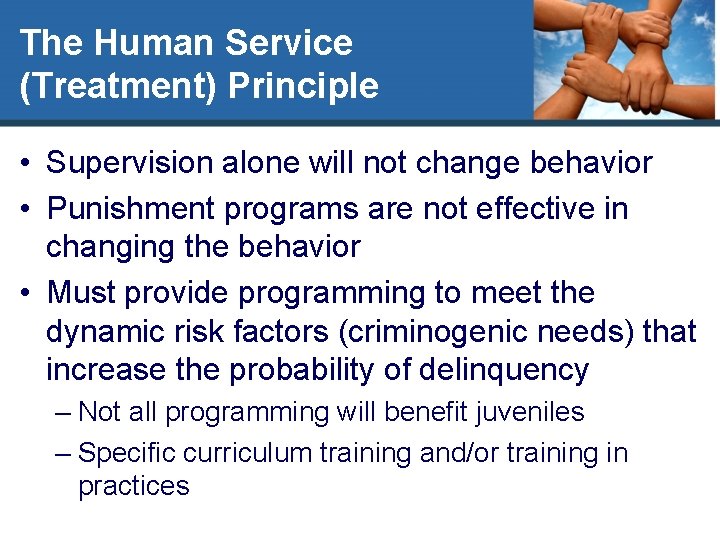
The Human Service (Treatment) Principle • Supervision alone will not change behavior • Punishment programs are not effective in changing the behavior • Must provide programming to meet the dynamic risk factors (criminogenic needs) that increase the probability of delinquency – Not all programming will benefit juveniles – Specific curriculum training and/or training in practices
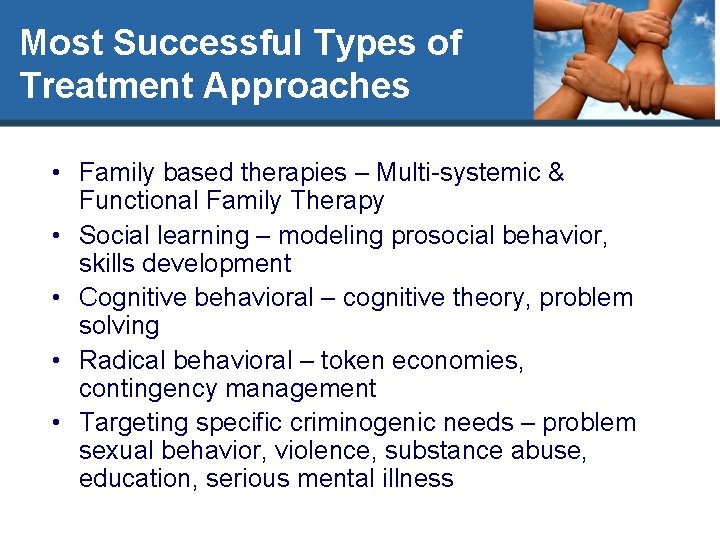
Most Successful Types of Treatment Approaches • Family based therapies – Multi-systemic & Functional Family Therapy • Social learning – modeling prosocial behavior, skills development • Cognitive behavioral – cognitive theory, problem solving • Radical behavioral – token economies, contingency management • Targeting specific criminogenic needs – problem sexual behavior, violence, substance abuse, education, serious mental illness
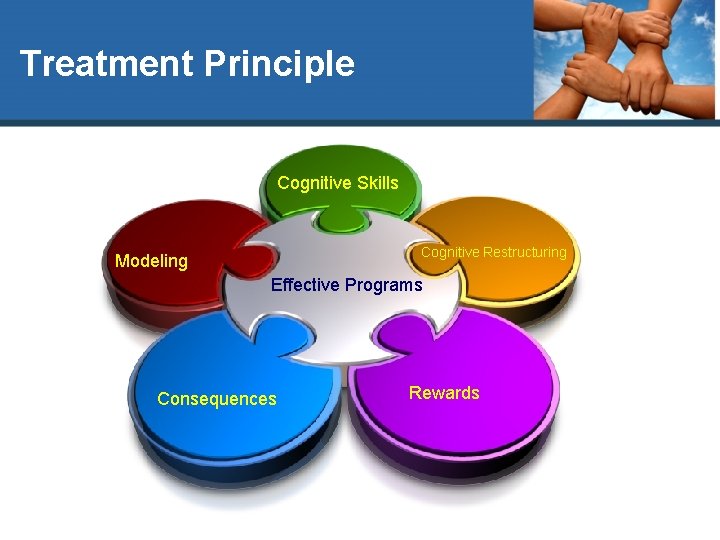
Treatment Principle Cognitive Skills Cognitive Restructuring Modeling Effective Programs Consequences Rewards
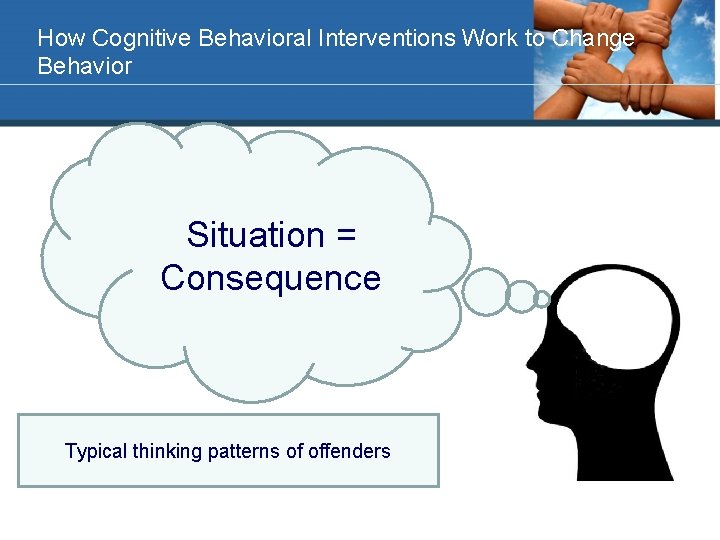
How Cognitive Behavioral Interventions Work to Change Behavior Situation = Consequence Typical thinking patterns of offenders
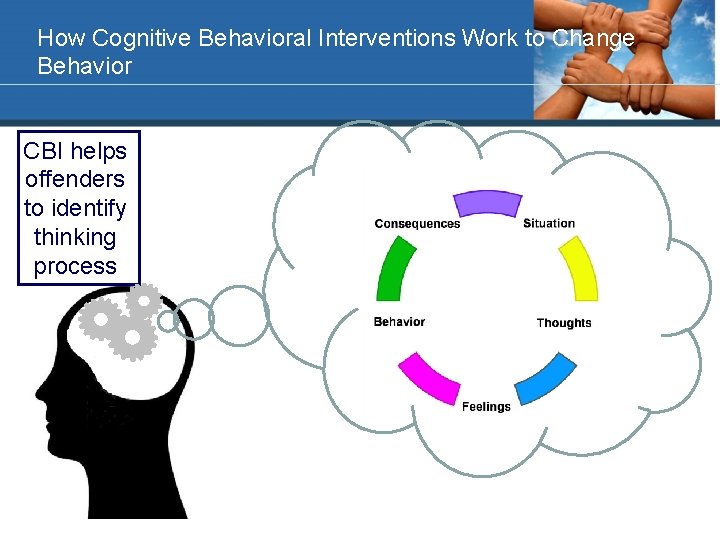
How Cognitive Behavioral Interventions Work to Change Behavior CBI helps offenders to identify thinking process
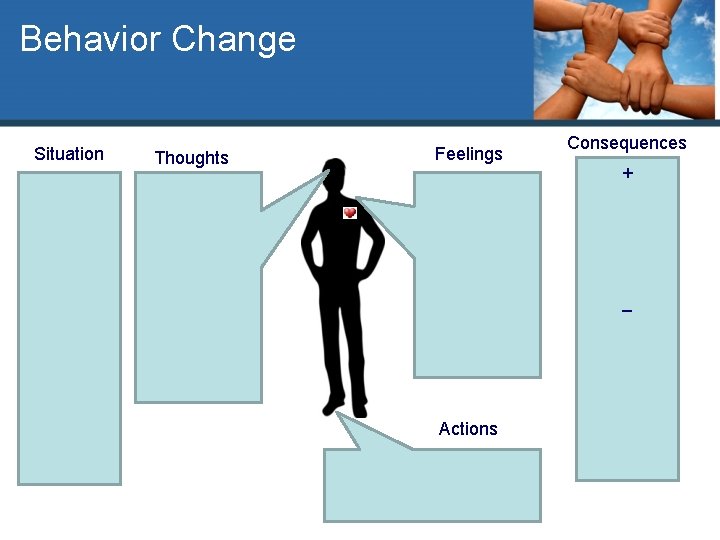
Behavior Change Situation Thoughts Feelings Consequences + _ Actions
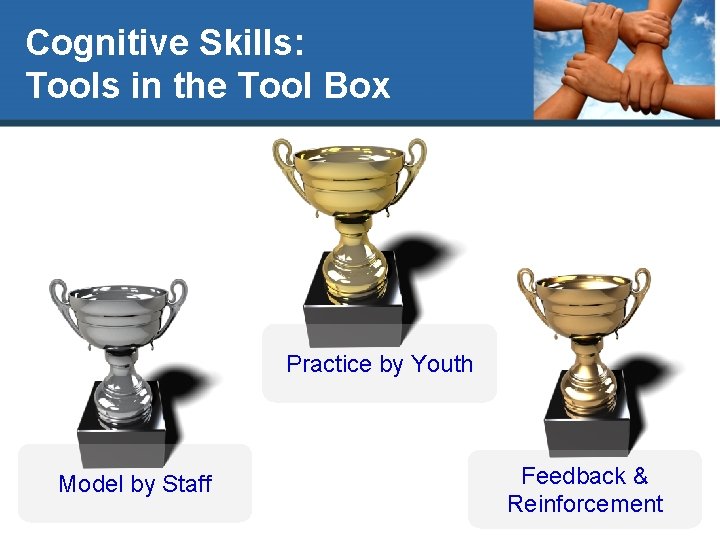
Cognitive Skills: Tools in the Tool Box Practice by Youth Model by Staff Feedback & Reinforcement
Structured Skill Building • Staff defines and sells the skill to be learned • Staff models the skill – Demonstrates for offender • Offender practices – Engages in roleplay • Offender receives reinforcement and feedback • Offender generalizes skill – Practices the skill in real life situations
Effective Reinforcement The Hows and Whys • Identify the behavior to be reinforced • During or immediately following the behavior tell the person what behavior you liked and why • Discuss short and long term benefits of behavior • Contingent on performing the desired behavior • Consistently and then intermittently • Reinforcer desirable to recipient
Effective Disapproval How to Administer Punishers • Identify the behavior to be punished • Immediately tell the person what behavior you disliked • Tell the person why you disliked the behavior • Discuss the short and long term consequences of the behavior • Model an alternative prosocial behavior • Consider pairing the disapproval with a sanction
Effective Programs Have Certain Characteristics • Disrupt delinquent relationships & build natural supportive prosocial relationships • Assist youth in maintaining contact with the family and work to teach family members skills to support youth • Intensity of interventions corresponds with level of risk • Provides for a continuum of care • Have qualified, experienced, dedicated, & educated leadership & staff • Adhere to program fidelity – Establish performance measures and conduct evaluations • Are stable & have sufficient resources & support
What the Research Tells Us Works 1 • Validated assessment of risk/need is imperative to determine the best interventions. (Risk/Need Principles) 2 • Supervision strategies should correspond with the risk of recidivism. (Risk Principle) 3 • Programming and treatment designed to target criminogenic needs are necessary components of interventions. They should be theorydriven and based on current research. (Need/Treatment Principles) 4 • Individualize intervention strategies to increase the responsiveness of each youth. (Responsivity Principle)
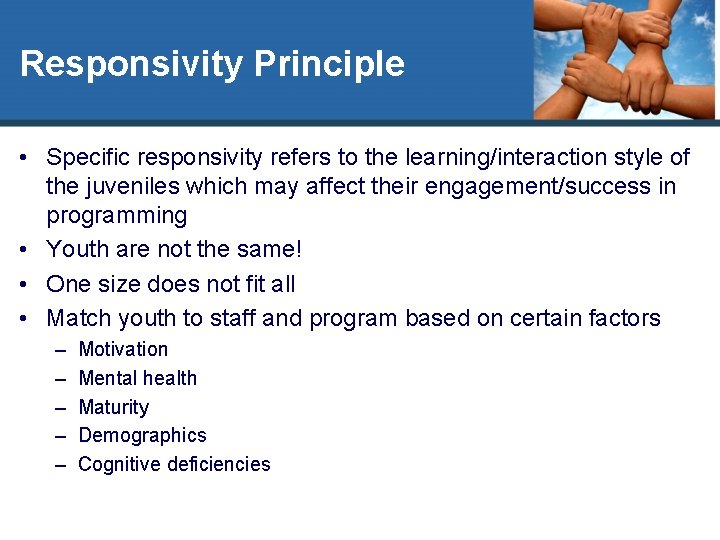
Responsivity Principle • Specific responsivity refers to the learning/interaction style of the juveniles which may affect their engagement/success in programming • Youth are not the same! • One size does not fit all • Match youth to staff and program based on certain factors – – – Motivation Mental health Maturity Demographics Cognitive deficiencies
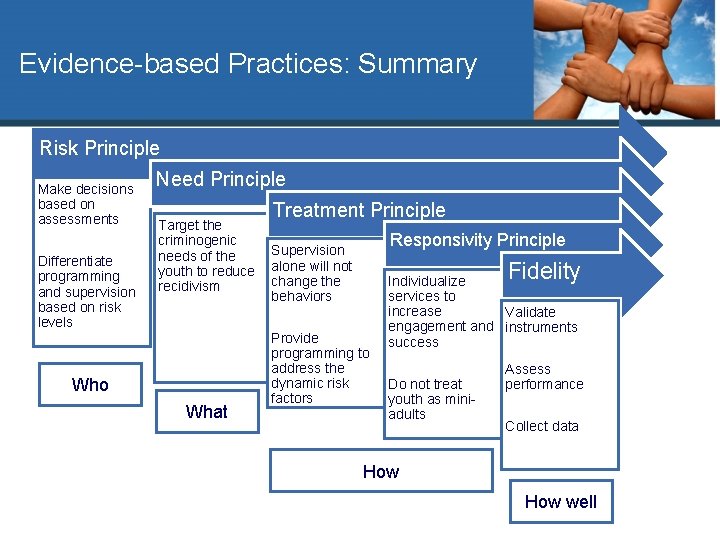
Evidence-based Practices: Summary Risk Principle Make decisions based on assessments Differentiate programming and supervision based on risk levels Need Principle Target the criminogenic needs of the youth to reduce recidivism Who What Treatment Principle Responsivity Principle Supervision alone will not change the behaviors Fidelity Provide programming to address the dynamic risk factors Individualize services to increase Validate engagement and instruments success Do not treat youth as miniadults Assess performance Collect data How well
Contact Information Jennifer A. Pealer, Ph. D. Senior Policy Analyst jpealer@csg. org