
What Works Supporting Adults with Autism and Complex
![Happiness Autism and Being in the Flow MC [1] is engaged in a doable](https://slidetodoc.com/presentation_image_h/32aa25aadbfbc4bf593409ba61c1358b/image-47.jpg "Happiness Autism and Being in the Flow MC [1] is engaged in a doable")
- Slides: 53
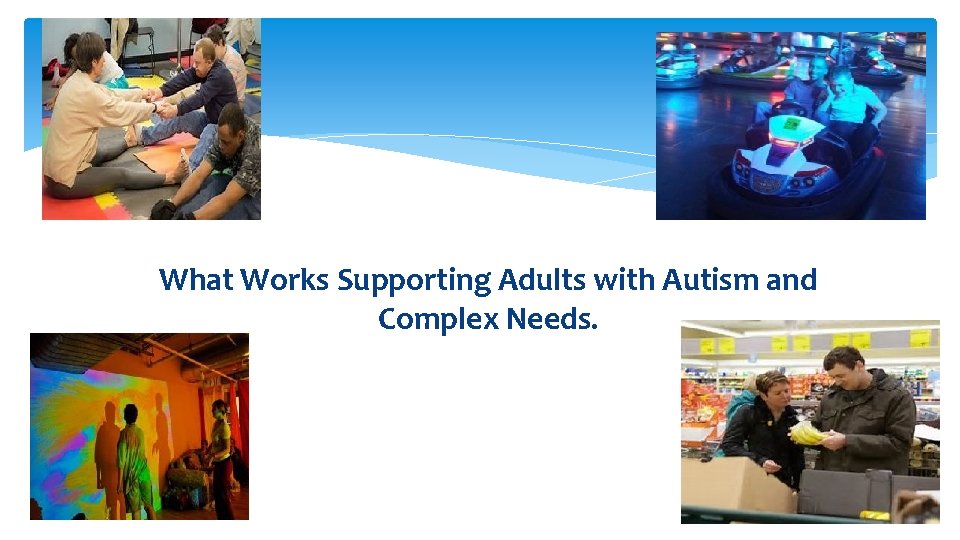
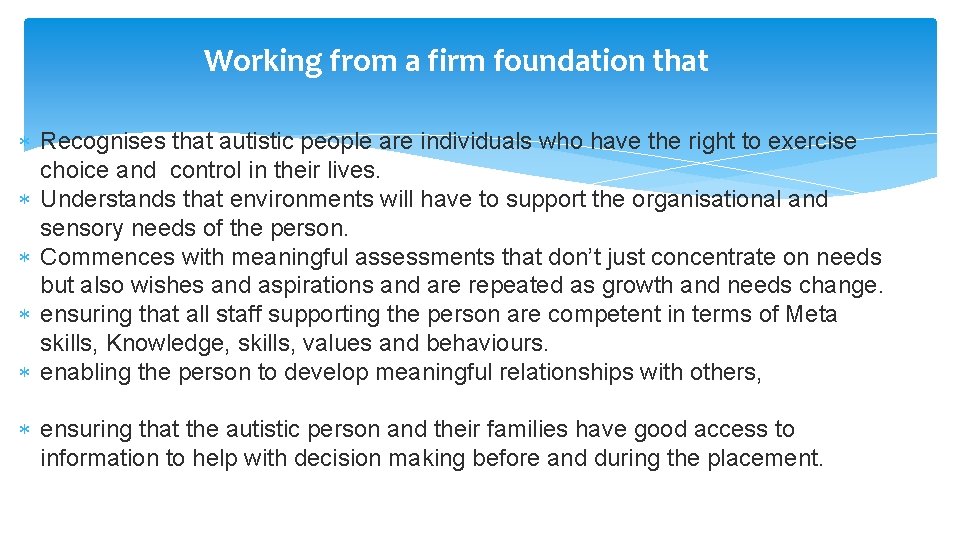
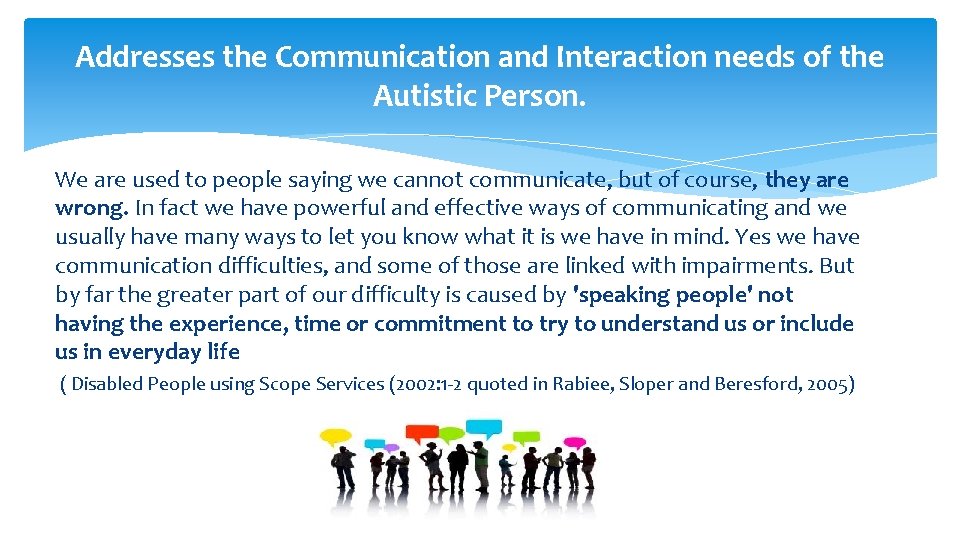
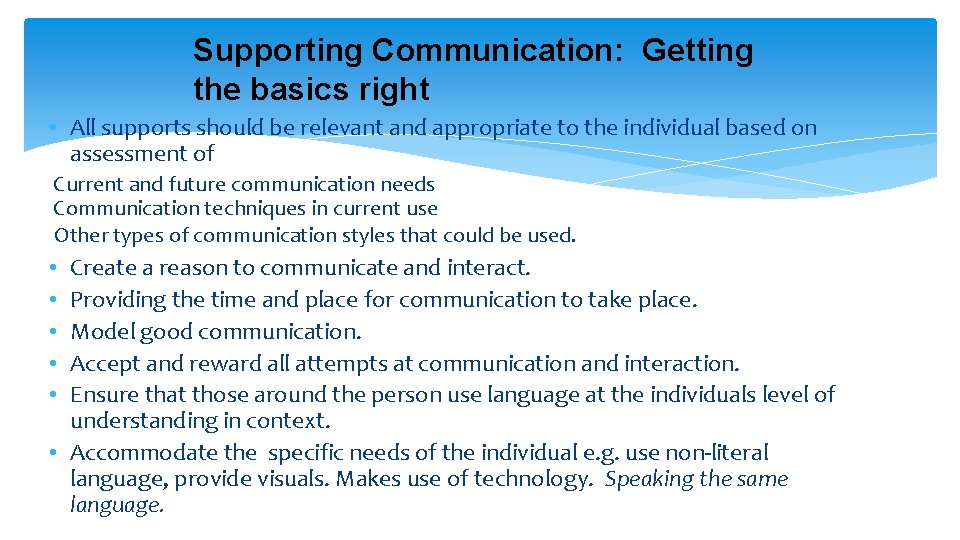
What Works Supporting Adults with Autism and Complex Needs.
Working from a firm foundation that Recognises that autistic people are individuals who have the right to exercise choice and control in their lives. Understands that environments will have to support the organisational and sensory needs of the person. Commences with meaningful assessments that don’t just concentrate on needs but also wishes and aspirations and are repeated as growth and needs change. ensuring that all staff supporting the person are competent in terms of Meta skills, Knowledge, skills, values and behaviours. enabling the person to develop meaningful relationships with others, ensuring that the autistic person and their families have good access to information to help with decision making before and during the placement.
Addresses the Communication and Interaction needs of the Autistic Person. We are used to people saying we cannot communicate, but of course, they are wrong. In fact we have powerful and effective ways of communicating and we usually have many ways to let you know what it is we have in mind. Yes we have communication difficulties, and some of those are linked with impairments. But by far the greater part of our difficulty is caused by 'speaking people' not having the experience, time or commitment to try to understand us or include us in everyday life ( Disabled People using Scope Services (2002: 1 -2 quoted in Rabiee, Sloper and Beresford, 2005)
Supporting Communication: Getting the basics right • All supports should be relevant and appropriate to the individual based on assessment of Current and future communication needs Communication techniques in current use Other types of communication styles that could be used. Create a reason to communicate and interact. Providing the time and place for communication to take place. Model good communication. Accept and reward all attempts at communication and interaction. Ensure that those around the person use language at the individuals level of understanding in context. • Accommodate the specific needs of the individual e. g. use non-literal language, provide visuals. Makes use of technology. Speaking the same language. • • •
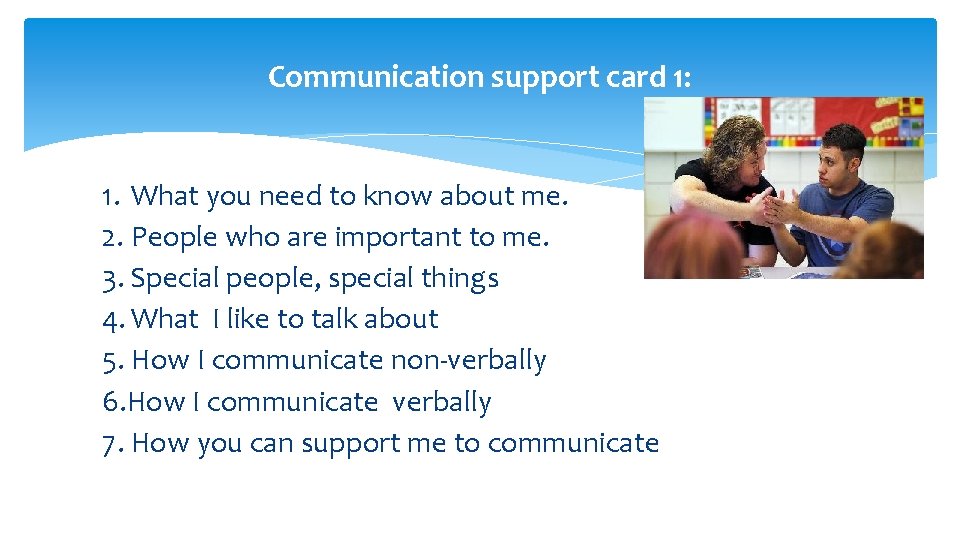
Communication support card 1: 1. What you need to know about me. 2. People who are important to me. 3. Special people, special things 4. What I like to talk about 5. How I communicate non-verbally 6. How I communicate verbally 7. How you can support me to communicate
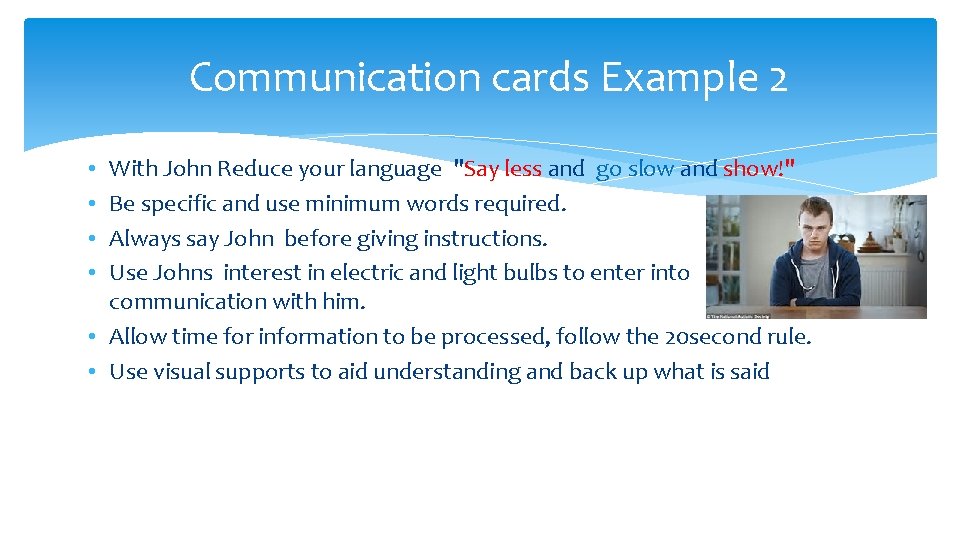
Communication cards Example 2 With John Reduce your language "Say less and go slow and show!" Be specific and use minimum words required. Always say John before giving instructions. Use Johns interest in electric and light bulbs to enter into communication with him. • Allow time for information to be processed, follow the 20 second rule. • Use visual supports to aid understanding and back up what is said • •
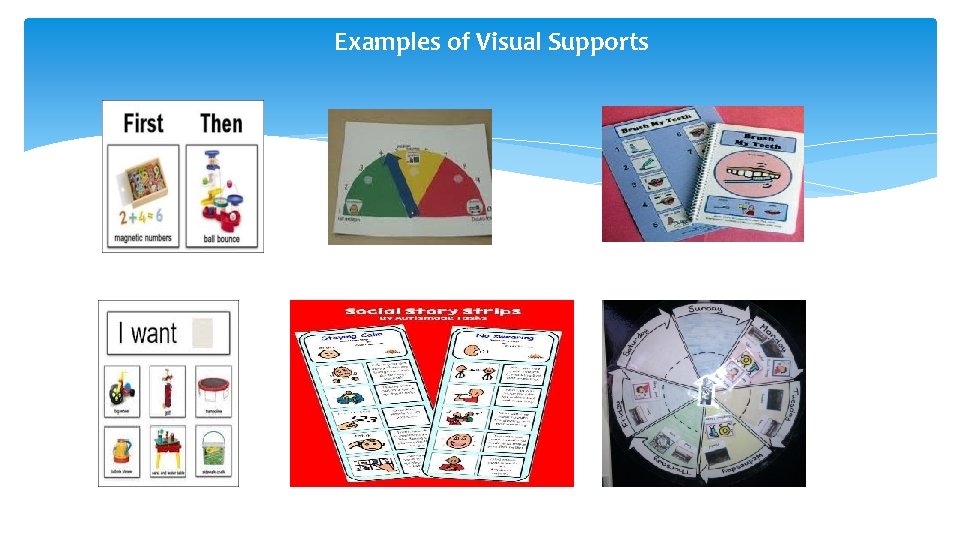
Examples of Visual Supports
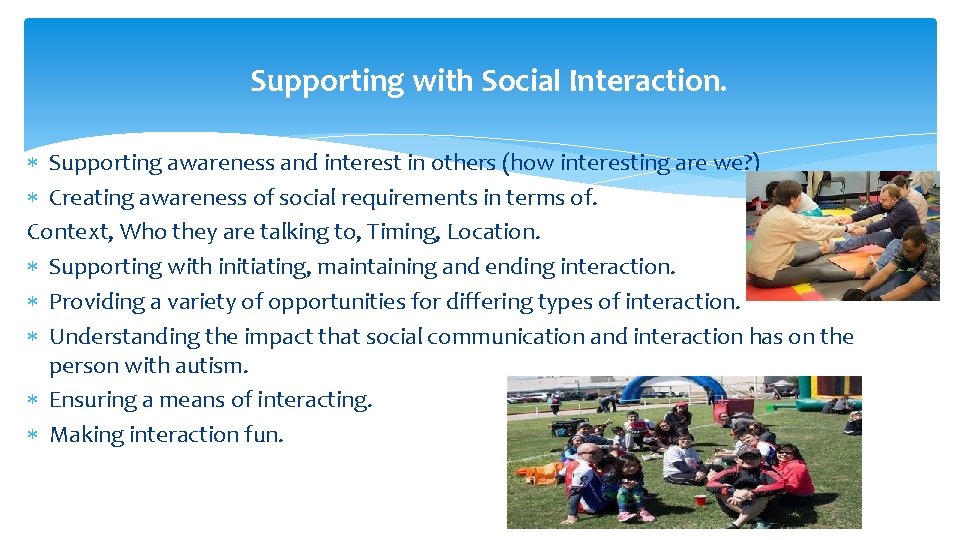
Supporting with Social Interaction. Supporting awareness and interest in others (how interesting are we? ) Creating awareness of social requirements in terms of. Context, Who they are talking to, Timing, Location. Supporting with initiating, maintaining and ending interaction. Providing a variety of opportunities for differing types of interaction. Understanding the impact that social communication and interaction has on the person with autism. Ensuring a means of interacting. Making interaction fun.
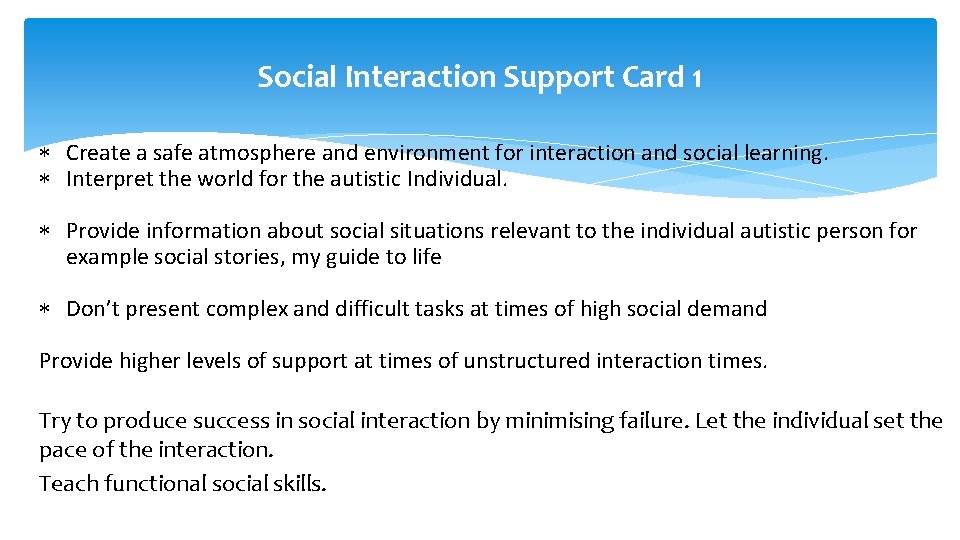
Social Interaction Support Card 1 Create a safe atmosphere and environment for interaction and social learning. Interpret the world for the autistic Individual. Provide information about social situations relevant to the individual autistic person for example social stories, my guide to life Don’t present complex and difficult tasks at times of high social demand Provide higher levels of support at times of unstructured interaction times. Try to produce success in social interaction by minimising failure. Let the individual set the pace of the interaction. Teach functional social skills.
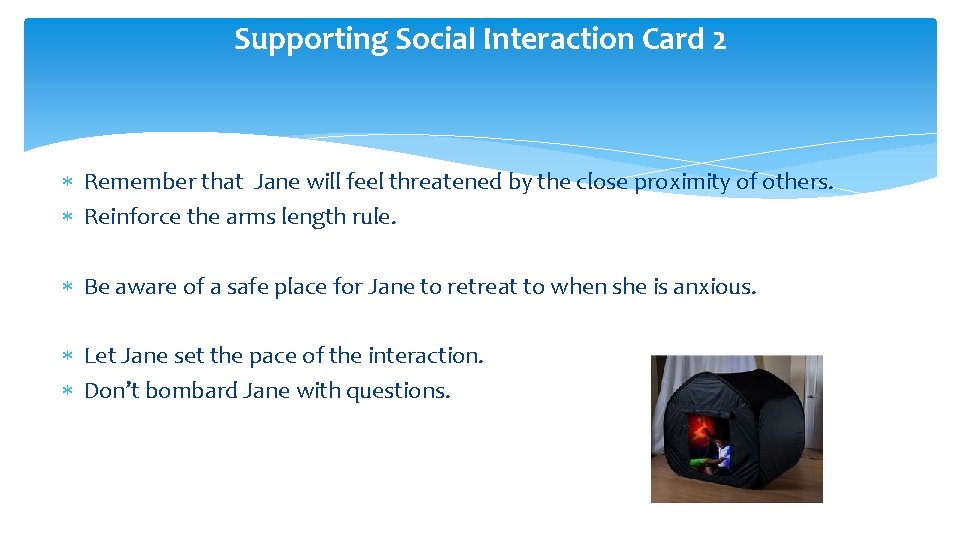
Supporting Social Interaction Card 2 Remember that Jane will feel threatened by the close proximity of others. Reinforce the arms length rule. Be aware of a safe place for Jane to retreat to when she is anxious. Let Jane set the pace of the interaction. Don’t bombard Jane with questions.
Golden rules for interacting with… Always. 1. 2. 3. 4. 5. Never. 1. 2. 3. 4. 5
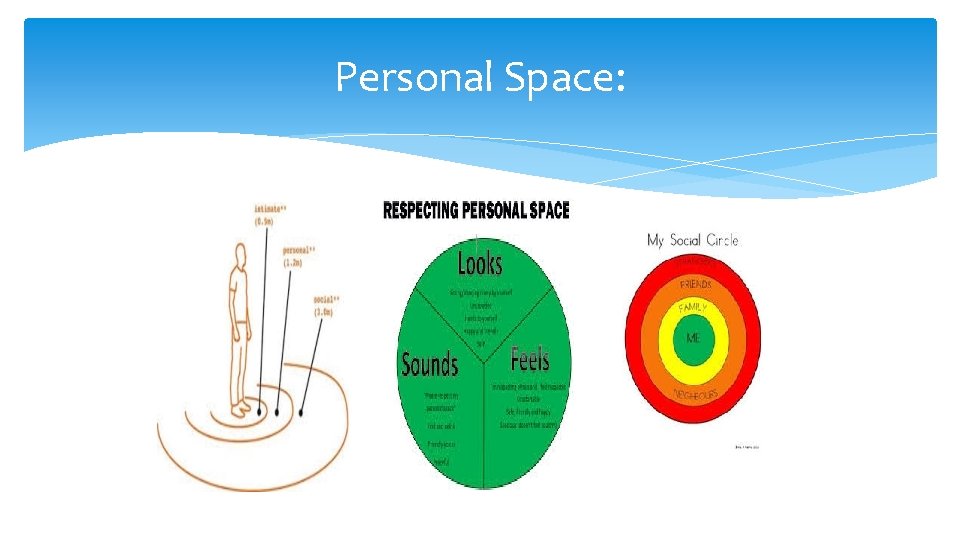
Personal Space:
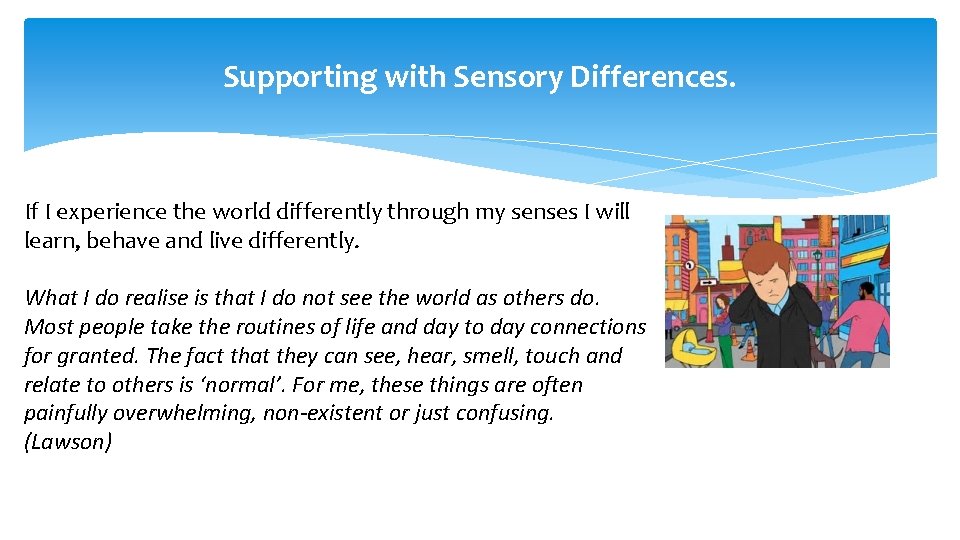
Supporting with Sensory Differences. If I experience the world differently through my senses I will learn, behave and live differently. What I do realise is that I do not see the world as others do. Most people take the routines of life and day to day connections for granted. The fact that they can see, hear, smell, touch and relate to others is ‘normal’. For me, these things are often painfully overwhelming, non-existent or just confusing. (Lawson)
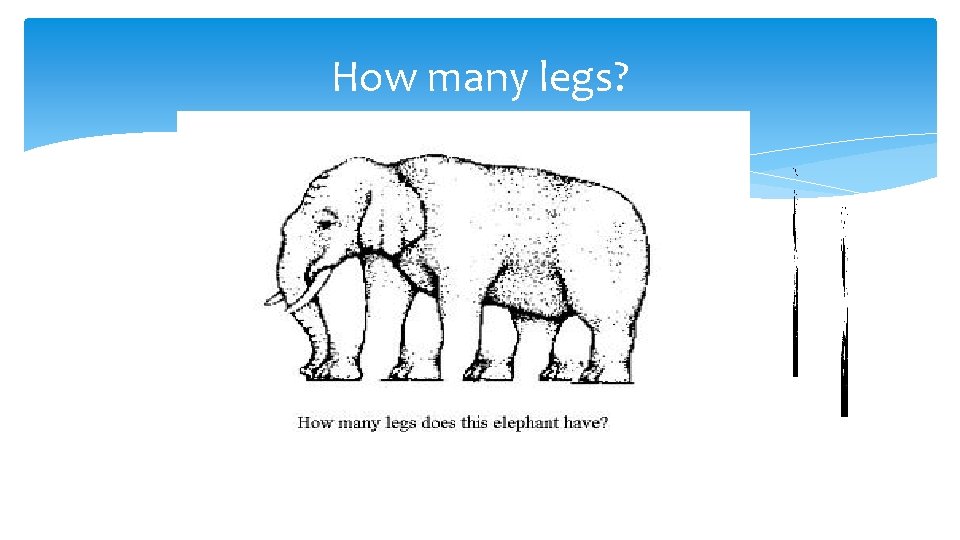
How many legs?
The sensory differences of Autistic people. I used to hate small shops because my eyesight used to make them look as if they were even smaller than they actually were. I also remember one Christmas when I got a new bike for a present. It was yellow, I would not look at it. Extra red was added to the colour making it like orange, and it blurred upward making it look like it was on fire. Another trick my ears played was to change the volume of sounds around me. Sometimes when other kids speak to me I could scarcely hear them and sometimes they sounded like bullets. My sense of touch can be overly sensitive, sharp as a pin and to be touched can be ‘shocking’ as though being jolted. (Donna Williams) When people hugged me I stiffened and pulled away to avoid the engulfing tidal wave of stimulation. (Temple Grandin)
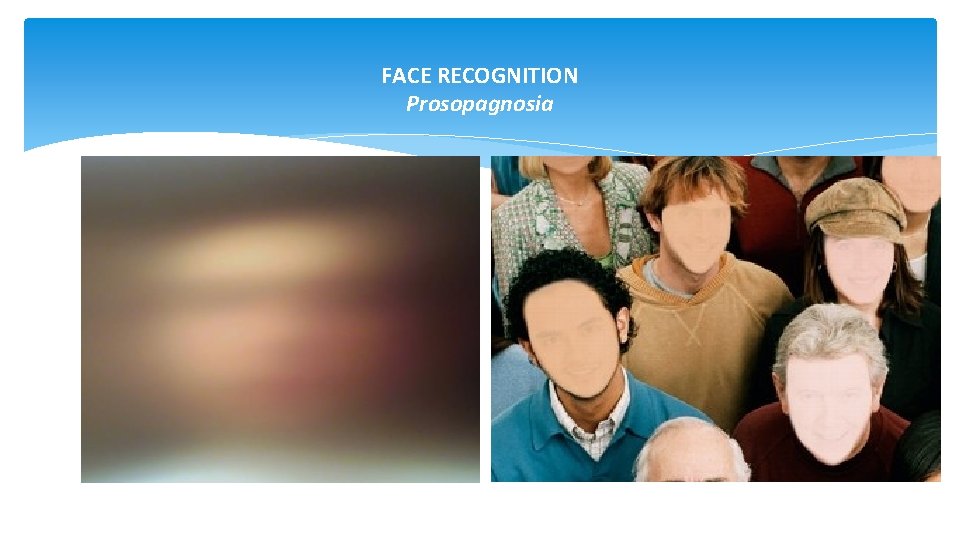
FACE RECOGNITION Prosopagnosia
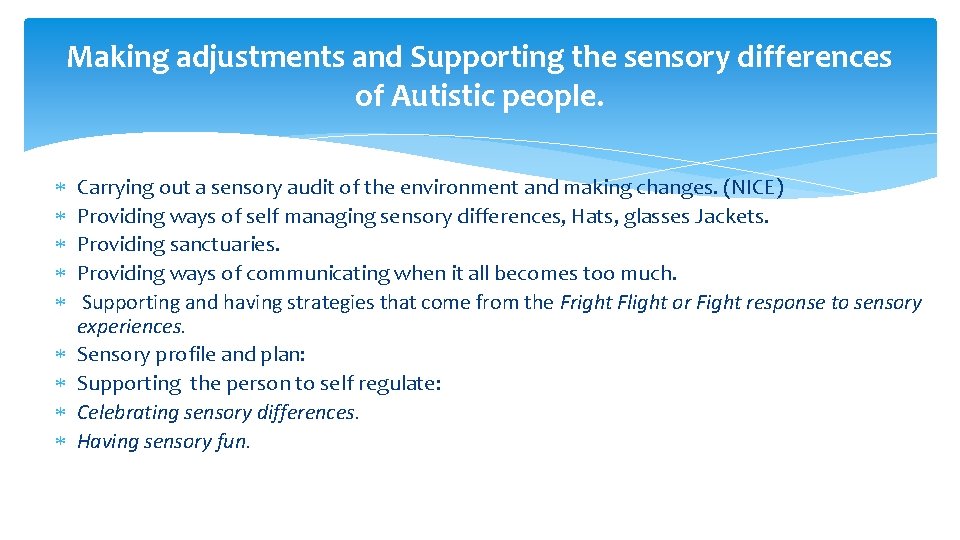
Making adjustments and Supporting the sensory differences of Autistic people. Carrying out a sensory audit of the environment and making changes. (NICE) Providing ways of self managing sensory differences, Hats, glasses Jackets. Providing sanctuaries. Providing ways of communicating when it all becomes too much. Supporting and having strategies that come from the Fright Flight or Fight response to sensory experiences. Sensory profile and plan: Supporting the person to self regulate: Celebrating sensory differences. Having sensory fun.
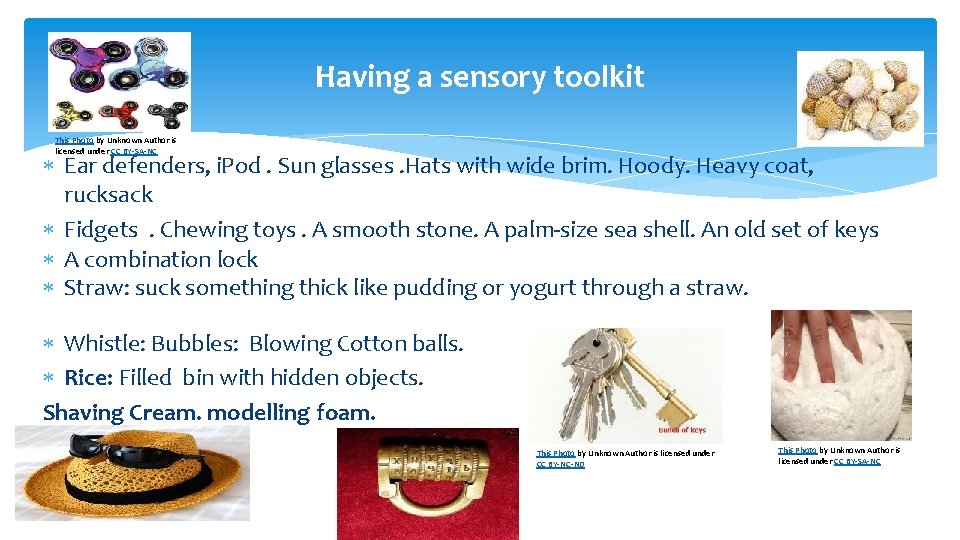
Having a sensory toolkit This Photo by Unknown Author is licensed under CC BY-SA-NC Ear defenders, i. Pod. Sun glasses. Hats with wide brim. Hoody. Heavy coat, rucksack Fidgets . Chewing toys. A smooth stone. A palm-size sea shell. An old set of keys A combination lock Straw: suck something thick like pudding or yogurt through a straw. Whistle: Bubbles: Blowing Cotton balls. Rice: Filled bin with hidden objects. Shaving Cream. modelling foam. This Photo by Unknown Author is licensed under CC BY-NC-ND This Photo by Unknown Author is licensed under CC BY-SA-NC
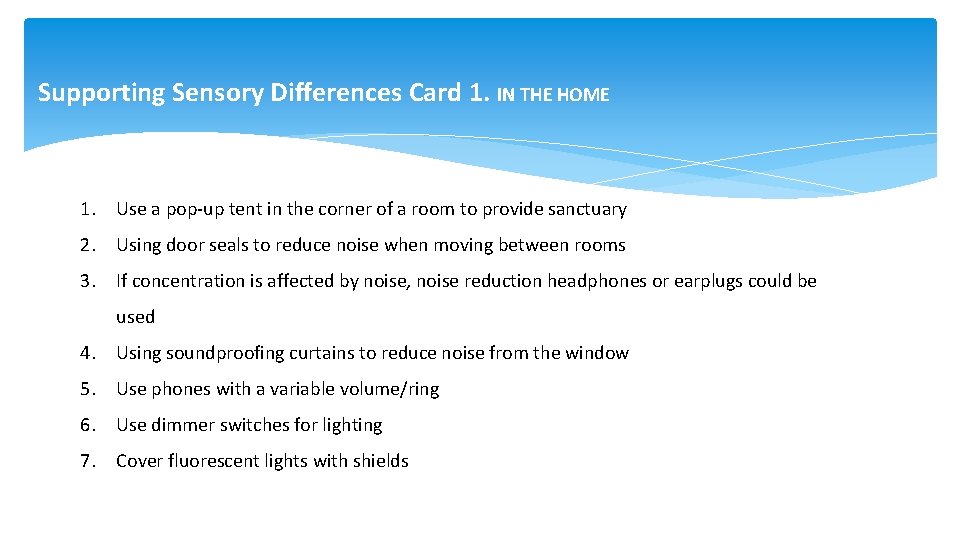
Supporting Sensory Differences Card 1. IN THE HOME 1. Use a pop-up tent in the corner of a room to provide sanctuary 2. Using door seals to reduce noise when moving between rooms 3. If concentration is affected by noise, noise reduction headphones or earplugs could be used 4. Using soundproofing curtains to reduce noise from the window 5. Use phones with a variable volume/ring 6. Use dimmer switches for lighting 7. Cover fluorescent lights with shields
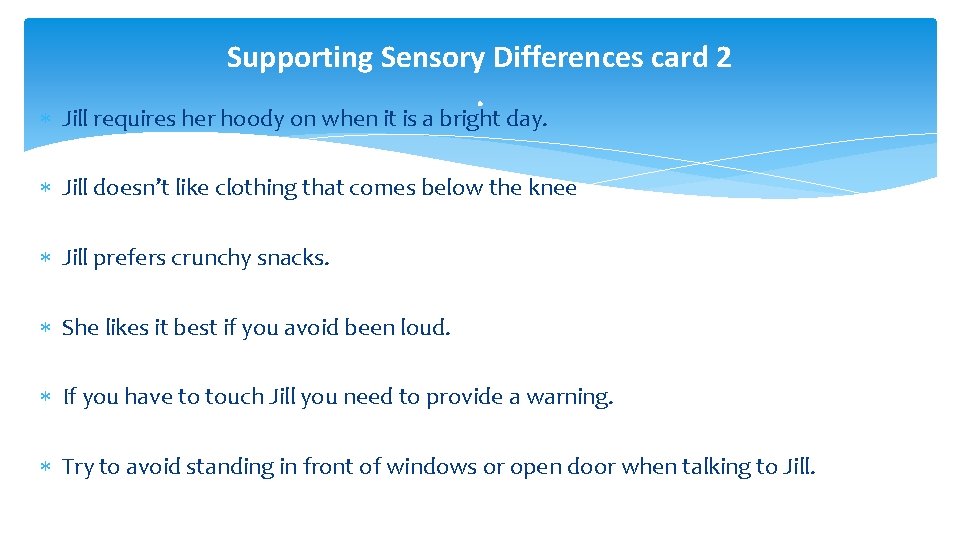
Supporting Sensory Differences card 2. Jill requires her hoody on when it is a bright day. Jill doesn’t like clothing that comes below the knee Jill prefers crunchy snacks. She likes it best if you avoid been loud. If you have to touch Jill you need to provide a warning. Try to avoid standing in front of windows or open door when talking to Jill.
Supporting with Flexibility of Thought and Behaviour ( Social Imagination ) Understanding mental states. (thought, feelings, desires) Predicting events and behaviours. working out what comes next Special interests can become all absorbing. Understanding danger Follows ridged routines without variation Finds change difficult Difficulties transferring skills between settings Difficulties engaging in abstract and or creative play
The following quotation illustrates why there is a determination to create order (Jolliffe et al 1992) “Reality to an autistic person is a confusing, interacting mass of events, people, places, sounds and sights. There seem to be no clear boundaries, order or meaning to anything. A large part of my life is spent just trying to work out the pattern behind everything. Set routines, times, particular routes and rituals all help to get order into an unbearable chaotic life. ” (p. 16)
Supporting Flexibility of Thought and Behaviour Support Card 1. Discuss and explain other possible ways of behaving. Whilst encourage problem solving. Provide structure, plan transitions. build in small changes Try using role play to help the individual understand other viewpoints Have set times to discuss favourite questions/topics/explore misunderstandings Expand favourite topics. use them to teach, motivate and move the individual on. Have armistices for collections that get out of hand
Supporting Flexibility of Thought and Behaviour Card 2. Make sure Jack has his schedule with him. Highlight the next thing on Jacks schedule for him. Ensure you position yourself between dangers and Jack. Use Jacks sequence cards to remind him how to get dressed after swimming.
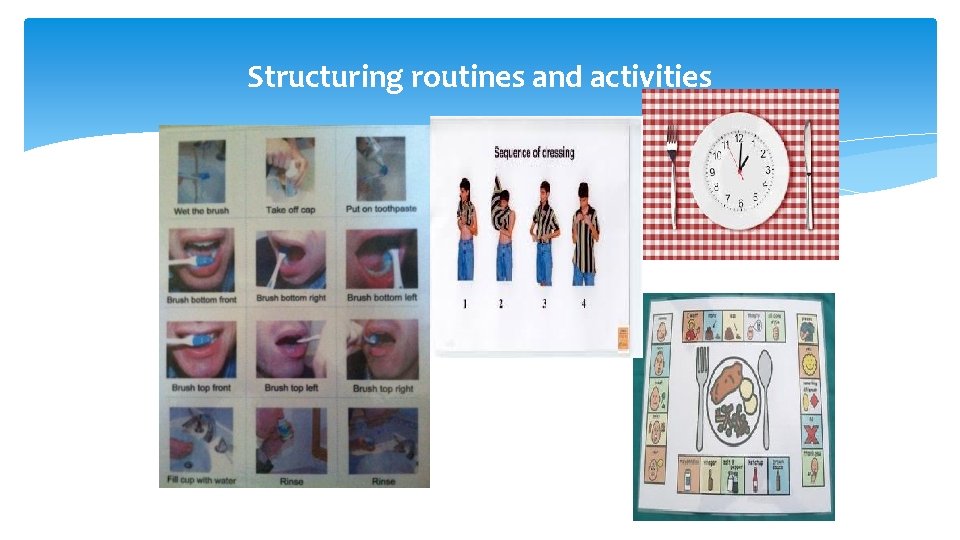
Structuring routines and activities
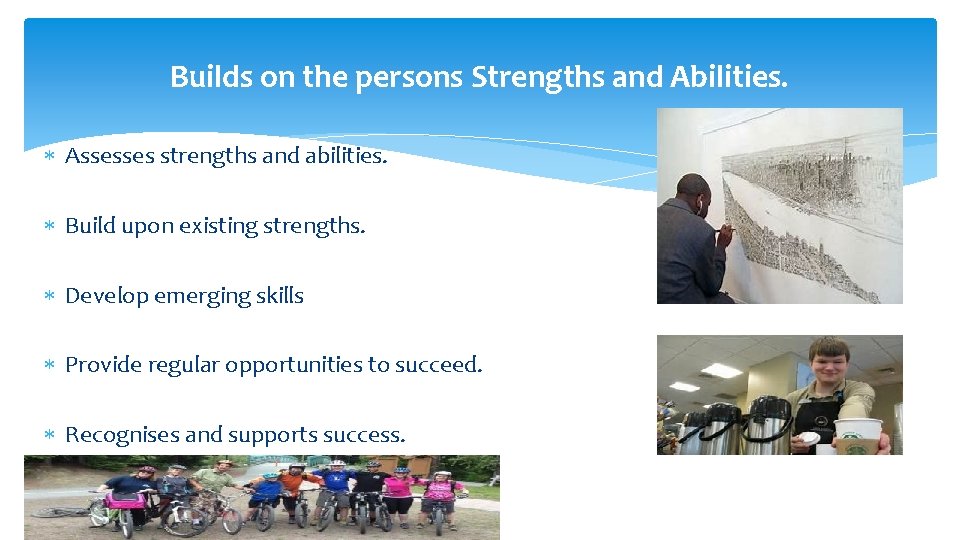
Builds on the persons Strengths and Abilities. Assesses strengths and abilities. Build upon existing strengths. Develop emerging skills Provide regular opportunities to succeed. Recognises and supports success.
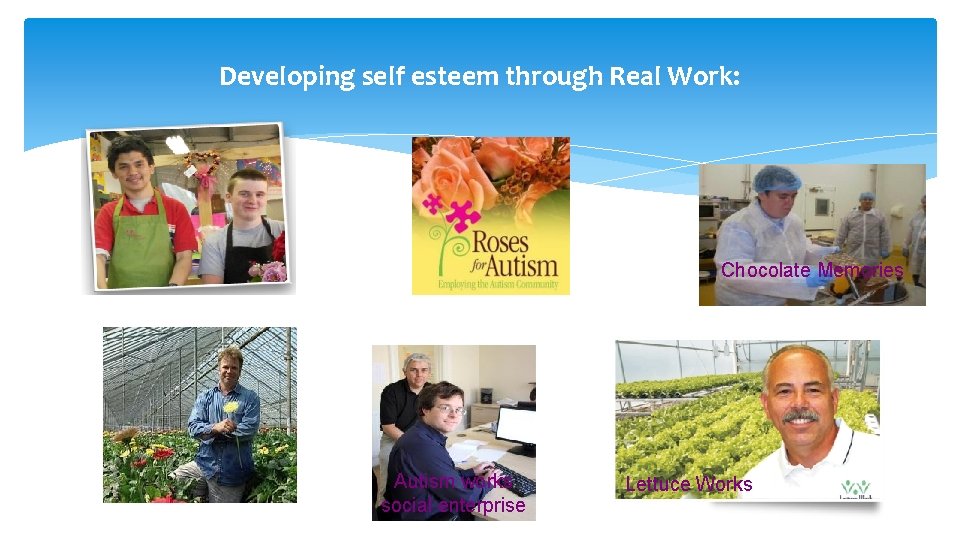
Developing self esteem through Real Work: Chocolate Memories Autism works social enterprise Lettuce Works
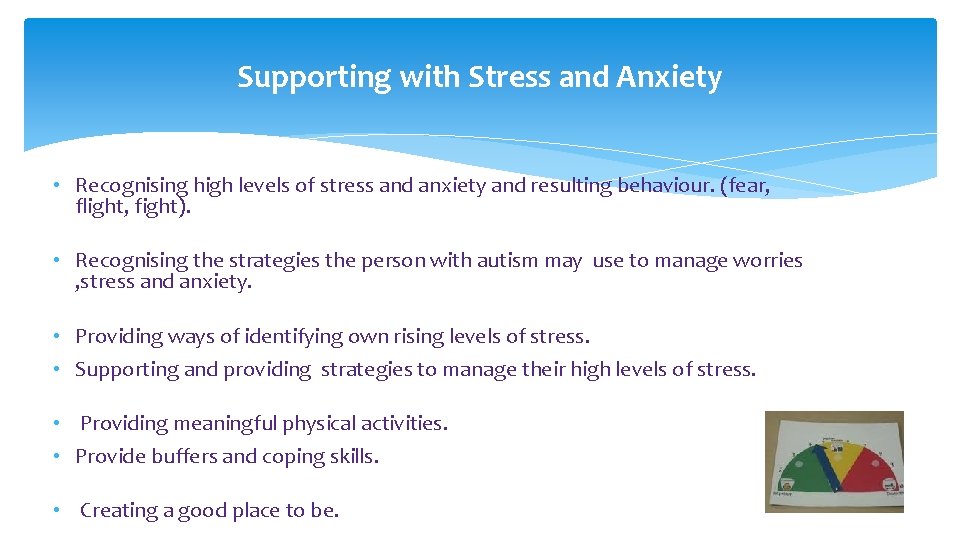
Supporting with Stress and Anxiety • Recognising high levels of stress and anxiety and resulting behaviour. (fear, flight, fight). • Recognising the strategies the person with autism may use to manage worries , stress and anxiety. • Providing ways of identifying own rising levels of stress. • Supporting and providing strategies to manage their high levels of stress. • Providing meaningful physical activities. • Provide buffers and coping skills. • Creating a good place to be.
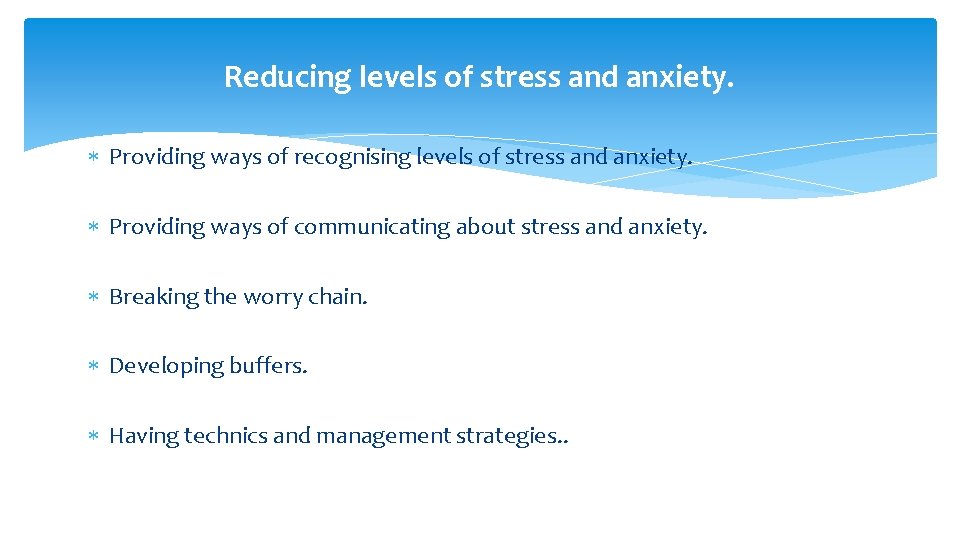
Reducing levels of stress and anxiety. Providing ways of recognising levels of stress and anxiety. Providing ways of communicating about stress and anxiety. Breaking the worry chain. Developing buffers. Having technics and management strategies. .
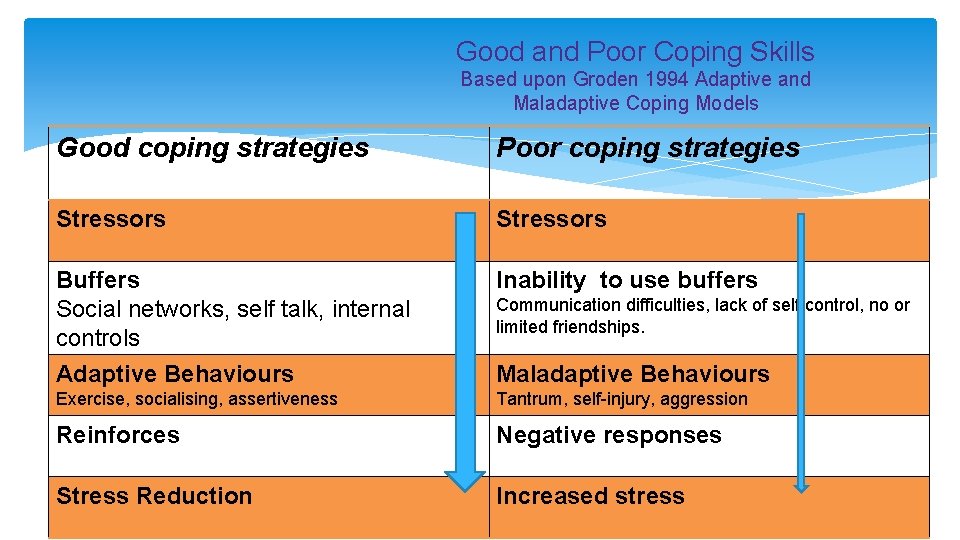
Good and Poor Coping Skills Based upon Groden 1994 Adaptive and Maladaptive Coping Models Good coping strategies Poor coping strategies Stressors Buffers Social networks, self talk, internal controls Inability to use buffers Adaptive Behaviours Maladaptive Behaviours Exercise, socialising, assertiveness Tantrum, self-injury, aggression Reinforces Negative responses Stress Reduction Increased stress Communication difficulties, lack of self control, no or limited friendships.
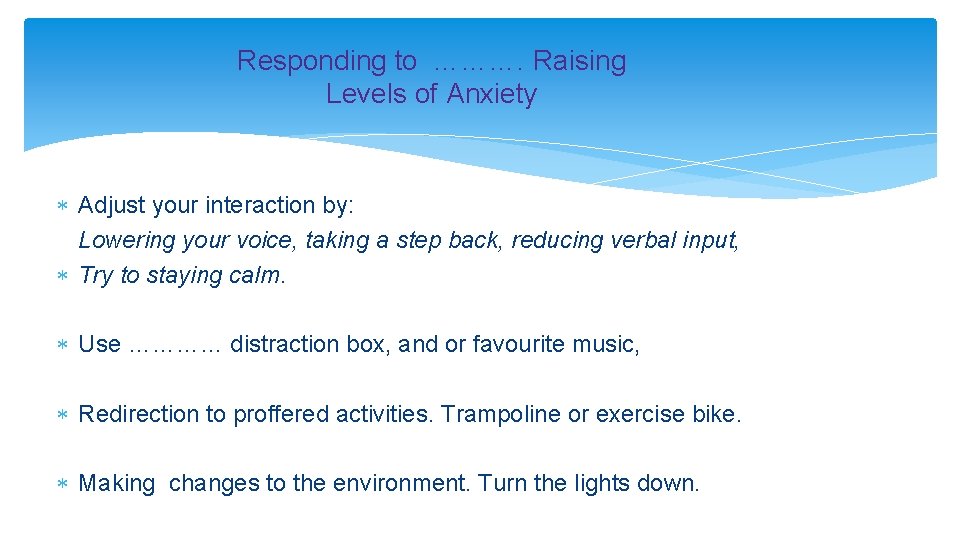
Responding to ………. Raising Levels of Anxiety Adjust your interaction by: Lowering your voice, taking a step back, reducing verbal input, Try to staying calm. Use ………… distraction box, and or favourite music, Redirection to proffered activities. Trampoline or exercise bike. Making changes to the environment. Turn the lights down.
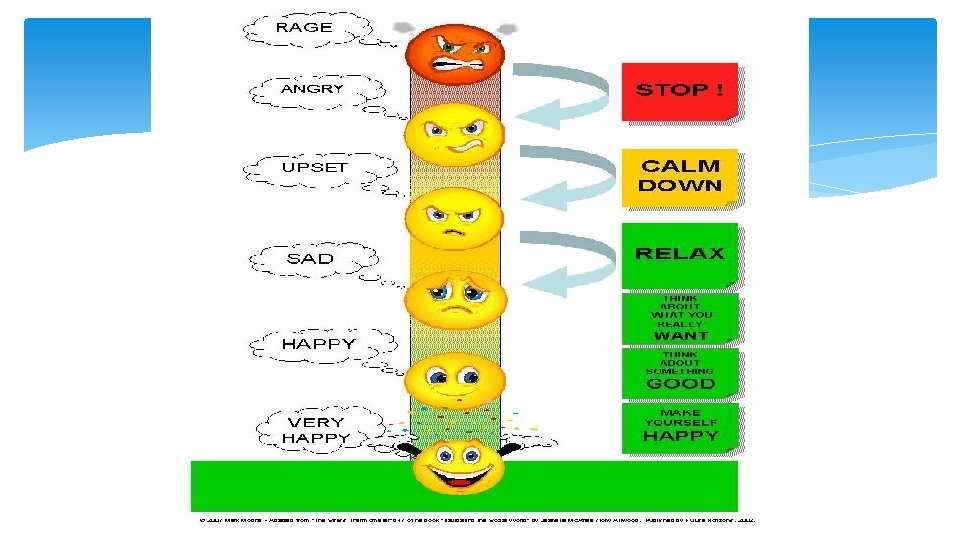
My Stress Scale
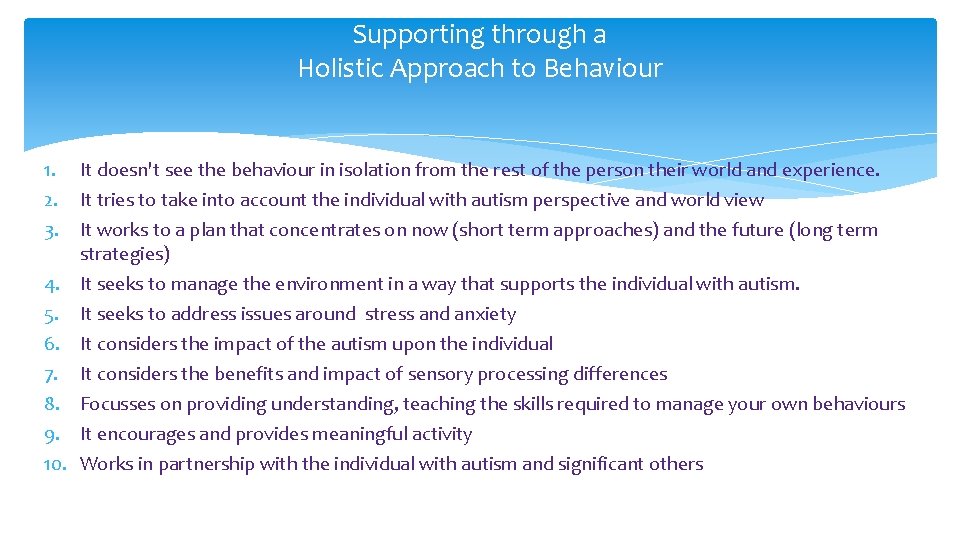
Supporting through a Holistic Approach to Behaviour 1. 2. 3. 4. 5. 6. 7. 8. 9. 10. It doesn't see the behaviour in isolation from the rest of the person their world and experience. It tries to take into account the individual with autism perspective and world view It works to a plan that concentrates on now (short term approaches) and the future (long term strategies) It seeks to manage the environment in a way that supports the individual with autism. It seeks to address issues around stress and anxiety It considers the impact of the autism upon the individual It considers the benefits and impact of sensory processing differences Focusses on providing understanding, teaching the skills required to manage your own behaviours It encourages and provides meaningful activity Works in partnership with the individual with autism and significant others
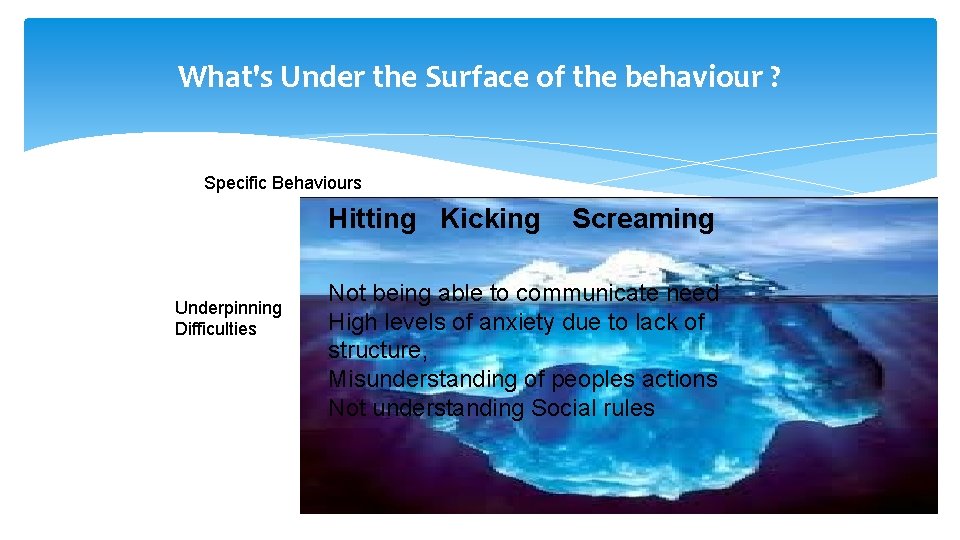
What's Under the Surface of the behaviour ? Specific Behaviours Hitting Kicking Underpinning Difficulties Screaming Not being able to communicate need High levels of anxiety due to lack of structure, Misunderstanding of peoples actions Not understanding Social rules
What's under the surface? Stress, worry and anxiety. Differences and difficulties with communication and interaction. Rigidity of thought and behaviour. Not understanding others. Not understanding self. Sensory differences
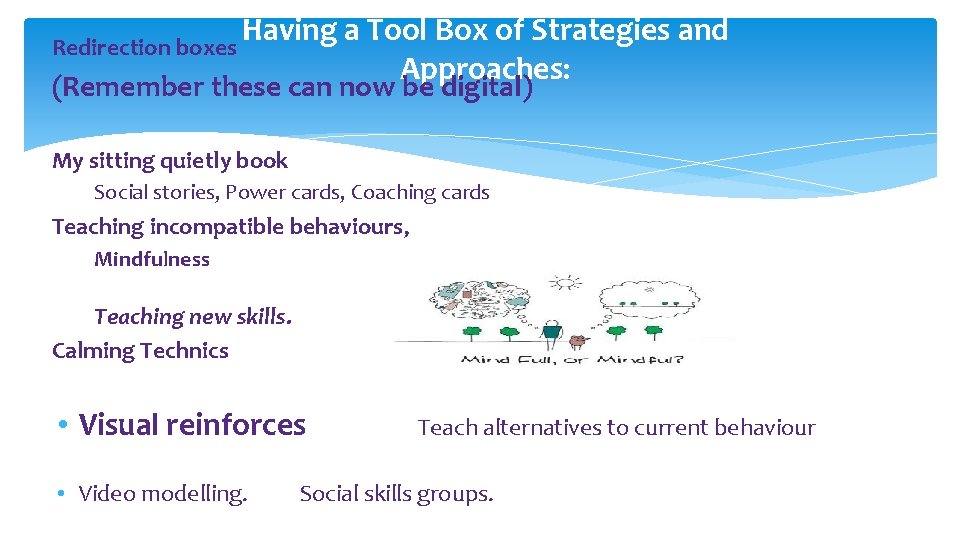
Redirection boxes Having a Tool Box of Strategies and Approaches: (Remember these can now be digital) My sitting quietly book Social stories, Power cards, Coaching cards Teaching incompatible behaviours, Mindfulness Teaching new skills. Calming Technics • Visual reinforces Teach alternatives to current behaviour • Video modelling. Social skills groups.
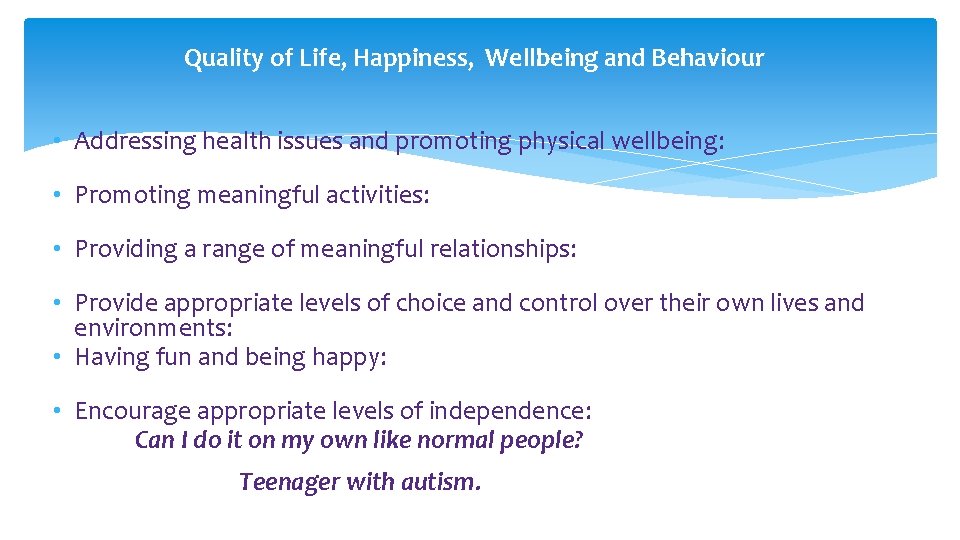
Quality of Life, Happiness, Wellbeing and Behaviour • Addressing health issues and promoting physical wellbeing: • Promoting meaningful activities: • Providing a range of meaningful relationships: • Provide appropriate levels of choice and control over their own lives and environments: • Having fun and being happy: • Encourage appropriate levels of independence: Can I do it on my own like normal people? Teenager with autism.
Promoting Happiness with Autistic People. Past emphasis upon deficit and need. Happiness often described in term of the absence of things like stress and anxiety Research as shown that negative comparisons and inequality increase unhappiness. (Boniwell 2008) Success needs to be individually defined and celebrated. There is a need to challenge the media presentation of what equals happiness. don’t force our concept of happiness on the autistic adult. Ability in autism is not necessarily a good indicator of happiness. (Does being smarter make you happier? (Dr. Evdokia Anagnostou, ) Doing more of what makes the autistic person happy.
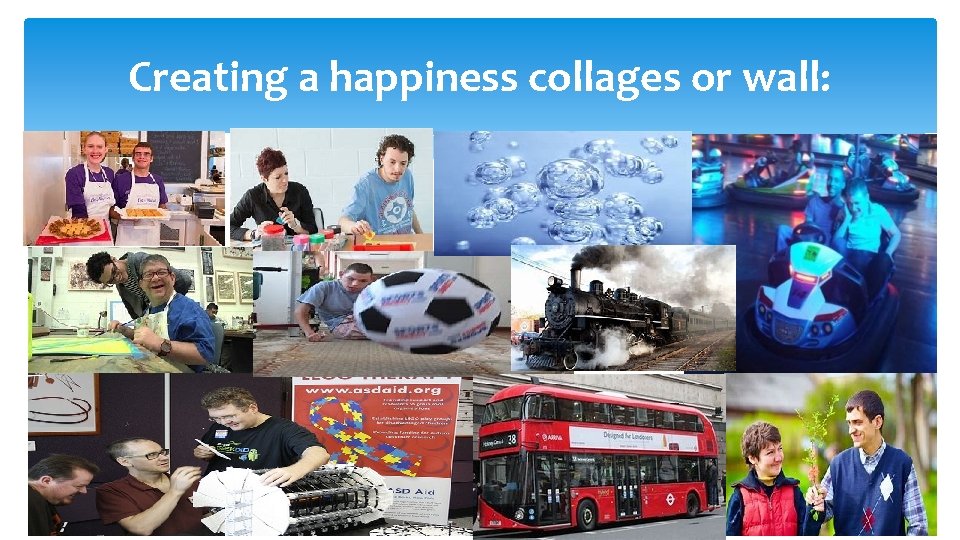
Assessing what makes the persons life you support happy and meaningful ? My happiness profile. Happy places. Happy activities. Sensory experiences that make me happy People that make me happy. Things I can do to make myself happy. Things I can do to make others happy.
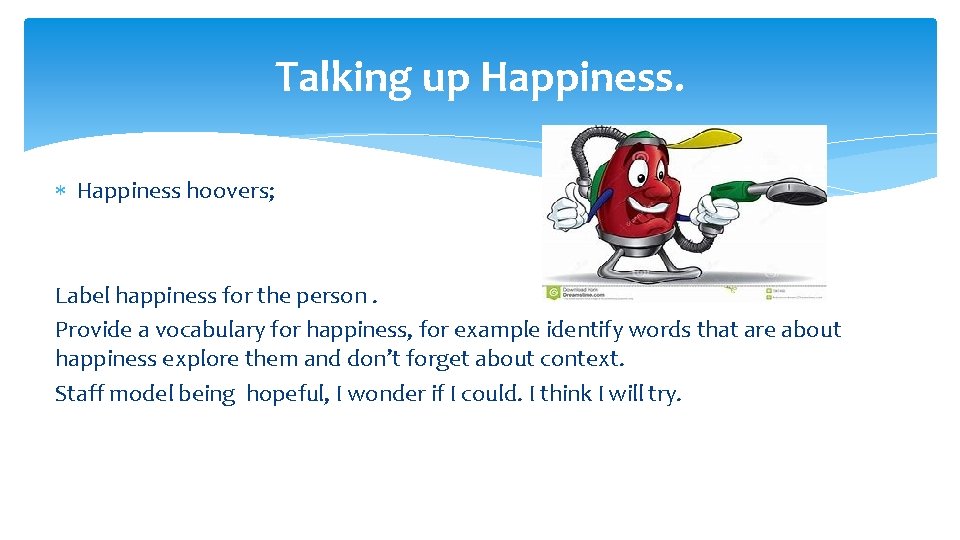
Talking up Happiness hoovers; Label happiness for the person. Provide a vocabulary for happiness, for example identify words that are about happiness explore them and don’t forget about context. Staff model being hopeful, I wonder if I could. I think I will try.
Developing Self Esteem and self worth. Greater emphasis on what they can achieve Through contributing to society rather than just receiving. Building in time to develop and achieve through special interests. Celebrating individual success Engaging in meaningful activities.
Creating a happiness collages or wall:
However Happiness alone is not enough. What makes us happy does not always make our life meaningful and fulfilled. What gives our lives meaning does not always make us happy. Prompting happy and meaningful lives for people with autism. Roy Baumeister et al. (2013) found that factors such as feeling connected to others, feeling productive, and not being alone or bored contributed to both happiness and meaning
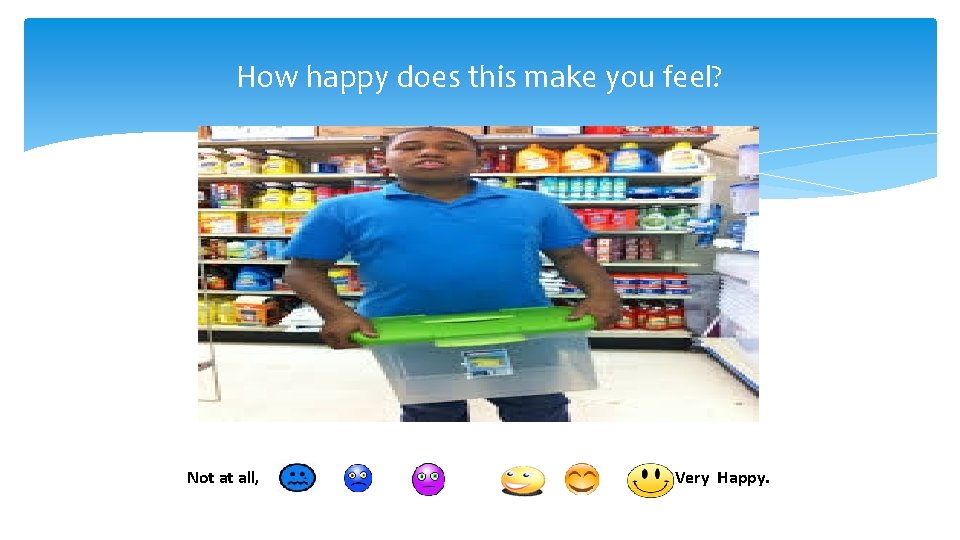
How happy does this make you feel? Not at all, Very Happy.
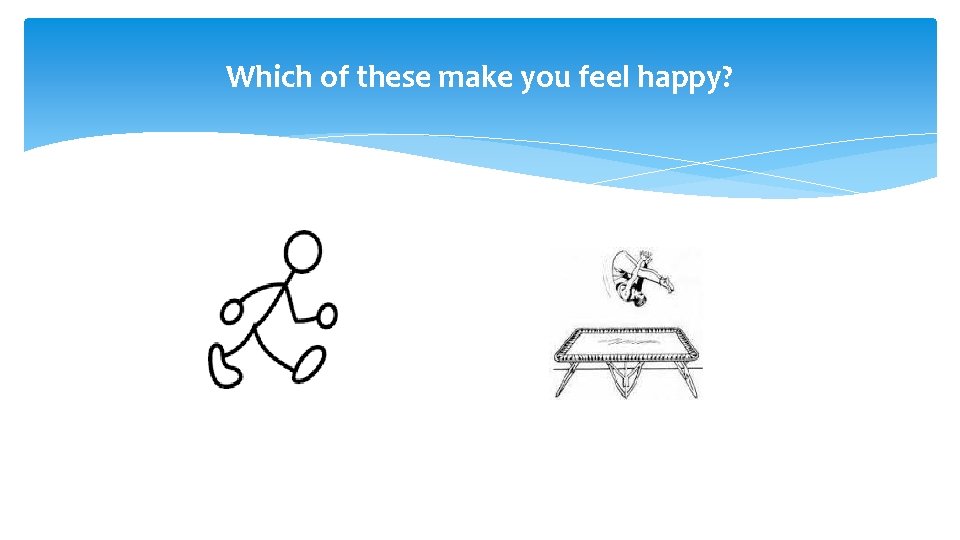
Which of these make you feel happy?
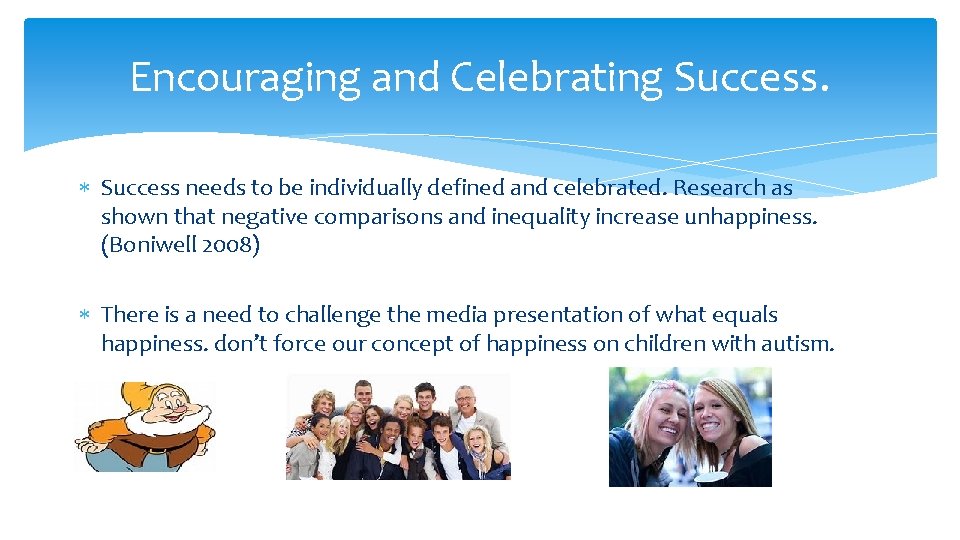
Encouraging and Celebrating Success needs to be individually defined and celebrated. Research as shown that negative comparisons and inequality increase unhappiness. (Boniwell 2008) There is a need to challenge the media presentation of what equals happiness. don’t force our concept of happiness on children with autism.
Happiness Autism and Being in the Flow MC [1] is engaged in a doable task, [2] is able to focus, [3]has a clear goal, [4] receives immediate feedback, [5] moves without worrying, [6] has a sense of control, [7] has suspended the sense of self, [8] has temporarily lost a sense of time. Mikhail Csikszentmihalyi (1992) Being in the flow can help children with autism reduce their stress ; levels Special interests allow people to become absorbed in an area that gives them specialist knowledge and a sense of achievement. Repetitive tasks can help people achieve a flow like state of mind. These tasks can become absorbing and are an important part of peoples lives (Mc. Donell and Milton 2014) Being in the flow is not always meaningful or positive and can interfere with learning and getting things done.
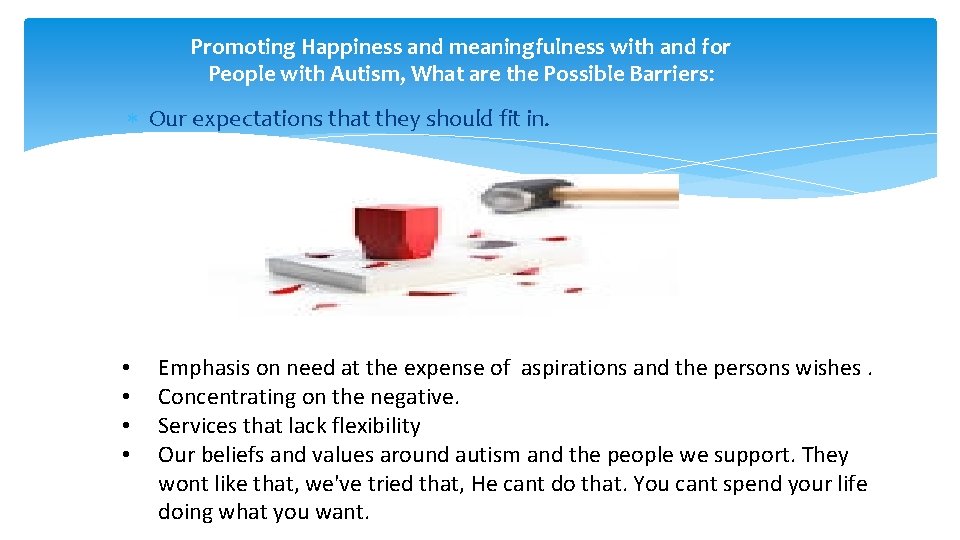
Promoting Happiness and meaningfulness with and for People with Autism, What are the Possible Barriers: Our expectations that they should fit in. • • Emphasis on need at the expense of aspirations and the persons wishes. Concentrating on the negative. Services that lack flexibility Our beliefs and values around autism and the people we support. They wont like that, we've tried that, He cant do that. You cant spend your life doing what you want.
Learning about Happiness. What is happiness? How can I recognise it in myself and others? Do I have to be happy all the time? How can I help others to be happy? What can I do to make myself happy? Having a happy scrapbook. Having happiness objects. Talking happy Having buffers for unhappiness.
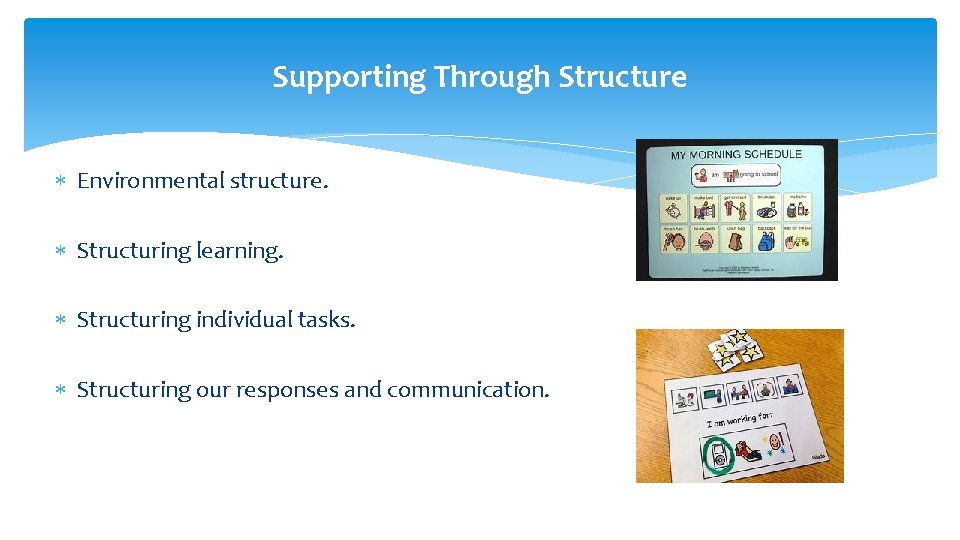
Supporting Through Structure Environmental structure. Structuring learning. Structuring individual tasks. Structuring our responses and communication.
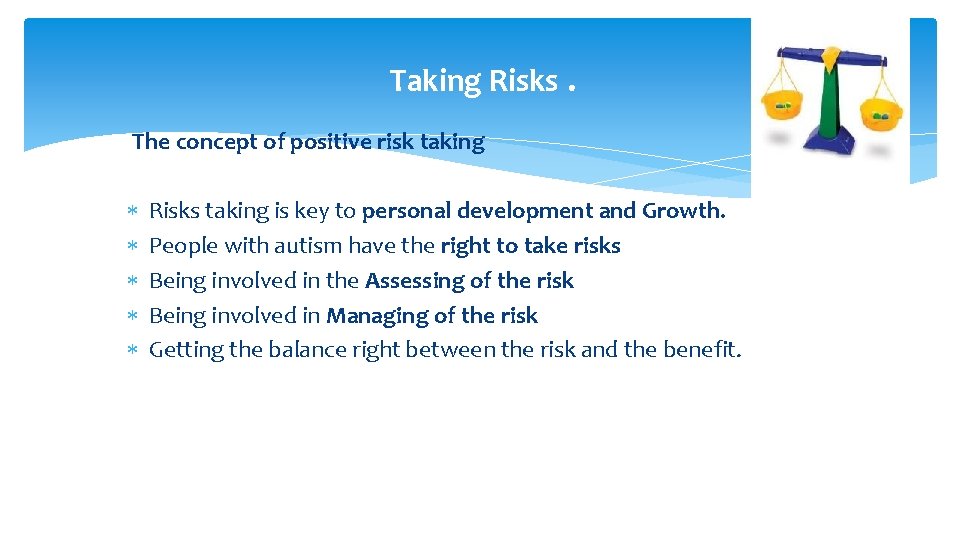
Taking Risks. The concept of positive risk taking Risks taking is key to personal development and Growth. People with autism have the right to take risks Being involved in the Assessing of the risk Being involved in Managing of the risk Getting the balance right between the risk and the benefit.
Work in Partnership with the Individual with Autism and Significant Others • Enable service users to find solutions to and solve their own problems • Working in genuine cooperation, partnership • Gaining and having control over your life • Working with parents and siblings
Thank you for joining me today Geoff Evans geoffaut@hotmail. com