
What Why Which Worldviews DR HELEN C JOHN


- Slides: 39
What, Why, Which Worldviews? DR HELEN C. JOHN UNIVERSITY OF EXETER
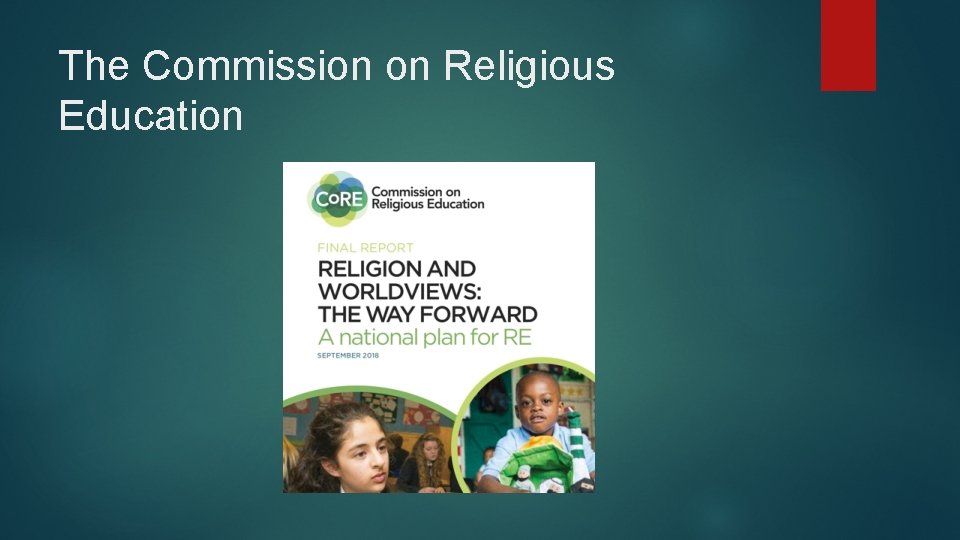
The Commission on Religious Education
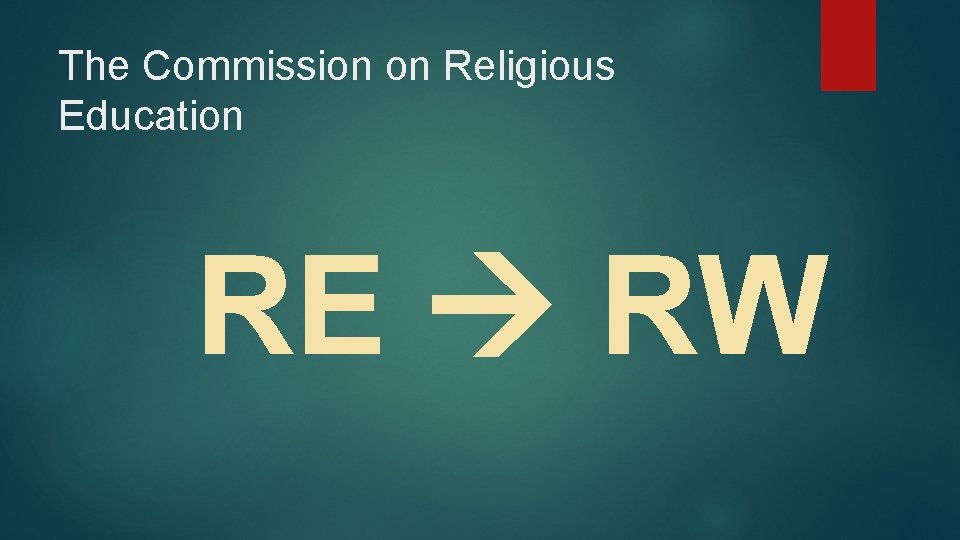
The Commission on Religious Education RE RW
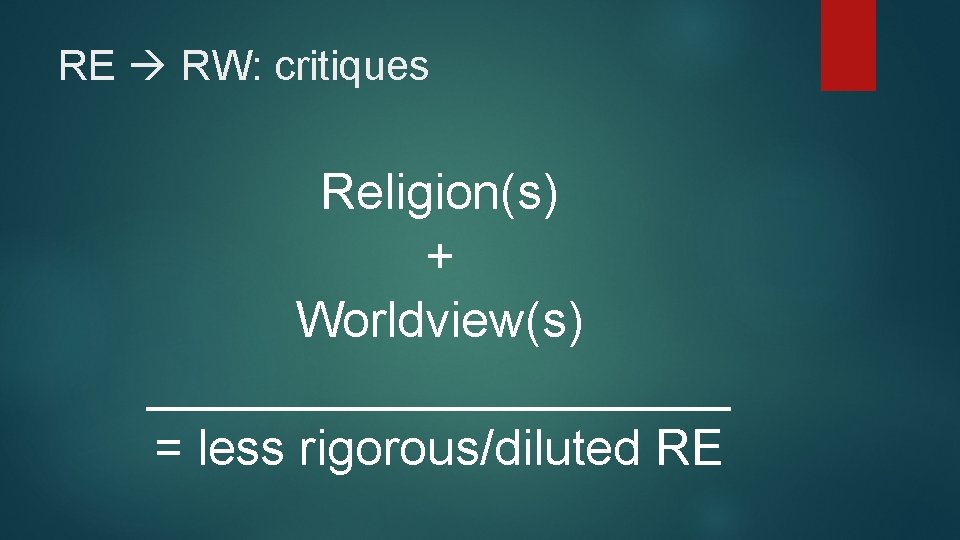
RE RW: critiques Religion(s) + Worldview(s) ___________ = less rigorous/diluted RE
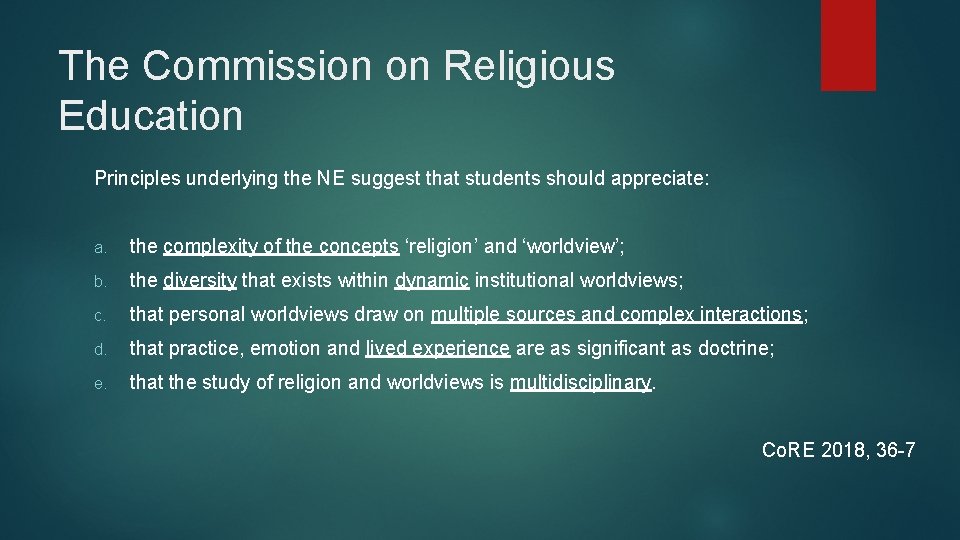
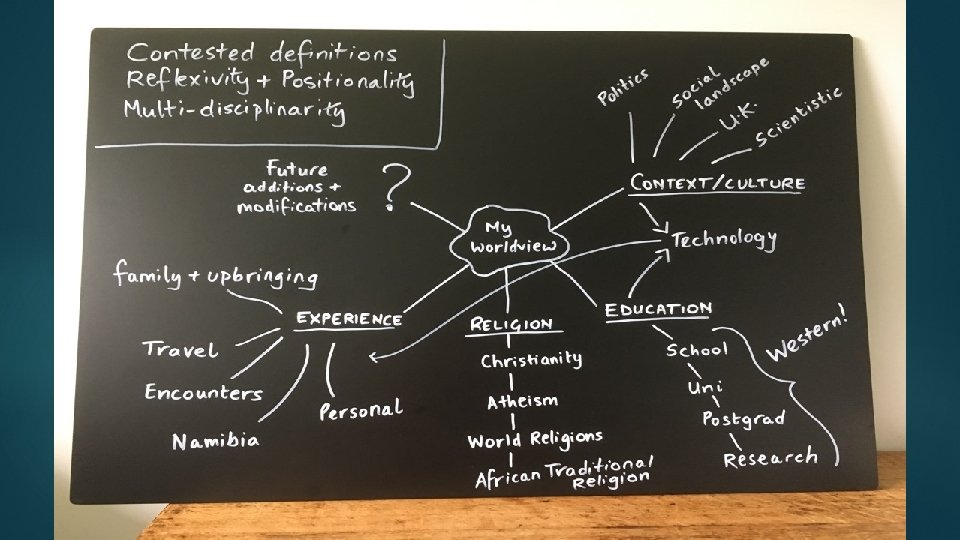
The Commission on Religious Education Principles underlying the NE suggest that students should appreciate: a. the complexity of the concepts ‘religion’ and ‘worldview’; b. the diversity that exists within dynamic institutional worldviews; c. that personal worldviews draw on multiple sources and complex interactions; d. that practice, emotion and lived experience are as significant as doctrine; e. that the study of religion and worldviews is multidisciplinary. Co. RE 2018, 36 -7
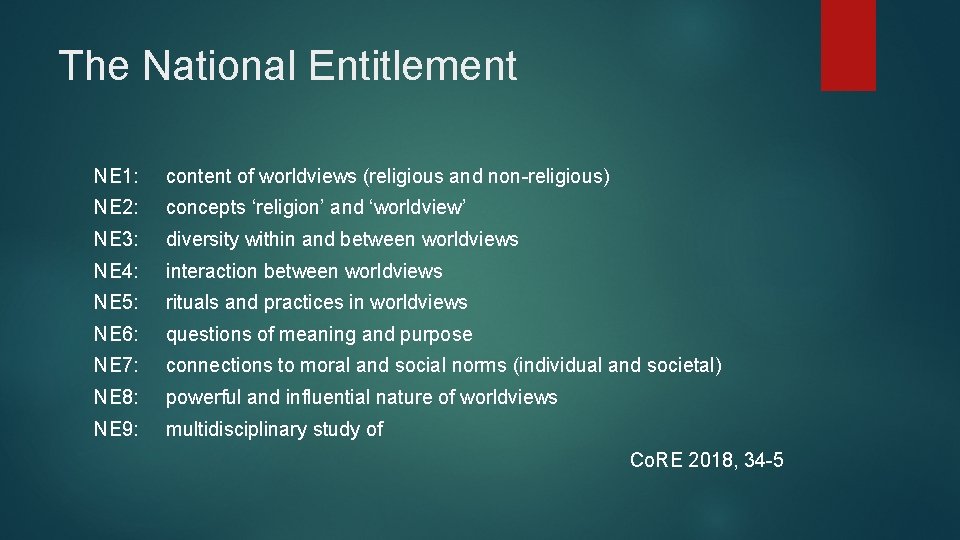
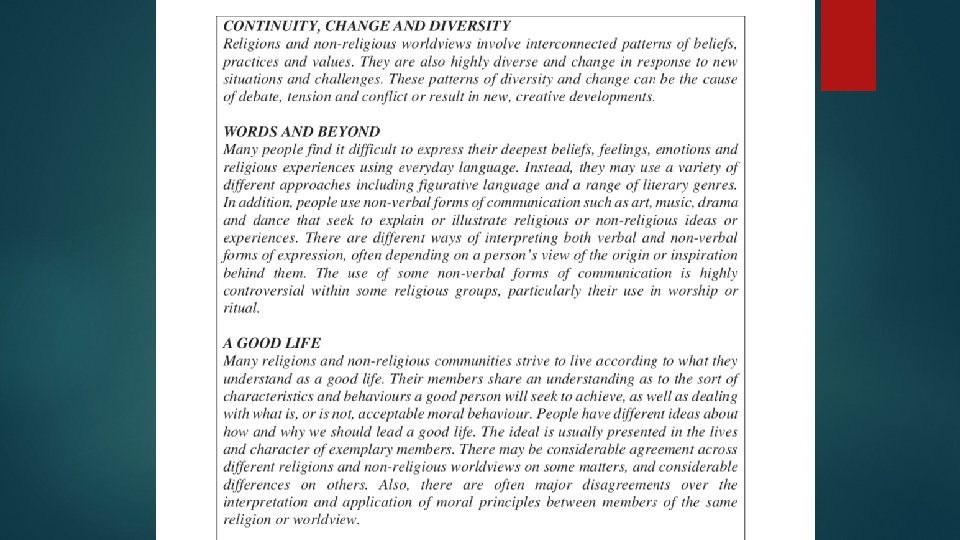
The National Entitlement NE 1: content of worldviews (religious and non-religious) NE 2: concepts ‘religion’ and ‘worldview’ NE 3: diversity within and between worldviews NE 4: interaction between worldviews NE 5: rituals and practices in worldviews NE 6: questions of meaning and purpose NE 7: connections to moral and social norms (individual and societal) NE 8: powerful and influential nature of worldviews NE 9: multidisciplinary study of Co. RE 2018, 34 -5
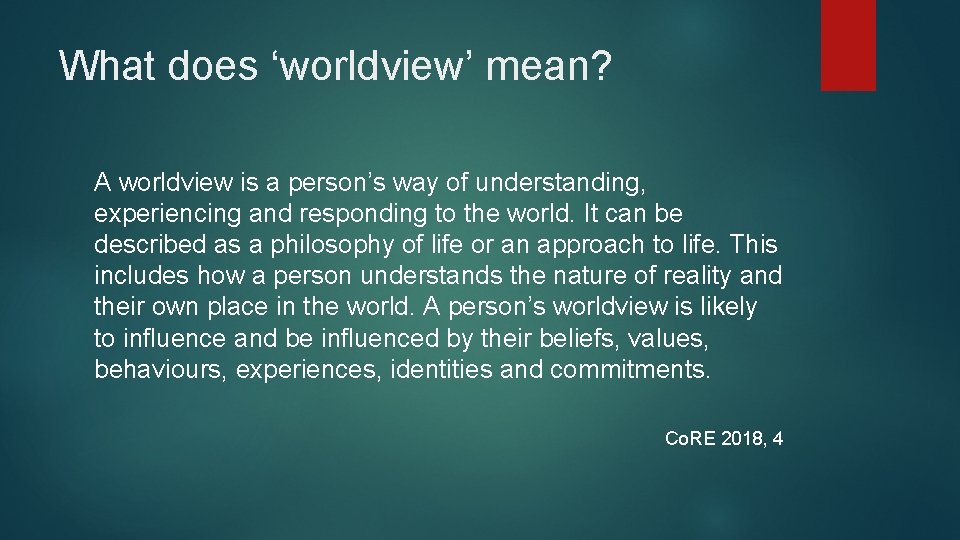
What does ‘worldview’ mean? A worldview is a person’s way of understanding, experiencing and responding to the world. It can be described as a philosophy of life or an approach to life. This includes how a person understands the nature of reality and their own place in the world. A person’s worldview is likely to influence and be influenced by their beliefs, values, behaviours, experiences, identities and commitments. Co. RE 2018, 4
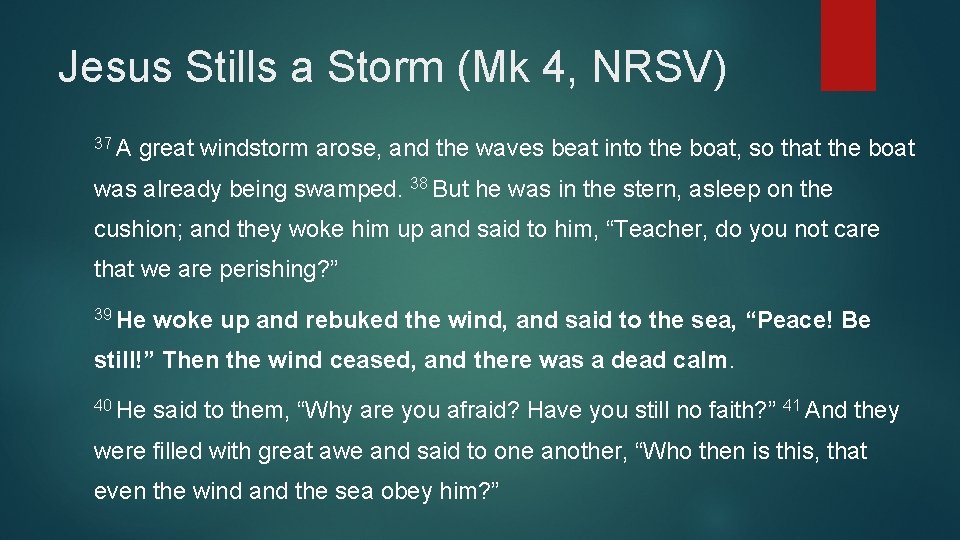
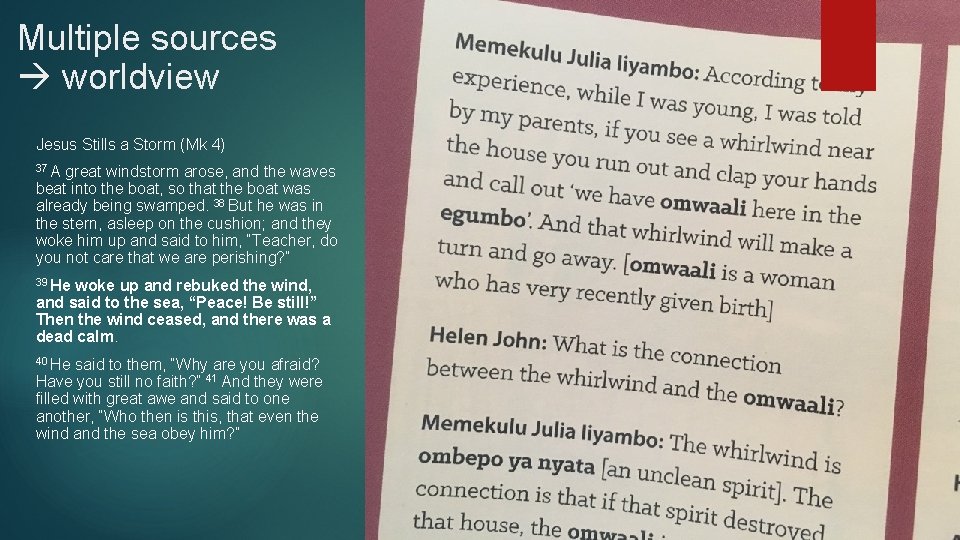
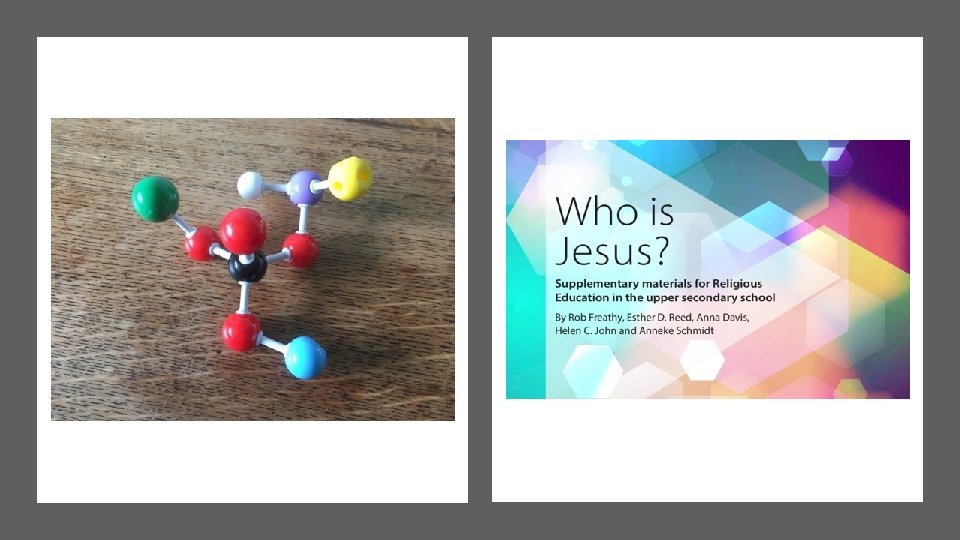
Jesus Stills a Storm (Mk 4, NRSV) 37 A great windstorm arose, and the waves beat into the boat, so that the boat was already being swamped. 38 But he was in the stern, asleep on the cushion; and they woke him up and said to him, “Teacher, do you not care that we are perishing? ” 39 He woke up and rebuked the wind, and said to the sea, “Peace! Be still!” Then the wind ceased, and there was a dead calm. 40 He said to them, “Why are you afraid? Have you still no faith? ” 41 And they were filled with great awe and said to one another, “Who then is this, that even the wind and the sea obey him? ”
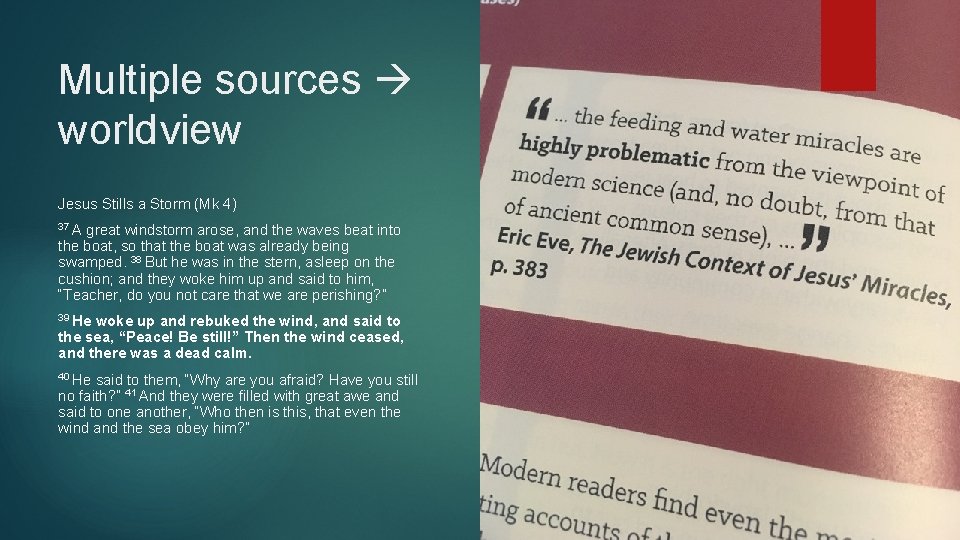
Multiple sources worldview Jesus Stills a Storm (Mk 4) 37 A great windstorm arose, and the waves beat into the boat, so that the boat was already being swamped. 38 But he was in the stern, asleep on the cushion; and they woke him up and said to him, “Teacher, do you not care that we are perishing? ” 39 He woke up and rebuked the wind, and said to the sea, “Peace! Be still!” Then the wind ceased, and there was a dead calm. 40 He said to them, “Why are you afraid? Have you still no faith? ” 41 And they were filled with great awe and said to one another, “Who then is this, that even the wind and the sea obey him? ”
Multiple sources worldview Jesus Stills a Storm (Mk 4) 37 A great windstorm arose, and the waves beat into the boat, so that the boat was already being swamped. 38 But he was in the stern, asleep on the cushion; and they woke him up and said to him, “Teacher, do you not care that we are perishing? ” 39 He woke up and rebuked the wind, and said to the sea, “Peace! Be still!” Then the wind ceased, and there was a dead calm. 40 He said to them, “Why are you afraid? Have you still no faith? ” 41 And they were filled with great awe and said to one another, “Who then is this, that even the wind and the sea obey him? ”
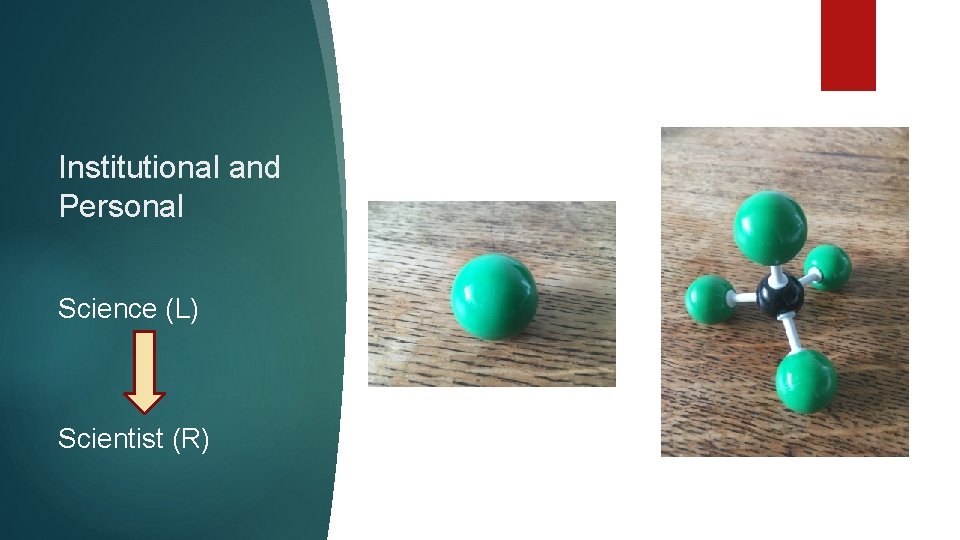
Institutional and Personal Science (L) Scientist (R)
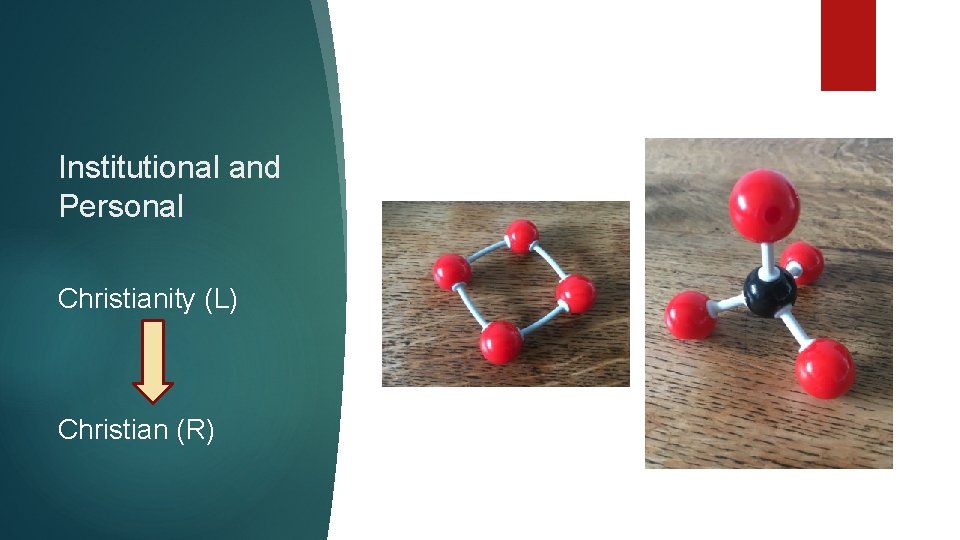
Institutional and Personal Christianity (L) Christian (R)
What is missing?
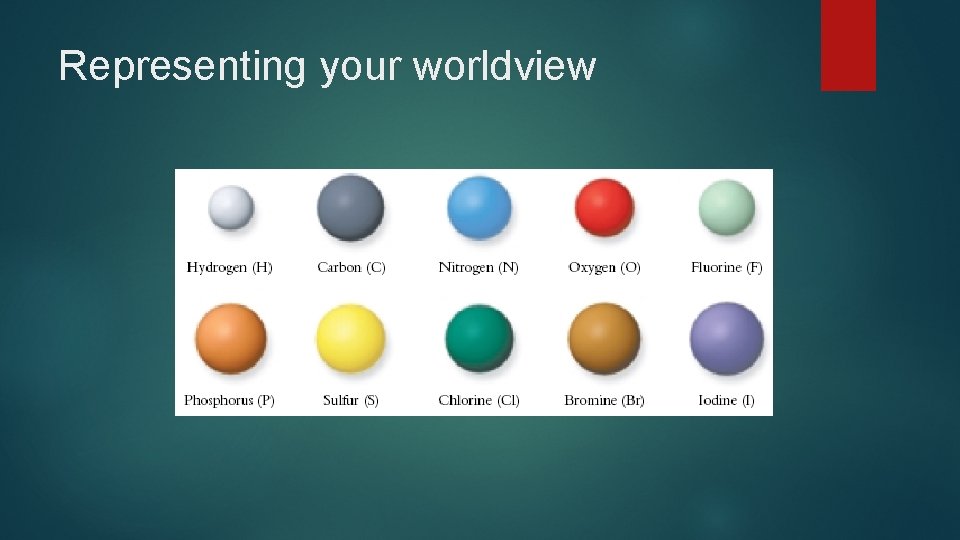
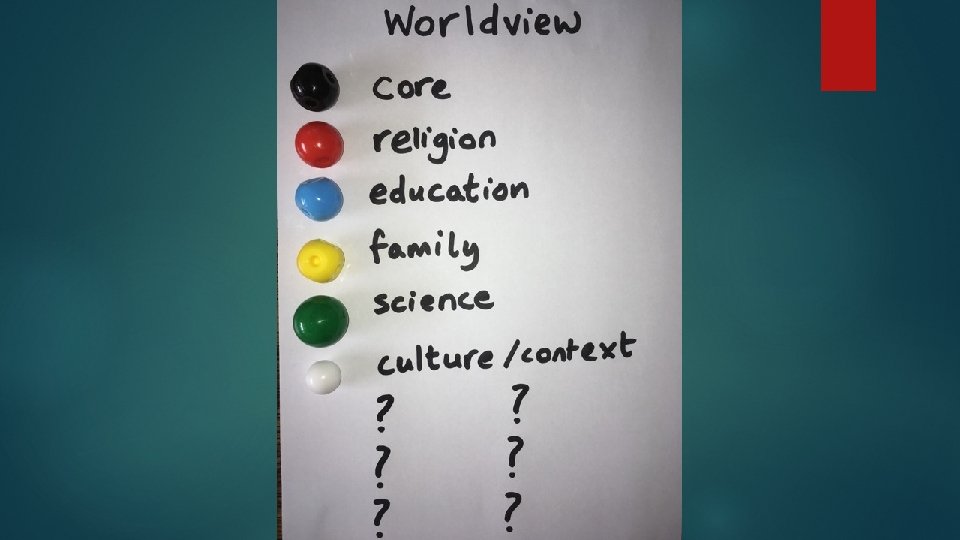
Representing your worldview
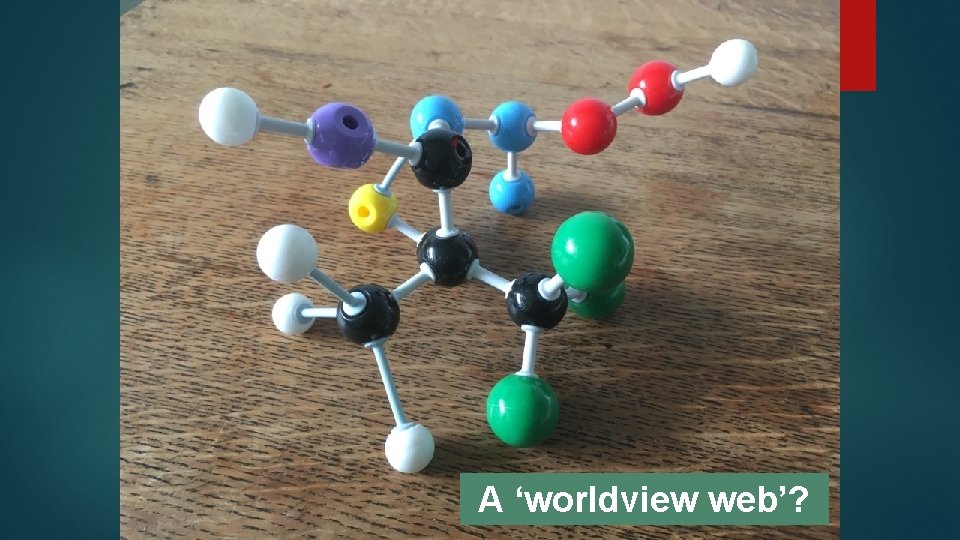
A ‘worldview web’?
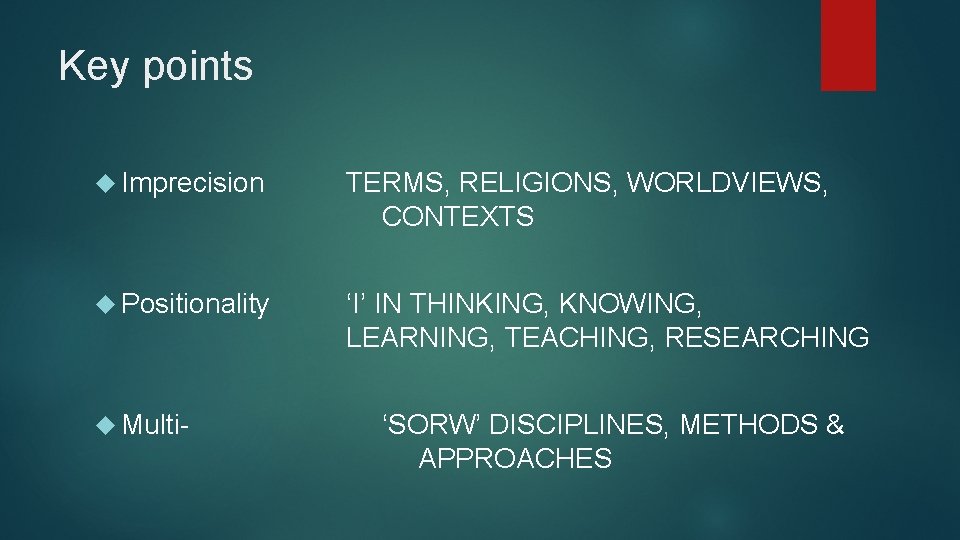
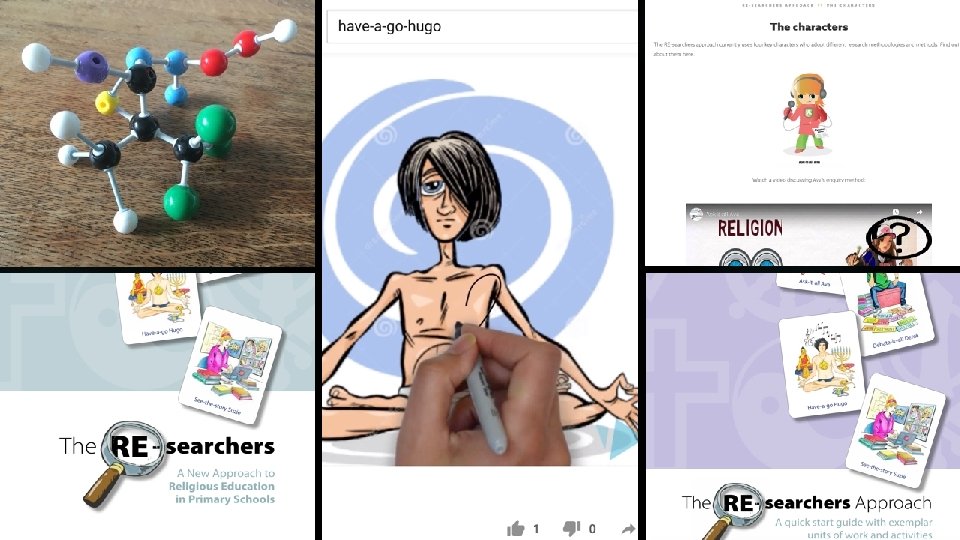
Key points Imprecision TERMS, RELIGIONS, WORLDVIEWS, CONTEXTS Positionality ‘I’ IN THINKING, KNOWING, LEARNING, TEACHING, RESEARCHING Multi- ‘SORW’ DISCIPLINES, METHODS & APPROACHES
Big Ideas of Science Education Big Ideas in Science (PRECISE CONTENT) PLUS Big Ideas about Science (METHODS) Harlen 2010
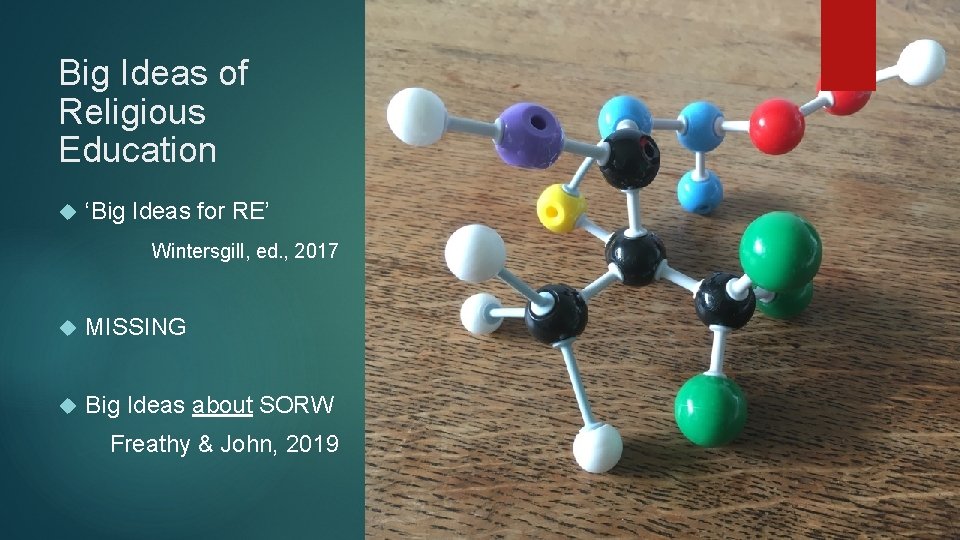
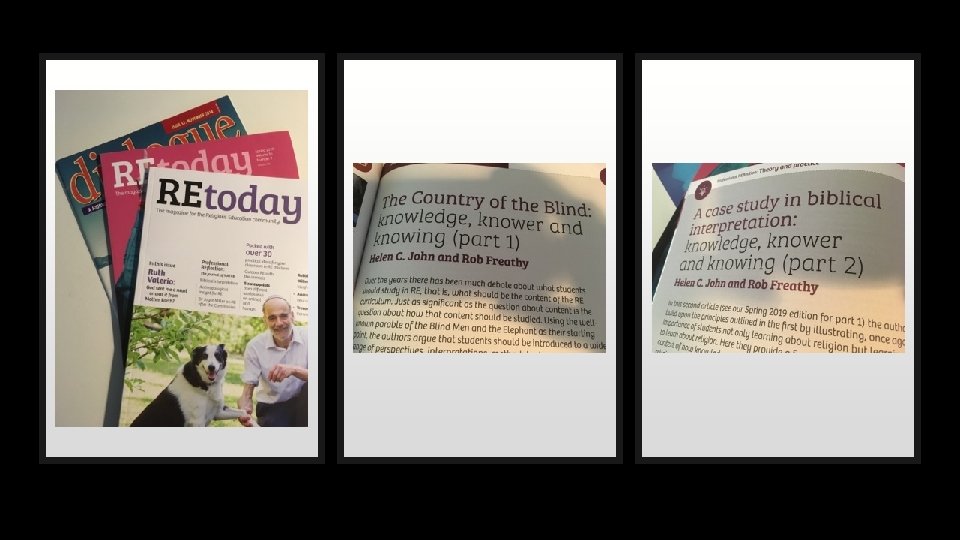
Big Ideas of Religious Education ‘Big Ideas for RE’ Wintersgill, ed. , 2017 MISSING Big Ideas about SORW Freathy & John, 2019
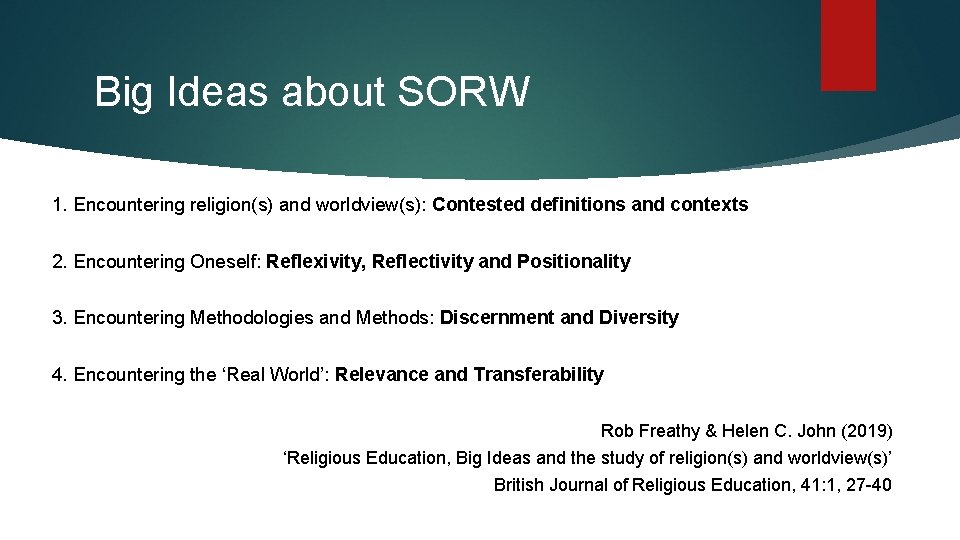
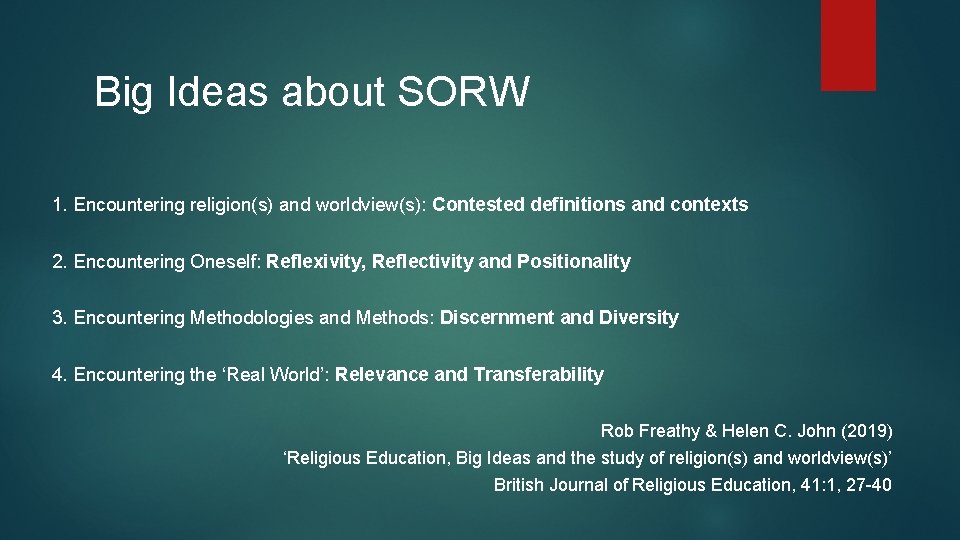
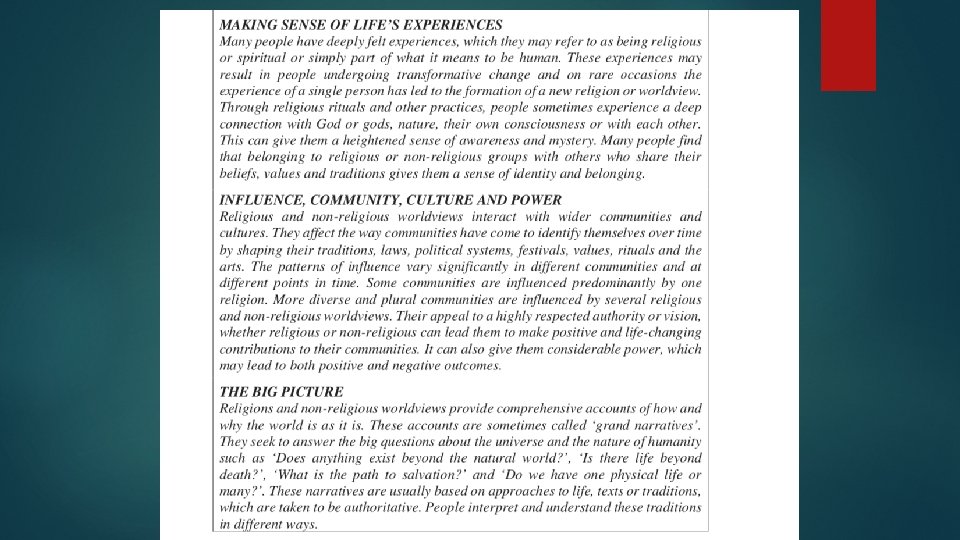
Big Ideas about SORW 1. Encountering religion(s) and worldview(s): Contested definitions and contexts 2. Encountering Oneself: Reflexivity, Reflectivity and Positionality 3. Encountering Methodologies and Methods: Discernment and Diversity 4. Encountering the ‘Real World’: Relevance and Transferability Rob Freathy & Helen C. John (2019) ‘Religious Education, Big Ideas and the study of religion(s) and worldview(s)’ British Journal of Religious Education, 41: 1, 27 -40
The Commission on Religious Education Principles underlying the NE suggest that students should appreciate: a. the complexity of the concepts ‘religion’ and ‘worldview’; b. the diversity that exists within dynamic institutional worldviews; c. that personal worldviews draw on multiple sources and complex interactions; d. that practice, emotion and lived experience are as significant as doctrine; e. that the study of religion and worldviews is multidisciplinary. Co. RE 2018, 36 -7
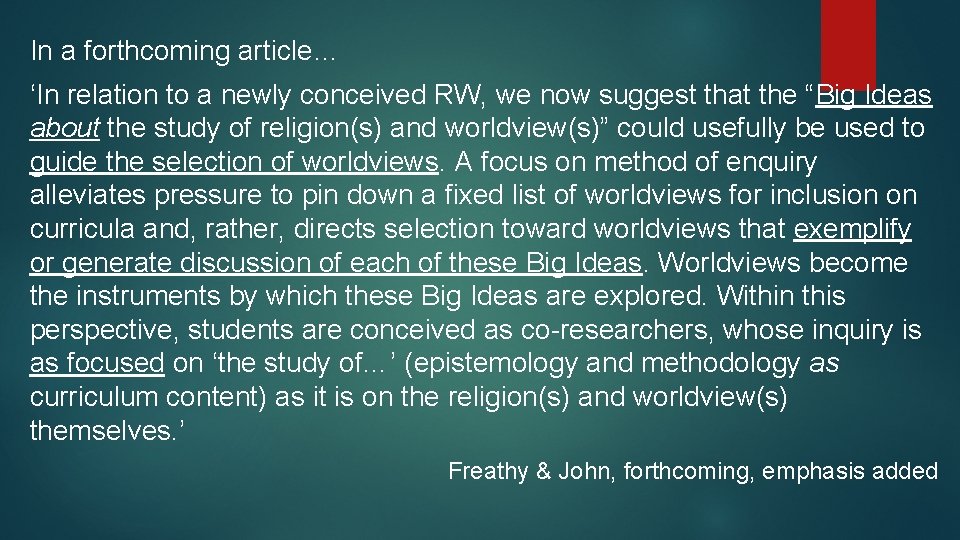
In a forthcoming article… ‘In relation to a newly conceived RW, we now suggest that the “Big Ideas about the study of religion(s) and worldview(s)” could usefully be used to guide the selection of worldviews. A focus on method of enquiry alleviates pressure to pin down a fixed list of worldviews for inclusion on curricula and, rather, directs selection toward worldviews that exemplify or generate discussion of each of these Big Ideas. Worldviews become the instruments by which these Big Ideas are explored. Within this perspective, students are conceived as co-researchers, whose inquiry is as focused on ‘the study of…’ (epistemology and methodology as curriculum content) as it is on the religion(s) and worldview(s) themselves. ’ Freathy & John, forthcoming, emphasis added
Big Ideas about SORW 1. Encountering religion(s) and worldview(s): Contested definitions and contexts 2. Encountering Oneself: Reflexivity, Reflectivity and Positionality 3. Encountering Methodologies and Methods: Discernment and Diversity 4. Encountering the ‘Real World’: Relevance and Transferability Rob Freathy & Helen C. John (2019) ‘Religious Education, Big Ideas and the study of religion(s) and worldview(s)’ British Journal of Religious Education, 41: 1, 27 -40
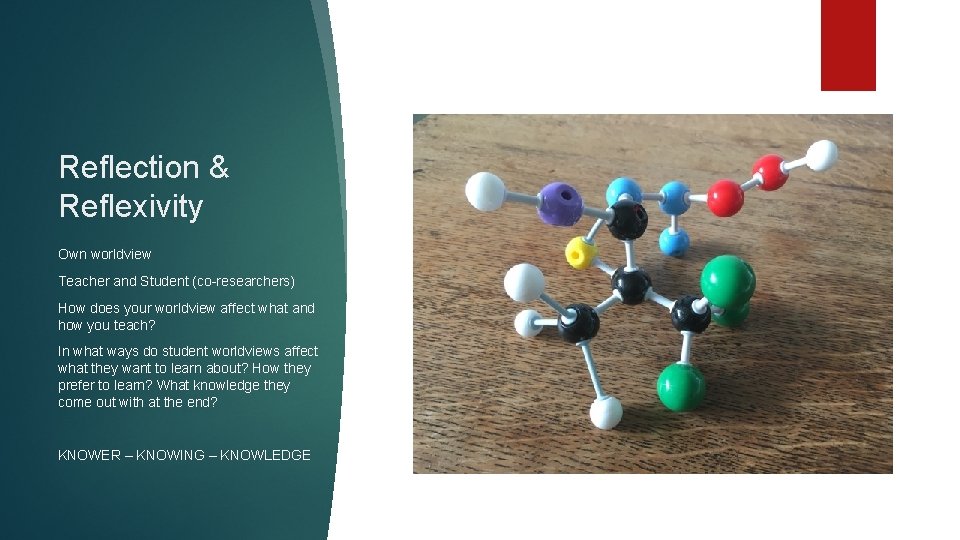
Reflection & Reflexivity Own worldview Teacher and Student (co-researchers) How does your worldview affect what and how you teach? In what ways do student worldviews affect what they want to learn about? How they prefer to learn? What knowledge they come out with at the end? KNOWER – KNOWING – KNOWLEDGE
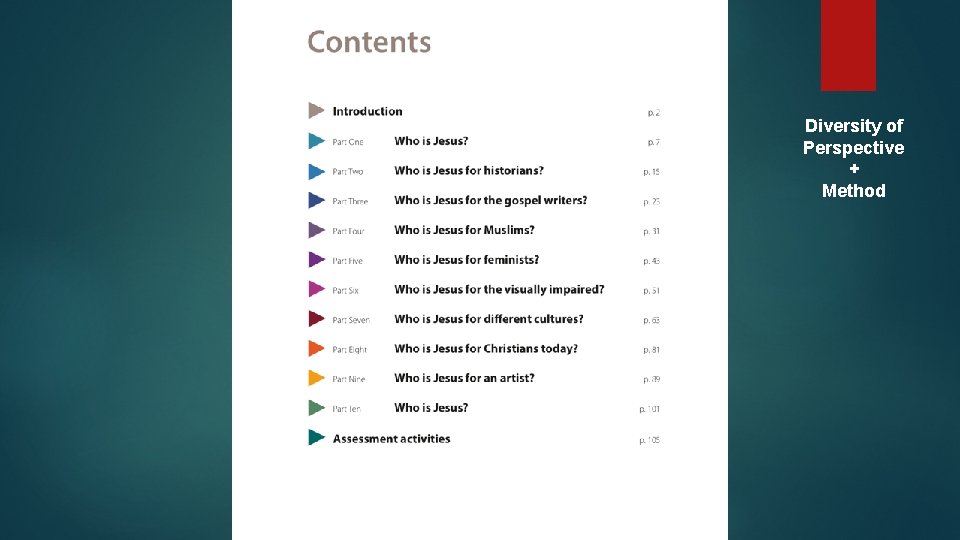
Diversity of Perspective + Method
Big Ideas about (4) 4. Encountering the ‘Real World’: Relevance and Transferability The study of religion(s) and worldview(s) is a vital tool in gaining knowledge and understanding of the various religions and worldviews in the world, as well as their engagement in contemporary public and private affairs. It offers many transferable skills, which are invaluable in many domains of life experience, including further education and employment. Freathy and John (2019, 8 -10)
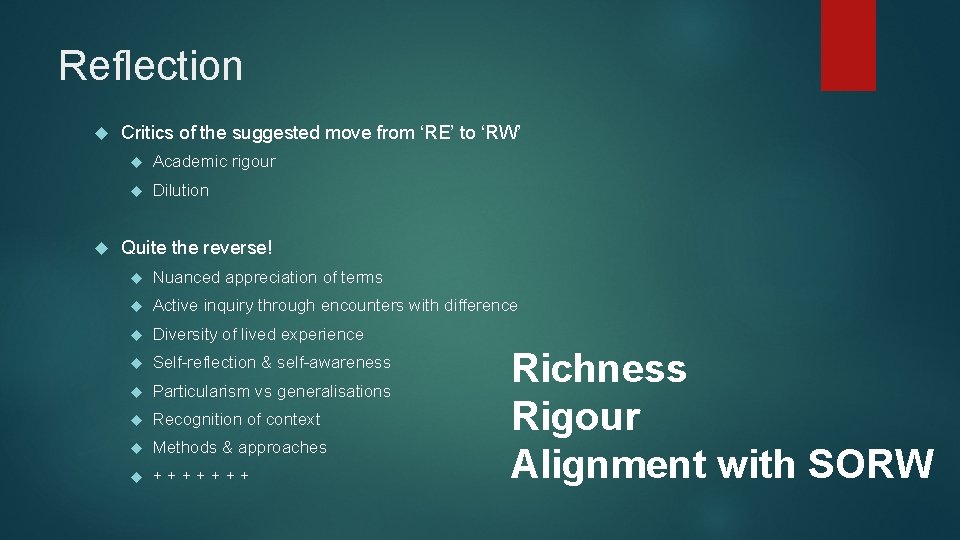
Reflection Critics of the suggested move from ‘RE’ to ‘RW’ Academic rigour Dilution Quite the reverse! Nuanced appreciation of terms Active inquiry through encounters with difference Diversity of lived experience Self-reflection & self-awareness Particularism vs generalisations Recognition of context Methods & approaches + + + + Richness Rigour Alignment with SORW
Q&A H. C. John@exeter. ac. uk Dr Helen C. John
Big Ideas about (1) 1. Encountering religion(s) and worldview(s): Contested definitions and contexts There is no uncontested definition of ‘religion’ or ‘worldview’, nor is there certainty about the nature of individual religions or worldviews. There is no uncontested definition of what the study of religion(s) and worldview(s) is, or what it should involve. A criticalanalytical, empathetic, and inquisitive approach – alongside an awareness of dynamic contexts – is required at all times. Freathy and John (2019, 8 -10)
Big Ideas about (2) 2. Encountering Oneself: Reflexivity, Reflectivity and Positionality Who we are (place, era, culture, aspects of identity, etc. ) affects – and sometimes determines – what we know about religion(s) and worldview(s). Encounters with unfamiliar peoples, cultures, religions and worldviews assist us in understanding ourselves better. In turn, this equips us better to investigate and understand religion(s) and worldview(s). Freathy and John (2019, 8 -10)
Big Ideas about (3) 3. Encountering Methodologies and Methods: Discernment and Diversity The study of religion(s) and worldview(s) is inherently multidisciplinary and methodologically diverse. The disciplinary and methodological approaches taken to the study of a religious phenomenon or worldview will contribute significantly to the results. Freathy and John (2019, 8 -10)
Big Ideas about (4) 4. Encountering the ‘Real World’: Relevance and Transferability The study of religion(s) and worldview(s) is a vital tool in gaining knowledge and understanding of the various religions and worldviews in the world, as well as their engagement in contemporary public and private affairs. It offers many transferable skills, which are invaluable in many domains of life experience, including further education and employment. Freathy and John (2019, 8 -10)