
What we Know About Eyewitness Memory SMUS October
What we Know About Eyewitness Memory SMUS, October 2017 Mario Baldassari Ph. D. Candidate, Cognition and Brain Sciences
Bio Ph. D Candidate At UVic since 2011 M. Sc. in 2013 From Indiana, by way of Chicago Cognitive psychologist, memory researcher, teacher • Most expert in eyewitness identification • • •
Today • Overview of interviews, lineups • Discuss how memory works • Apply memory concepts to interviews and lineups
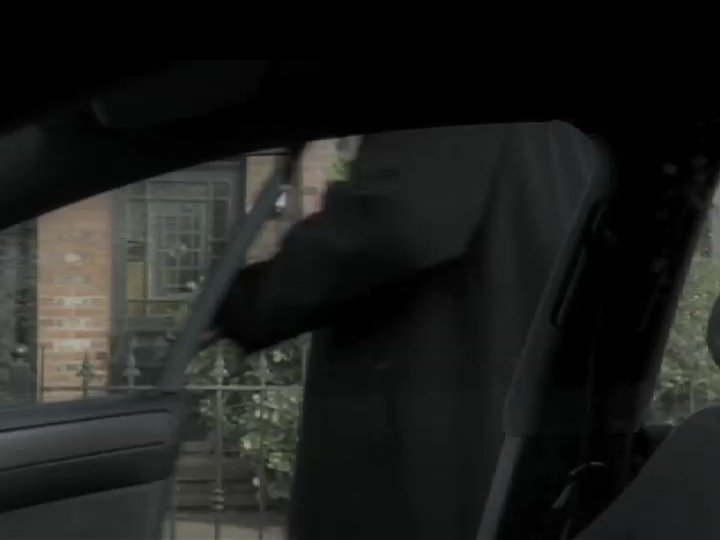
Crime coming… no violence on people just a loud break-in. Half of class close your eyes! (every other person)
Learning outcomes You will appreciate how hard it can be to be an eyewitness You will be able to describe the structure of and potential errors in three eyewitness tasks
If you witness a crime… • • Stress, fear Interview Lineup Trial
What happened in the video? Interview your neighbor, try to get most information you can about: Event Culprit Items/tools
Research on Interviewing • Widely pursued, difficult to change policy • Basic structure: watch a video, do one of two types of interviews, measure number of details remembered and compare • If one process generates more details from the same event, we deem it the better process – But important to not just generate errors • Questions?
Lineups are a bit more complicated…
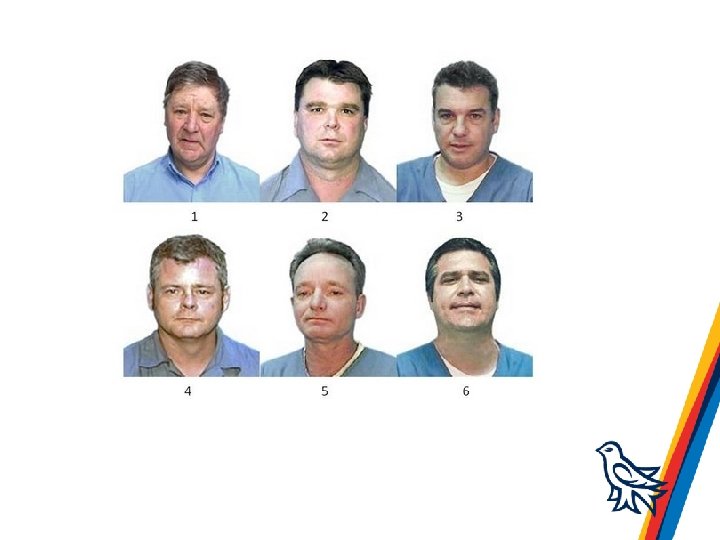
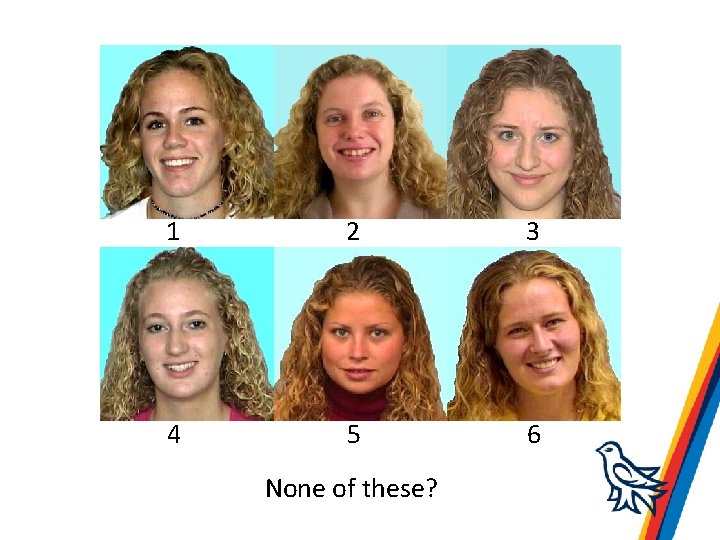
If you can identify the person who committed the crime in the video, please write the number of that person’s photo on a sheet of paper. If you think that the person that you saw commit the crime is not in the line-up, then please write "None. "
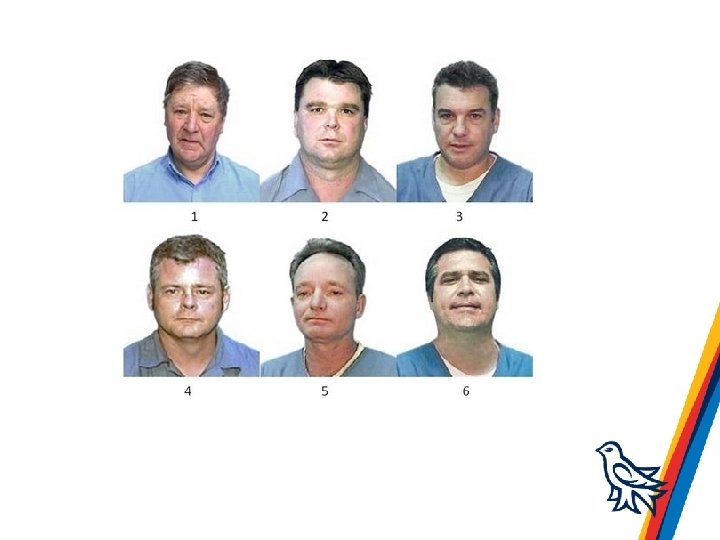
Tally votes. Write a number 1 -100, how confident are you that you made the right decision?
Lineups are a bit more complicated… • We assess lineups like doctors assess new medical tests: with 4 potential outcomes • Based on the true state of the world …and the outcome of the test • Because sometimes the police have the wrong suspect
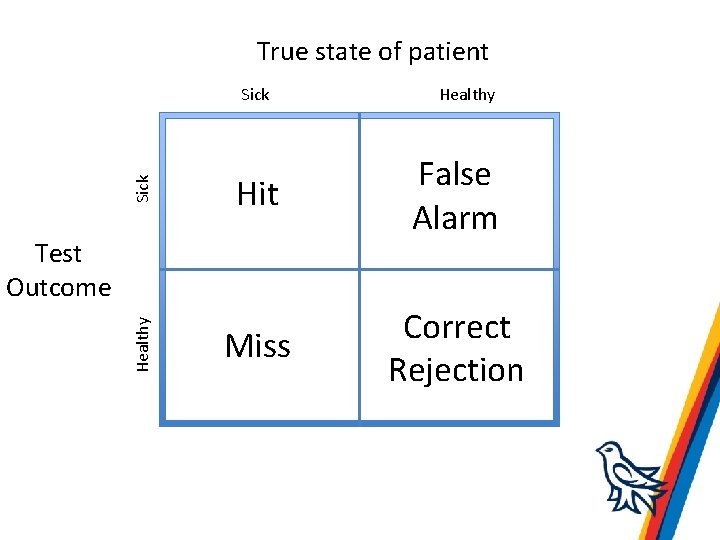
True state of patient Sick Hit False Alarm Miss Correct Rejection Test Outcome Healthy
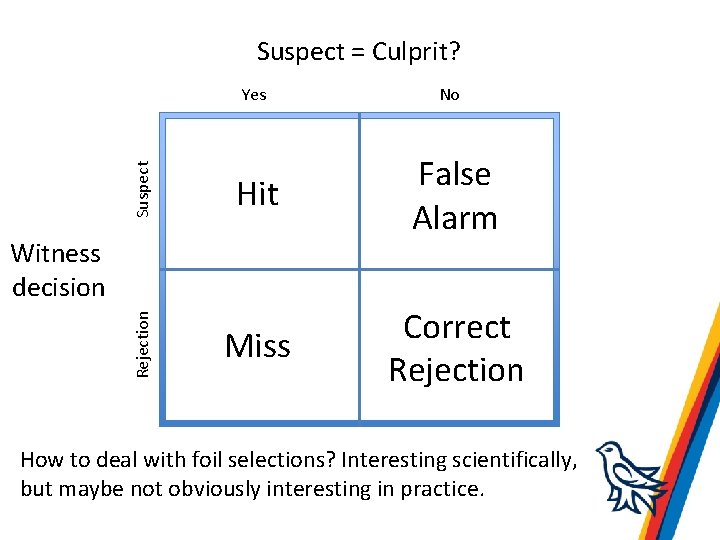
Suspect = Culprit? Suspect Yes Hit False Alarm Miss Correct Rejection Witness decision Rejection No How to deal with foil selections? Interesting scientifically, but maybe not obviously interesting in practice.
The Trial By trial time, witnesses may… – – have been tampered with have different beliefs about memory strength have thought more about the crime or criminal have spoken to the police more about the crime or been coached on testifying
Summarize: What do we want to happen in The interview? -Lots of information, nothing wrong The lineup? -Criminal chosen if he’s present, lineup rejected if he’s not The trial? -Witness restates everything just as they originally did
Questions? Moving on to memory. Remembering seems easy, but can be hard.
Miserandino, M. (1991). Memory and the seven dwarfs. Teaching of Psychology, 18, 169– 171. Name Snow White’s seven dwarfs. • Write every possible name that pops into your head in the order they occur • Who found it easy? • Difficult? • Anyone not know the names at all? Cultural differences? • Possible to know the story well but not have focused on this detail
Miserandino, M. (1991). Memory and the seven dwarfs. Teaching of Psychology, 18, 169– 171. Which of these are Snow White’s seven dwarfs? Grouchy, Gabby, Fearful, Sleepy, Smiley, Jumpy, Hopeful, Shy, Droopy, Dopey, Sniffy, Wishful, Puffy, Dumpy, Sneezy, Lazy, Pop, Grumpy, Bashful, Cheerful, Teach, Shorty, Nifty, Happy, Doc, Wheezy, and Stubby Recognition. Did you get more right? Why?
The final reveal: Sleepy, Dopey, Grumpy, Sneezy, Happy, Pop, and Bashful. It’s Doc! Did I get you?
Learning outcome You will begin to be able to explain the constructive, networked nature of memory We will work in the next section to apply this to eyewitnessing
The Constructive Nature of Memory depends on: – What actually happened plus – Person’s knowledge, experiences, and expectations (CONTEXT) – Memory is not replayed like a video, but reconstructed based on multiple pieces of information

Your memory is a network When one node is activated, all the nodes it’s connected to become somewhat active This is why recognizing your friend is easier than describing their face to someone
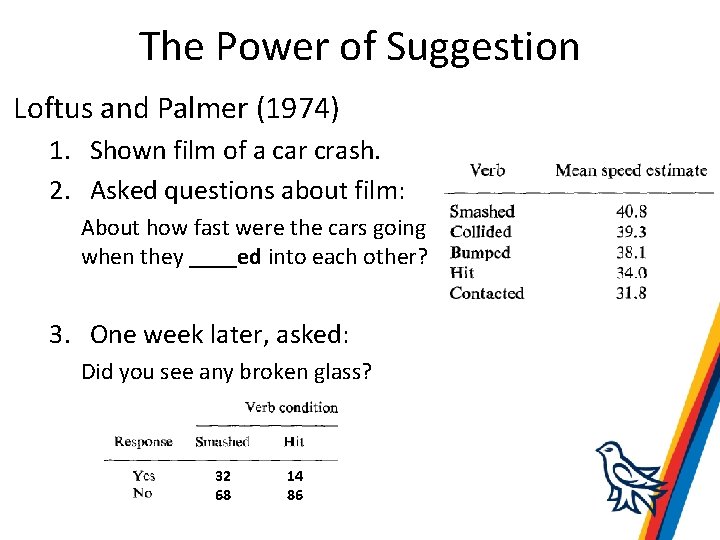
The Power of Suggestion Loftus and Palmer (1974) 1. Shown film of a car crash. 2. Asked questions about film: About how fast were the cars going when they ____ed into each other? 3. One week later, asked: Did you see any broken glass? 32 68 14 86
Summary • Memory is reconstructed every time we remember • Memory works like Wikipedia, relevant links are helpful to move from one item to another • Memory can be manipulated
Learning outcomes • You will be able to describe some ways in which psychological scientists solved the problems with the way eyewitnesses are asked to remember • You will be able to identify and differentiate system and witness variables
Interrogation does not work • Especially not with cooperative witnesses – And some suggest not with uncooperatives • Forcing people to confess through fear or harm results in too many false confessions • People fabricate details to get out of the situation • Exhausted people will confess to crimes or that they saw friends commit crimes and immediately recant when the leave the interrogation
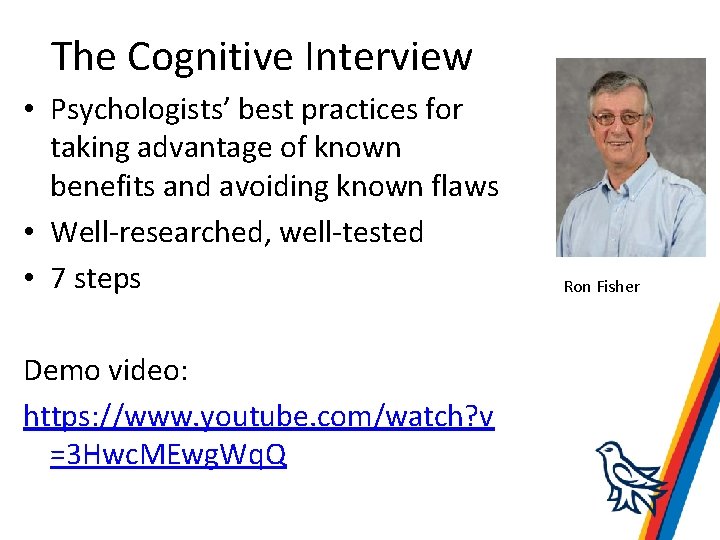
The Cognitive Interview • Psychologists’ best practices for taking advantage of known benefits and avoiding known flaws • Well-researched, well-tested • 7 steps Demo video: https: //www. youtube. com/watch? v =3 Hwc. MEwg. Wq. Q Ron Fisher
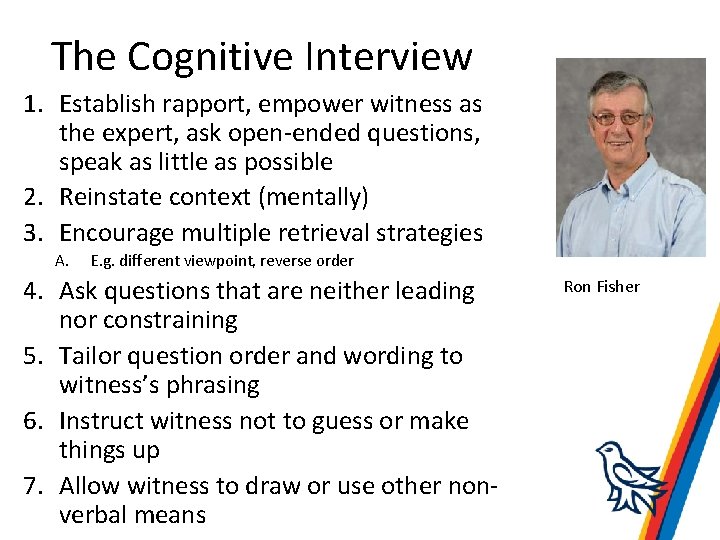
The Cognitive Interview 1. Establish rapport, empower witness as the expert, ask open-ended questions, speak as little as possible 2. Reinstate context (mentally) 3. Encourage multiple retrieval strategies A. E. g. different viewpoint, reverse order 4. Ask questions that are neither leading nor constraining 5. Tailor question order and wording to witness’s phrasing 6. Instruct witness not to guess or make things up 7. Allow witness to draw or use other nonverbal means Ron Fisher

The Cognitive Interview • The issue: Difficult to train Ron Fisher
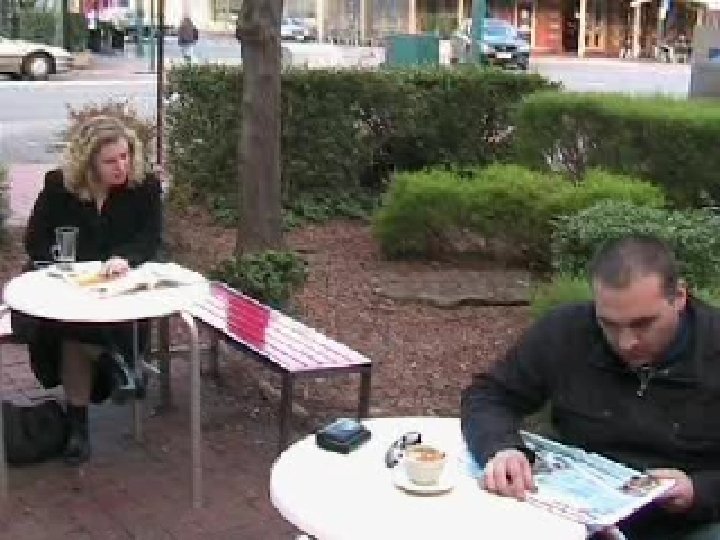
Let’s try it! Other half of the room close your eyes
The Cognitive Interview 1. Establish rapport, empower witness as the expert, ask open-ended questions, speak as little as possible 2. Reinstate context (mentally) 3. Encourage multiple retrieval strategies A. E. g. different viewpoint, reverse order 4. Ask questions that are neither leading nor constraining 5. Tailor question order and wording to witness’s phrasing 6. Instruct witness not to guess or make things up 7. Allow witness to draw or use other nonverbal means

Lineup time…
First: What’s a variable? • System Variable Anything within the control of the justice system, including police and courts. • Witness Variable Things that vary outside the control of the justice system, but are measureable and possibly useful/predictive
Generate some variables
System Variables from the AP-LS White Paper • Lineup administrator should not know which member of the lineup is the suspect – Witness should be told this • Witness should be told they don’t have to choose, the criminal may not appear • Suspect should not stand out from others in any obvious way • Witness should be immediately asked about confidence • Maybe do them sequentially • Maybe videotape the whole thing
Witness Variables • Confidence and ID Latency are predictive when choosing • No clear evidence of gender effects • Some evidence of decline with age • Own-Age Effects • Poor performance from children, especially when culprit absent • Other Race Effects • Global vs. Local Processing • Personality Dimensions • Face recognition ability
Now: A real lineup administration https: //www. youtube. com/watch? v=pc. Fy 6 T_s 8 OE
Real-Life Lineup Administration Things done in the You. Tube Video that I didn’t do here • Officer administering lineup not involved in case • Sequential not simultaneous • Confidence in words, not numbers “how certain you are” • Careful admonishment that important to clear innocents • Change-appearance instruction • Minimization of consequences • Do not discuss with other witnesses or the media • No feedback from officer Issues • No mention that administrator doesn’t know who the suspect is • Why show more after they choose someone? • Initial on the face you pick, that’s weird
If you can identify the person who committed the crime in the video, please write the number of that person’s photo on a sheet of paper. If you think that the person that you saw commit the crime is not in the line-up, then please write "None. ” Remember that our intention is to catch the culprit, so it is just as important that you identify them if they appear as it is to reject the lineup if they do not.
1 2 3 4 5 6 None of these?
Write a number 1 -100, how confident are you that you made the right decision? Tally votes.
Summary • Memory researchers have come up with a great way to make interviews better • Progress has been made in lineups, though still an imperfect process
Hopefully at this point, • You appreciate how hard it can be to be an eyewitness • You are able to describe the structure of and potential errors in eyewitness interviews and lineups • You are able to describe the constructive, networked nature of memory (7 dwarves, Wikipedia) • You are able to describe some solutions that psychological scientists have worked out for the problems with the way eyewitnesses are asked to remember • You are able to identify and differentiate system and witness variables
THANKS! QUESTIONS?
- Slides: 50