
What was the significance of the Age of


- Slides: 13
What was the significance of the Age of Absolutism in Europe? Notes #16
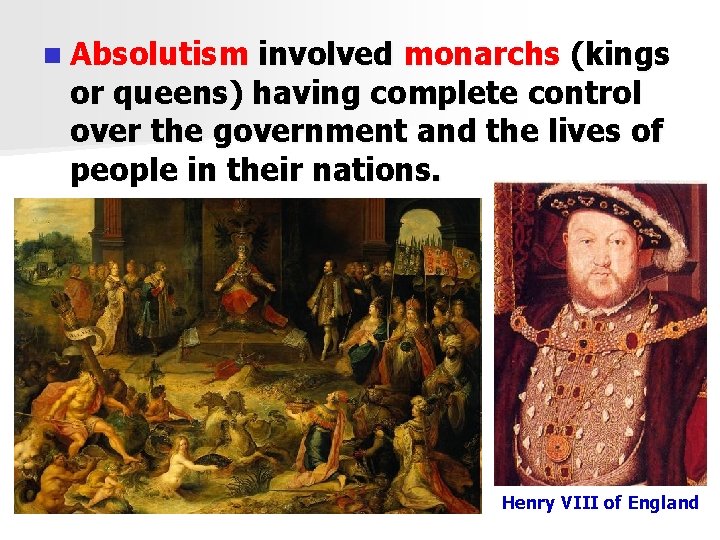
n Absolutism involved monarchs (kings or queens) having complete control over the government and the lives of people in their nations. Henry VIII of England
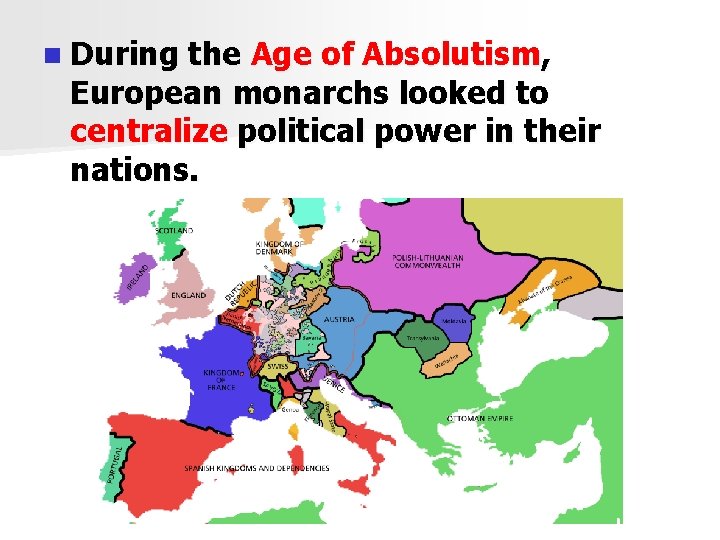
n During the Age of Absolutism, European monarchs looked to centralize political power in their nations.
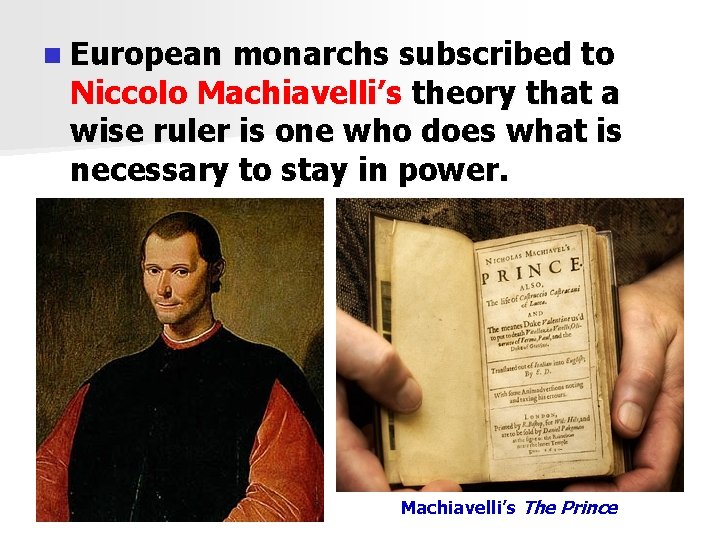
n European monarchs subscribed to Niccolo Machiavelli’s theory that a wise ruler is one who does what is necessary to stay in power. Machiavelli’s The Prince
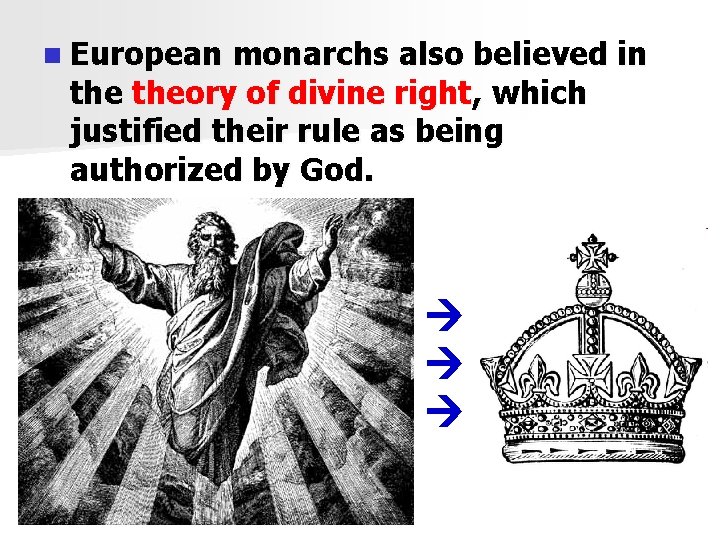
n European monarchs also believed in theory of divine right, which justified their rule as being authorized by God.
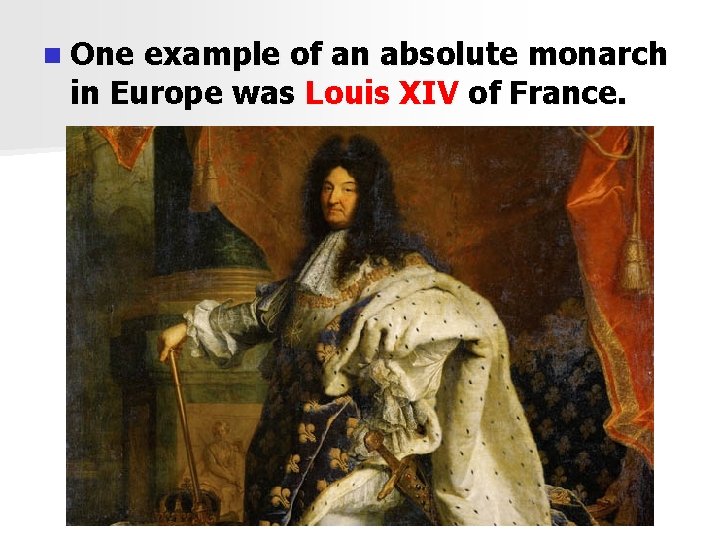
n One example of an absolute monarch in Europe was Louis XIV of France.
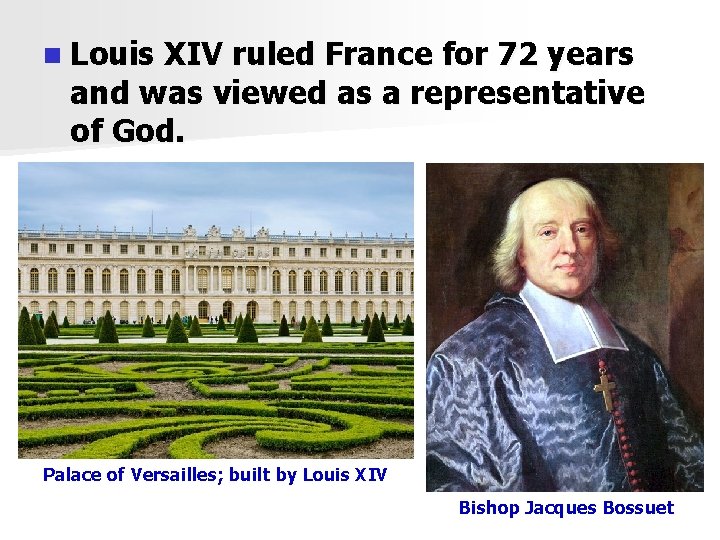
n Louis XIV ruled France for 72 years and was viewed as a representative of God. Palace of Versailles; built by Louis XIV Bishop Jacques Bossuet
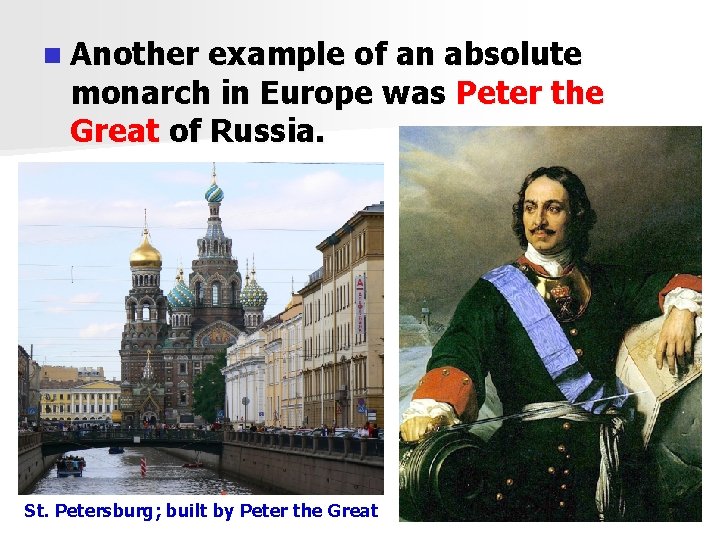
n Another example of an absolute monarch in Europe was Peter the Great of Russia. St. Petersburg; built by Peter the Great
n Peter the Great used his absolute rule to change Russia by introducing Western ideas and customs.
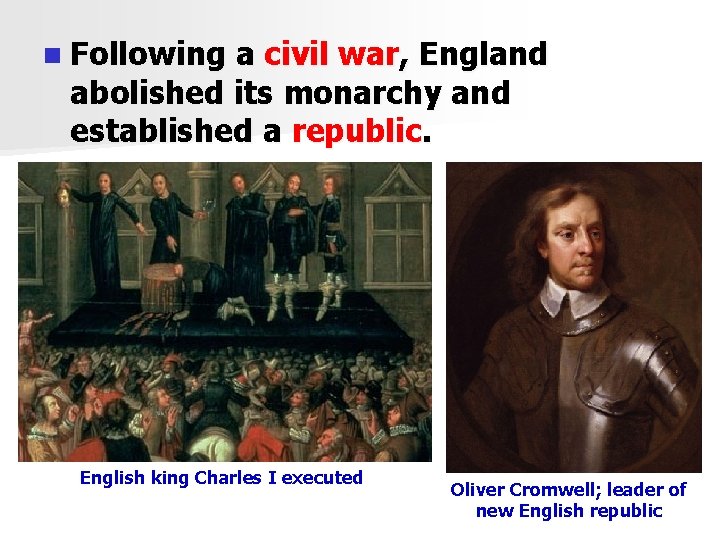
n Following a civil war, England abolished its monarchy and established a republic. English king Charles I executed Oliver Cromwell; leader of new English republic
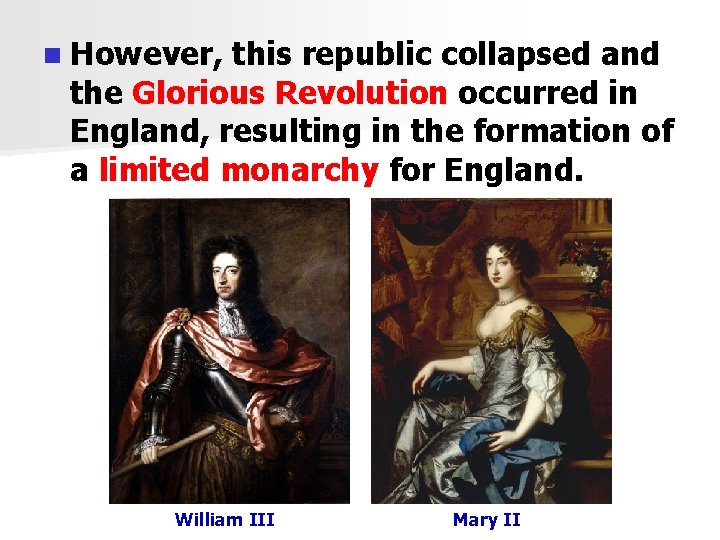
n However, this republic collapsed and the Glorious Revolution occurred in England, resulting in the formation of a limited monarchy for England. William III Mary II
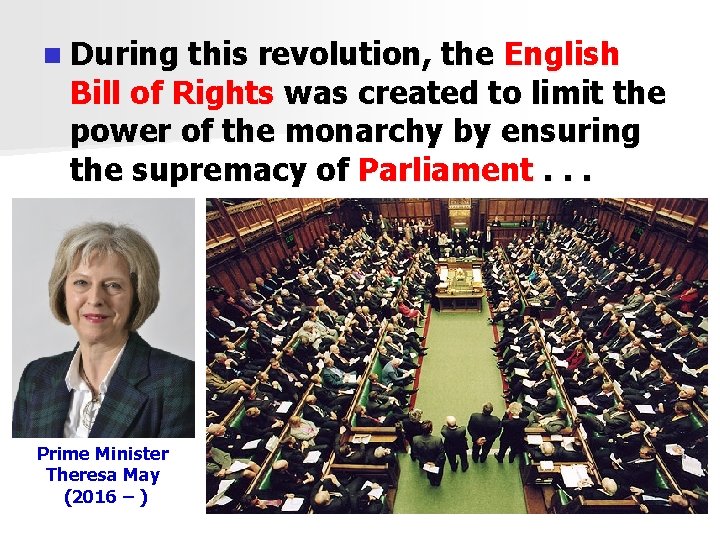
n During this revolution, the English Bill of Rights was created to limit the power of the monarchy by ensuring the supremacy of Parliament. . . Prime Minister Theresa May (2016 – )
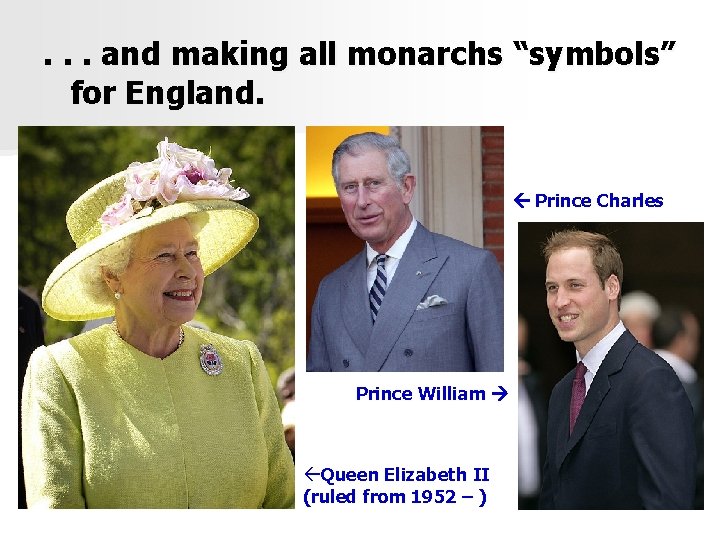
. . . and making all monarchs “symbols” for England. Prince Charles Prince William ßQueen Elizabeth II (ruled from 1952 – )