
What was the nature of changing immigration patterns
- Slides: 11
What was the nature of changing immigration patterns after WWII? LOs: 1. To recall immigration patterns 1917 -1945 2. To support and explain the impact of changing attitudes, WWII, the Cold War and economic needs on the nature of immigration. 3. To assess the degree to which shifts in attitudes affected the changes in the nature of immigration LOs: 1. To recall immigration patterns 1917 -1945 2. To support and explain the impact of changing attitudes, WWII, the Cold War and economic needs on the nature of immigration. 3. To assess the degree to which shifts in attitudes affected the changes in the nature of immigration Keywords The Mc. Carran Walter Act of 1952
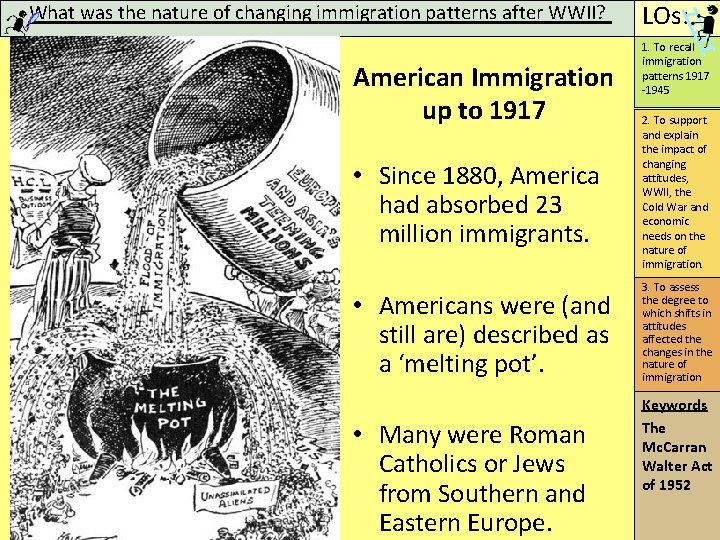
What was the nature of changing immigration patterns after WWII? American Immigration up to 1917 • Since 1880, America had absorbed 23 million immigrants. • Americans were (and still are) described as a ‘melting pot’. • Many were Roman Catholics or Jews from Southern and Eastern Europe. LOs: 1. To recall immigration patterns 1917 -1945 2. To support and explain the impact of changing attitudes, WWII, the Cold War and economic needs on the nature of immigration. 3. To assess the degree to which shifts in attitudes affected the changes in the nature of immigration Keywords The Mc. Carran Walter Act of 1952
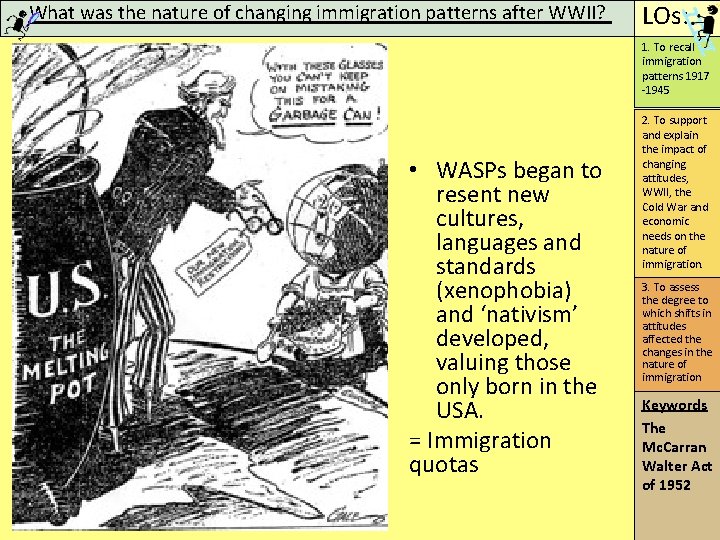
What was the nature of changing immigration patterns after WWII? LOs: 1. To recall immigration patterns 1917 -1945 • WASPs began to resent new cultures, languages and standards (xenophobia) and ‘nativism’ developed, valuing those only born in the USA. = Immigration quotas 2. To support and explain the impact of changing attitudes, WWII, the Cold War and economic needs on the nature of immigration. 3. To assess the degree to which shifts in attitudes affected the changes in the nature of immigration Keywords The Mc. Carran Walter Act of 1952
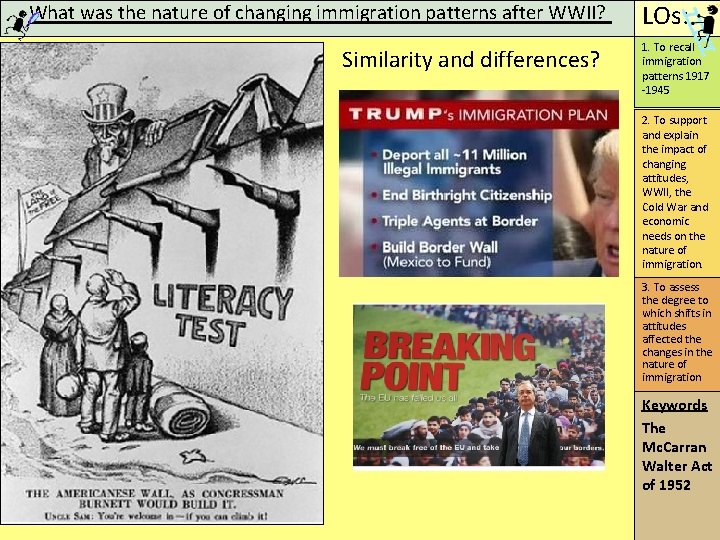
What was the nature of changing immigration patterns after WWII? Similarity and differences? LOs: 1. To recall immigration patterns 1917 -1945 2. To support and explain the impact of changing attitudes, WWII, the Cold War and economic needs on the nature of immigration. 3. To assess the degree to which shifts in attitudes affected the changes in the nature of immigration Keywords The Mc. Carran Walter Act of 1952
What was the nature of changing immigration patterns after WWII? How were immigrants affected by the Great Depression? • • Large immigrant communities influenced voting. Immigrant communities typically voted Democrat = Roosevelt. BUT • Immigrants were not well provided for under the New Deal (esp. Mexicans). • Shortage of jobs = resentment of immigrants. “American jobs for real Americans”. • Mexicans faced forced deportation. This started under Hoover (“American jobs for real Americans”) but continued under Roosevelt. About half were actually citizens. • Jews fleeing Germany also faced persecution – 60% disapproval rate. Assistant Secretary of State, Wilbur Car: “filthy, Un-American and often dangerous in their habits. ” LOs: 1. To recall immigration patterns 1917 -1945 2. To support and explain the impact of changing attitudes, WWII, the Cold War and economic needs on the nature of immigration. 3. To assess the degree to which shifts in attitudes affected the changes in the nature of immigration Keywords The Mc. Carran Walter Act of 1952
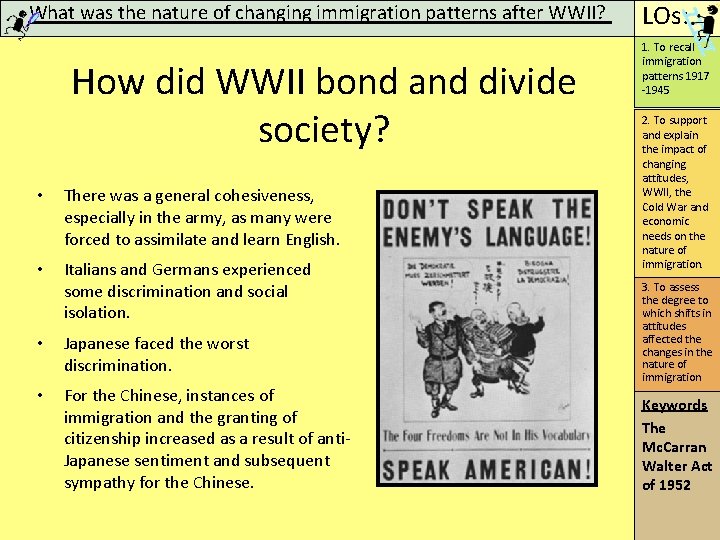
What was the nature of changing immigration patterns after WWII? How did WWII bond and divide society? • There was a general cohesiveness, especially in the army, as many were forced to assimilate and learn English. • Italians and Germans experienced some discrimination and social isolation. • Japanese faced the worst discrimination. • For the Chinese, instances of immigration and the granting of citizenship increased as a result of anti. Japanese sentiment and subsequent sympathy for the Chinese. LOs: 1. To recall immigration patterns 1917 -1945 2. To support and explain the impact of changing attitudes, WWII, the Cold War and economic needs on the nature of immigration. 3. To assess the degree to which shifts in attitudes affected the changes in the nature of immigration Keywords The Mc. Carran Walter Act of 1952
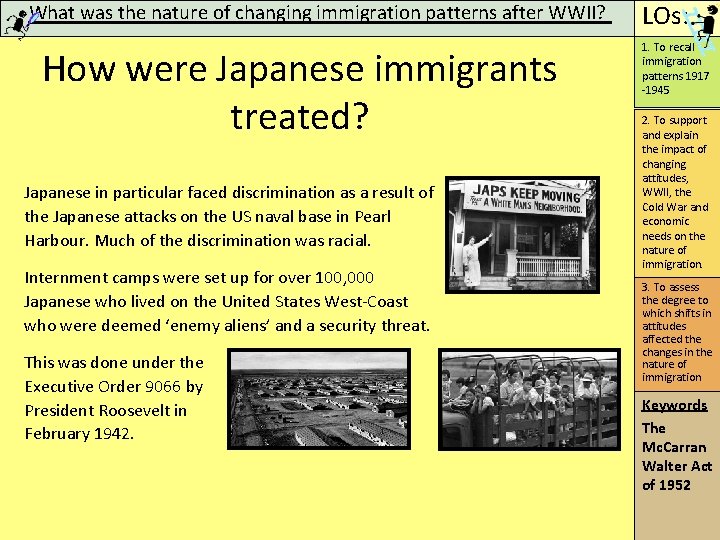
What was the nature of changing immigration patterns after WWII? How were Japanese immigrants treated? Japanese in particular faced discrimination as a result of the Japanese attacks on the US naval base in Pearl Harbour. Much of the discrimination was racial. Internment camps were set up for over 100, 000 Japanese who lived on the United States West-Coast who were deemed ‘enemy aliens’ and a security threat. This was done under the Executive Order 9066 by President Roosevelt in February 1942. LOs: 1. To recall immigration patterns 1917 -1945 2. To support and explain the impact of changing attitudes, WWII, the Cold War and economic needs on the nature of immigration. 3. To assess the degree to which shifts in attitudes affected the changes in the nature of immigration Keywords The Mc. Carran Walter Act of 1952
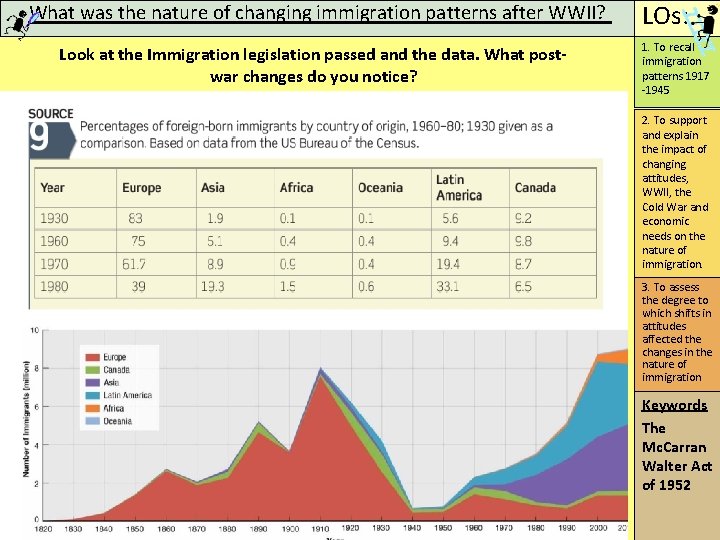
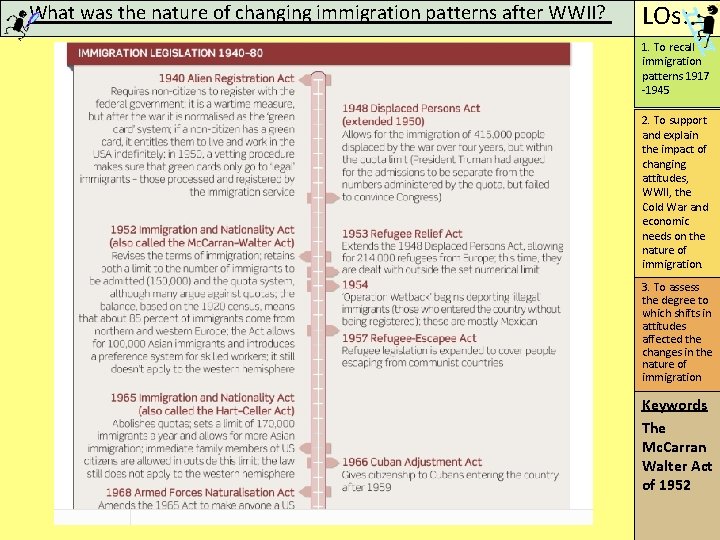
What was the nature of changing immigration patterns after WWII? Look at the Immigration legislation passed and the data. What postwar changes do you notice? LOs: 1. To recall immigration patterns 1917 -1945 2. To support and explain the impact of changing attitudes, WWII, the Cold War and economic needs on the nature of immigration. 3. To assess the degree to which shifts in attitudes affected the changes in the nature of immigration Keywords The Mc. Carran Walter Act of 1952
What was the nature of changing immigration patterns after WWII? LOs: 1. To recall immigration patterns 1917 -1945 2. To support and explain the impact of changing attitudes, WWII, the Cold War and economic needs on the nature of immigration. 3. To assess the degree to which shifts in attitudes affected the changes in the nature of immigration Keywords The Mc. Carran Walter Act of 1952
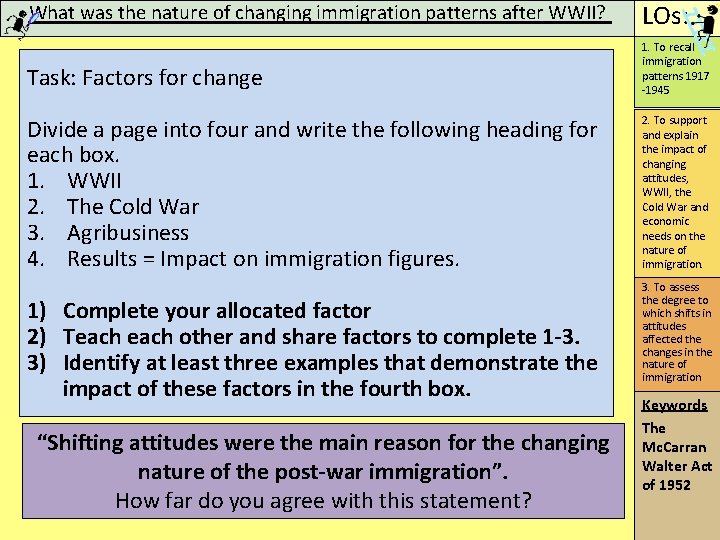
What was the nature of changing immigration patterns after WWII? Task: Factors for change Divide a page into four and write the following heading for each box. 1. WWII 2. The Cold War 3. Agribusiness 4. Results = Impact on immigration figures. 1) Complete your allocated factor 2) Teach other and share factors to complete 1 -3. 3) Identify at least three examples that demonstrate the impact of these factors in the fourth box. “Shifting attitudes were the main reason for the changing nature of the post-war immigration”. How far do you agree with this statement? LOs: 1. To recall immigration patterns 1917 -1945 2. To support and explain the impact of changing attitudes, WWII, the Cold War and economic needs on the nature of immigration. 3. To assess the degree to which shifts in attitudes affected the changes in the nature of immigration Keywords The Mc. Carran Walter Act of 1952
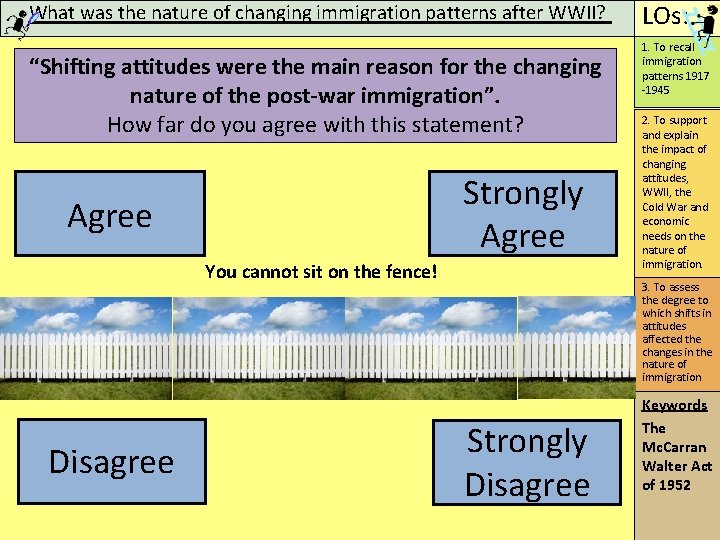
What was the nature of changing immigration patterns after WWII? “Shifting attitudes were the main reason for the changing nature of the post-war immigration”. How far do you agree with this statement? Strongly Agree You cannot sit on the fence! Disagree LOs: 1. To recall immigration patterns 1917 -1945 2. To support and explain the impact of changing attitudes, WWII, the Cold War and economic needs on the nature of immigration. 3. To assess the degree to which shifts in attitudes affected the changes in the nature of immigration Strongly Disagree Keywords The Mc. Carran Walter Act of 1952