
What was the Industrial Revolution Mass production of

![Factory Production ) Concentrates production in one place [materials, labor]. ) Located near sources](https://slidetodoc.com/presentation_image_h2/4693c02bc8d610daeef269a39bae6002/image-16.jpg "Factory Production ) Concentrates production in one place [materials, labor]. ) Located near sources")



![The Luddites: 1811 -1816 Attacks on the “frames” [power looms]. Ned Ludd [a mythical](https://slidetodoc.com/presentation_image_h2/4693c02bc8d610daeef269a39bae6002/image-48.jpg "The Luddites: 1811 -1816 Attacks on the “frames” [power looms]. Ned Ludd [a mythical")


- Slides: 56
What was the Industrial Revolution? • Mass production of goods by machine • Meant the end of the guild system which had run “industry for 800 years – What is the guild system? • “Hand made” took too long and was expensive • Was it a good thing?
Changing Life • Population numbers increased <more later> – New agricultural tools and techniques <more later> – Improved medical treatment. Doctors actually cured people • Vaccination – Jenner • Anesthsia <ether> and antisceptic- Crawford Long and Lister. • Transportation – canals and roads, iron and steam <more later> • Population moved from rural to urban <more later>
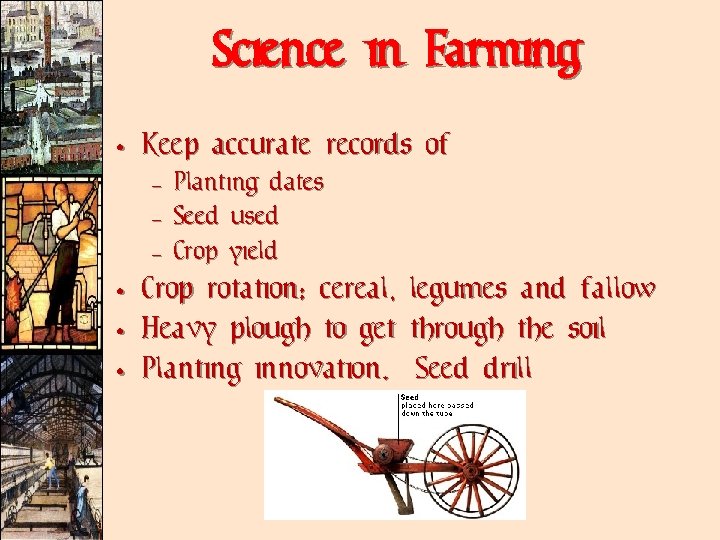
Science in Farming • Keep accurate records of – Planting dates – Seed used – Crop yield • Crop rotation: cereal, legumes and fallow • Heavy plough to get through the soil • Planting innovation. Seed drill
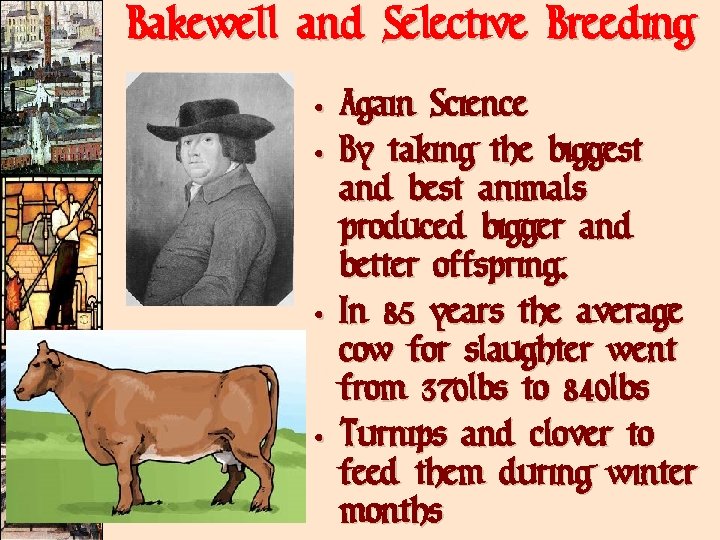
Bakewell and Selective Breeding • Again Science • By taking the biggest and best animals produced bigger and better offspring. • In 85 years the average cow for slaughter went from 370 lbs to 840 lbs • Turnips and clover to feed them during winter months
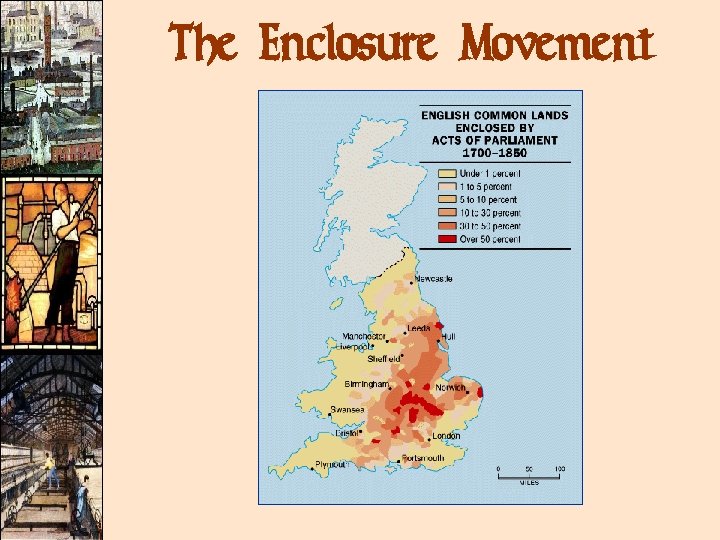
The Enclosure Movement
“Enclosed” Lands Today Small tenant farmers evicted!! Where do they go?
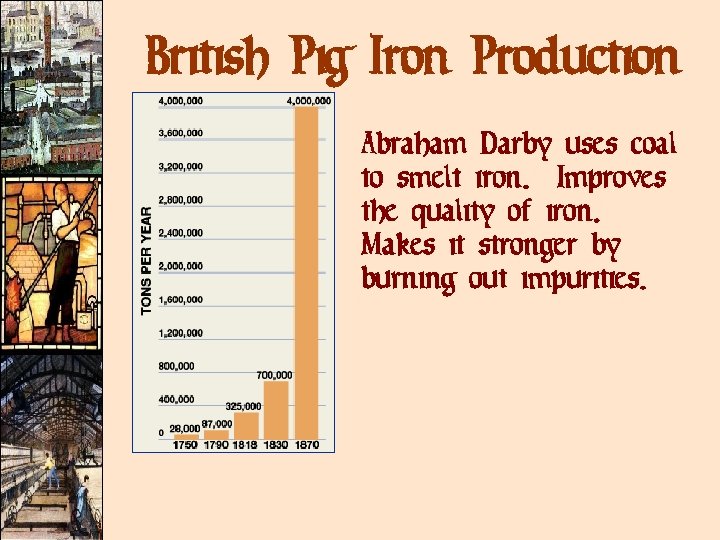
British Pig Iron Production Abraham Darby uses coal to smelt iron. Improves the quality of iron. Makes it stronger by burning out impurities.
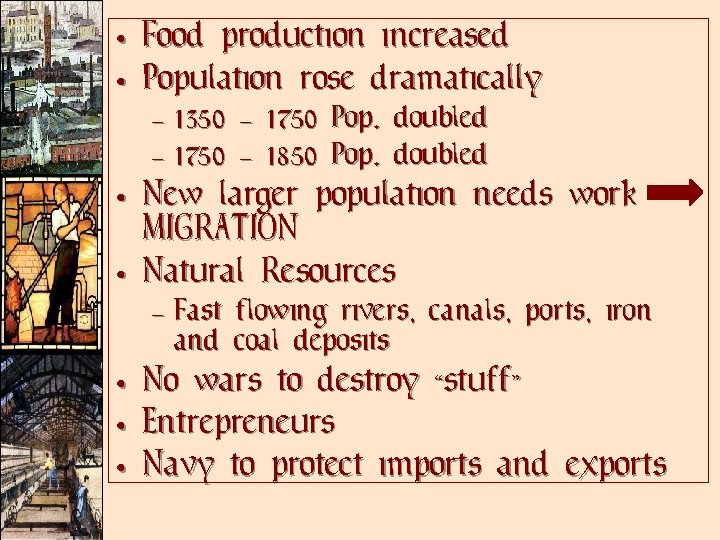
• Food production increased • Population rose dramatically – 1350 – 1750 Pop. doubled – 1850 Pop. doubled • New larger population needs work MIGRATION • Natural Resources – Fast flowing rivers, canals, ports, iron and coal deposits • • • No wars to destroy “stuff” Entrepreneurs Navy to protect imports and exports
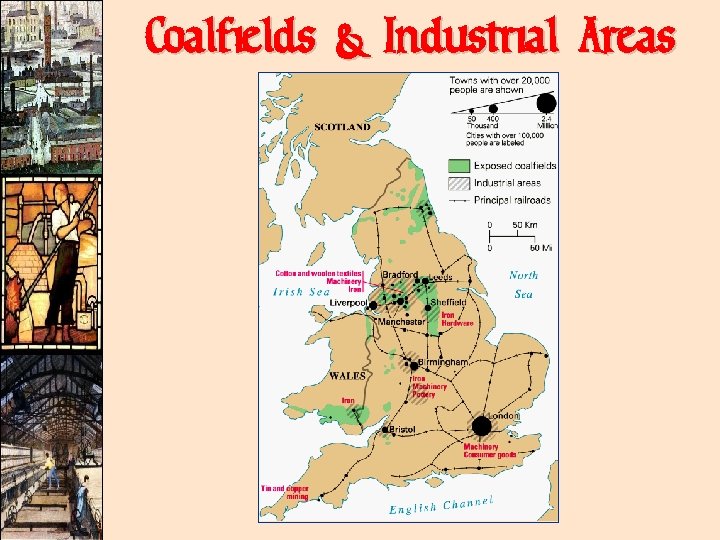
Coalfields & Industrial Areas
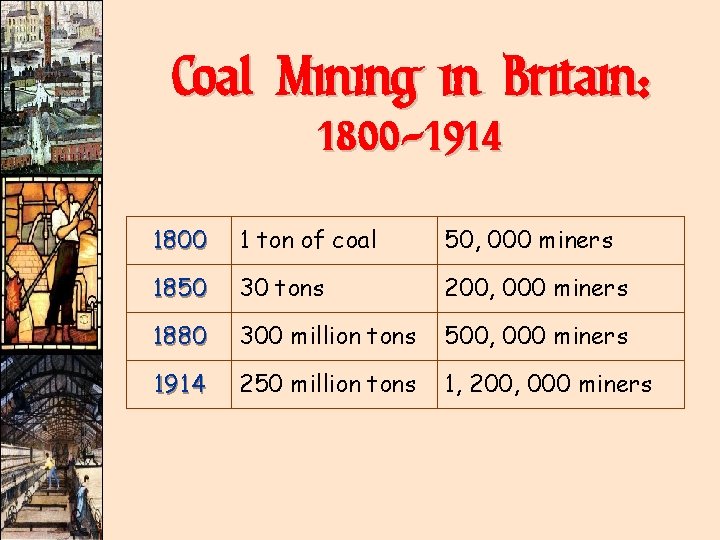
Coal Mining in Britain: 1800 -1914 1800 1 ton of coal 50, 000 miners 1850 30 tons 200, 000 miners 1880 300 million tons 500, 000 miners 1914 250 million tons 1, 200, 000 miners
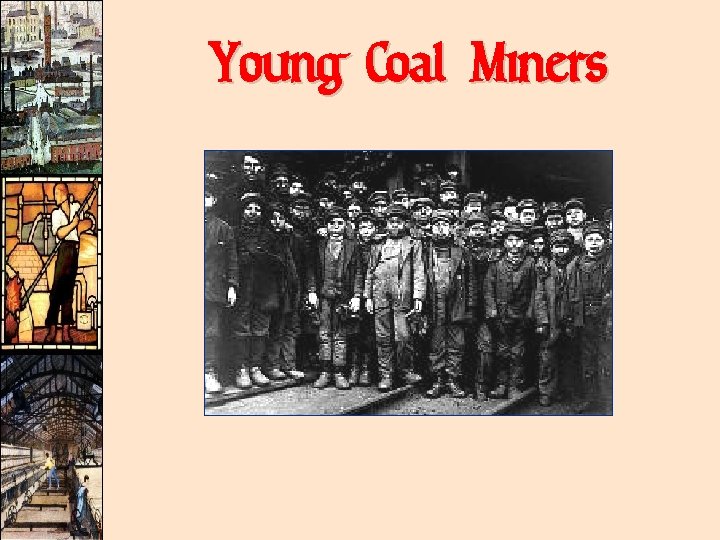
Young Coal Miners
Cottage Industry • With the growing population, need for goods, particularly cloth rose. • Result was cottage industry. • Each part of production - spinning, weaving, finishing – was done by a different family. The merchant moved the cloth from one place to the next after it was “PUT OUT” • Called PUTTING OUT SYSTEM • Demand grew too much so…
Factory Production ) Concentrates production in one place [materials, labor]. ) Located near sources of power. At first in the hills (Why? Then on coalfields ) Who were the first entrepreneurs? ) Those who could increase production could make a lot of money. ) Any inventions that sped up one part of production encouraged new inventions in another part…
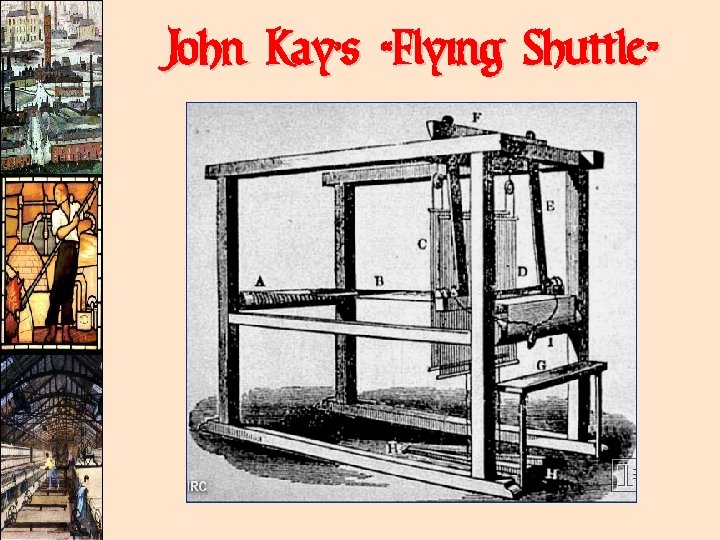
John Kay’s “Flying Shuttle”
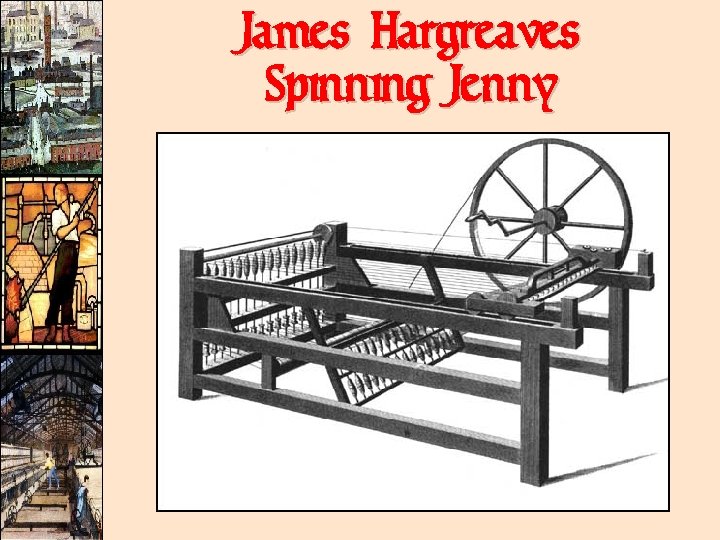
James Hargreaves Spinning Jenny
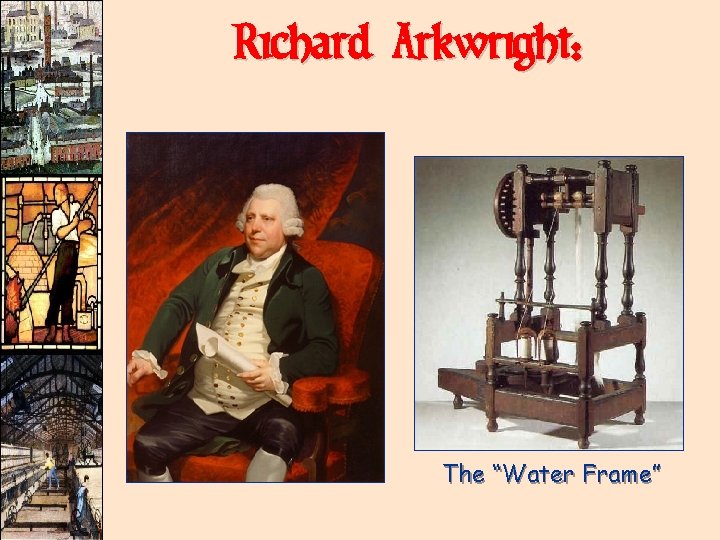
Richard Arkwright: The “Water Frame”
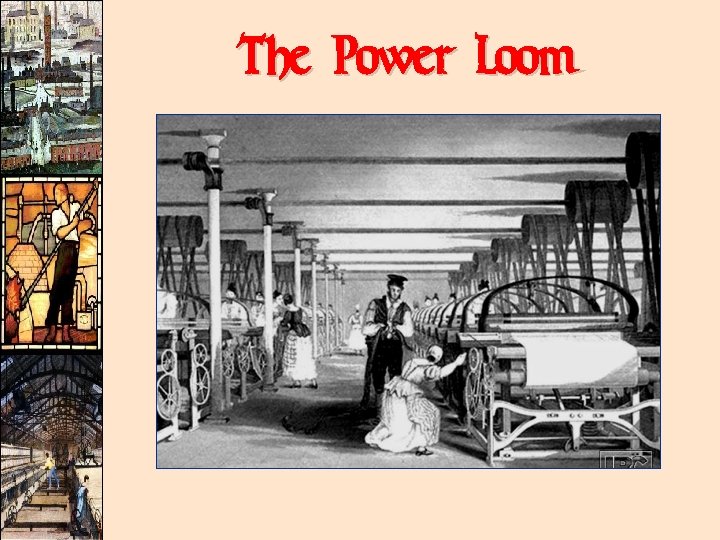
The Power Loom
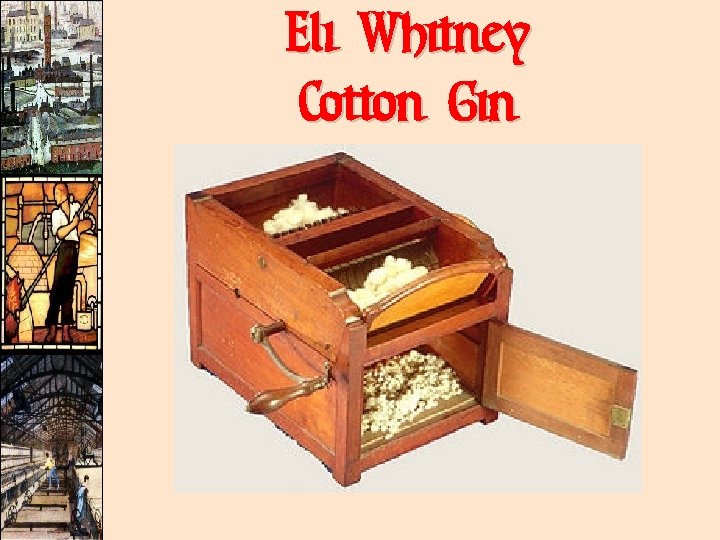
Eli Whitney Cotton Gin
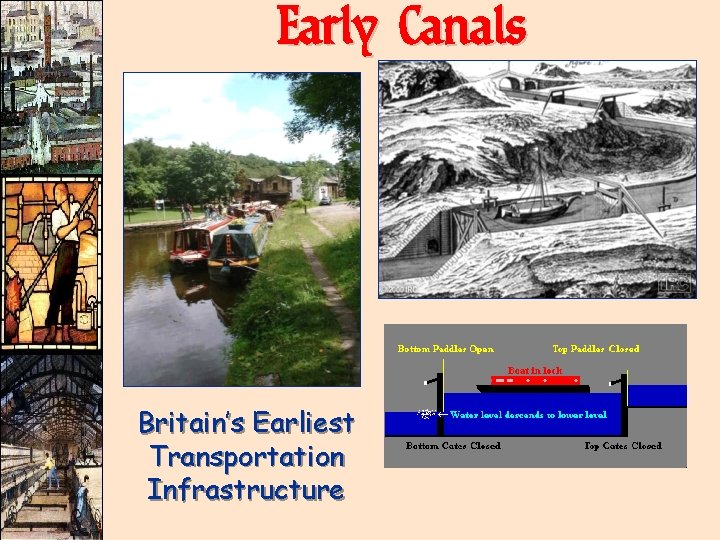
Early Canals Britain’s Earliest Transportation Infrastructure
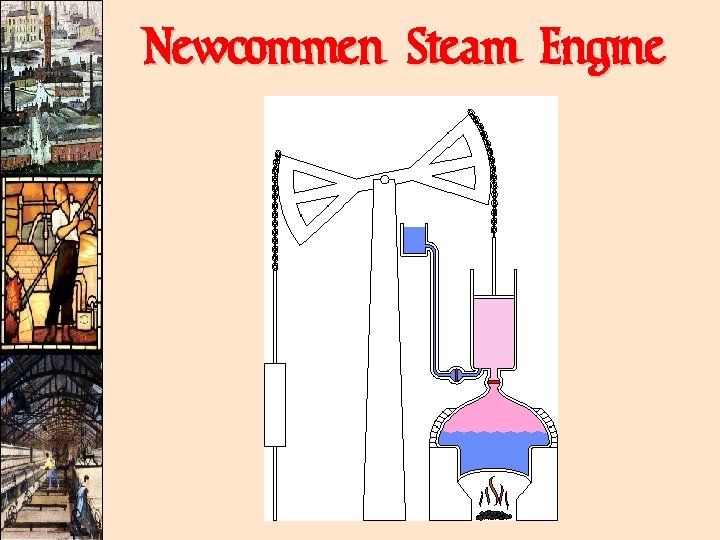
Newcommen Steam Engine
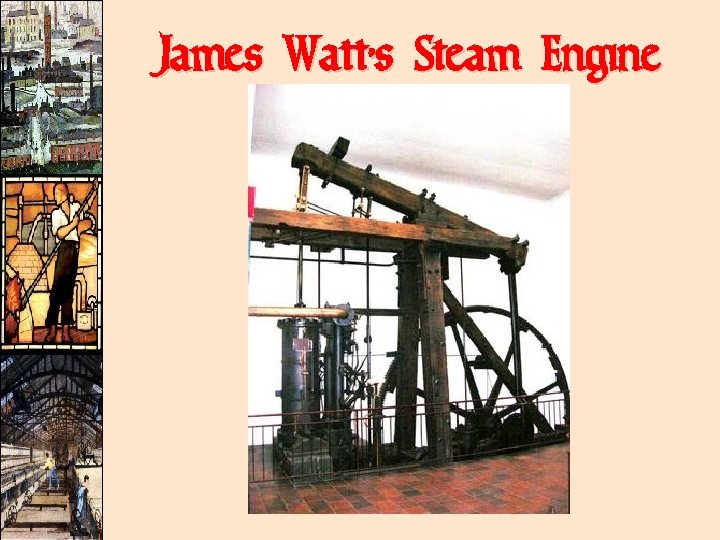
James Watt’s Steam Engine
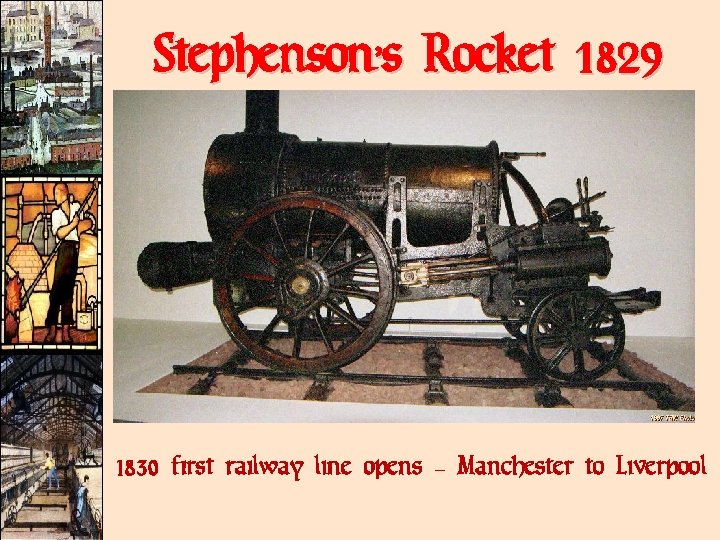
Stephenson’s Rocket 1829 1830 first railway line opens – Manchester to Liverpool
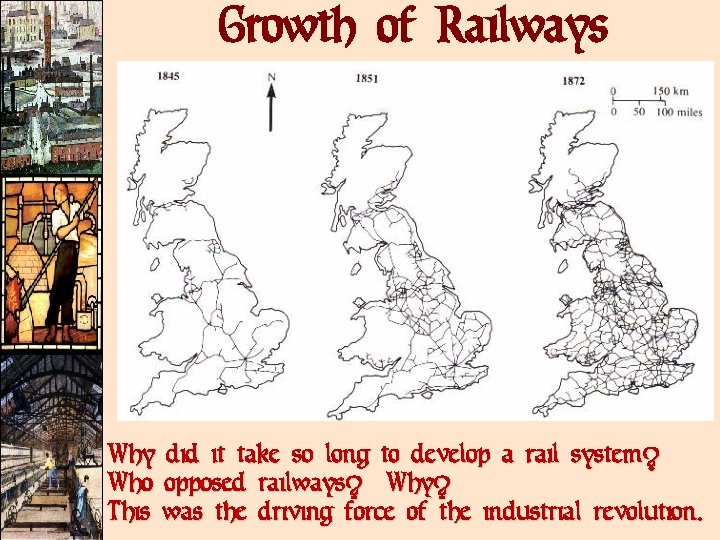
Growth of Railways Why did it take so long to develop a rail system? Who opposed railways? Why? This was the driving force of the industrial revolution.
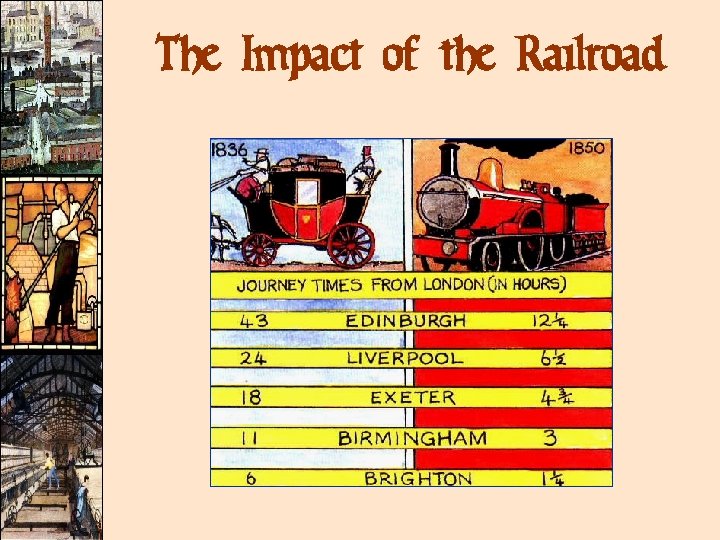
The Impact of the Railroad
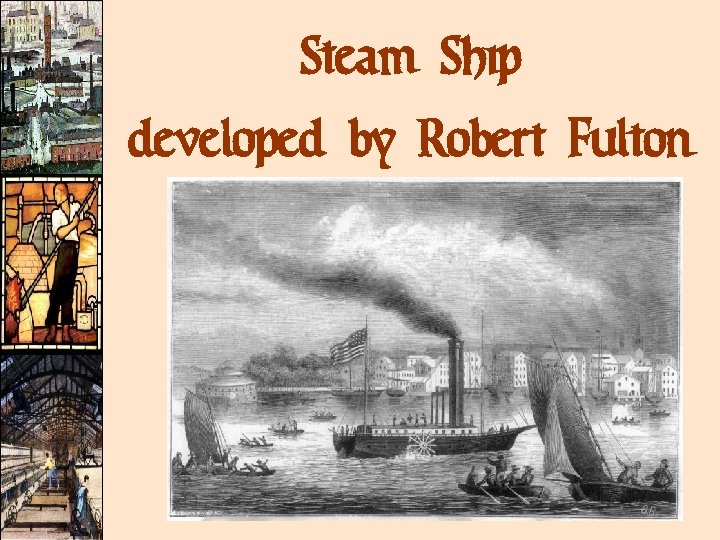
Steam Ship developed by Robert Fulton
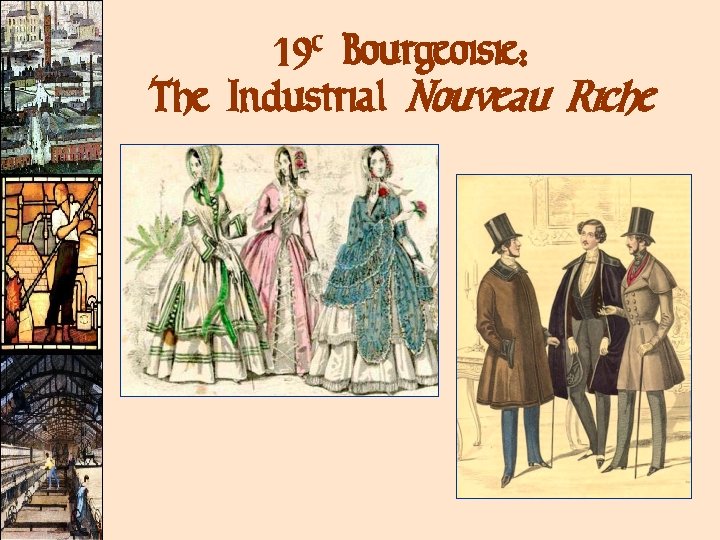
19 c Bourgeoisie: The Industrial Nouveau Riche
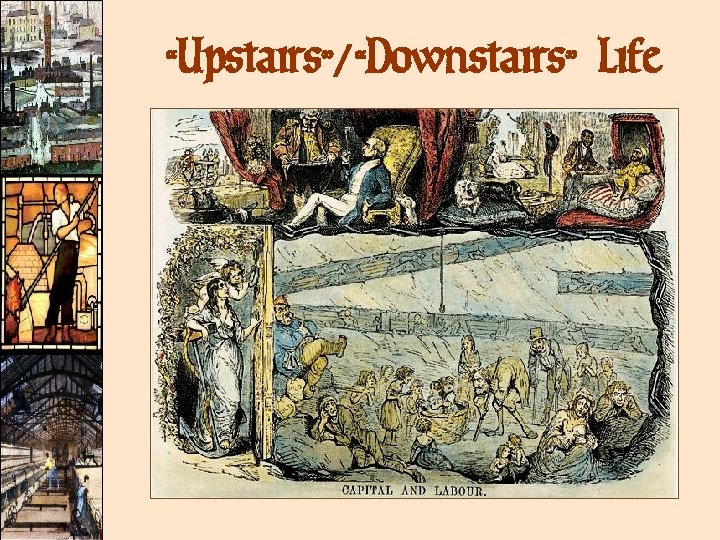
“Upstairs”/“Downstairs” Life
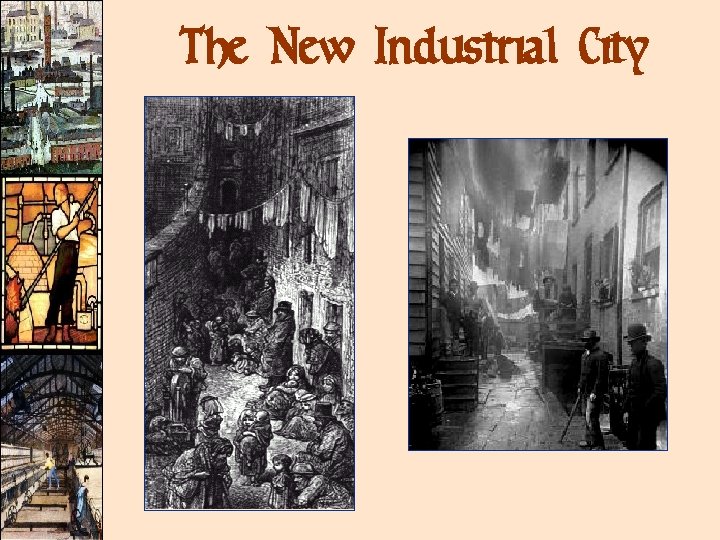
The New Industrial City
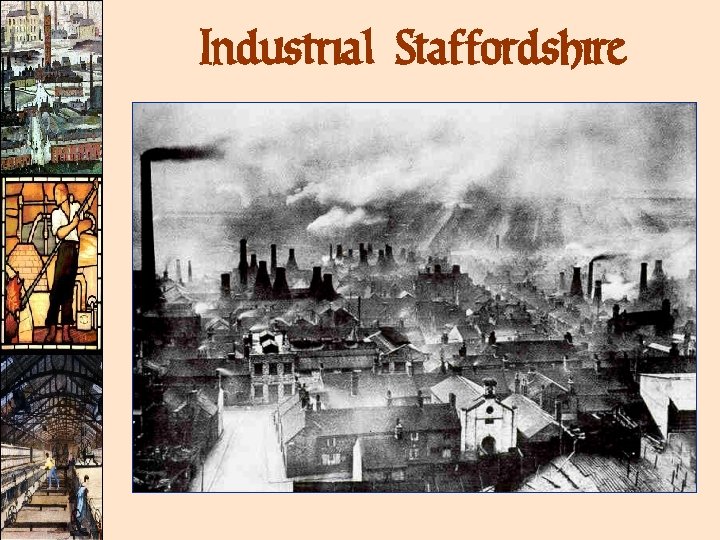
Industrial Staffordshire
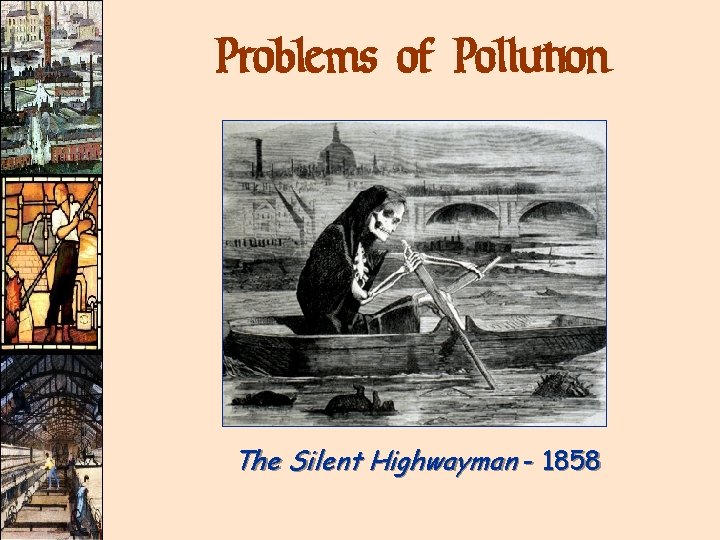
Problems of Pollution The Silent Highwayman - 1858
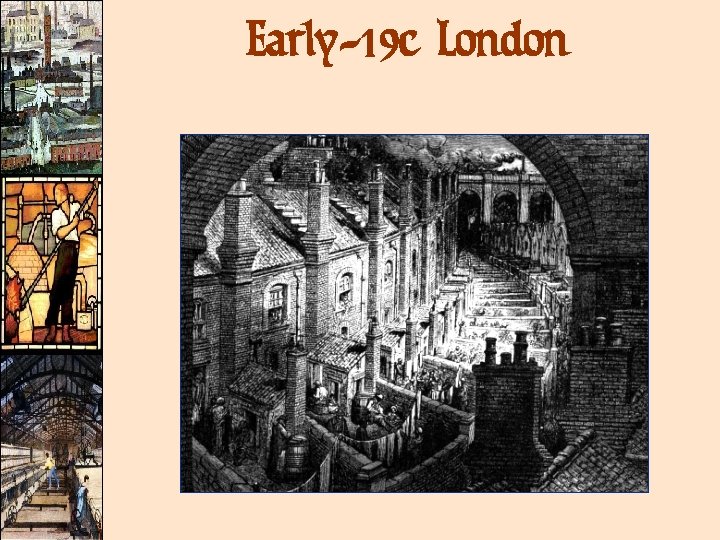
Early-19 c London
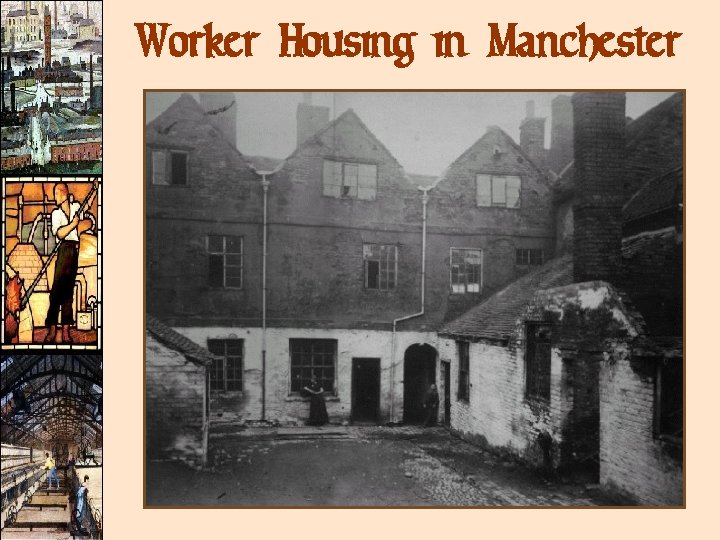
Worker Housing in Manchester
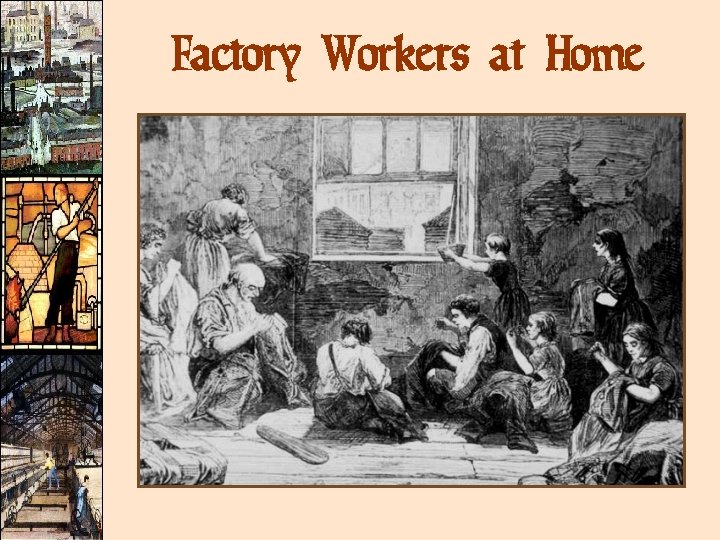
Factory Workers at Home
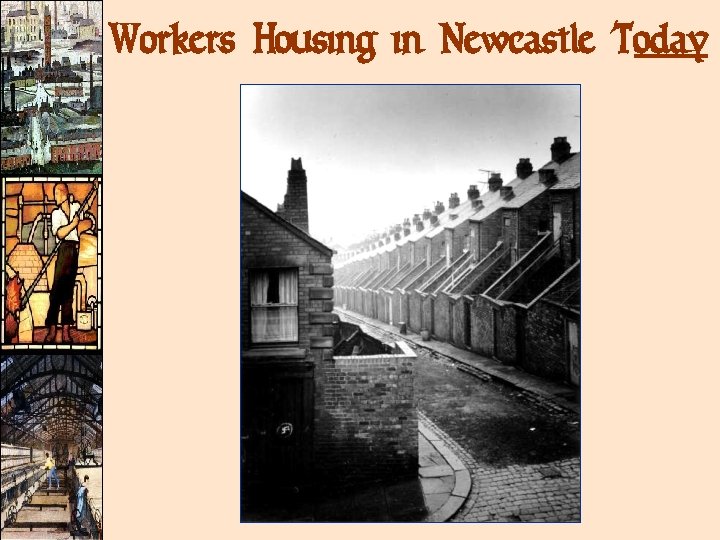
Workers Housing in Newcastle Today
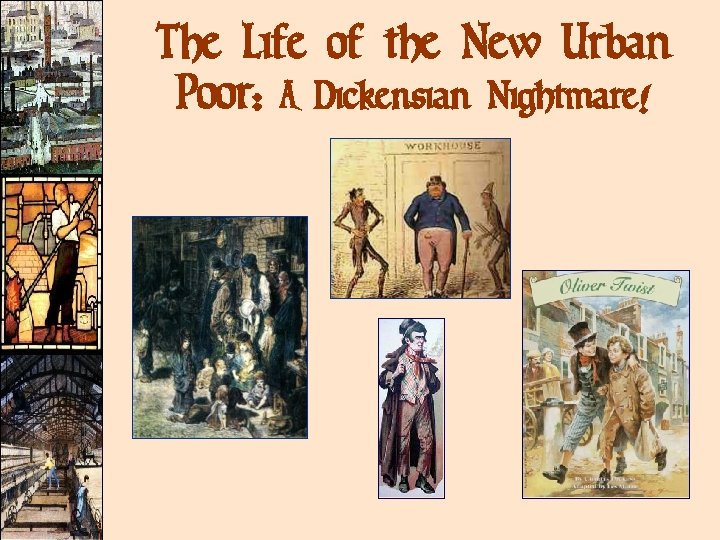
The Life of the New Urban Poor: A Dickensian Nightmare!
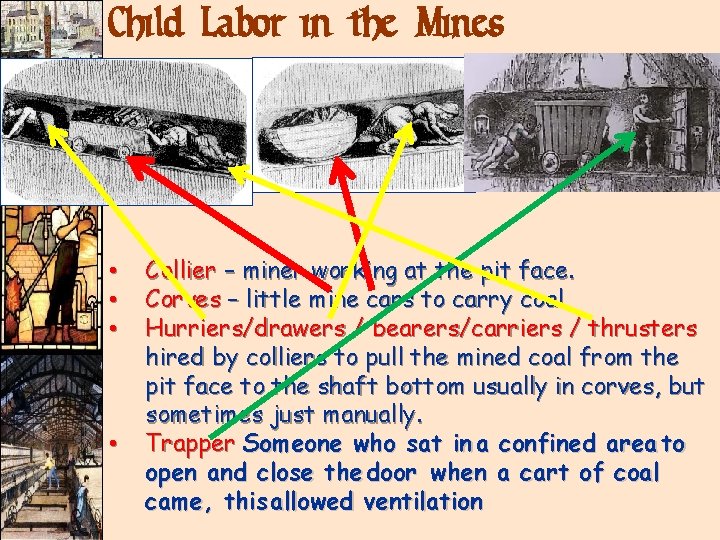
Child Labor in the Mines • • Collier – miner working at the pit face. Corves – little mine cars to carry coal Hurriers/drawers / bearers/carriers / thrusters hired by colliers to pull the mined coal from the pit face to the shaft bottom usually in corves, but sometimes just manually. Trapper Someone who sat in a confined area to open and close the door when a cart of coal came, this allowed ventilation
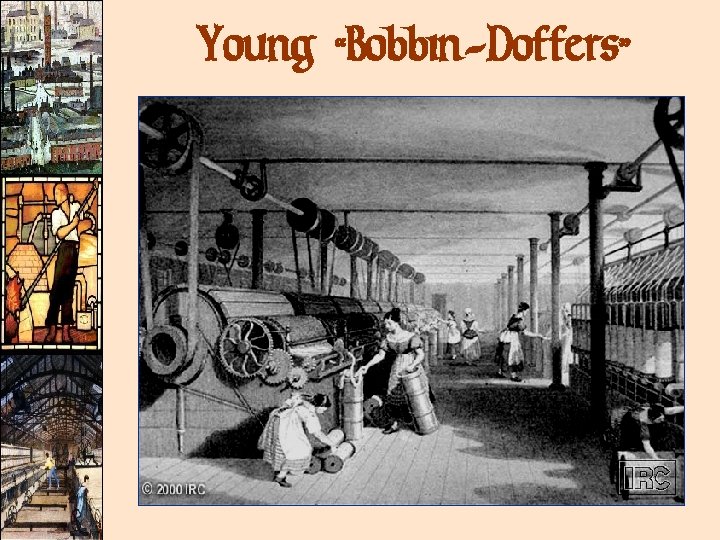
Young “Bobbin-Doffers”
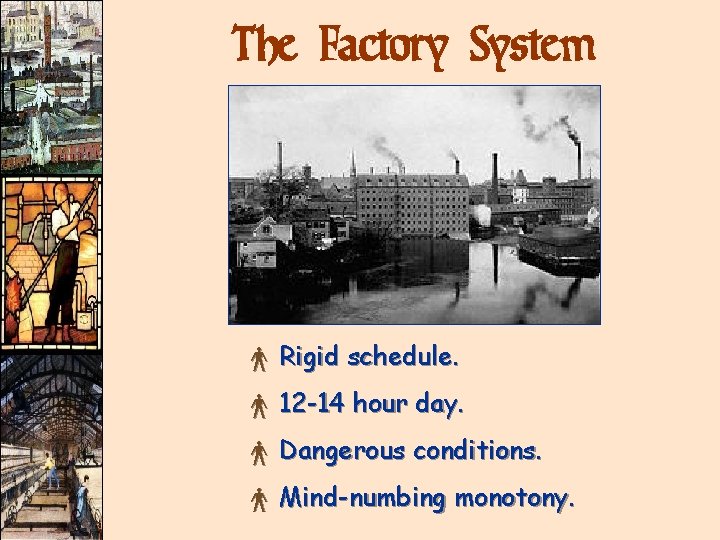
The Factory System × Rigid schedule. × 12 -14 hour day. × Dangerous conditions. × Mind-numbing monotony.
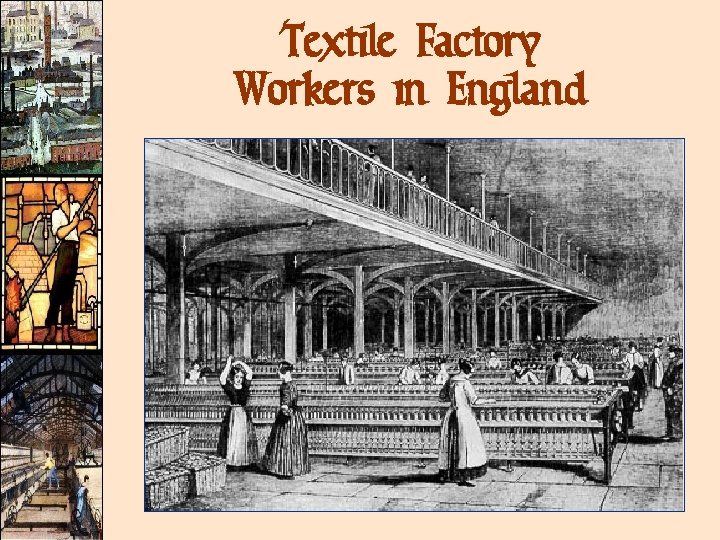
Textile Factory Workers in England
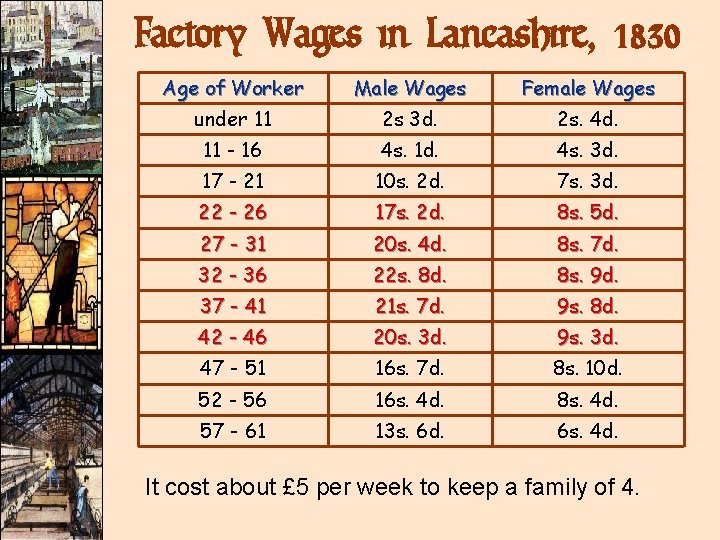
Factory Wages in Lancashire, 1830 Age of Worker Male Wages Female Wages under 11 2 s 3 d. 2 s. 4 d. 11 - 16 4 s. 1 d. 4 s. 3 d. 17 - 21 10 s. 2 d. 7 s. 3 d. 22 - 26 17 s. 2 d. 8 s. 5 d. 27 - 31 20 s. 4 d. 8 s. 7 d. 32 - 36 22 s. 8 d. 8 s. 9 d. 37 - 41 21 s. 7 d. 9 s. 8 d. 42 - 46 20 s. 3 d. 9 s. 3 d. 47 - 51 16 s. 7 d. 8 s. 10 d. 52 - 56 16 s. 4 d. 8 s. 4 d. 57 - 61 13 s. 6 d. 6 s. 4 d. It cost about £ 5 per week to keep a family of 4.
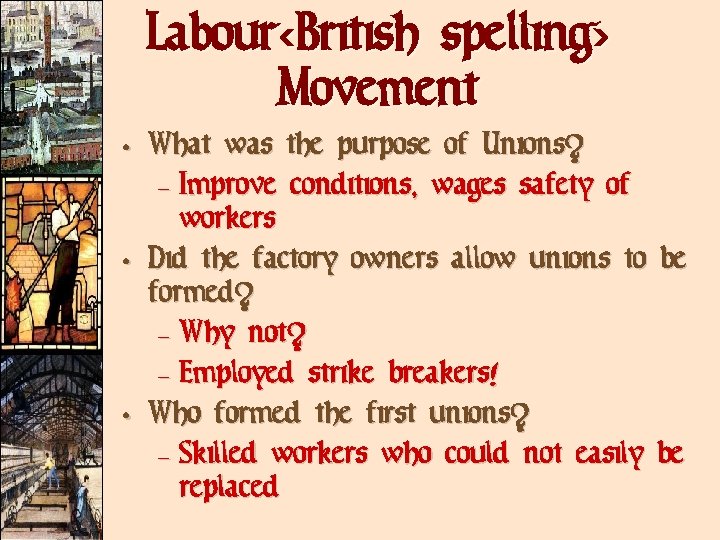
Labour<British spelling> Movement • What was the purpose of Unions? – Improve conditions, wages safety of workers • Did the factory owners allow unions to be formed? – Why not? – Employed strike breakers! • Who formed the first unions? – Skilled workers who could not easily be replaced
The Luddites: 1811 -1816 Attacks on the “frames” [power looms]. Ned Ludd [a mythical figure supposed to live in Sherwood Forest]
The Luddites
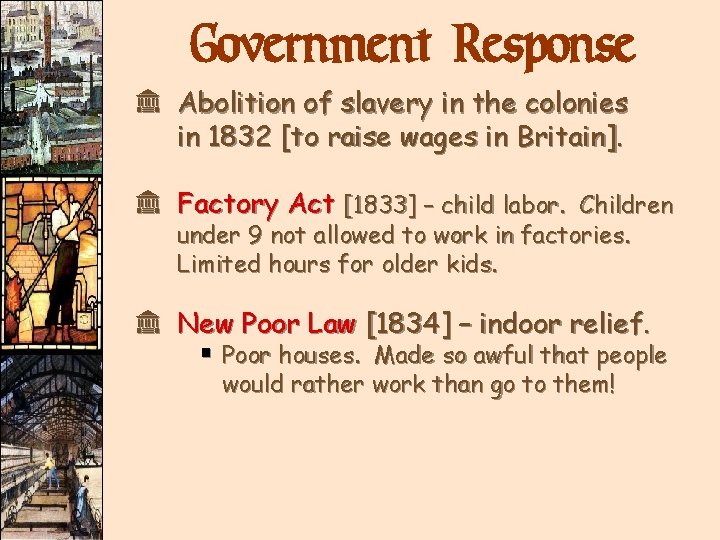
Government Response k Abolition of slavery in the colonies in 1832 [to raise wages in Britain]. k Factory Act [1833] – child labor. Children under 9 not allowed to work in factories. Limited hours for older kids. k New Poor Law [1834] – indoor relief. § Poor houses. Made so awful that people would rather work than go to them!
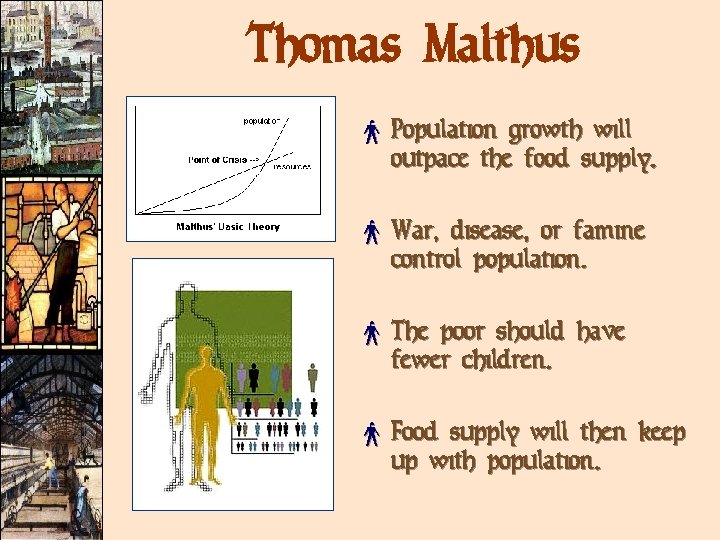
Thomas Malthus × Population growth will outpace the food supply. × War, disease, or famine control population. × The poor should have fewer children. × Food supply will then keep up with population.
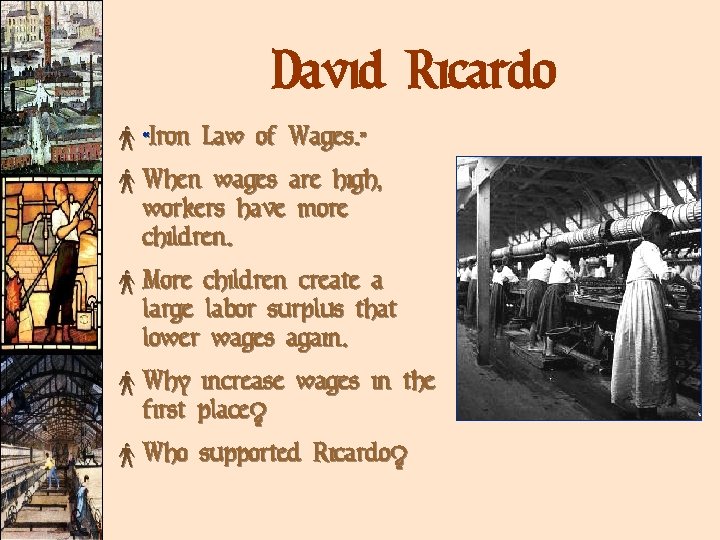
David Ricardo × “Iron Law of Wages. ” × When wages are high, workers have more children. × More children create a large labor surplus that lower wages again. × Why increase wages in the first place? × Who supported Ricardo?
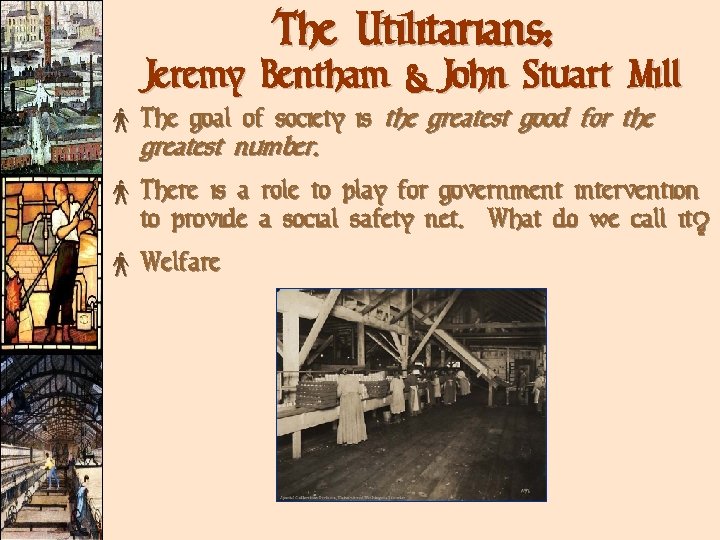
The Utilitarians: Jeremy Bentham & John Stuart Mill × The goal of society is the greatest good for the greatest number. × There is a role to play for government intervention to provide a social safety net. What do we call it? × Welfare
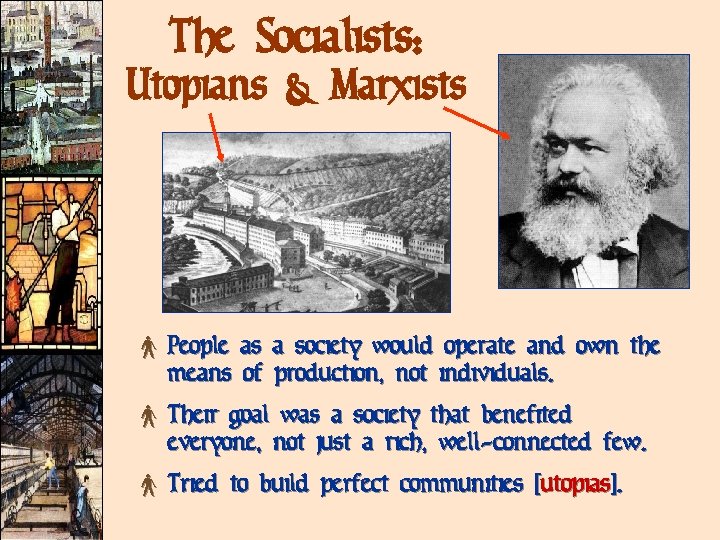
The Socialists: Utopians & Marxists × People as a society would operate and own the means of production, not individuals. × Their goal was a society that benefited everyone, not just a rich, well-connected few. × Tried to build perfect communities [utopias].
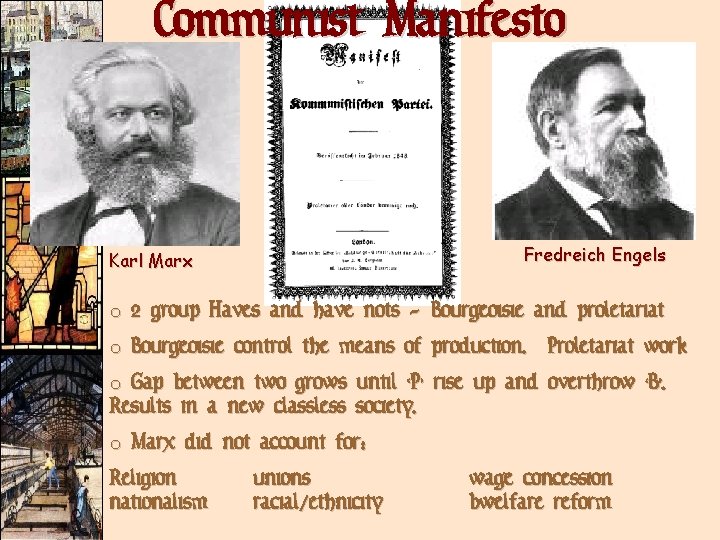
Communist Manifesto Fredreich Engels Karl Marx o 2 group Haves and have nots - Bourgeoisie and proletariat) o Bourgeoisie control the means of production. Proletariat work o Gap between two grows until ‘P’ rise up and overthrow ‘B’. Results in a new classless society. o Marx did not account for: Religion nationalism unions racial/ethnicity wage concession bwelfare reform