
What was PreIndustrial Society Like Pace of change







- Slides: 22
What was Pre-Industrial Society Like? • Pace of change was extremely slow. • Almost all people lived and worked in the country. • From 1300 to 1750, for the average peasant, people’s work and social life mixed, as families lived on small plots of land, growing crops mostly for home consumption. • Children learned to milk cows, churn butter, and tend to farm animals. • Tools changed very little over the centuries, for example wooden plows dependent on beasts of burden to pull them. • English diet consisted mostly of dark rye bread and porridge, with very little meat. As a rule, Europeans ate few fruits or vegetables, believing they could cause disease, depression, and flatulence. • Most people were illiterate and rarely bathed. • Healthcare relied more on astrology and bloodletting than science. • Poverty, war, plague, and poor hygiene resulted in high death rates, especially among young people. • 50% of children died before their 10 th birthday. • Population growth was very slow.
England Before the Industrial Revolution • Most people lived and worked in the country, no power, or indoor plumbing. • People farmed and made by hand what they needed; clothing, tools, furniture etc. • Cottage industry: trades were small family businesses.
What is an Industrial Revolution? • Industrial means to work. • Revolution means an important change in the way something is done. • An Industrial Revolution means an important change in the way people work. • Basically in the mid 1700’s many people stopped making many goods by hand started using machines to produce them.
What Natural Resources are needed to industrialize? • 1750’s POWER was needed to run machines in factories. • England had 3 natural resources needed to industrialize ; 1. Rivers, Water wheels. Fast moving rivers provided power for early machines. 2. Coal, Steam engines. Heat from burning coal could produce steam. 3. Iron ore, Iron ore was mined and made into Iron for making machines.
How a water mill works • https: //www. youtube. com/watch? v=3 Oe 8 YAJ 9 e. SQ • https: //www. youtube. com/watch? v=rau. Jq_LTMYI
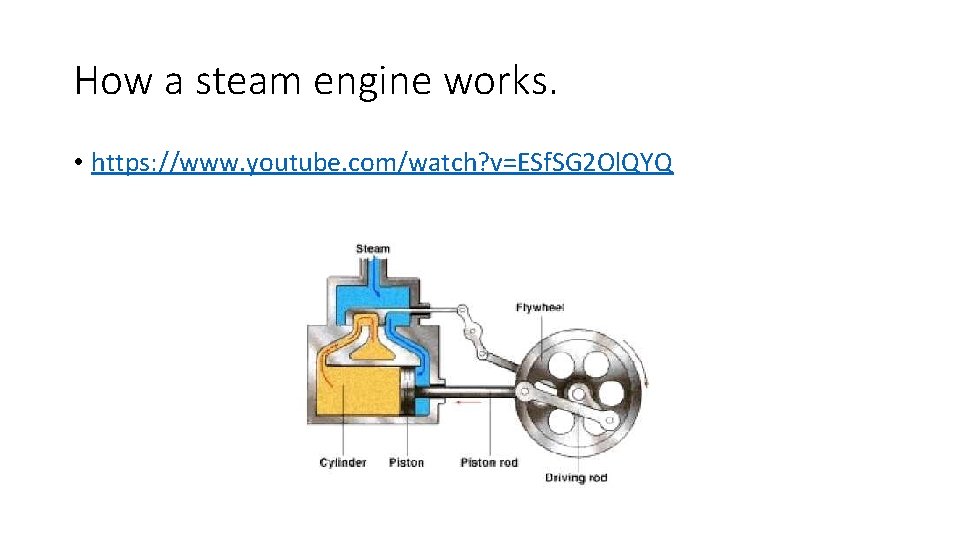
How a steam engine works. • https: //www. youtube. com/watch? v=ESf. SG 2 Ol. QYQ
Why did England have so many workers? • Factories needed lots of people to work in them. • Between 1750 and 1800 England population increased by 50%!!! • This was due to new food source from the Americas…THE POTATO a cheap high calorie food source! • Also at this time the Government forced many farmers off their land by passing a law that allowed the rich to fence open land which for years was available for farmers to use. • Farm families had little choice but to move to cities and factory labor.
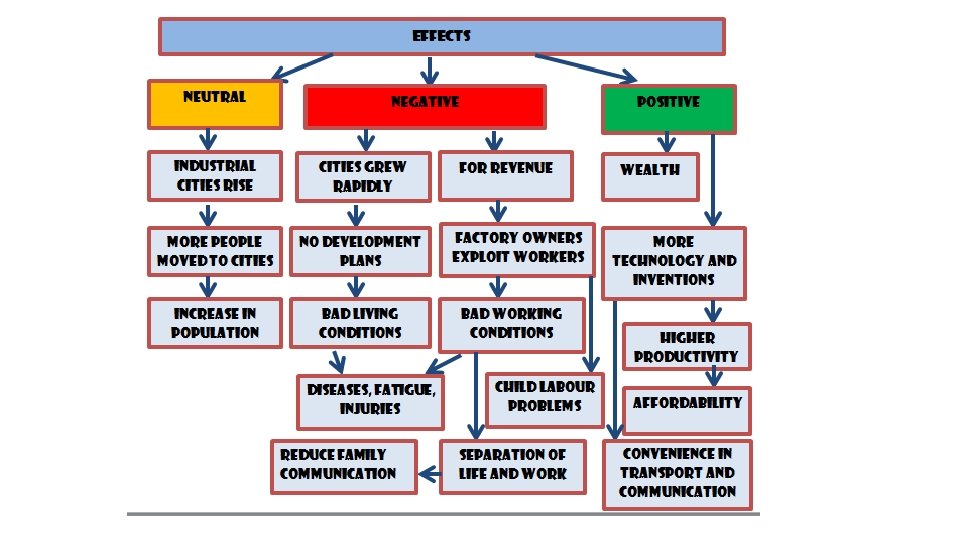
What is Capital? • Once the steam engine was developed factories no longer had to be on rivers for power. • Factories became much larger • Cities populations grew very fast with very poor working conditions. • Factory owners needed capital, money used to build factories. • The wealthy had the capital therefore the “rich got richer” and the “poor got poorer”
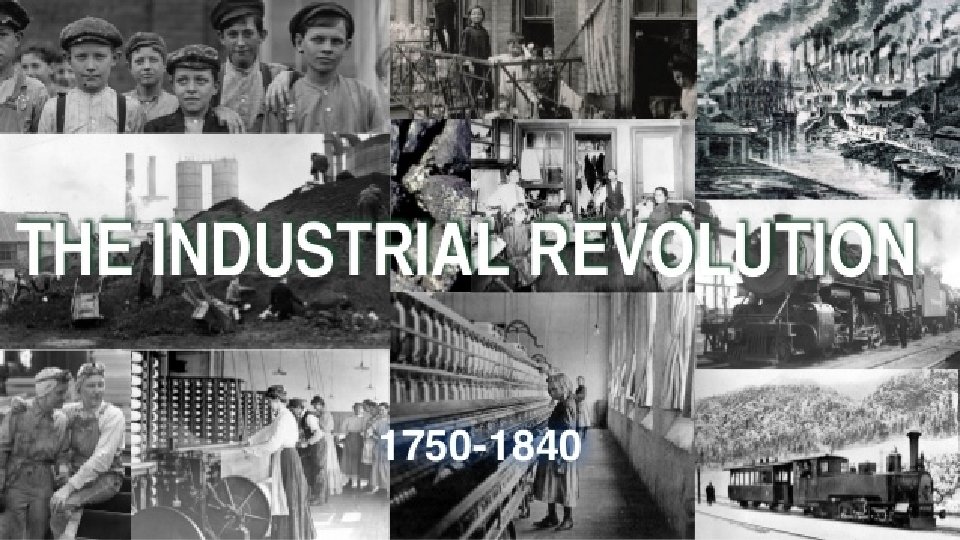
Living Conditions • Cities grew very quickly with very little real planning. • Poor infrastructure; housing, water, power, roads etc. • The workers lived in terrible conditions. • They worked long hours with little pay and no rights. • Child labor was common
What inventions helped the textile Industry? • 1773 Flying Shuttle - John Kay Made weaving much faster. • 1764 Spinning Jenny – 8 spindle spinning wheel. • 1778 Spinning Mule – 150 miles of thread from 1 pond of cotton. • All this meant much more cotton was needed. • Most of the cotton came from the American South where many slaves were used to pick it.
Manuel vs mechanical Loom
Other innovations • Mass production – Factories could produce many of the same product “fast and cheap”. • Canals – Roads could not handle heavy cargo so canals were dug so barges could move large loads of coal, wood and iron. • Steel – 1856 Henry Bessemer discovered how to purify iron, which was weak, to make much stronger steel.
Making steel
The Locomotive and Steel Rails • First steam engines were small and used in mining they could replace people and horses. • 1814 George Stephenson built the first Locomotive. • The locomotive was to heavy to travel on roads so steel rails were used. • The “Railroad” industry was underway!
Early Locomotives
Positive affects of the Industrial Revolution 1. More Efficient Production Inventions like the steam engine helped to streamline production of many goods. This reduced the time and labor that was involved in creating the things that people needed everyday. 2. Cheaper Prices Along with making production processes more efficient, the Industrial Revolution also resulted in dramatically lower prices for goods. This was due to the shortened amount of time needed to produce goods, as well as the costs saved for labor. 3. Major Increase In Job Opportunities Factories began to pop up everywhere during this time, which needed employees to run and manage them. This created tremendous job growth and also provided the opportunity for new products and inventions to be designed and produced.
Positive affects of the Industrial Revolution 4. Spectacular Motivation, Changing The World With all of the new and innovative things that began to emerge out of this time period, people became more motivated and educated than ever. This spurred a large amount of useful inventions that are still widely used in today’s modern world. Some of this include the light bulb, the telephone, and X-rays. 5. Improved Quality of Life All of the modern inventions and the amount of wealth that was brought into the cities greatly improved the way that people lived. Health care, education, appearance, and nutrition all began to get much more attention than previously.
Some inventions from the Industrial Revolution.
Negative affects of the Industrial Revolution 1. A Loss Of Farming There was much more money to be made in the cities than in the rural farming areas. This caused many people to abandon their farms and move to the industrial centers. This made the amount of farmed foods scarce for a long period of time. 2. The Beginning of Pollution Before all of the factories came about during the revolution, there was no major sources of pollution to the water and air in the world. The pollution never stopped after this time and continues to contaminate our air, land, and water. 3. Working Conditions In Factories quickly became all about profit. The working conditions for the large amount of people working these factories where extremely poor. They where forced to work extremely long hours with few breaks and little pay in order to maximize profits. This resulted in stress related illnesses, the spread of disease, and death through out the factories.
Review • https: //www. youtube. com/watch? v=3 Efq-a. NBkvc • Child labor • https: //www. youtube. com/watch? v=KHmq. Eq. JN 59 o