
What structure allows molecules to pass from outside
- Slides: 35
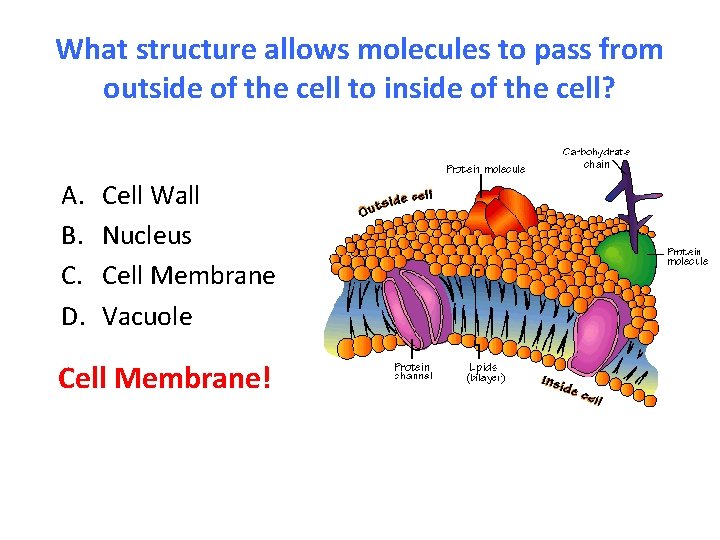
What structure allows molecules to pass from outside of the cell to inside of the cell? A. B. C. D. Cell Wall Nucleus Cell Membrane Vacuole Cell Membrane!
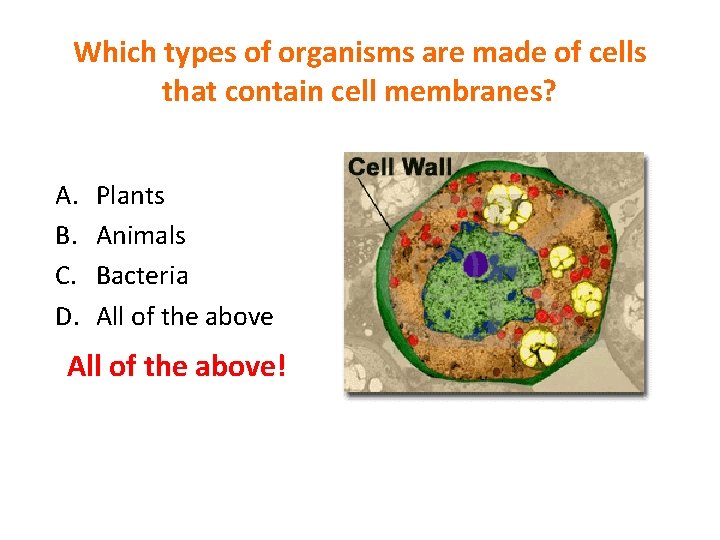
Which types of organisms are made of cells that contain cell membranes? A. B. C. D. Plants Animals Bacteria All of the above!
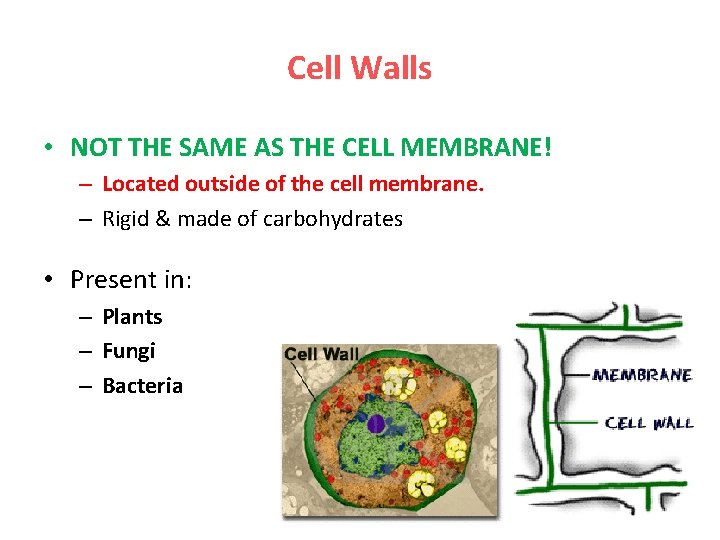
Cell Walls • NOT THE SAME AS THE CELL MEMBRANE! – Located outside of the cell membrane. – Rigid & made of carbohydrates • Present in: – Plants – Fungi – Bacteria
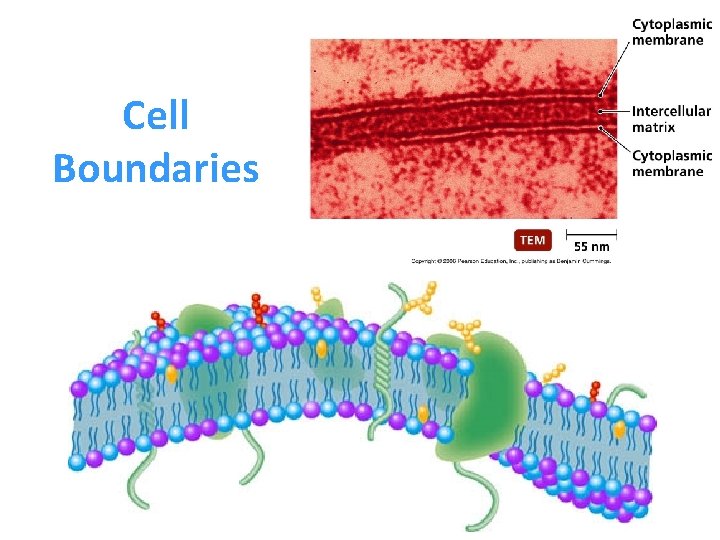
Cell Boundaries
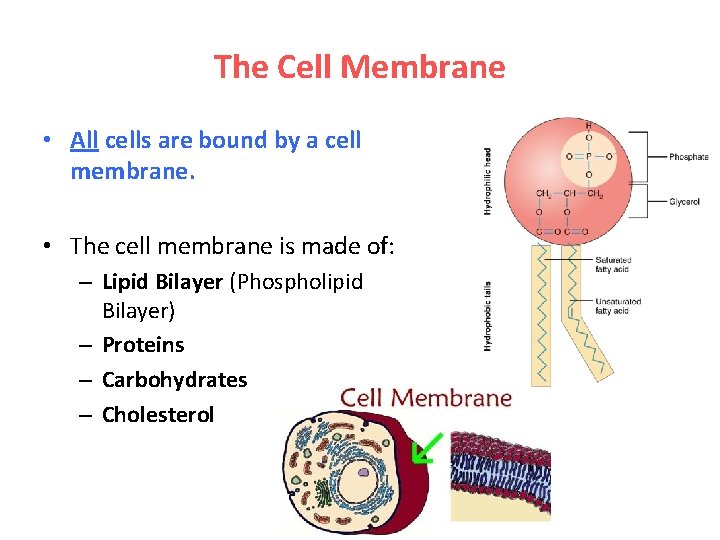
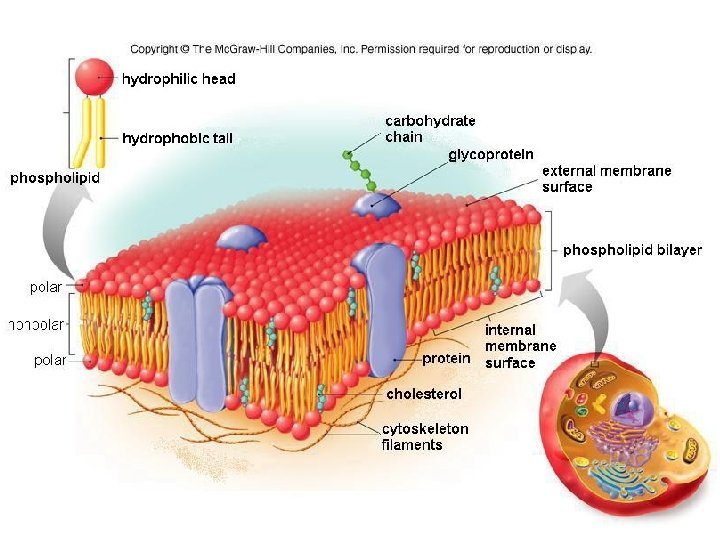
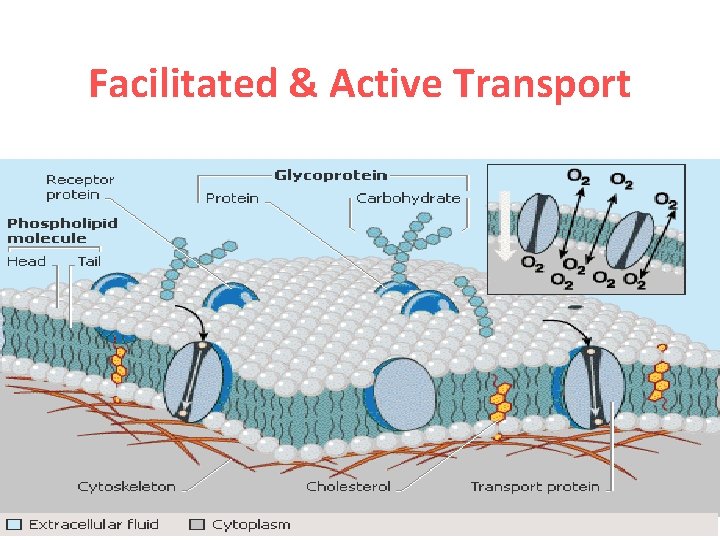
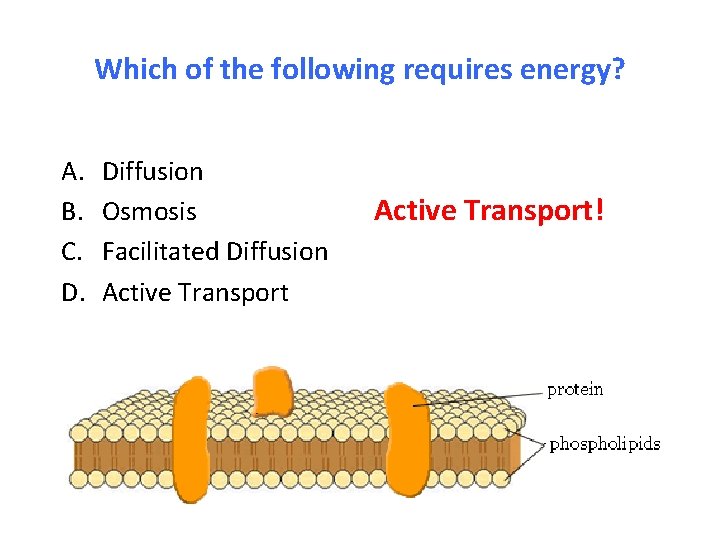
The Cell Membrane • All cells are bound by a cell membrane. • The cell membrane is made of: – Lipid Bilayer (Phospholipid Bilayer) – Proteins – Carbohydrates – Cholesterol
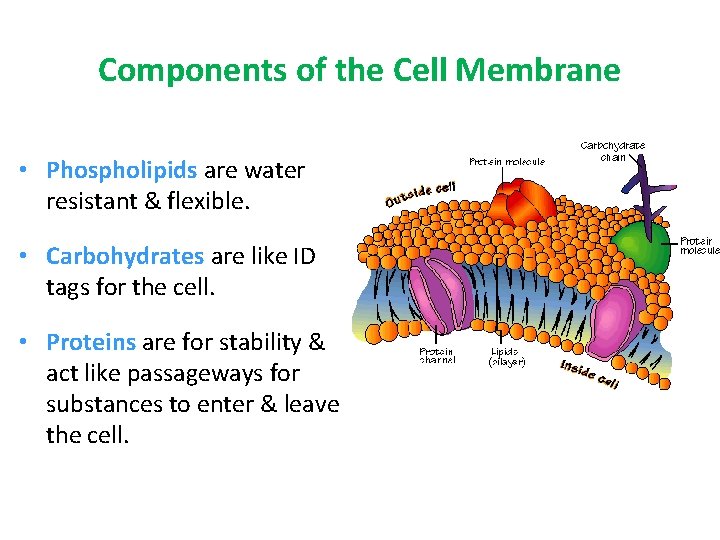
Components of the Cell Membrane • Phospholipids are water resistant & flexible. • Carbohydrates are like ID tags for the cell. • Proteins are for stability & act like passageways for substances to enter & leave the cell.
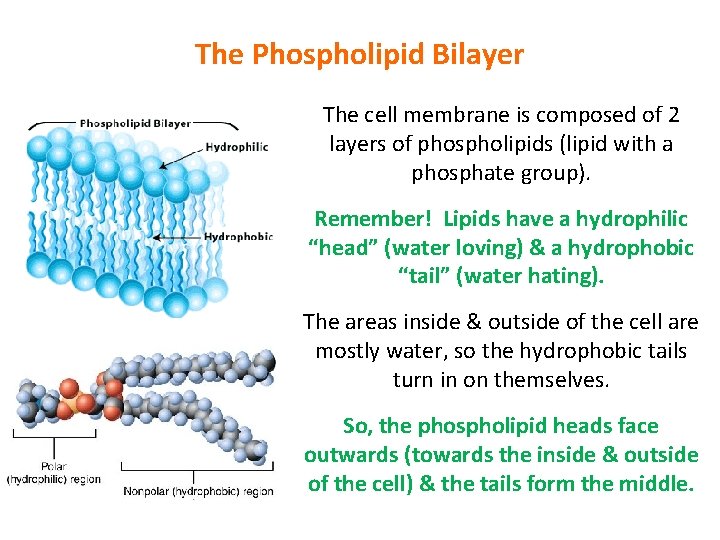
The Phospholipid Bilayer The cell membrane is composed of 2 layers of phospholipids (lipid with a phosphate group). Remember! Lipids have a hydrophilic “head” (water loving) & a hydrophobic “tail” (water hating). The areas inside & outside of the cell are mostly water, so the hydrophobic tails turn in on themselves. So, the phospholipid heads face outwards (towards the inside & outside of the cell) & the tails form the middle.
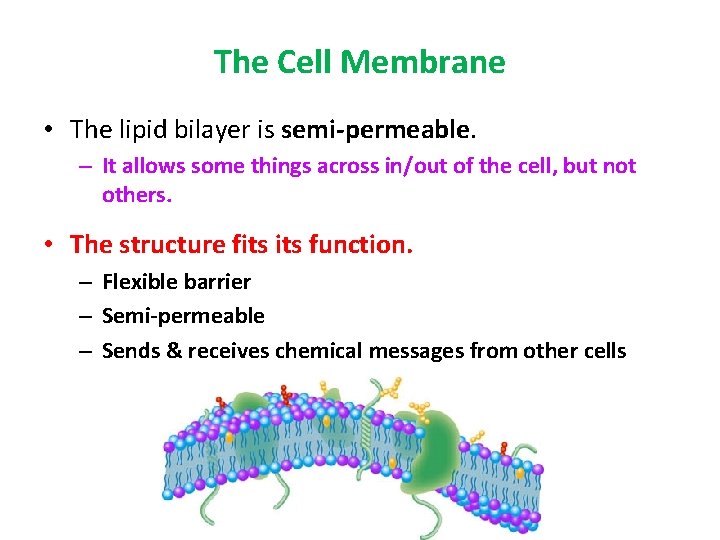
The Cell Membrane • The lipid bilayer is semi-permeable. – It allows some things across in/out of the cell, but not others. • The structure fits function. – Flexible barrier – Semi-permeable – Sends & receives chemical messages from other cells
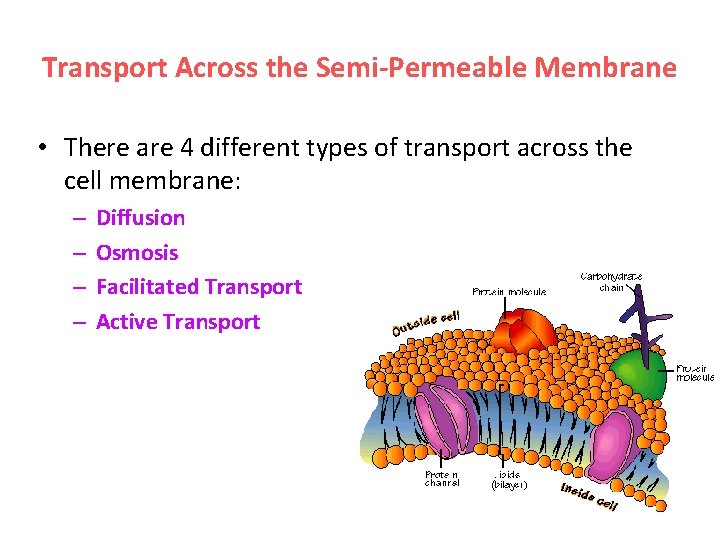
Transport Across the Semi-Permeable Membrane • There are 4 different types of transport across the cell membrane: – – Diffusion Osmosis Facilitated Transport Active Transport
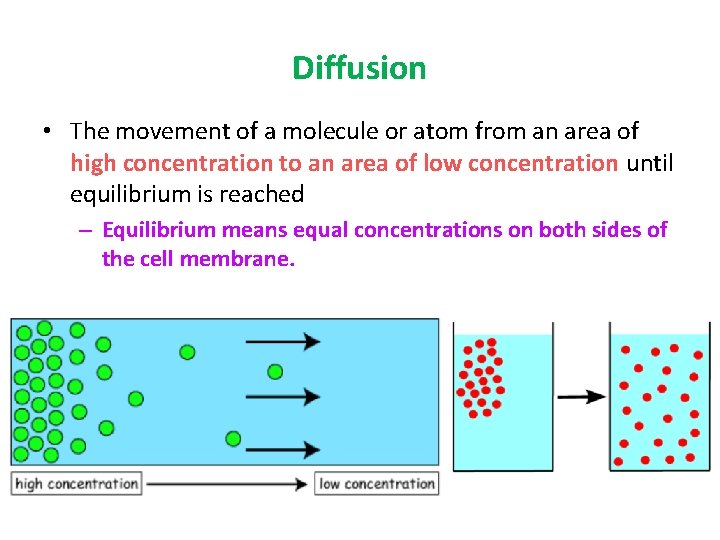
Diffusion • The movement of a molecule or atom from an area of high concentration to an area of low concentration until equilibrium is reached – Equilibrium means equal concentrations on both sides of the cell membrane.
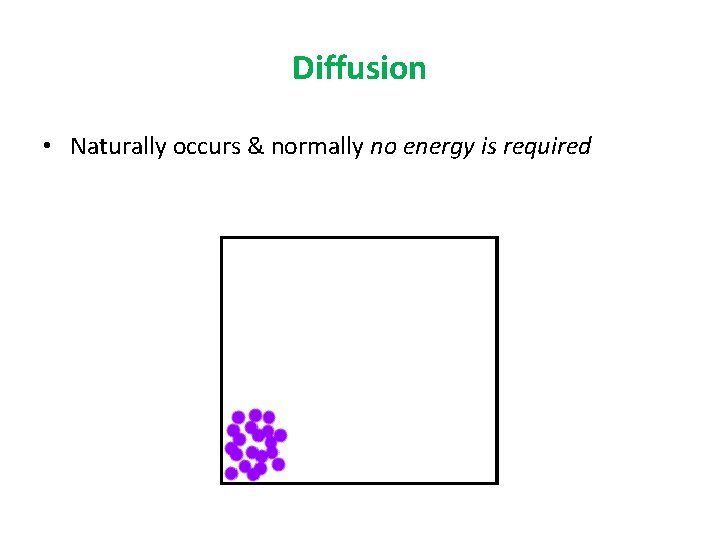
Diffusion • Naturally occurs & normally no energy is required
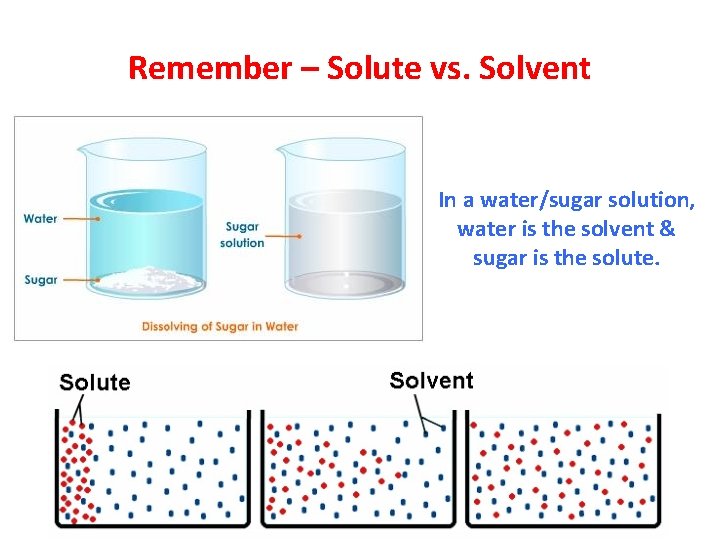
Remember – Solute vs. Solvent In a water/sugar solution, water is the solvent & sugar is the solute.
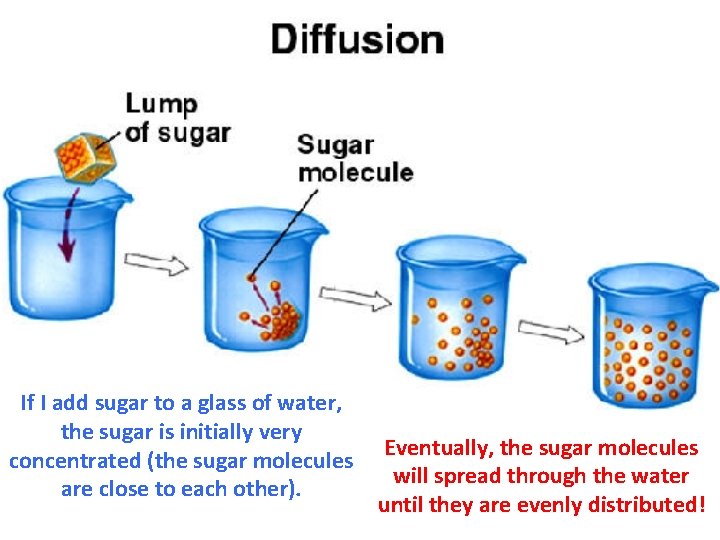
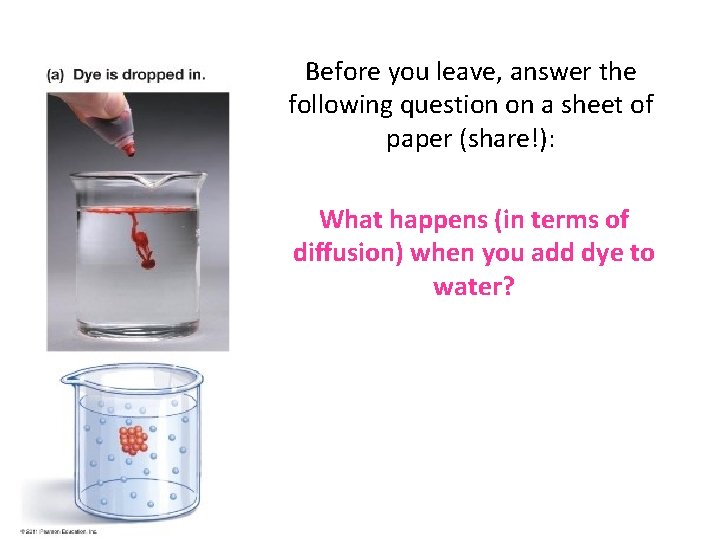
If I add sugar to a glass of water, the sugar is initially very concentrated (the sugar molecules are close to each other). Eventually, the sugar molecules will spread through the water until they are evenly distributed!
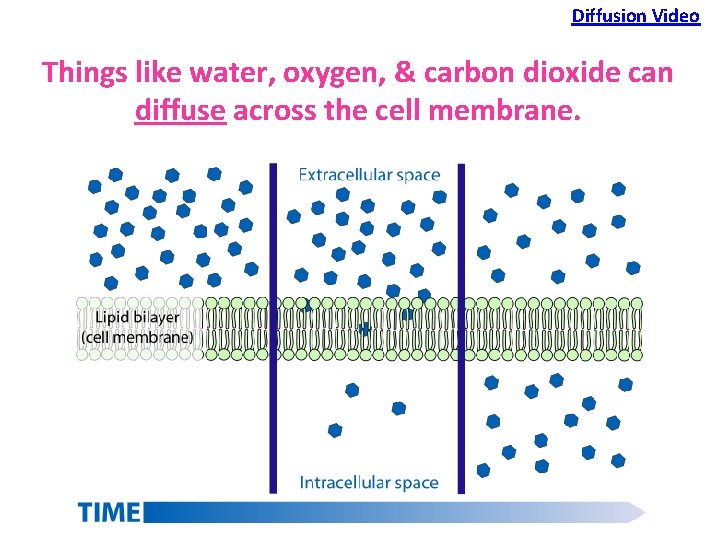
Diffusion Video Things like water, oxygen, & carbon dioxide can diffuse across the cell membrane.
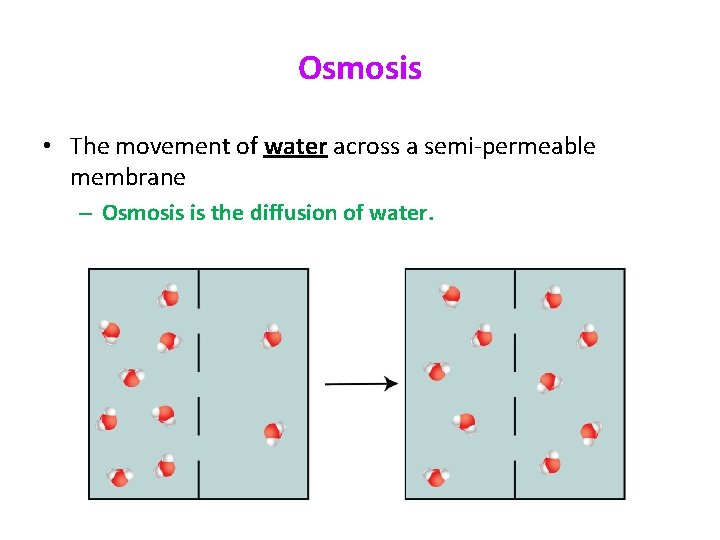
Osmosis • The movement of water across a semi-permeable membrane – Osmosis is the diffusion of water.
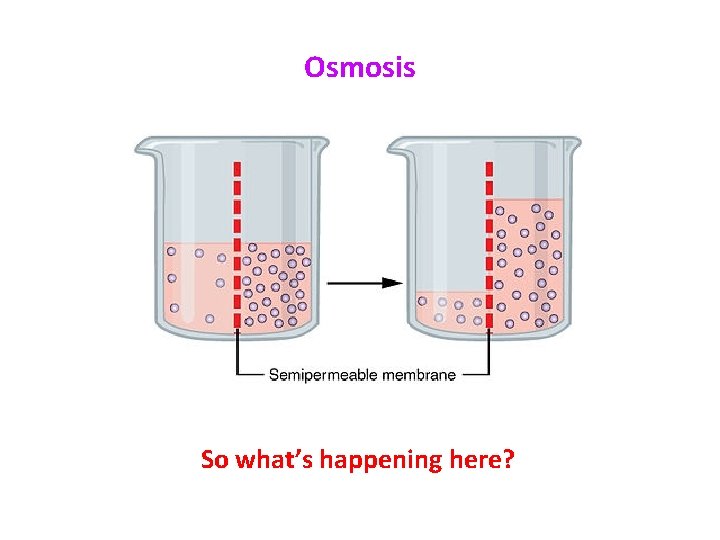
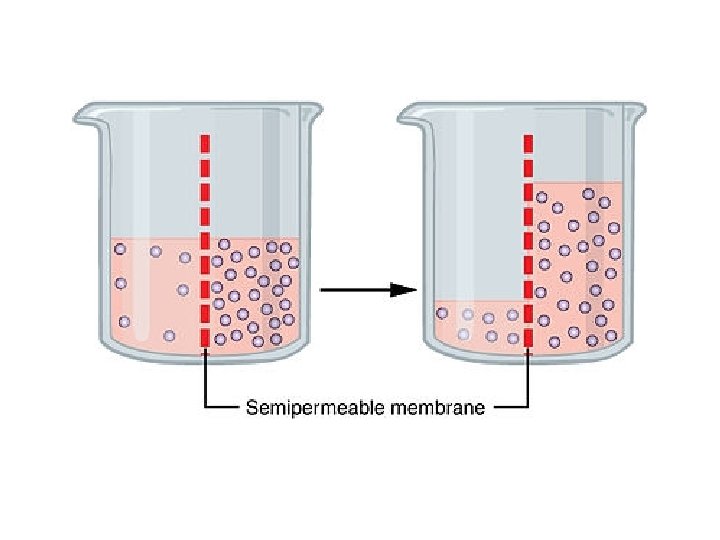
Osmosis So what’s happening here?
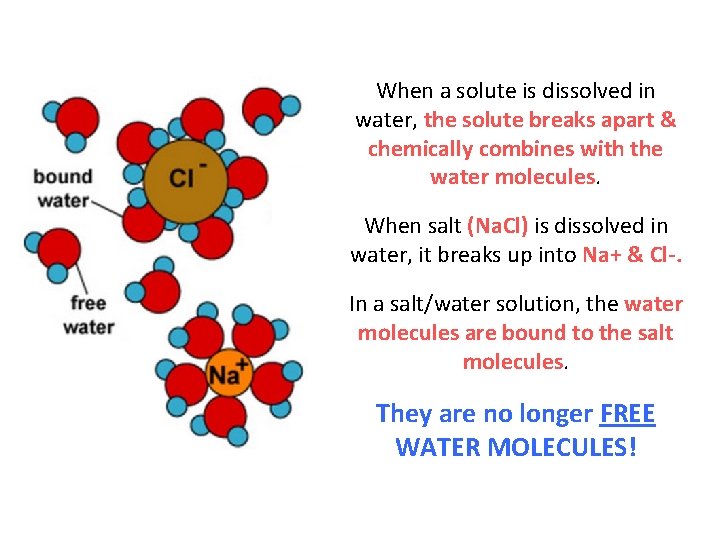
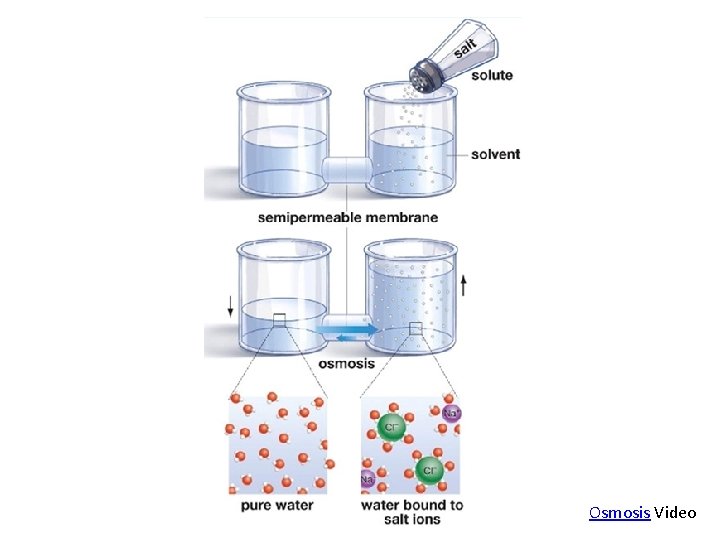
When a solute is dissolved in water, the solute breaks apart & chemically combines with the water molecules. When salt (Na. Cl) is dissolved in water, it breaks up into Na+ & Cl-. In a salt/water solution, the water molecules are bound to the salt molecules. They are no longer FREE WATER MOLECULES!
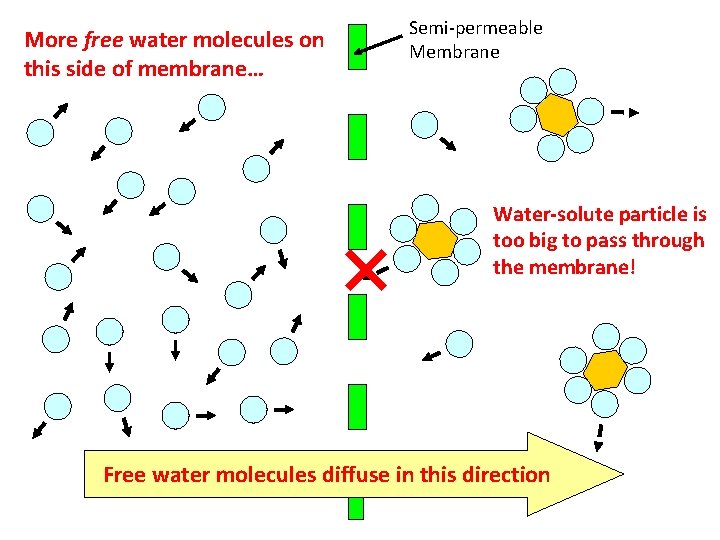
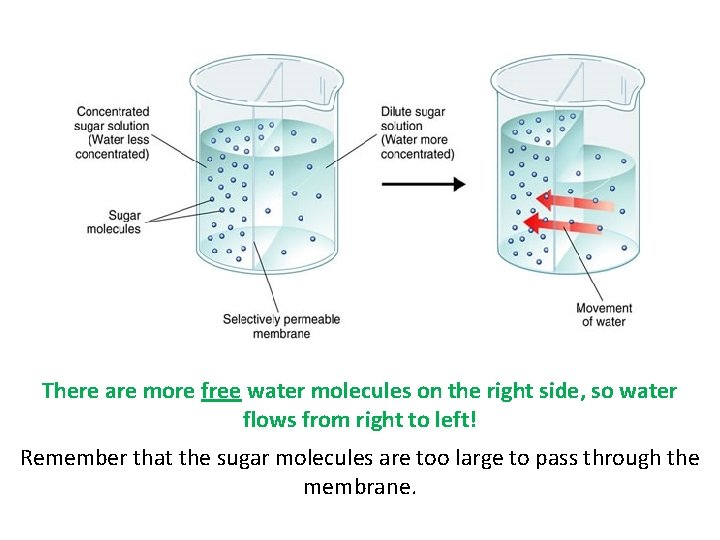
More free water molecules on this side of membrane… Semi-permeable Membrane Water-solute particle is too big to pass through the membrane! Free water molecules diffuse in this direction
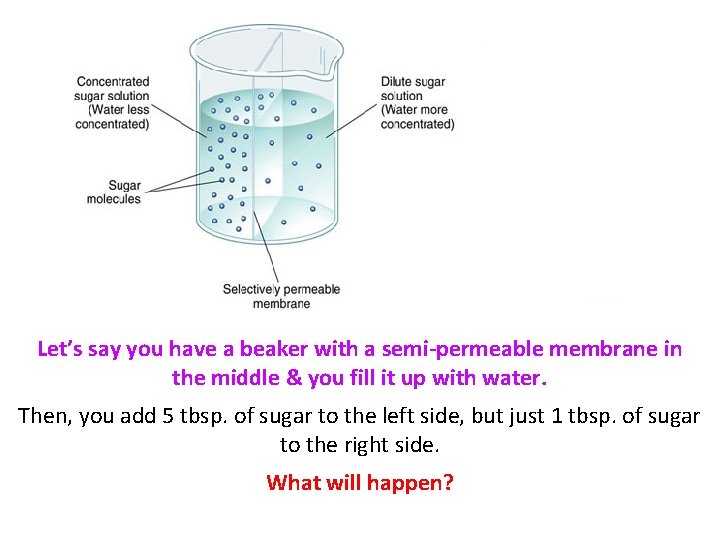
Let’s say you have a beaker with a semi-permeable membrane in the middle & you fill it up with water. Then, you add 5 tbsp. of sugar to the left side, but just 1 tbsp. of sugar to the right side. What will happen?
There are more free water molecules on the right side, so water flows from right to left! Remember that the sugar molecules are too large to pass through the membrane.
Osmosis Video
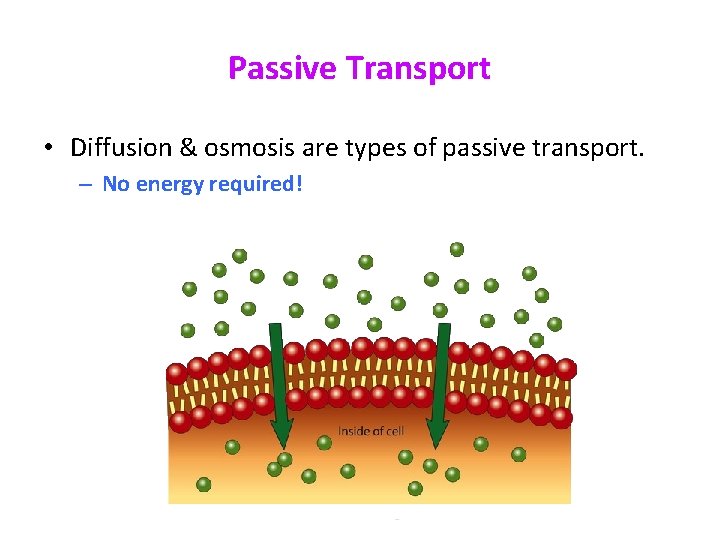
Passive Transport • Diffusion & osmosis are types of passive transport. – No energy required!
Facilitated & Active Transport
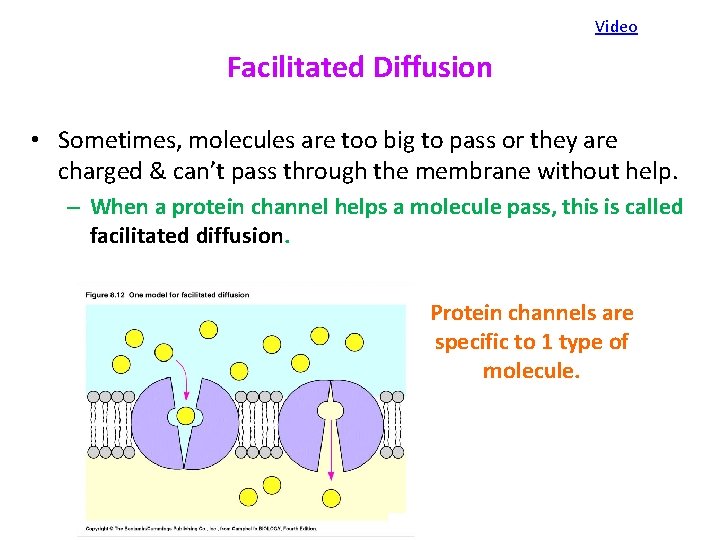
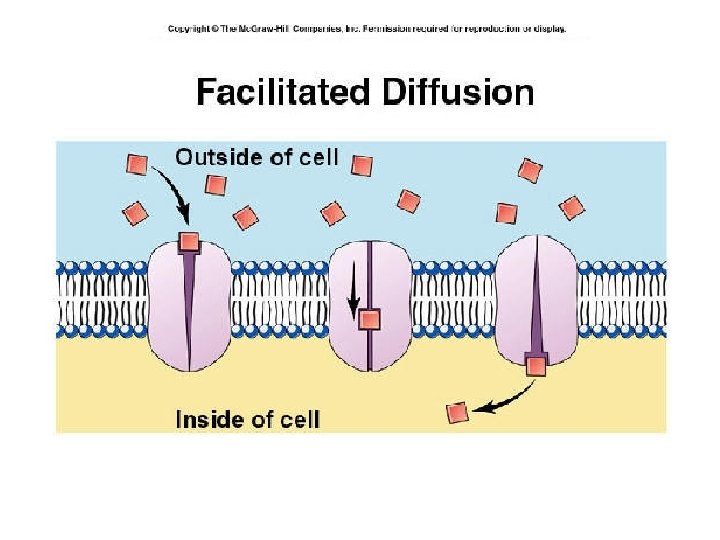
Video Facilitated Diffusion • Sometimes, molecules are too big to pass or they are charged & can’t pass through the membrane without help. – When a protein channel helps a molecule pass, this is called facilitated diffusion. Protein channels are specific to 1 type of molecule.
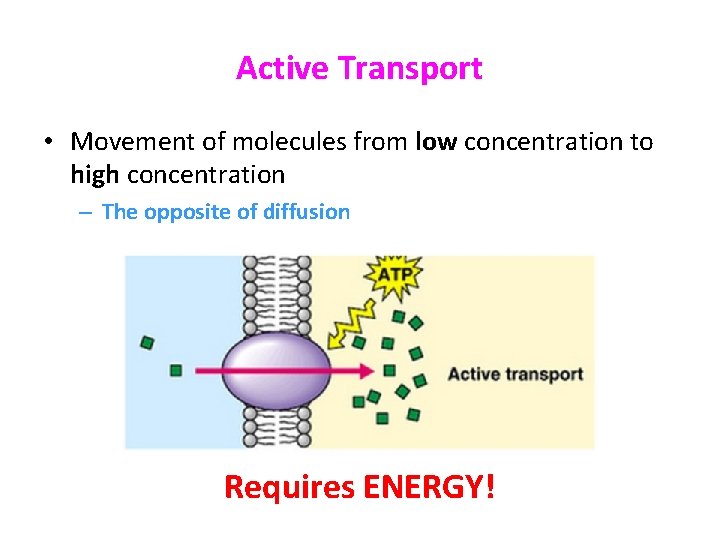
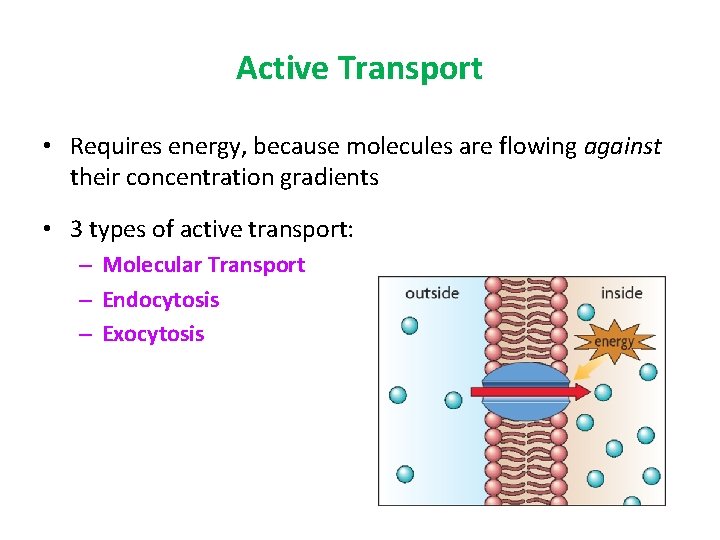
Active Transport • Movement of molecules from low concentration to high concentration – The opposite of diffusion Requires ENERGY!
Active Transport • Requires energy, because molecules are flowing against their concentration gradients • 3 types of active transport: – Molecular Transport – Endocytosis – Exocytosis
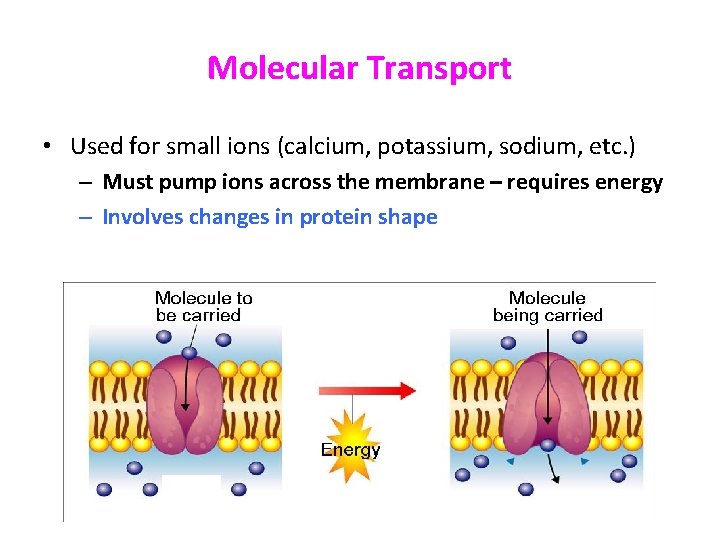
Molecular Transport • Used for small ions (calcium, potassium, sodium, etc. ) – Must pump ions across the membrane – requires energy – Involves changes in protein shape
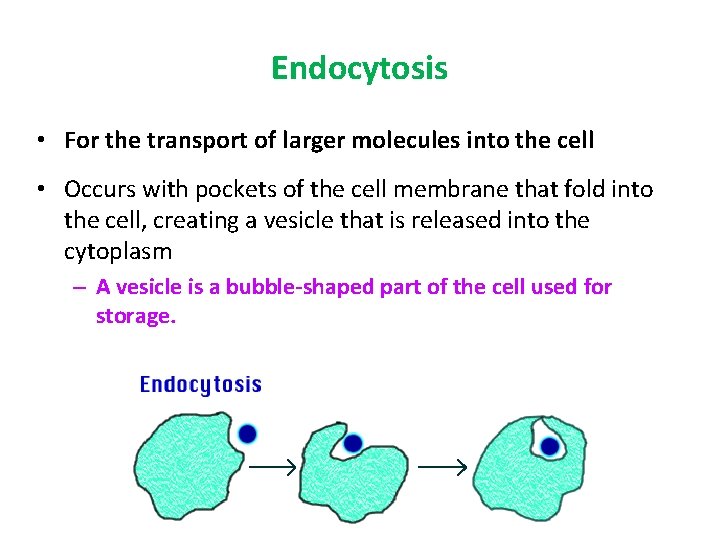
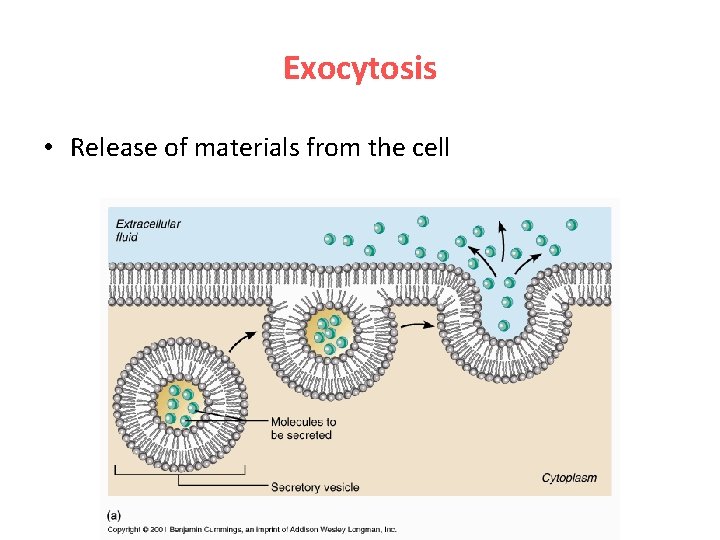
Endocytosis • For the transport of larger molecules into the cell • Occurs with pockets of the cell membrane that fold into the cell, creating a vesicle that is released into the cytoplasm – A vesicle is a bubble-shaped part of the cell used for storage.
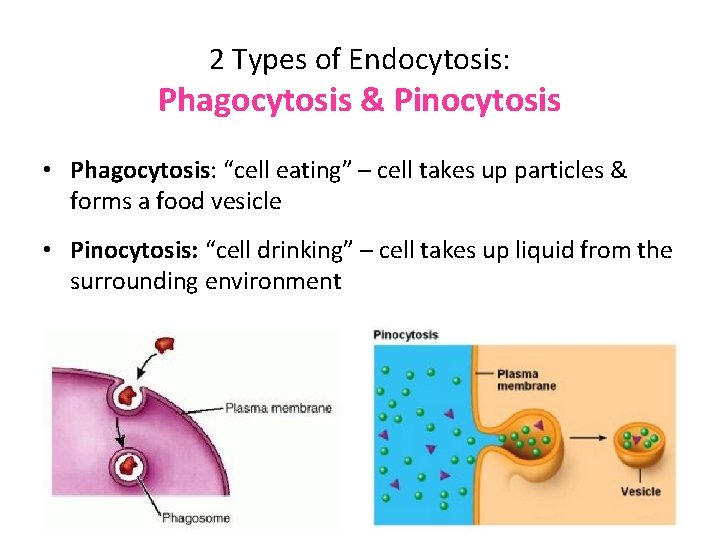
2 Types of Endocytosis: Phagocytosis & Pinocytosis • Phagocytosis: “cell eating” – cell takes up particles & forms a food vesicle • Pinocytosis: “cell drinking” – cell takes up liquid from the surrounding environment
Exocytosis • Release of materials from the cell
Which of the following requires energy? A. B. C. D. Diffusion Osmosis Facilitated Diffusion Active Transport!
Before you leave, answer the following question on a sheet of paper (share!): What happens (in terms of diffusion) when you add dye to water?