
WHAT STRUCTURAL CHANGES ARE CAUSED BY GENDER EQUALITY

WHAT STRUCTURAL CHANGES ARE CAUSED BY GENDER EQUALITY PLANS IN HIGHER EDUCATION AND RESEARCH ORGANIZATIONS? Dr. Virginija Šidlauskienė Chief Researcher, Head of the Gender Studies and Research Group International Conference „Gender equality in CEE countries“ November 12 -13, 2020, Vilnius

Back to history n Since 2001 National Science Foundation (NSF) Programme ADVANCE (USA) n ADVANCE contributes to organizational Change for Gender Equity in STEM Academic Professions n NSF has invested over $270 M to support ADVANCE projects at more than 100 institutions of higher education and STEMrelated not-for-profit organizations
“Strengthening the ERA – Reforming and Enhancing European R&I system” n In 2007, under 7 FP ‘Science and Society’ , later ‘Science in Society (Si. S)’ address one of main objectives’ - to foster gender equality in R&I. RRI was tested and promoted during the last years of FP 7. n In 2010 'institutional changes' concept was firstly piloted by Genis. Lab and INTEGER projects’ by tailored GEPs
2014 -2020: 'Science with and for Society' and RRI in Horizon 2020 n ‘Science with and for Society’ Swaf. S 20142020 under Horizon 2020: GERI calls n 'Accelerating institutional change' contributes to implementing the RRI keys (ethics including research integrity, gender equality, and open access) through institutional governance changes in RPOs and RFOs in an integrated way
The aim of this presentation is to convey the achievements of gender equality projects funded under Swaf. S in Horizon 2020
Methological note (1) n Data sources: The Community Research and Development Information Service (CORDIS) public repository with all project information held by EC such as reports, deliverables, websites, etc. n Analysed 37 gender equality projects funded under the calls since the period of 2010 to 2020 – „projects‘ portfolio“:
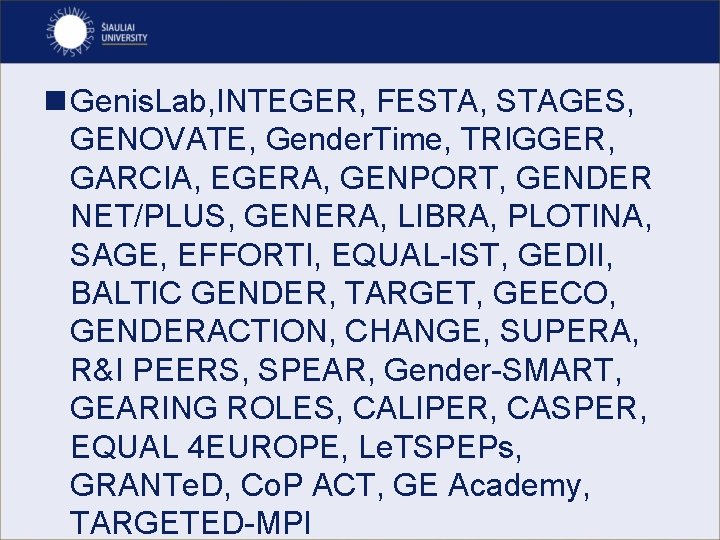
n Genis. Lab, INTEGER, FESTA, STAGES, GENOVATE, Gender. Time, TRIGGER, GARCIA, EGERA, GENPORT, GENDER NET/PLUS, GENERA, LIBRA, PLOTINA, SAGE, EFFORTI, EQUAL-IST, GEDII, BALTIC GENDER, TARGET, GEECO, GENDERACTION, CHANGE, SUPERA, R&I PEERS, SPEAR, Gender-SMART, GEARING ROLES, CALIPER, CASPER, EQUAL 4 EUROPE, Le. TSPEPs, GRANTe. D, Co. P ACT, GE Academy, TARGETED-MPI
Methodological note (2) n Analytical approach based on quantitative and qualitative data n The analysis is carried out on desk data on currently running or completed projects under the FP 7 & H 2020 Programmes n Each project was systematically assessed: Consortia composition and main outputs Limitation of this study is lack of complete data as many projects have not yet concluded.
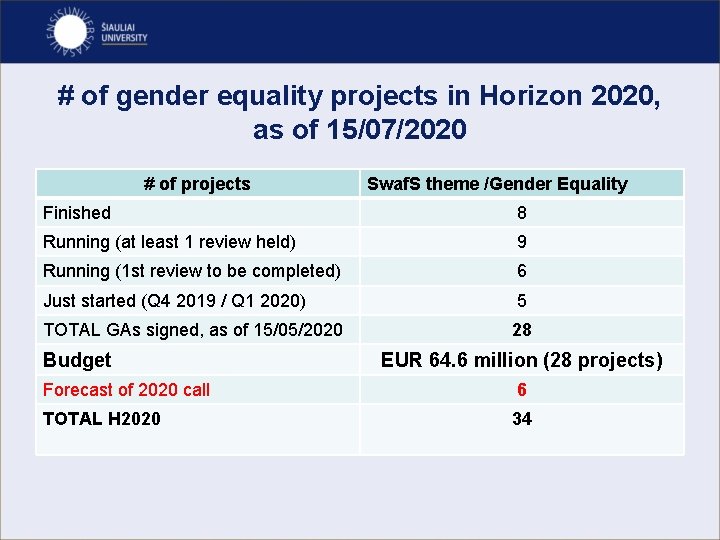
# of gender equality projects in Horizon 2020, as of 15/07/2020 # of projects Swaf. S theme /Gender Equality Finished 8 Running (at least 1 review held) 9 Running (1 st review to be completed) 6 Just started (Q 4 2019 / Q 1 2020) 5 TOTAL GAs signed, as of 15/05/2020 28 Budget EUR 64. 6 million (28 projects) Forecast of 2020 call 6 TOTAL H 2020 34

GEP implementation results (1) n In H 2020, excluding the 2020 call, 18 GEP projects have been funded n Total budget of EUR 43. 9 million (corresponding to 68% of the total budget allocated to GE projects in Swaf. S) n EUR 34. 2 million (78%) is dedicated for GEP-implementing institutions

GEP implementation results (2) n 168 institutions involved in GEP projects, 130 institutions (78%) are implementing GEPs n BUT among 2, 725* officially recognized higher education institutions in Europe GEPs covers just 6, 15 % RPOs/RFOs *(uni. Rank database, 2020)

Central & Eastern European Countries, CEEC: Euro. Voc n 17 CEE countries associated with the EU through association agreements: Estonia, Hungary, Latvia, Lithuania, Poland, the Czech Republic, Slovakia, Slovenia, Bulgaria, Romania, Albania, Bosnia. Herzegovina, Croatia, the former Yugoslav Republic of Macedonia, Kosovo, Montenegro and Serbia
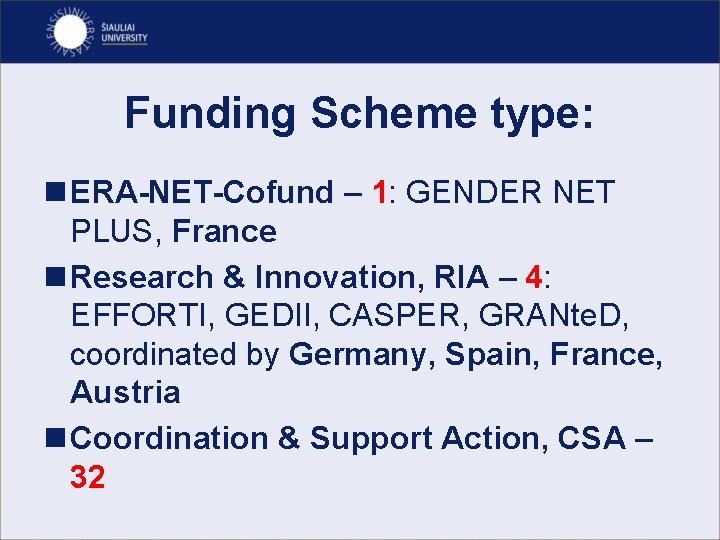
Funding Scheme type: n ERA-NET-Cofund – 1: GENDER NET PLUS, France n Research & Innovation, RIA – 4: EFFORTI, GEDII, CASPER, GRANte. D, coordinated by Germany, Spain, France, Austria n Coordination & Support Action, CSA – 32
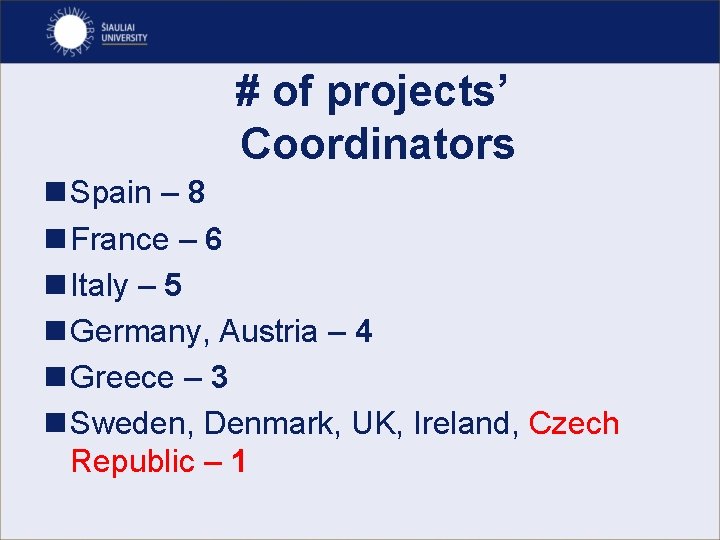
# of projects’ Coordinators n Spain – 8 n France – 6 n Italy – 5 n Germany, Austria – 4 n Greece – 3 n Sweden, Denmark, UK, Ireland, Czech Republic – 1
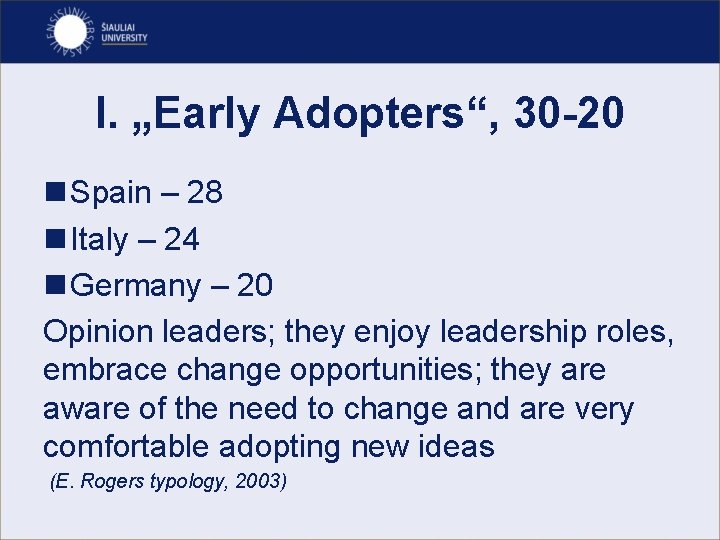
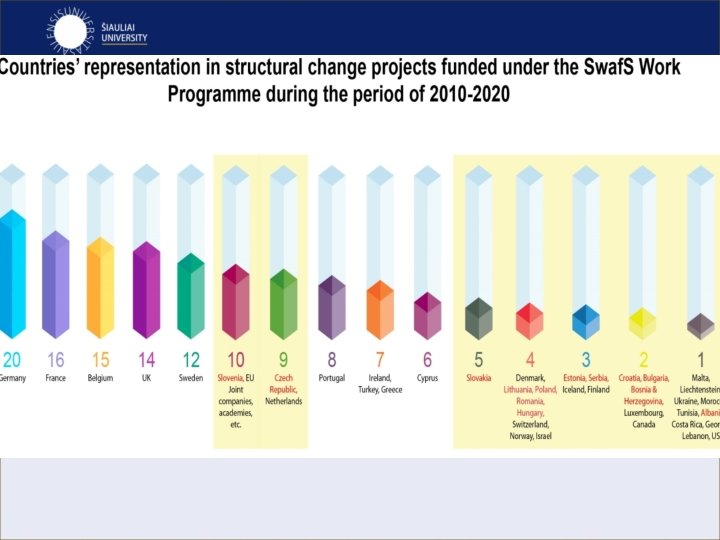
I. „Early Adopters“, 30 -20 n Spain – 28 n Italy – 24 n Germany – 20 Opinion leaders; they enjoy leadership roles, embrace change opportunities; they are aware of the need to change and are very comfortable adopting new ideas (E. Rogers typology, 2003)
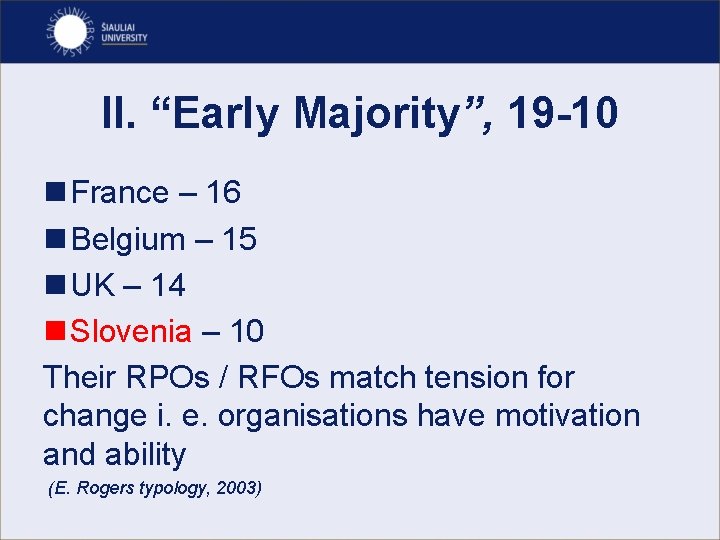
II. “Early Majority”, 19 -10 n France – 16 n Belgium – 15 n UK – 14 n Slovenia – 10 Their RPOs / RFOs match tension for change i. e. organisations have motivation and ability (E. Rogers typology, 2003)
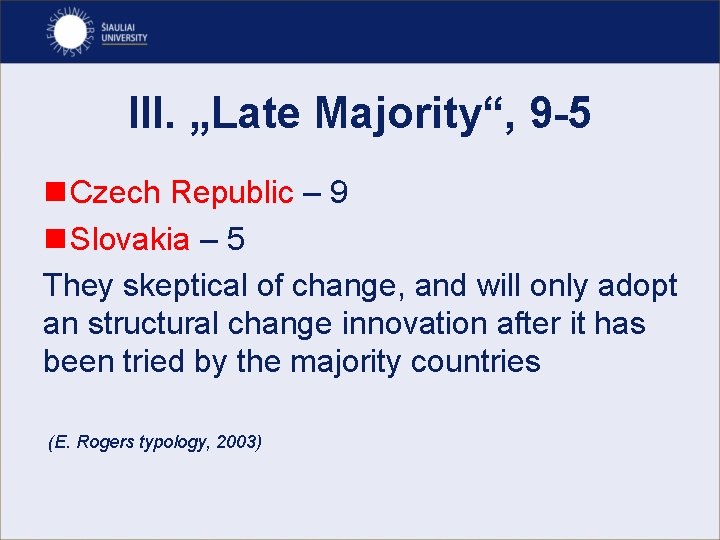
III. „Late Majority“, 9 -5 n Czech Republic – 9 n Slovakia – 5 They skeptical of change, and will only adopt an structural change innovation after it has been tried by the majority countries (E. Rogers typology, 2003)
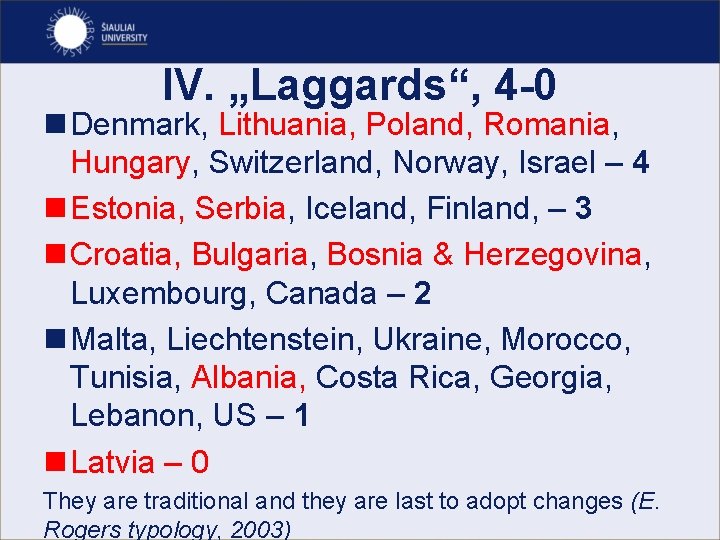
IV. „Laggards“, 4 -0 n Denmark, Lithuania, Poland, Romania, Hungary, Switzerland, Norway, Israel – 4 n Estonia, Serbia, Iceland, Finland, – 3 n Croatia, Bulgaria, Bosnia & Herzegovina, Luxembourg, Canada – 2 n Malta, Liechtenstein, Ukraine, Morocco, Tunisia, Albania, Costa Rica, Georgia, Lebanon, US – 1 n Latvia – 0 They are traditional and they are last to adopt changes (E. Rogers typology, 2003)
WHAT STRUCTURAL CHANGES ARE CAUSED BY GEPs IN RESEARCH ORGANIZATIONS?
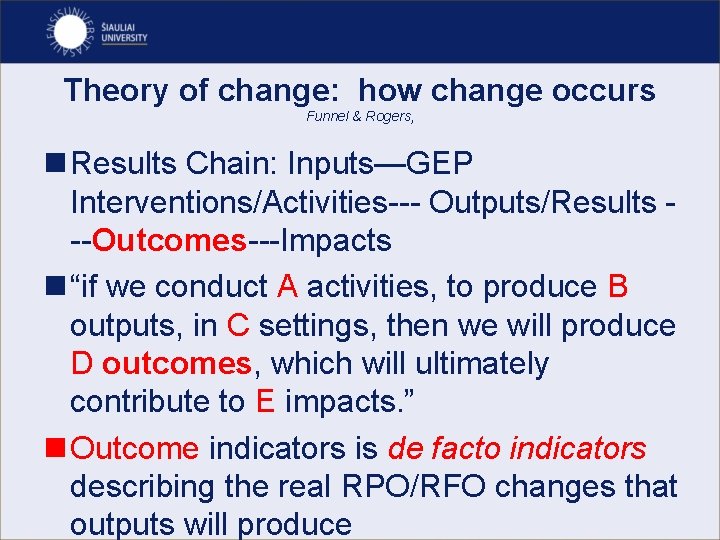
Theory of change: how change occurs Funnel & Rogers, n Results Chain: Inputs—GEP Interventions/Activities--- Outputs/Results --Outcomes---Impacts n “if we conduct A activities, to produce B outputs, in C settings, then we will produce D outcomes, which will ultimately contribute to E impacts. ” n Outcome indicators is de facto indicators describing the real RPO/RFO changes that outputs will produce
Institutional change in: n Governance, policies, rules, processes and behaviours that affect the way powers (decision making) are exercised making them more inclusive, transparent and accountable n Transformation of informal norms; modification of formal institutions (such as laws and policies) (Rao; Kelleher 2005)
1 st Indicator: Policies & Actions n Refer to changes in terms of the incorporation of gender issues in strategic documents, the availability of resources (budget, staff, materials, time) and the existence of a gender sensitive monitoring system, among other issues
2 nd Indicator: Structures & Mechanisms n Obligations to gender balance in tasks, responsibilities & decision making n Formal incorporation of expertise, experts & incentives and opportunities: reward system, sanctions to discourage gender biases, and equal career opportunities for women and men, etc.
Changes in Policy (1) n CNRS STRIDE Committee, FR INTEGER n Oder „Recommendation on ensuring of equal opportunities between women and men at higher education and research institutions“ passed by Ministry, LT INTEGER n Upsala University has developed indicators for GE, SE FESTA n Extension of the Athena SWAN (UK) award scheme to Ireland, FESTA, INTEGER, GENERA
Changes in Policy (2) n Marine Strategy Framework, STAGES n IGAR tool, GENDER-Net n Internet Portal, GENPORT n A gender course module Gender and Diversity in Research Management, GENOVATE n Gender Equality Network in Physics in ERA, GENERA n Gender-Diversity-Index, GEDII; Policy Brief Series, GENDERACTION
Structures & Mechanisms n Guideliness & Tools – 28 n Handbooks & books – 8 n Training modules, E-learning Package - 6 n Studies, products: Evaluation framework, EFFORTI, SAGE Charter of Principles for Gender Equality, SAGE Wheel Model, GENERA Roadmap, Programme Theory Generator, EFFORTI, etc. ) – 8 n Videos - 2
CONCLUSIONS (1) n Less changes in institutional or national policies n Obvious disparities across Member States and its raising a problem of CEEC inclusiveness in applying to Horizon Europe n CEE countries and their RPO/RFO institutions less experienced and less advanced in the field of gender equality in R&I
CONCLUSIONS (2) n “A new ERA for Research and Innovation”* is foreseeing strong measures to promote inclusive gender equality plans in R&I organisations, in line with the European Strategy for Gender Equality for the period 2020 -2025, to which R&I, and Horizon Europe, must contribute actively *Communication of 30 September 2020
CONCLUSIONS (3) n This new inclusive, intersectional (intersecting with gender, such as ethnicity, disability, sexual orientation or else socio-economic status) approach to gender equality is a focus area of the new EC Gender Equality Strategy is serious challenge to CEEC
Thank you for your attention!
- Slides: 32