
What should I do after high school On


- Slides: 31
What should I do after high school?
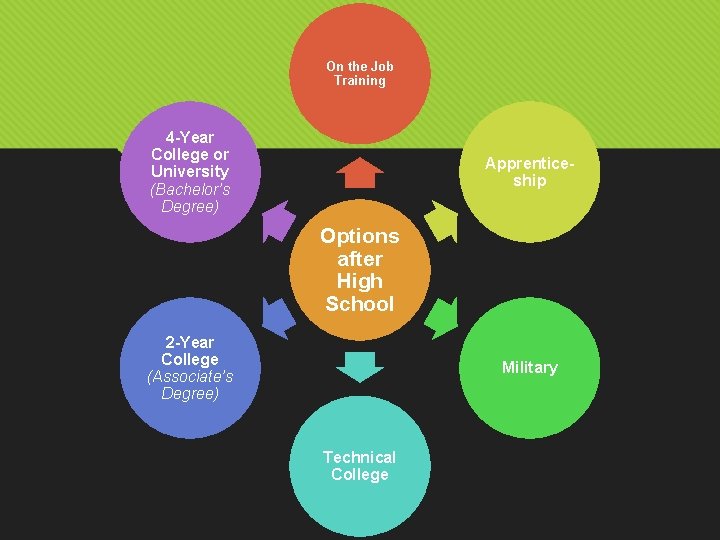
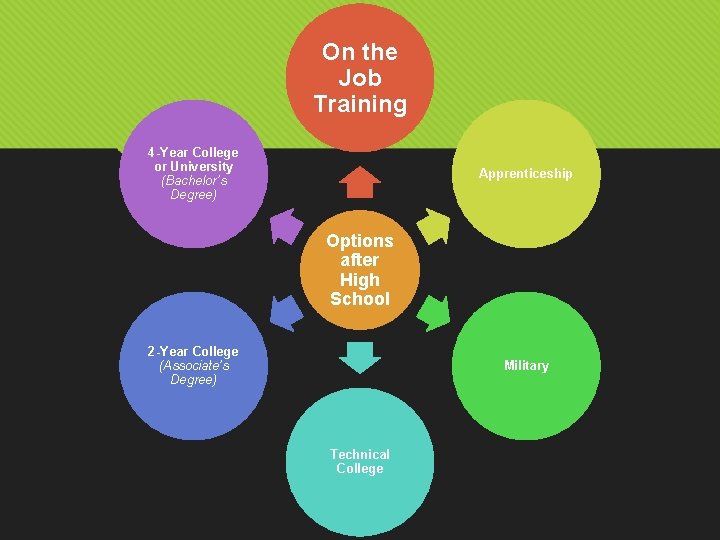
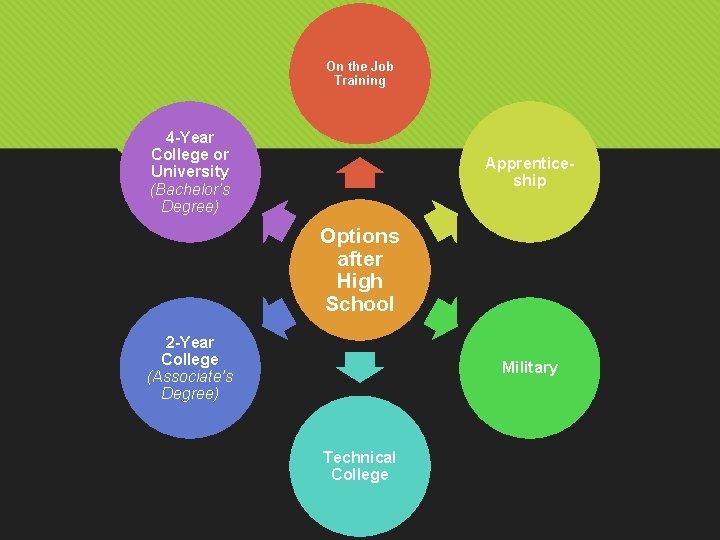
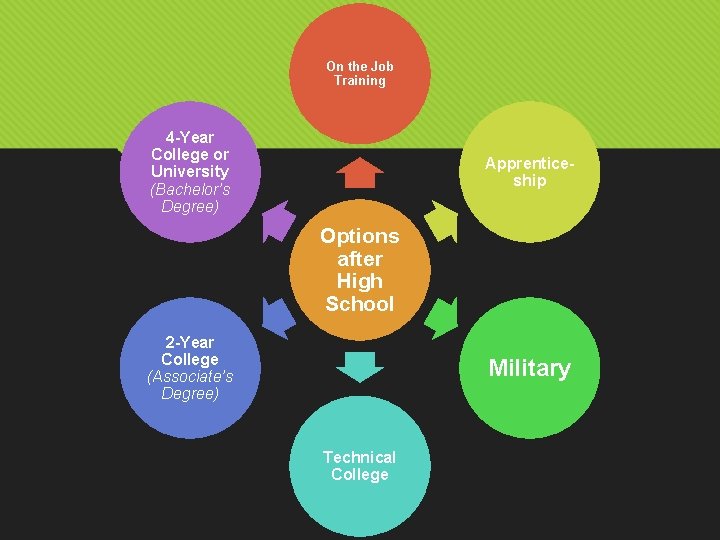
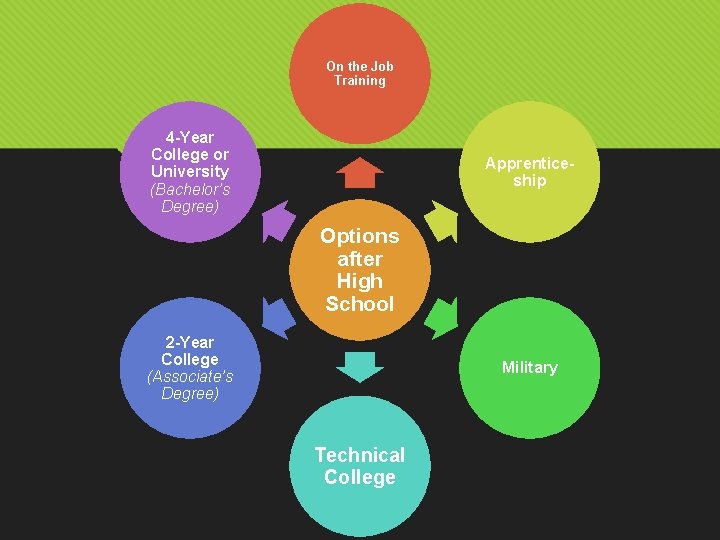
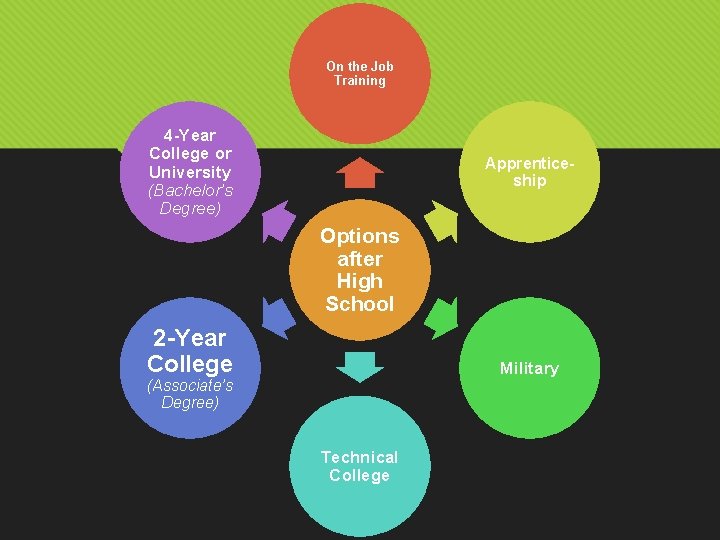
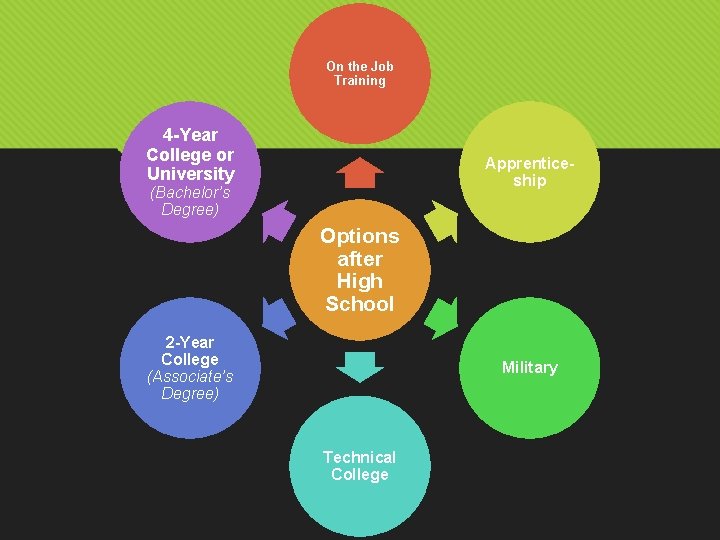
On the Job Training 4 -Year College or University (Bachelor’s Degree) Apprenticeship Options after High School 2 -Year College (Associate’s Degree) Military Technical College
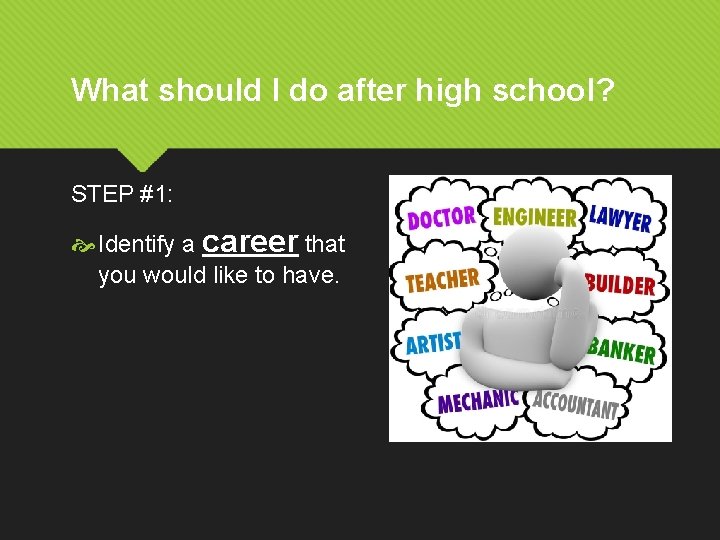
What should I do after high school? STEP #1: Identify a career that you would like to have.
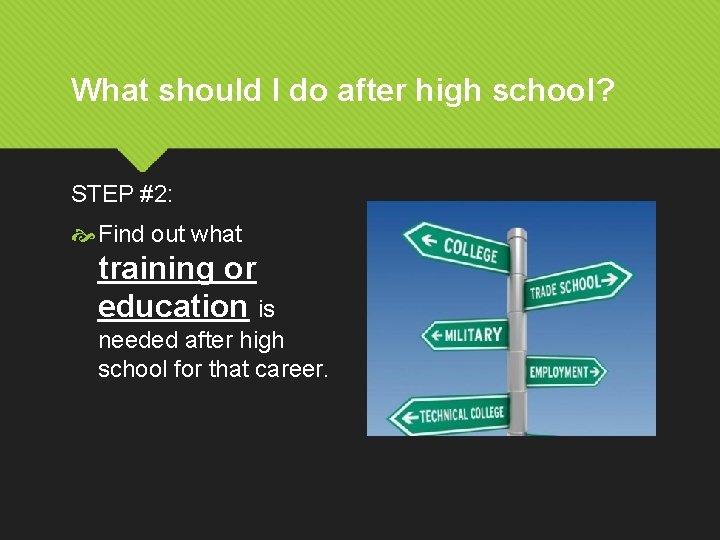
What should I do after high school? STEP #2: Find out what training or education is needed after high school for that career.
What should I do after high school? STEP #3: Find the training programs, schools, or colleges that provide the best training for your chosen career.
What should I do after high school? STEP #4: Get as much education and experience related to your career interests as possible, while still in high school.
On the Job Training 4 -Year College or University (Bachelor’s Degree) Apprenticeship Options after High School 2 -Year College (Associate’s Degree) Military Technical College
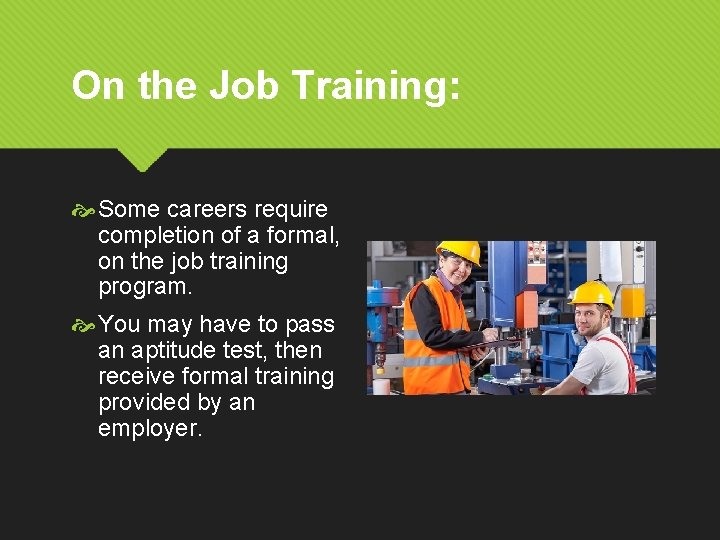
On the Job Training: Some careers require completion of a formal, on the job training program. You may have to pass an aptitude test, then receive formal training provided by an employer.
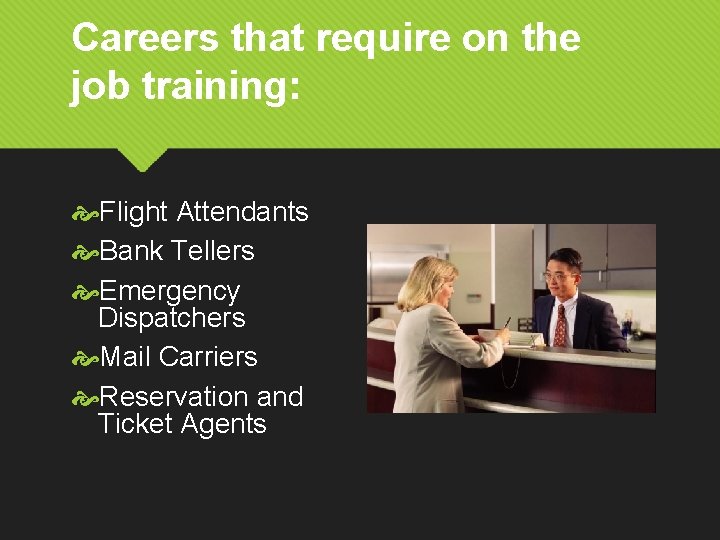
Careers that require on the job training: Flight Attendants Bank Tellers Emergency Dispatchers Mail Carriers Reservation and Ticket Agents
On the Job Training 4 -Year College or University (Bachelor’s Degree) Apprenticeship Options after High School 2 -Year College (Associate’s Degree) Military Technical College
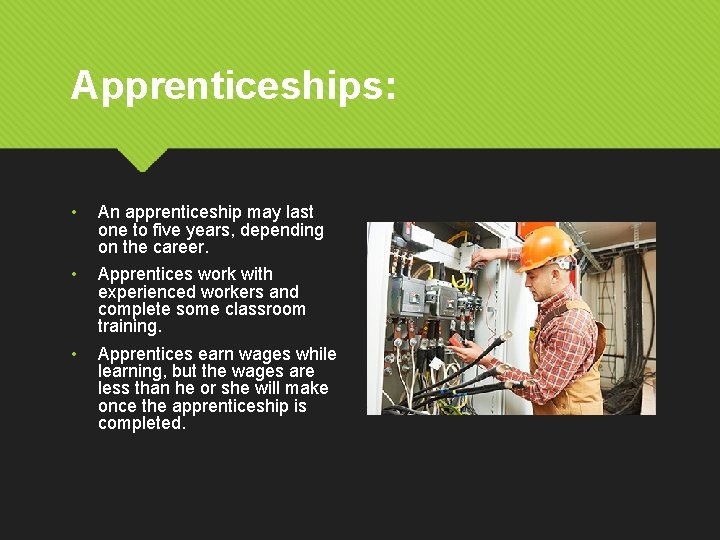
Apprenticeships: • An apprenticeship may last one to five years, depending on the career. • Apprentices work with experienced workers and complete some classroom training. • Apprentices earn wages while learning, but the wages are less than he or she will make once the apprenticeship is completed.
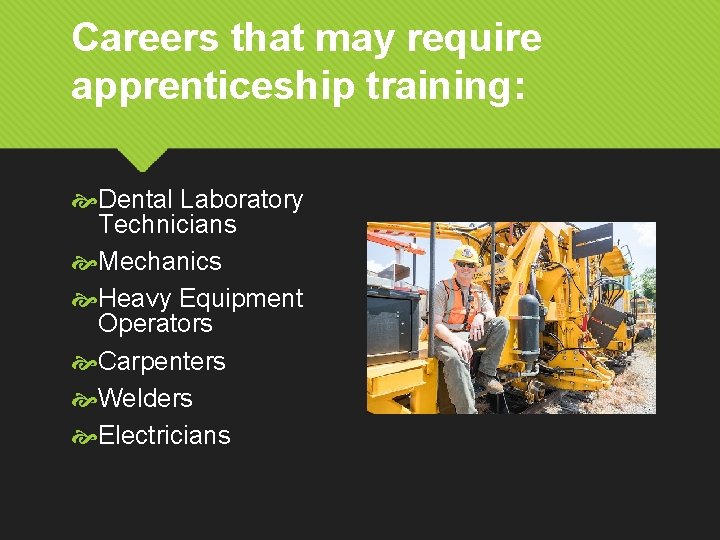
Careers that may require apprenticeship training: Dental Laboratory Technicians Mechanics Heavy Equipment Operators Carpenters Welders Electricians
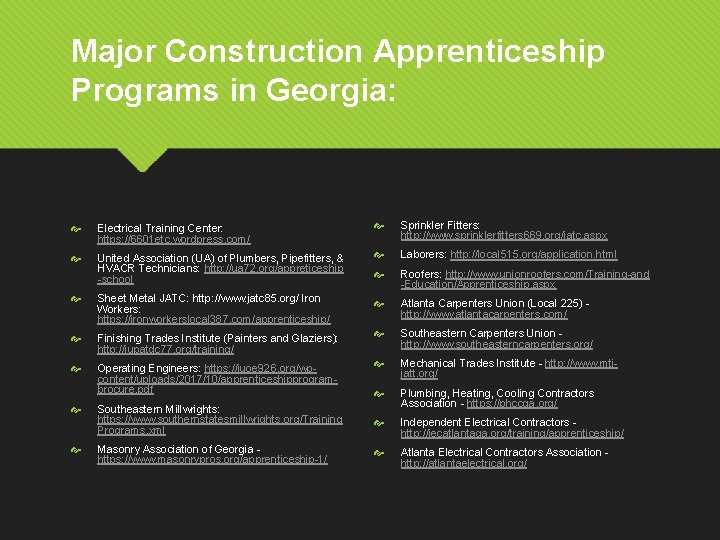
Major Construction Apprenticeship Programs in Georgia: Electrical Training Center: https: //6601 etc. wordpress. com/ Sprinkler Fitters: http: //www. sprinklerfitters 669. org/jatc. aspx United Association (UA) of Plumbers, Pipefitters, & HVACR Technicians: http: //ua 72. org/appreticeship -school Laborers: http: //local 515. org/application. html Roofers: http: //www. unionroofers. com/Training-and -Education/Apprenticeship. aspx Sheet Metal JATC: http: //www. jatc 85. org/ Iron Workers: https: //ironworkerslocal 387. com/apprenticeship/ Atlanta Carpenters Union (Local 225) http: //www. atlantacarpenters. com/ Finishing Trades Institute (Painters and Glaziers): http: //iupatdc 77. org/training/ Southeastern Carpenters Union http: //www. southeasterncarpenters. org/ Operating Engineers: https: //iuoe 926. org/wpcontent/uploads/2017/10/apprenticeshipprogrambrocure. pdf Mechanical Trades Institute - http: //www. mtijatt. org/ Southeastern Millwrights: https: //www. southernstatesmillwrights. org/Training Programs. xml Plumbing, Heating, Cooling Contractors Association - https: //phccga. org/ Independent Electrical Contractors http: //iecatlantaga. org/training/apprenticeship/ Masonry Association of Georgia https: //www. masonrypros. org/apprenticeship-1/ Atlanta Electrical Contractors Association http: //atlantaelectrical. org/
On the Job Training 4 -Year College or University (Bachelor’s Degree) Apprenticeship Options after High School 2 -Year College (Associate’s Degree) Military Technical College
Military: The U. S. military has five branches of service: the Army, Navy, Air Force, Coast Guard, and Marine Corps. The military trains people in over 140 occupations. Many military occupations involve skills that can be useful in civilian jobs. Service members receive basic pay, allowances and benefits, include tuition assistance at colleges and universities.
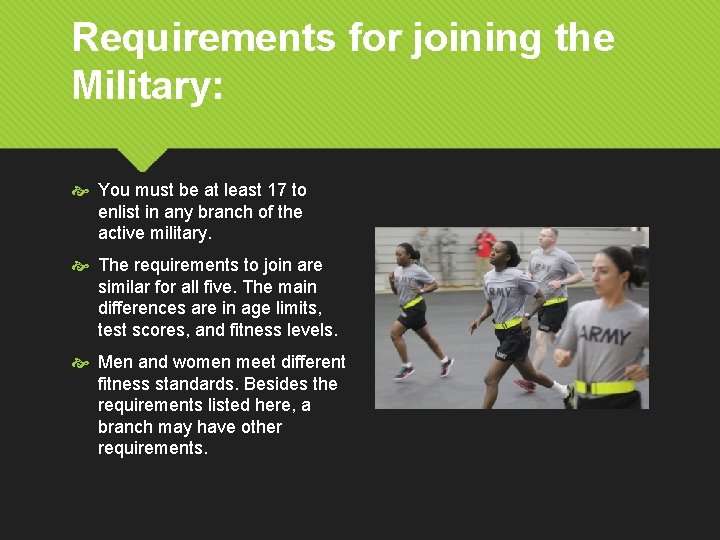
Requirements for joining the Military: You must be at least 17 to enlist in any branch of the active military. The requirements to join are similar for all five. The main differences are in age limits, test scores, and fitness levels. Men and women meet different fitness standards. Besides the requirements listed here, a branch may have other requirements.
Requirements for joining the Military: You do not have to be a U. S. citizen to enlist in the military, but you may have fewer options. If you are not a U. S. citizen, you must: Have a permanent resident card, also known as a Green Card Currently live in the U. S. Speak, read, and write English fluently
Steps for Joining the Military: Learn about the five active-duty branches. Know the main differences between officers and enlisted members. Learn about pre-enlistment steps, which include taking the Armed Services Vocational Aptitude Battery (ASVAB), having a physical exam, and meeting with a career counselor. Consider applying to a military service academy or the Reserve Officers Training Corps (ROTC) program at a college or university. These programs pay for students’ tuition and prepare them to be military officers.
On the Job Training 4 -Year College or University (Bachelor’s Degree) Apprenticeship Options after High School 2 -Year College (Associate’s Degree) Military Technical College
Technical College: Students at a technical colleges may earn a technical certificate of credit, technical diploma, or associate degree, depending on the career field. Associate degree programs usually take two years to complete, diploma programs take 18 months to complete, and technical certificate programs take less than a year to complete.
Benefits of attending Technical College: Free Tuition for 17 high-demand fields with 100% of your college tuition costs covered with Georgia’s HOPE Career Grant. Affordable: A TCSG education is one of the best academic values in the Southeast, costing approximately $3, 200 including tuition and fees. Students who receive a HOPE Grant paid only an estimated $1, 200 per year for school. Quality Higher Education: According to The Atlanta Journal-Constitution, TCSG colleges are ranked among the top best two year colleges in the country as a result of TCSG’s affordable tuition costs, graduation rates, student-faculty ratios and other key factors.
Benefits of attending Technical College: TCSG offers 600 Degree, Diploma & Certificate programs including computer technology criminal justice, health sciences, nursing, culinary arts, construction management and many more. 99% Job Placement Success Smooth Transfers: Over 25 system-wide transfer agreements making it easy to transfer to other colleges, including 4 -year universities in the Georgia university system. Convenient Access: TCSG has 22 colleges with 88 locations across the state as well as online classes, giving you access higher education that is convenient for you.
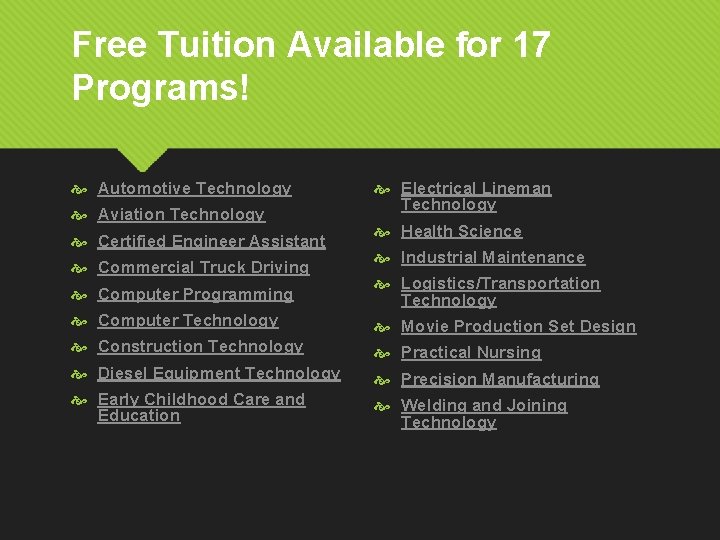
Free Tuition Available for 17 Programs! Automotive Technology Aviation Technology Certified Engineer Assistant Commercial Truck Driving Electrical Lineman Technology Health Science Industrial Maintenance Computer Programming Logistics/Transportation Technology Computer Technology Movie Production Set Design Construction Technology Practical Nursing Diesel Equipment Technology Precision Manufacturing Early Childhood Care and Education Welding and Joining Technology
On the Job Training 4 -Year College or University (Bachelor’s Degree) Apprenticeship Options after High School 2 -Year College Military (Associate’s Degree) Technical College
Associate’s Degree (2 -Year College Program): Get an associate’s degree at a community college and transfer to a four-year college or university. OR Get a two-year associate degree that prepares you for a specific career.
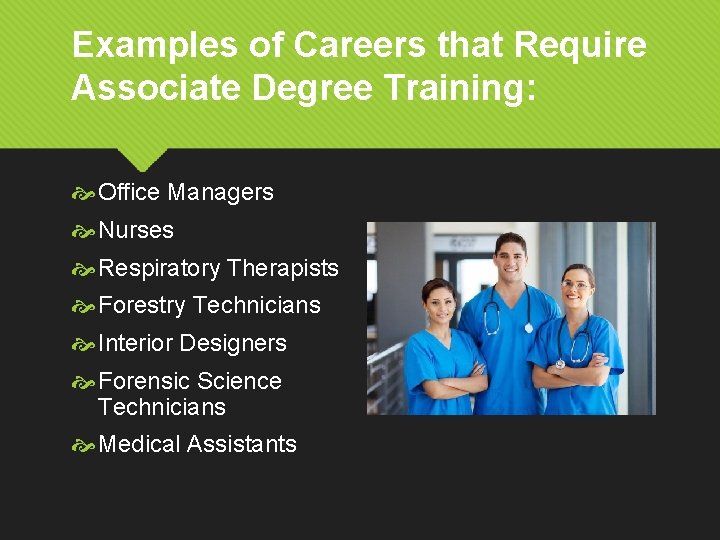
Examples of Careers that Require Associate Degree Training: Office Managers Nurses Respiratory Therapists Forestry Technicians Interior Designers Forensic Science Technicians Medical Assistants
On the Job Training 4 -Year College or University Apprenticeship (Bachelor’s Degree) Options after High School 2 -Year College (Associate’s Degree) Military Technical College
Bachelor’s Degree (4 -Year College Program): Four-year degree programs are available through state and private colleges and universities. It is important for you to have a plan for what you want to study in college in order to increase the chances that this degree will be completed successfully.
Examples of Careers that Require Bachelor’s Degree Training: Dietitians Foresters Graphic Designers Technical Writers Financial Counselors Teachers
Education Beyond a Bachelor’s Degree: There are many careers in which you may be interested that require education beyond a bachelor’s degree. Additional degrees may include a Master’s Degree, Ph. D. , or M. D.
Examples of Careers that Require Training Beyond a Bachelor’s Degree: Architects Lawyers Physicians Pharmacists Psychologists Counselors or Social Workers Administrators