
What Shapes Giant Hogweed Invasion Answers from a
- Slides: 16
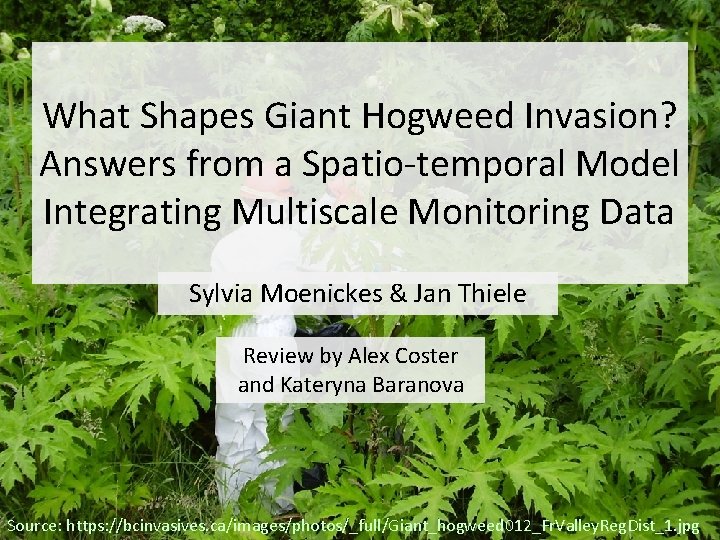
What Shapes Giant Hogweed Invasion? Answers from a Spatio-temporal Model Integrating Multiscale Monitoring Data Sylvia Moenickes & Jan Thiele Review by Alex Coster and Kateryna Baranova Source: https: //bcinvasives. ca/images/photos/_full/Giant_hogweed 012_Fr. Valley. Reg. Dist_1. jpg
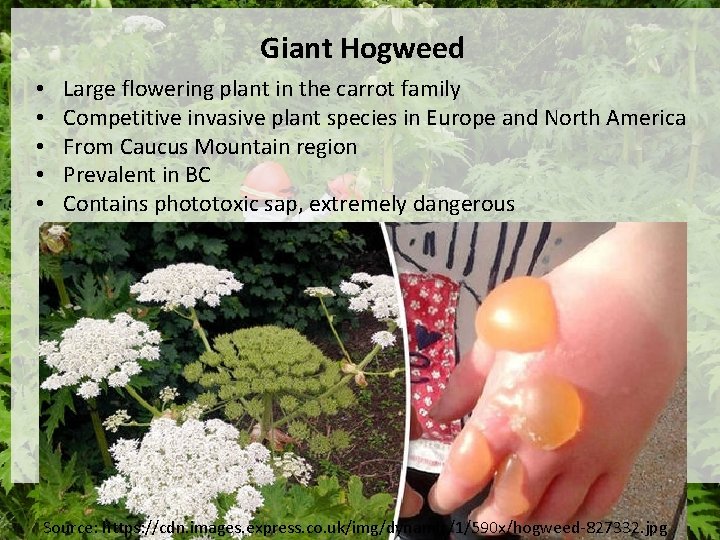
Giant Hogweed • • • Large flowering plant in the carrot family Competitive invasive plant species in Europe and North America From Caucus Mountain region Prevalent in BC Contains phototoxic sap, extremely dangerous Source: https: //cdn. images. express. co. uk/img/dynamic/1/590 x/hogweed-827332. jpg
Goals of the Report • Significance of different mechanisms of invasion? • Is a model able to accurately predict invasion patterns? • How is this information useful?
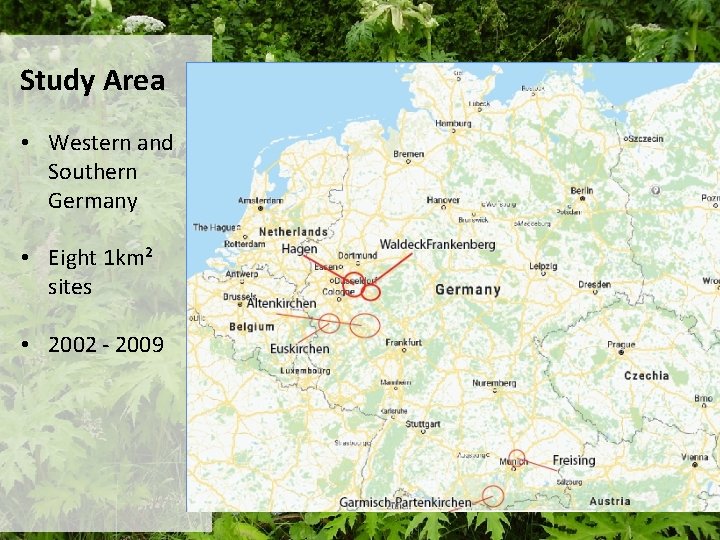
Study Area • Western and Southern Germany • Eight 1 km² sites • 2002 - 2009
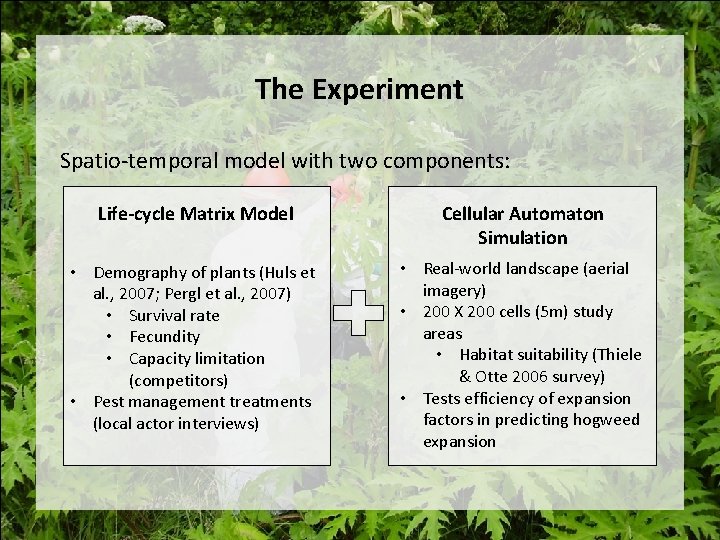
The Experiment Spatio-temporal model with two components: Life-cycle Matrix Model Cellular Automaton Simulation • Demography of plants (Huls et al. , 2007; Pergl et al. , 2007) • Survival rate • Fecundity • Capacity limitation (competitors) • Pest management treatments (local actor interviews) • Real-world landscape (aerial imagery) • 200 X 200 cells (5 m) study areas • Habitat suitability (Thiele & Otte 2006 survey) • Tests efficiency of expansion factors in predicting hogweed expansion
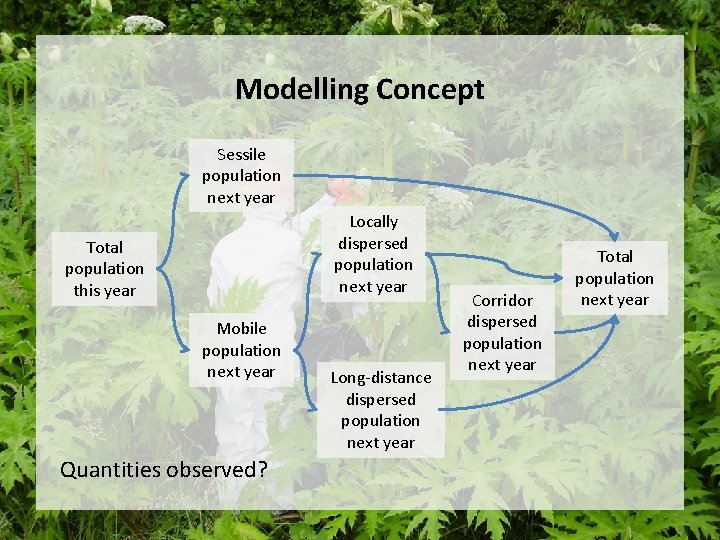
Modelling Concept Sessile population next year Locally dispersed population next year Total population this year Mobile population next year Quantities observed? Long-distance dispersed population next year Corridor dispersed population next year Total population next year
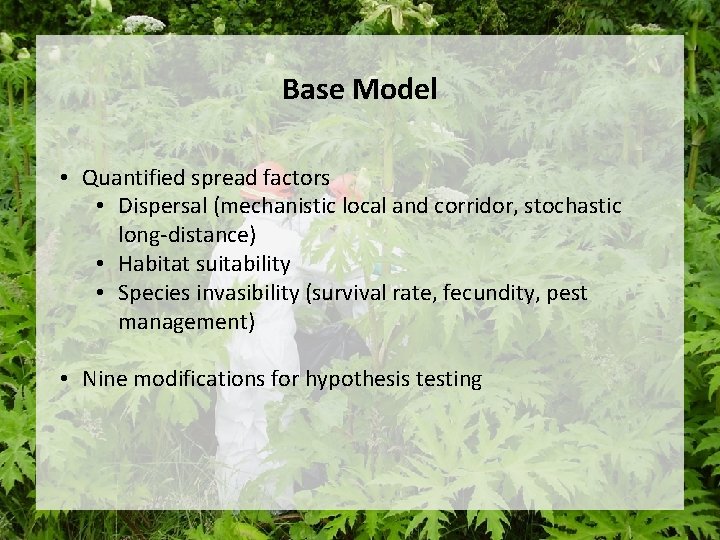
Base Model • Quantified spread factors • Dispersal (mechanistic local and corridor, stochastic long-distance) • Habitat suitability • Species invasibility (survival rate, fecundity, pest management) • Nine modifications for hypothesis testing
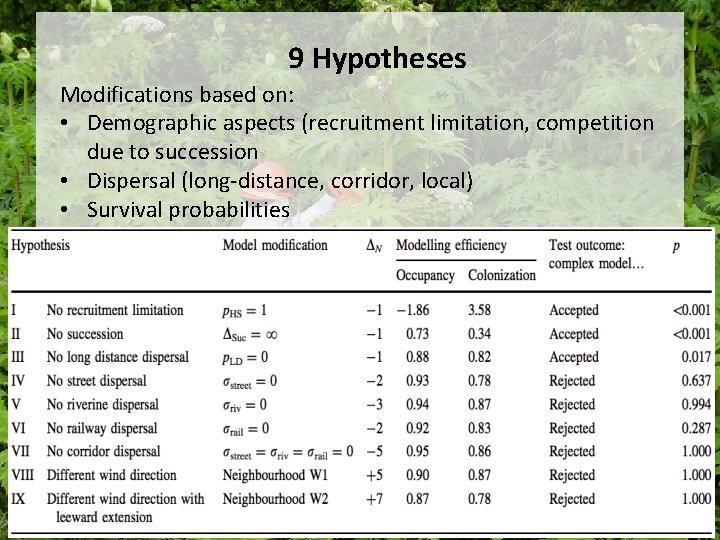
9 Hypotheses Modifications based on: • Demographic aspects (recruitment limitation, competition due to succession • Dispersal (long-distance, corridor, local) • Survival probabilities
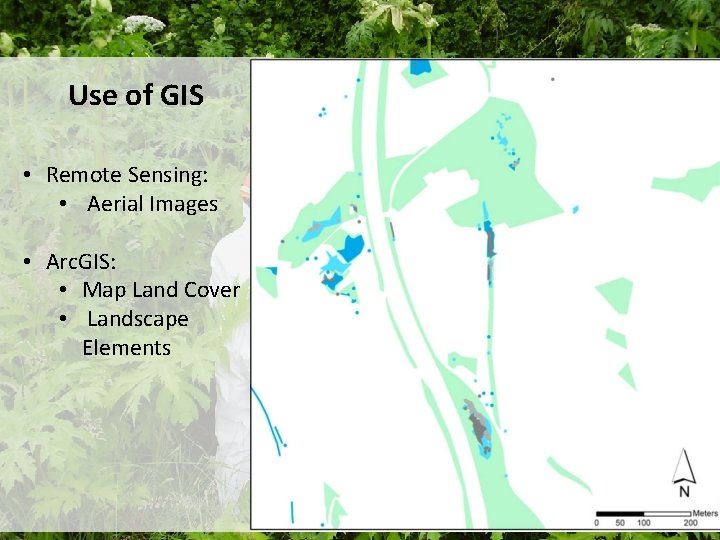
Use of GIS • Remote Sensing: • Aerial Images • Arc. GIS: • Map Land Cover • Landscape Elements
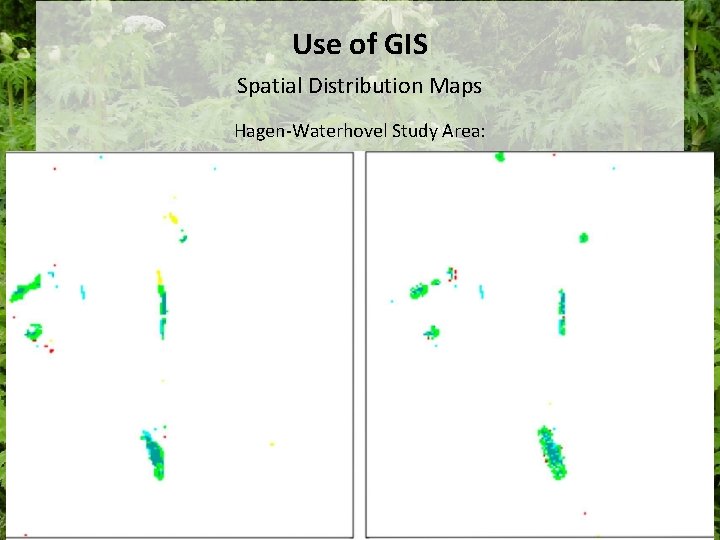
Use of GIS Spatial Distribution Maps Hagen-Waterhovel Study Area:
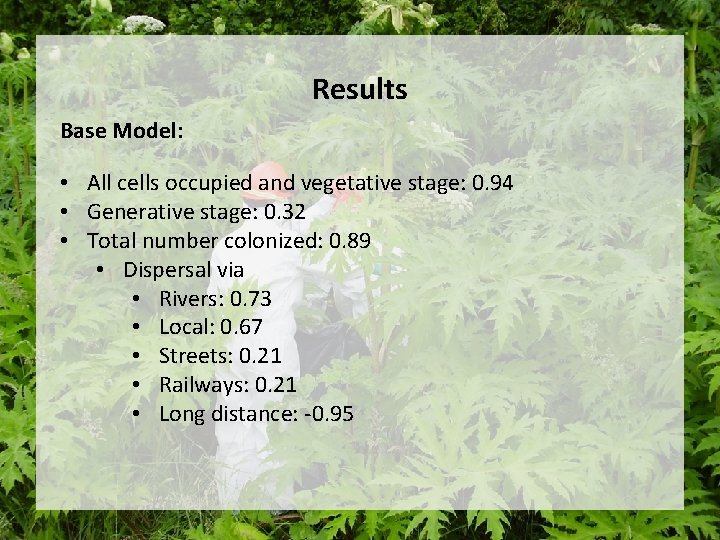
Results Base Model: • All cells occupied and vegetative stage: 0. 94 • Generative stage: 0. 32 • Total number colonized: 0. 89 • Dispersal via • Rivers: 0. 73 • Local: 0. 67 • Streets: 0. 21 • Railways: 0. 21 • Long distance: -0. 95
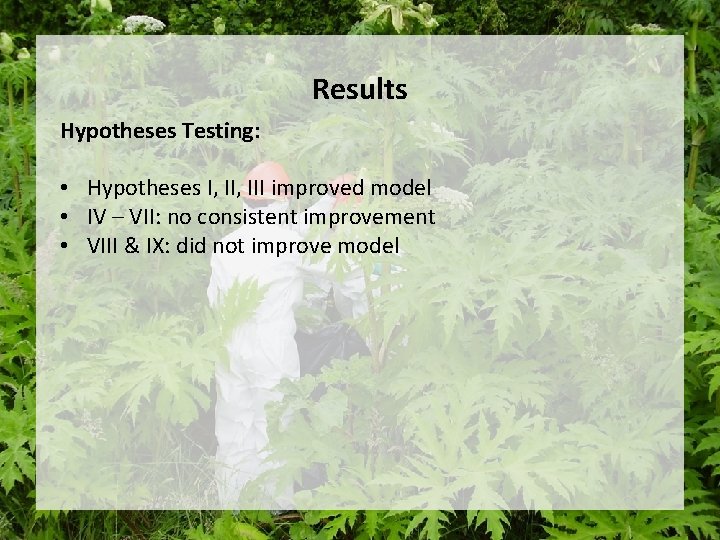
Results Hypotheses Testing: • Hypotheses I, III improved model • IV – VII: no consistent improvement • VIII & IX: did not improve model
Strong Points • Massive undertaking; integrated input from diverse source • Sensitivity Analysis • Well organized • Simulation was quite accurate
Weak Points • Pest management? • Randomized long-distance dispersal • Problem with monitoring data: young plants • Water & Nutrient factors? • Spatial distribution figures • Arguments against one-at-a-time modifications?
Score 7/10
Questions