
What makes water so special Water A water
- Slides: 25
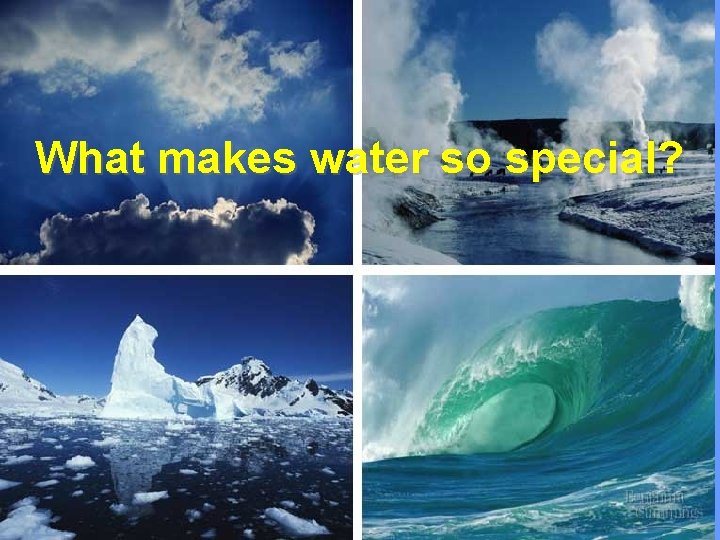
What makes water so special?
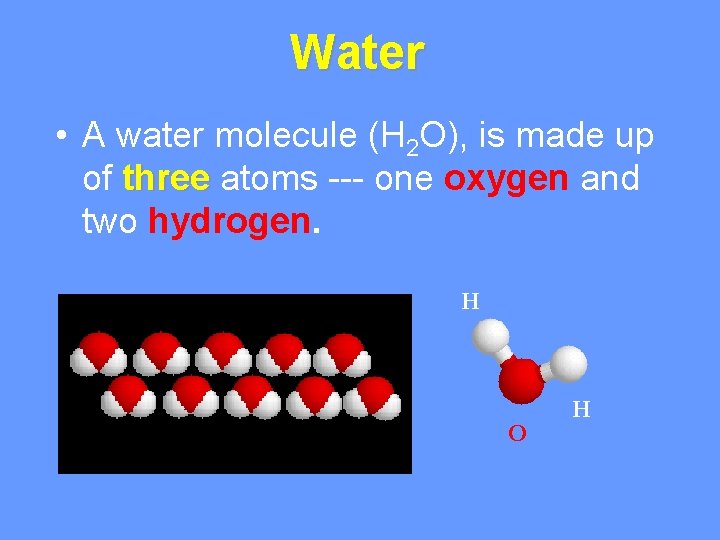
Water • A water molecule (H 2 O), is made up of three atoms --- one oxygen and two hydrogen. H O H
So…what makes water so special?
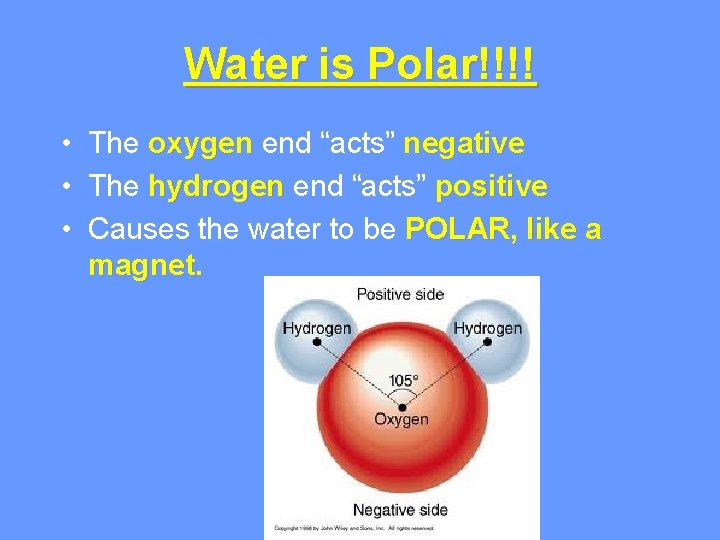
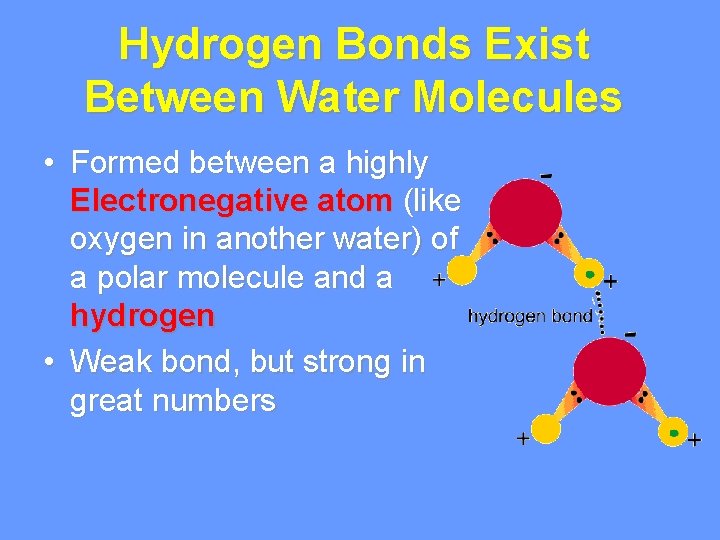
Water is Polar!!!! • The oxygen end “acts” negative • The hydrogen end “acts” positive • Causes the water to be POLAR, like a magnet.
Hydrogen Bonds Exist Between Water Molecules • Formed between a highly Electronegative atom (like oxygen in another water) of a polar molecule and a hydrogen • Weak bond, but strong in great numbers
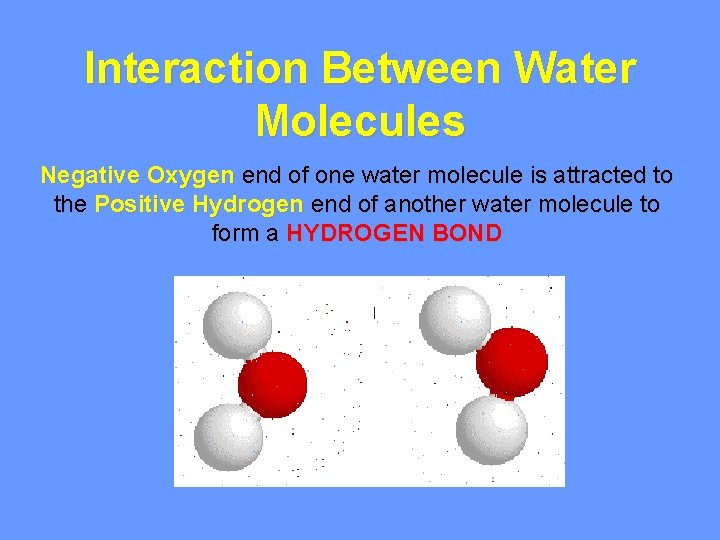
Interaction Between Water Molecules Negative Oxygen end of one water molecule is attracted to the Positive Hydrogen end of another water molecule to form a HYDROGEN BOND
Properties of Water Video
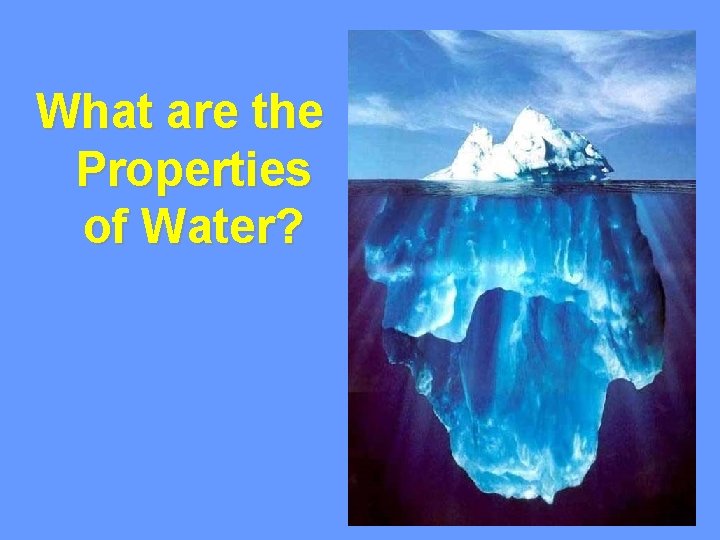
What are the Properties of Water?
Properties of Water • Cohesion • Adhesion • High Specific Heat • High Heat of Vaporization • Less Dense as a Solid
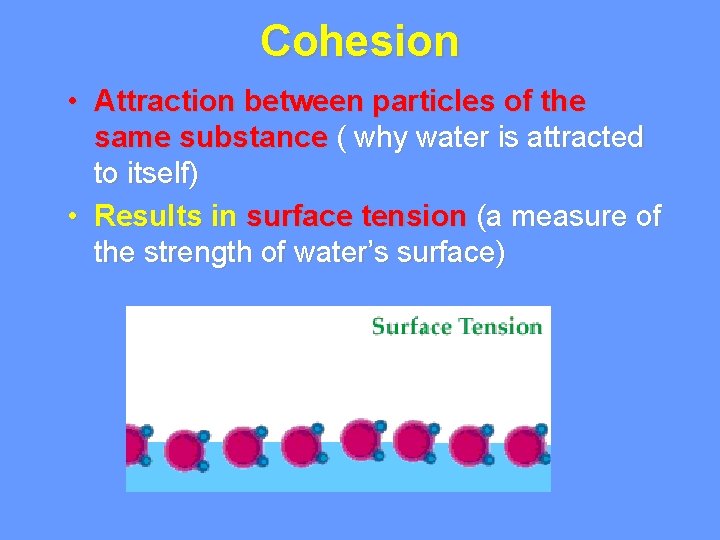
Cohesion • Attraction between particles of the same substance ( why water is attracted to itself) • Results in surface tension (a measure of the strength of water’s surface)
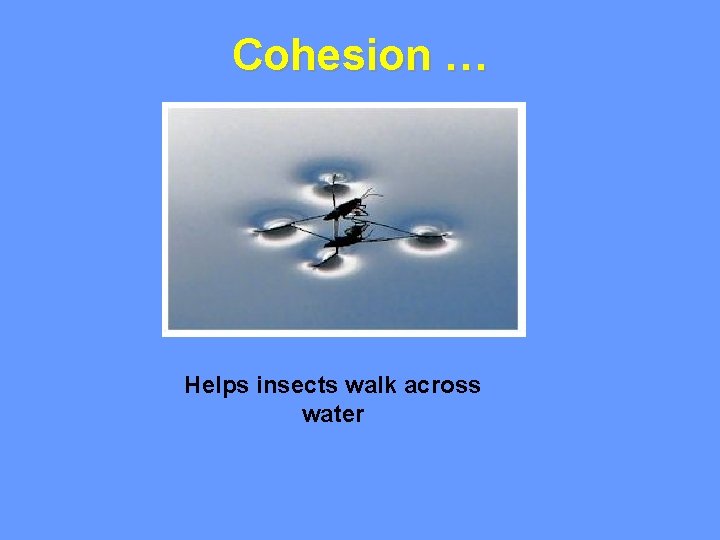
Cohesion … Helps insects walk across water
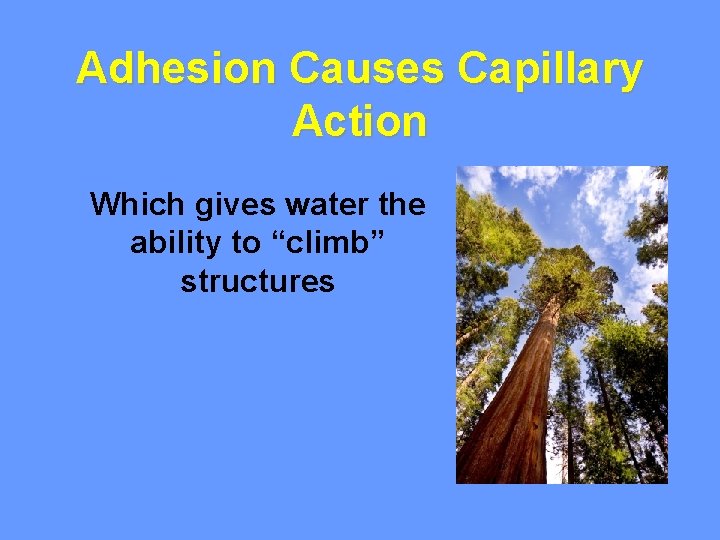
Adhesion • Attraction between two different substances. • Water will make hydrogen bonds with other surfaces such as glass, soil, plant tissues, and cotton. • Capillary action-water molecules will “tow” each other along when in a thin glass tube.
Adhesion Causes Capillary Action Which gives water the ability to “climb” structures
High Specific Heat • Amount of heat needed to raise or lower 1 g of a substance 1° C. • Water resists temperature change, both for heating and cooling. – Would you rather walk on sand or in water on a beach on a hot summer day?
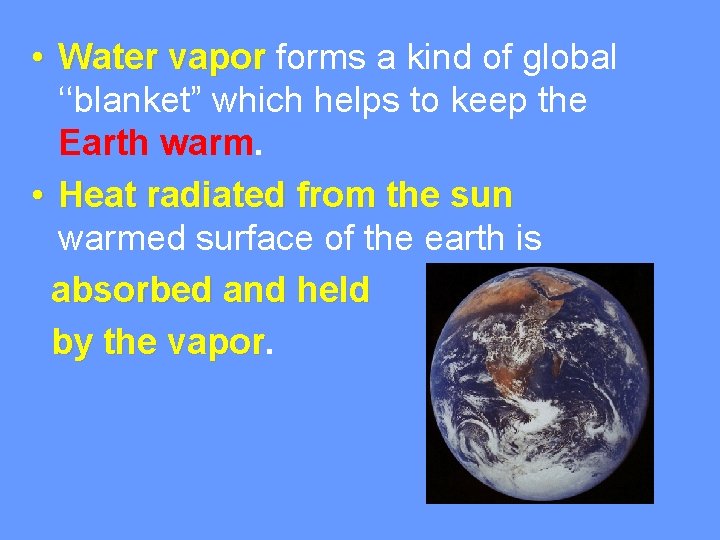
• Water vapor forms a kind of global ‘‘blanket” which helps to keep the Earth warm. • Heat radiated from the sun warmed surface of the earth is absorbed and held by the vapor
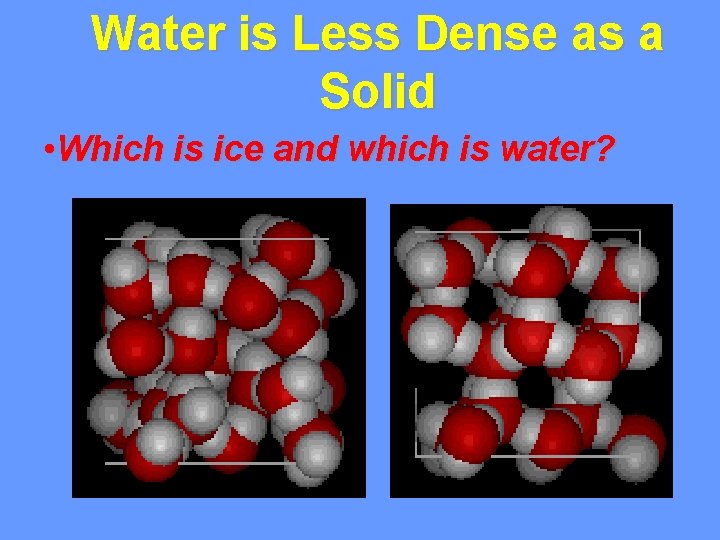
Water is Less Dense as a Solid • Which is ice and which is water?
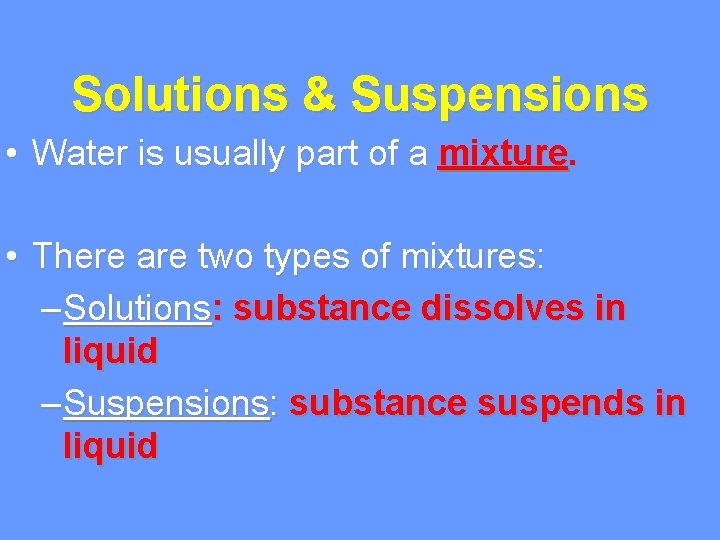
Solutions & Suspensions • Water is usually part of a mixture. • There are two types of mixtures: – Solutions: substance dissolves in liquid – Suspensions: substance suspends in liquid
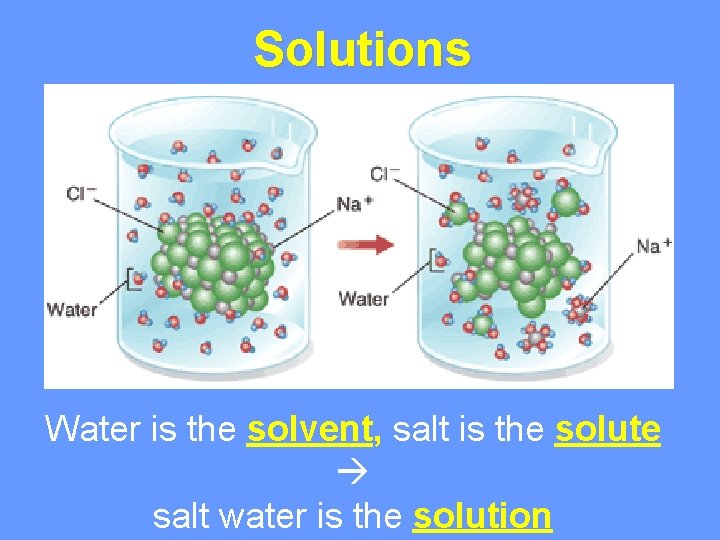
Solutions Water is the solvent, salt is the solute salt water is the solution
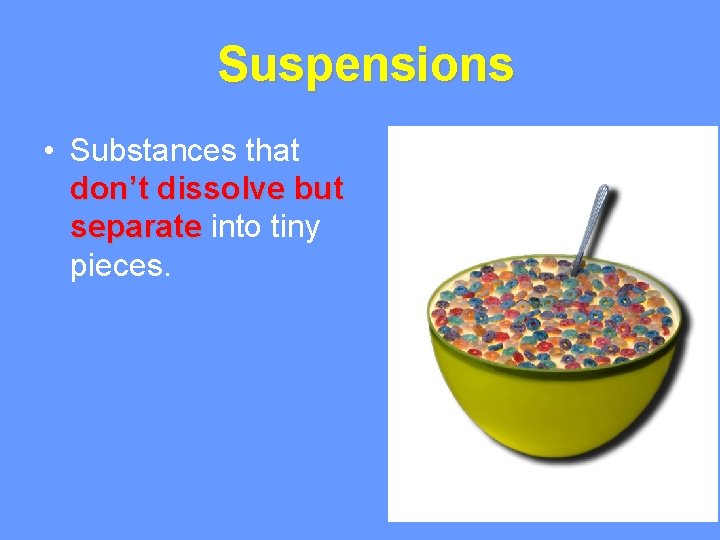
Suspensions • Substances that don’t dissolve but separate into tiny pieces.
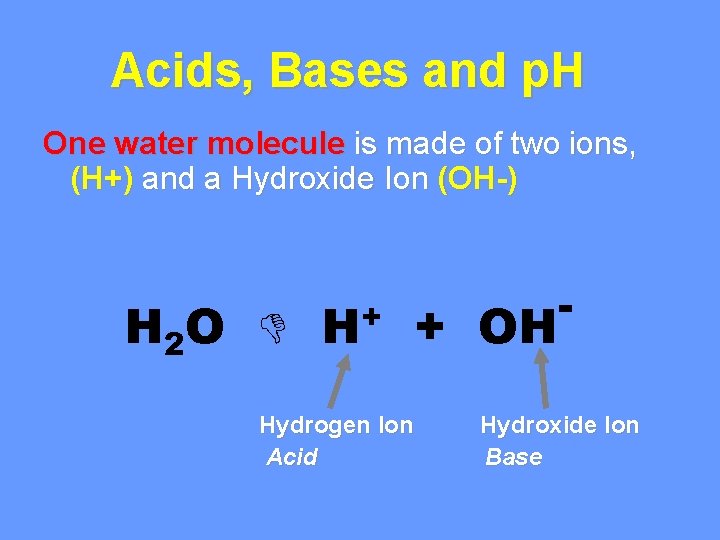
Acids, Bases and p. H One water molecule is made of two ions, (H+) and a Hydroxide Ion (OH-) H 2 O H+ + OH Hydrogen Ion Acid - Hydroxide Ion Base
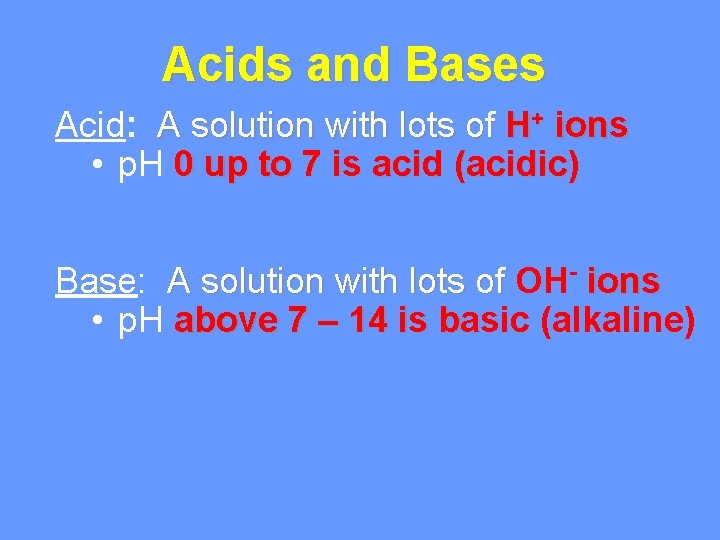
Acids and Bases Acid: A solution with lots of H+ ions • p. H 0 up to 7 is acid (acidic) Base: A solution with lots of OH- ions • p. H above 7 – 14 is basic (alkaline) b
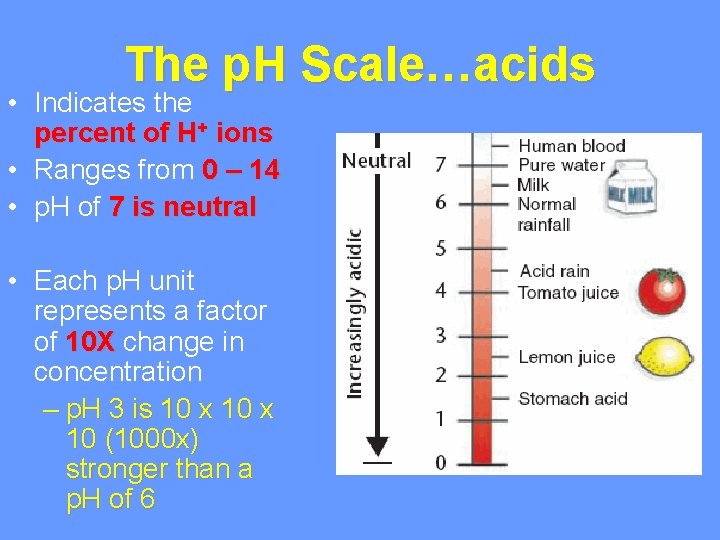
The p. H Scale…acids • Indicates the percent of H+ ions • Ranges from 0 – 14 • p. H of 7 is neutral • Each p. H unit represents a factor of 10 X change in concentration – p. H 3 is 10 x 10 (1000 x) stronger than a p. H of 6
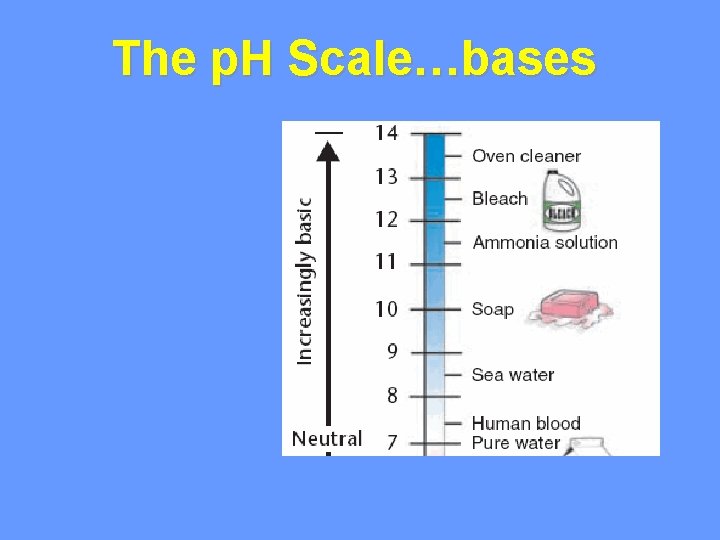
The p. H Scale…bases
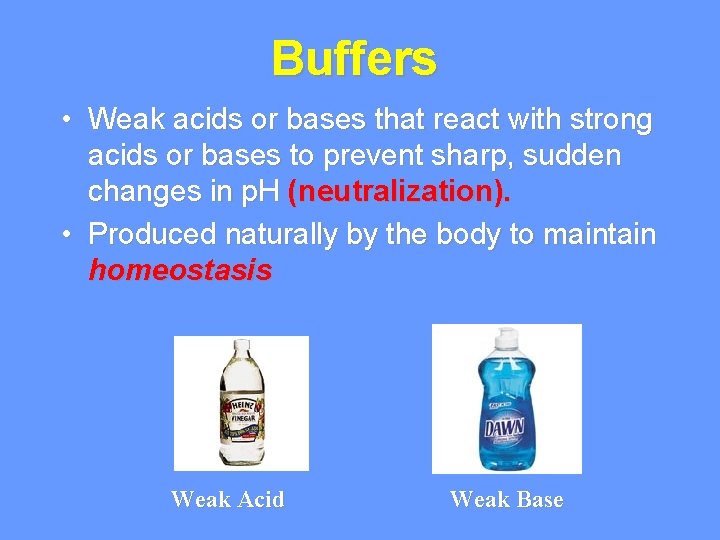
Buffers • Weak acids or bases that react with strong acids or bases to prevent sharp, sudden changes in p. H (neutralization). • Produced naturally by the body to maintain homeostasis Weak Acid Weak Base
Ticket out the Door 1. Draw a water molecule with labeled atoms and charges. 2. What is the property called that describes water sticking to itself? 3. What makes a solution acidic? 4. What has a higher p. H, bleach or lemon juice?