
What makes up our solar system Where is
- Slides: 48
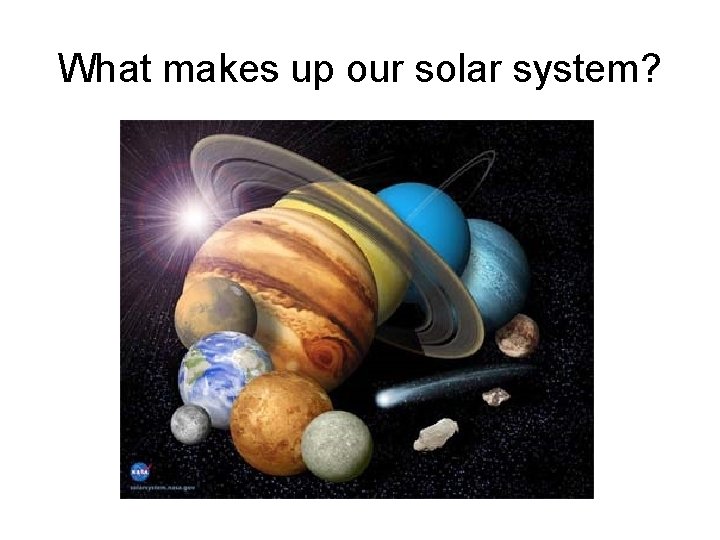
What makes up our solar system?
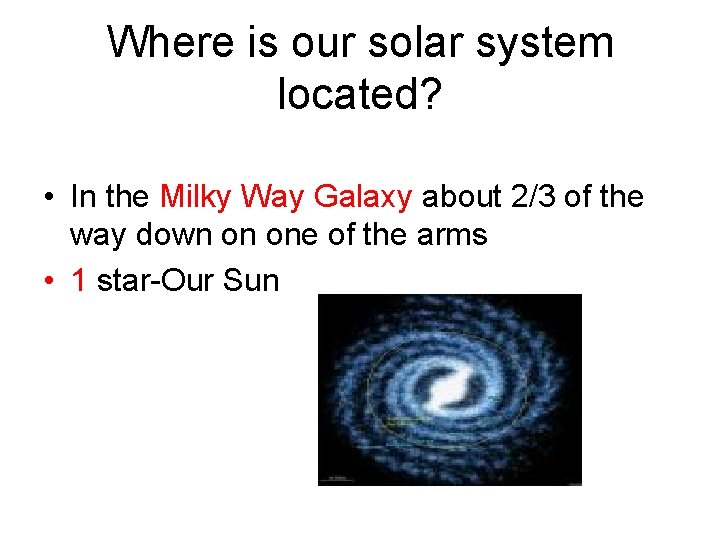
Where is our solar system located? • In the Milky Way Galaxy about 2/3 of the way down on one of the arms • 1 star-Our Sun
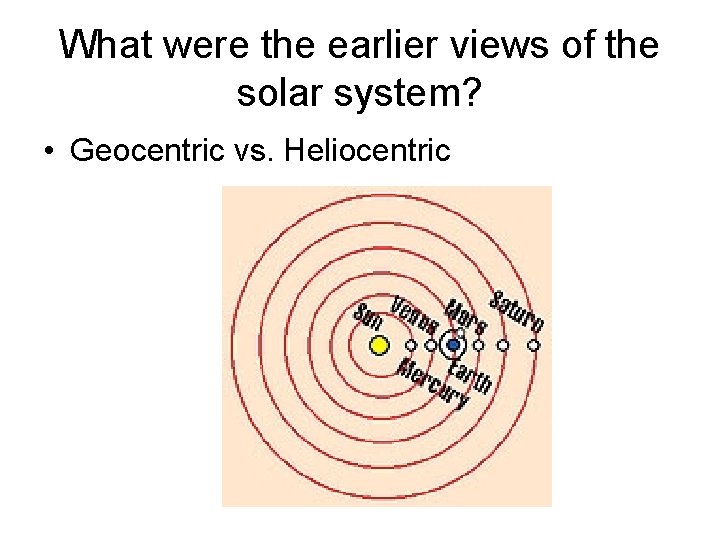
What were the earlier views of the solar system? • Geocentric vs. Heliocentric
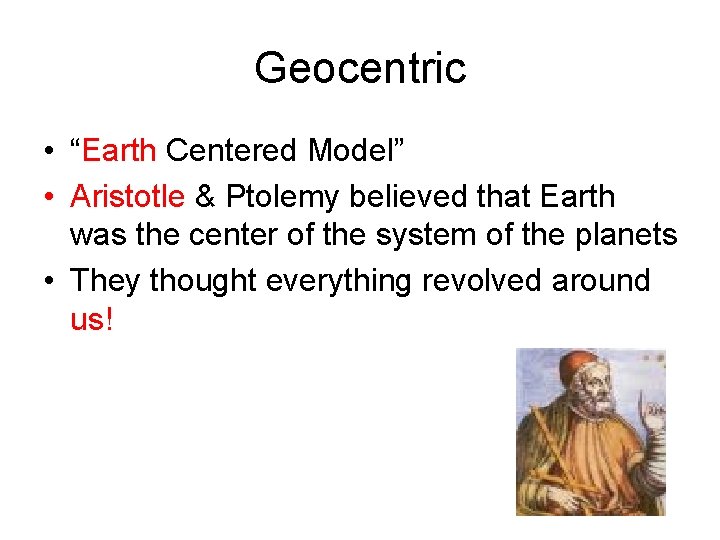
Geocentric • “Earth Centered Model” • Aristotle & Ptolemy believed that Earth was the center of the system of the planets • They thought everything revolved around us!
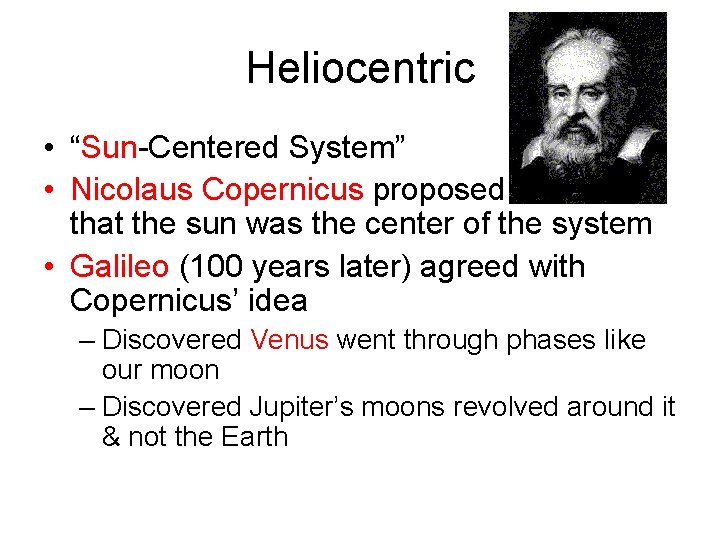
Heliocentric • “Sun-Centered System” • Nicolaus Copernicus proposed the idea of that the sun was the center of the system • Galileo (100 years later) agreed with Copernicus’ idea – Discovered Venus went through phases like our moon – Discovered Jupiter’s moons revolved around it & not the Earth
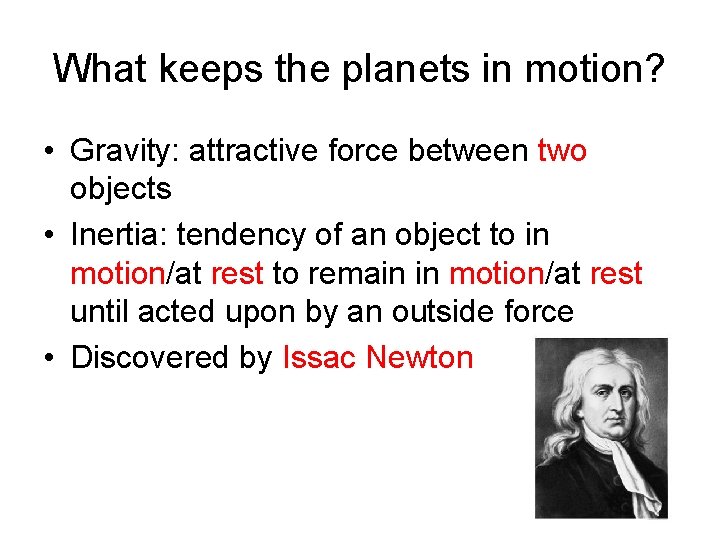
What keeps the planets in motion? • Gravity: attractive force between two objects • Inertia: tendency of an object to in motion/at rest to remain in motion/at rest until acted upon by an outside force • Discovered by Issac Newton
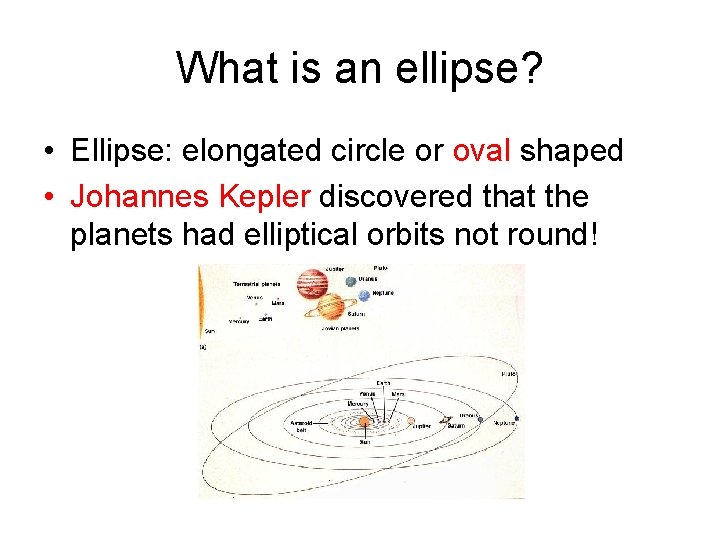
What is an ellipse? • Ellipse: elongated circle or oval shaped • Johannes Kepler discovered that the planets had elliptical orbits not round!
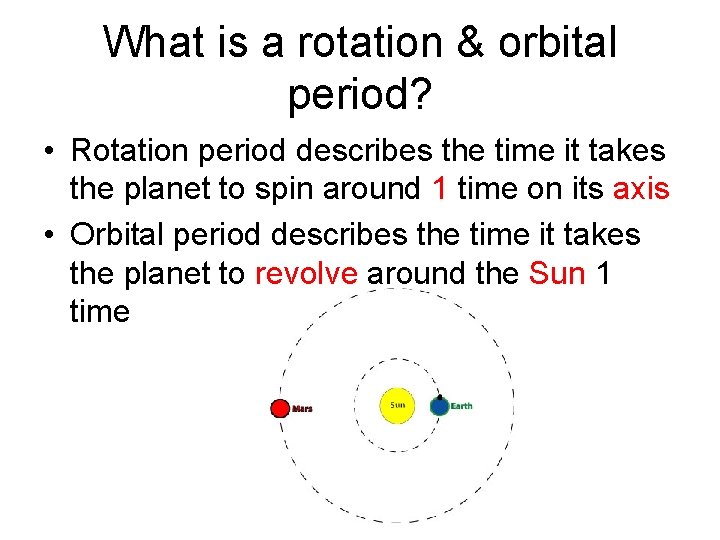
What is a rotation & orbital period? • Rotation period describes the time it takes the planet to spin around 1 time on its axis • Orbital period describes the time it takes the planet to revolve around the Sun 1 time
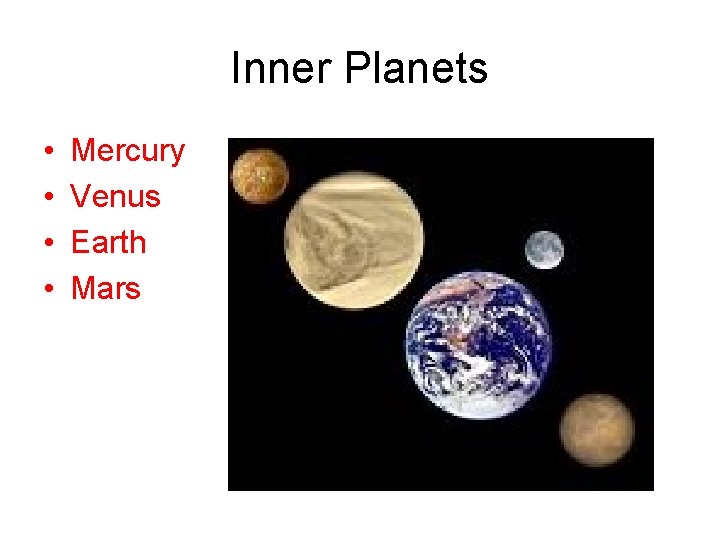
Inner Planets • • Mercury Venus Earth Mars
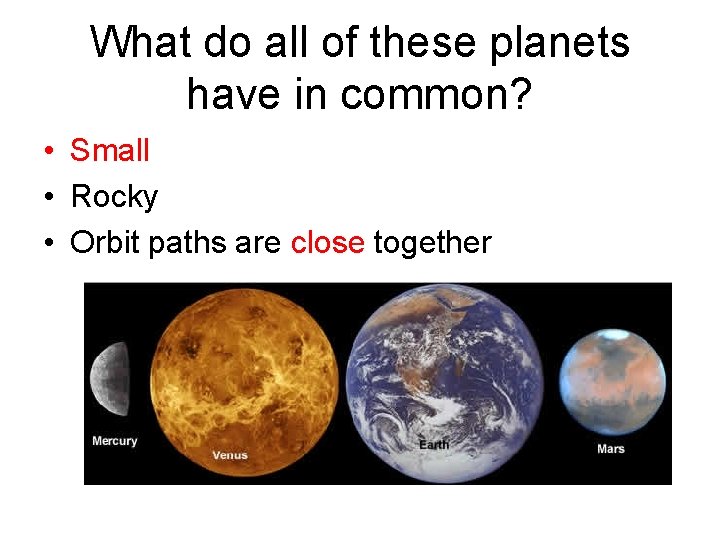
What do all of these planets have in common? • Small • Rocky • Orbit paths are close together
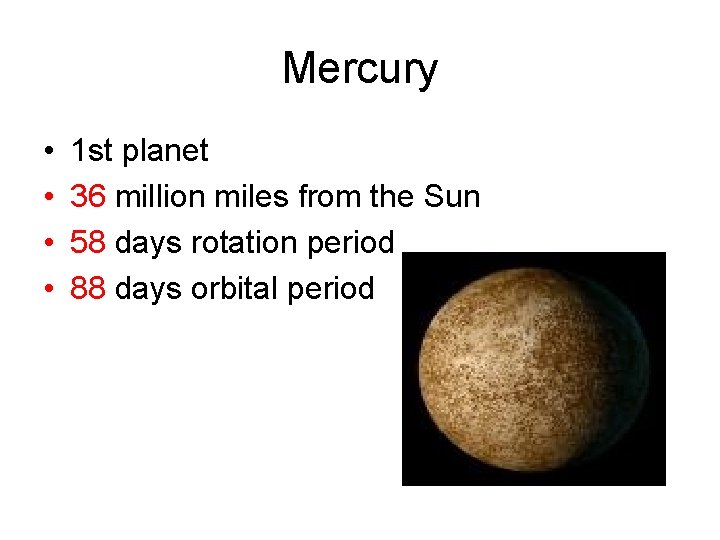
Mercury • • 1 st planet 36 million miles from the Sun 58 days rotation period 88 days orbital period
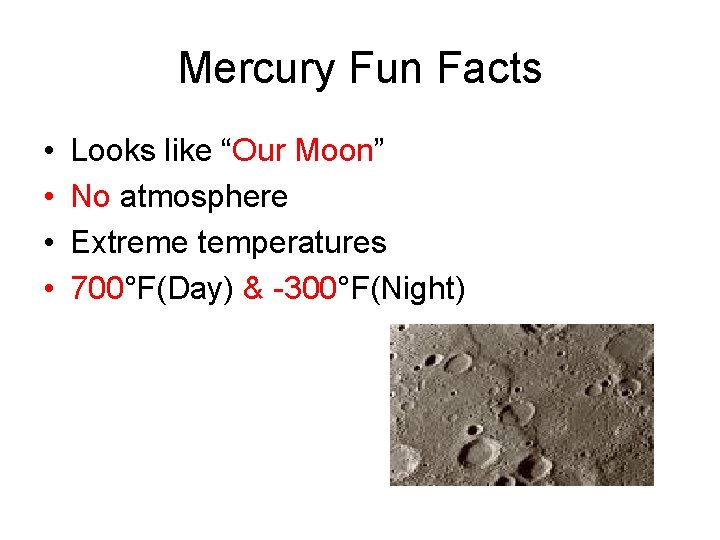
Mercury Fun Facts • • Looks like “Our Moon” No atmosphere Extreme temperatures 700°F(Day) & -300°F(Night)
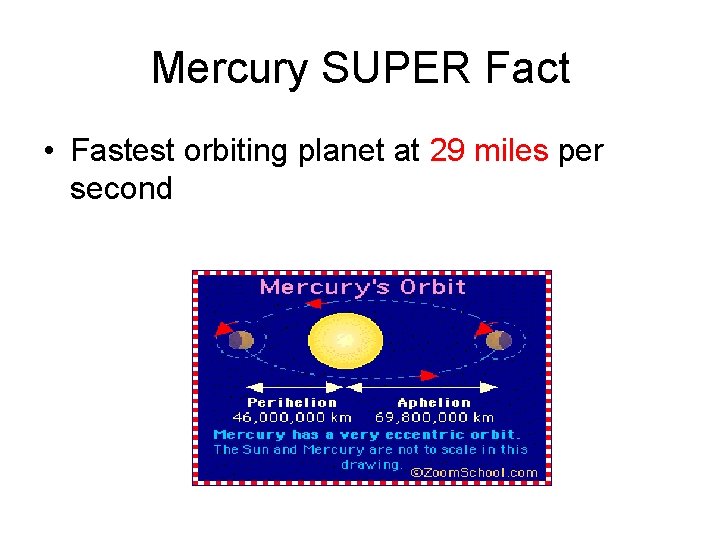
Mercury SUPER Fact • Fastest orbiting planet at 29 miles per second
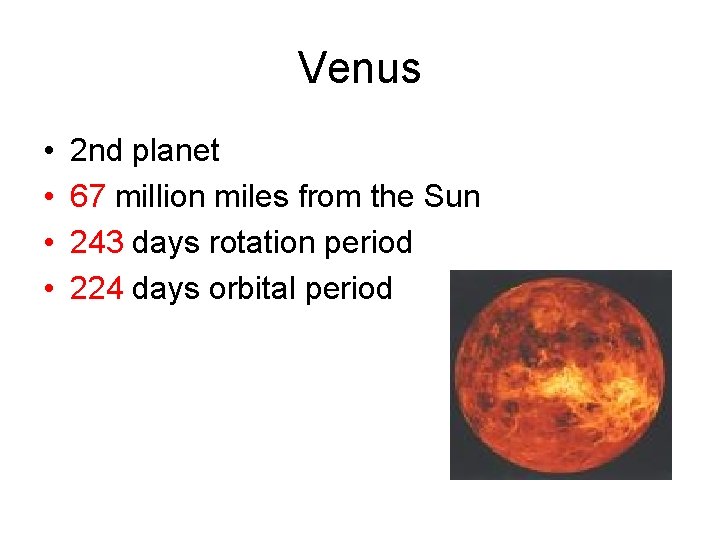
Venus • • 2 nd planet 67 million miles from the Sun 243 days rotation period 224 days orbital period
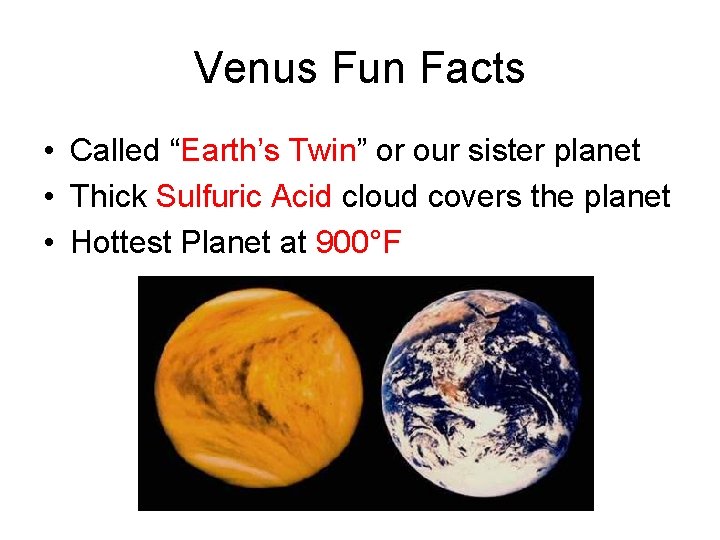
Venus Fun Facts • Called “Earth’s Twin” or our sister planet • Thick Sulfuric Acid cloud covers the planet • Hottest Planet at 900°F
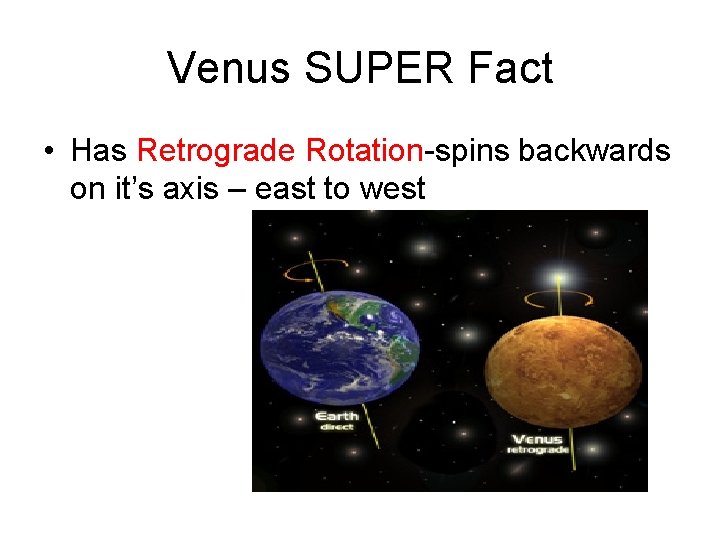
Venus SUPER Fact • Has Retrograde Rotation-spins backwards on it’s axis – east to west
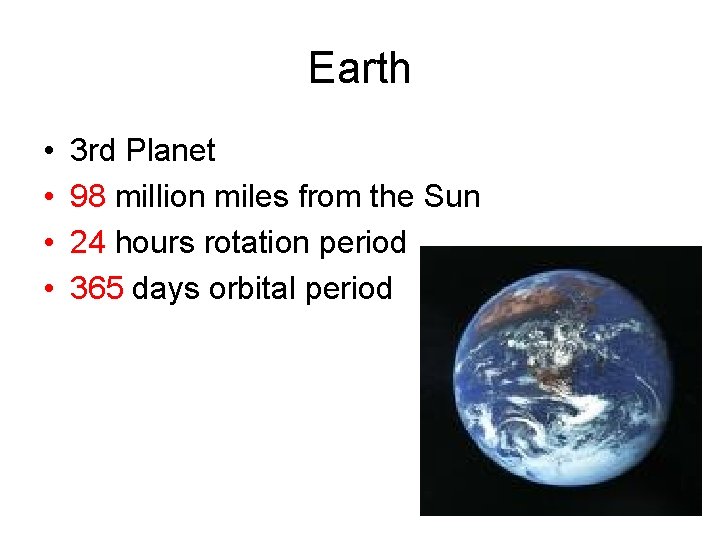
Earth • • 3 rd Planet 98 million miles from the Sun 24 hours rotation period 365 days orbital period
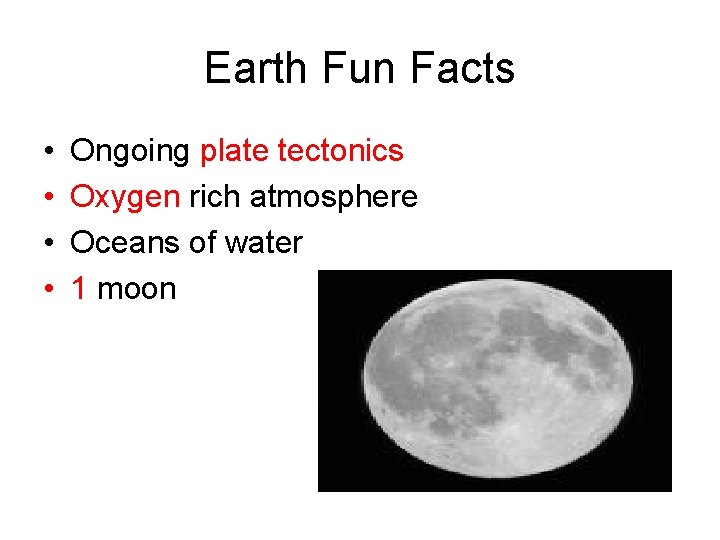
Earth Fun Facts • • Ongoing plate tectonics Oxygen rich atmosphere Oceans of water 1 moon
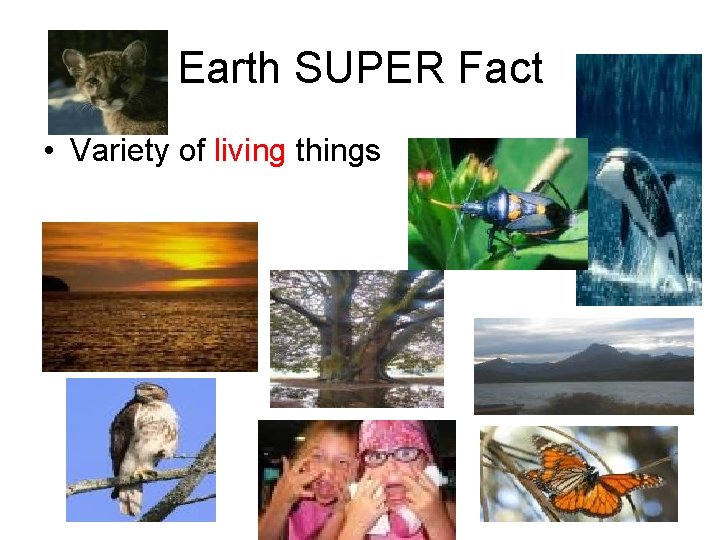
Earth SUPER Fact • Variety of living things
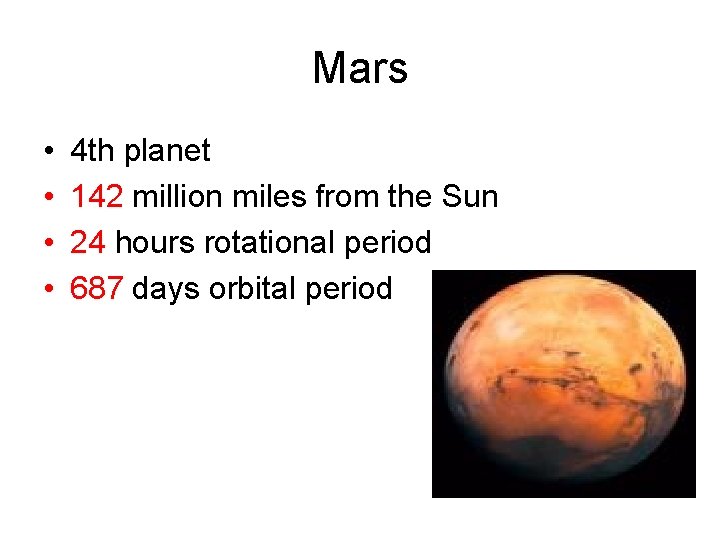
Mars • • 4 th planet 142 million miles from the Sun 24 hours rotational period 687 days orbital period
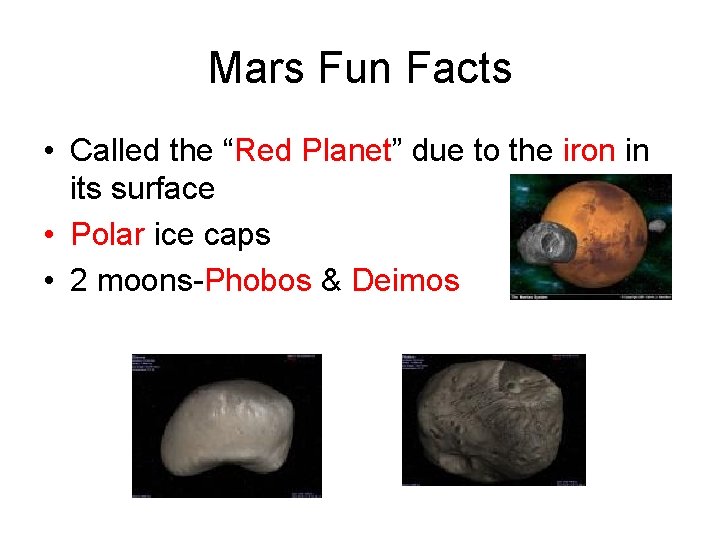
Mars Fun Facts • Called the “Red Planet” due to the iron in its surface • Polar ice caps • 2 moons-Phobos & Deimos
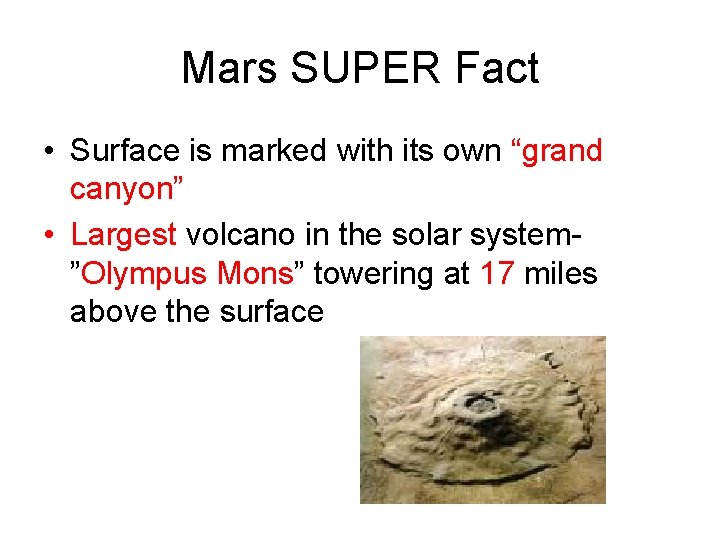
Mars SUPER Fact • Surface is marked with its own “grand canyon” • Largest volcano in the solar system”Olympus Mons” towering at 17 miles above the surface
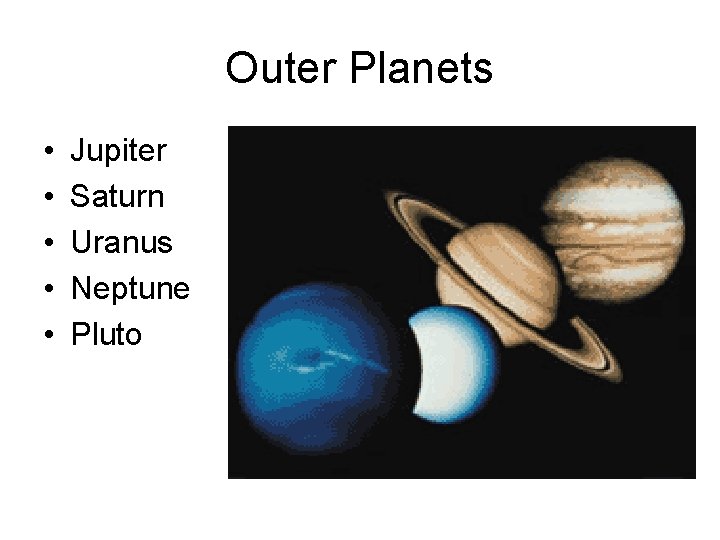
Outer Planets • • • Jupiter Saturn Uranus Neptune Pluto
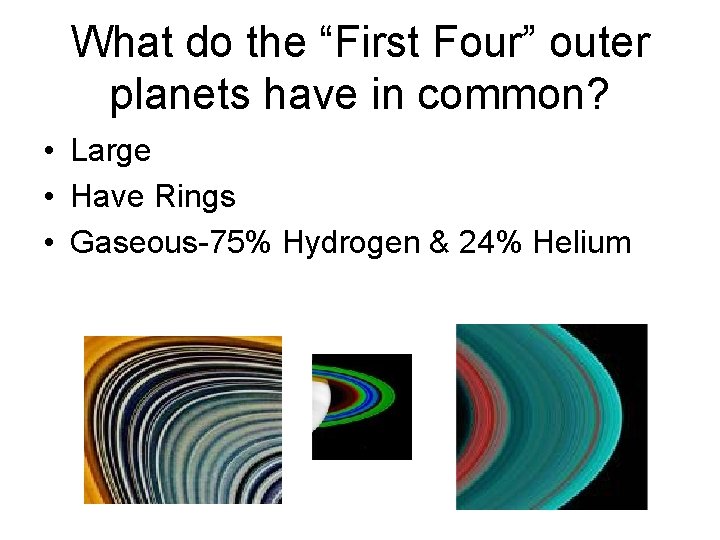
What do the “First Four” outer planets have in common? • Large • Have Rings • Gaseous-75% Hydrogen & 24% Helium
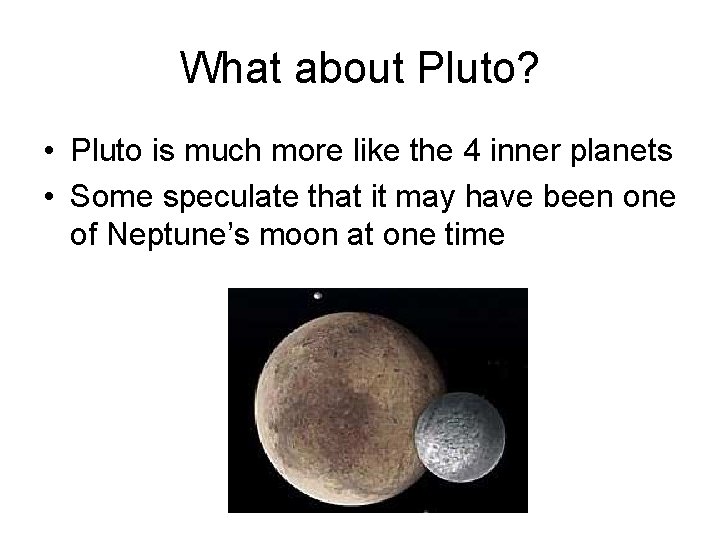
What about Pluto? • Pluto is much more like the 4 inner planets • Some speculate that it may have been one of Neptune’s moon at one time
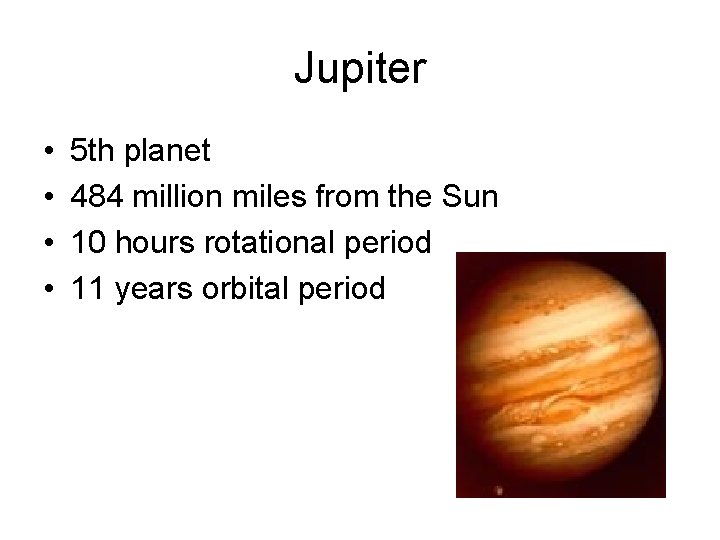
Jupiter • • 5 th planet 484 million miles from the Sun 10 hours rotational period 11 years orbital period
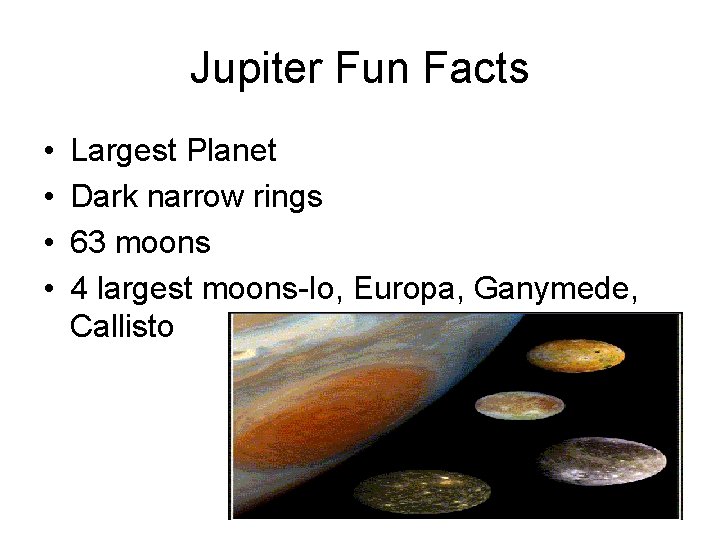
Jupiter Fun Facts • • Largest Planet Dark narrow rings 63 moons 4 largest moons-Io, Europa, Ganymede, Callisto
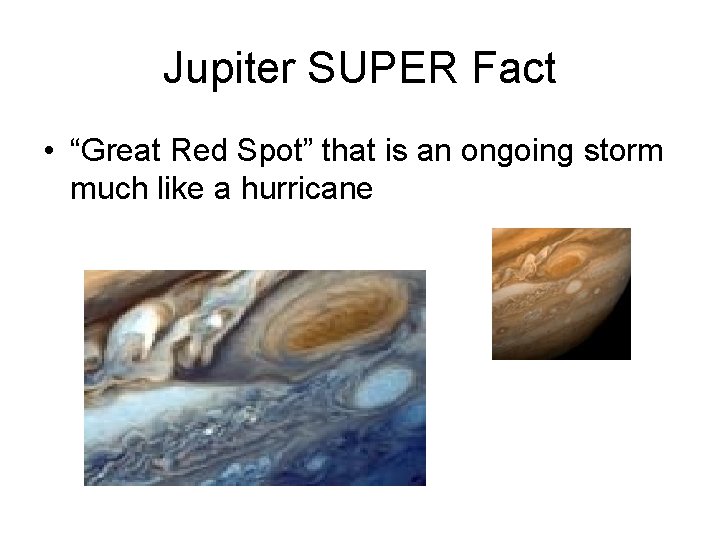
Jupiter SUPER Fact • “Great Red Spot” that is an ongoing storm much like a hurricane
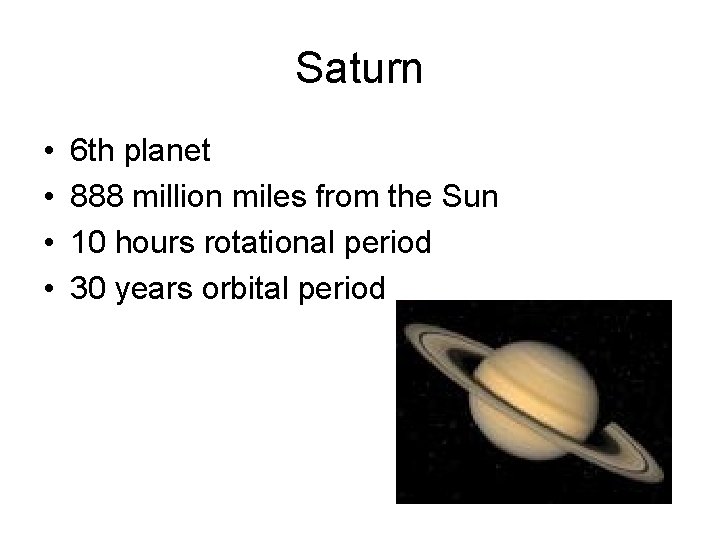
Saturn • • 6 th planet 888 million miles from the Sun 10 hours rotational period 30 years orbital period
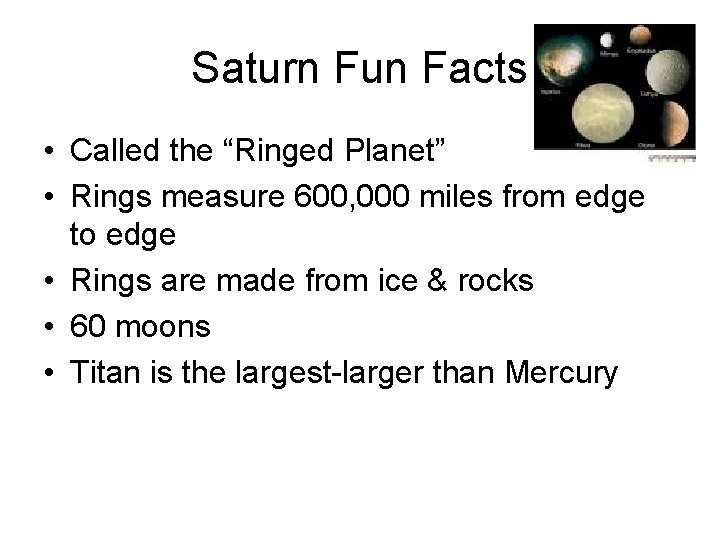
Saturn Fun Facts • Called the “Ringed Planet” • Rings measure 600, 000 miles from edge to edge • Rings are made from ice & rocks • 60 moons • Titan is the largest-larger than Mercury
Saturn SUPER Fact • It floats! It’s density is actually lower than water! If we could place Saturn in water…it would float!
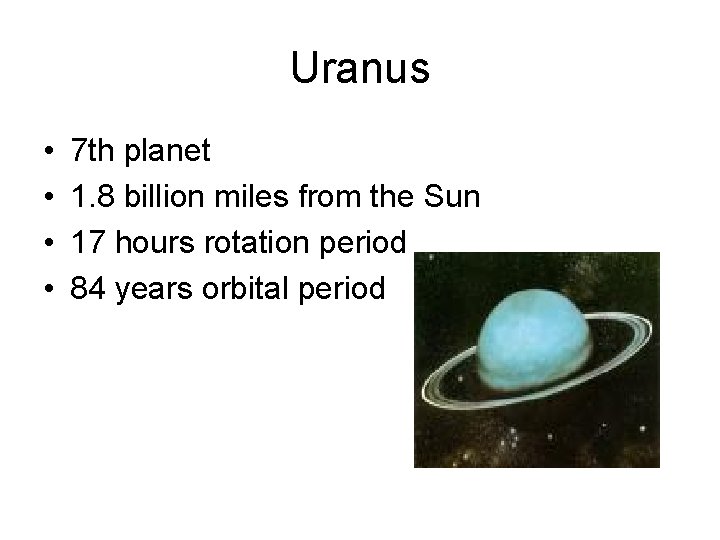
Uranus • • 7 th planet 1. 8 billion miles from the Sun 17 hours rotation period 84 years orbital period
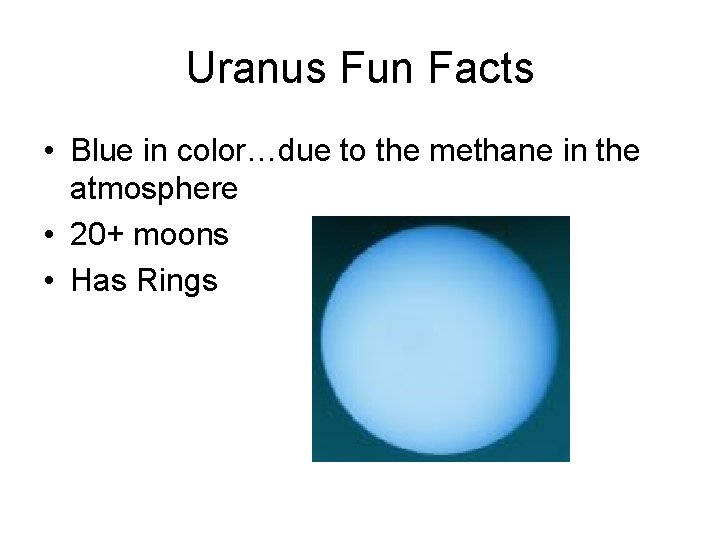
Uranus Fun Facts • Blue in color…due to the methane in the atmosphere • 20+ moons • Has Rings
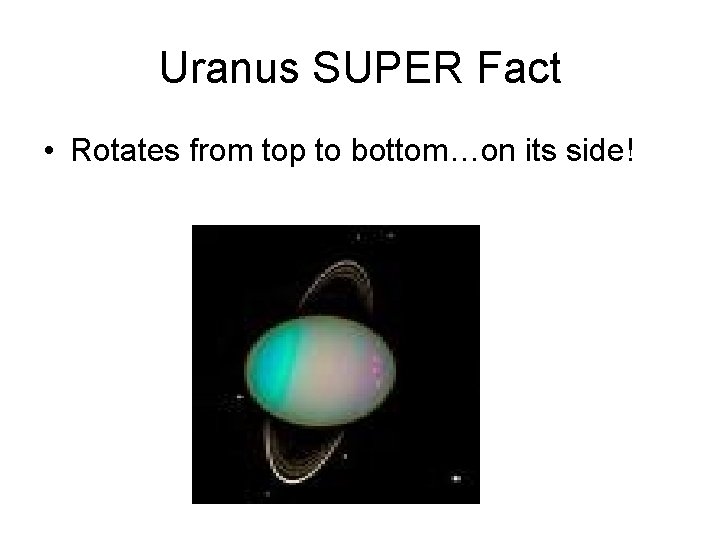
Uranus SUPER Fact • Rotates from top to bottom…on its side!
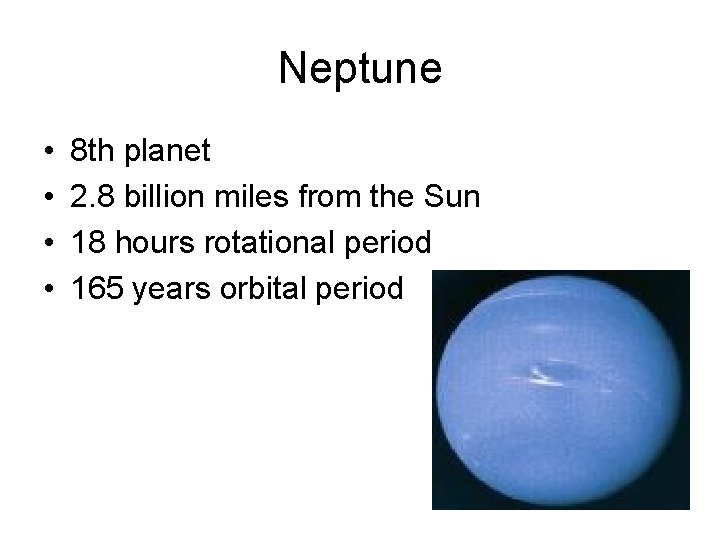
Neptune • • 8 th planet 2. 8 billion miles from the Sun 18 hours rotational period 165 years orbital period
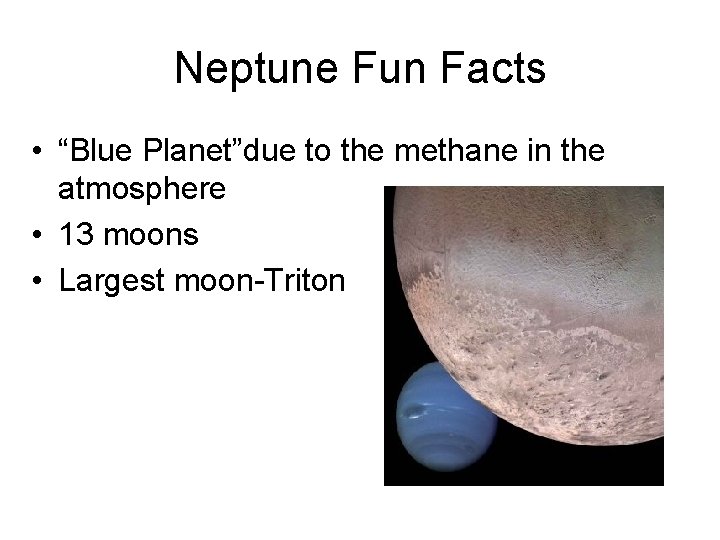
Neptune Fun Facts • “Blue Planet”due to the methane in the atmosphere • 13 moons • Largest moon-Triton
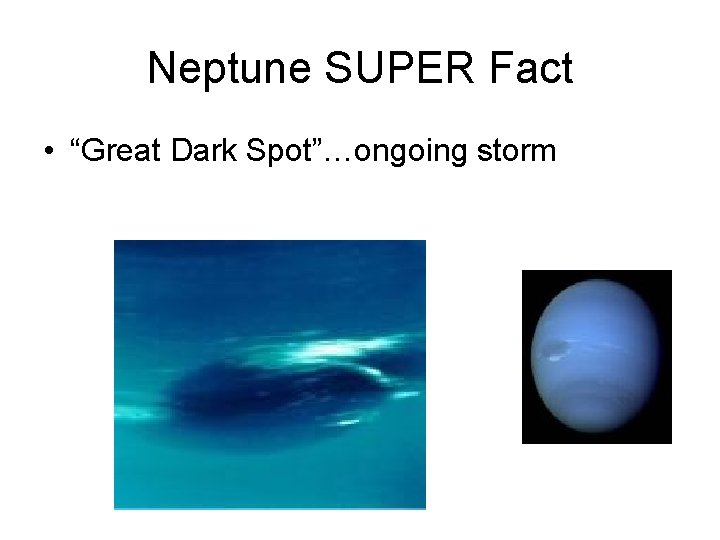
Neptune SUPER Fact • “Great Dark Spot”…ongoing storm
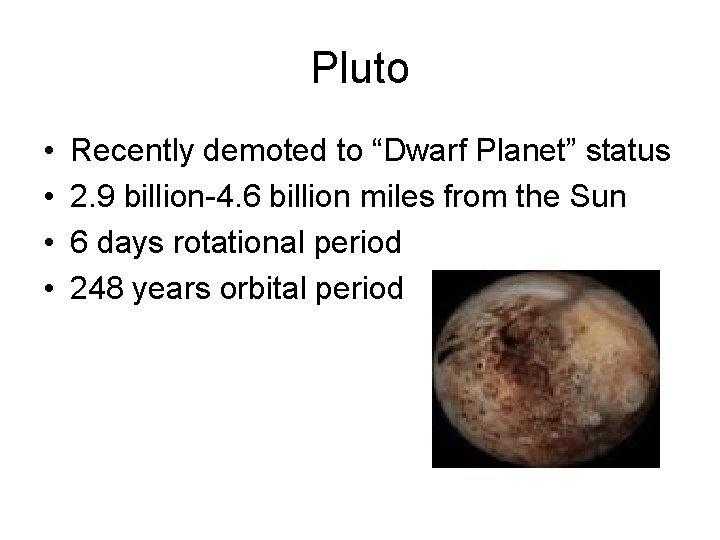
Pluto • • Recently demoted to “Dwarf Planet” status 2. 9 billion-4. 6 billion miles from the Sun 6 days rotational period 248 years orbital period
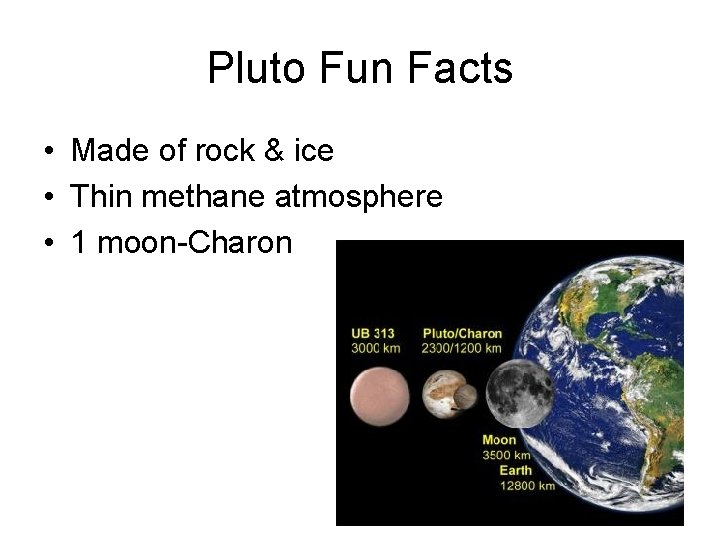
Pluto Fun Facts • Made of rock & ice • Thin methane atmosphere • 1 moon-Charon
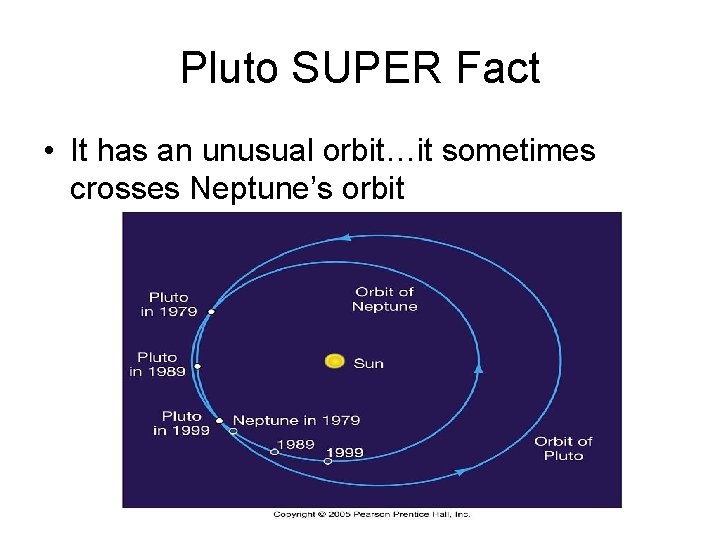
Pluto SUPER Fact • It has an unusual orbit…it sometimes crosses Neptune’s orbit
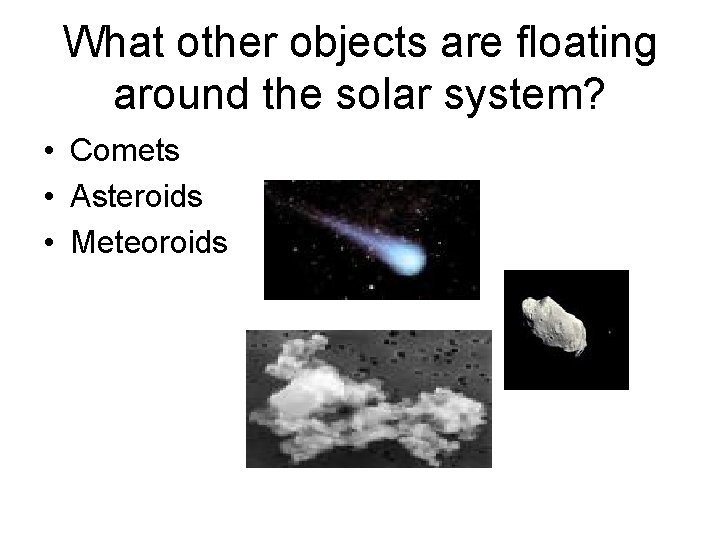
What other objects are floating around the solar system? • Comets • Asteroids • Meteoroids
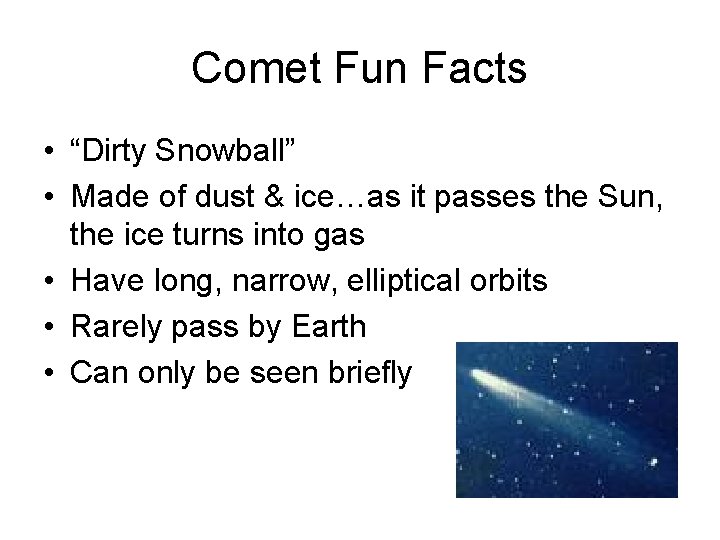
Comet Fun Facts • “Dirty Snowball” • Made of dust & ice…as it passes the Sun, the ice turns into gas • Have long, narrow, elliptical orbits • Rarely pass by Earth • Can only be seen briefly
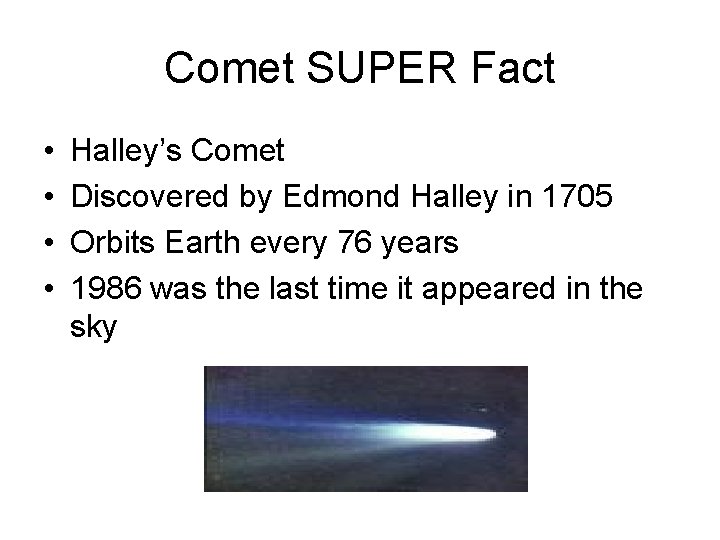
Comet SUPER Fact • • Halley’s Comet Discovered by Edmond Halley in 1705 Orbits Earth every 76 years 1986 was the last time it appeared in the sky
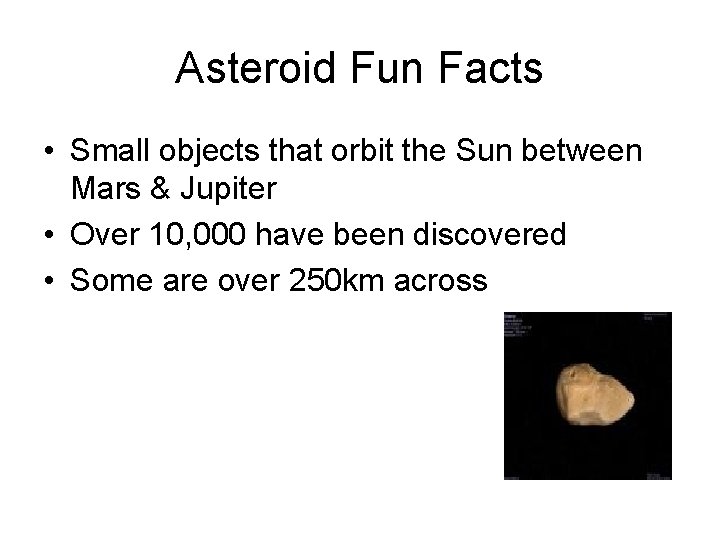
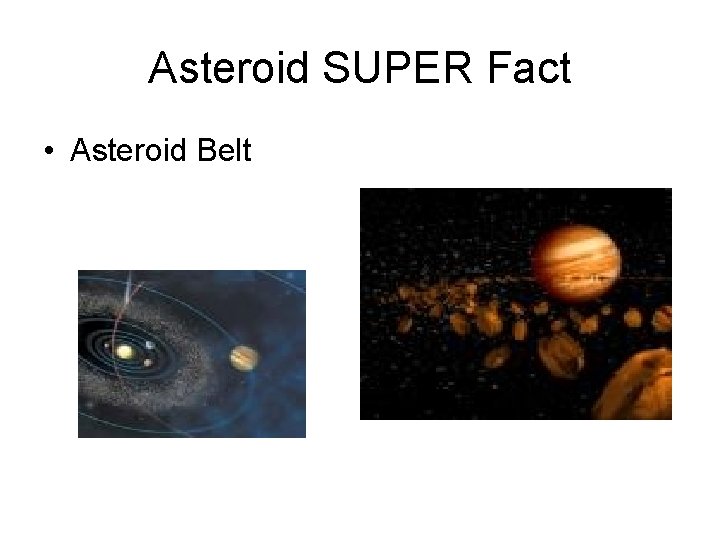
Asteroid Fun Facts • Small objects that orbit the Sun between Mars & Jupiter • Over 10, 000 have been discovered • Some are over 250 km across
Asteroid SUPER Fact • Asteroid Belt
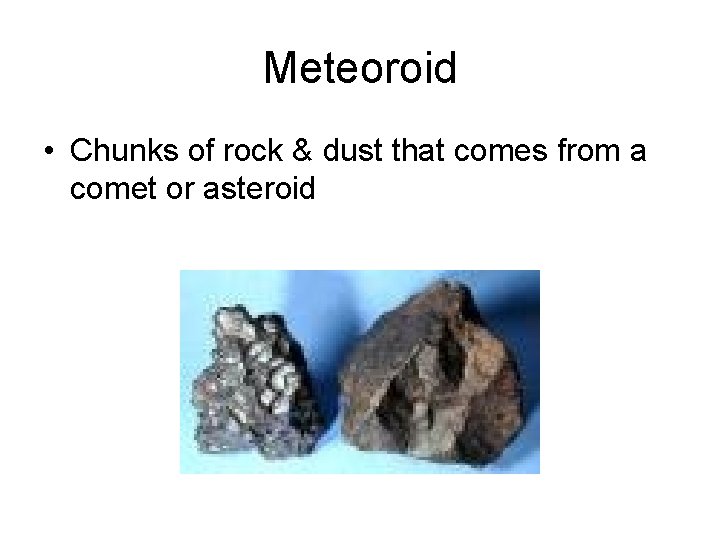
Meteoroid • Chunks of rock & dust that comes from a comet or asteroid
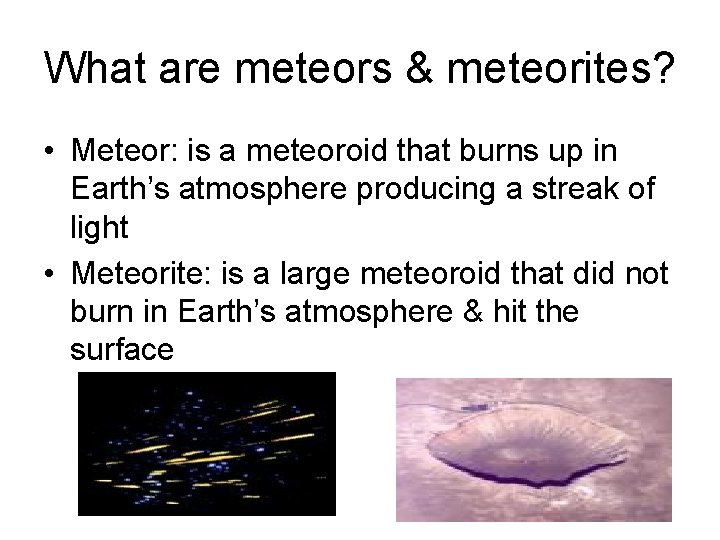
What are meteors & meteorites? • Meteor: is a meteoroid that burns up in Earth’s atmosphere producing a streak of light • Meteorite: is a large meteoroid that did not burn in Earth’s atmosphere & hit the surface