
What Makes Good Writing Good question Good Writing
- Slides: 15
What Makes Good Writing? (Good question…)
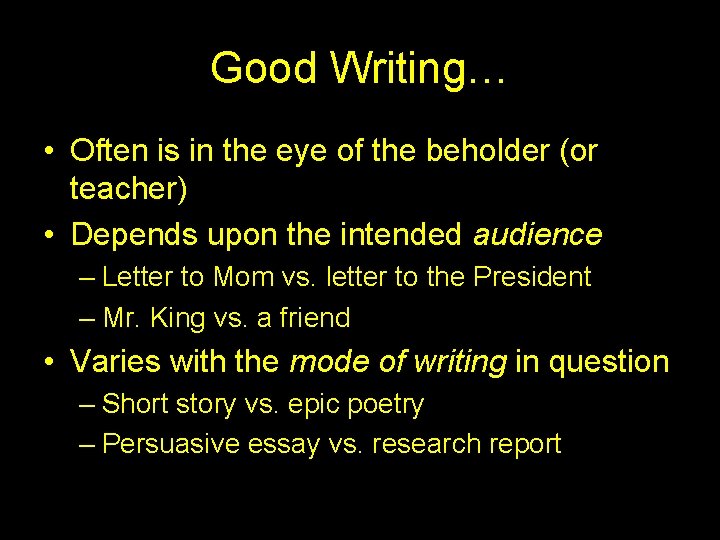
Good Writing… • Often is in the eye of the beholder (or teacher) • Depends upon the intended audience – Letter to Mom vs. letter to the President – Mr. King vs. a friend • Varies with the mode of writing in question – Short story vs. epic poetry – Persuasive essay vs. research report
In short: There as many definitions of “good” writing as there are forms of writing Frustrating, huh?
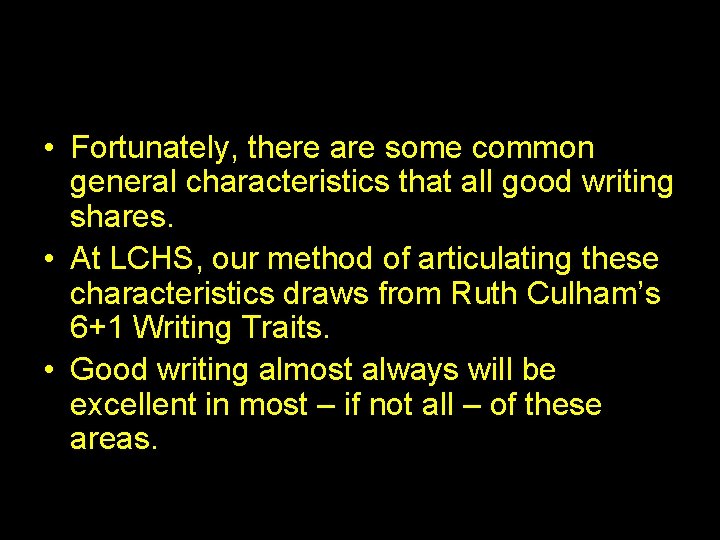
• Fortunately, there are some common general characteristics that all good writing shares. • At LCHS, our method of articulating these characteristics draws from Ruth Culham’s 6+1 Writing Traits. • Good writing almost always will be excellent in most – if not all – of these areas.
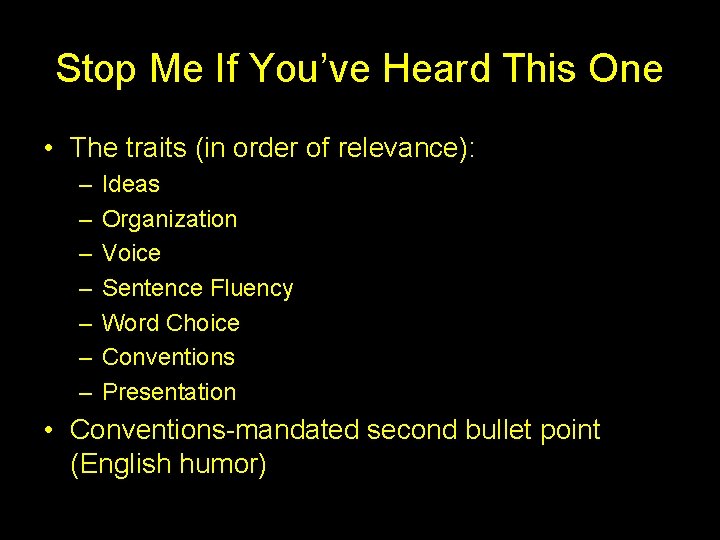
Stop Me If You’ve Heard This One • The traits (in order of relevance): – – – – Ideas Organization Voice Sentence Fluency Word Choice Conventions Presentation • Conventions-mandated second bullet point (English humor)
Ideas • The focal point of writing – why read if the work has nothing to say? • Not necessarily something earth-shatteringly original (though originality is good) • Consistency of ideas also important – everything said should contribute to the overarching idea or theme of the work
Organization • Content should “flow” in a logical manner • Structured conversation, not rambling • Manner of organization should contribute to the overall aim of the work
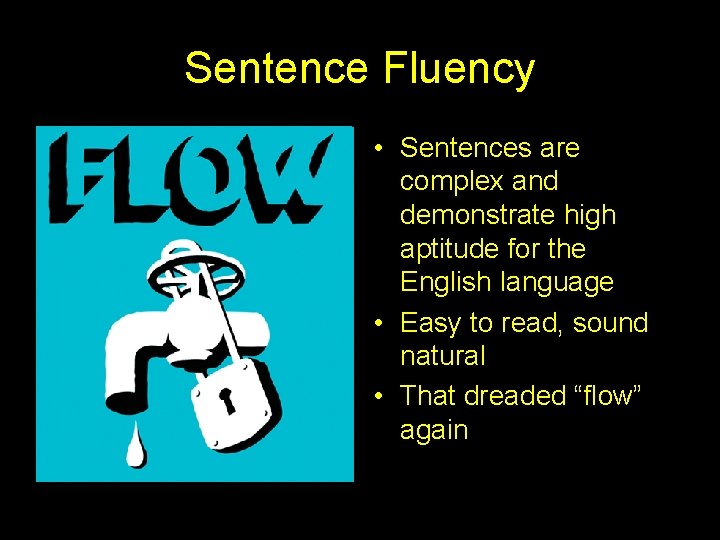
What the Heck is “Flow, ” Anyway? • English types like metaphors, and writing terms are no exception • In basic terms, flow is a logical, sequential progression of ideas (i. e. getting from point A to point B smoothly) • Writing that flows well doesn’t have to sound pretty, but it can.
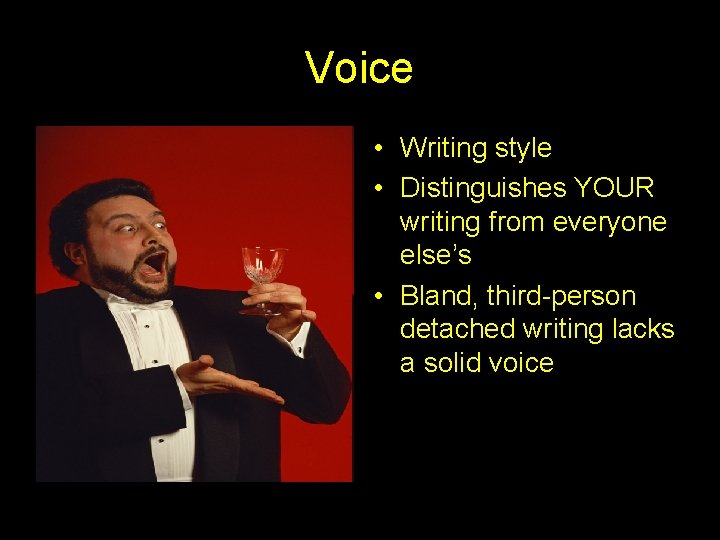
Voice • Writing style • Distinguishes YOUR writing from everyone else’s • Bland, third-person detached writing lacks a solid voice
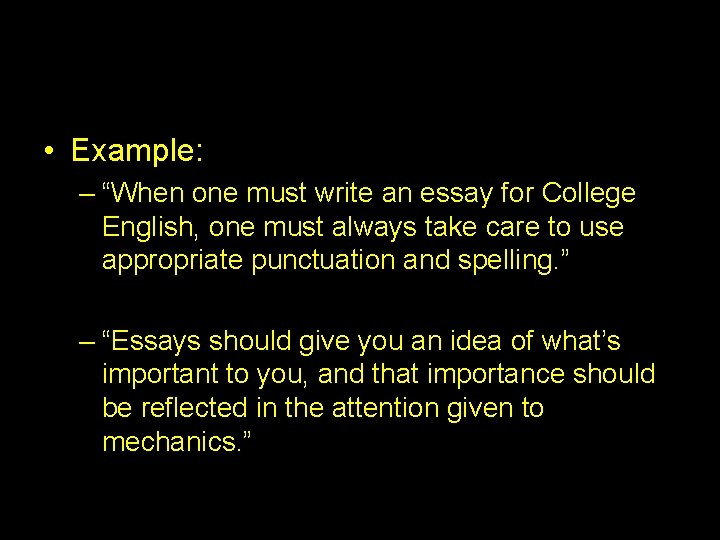
• Example: – “When one must write an essay for College English, one must always take care to use appropriate punctuation and spelling. ” – “Essays should give you an idea of what’s important to you, and that importance should be reflected in the attention given to mechanics. ”
Sentence Fluency • Sentences are complex and demonstrate high aptitude for the English language • Easy to read, sound natural • That dreaded “flow” again
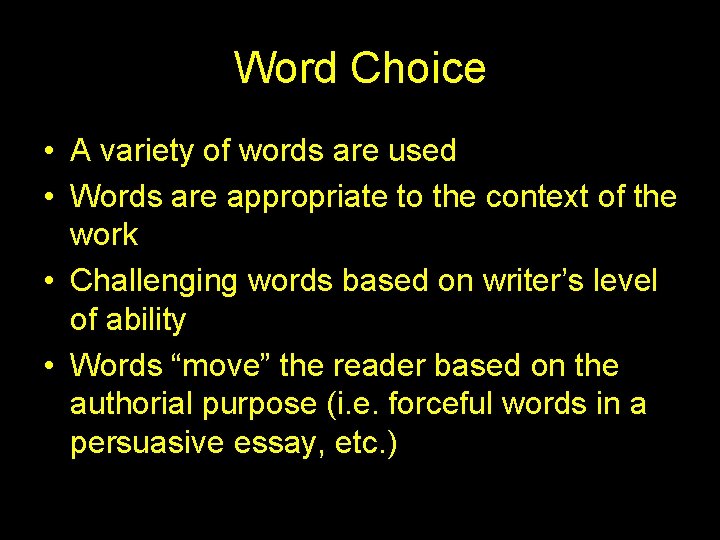
Word Choice • A variety of words are used • Words are appropriate to the context of the work • Challenging words based on writer’s level of ability • Words “move” the reader based on the authorial purpose (i. e. forceful words in a persuasive essay, etc. )
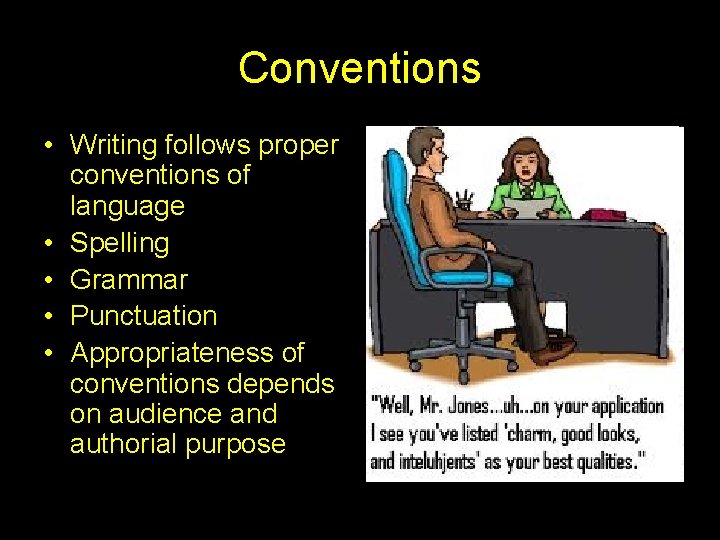
Conventions • Writing follows proper conventions of language • Spelling • Grammar • Punctuation • Appropriateness of conventions depends on audience and authorial purpose
Presentation • Make it look GOOD! • Follow formatting guidelines of publication or instructor • Looks aren’t everything, but they are important
Any Questions?