
What Makes a Good Team Dr Aaron Mc
- Slides: 11
What Makes a Good Team? Dr Aaron Mc. Manus ST 2 GP Ai. T
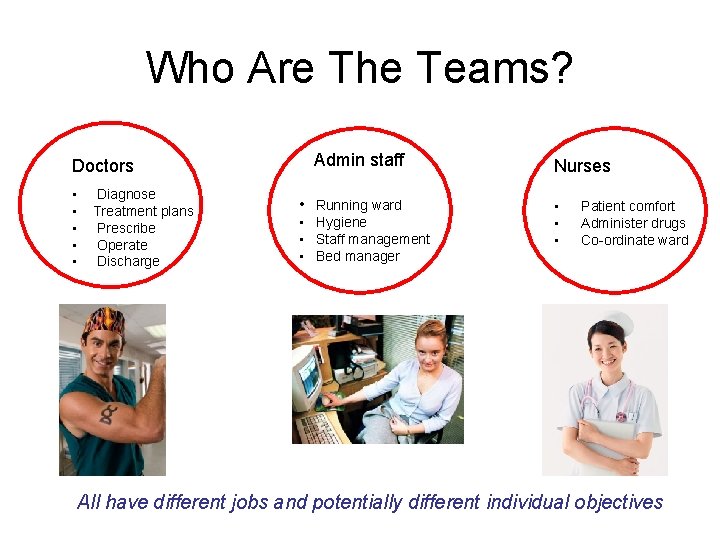
Who Are The Teams? Admin staff Doctors • • • Diagnose Treatment plans Prescribe Operate Discharge • Running ward • Hygiene • Staff management • Bed manager Nurses • • • Patient comfort Administer drugs Co-ordinate ward All have different jobs and potentially different individual objectives
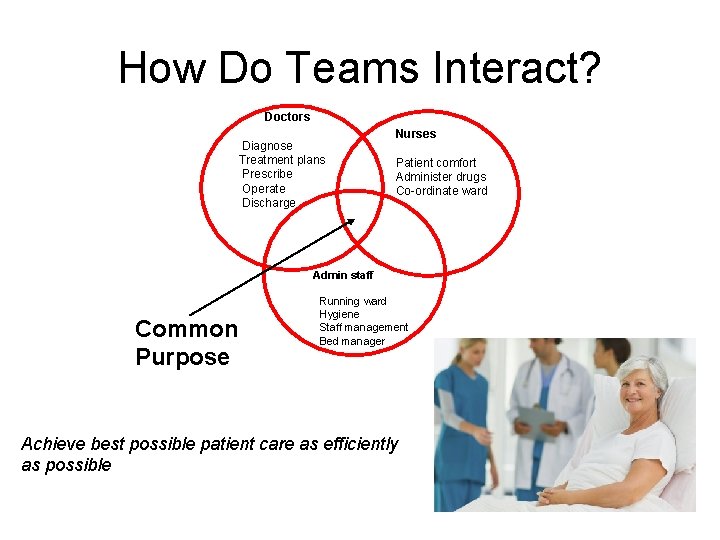
How Do Teams Interact? Doctors Diagnose Treatment plans Prescribe Operate Discharge Nurses Patient comfort Administer drugs Co-ordinate ward Admin staff Common Purpose Running ward Hygiene Staff management Bed manager Achieve best possible patient care as efficiently as possible
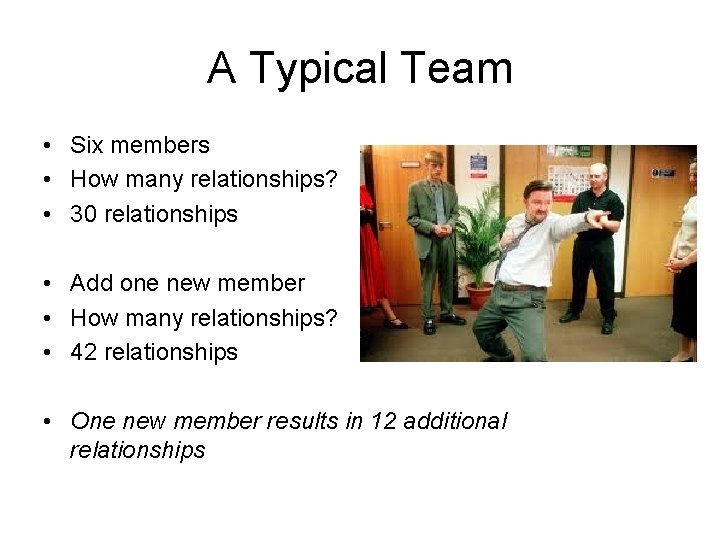
A Typical Team • Six members • How many relationships? • 30 relationships • Add one new member • How many relationships? • 42 relationships • One new member results in 12 additional relationships
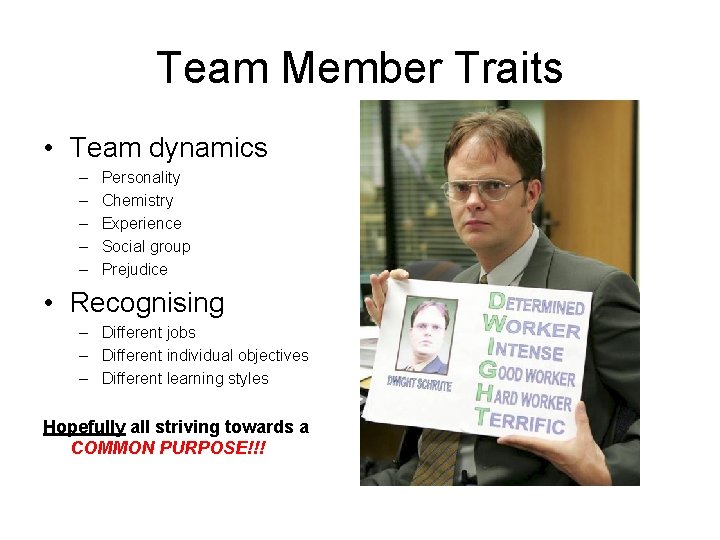
Team Member Traits • Team dynamics – – – Personality Chemistry Experience Social group Prejudice • Recognising – Different jobs – Different individual objectives – Different learning styles Hopefully all striving towards a COMMON PURPOSE!!!
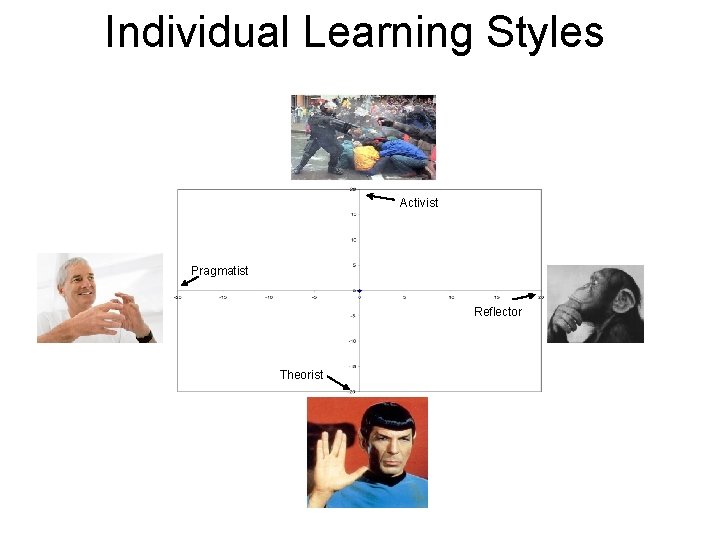
Individual Learning Styles Activist Pragmatist Reflector Theorist
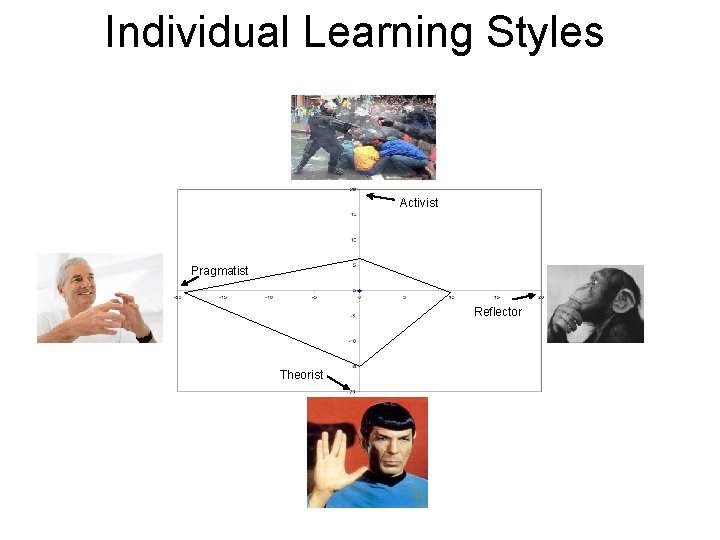
Individual Learning Styles Activist Pragmatist Reflector Theorist
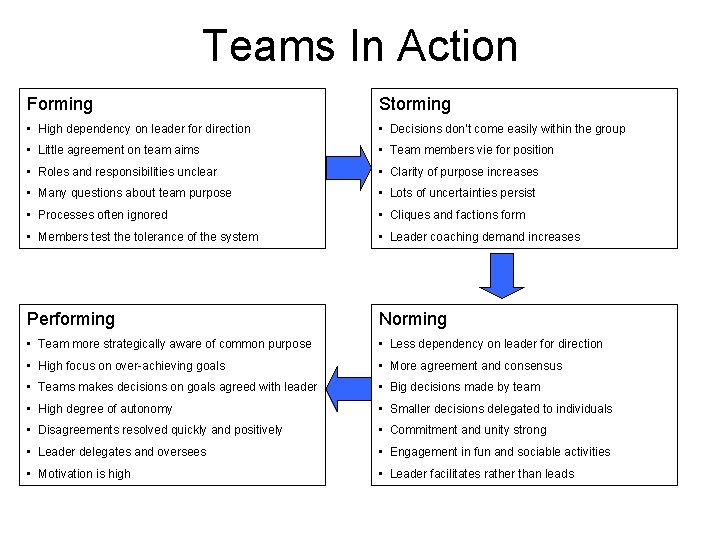
Teams In Action Forming Storming • High dependency on leader for direction • Decisions don’t come easily within the group • Little agreement on team aims • Team members vie for position • Roles and responsibilities unclear • Clarity of purpose increases • Many questions about team purpose • Lots of uncertainties persist • Processes often ignored • Cliques and factions form • Members test the tolerance of the system • Leader coaching demand increases Performing Norming • Team more strategically aware of common purpose • Less dependency on leader for direction • High focus on over-achieving goals • More agreement and consensus • Teams makes decisions on goals agreed with leader • Big decisions made by team • High degree of autonomy • Smaller decisions delegated to individuals • Disagreements resolved quickly and positively • Commitment and unity strong • Leader delegates and oversees • Engagement in fun and sociable activities • Motivation is high • Leader facilitates rather than leads
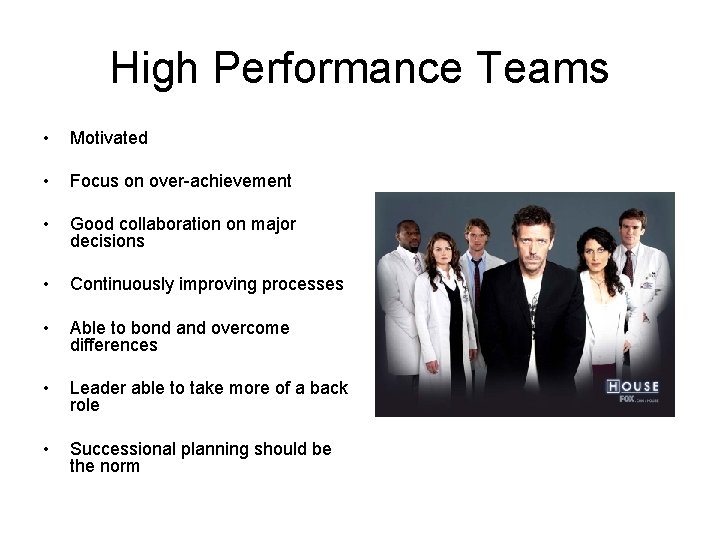
High Performance Teams • Motivated • Focus on over-achievement • Good collaboration on major decisions • Continuously improving processes • Able to bond and overcome differences • Leader able to take more of a back role • Successional planning should be the norm
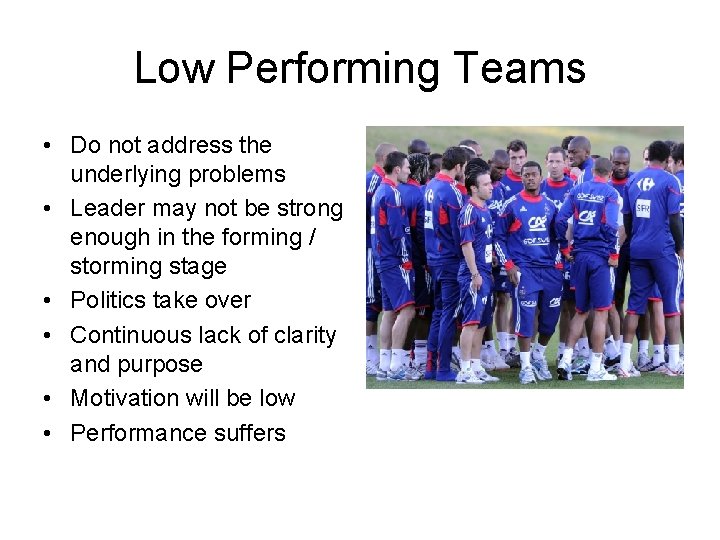
Low Performing Teams • Do not address the underlying problems • Leader may not be strong enough in the forming / storming stage • Politics take over • Continuous lack of clarity and purpose • Motivation will be low • Performance suffers
Thank You Any questions?