
What Makes a Crime Ch 4 Lesson 1

![Activity: Case Study Textbook pg. 109 R. v. Molodowic [2000] “Does mental illness nullify](https://slidetodoc.com/presentation_image_h2/a0c4dd7aa96a8a6fbe4c25de40606427/image-11.jpg "Activity: Case Study Textbook pg. 109 R. v. Molodowic [2000] “Does mental illness nullify")
- Slides: 11
What Makes a Crime? Ch. 4 Lesson 1
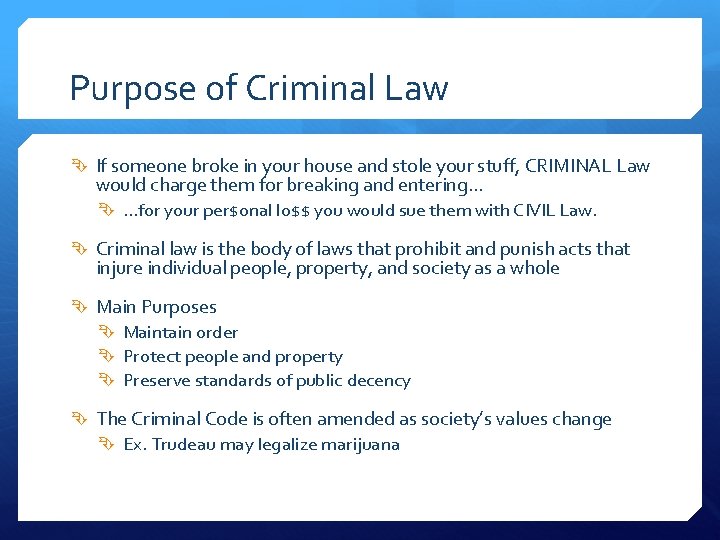
Purpose of Criminal Law If someone broke in your house and stole your stuff, CRIMINAL Law would charge them for breaking and entering… …for your per$onal lo$$ you would sue them with CIVIL Law. Criminal law is the body of laws that prohibit and punish acts that injure individual people, property, and society as a whole Main Purposes Maintain order Protect people and property Preserve standards of public decency The Criminal Code is often amended as society’s values change Ex. Trudeau may legalize marijuana
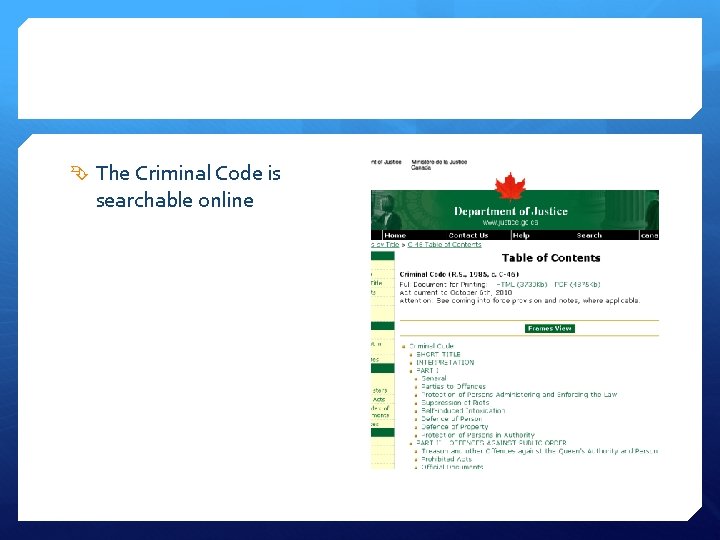
The Criminal Code is searchable online
ex. Criminal Code section 348 (don’t record) Why are the punishments different for houses or stores?
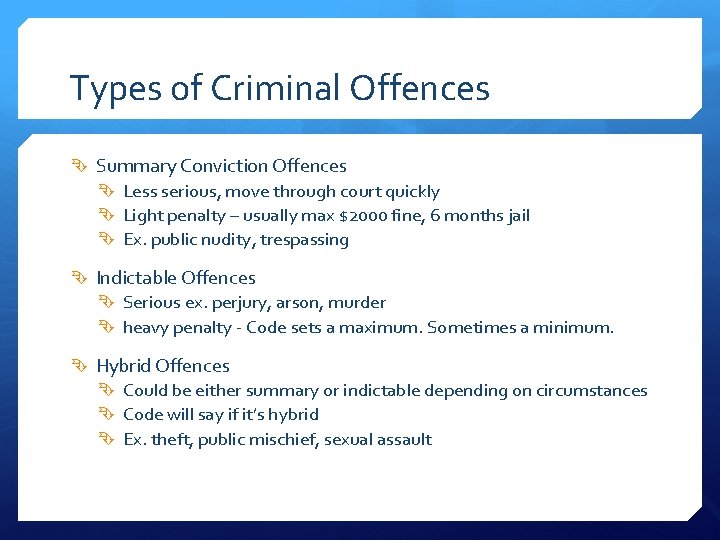
Types of Criminal Offences Summary Conviction Offences Less serious, move through court quickly Light penalty – usually max $2000 fine, 6 months jail Ex. public nudity, trespassing Indictable Offences Serious ex. perjury, arson, murder heavy penalty - Code sets a maximum. Sometimes a minimum. Hybrid Offences Could be either summary or indictable depending on circumstances Code will say if it’s hybrid Ex. theft, public mischief, sexual assault
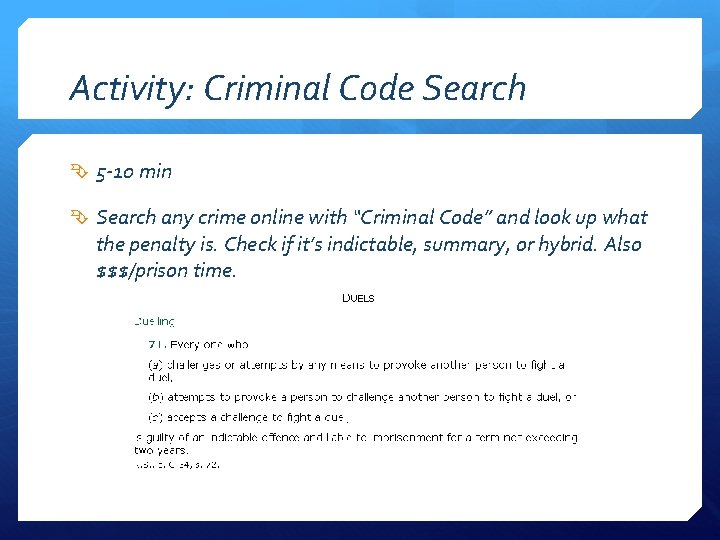
Activity: Criminal Code Search 5 -10 min Search any crime online with “Criminal Code” and look up what the penalty is. Check if it’s indictable, summary, or hybrid. Also $$$/prison time.
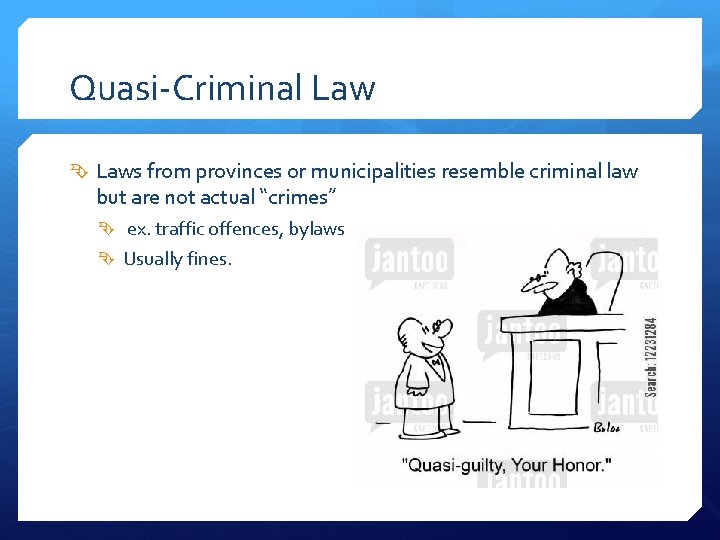
Quasi-Criminal Laws from provinces or municipalities resemble criminal law but are not actual “crimes” ex. traffic offences, bylaws Usually fines.
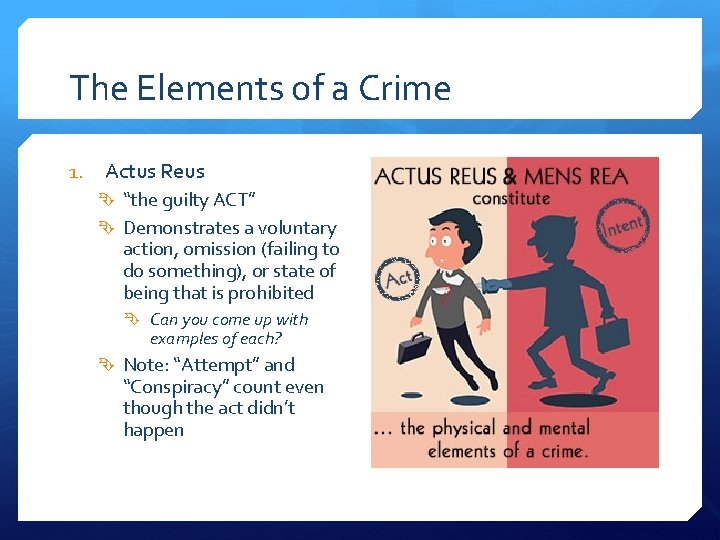
The Elements of a Crime 1. Actus Reus “the guilty ACT” Demonstrates a voluntary action, omission (failing to do something), or state of being that is prohibited Can you come up with examples of each? Note: “Attempt” and “Conspiracy” count even though the act didn’t happen
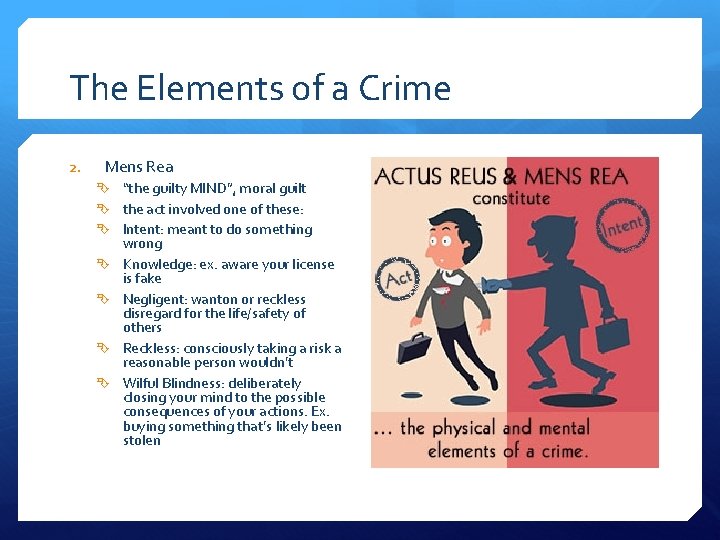
The Elements of a Crime 2. Mens Rea “the guilty MIND”, moral guilt the act involved one of these: Intent: meant to do something wrong Knowledge: ex. aware your license is fake Negligent: wanton or reckless disregard for the life/safety of others Reckless: consciously taking a risk a reasonable person wouldn’t Wilful Blindness: deliberately closing your mind to the possible consequences of your actions. Ex. buying something that’s likely been stolen
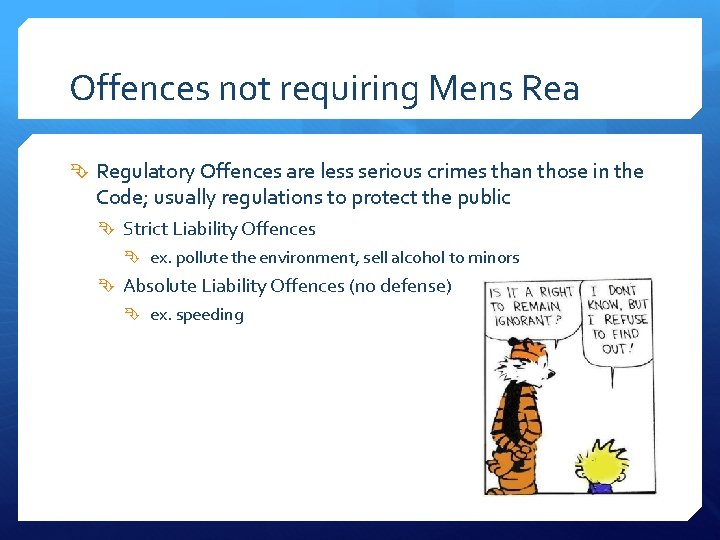
Offences not requiring Mens Rea Regulatory Offences are less serious crimes than those in the Code; usually regulations to protect the public Strict Liability Offences ex. pollute the environment, sell alcohol to minors Absolute Liability Offences (no defense) ex. speeding
Activity: Case Study Textbook pg. 109 R. v. Molodowic [2000] “Does mental illness nullify criminal responsibility? ”