
What macromolecule carries genetic information Agenda for 1
- Slides: 20
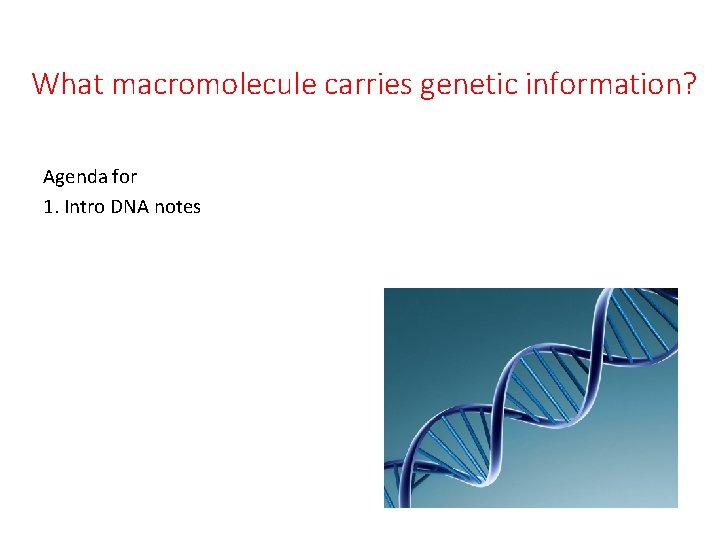
What macromolecule carries genetic information? Agenda for 1. Intro DNA notes
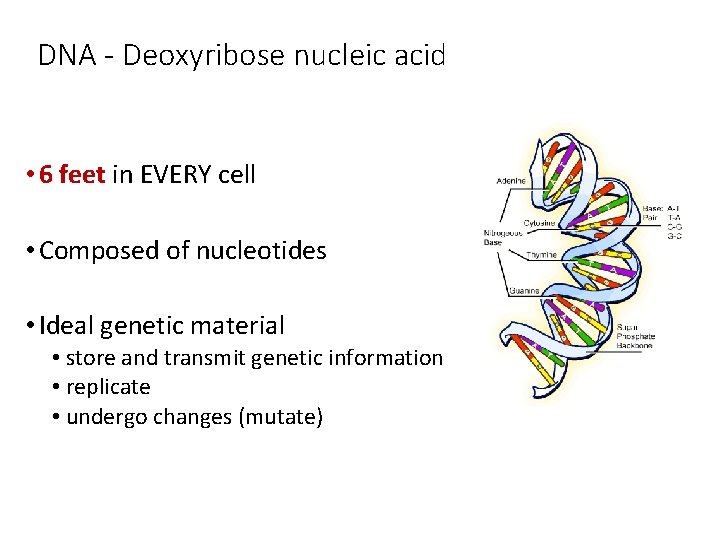
DNA - Deoxyribose nucleic acid • 6 feet in EVERY cell • Composed of nucleotides • Ideal genetic material • store and transmit genetic information • replicate • undergo changes (mutate)
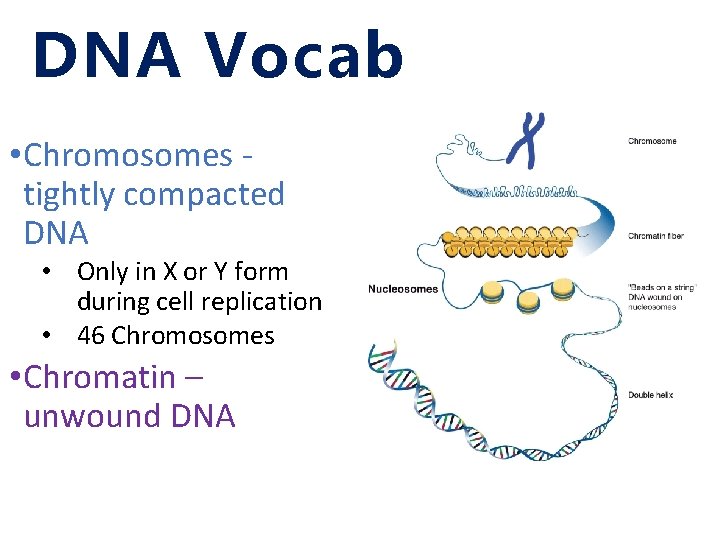
DNA Vocab • Chromosomes tightly compacted DNA • Only in X or Y form during cell replication • 46 Chromosomes • Chromatin – unwound DNA
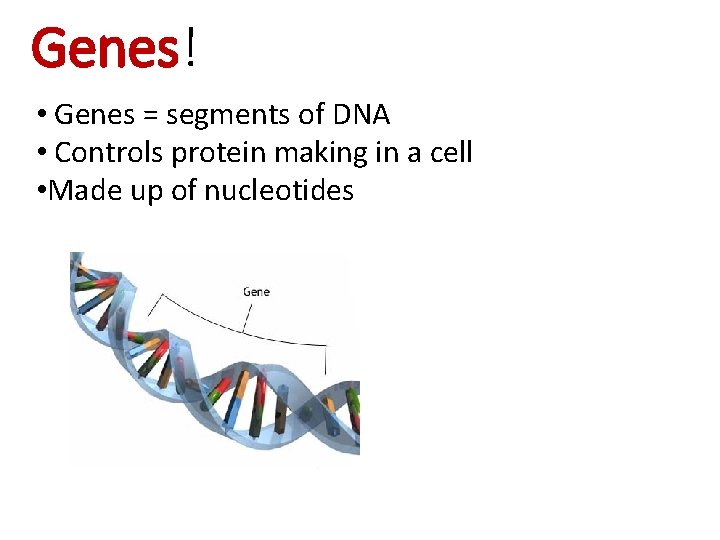
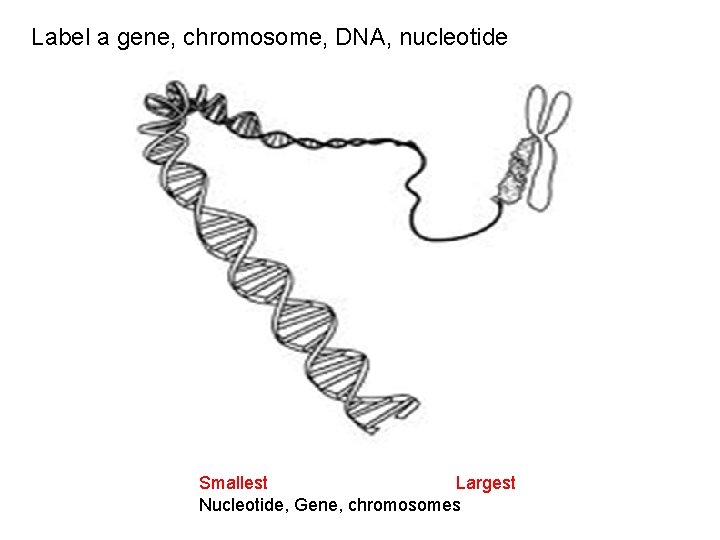
Genes! • Genes = segments of DNA • Controls protein making in a cell • Made up of nucleotides
Label a gene, chromosome, DNA, nucleotide Smallest Largest Nucleotide, Gene, chromosomes
EVERY human body cell (except egg or sperm cell) has 46 chromosomes • 23 from mom and 23 from dad Does this mean that you have 46 genes as well?
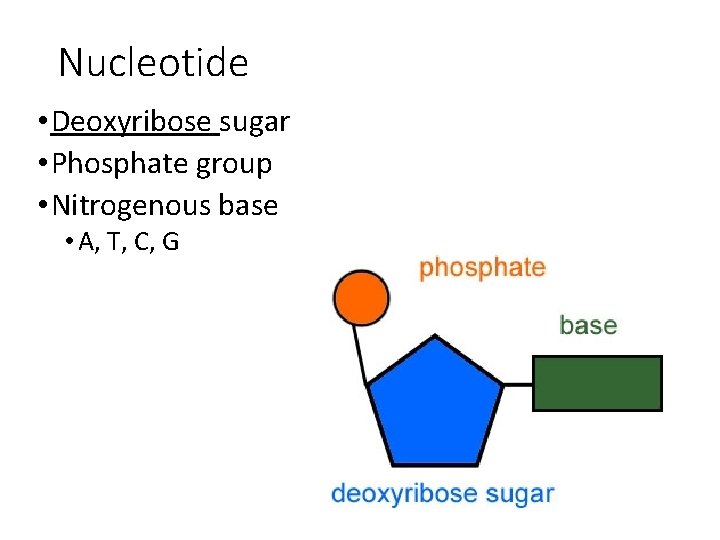
Nucleotide • Deoxyribose sugar • Phosphate group • Nitrogenous base • A, T, C, G
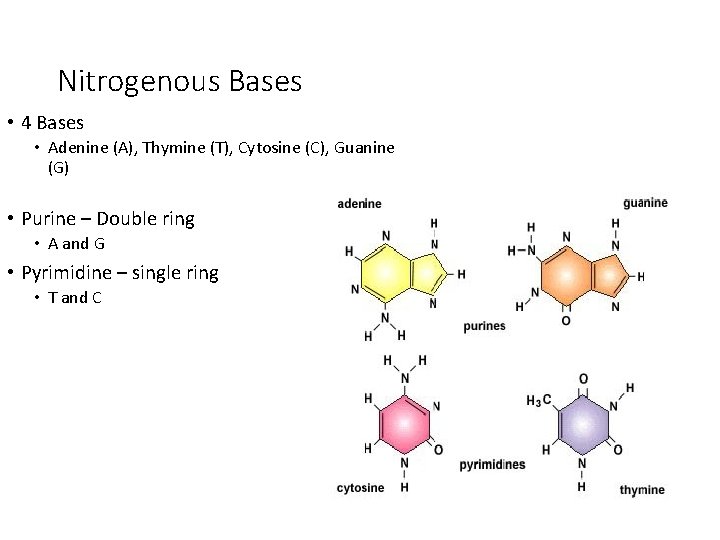
Nitrogenous Bases • 4 Bases • Adenine (A), Thymine (T), Cytosine (C), Guanine (G) • Purine – Double ring • A and G • Pyrimidine – single ring • T and C
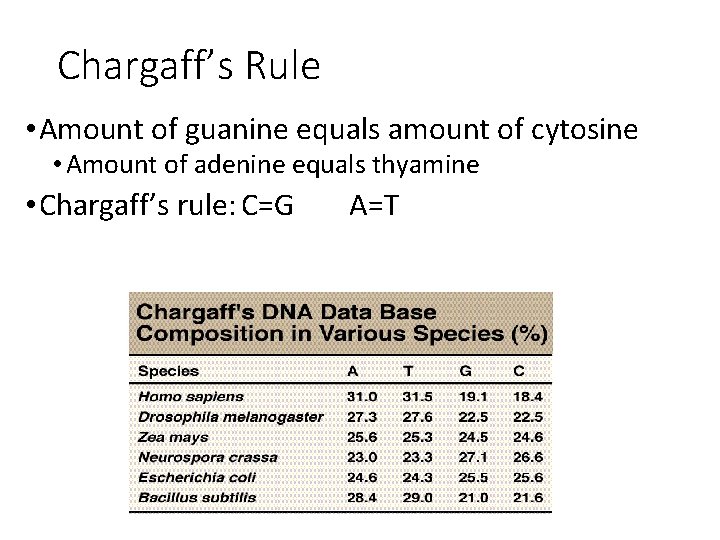
Chargaff’s Rule • Amount of guanine equals amount of cytosine • Amount of adenine equals thyamine • Chargaff’s rule: C=G A=T
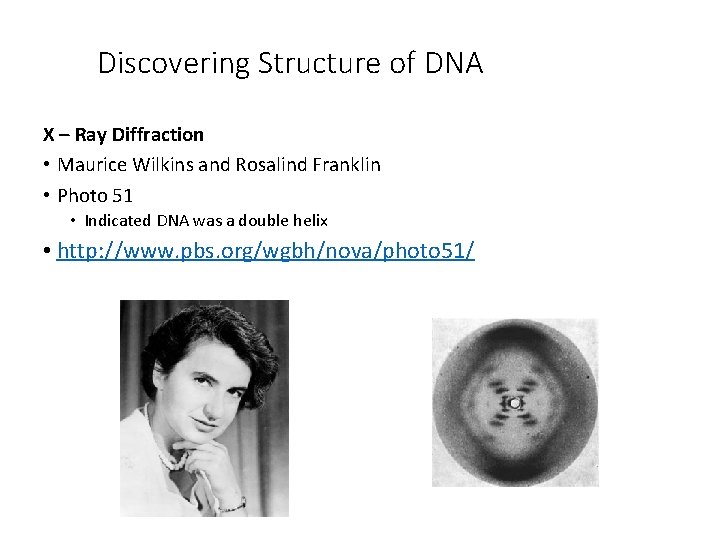
Discovering Structure of DNA X – Ray Diffraction • Maurice Wilkins and Rosalind Franklin • Photo 51 • Indicated DNA was a double helix • http: //www. pbs. org/wgbh/nova/photo 51/
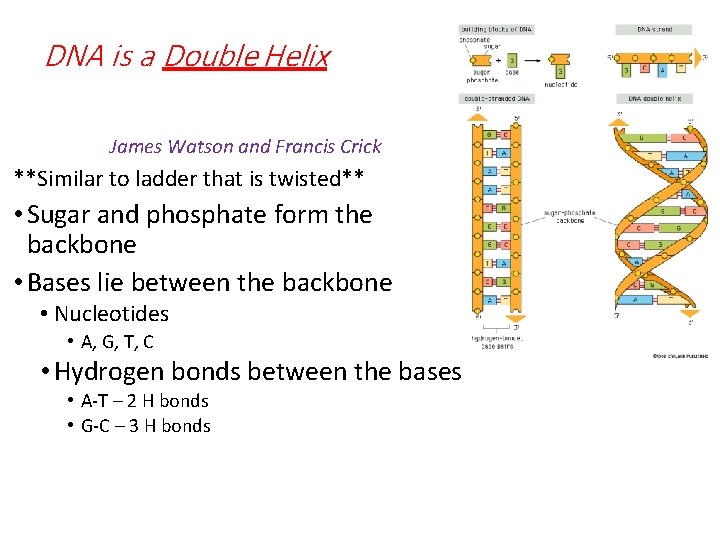
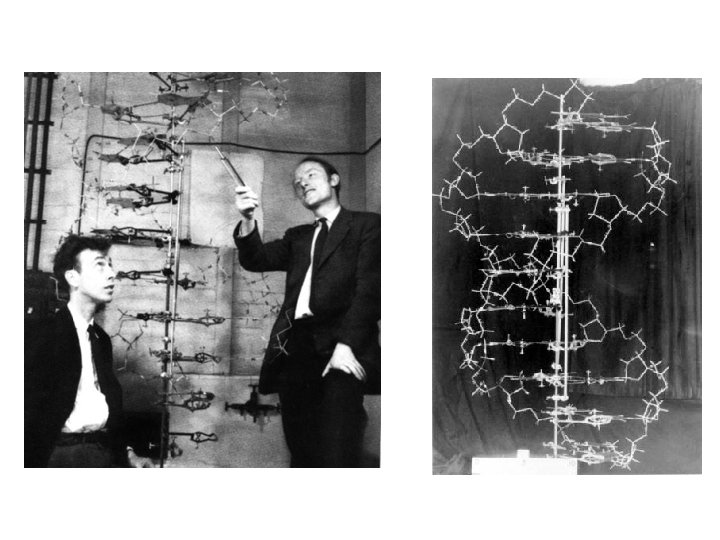
DNA is a Double Helix James Watson and Francis Crick **Similar to ladder that is twisted** • Sugar and phosphate form the backbone • Bases lie between the backbone • Nucleotides • A, G, T, C • Hydrogen bonds between the bases • A-T – 2 H bonds • G-C – 3 H bonds
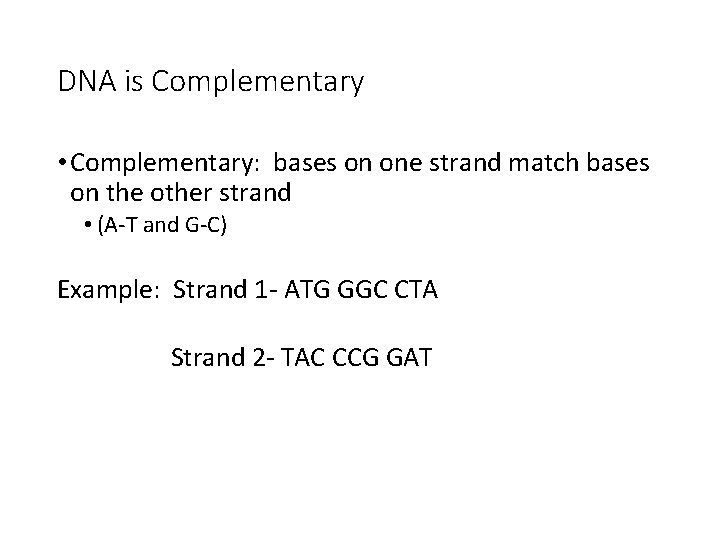
DNA is Complementary • Complementary: bases on one strand match bases on the other strand • (A-T and G-C) Example: Strand 1 - ATG GGC CTA Strand 2 - TAC CCG GAT
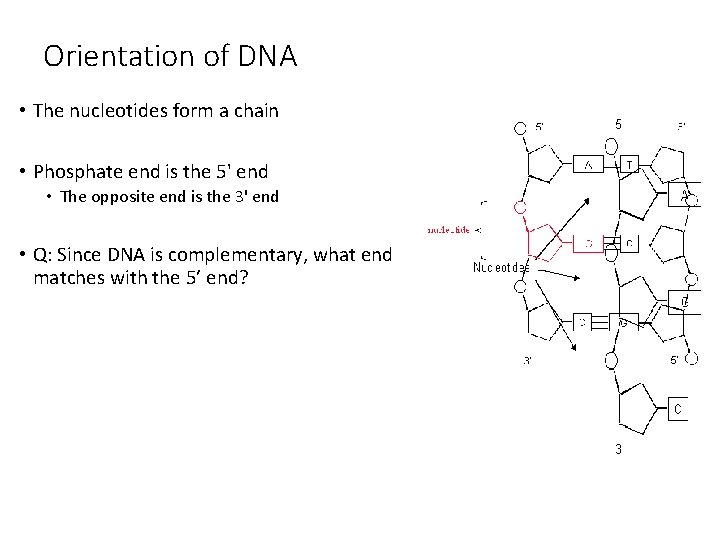
Orientation of DNA • The nucleotides form a chain • Phosphate end is the 5' end • The opposite end is the 3' end • Q: Since DNA is complementary, what end matches with the 5’ end?
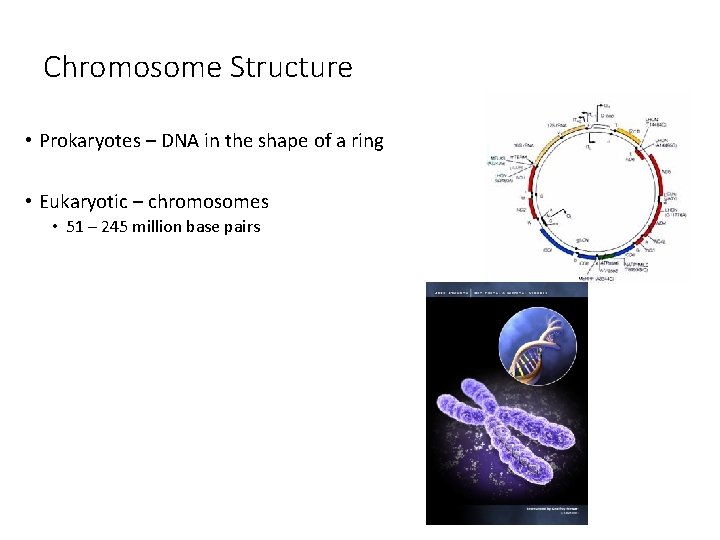
Chromosome Structure • Prokaryotes – DNA in the shape of a ring • Eukaryotic – chromosomes • 51 – 245 million base pairs
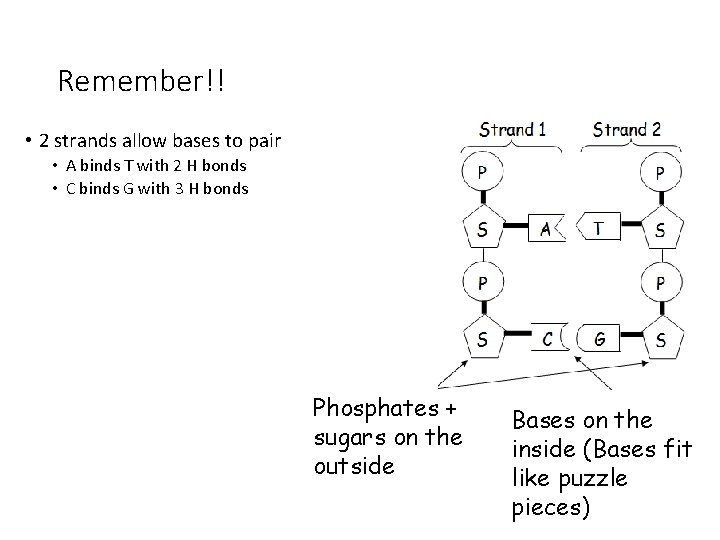
Remember!! • 2 strands allow bases to pair • A binds T with 2 H bonds • C binds G with 3 H bonds Phosphates + sugars on the outside Bases on the inside (Bases fit like puzzle pieces)
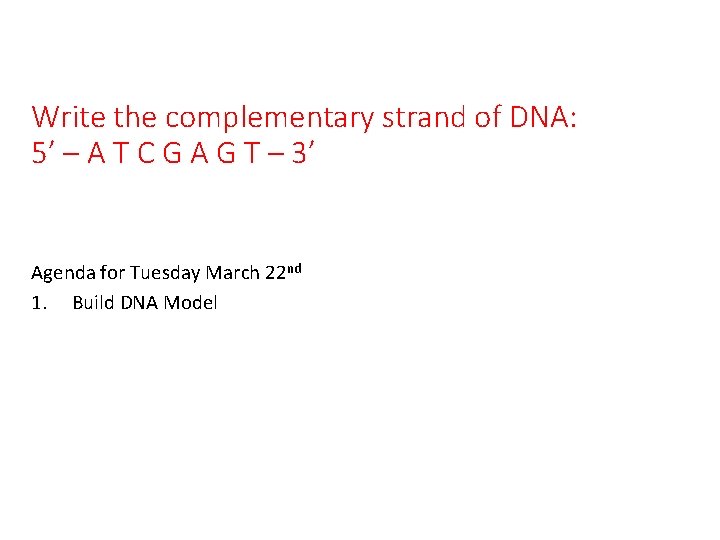
Write the complementary strand of DNA: 5’ – A T C G A G T – 3’ Agenda for Tuesday March 22 nd 1. Build DNA Model
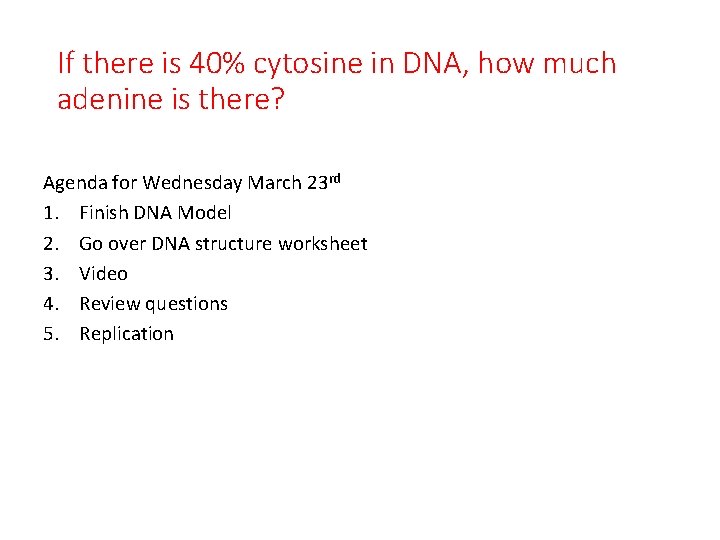
If there is 40% cytosine in DNA, how much adenine is there? Agenda for Wednesday March 23 rd 1. Finish DNA Model 2. Go over DNA structure worksheet 3. Video 4. Review questions 5. Replication
• http: //www. bozemanscience. com/what-is-dna
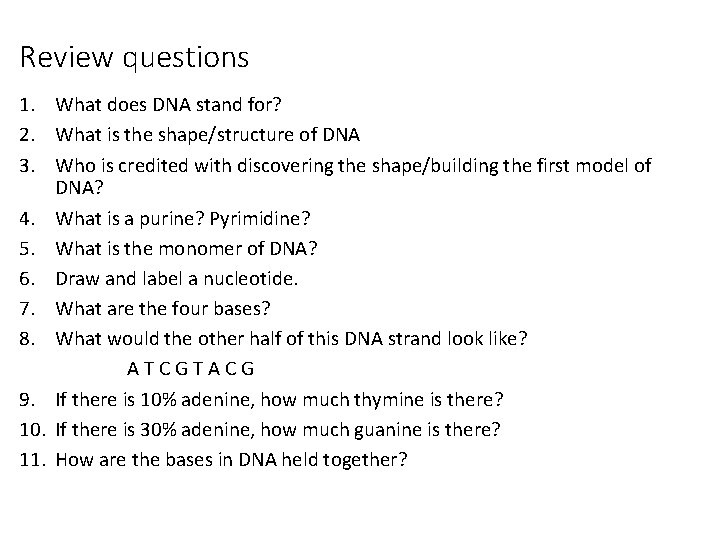
Review questions 1. What does DNA stand for? 2. What is the shape/structure of DNA 3. Who is credited with discovering the shape/building the first model of DNA? 4. What is a purine? Pyrimidine? 5. What is the monomer of DNA? 6. Draw and label a nucleotide. 7. What are the four bases? 8. What would the other half of this DNA strand look like? ATCGTACG 9. If there is 10% adenine, how much thymine is there? 10. If there is 30% adenine, how much guanine is there? 11. How are the bases in DNA held together?