
What is your purpose 1 Who do you


- Slides: 26
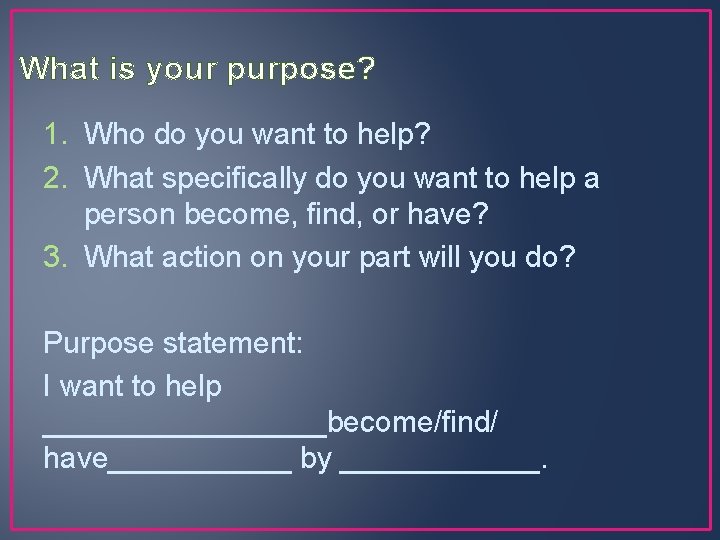
What is your purpose? 1. Who do you want to help? 2. What specifically do you want to help a person become, find, or have? 3. What action on your part will you do? Purpose statement: I want to help _________become/find/ have______ by ______.
Strengths. Quest Wednesday, January 28 th
History and philosophy
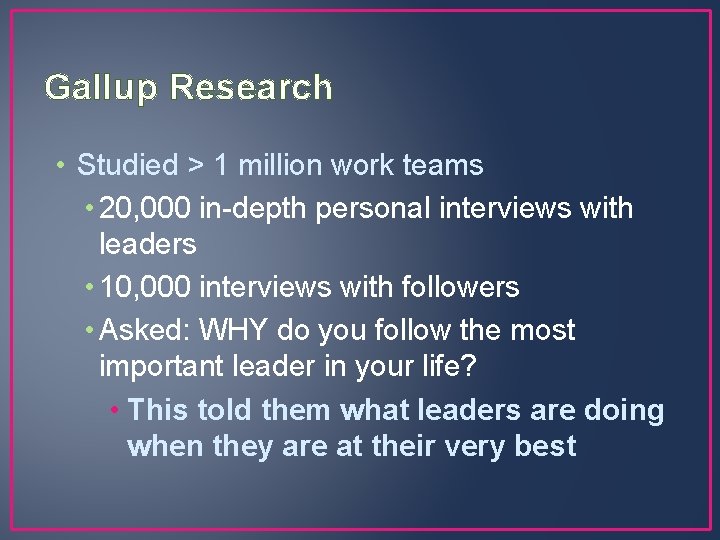
Gallup Research • Studied > 1 million work teams • 20, 000 in-depth personal interviews with leaders • 10, 000 interviews with followers • Asked: WHY do you follow the most important leader in your life? • This told them what leaders are doing when they are at their very best
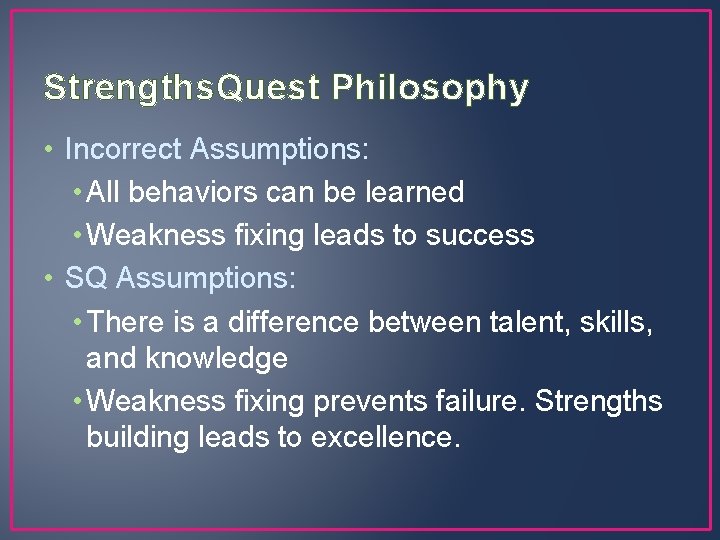
Strengths. Quest Philosophy • Incorrect Assumptions: • All behaviors can be learned • Weakness fixing leads to success • SQ Assumptions: • There is a difference between talent, skills, and knowledge • Weakness fixing prevents failure. Strengths building leads to excellence.
Strengths. Quest Philosophy • We possess all 34 strengths • Your strengths come naturally to you • Positive psychology • Spend your energy on leveraging your strengths rather than improving your weaknesses
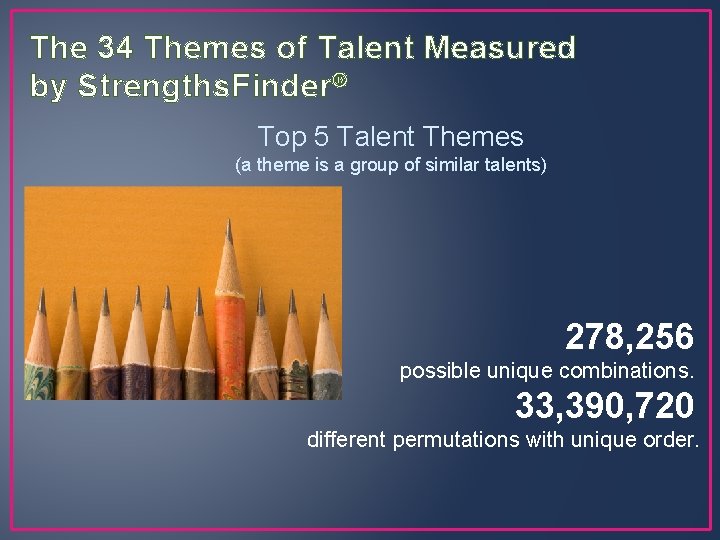
The 34 Themes of Talent Measured by Strengths. Finder® Top 5 Talent Themes (a theme is a group of similar talents) 278, 256 possible unique combinations. 33, 390, 720 different permutations with unique order.
Five Clues to Your Talents & Hunt
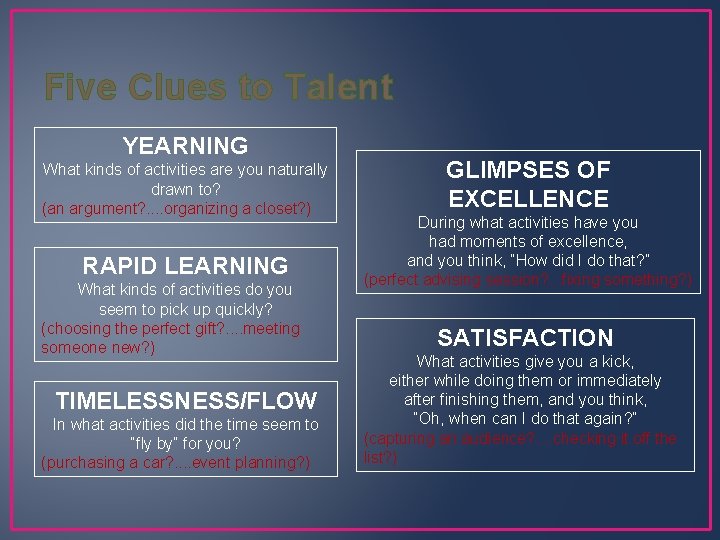
Five Clues to Talent YEARNING What kinds of activities are you naturally drawn to? (an argument? . . organizing a closet? ) RAPID LEARNING What kinds of activities do you seem to pick up quickly? (choosing the perfect gift? . . meeting someone new? ) TIMELESSNESS/FLOW In what activities did the time seem to “fly by” for you? (purchasing a car? . . event planning? ) GLIMPSES OF EXCELLENCE During what activities have you had moments of excellence, and you think, “How did I do that? ” (perfect advising session? . . . fixing something? ) SATISFACTION What activities give you a kick, either while doing them or immediately after finishing them, and you think, “Oh, when can I do that again? ” (capturing an audience? . . checking it off the list? )
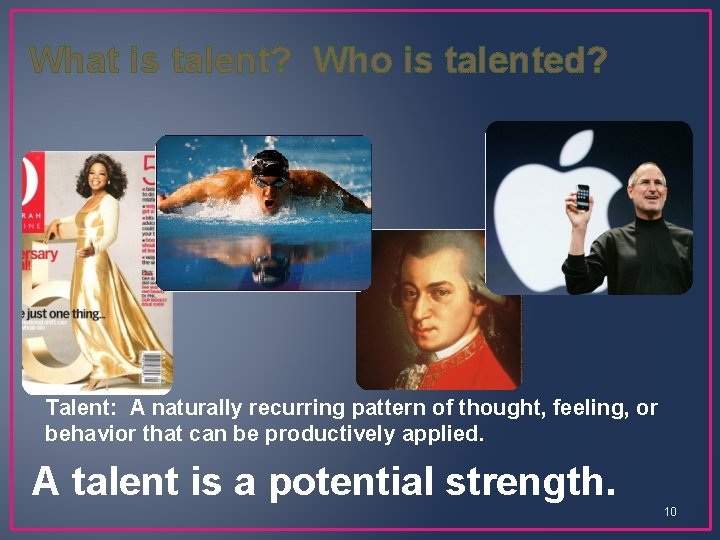
What is talent? Who is talented? Talent: A naturally recurring pattern of thought, feeling, or behavior that can be productively applied. A talent is a potential strength. 10
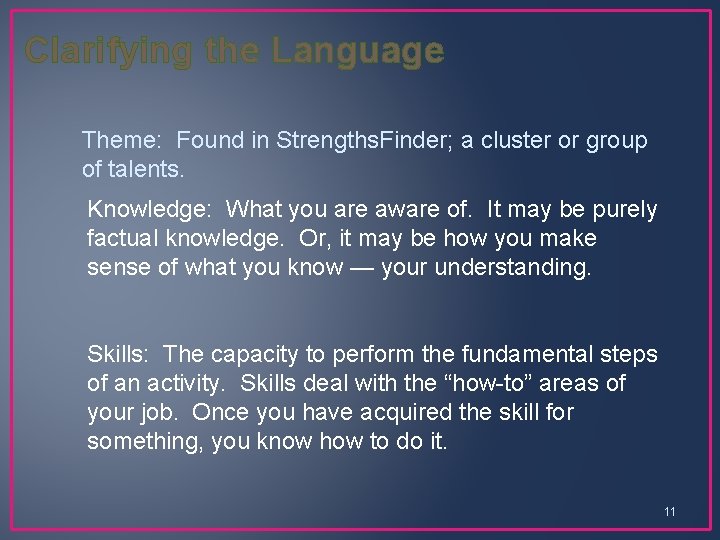
Clarifying the Language Theme: Found in Strengths. Finder; a cluster or group of talents. Knowledge: What you are aware of. It may be purely factual knowledge. Or, it may be how you make sense of what you know — your understanding. Skills: The capacity to perform the fundamental steps of an activity. Skills deal with the “how-to” areas of your job. Once you have acquired the skill for something, you know how to do it. 11
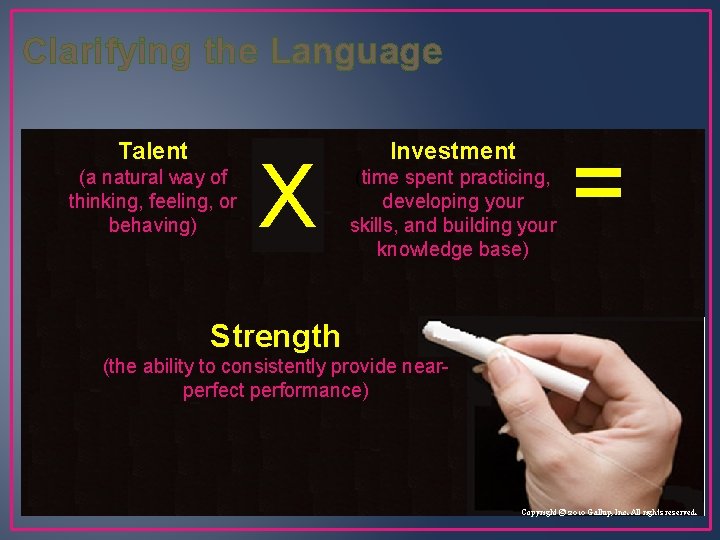
Clarifying the Language Talent (a natural way of thinking, feeling, or behaving) X Investment (time spent practicing, developing your skills, and building your knowledge base) = Strength (the ability to consistently provide nearperfect performance) Copyright © 2010 Gallup, Inc. All rights reserved.
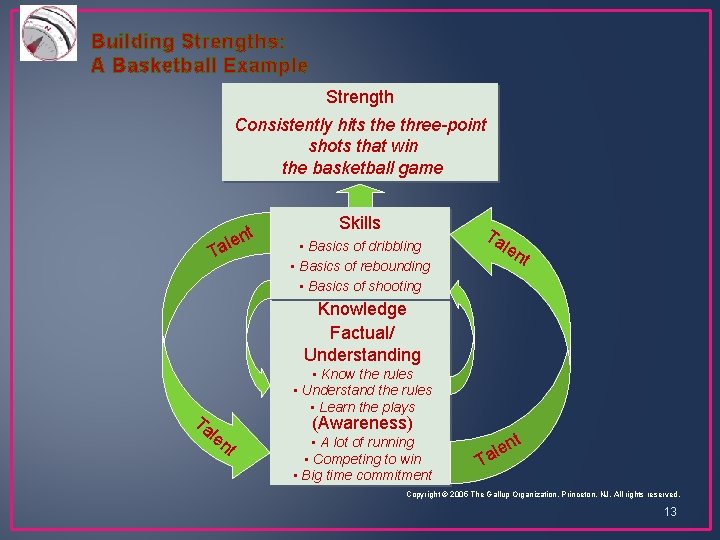
Building Strengths: A Basketball Example Strength Consistently hits the three-point shots that win the basketball game nt e l Ta Skills • Basics of dribbling • Basics of rebounding • Basics of shooting Ta len t Knowledge Factual/ Understanding Ta • Know the rules • Understand the rules • Learn the plays le nt (Awareness) • A lot of running • Competing to win • Big time commitment nt e l a T Copyright © 2005 The Gallup Organization, Princeton, NJ. All rights reserved. 13
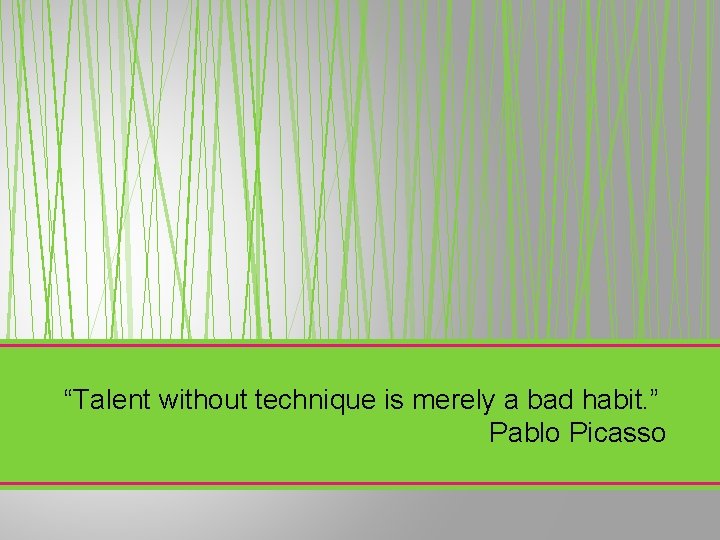
“Talent without technique is merely a bad habit. ” Pablo Picasso
Workplace Engagement
Workplace Engagement Gallup found that 13% of people are engaged at work (1 in 8 workers) Engaged = psychologically committed to their jobs and likely to be making positive contributions to their organizations. Not Engaged = 63% = they lack motivation and are less likely to invest discretionary effort in organizational goals or outcomes Actively Disengaged = 24% = they are unhappy and unproductive at work and liable to spread negativity to coworkers.
Health & Happiness 1 in 5 actively disengaged workers report that poor health kept them from their usual activities on 3 or more days out of the past 30. 30% of actively disengaged workers are obese. Fatigue, Depression & the Common Cold “How employees are managed can significantly influence employee engagement, which in turn influences the organization’s bottom line. ” {Gallup}
How much does it cost?
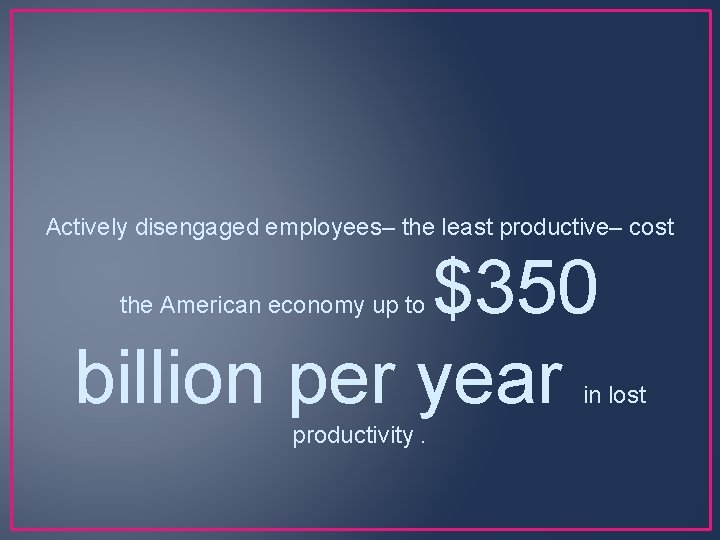
Actively disengaged employees– the least productive– cost $350 billion per year the American economy up to in lost productivity.
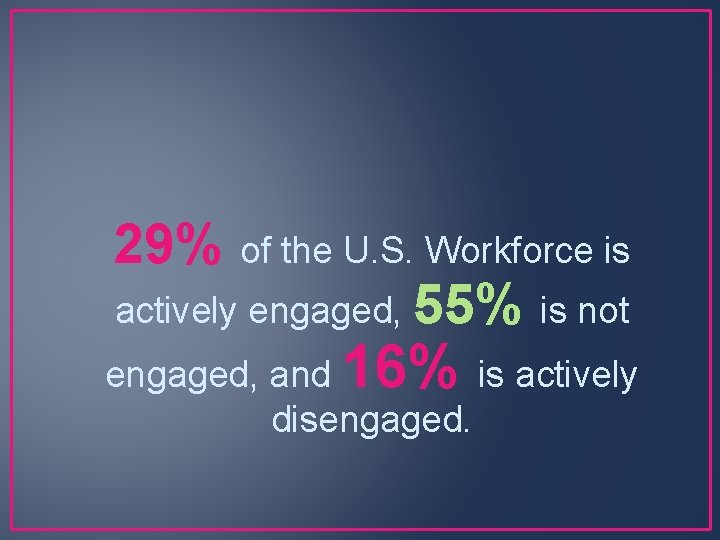
29% of the U. S. Workforce is actively engaged, 55% is not 16% engaged, and is actively disengaged.
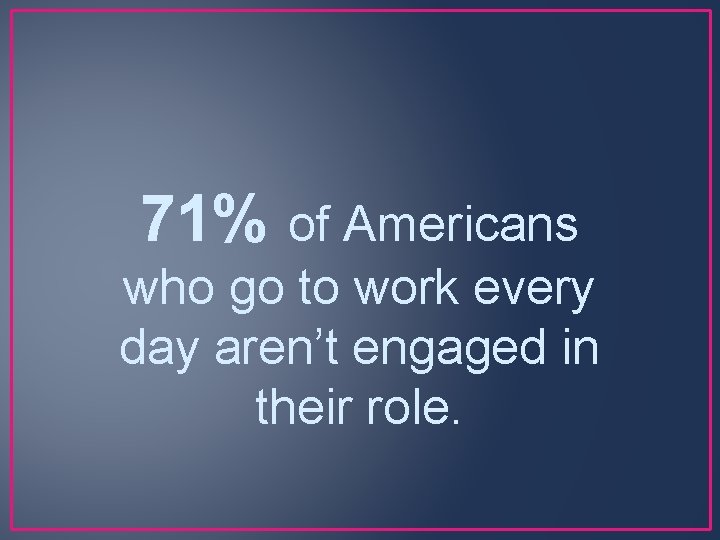
71% of Americans who go to work every day aren’t engaged in their role.
Bottomline • Bottomline – we spend a LOT of time working. If our workplaces are not engaging us, the unhappiness caused will inevitably bleed into other areas of our lives. • Enter: Strengths
Job Description Breakdown
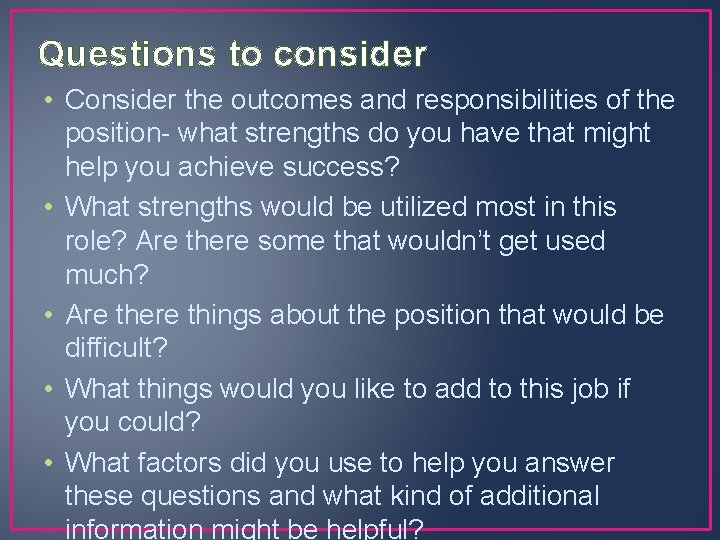
Questions to consider • Consider the outcomes and responsibilities of the position- what strengths do you have that might help you achieve success? • What strengths would be utilized most in this role? Are there some that wouldn’t get used much? • Are there things about the position that would be difficult? • What things would you like to add to this job if you could? • What factors did you use to help you answer these questions and what kind of additional information might be helpful?
Internalizing your strengths
References • http: //www. gallup. com/poll/165269/worldwide-employeesengagedwork. aspx? utm_source=WWW&utm_medium=cs m&utm_campaign=syndication • Strengths Quest Activity Workbook. (2008).