
What is weather The state of the atmosphere
- Slides: 49
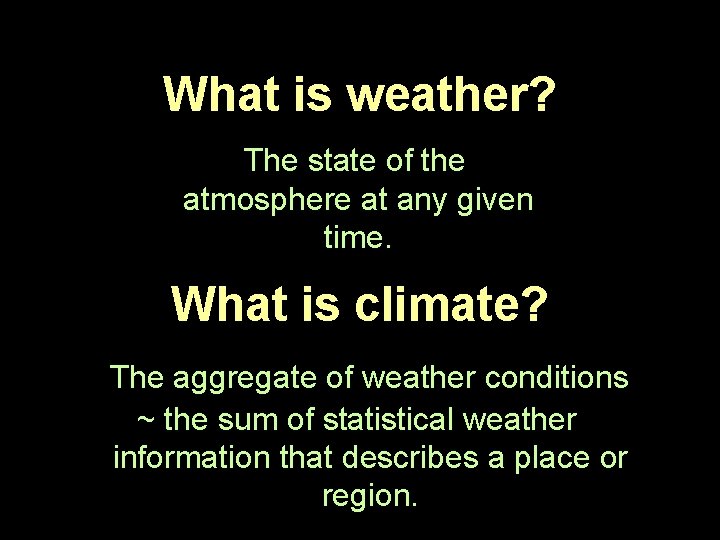
What is weather? The state of the atmosphere at any given time. What is climate? The aggregate of weather conditions ~ the sum of statistical weather information that describes a place or region.
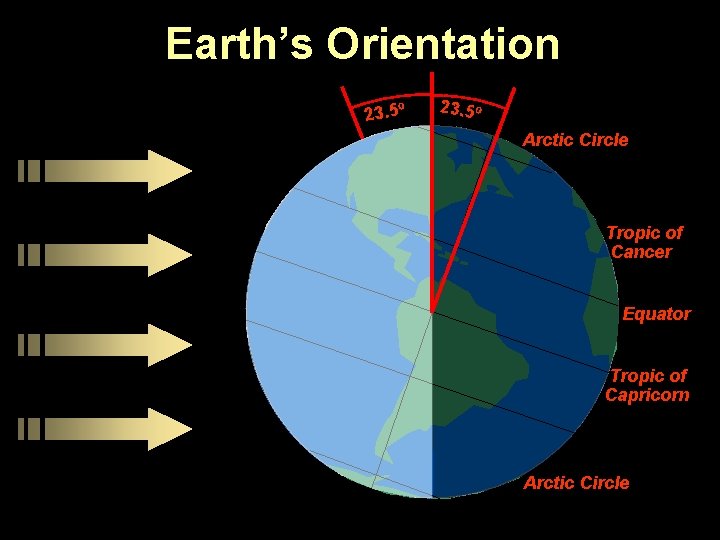
Earth’s Orientation o 23. 5 o Arctic Circle Tropic of Cancer Ecliptic Plane Equator Tropic of Capricorn Arctic Circle
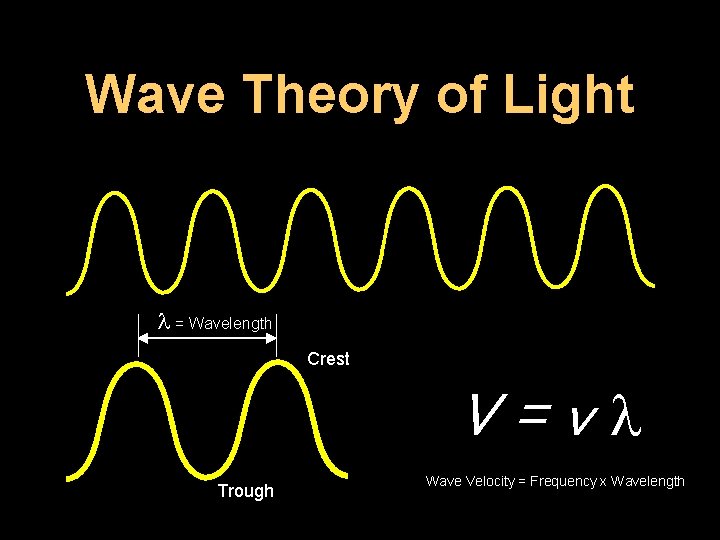
Wave Theory of Light = Wavelength Crest V=v Trough Wave Velocity = Frequency x Wavelength
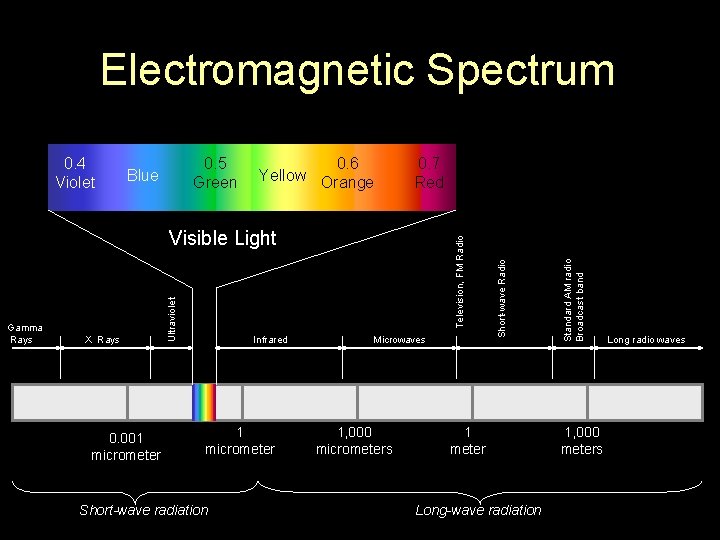
Electromagnetic Spectrum 0. 6 Yellow Orange 0. 7 Red X Rays 0. 001 micrometer Infrared 1 micrometer Short-wave radiation Television, FM Radio Gamma Rays Ultraviolet Visible Light Microwaves 1, 000 micrometers 1 meter Long-wave radiation Standard AM radio Broadcast band 0. 5 Green Blue Short-wave Radio 0. 4 Violet 1, 000 meters Long radio waves
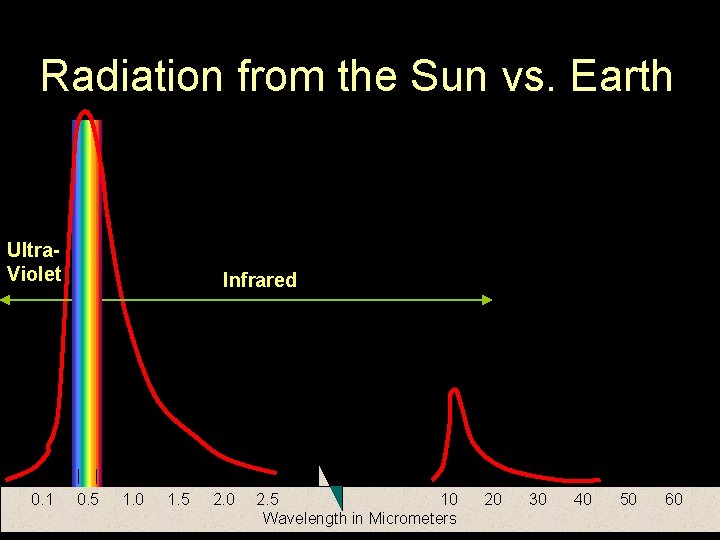
Radiation from the Sun vs. Earth Ultra. Violet 0. 1 Infrared 0. 5 1. 0 1. 5 2. 0 2. 5 10 Wavelength in Micrometers 20 30 40 50 60
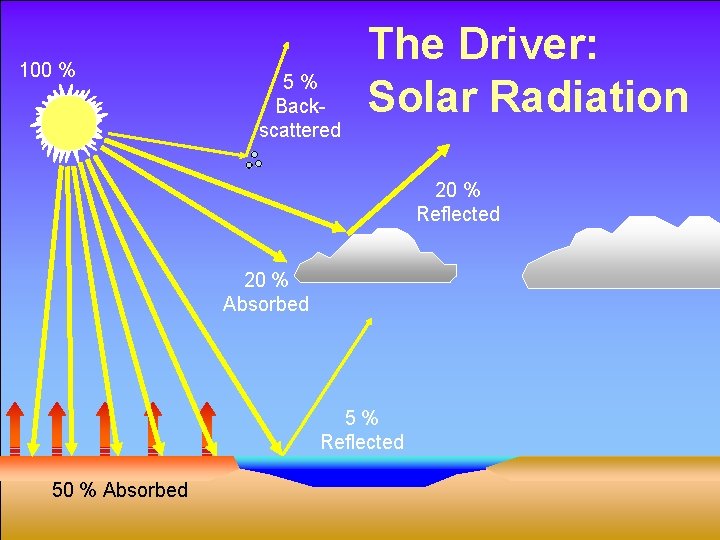
100 % 5% Backscattered The Driver: Solar Radiation 20 % Reflected 20 % Absorbed 5% Reflected 50 % Absorbed
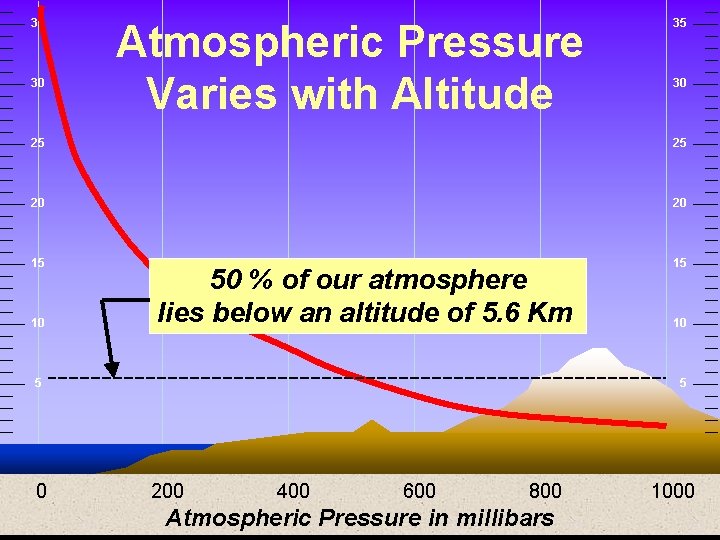
35 30 Atmospheric Pressure Varies with Altitude 35 30 25 25 20 20 15 15 10 50 % of our atmosphere lies below an altitude of 5. 6 Km 5 0 10 5 200 400 600 800 Atmospheric Pressure in millibars 1000
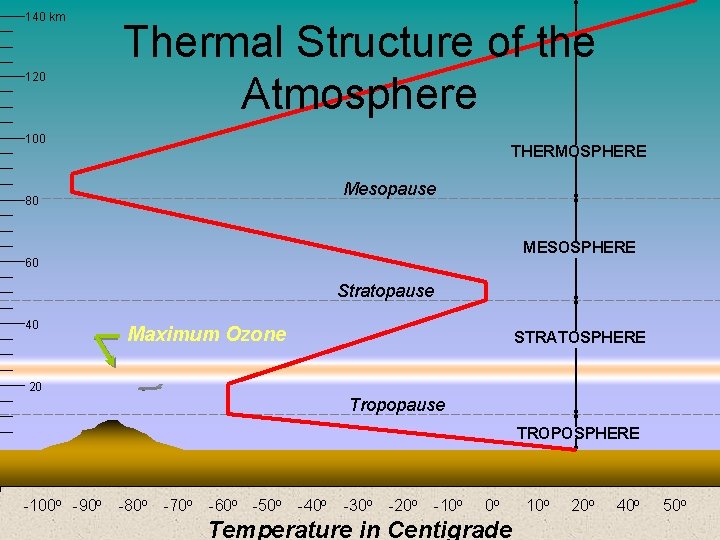
140 km 120 Thermal Structure of the Atmosphere 100 THERMOSPHERE Mesopause 80 MESOSPHERE 60 Stratopause 40 Maximum Ozone STRATOSPHERE 20 Tropopause TROPOSPHERE -100 o -90 o -80 o -70 o -60 o -50 o -40 o -30 o -20 o -10 o 0 o Temperature in Centigrade 10 o 20 o 40 o 50 o
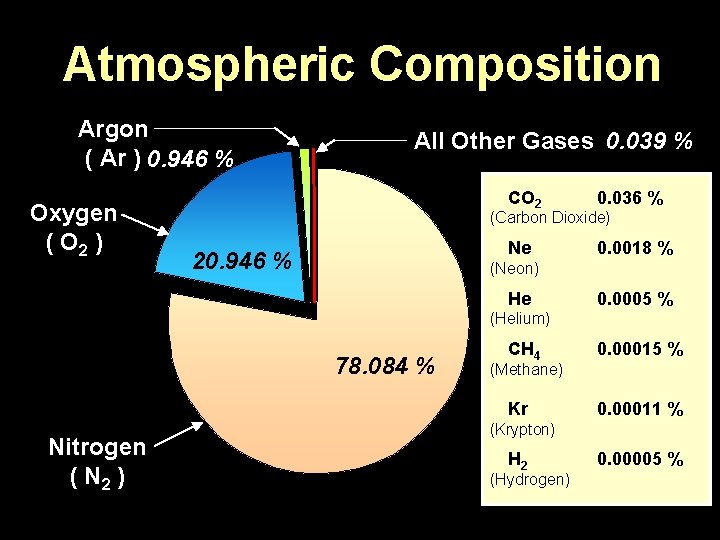
Atmospheric Composition Argon ( Ar ) 0. 946 % Oxygen ( O 2 ) All Other Gases 0. 039 % CO 2 0. 036 % Ne 0. 0018 % (Carbon Dioxide) 20. 946 % (Neon) He 0. 0005 % (Helium) 78. 084 % Nitrogen ( N 2 ) CH 4 0. 00015 % Kr 0. 00011 % (Methane) (Krypton) H 2 (Hydrogen) 0. 00005 %
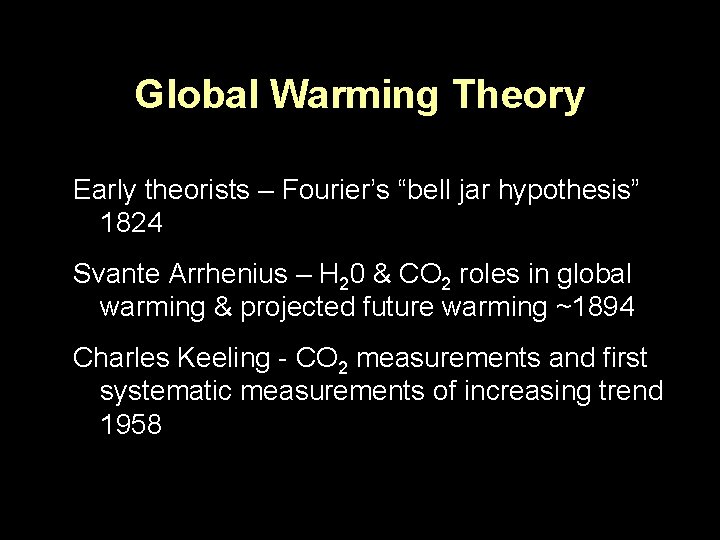
Global Warming Theory Early theorists – Fourier’s “bell jar hypothesis” 1824 Svante Arrhenius – H 20 & CO 2 roles in global warming & projected future warming ~1894 Charles Keeling - CO 2 measurements and first systematic measurements of increasing trend 1958
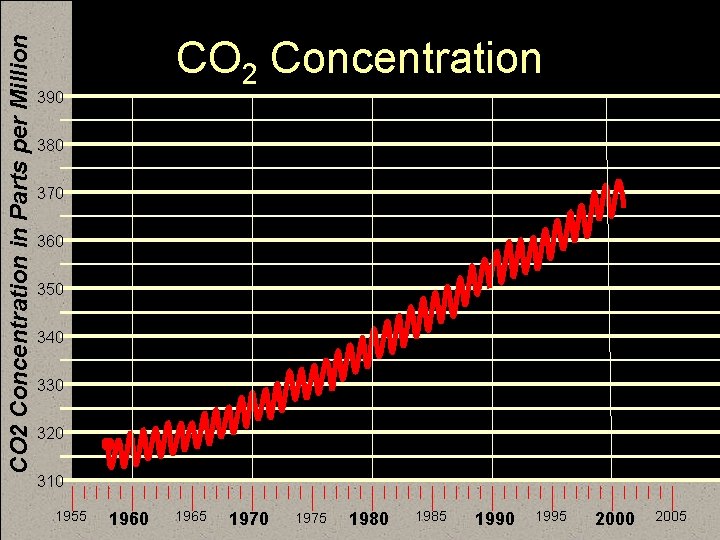
CO 2 Concentration in Parts per Million CO 2 Concentration 390 380 370 360 350 340 330 320 310 1955 1960 1965 1970 1975 1980 1985 1990 1995 2000 2005
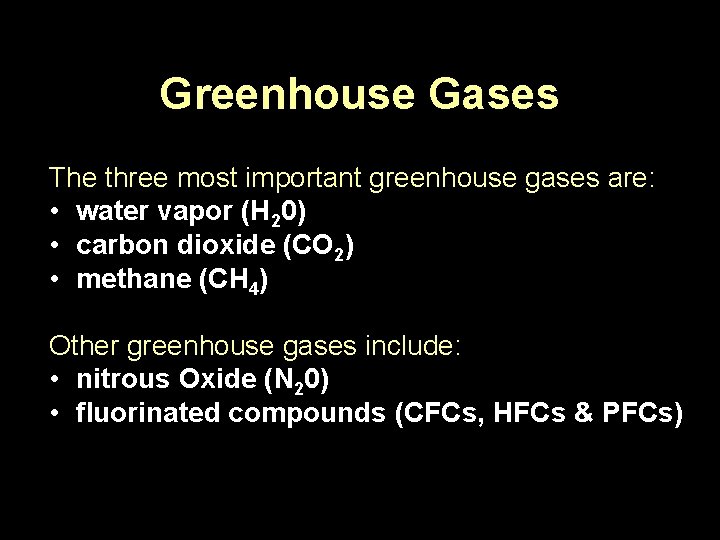
Greenhouse Gases The three most important greenhouse gases are: • water vapor (H 20) • carbon dioxide (CO 2) • methane (CH 4) Other greenhouse gases include: • nitrous Oxide (N 20) • fluorinated compounds (CFCs, HFCs & PFCs)
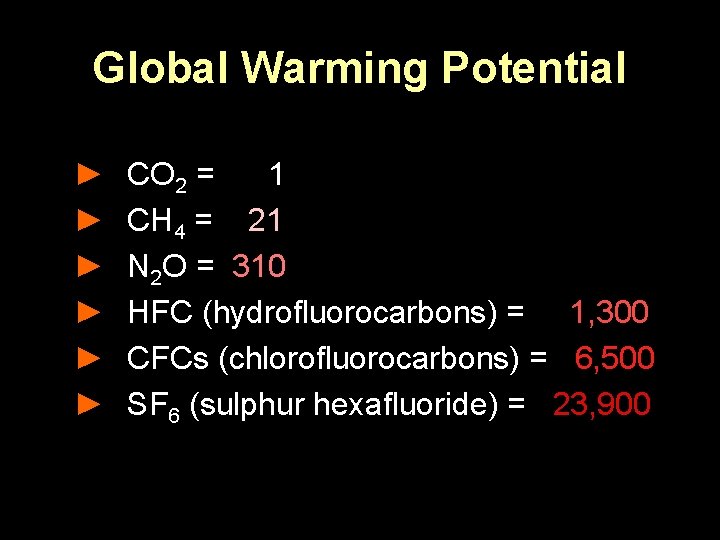
Global Warming Potential ► ► ► CO 2 = 1 CH 4 = 21 N 2 O = 310 HFC (hydrofluorocarbons) = 1, 300 CFCs (chlorofluorocarbons) = 6, 500 SF 6 (sulphur hexafluoride) = 23, 900
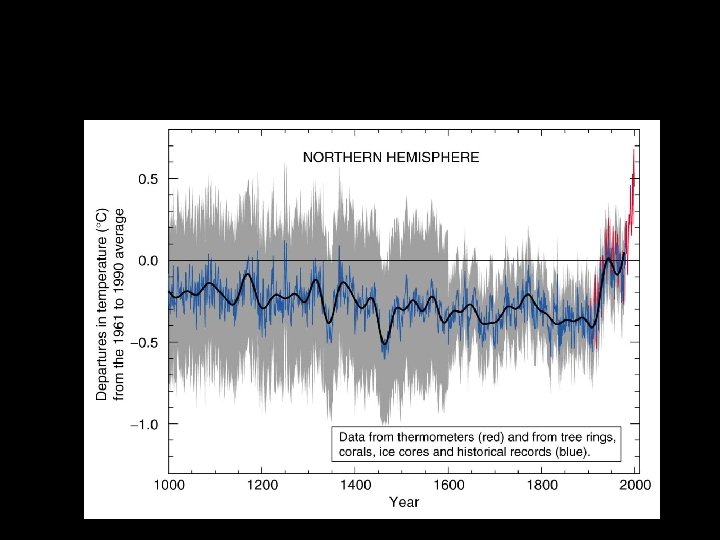
Variations of the Earth’s surface temperature for the past 1, 000 years
Atmospheric General Circulation Models (AGCMs) Before 1955: Numerical Models 1955 -65: GCM modeling established 1965 -75: GCMs first applied on a global & longrange basis 1975 -85: GCMs Mature
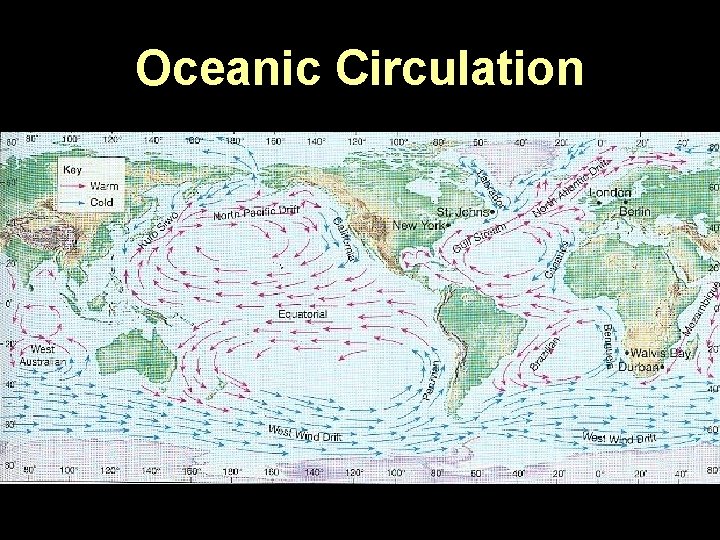
Oceanic Circulation
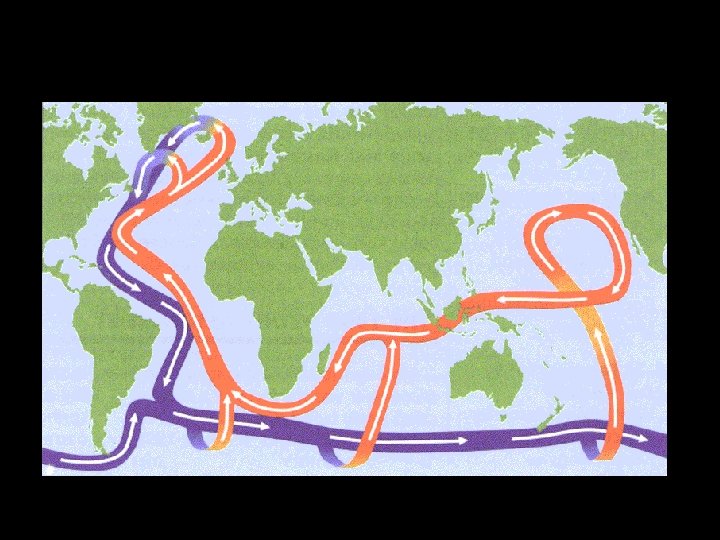
Global ocean circulation A simplified view of the global thermohaline conveyor belt, showing cooling and downwelling in the North Atlantic, warming and freshening in the southern hemisphere, and return flow as a warm surface current.
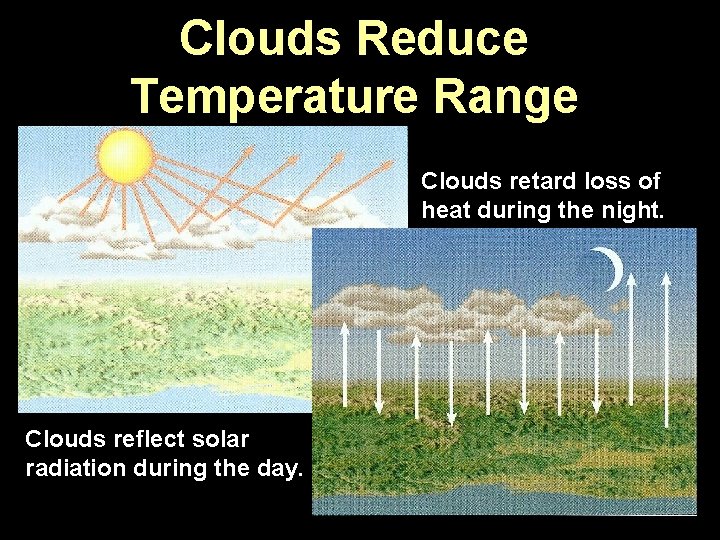
Clouds Reduce Temperature Range Clouds retard loss of heat during the night. Clouds reflect solar radiation during the day.
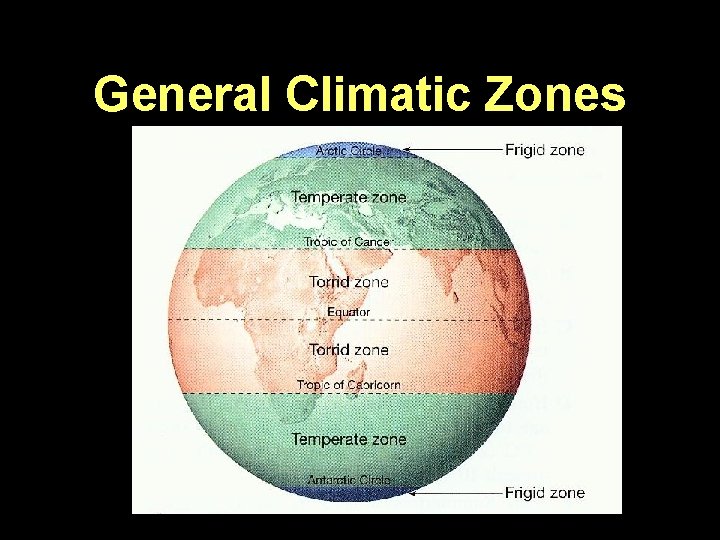
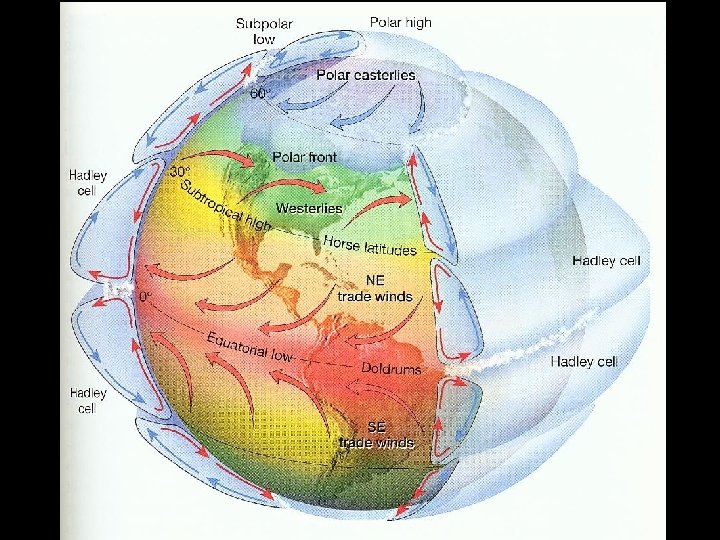
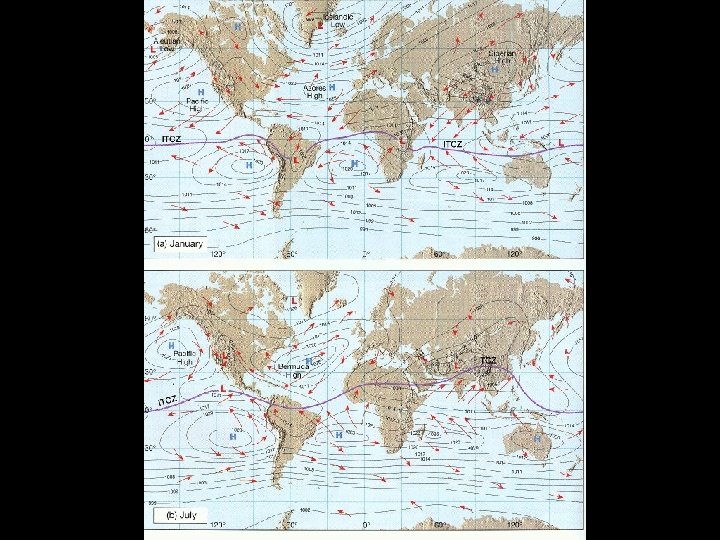
General Climatic Zones
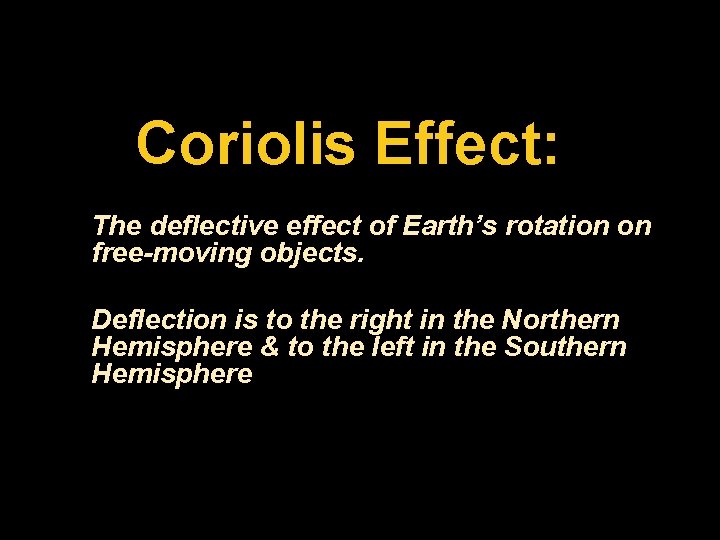
Coriolis Effect: The deflective effect of Earth’s rotation on free-moving objects. Deflection is to the right in the Northern Hemisphere & to the left in the Southern Hemisphere
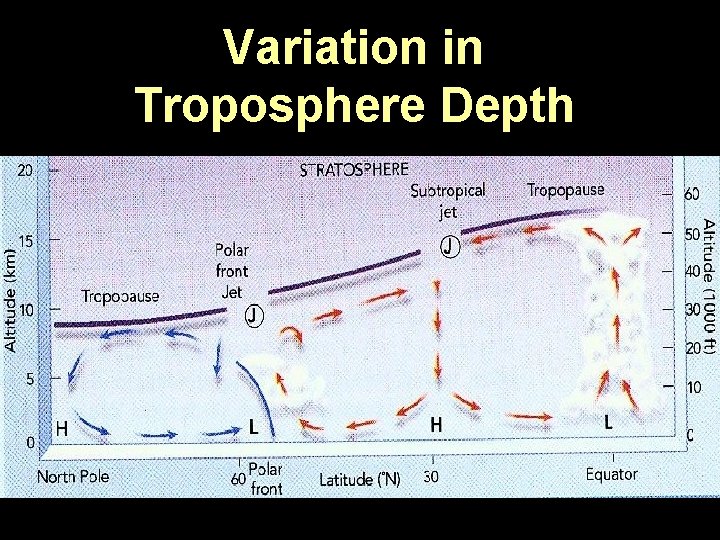
Variation in Troposphere Depth
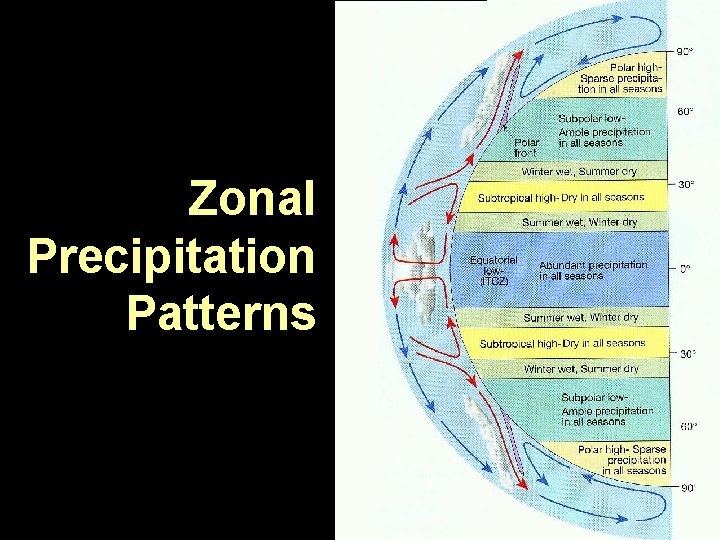
Zonal Precipitation Patterns
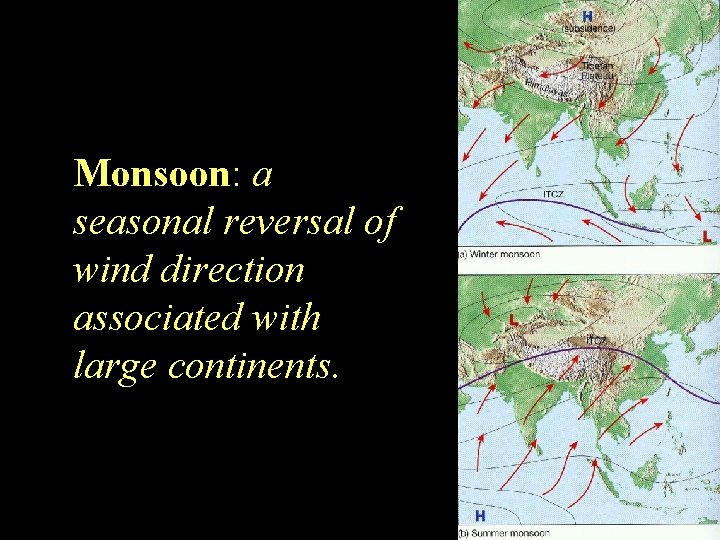
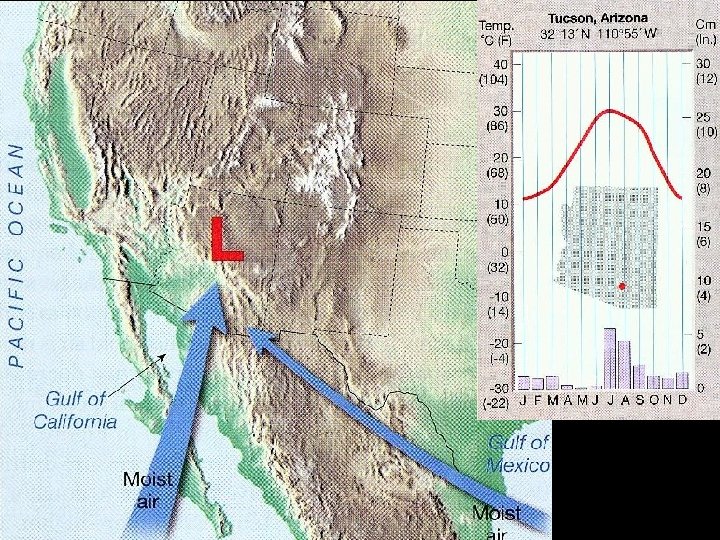
Monsoon: a seasonal reversal of wind direction associated with large continents.
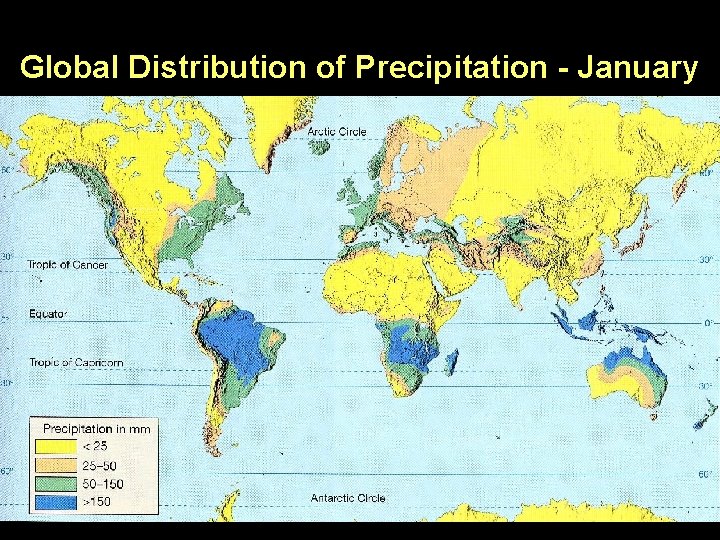
Global Distribution of Precipitation - January
What is the Intergovernmental Panel on Climate Change? The IPCC was set up jointly by the World Meteorological Organization and the United Nations Environment Programme in November 1988. Its mandate is to: “Assess the scientific, technical, and socioeconomic information relevant for the understanding of the risk of human-induced climate change. ”
The IPCC does NOT conduct any research nor does it monitor climate related data or parameters. The IPCC role is to assess on a comprehensive, objective, open and transparent basis the latest scientific, technical and socioeconomic literature produced worldwide relevant to the understanding of the risk of human-induced climate change, its observed and projected impacts and options for adaptation and mitigation. IPCC reports are intended to be NEUTRAL with respect to policy, although they need to deal objectively with policy relevant scientific, technical and socio economic factors. IPCC reports are to be of high scientific and technical standards, and aim to reflect a range of views, expertise and wide geographical coverage. ”
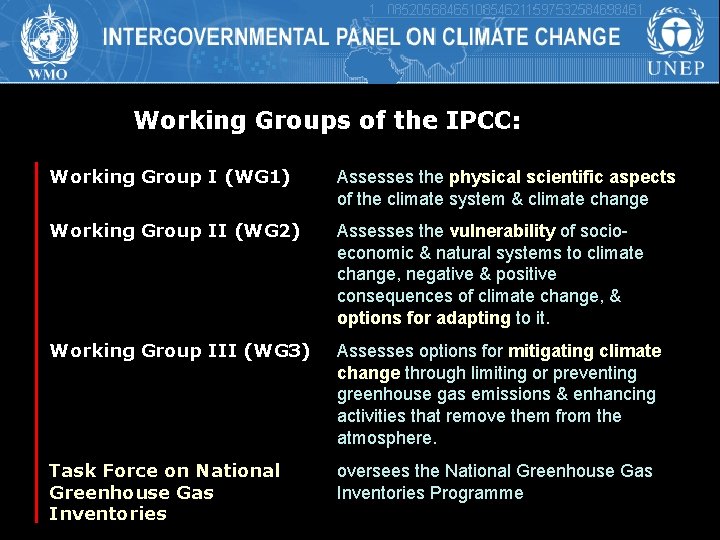
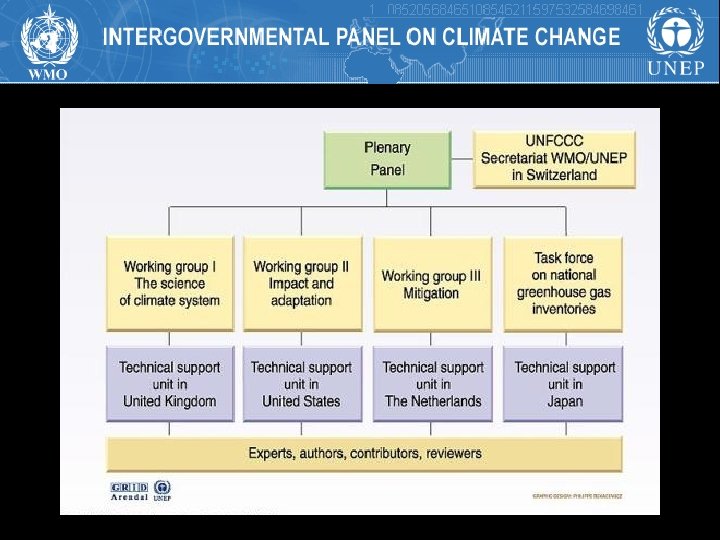
Working Groups of the IPCC: Working Group I (WG 1) Assesses the physical scientific aspects of the climate system & climate change Working Group II (WG 2) Assesses the vulnerability of socioeconomic & natural systems to climate change, negative & positive consequences of climate change, & options for adapting to it. Working Group III (WG 3) Assesses options for mitigating climate change through limiting or preventing greenhouse gas emissions & enhancing activities that remove them from the atmosphere. Task Force on National Greenhouse Gas Inventories oversees the National Greenhouse Gas Inventories Programme
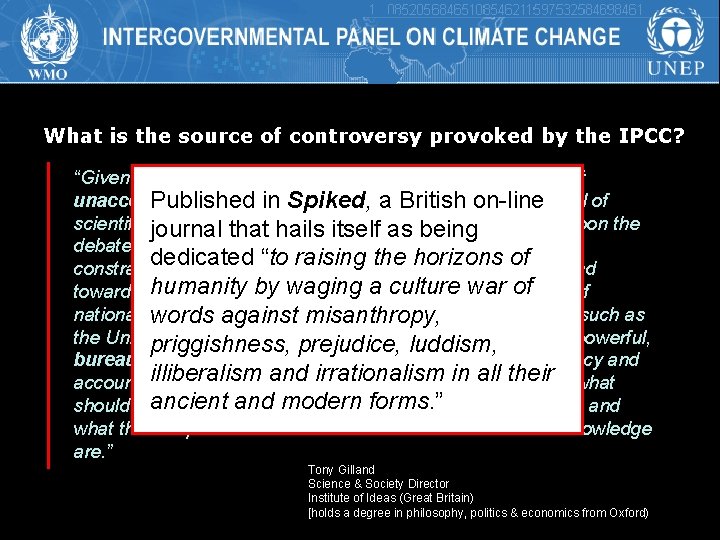
What do critics say of the IPCC? Critics contend that expression of reservations by scientists regarding an impending ‘climate catastrophe’ are sometimes castigated by others within the scientific community, thereby undermining the scientific process “[S]elf-censorship in the minds of scientists ultimately leads to a sort of deafness toward new, surprising insights that compete with or even contradict the conventional explanatory models. Science is deteriorating into a repair shop for conventional, politically opportune scientific claims. Not only does science become impotent; it also loses its ability to objectively inform the public. ” Hans von Storch Director of the Institute for Coastal Research GKSS Research Centre (Germany) Professor, Meteorological Institute University of Hamburg
What is the source of controversy provoked by the IPCC? “Given authority by supranational bodies such as the UN, but unaccountable to their own national governments, a handful of Published in Spiked, a British on-line scientific activists could make a disproportionate journal that hails itself as being impact upon the debate, and make policy recommendations outside of the dedicated “to raising the horizons of constraints of policy and practicality … [This is part of a ] trend humanity by waging a culture war of towards ‘international’ policymaking, where the authority of national governments is diminished in relation to institutions such as words against misanthropy, the United Nations or the European Union … [R]emote, yet powerful, priggishness, prejudice, luddism, bureaucracies raises a number of questions about democracy and illiberalism and irrationalism in all their accountability … [S]cience becomes allied with advocating what ancient and modern forms. ” should be done rather than telling us what is currently known and what the complexities and uncertainties involved with that knowledge are. ” Tony Gilland Science & Society Director Institute of Ideas (Great Britain) [holds a degree in philosophy, politics & economics from Oxford)
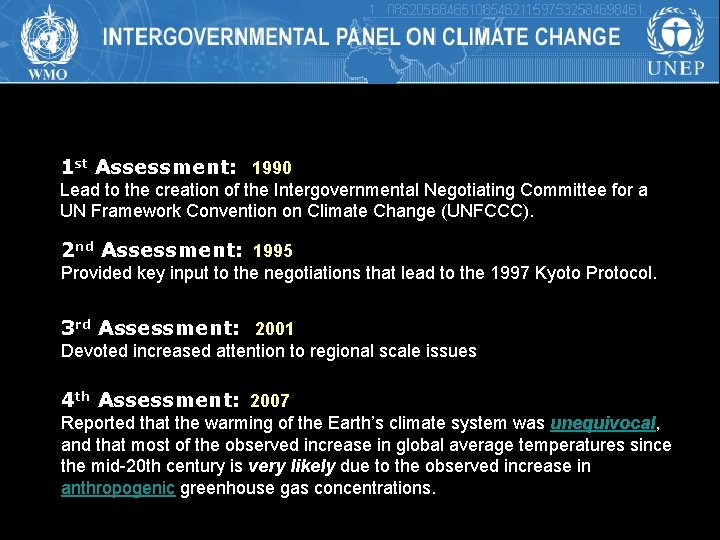
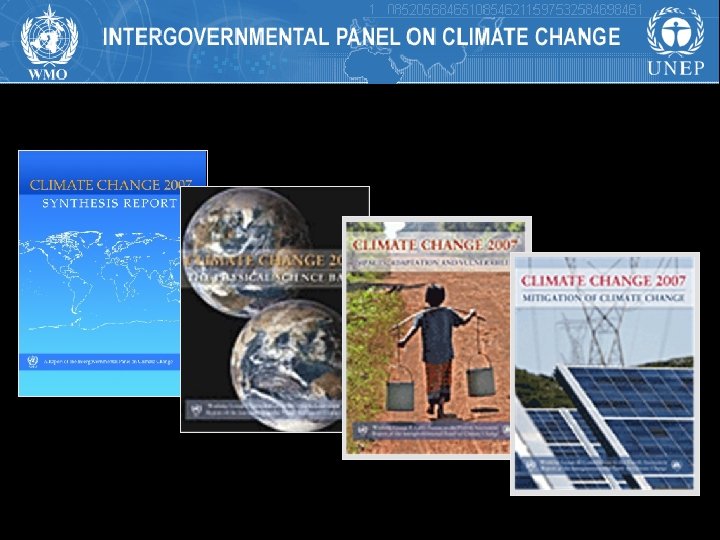
1 st Assessment: 1990 Lead to the creation of the Intergovernmental Negotiating Committee for a UN Framework Convention on Climate Change (UNFCCC). 2 nd Assessment: 1995 Provided key input to the negotiations that lead to the 1997 Kyoto Protocol. 3 rd Assessment: 2001 Devoted increased attention to regional scale issues 4 th Assessment: 2007 Reported that the warming of the Earth’s climate system was unequivocal, and that most of the observed increase in global average temperatures since the mid-20 th century is very likely due to the observed increase in anthropogenic greenhouse gas concentrations.
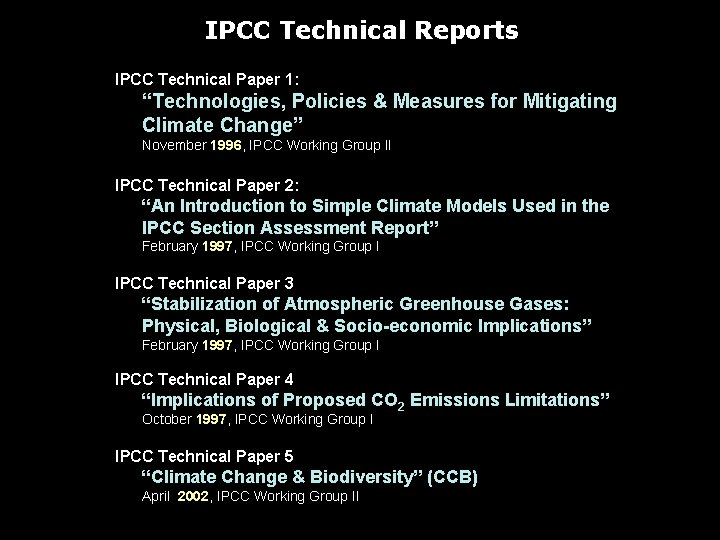
IPCC Technical Reports IPCC Technical Paper 1: “Technologies, Policies & Measures for Mitigating Climate Change” November 1996, IPCC Working Group II IPCC Technical Paper 2: “An Introduction to Simple Climate Models Used in the IPCC Section Assessment Report” February 1997, IPCC Working Group I IPCC Technical Paper 3 “Stabilization of Atmospheric Greenhouse Gases: Physical, Biological & Socio-economic Implications” February 1997, IPCC Working Group I IPCC Technical Paper 4 “Implications of Proposed CO 2 Emissions Limitations” October 1997, IPCC Working Group I IPCC Technical Paper 5 “Climate Change & Biodiversity” (CCB) April 2002, IPCC Working Group II
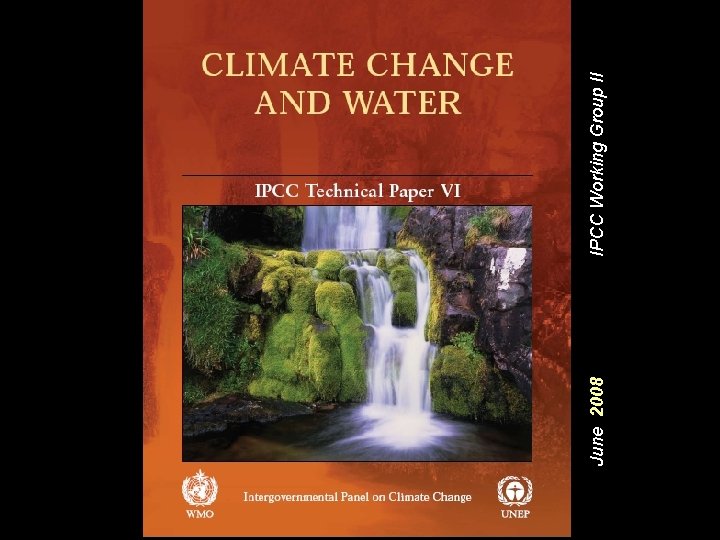
June 2008 IPCC Working Group II
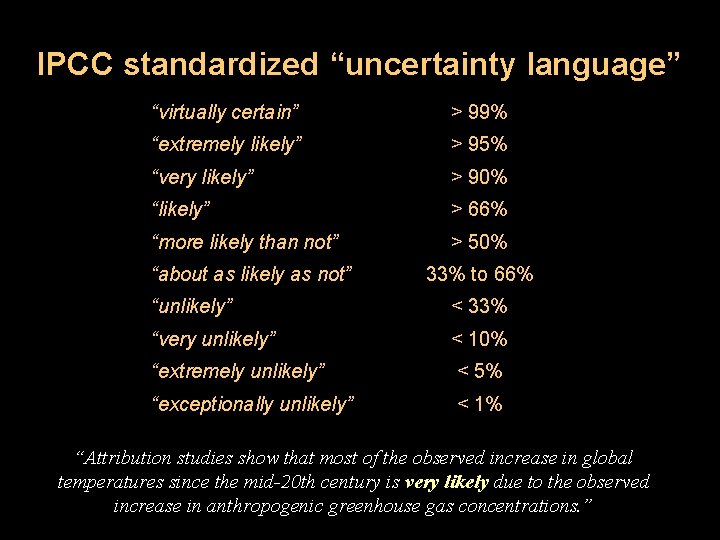
IPCC standardized “uncertainty language” “virtually certain” > 99% “extremely likely” > 95% “very likely” > 90% “likely” > 66% “more likely than not” > 50% “about as likely as not” 33% to 66% “unlikely” < 33% “very unlikely” < 10% “extremely unlikely” < 5% “exceptionally unlikely” < 1% “Attribution studies show that most of the observed increase in global temperatures since the mid-20 th century is very likely due to the observed increase in anthropogenic greenhouse gas concentrations. ”
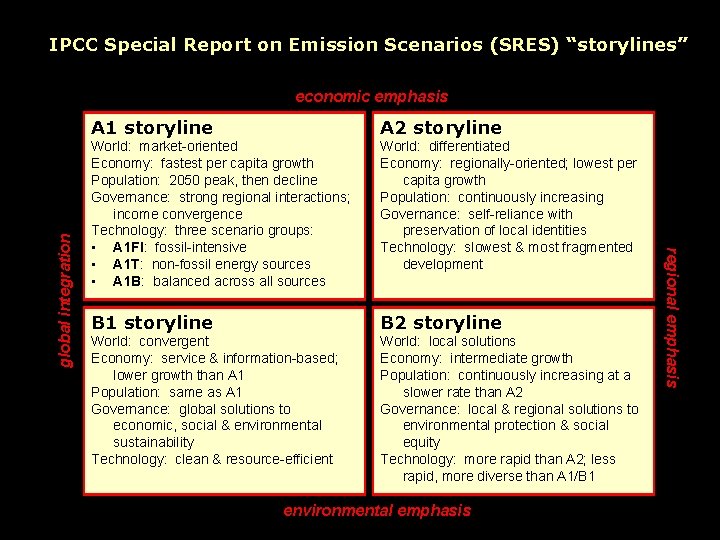
IPCC Special Report on Emission Scenarios (SRES) “storylines” A 1 storyline A 2 storyline World: market-oriented Economy: fastest per capita growth Population: 2050 peak, then decline Governance: strong regional interactions; income convergence Technology: three scenario groups: • A 1 FI: fossil-intensive • A 1 T: non-fossil energy sources • A 1 B: balanced across all sources World: differentiated Economy: regionally-oriented; lowest per capita growth Population: continuously increasing Governance: self-reliance with preservation of local identities Technology: slowest & most fragmented development B 1 storyline B 2 storyline World: convergent Economy: service & information-based; lower growth than A 1 Population: same as A 1 Governance: global solutions to economic, social & environmental sustainability Technology: clean & resource-efficient World: local solutions Economy: intermediate growth Population: continuously increasing at a slower rate than A 2 Governance: local & regional solutions to environmental protection & social equity Technology: more rapid than A 2; less rapid, more diverse than A 1/B 1 environmental emphasis regional emphasis global integration economic emphasis
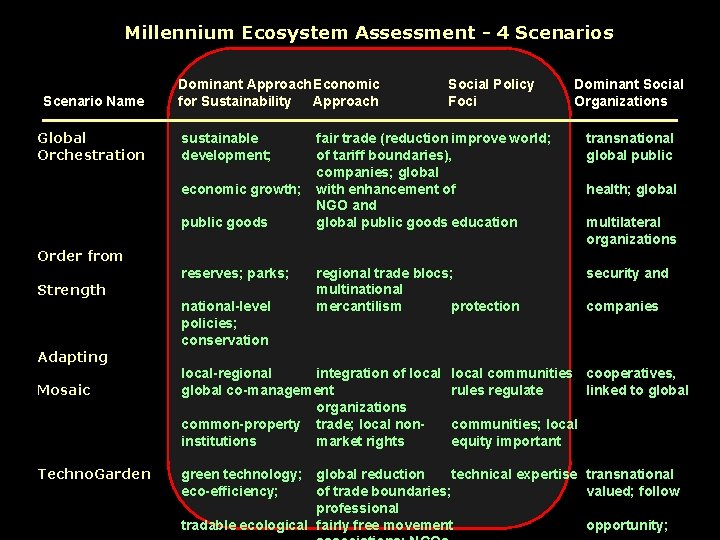
Millennium Ecosystem Assessment - 4 Scenarios Scenario Name Global Orchestration Dominant Approach. Economic for Sustainability Approach sustainable development; economic growth; public goods Social Policy Foci Dominant Social Organizations fair trade (reduction improve world; of tariff boundaries), companies; global with enhancement of NGO and global public goods education transnational global public regional trade blocs; multinational mercantilism protection security and health; global multilateral organizations Order from reserves; parks; Strength national-level policies; conservation companies Adapting Mosaic Techno. Garden local-regional integration of local global co-management organizations common-property trade; local noninstitutions market rights local communities cooperatives, rules regulate linked to global communities; local equity important green technology; global reduction technical expertise transnational eco-efficiency; of trade boundaries; valued; follow professional tradable ecological fairly free movement opportunity;
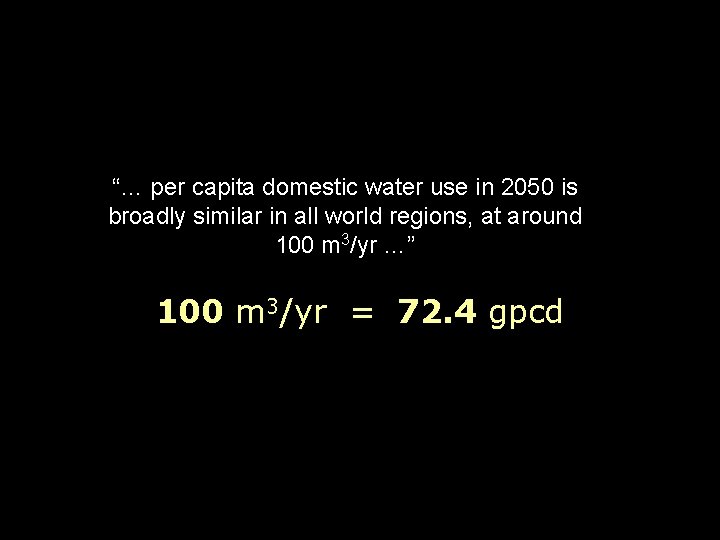
“… per capita domestic water use in 2050 is broadly similar in all world regions, at around 100 m 3/yr …” 100 m 3/yr = 72. 4 gpcd
total column water vapor the amount of water vapor contained in a column over a given area on Earth cryosphere the sum of snow, ice & frozen water on land – said to store about 75% of the world’s fresh water