
What is VLSI and Why You Should Care
- Slides: 21
What is VLSI and Why You Should Care Dr. Joseph Elias Adjunct Faculty, ECE Department Modeling MTS, Cypress Semiconductor 1
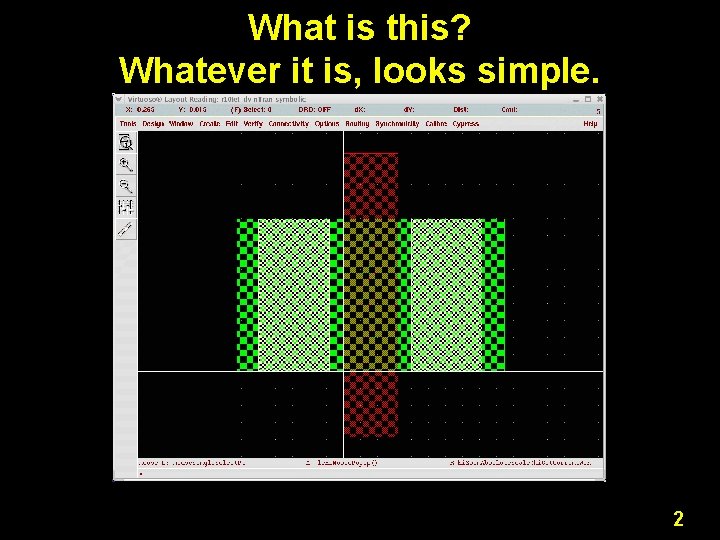
What is this? Whatever it is, looks simple. 2
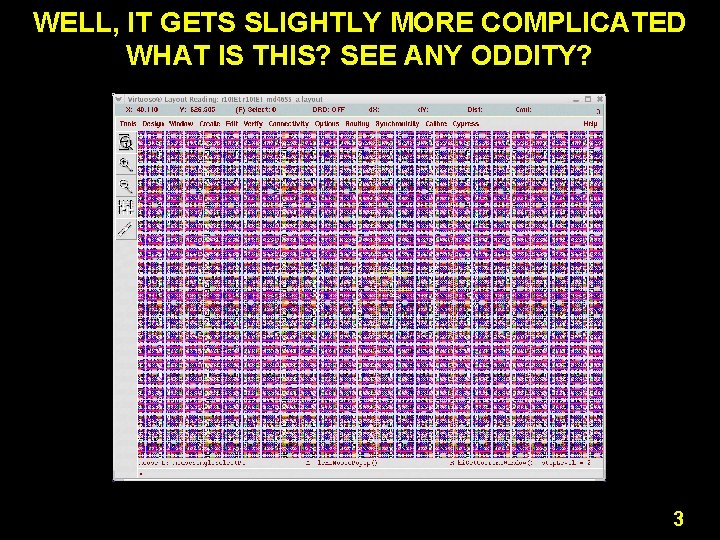
WELL, IT GETS SLIGHTLY MORE COMPLICATED WHAT IS THIS? SEE ANY ODDITY? 3
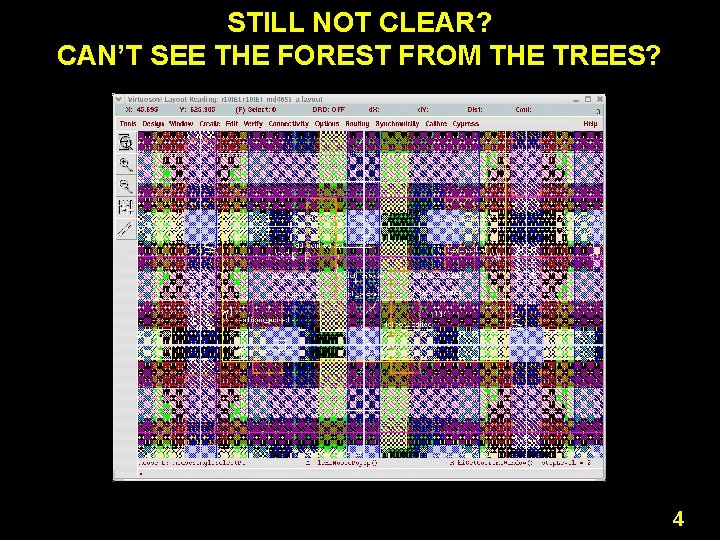
STILL NOT CLEAR? CAN’T SEE THE FOREST FROM THE TREES? 4
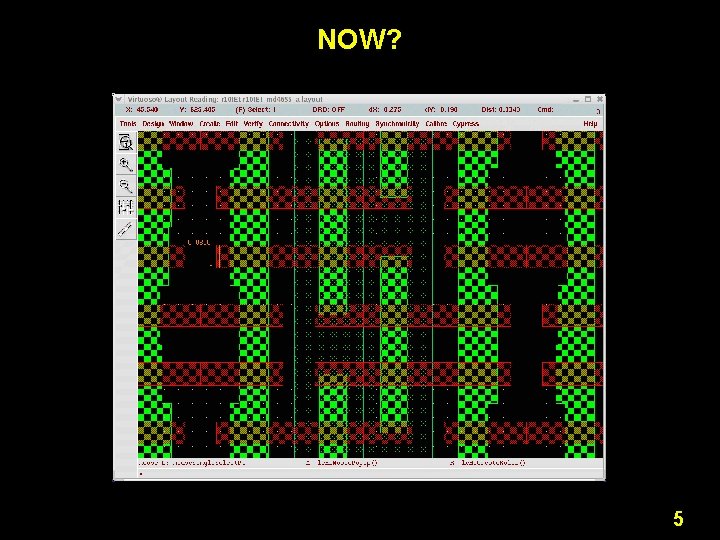
NOW? 5
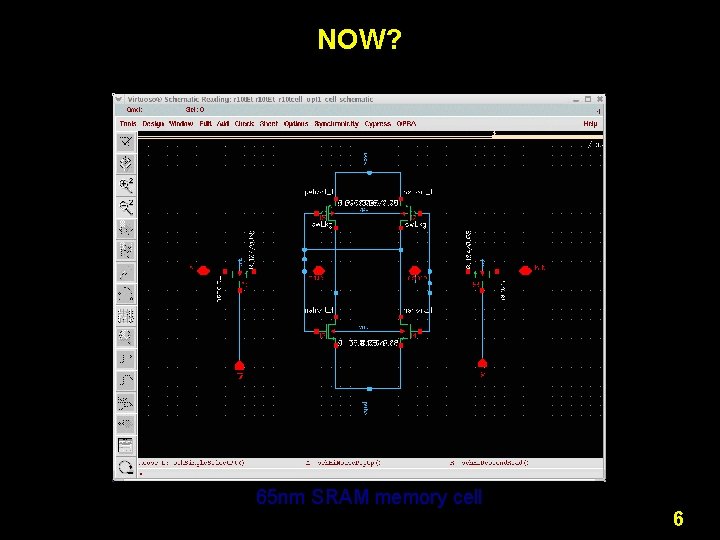
NOW? 65 nm SRAM memory cell 6
Who am I? • Graduated from UK, 1989, BSEE – Electro-magnetics, EMC, one laser class – No hard-core semiconductor class • Masters, Ph. D. , Rice University – Laser interaction with semiconductors – Semiconductor research with Texas Instruments • • • Texas Instruments, 1995 -2000 Cypress Semiconductor, 2000 -present UK, 2000 -present I was sitting in your seat 15 -20 years ago I thought I was going to be a laser / EM engineer 7
Why you should care? • One day you will graduate, then what? • Do you want to apply your previous class work? • What are your options for jobs or grad school? – Possibilities you may not have thought of • EE 584 Intro to VLSI may help your career decision 8
But I’ve heard the class is hard…. . • EE 584 is taught as a segue to the real world – We use industry-standard tools – Class work is encouraged to be done at Cypress • Job prospects from recent students: – Cypress has hired 19 (16 full time, 3 co-ops) – TI, Intel, Cisco, Cadence, Silicon Valley start-ups – These are high-paying, cutting-edge companies • “Hard” classes are relative to your expectations – Your competition: thousands of EE grads each year – Are you going to settle for lower echelon jobs? • But can I do the work? – Yes, if you like devices, circuits, programming, … • But I can get a good paying jobs w/o much effort… – Chicken and egg 9
What is expected from an engineer? • Hours: – 8 am 6 pm (nominally) – 7 am 12 am (sometimes) • Skills: – – – – Typing Speaking Reading Programming (SKILL, Perl, Ruby, Shell, XL, … ) Flexibility (try new things) Paying attention, energy, enthusiasm Playing well with others • List is independent of your specialty 10
What can VLSI do for me? • Jobs – Industry is cyclical, but drives economy • Grad school – New technologies to replace Silicon needed • VLSI can lead you to: – – – West Coast (OR, CA) East Coast (NY, MA, NJ, NC) Midwest (IL, MN) Southwest (TX, AZ) International (India, Ireland, Germany, Denmark, England, Japan, Taiwan, China) 11
What do you learn/use in VLSI? • • • Physics Chemistry Software Presentations Documentation What is important in order to get a job • FALL • SPRING EE 584 VLSI INTRO MWF 9 am EE 589 ADVANCED VLSI MWF 9 am 12
BACKUP 13
What are possible jobs I could do? • Software – Web interfaces: financials, data mining – Scripts to automate manual tasks • Hardware – Production : large volumes (hundreds – millions) – Engineering : small volumes (one, two, ten) • Writing – Documentation of what you just did – Simple, yet hard to accomplish • Speaking – Management, communicate effectively – Believable, trustworthy 14
What is a semiconductor? • Small switch • Put lots of them together, you get a chip • Used in – – – Cell phones Computers Toasters Cars Everything ……… 15
How much does an engineer get paid? • 2001 IEEE Salary Survey: Median $93 k (n=9, 700) – Experience level – This is not a starting salary – Typically takes 10 years work experience – Education level – Ph. D. = Master + (3 to 5) – Master = Bachelor + (3 to 5) 16
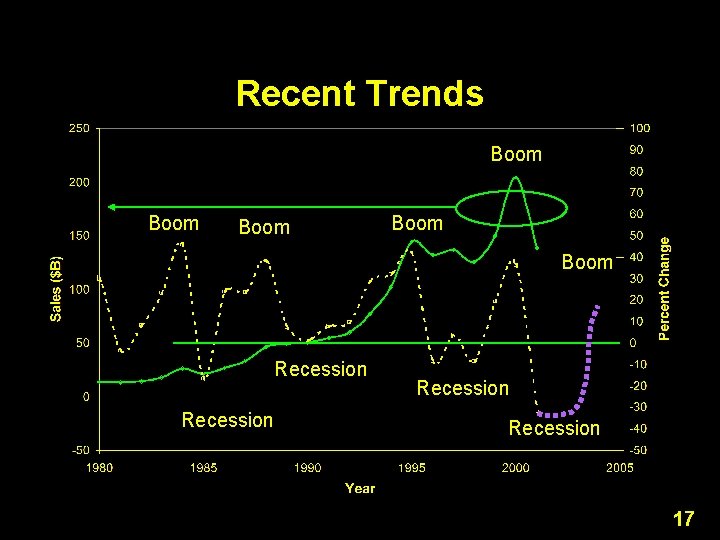
Recent Trends Boom Boom Recession 17
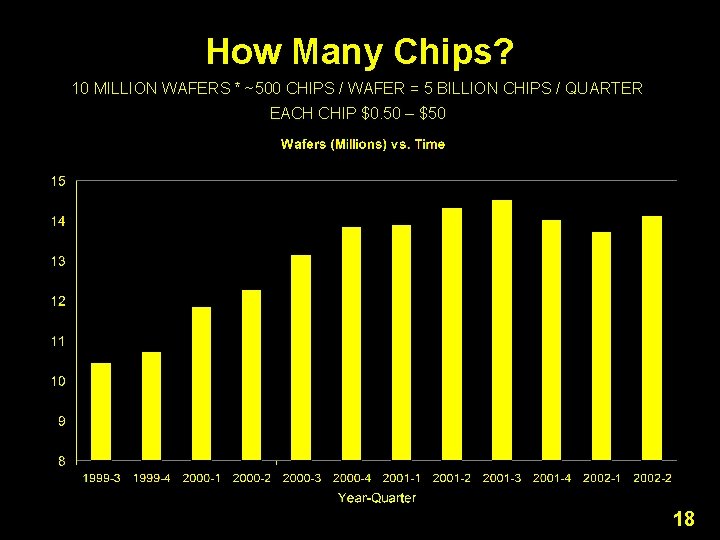
How Many Chips? 10 MILLION WAFERS * ~500 CHIPS / WAFER = 5 BILLION CHIPS / QUARTER EACH CHIP $0. 50 – $50 18
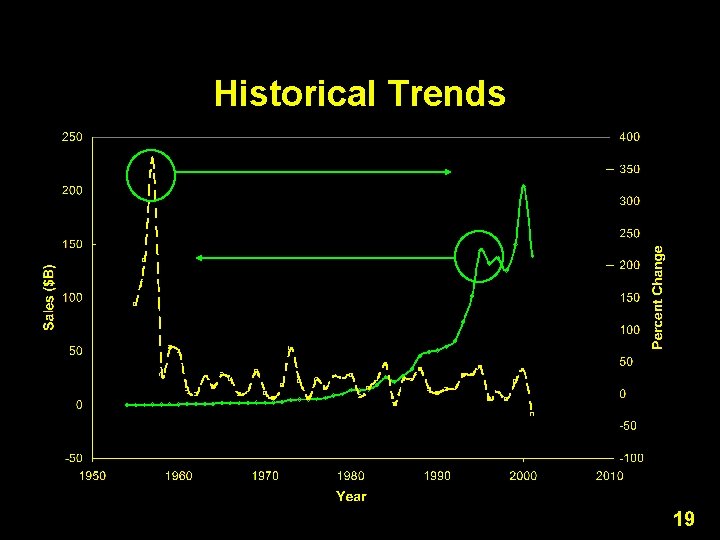
Historical Trends 19
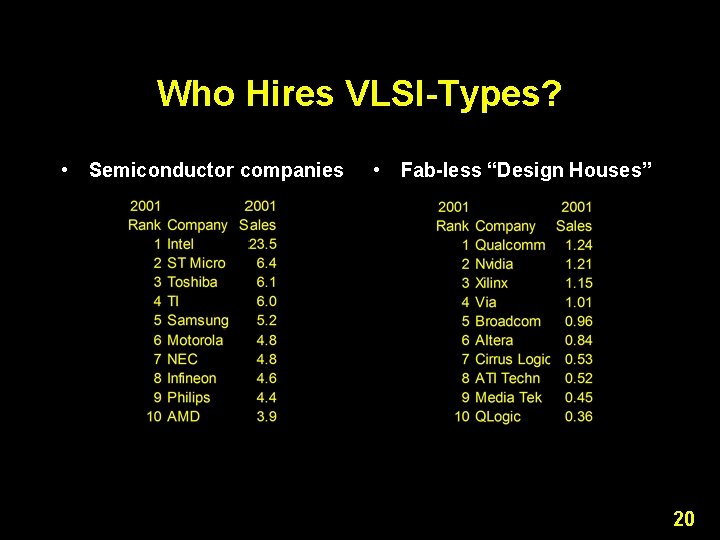
Who Hires VLSI-Types? • Semiconductor companies • Fab-less “Design Houses” 20
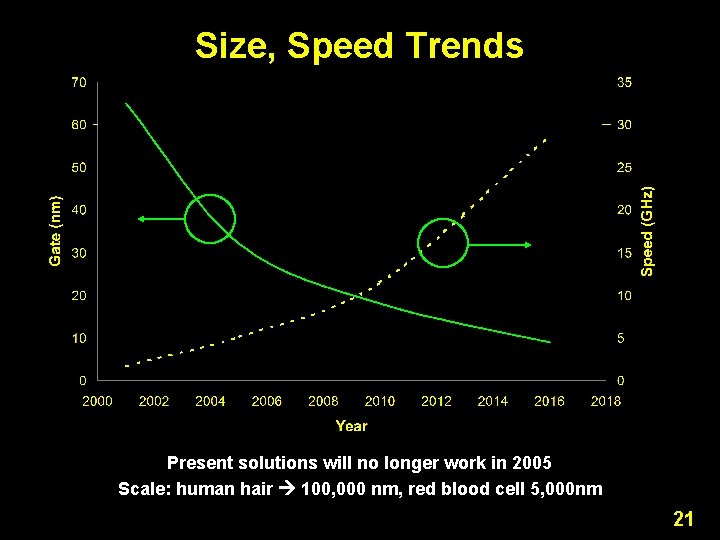
Size, Speed Trends Present solutions will no longer work in 2005 Scale: human hair 100, 000 nm, red blood cell 5, 000 nm 21