
What is Variation Variation is the diversity among


- Slides: 38
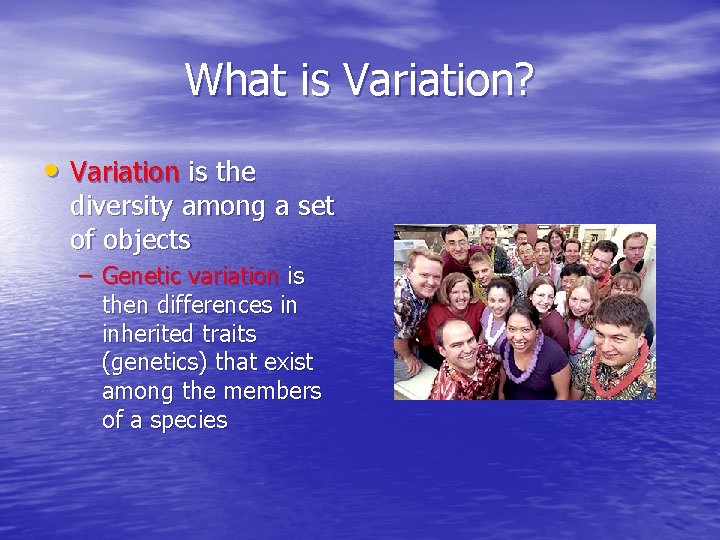
What is Variation? • Variation is the diversity among a set of objects – Genetic variation is then differences in inherited traits (genetics) that exist among the members of a species
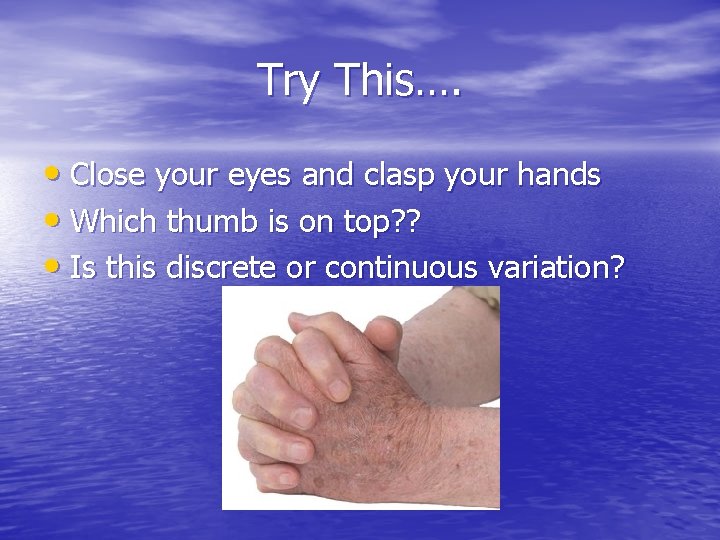
Observing Variation • Tall vs Short people • Curly vs straight hair • Bent vs straight • • • thumb Attached vs separate earlobes Pointed vs smooth hairline Rolling your tongue
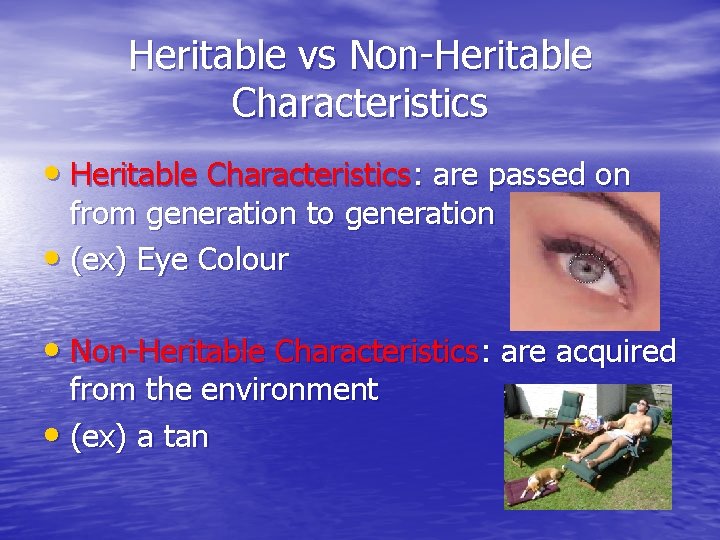
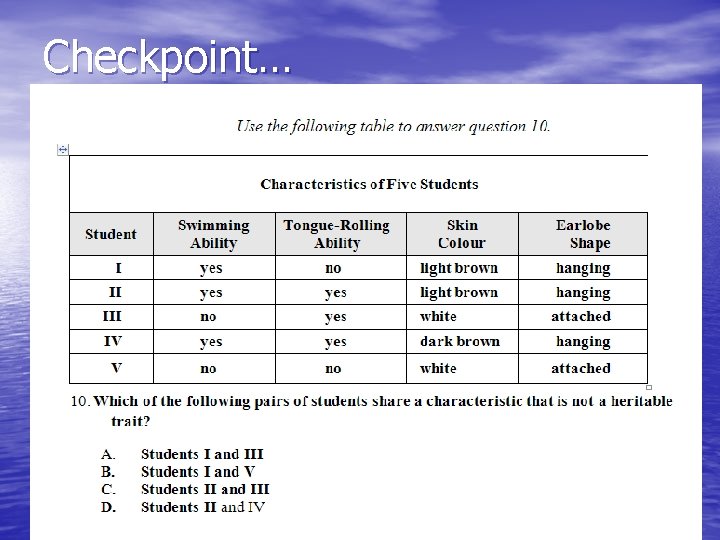
Heritable vs Non-Heritable Characteristics • Heritable Characteristics: are passed on from generation to generation • (ex) Eye Colour • Non-Heritable Characteristics: are acquired from the environment • (ex) a tan
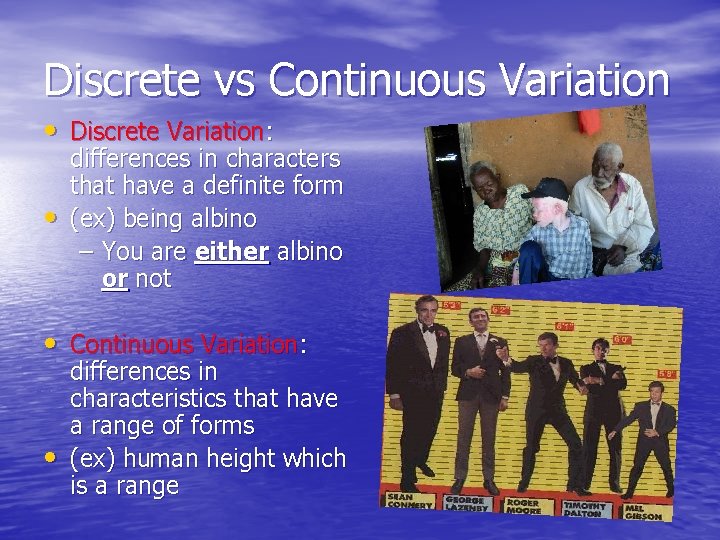
Discrete vs Continuous Variation • Discrete Variation: • differences in characters that have a definite form (ex) being albino – You are either albino or not • Continuous Variation: • differences in characteristics that have a range of forms (ex) human height which is a range
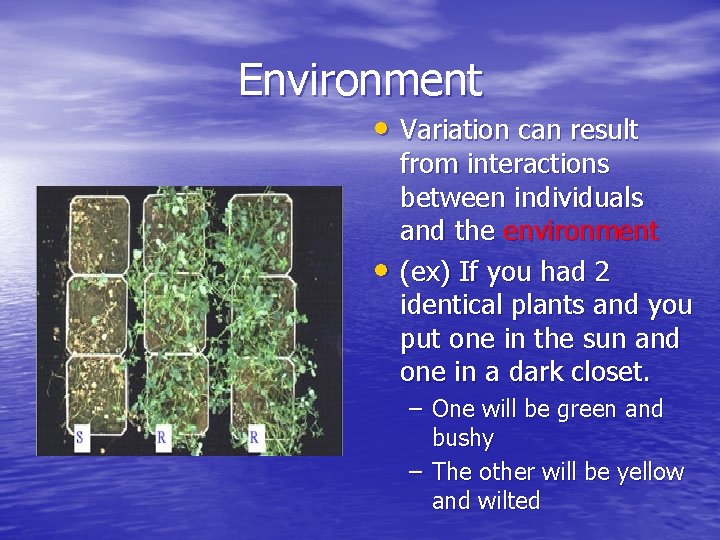
Environment • Variation can result • from interactions between individuals and the environment (ex) If you had 2 identical plants and you put one in the sun and one in a dark closet. – One will be green and bushy – The other will be yellow and wilted
Try This…. • Close your eyes and clasp your hands • Which thumb is on top? ? • Is this discrete or continuous variation?
What is Asexual Reproduction? • Asexual Reproduction: involves only one parent and doesn’t require the fusion of sex cells – The offspring is identical to its parent – Video
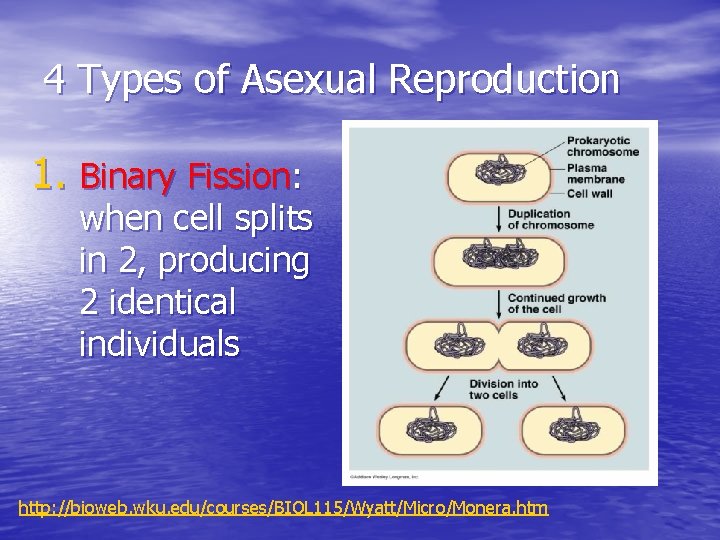
4 Types of Asexual Reproduction 1. Binary Fission: when cell splits in 2, producing 2 identical individuals http: //bioweb. wku. edu/courses/BIOL 115/Wyatt/Micro/Monera. htm
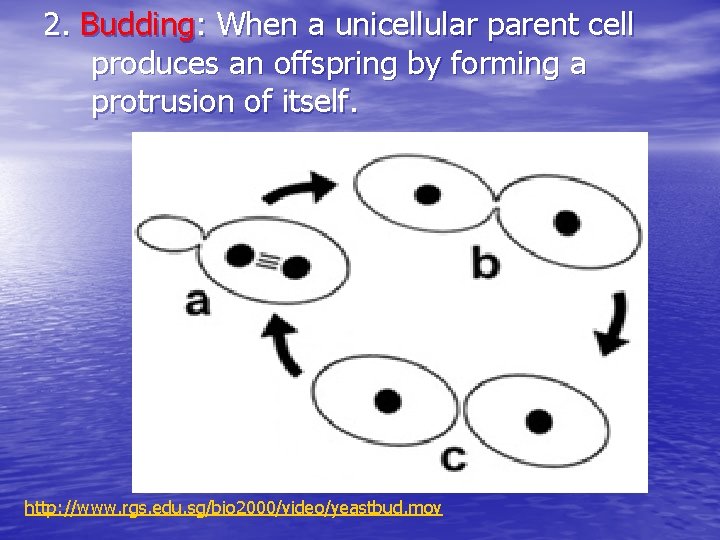
2. Budding: When a unicellular parent cell produces an offspring by forming a protrusion of itself. http: //www. rgs. edu. sg/bio 2000/video/yeastbud. mov
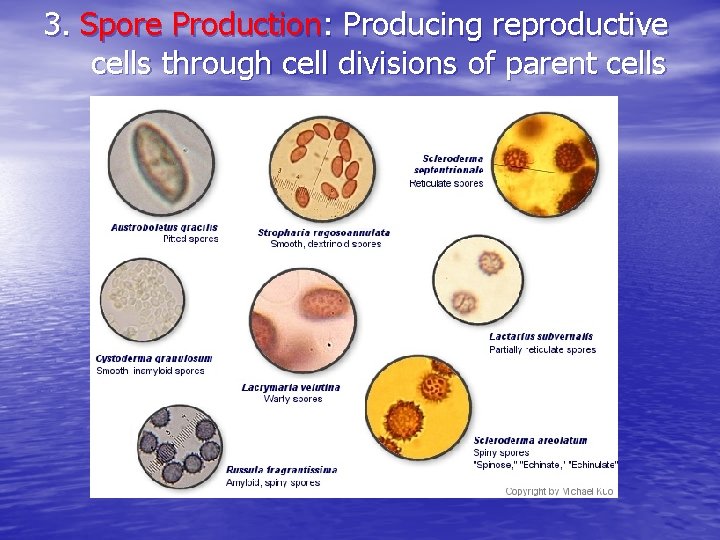
3. Spore Production: Producing reproductive cells through cell divisions of parent cells
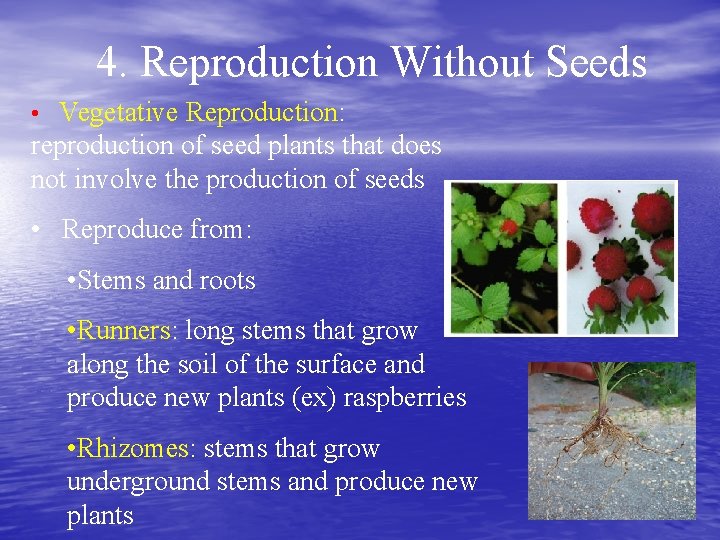
4. Reproduction Without Seeds • Vegetative Reproduction: reproduction of seed plants that does not involve the production of seeds • Reproduce from: • Stems and roots • Runners: long stems that grow along the soil of the surface and produce new plants (ex) raspberries • Rhizomes: stems that grow underground stems and produce new plants
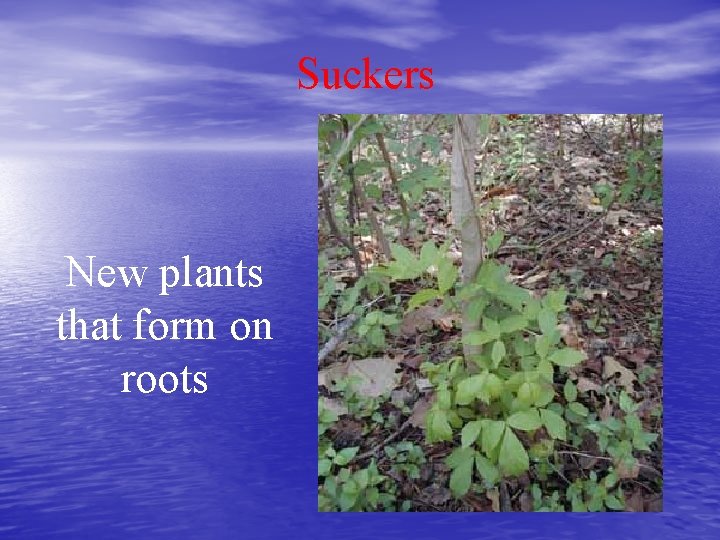
Suckers New plants that form on roots
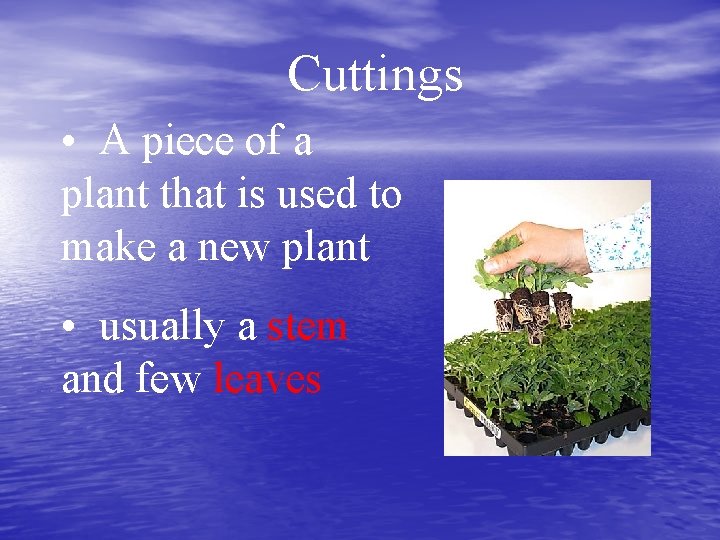
Cuttings • A piece of a plant that is used to make a new plant • usually a stem and few leaves
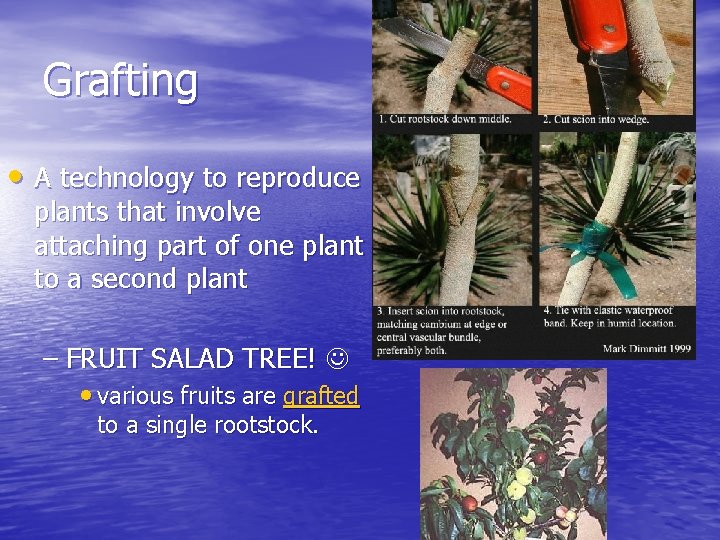
Grafting • A technology to reproduce plants that involve attaching part of one plant to a second plant – FRUIT SALAD TREE! • various fruits are grafted to a single rootstock.
Asexual Reproduction • Big Bang - Sheldon
Checkpoint…
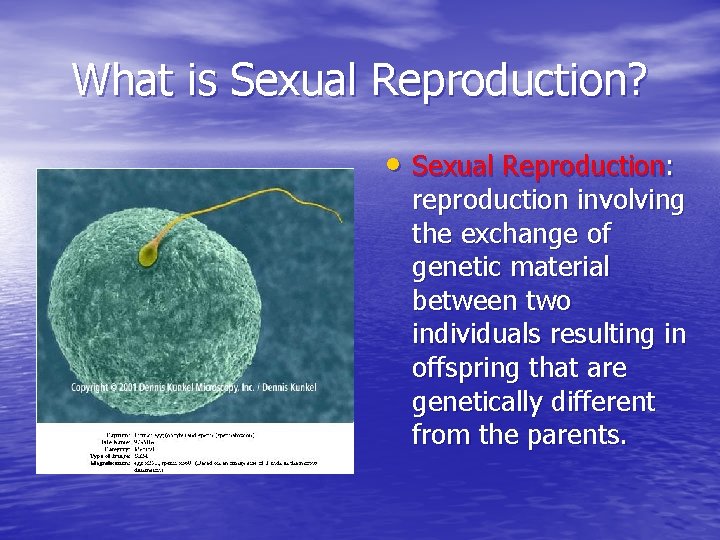
What is Sexual Reproduction? • Sexual Reproduction: reproduction involving the exchange of genetic material between two individuals resulting in offspring that are genetically different from the parents.
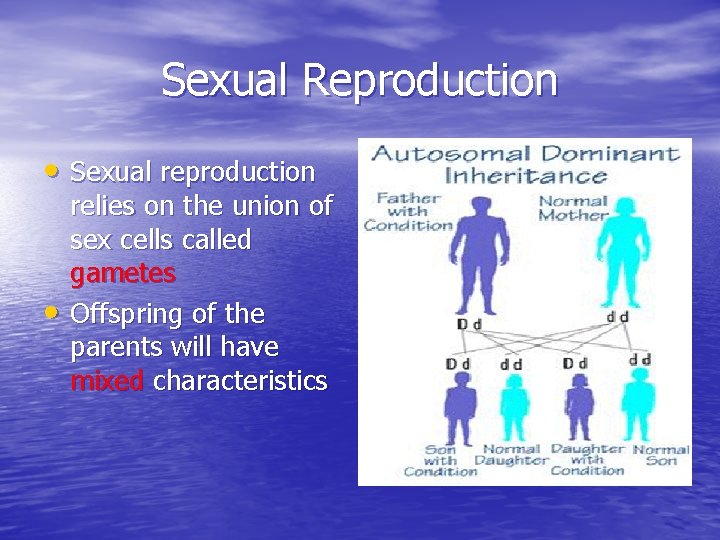
Sexual Reproduction • Sexual reproduction • relies on the union of sex cells called gametes Offspring of the parents will have mixed characteristics
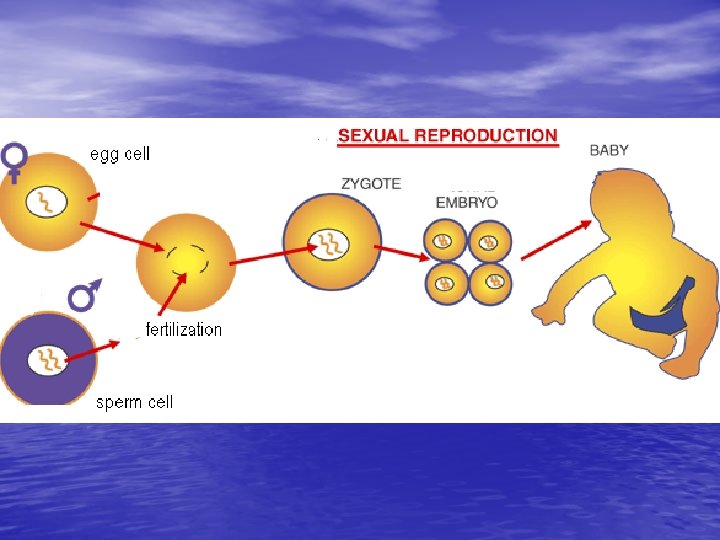
Sexual Reproduction in Animals • Male gametes are called sperm • Female gametes are called egg cells or ova • When a sperm and egg cell come together this is called fertilization – Only 1 sperm cell can fertilize an egg cell
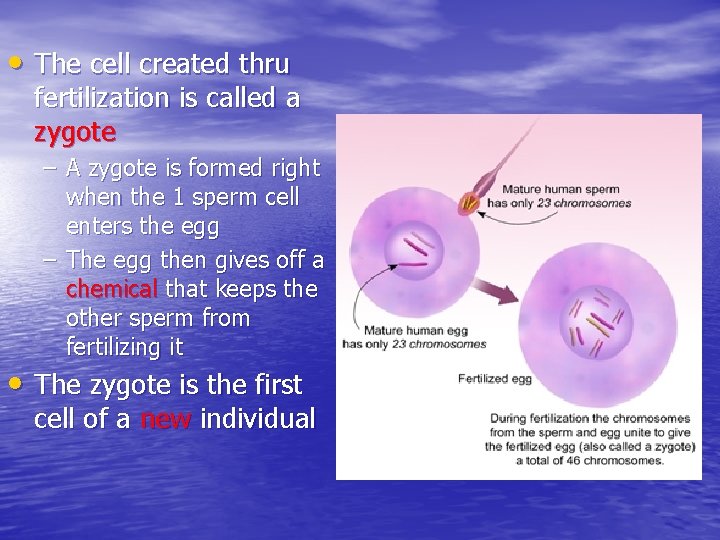
• The cell created thru fertilization is called a zygote – A zygote is formed right when the 1 sperm cell enters the egg – The egg then gives off a chemical that keeps the other sperm from fertilizing it • The zygote is the first cell of a new individual
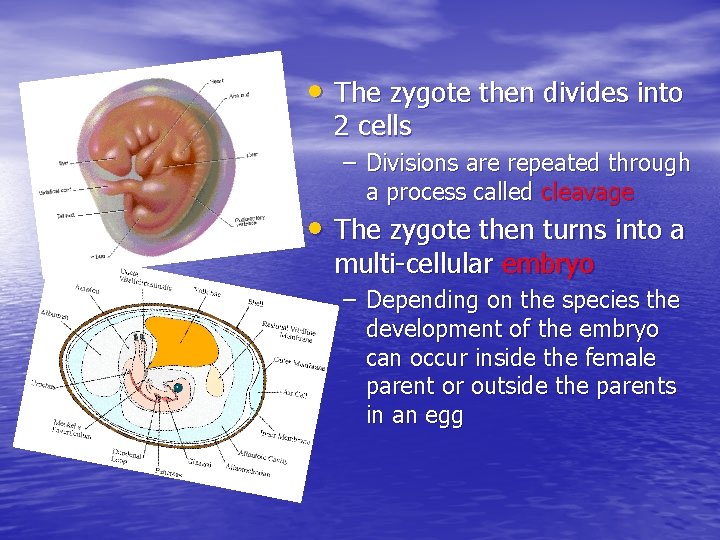
• The zygote then divides into 2 cells – Divisions are repeated through a process called cleavage • The zygote then turns into a multi-cellular embryo – Depending on the species the development of the embryo can occur inside the female parent or outside the parents in an egg
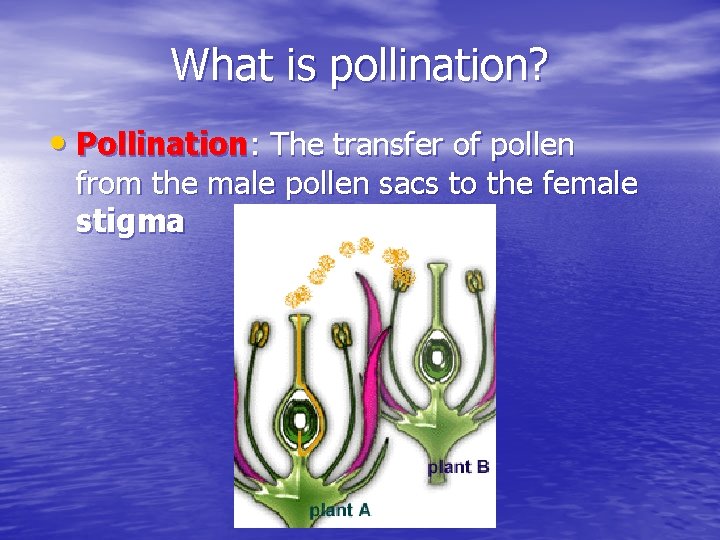
What is pollination? • Pollination: The transfer of pollen from the male pollen sacs to the female stigma
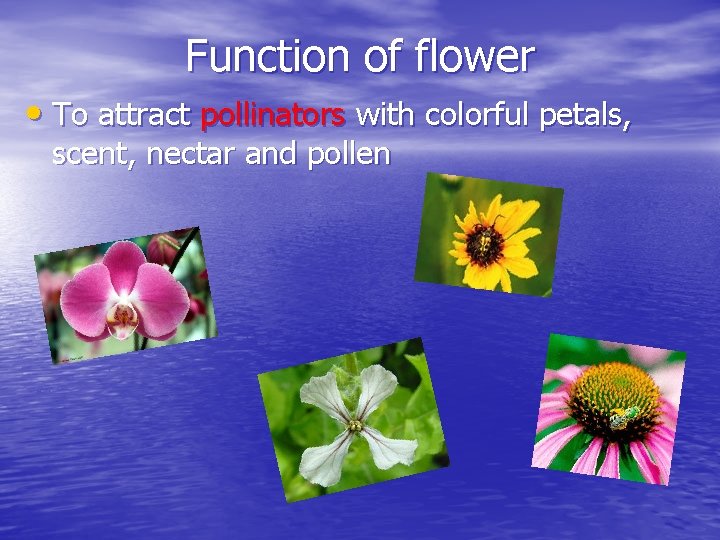
Function of flower • To attract pollinators with colorful petals, scent, nectar and pollen
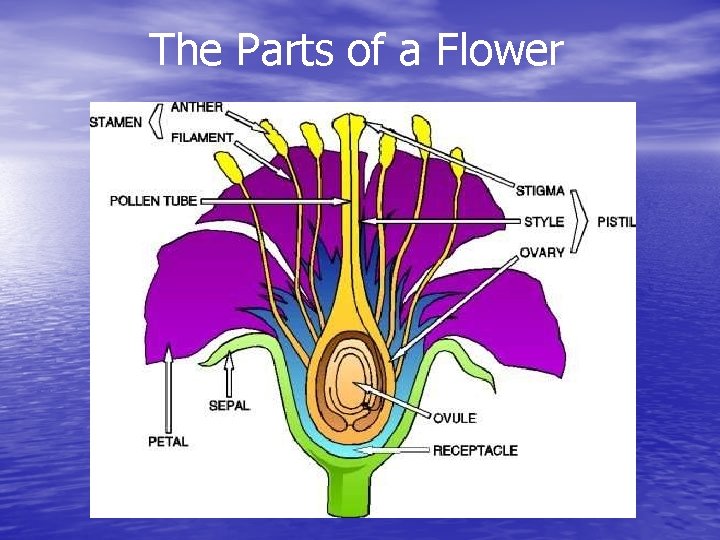
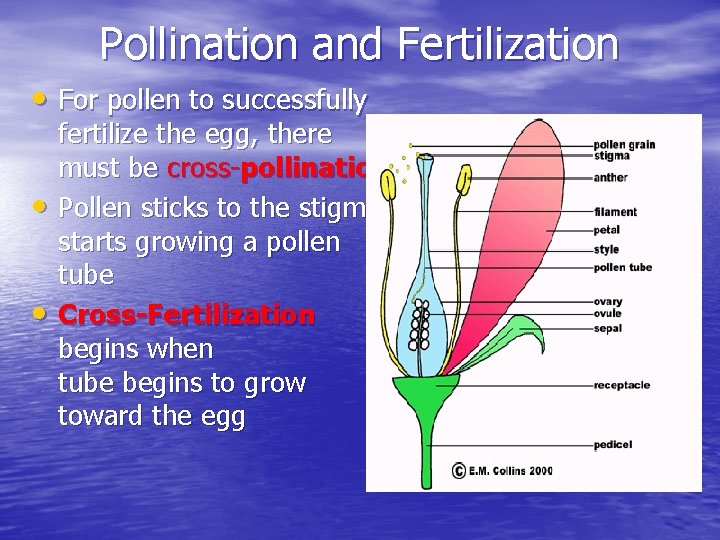
The Parts of a Flower
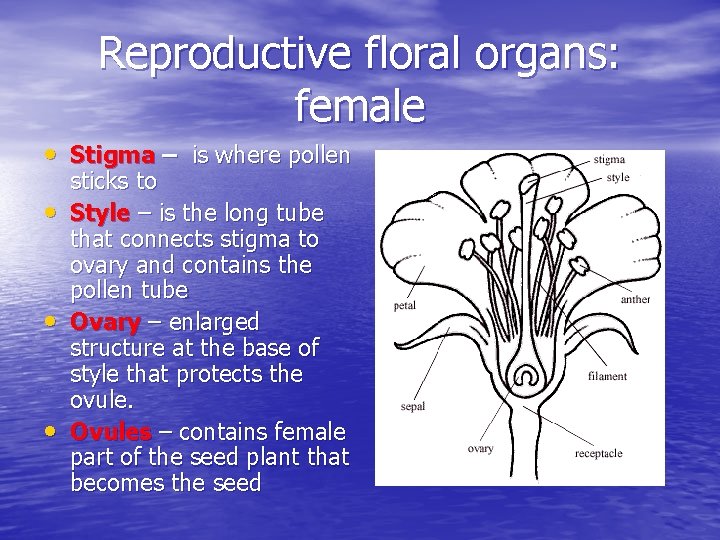
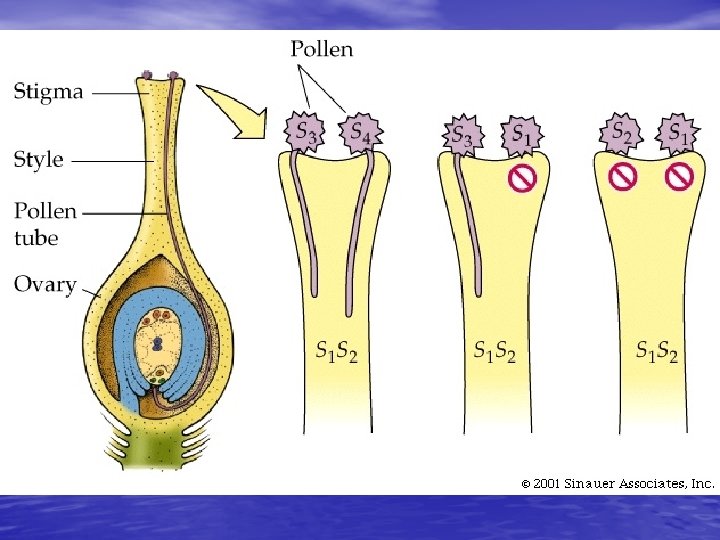
Reproductive floral organs: female • Stigma – is where pollen • • • sticks to Style – is the long tube that connects stigma to ovary and contains the pollen tube Ovary – enlarged structure at the base of style that protects the ovule. Ovules – contains female part of the seed plant that becomes the seed
Sexual reproduction • In animals is easy because you have separate male and female individuals. • In flowering plants it’s not so easy, because most flowers have both male and female parts in them, called perfect flowers.
Strategies to avoid selfpollination • Perfect flowers have both male and female organs, so plants have strategies to avoid self -pollination: • 1. Timing – male and female structures mature at different times • 2. Structure –male and female organs prevent self-pollination (imperfect flower) • 3. Biochemical – chemical on surface of pollen and stigma that stops the pollen tube from being formed in the same flower
Pollination and Fertilization • For pollen to successfully • • fertilize the egg, there must be cross-pollination Pollen sticks to the stigma, starts growing a pollen tube Cross-Fertilization begins when tube begins to grow toward the egg
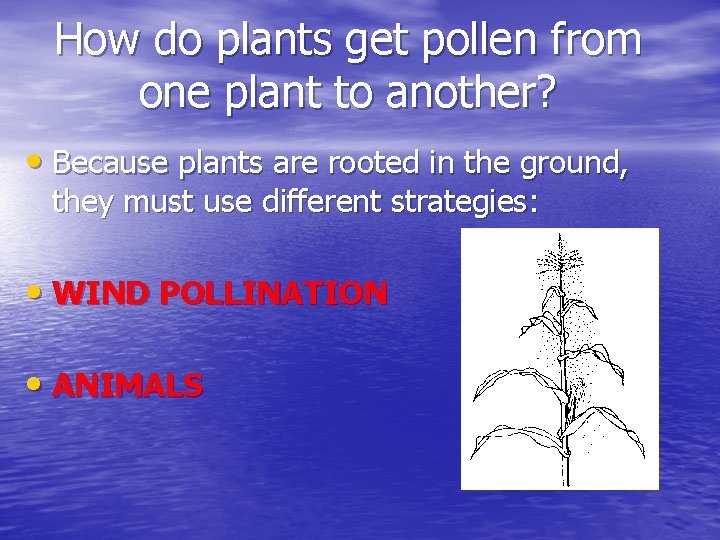
How do plants get pollen from one plant to another? • Because plants are rooted in the ground, they must use different strategies: • WIND POLLINATION • ANIMALS
ANIMAL POLLINATORS • Many flowering plants rely on animals for cross-pollination: • Insects – bees, wasps, flies, butterflies, moths • Birds – hummingbirds, honey creepers • Mammals – bats, mice, monkeys • Even some reptiles and amphibians!
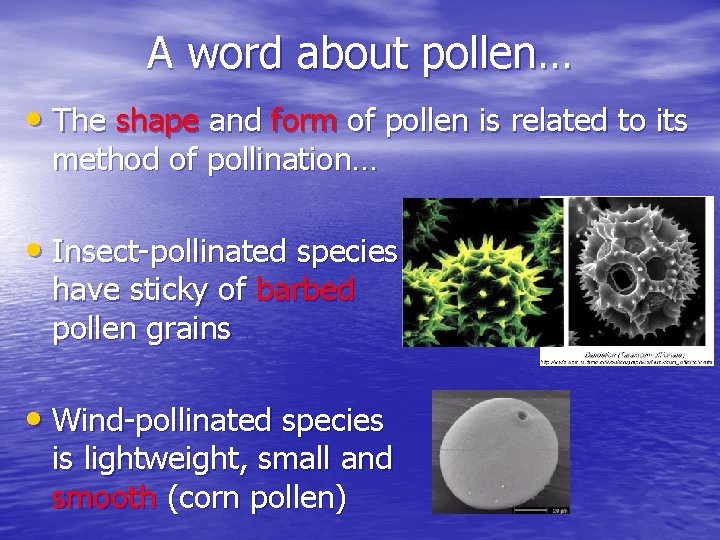
A word about pollen… • The shape and form of pollen is related to its method of pollination… • Insect-pollinated species have sticky of barbed pollen grains • Wind-pollinated species is lightweight, small and smooth (corn pollen)
Advantages and Disadvantages of Asexual Reproduction • Are able to reproduce rapidly – (ex) strep – (ex) white blood cells • Limited variation • If conditions become unfavorable whole populations can be wiped out • Puts all energy into reproduction of itself
Advantages and Disadvantages of Sexual Reproduction • Reproduce a lot slower – (ex) human’s • Provides lots of variation • Takes a lot of energy into making enough gametes so that fertilization can occur – Have a limited amount of offspring – (ex) sperm and pollen
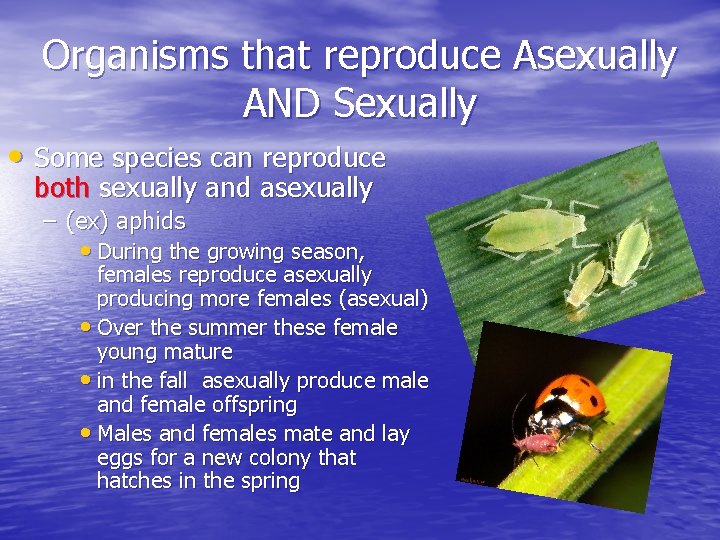
Organisms that reproduce Asexually AND Sexually • Some species can reproduce both sexually and asexually – (ex) aphids • During the growing season, females reproduce asexually producing more females (asexual) • Over the summer these female young mature • in the fall asexually produce male and female offspring • Males and females mate and lay eggs for a new colony that hatches in the spring