
What is Urbanisation Match the heads to the
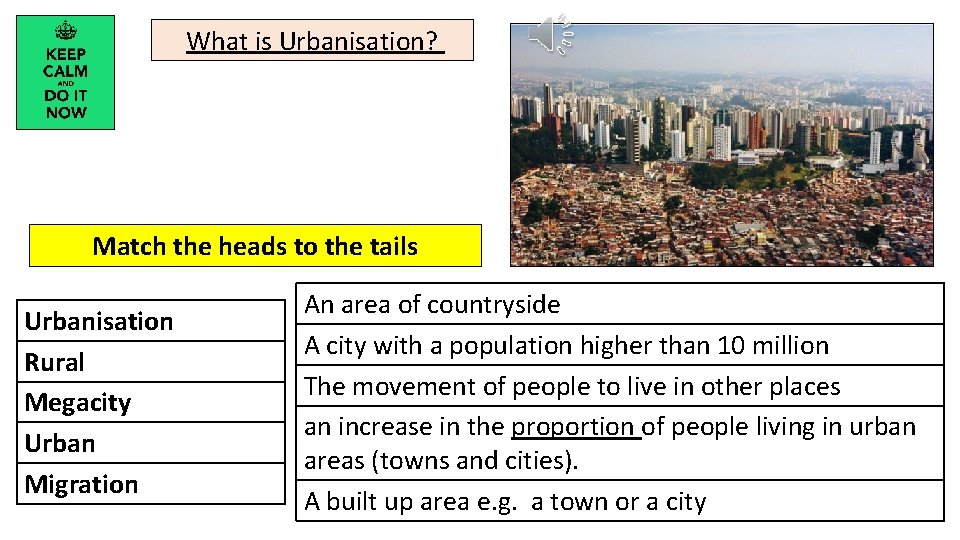
What is Urbanisation? Match the heads to the tails Urbanisation Rural Megacity Urban Migration An area of countryside A city with a population higher than 10 million The movement of people to live in other places an increase in the proportion of people living in urban areas (towns and cities). A built up area e. g. a town or a city
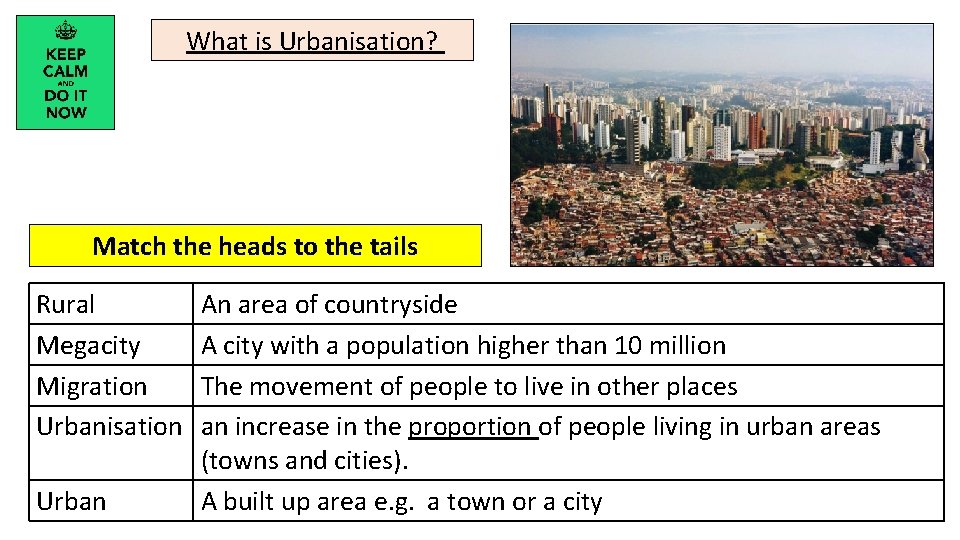
What is Urbanisation? Match the heads to the tails Rural Megacity Migration Urbanisation Urban An area of countryside A city with a population higher than 10 million The movement of people to live in other places an increase in the proportion of people living in urban areas (towns and cities). A built up area e. g. a town or a city
Learning aim: To investigate changes in world population ‘so that’ I can explain why urban growth is so rapid in the modern world Success criteria I can accurately describe trends in population growth and urbanisation I can explain the increase in urbanisation rates around the world
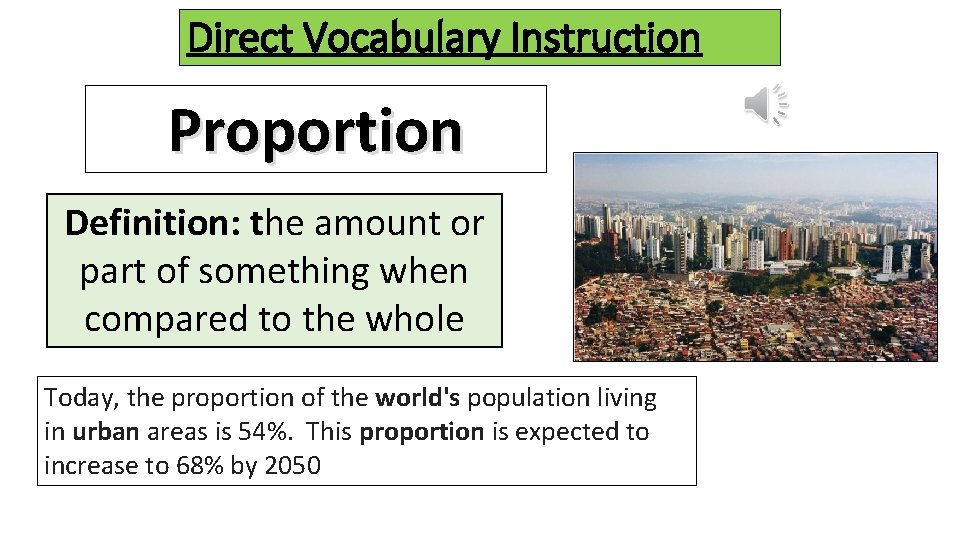
Direct Vocabulary Instruction Proportion Definition: the amount or part of something when compared to the whole Today, the proportion of the world's population living in urban areas is 54%. This proportion is expected to increase to 68% by 2050
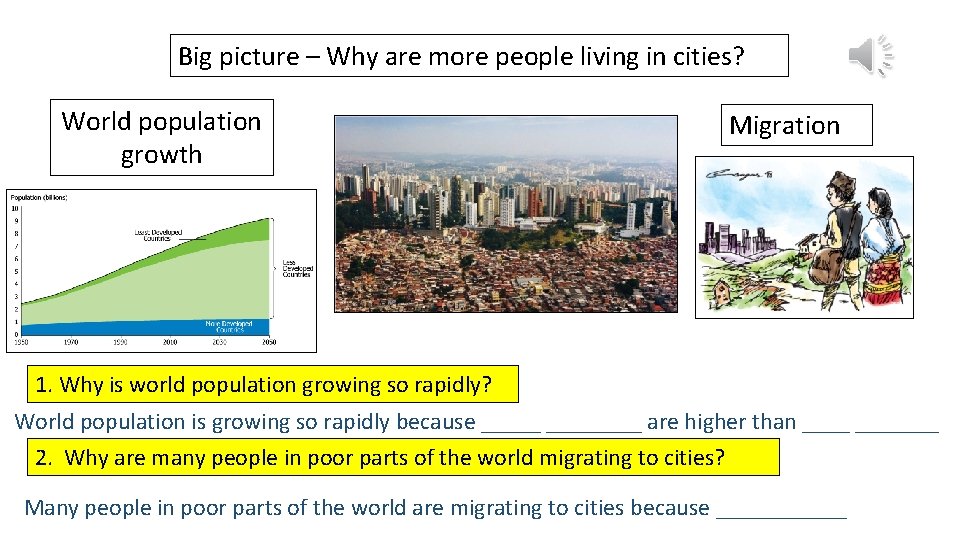
Big picture – Why are more people living in cities? World population growth Migration 1. Why is world population growing so rapidly? World population is growing so rapidly because ________ are higher than _______ 2. Why are many people in poor parts of the world migrating to cities? Many people in poor parts of the world are migrating to cities because ______
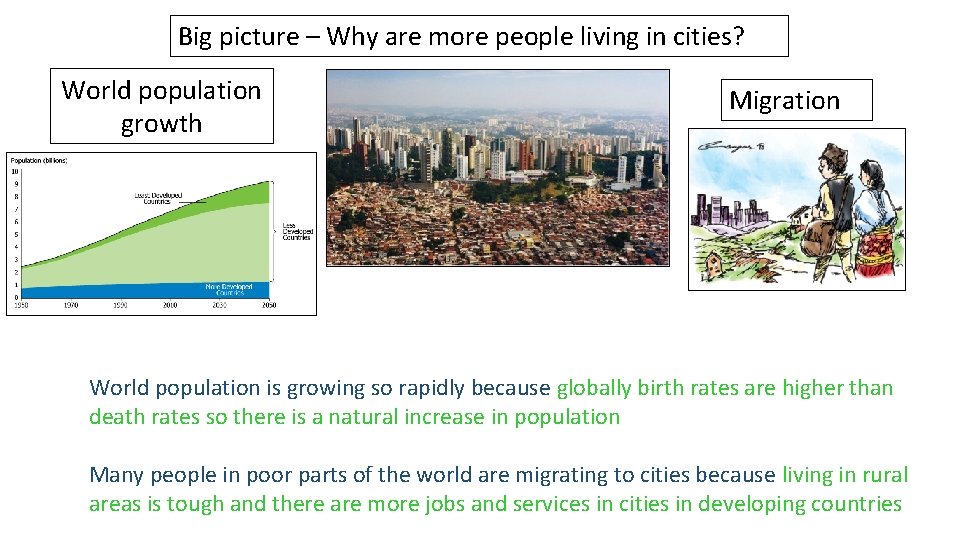
Big picture – Why are more people living in cities? World population growth Migration World population is growing so rapidly because globally birth rates are higher than death rates so there is a natural increase in population Many people in poor parts of the world are migrating to cities because living in rural areas is tough and there are more jobs and services in cities in developing countries
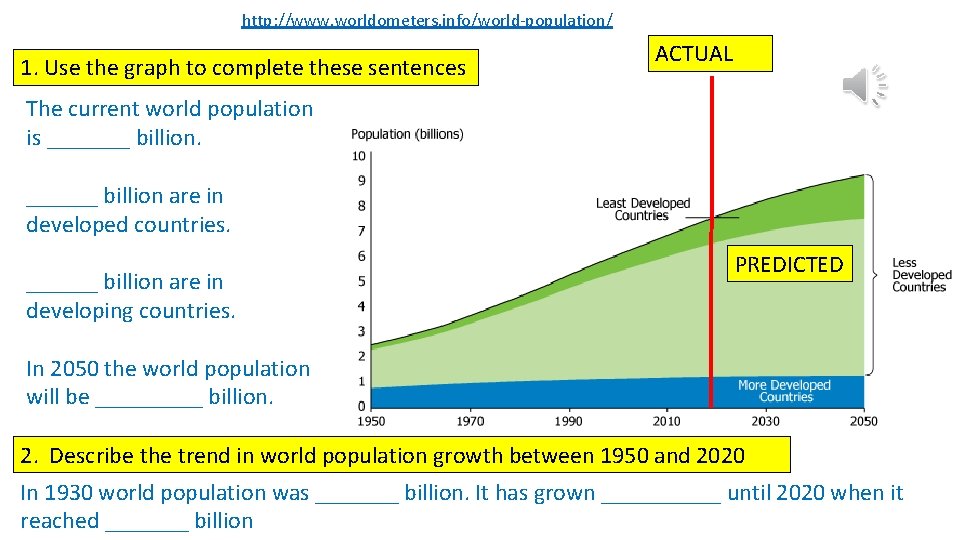
http: //www. worldometers. info/world-population/ 1. Use the graph to complete these sentences ACTUAL The current world population is _______ billion are in developed countries. ______ billion are in developing countries. PREDICTED In 2050 the world population will be _____ billion. 2. Describe the trend in world population growth between 1950 and 2020 In 1930 world population was _______ billion. It has grown _____ until 2020 when it reached _______ billion
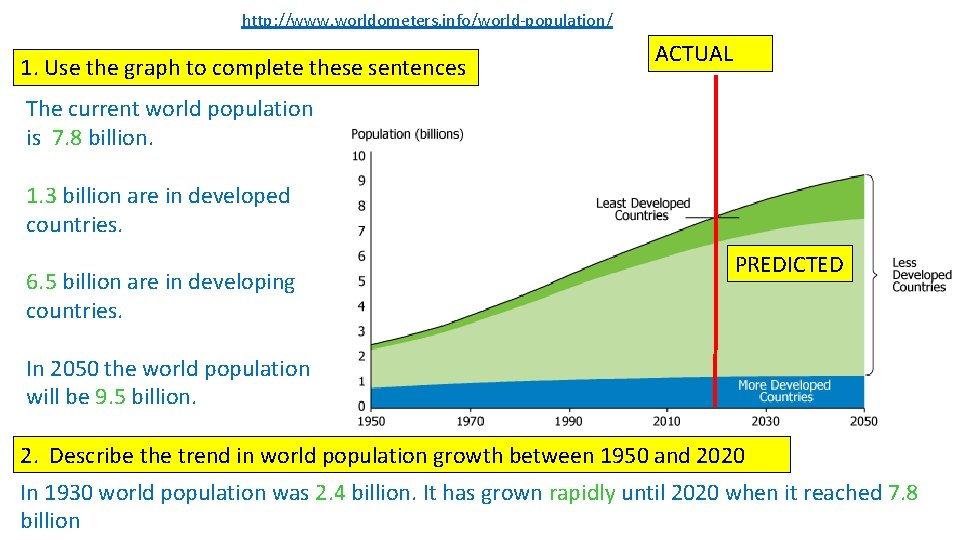
http: //www. worldometers. info/world-population/ 1. Use the graph to complete these sentences ACTUAL The current world population is 7. 8 billion. 1. 3 billion are in developed countries. 6. 5 billion are in developing countries. PREDICTED In 2050 the world population will be 9. 5 billion. 2. Describe the trend in world population growth between 1950 and 2020 In 1930 world population was 2. 4 billion. It has grown rapidly until 2020 when it reached 7. 8 billion
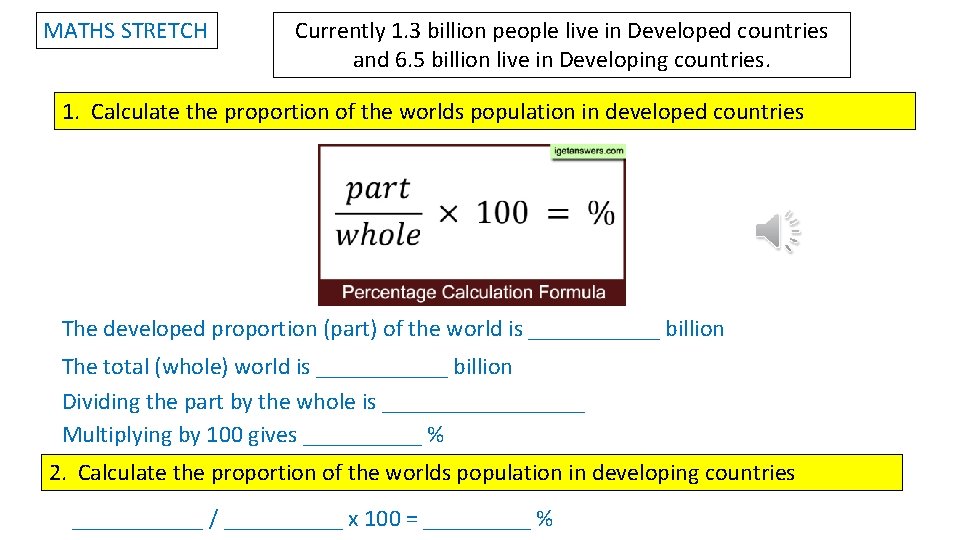
MATHS STRETCH Currently 1. 3 billion people live in Developed countries and 6. 5 billion live in Developing countries. 1. Calculate the proportion of the worlds population in developed countries The developed proportion (part) of the world is ______ billion The total (whole) world is ______ billion Dividing the part by the whole is _________ Multiplying by 100 gives _____ % 2. Calculate the proportion of the worlds population in developing countries ______ / _____ x 100 = _____ %
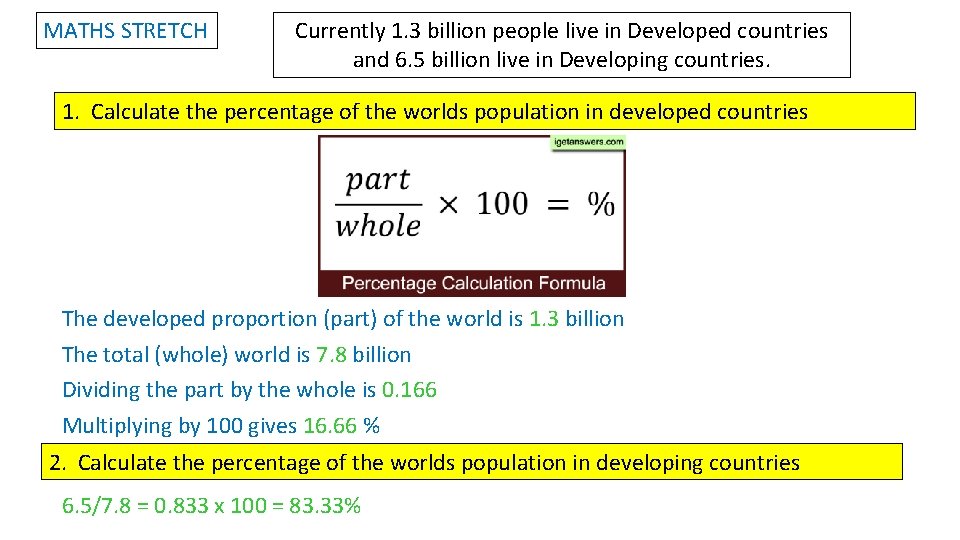
MATHS STRETCH Currently 1. 3 billion people live in Developed countries and 6. 5 billion live in Developing countries. 1. Calculate the percentage of the worlds population in developed countries The developed proportion (part) of the world is 1. 3 billion The total (whole) world is 7. 8 billion Dividing the part by the whole is 0. 166 Multiplying by 100 gives 16. 66 % 2. Calculate the percentage of the worlds population in developing countries 6. 5/7. 8 = 0. 833 x 100 = 83. 33%
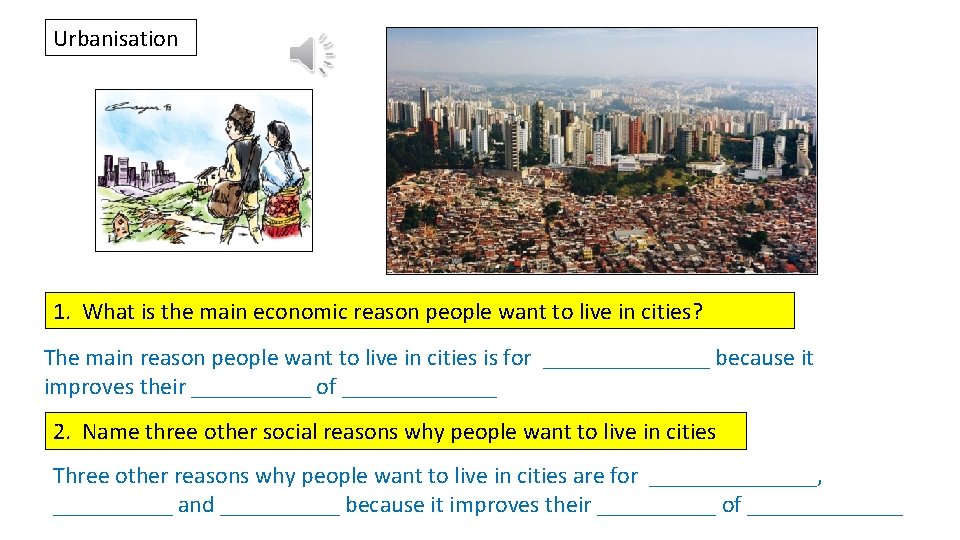
Urbanisation 1. What is the main economic reason people want to live in cities? The main reason people want to live in cities is for _______ because it improves their _____ of _______ 2. Name three other social reasons why people want to live in cities Three other reasons why people want to live in cities are for _______, _____ and _____ because it improves their _____ of _______
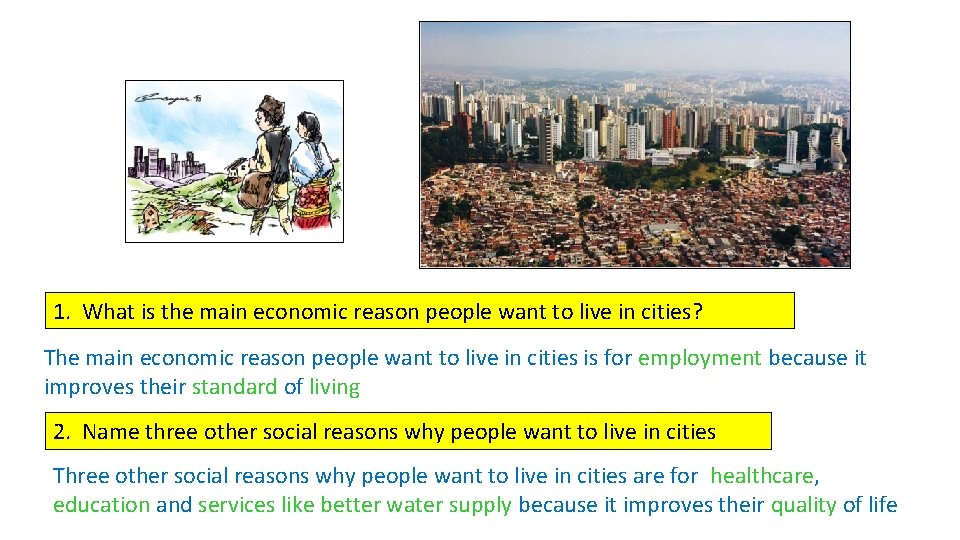
1. What is the main economic reason people want to live in cities? The main economic reason people want to live in cities is for employment because it improves their standard of living 2. Name three other social reasons why people want to live in cities Three other social reasons why people want to live in cities are for healthcare, education and services like better water supply because it improves their quality of life
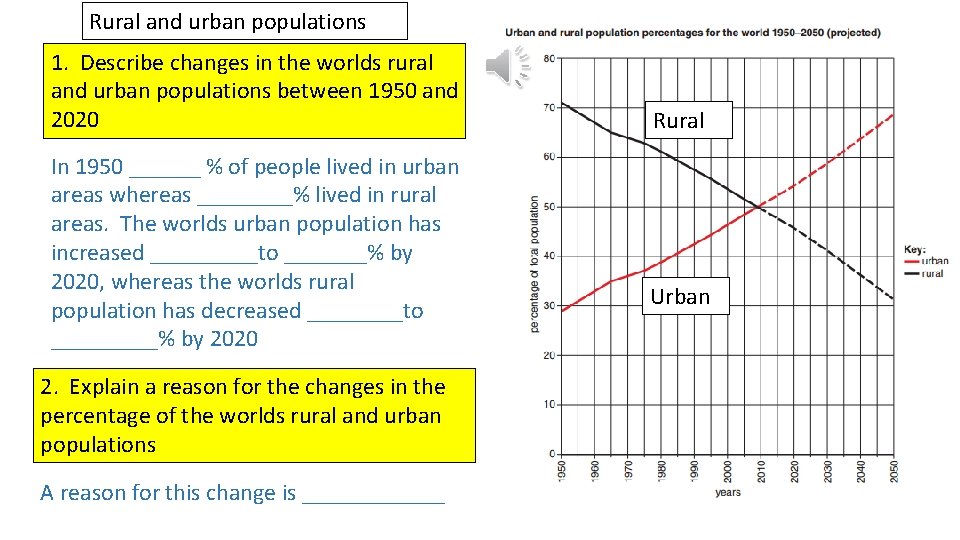
Rural and urban populations 1. Describe changes in the worlds rural and urban populations between 1950 and 2020 In 1950 ______ % of people lived in urban areas whereas ____% lived in rural areas. The worlds urban population has increased _____to _______% by 2020, whereas the worlds rural population has decreased ____to _____% by 2020 2. Explain a reason for the changes in the percentage of the worlds rural and urban populations A reason for this change is ______ Rural Urban
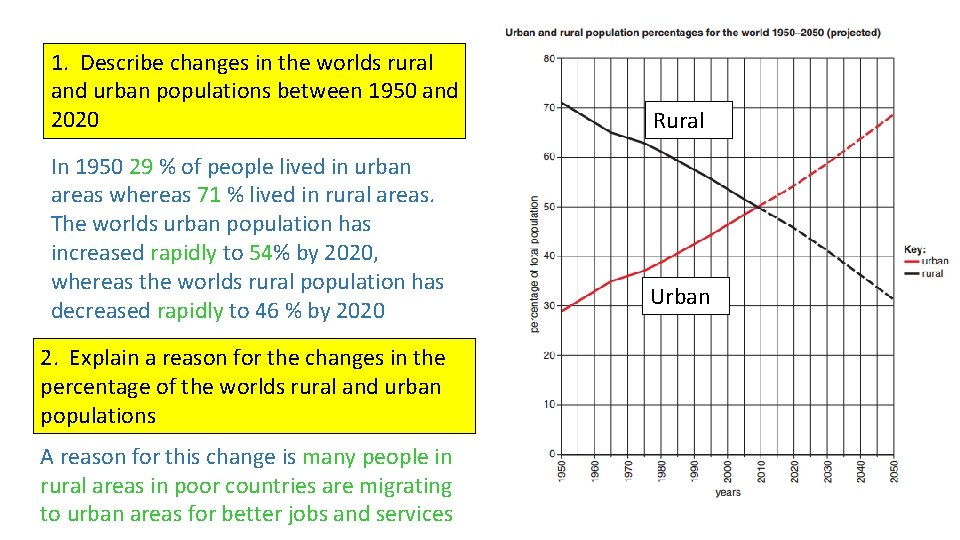
1. Describe changes in the worlds rural and urban populations between 1950 and 2020 In 1950 29 % of people lived in urban areas whereas 71 % lived in rural areas. The worlds urban population has increased rapidly to 54% by 2020, whereas the worlds rural population has decreased rapidly to 46 % by 2020 2. Explain a reason for the changes in the percentage of the worlds rural and urban populations A reason for this change is many people in rural areas in poor countries are migrating to urban areas for better jobs and services Rural Urban
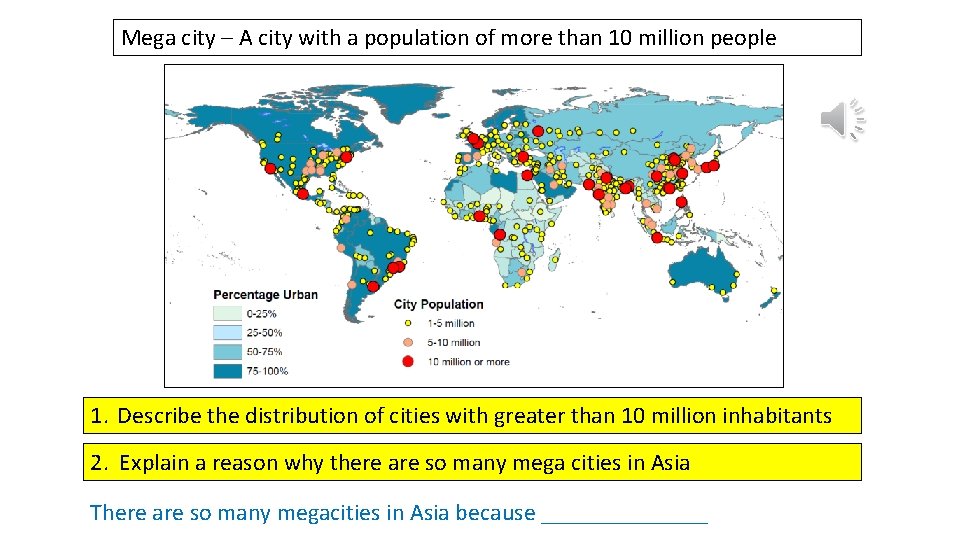
Mega city – A city with a population of more than 10 million people 1. Describe the distribution of cities with greater than 10 million inhabitants 2. Explain a reason why there are so many mega cities in Asia There are so many megacities in Asia because _______
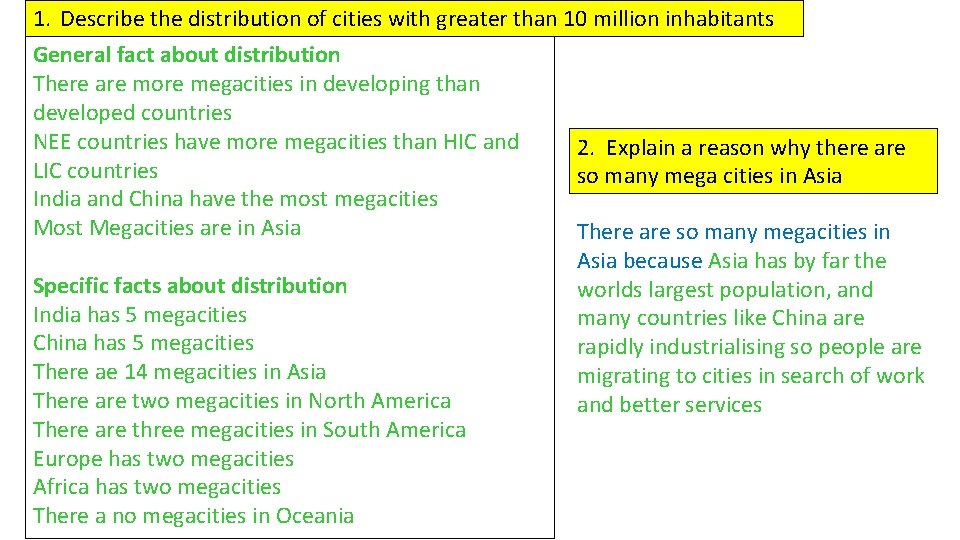
1. Describe the distribution of cities with greater than 10 million inhabitants General fact about distribution There are more megacities in developing than developed countries NEE countries have more megacities than HIC and 2. Explain a reason why there are LIC countries so many mega cities in Asia India and China have the most megacities Most Megacities are in Asia There are so many megacities in Asia because Asia has by far the Specific facts about distribution worlds largest population, and India has 5 megacities many countries like China are China has 5 megacities rapidly industrialising so people are There ae 14 megacities in Asia migrating to cities in search of work There are two megacities in North America and better services There are three megacities in South America Europe has two megacities Africa has two megacities There a no megacities in Oceania
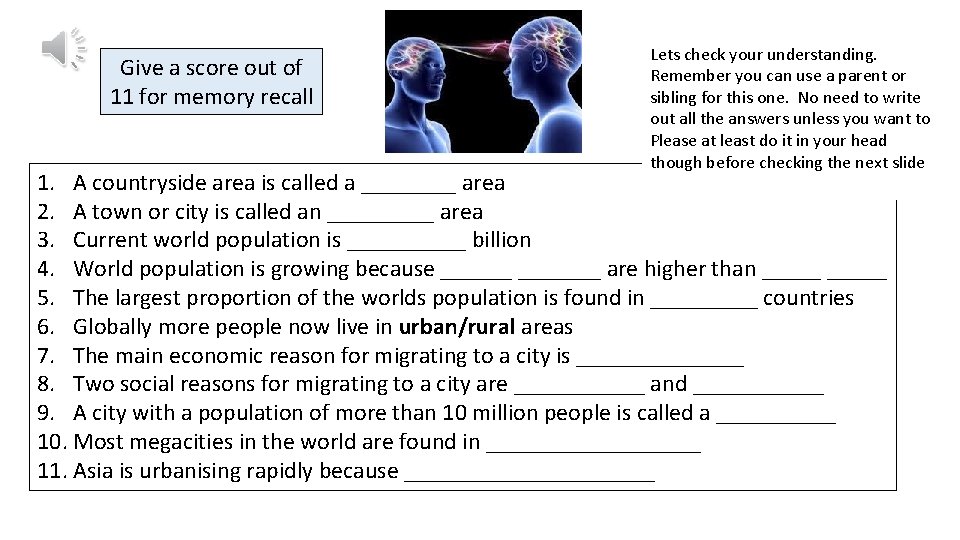
Give a score out of 11 for memory recall Lets check your understanding. Remember you can use a parent or sibling for this one. No need to write out all the answers unless you want to Please at least do it in your head though before checking the next slide 1. A countryside area is called a ____ area 2. A town or city is called an _____ area 3. Current world population is _____ billion 4. World population is growing because _______ are higher than _____ 5. The largest proportion of the worlds population is found in _____ countries 6. Globally more people now live in urban/rural areas 7. The main economic reason for migrating to a city is _______ 8. Two social reasons for migrating to a city are ______ and ______ 9. A city with a population of more than 10 million people is called a _____ 10. Most megacities in the world are found in _________ 11. Asia is urbanising rapidly because ___________
Give a score out of 11 for memory recall 1. A countryside area is called a rural area 2. A town or city is called an urban area 3. Current world population is 7. 8 billion 4. World population is growing because birth rates are higher than death rates 5. The largest proportion of the worlds population is found in developing countries 6. Globally more people now live in urban/rural areas 7. The main economic reason for migrating to a city is employment 8. Two social reasons for migrating to a city are healthcare and education 9. A city with a population of more than 10 million people is called a megacity 10. Most megacities in the world are found in Asia 11. Asia is urbanising rapidly because people are moving to cities to work in new industries to improve their standard of living
![Explain the recent global growth of megacities [4 marks] Megacities are __________ They are](http://slidetodoc.com/presentation_image_h2/7c42b9efa94c8672ba0d09196238edf9/image-19.jpg "Explain the recent global growth of megacities [4 marks] Megacities are __________ They are")
Explain the recent global growth of megacities [4 marks] Megacities are __________ They are rapidly growing in __________ This is because global population is _______ This is also because many countries are _______ This means people are _______
![Explain the recent global growth of megacities [4 marks] Megacities are cities with more](http://slidetodoc.com/presentation_image_h2/7c42b9efa94c8672ba0d09196238edf9/image-20.jpg "Explain the recent global growth of megacities [4 marks] Megacities are cities with more")
Explain the recent global growth of megacities [4 marks] Megacities are cities with more than 10 million people They are rapidly growing in developing countries, particularly in Asia This is because global population is rapidly growing in these parts of the world because birth rates are higher than death rates. it is currently 6. 5 billion in developing countries and 7. 8 million globally. This is also because many developing countries are rapidly industrialising This means people are migrating to cities in search of jobs to improve their standard of living, and to access better services like healthcare and education to improve their quality of life
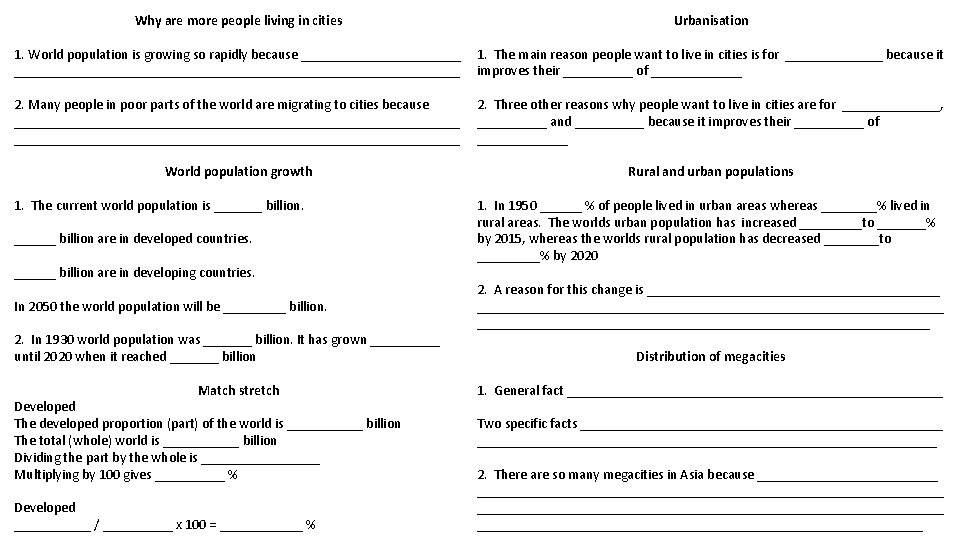
Why are more people living in cities Urbanisation 1. World population is growing so rapidly because ____________________________________________ 1. The main reason people want to live in cities is for _______ because it improves their _____ of _______ 2. Many people in poor parts of the world are migrating to cities because ________________________________________________________________ 2. Three other reasons why people want to live in cities are for _______, _____ and _____ because it improves their _____ of _______ World population growth Rural and urban populations 1. The current world population is _______ billion are in developed countries. ______ billion are in developing countries. In 2050 the world population will be _____ billion. 2. In 1930 world population was _______ billion. It has grown _____ until 2020 when it reached _______ billion Match stretch Developed The developed proportion (part) of the world is ______ billion The total (whole) world is ______ billion Dividing the part by the whole is _________ Multiplying by 100 gives _____ % Developed ______ / _____ x 100 = ______ % 1. In 1950 ______ % of people lived in urban areas whereas ____% lived in rural areas. The worlds urban population has increased _____to _______% by 2015, whereas the worlds rural population has decreased ____to _____% by 2020 2. A reason for this change is _______________________________________________________ Distribution of megacities 1. General fact ___________________________ Two specific facts ___________________________________________________________ 2. There are so many megacities in Asia because ___________________________________________________________________
- Slides: 21