
What is Transportation Engineering Michael A Knodler Jr
- Slides: 54
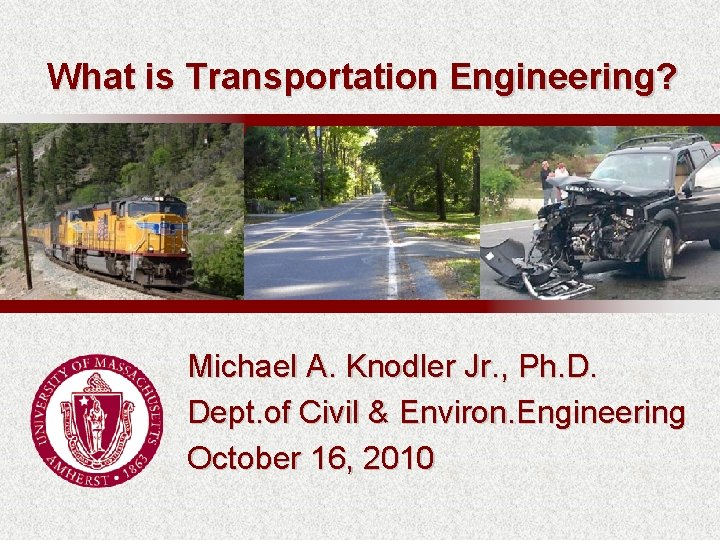
What is Transportation Engineering? Michael A. Knodler Jr. , Ph. D. Dept. of Civil & Environ. Engineering October 16, 2010
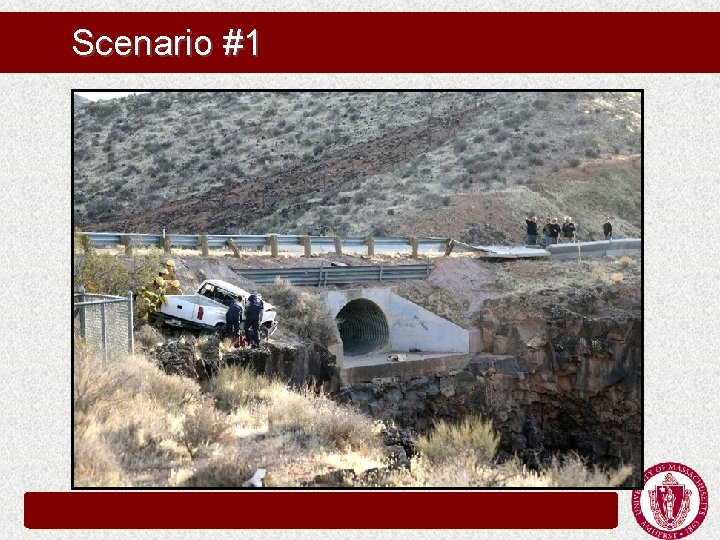
Scenario #1
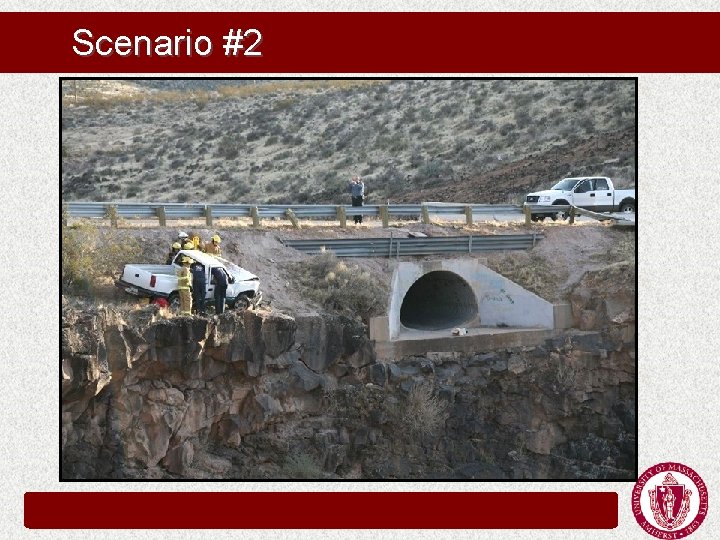
Scenario #2
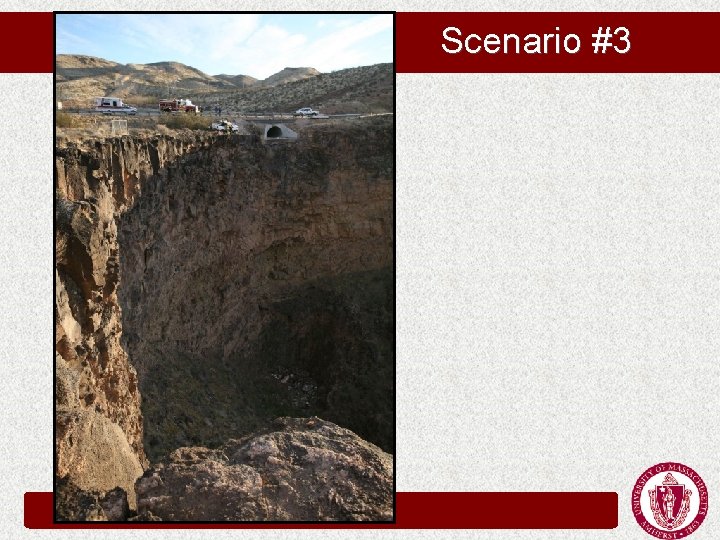
Scenario #3
What is Engineering? en·gi·neer·ing (n. ) -The application of scientific and mathematical principles to practical ends such as the design, manufacture, and operation of efficient and economical structures, machines, processes, and systems. • • Chemical Engineering Mechanical & Industrial Engineering Electrical & Computer Engineering Civil & Environmental Engineering
What is Transportation? The safe and efficient movement of people and goods! “the branch of engineering which applies technology, science, and human factors to the planning, design, operations and management of roads, streets, bikeways, highways, their networks, terminals, and abutting lands” The objective is to provide for the safe, rapid, comfortable, efficient, convenient, and environmentally compatible movement of people, goods, and services.
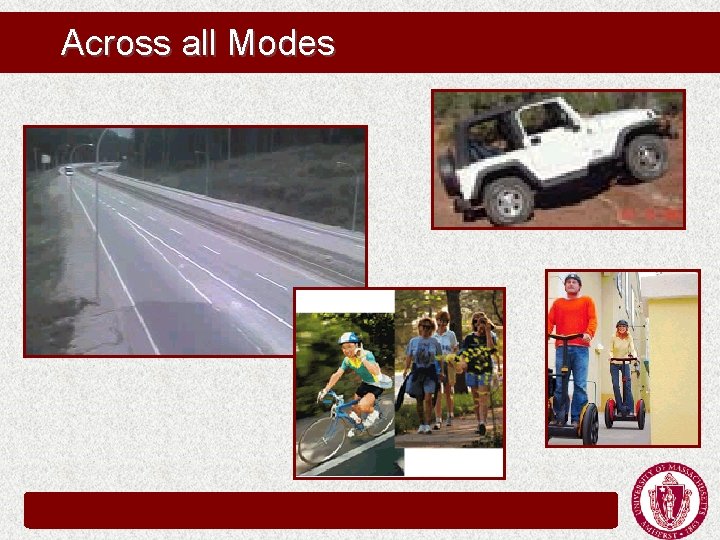
Across all Modes
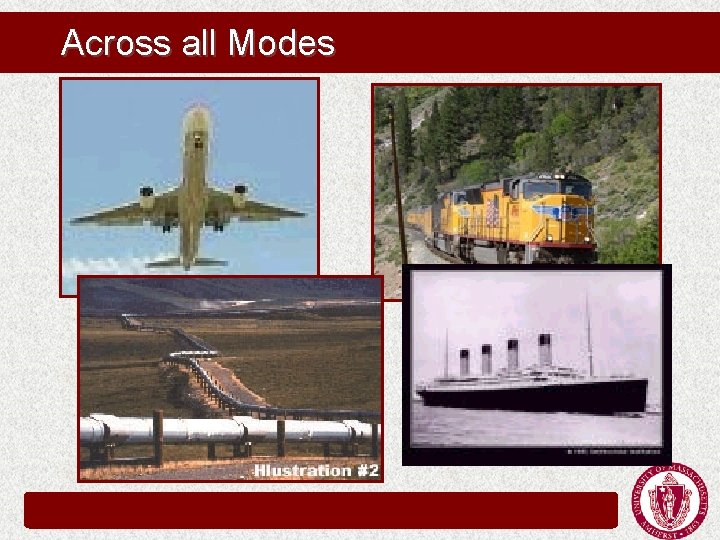
Across all Modes
Across all Modes
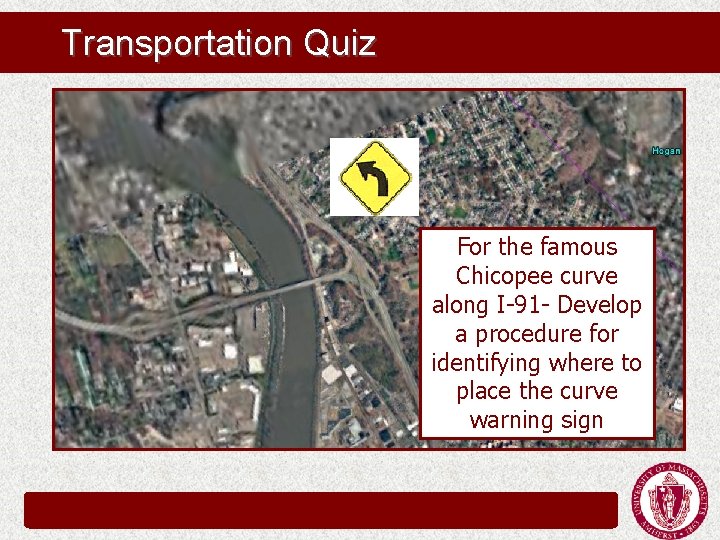
Transportation Quiz For the famous Chicopee curve along I-91 - Develop a procedure for identifying where to place the curve warning sign
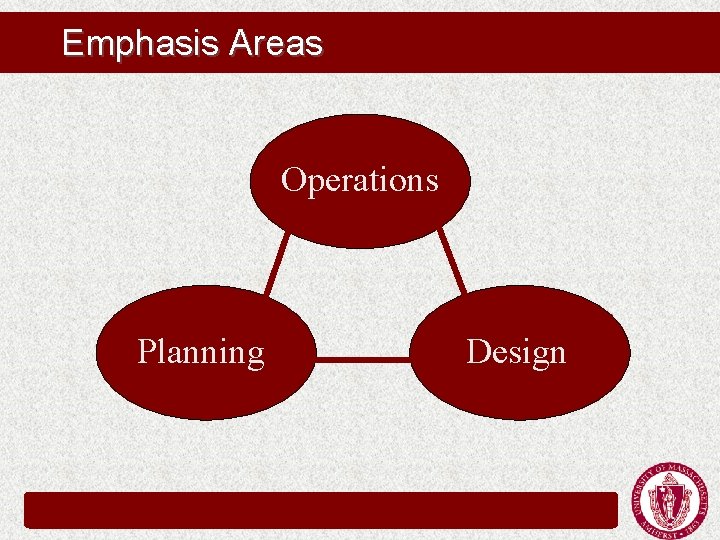
Emphasis Areas Operations Planning Design
Transportation Fun Facts • • 16% of U. S. GDP Approx $1. 5 trillion on expenditures 70% of petroleum in U. S. citizens travel on average – 1 hour per day – 12, 000 miles per year • 80% of eligible…. . have licenses • 11% of the U. S. workforce
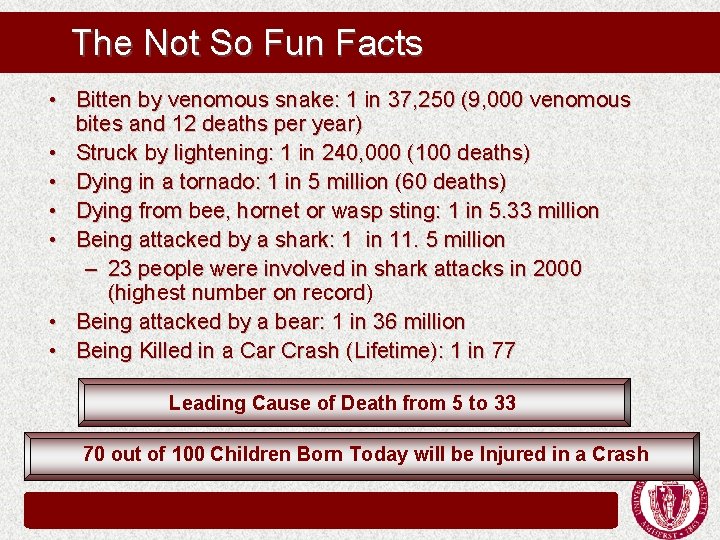
The Not So Fun Facts • Bitten by venomous snake: 1 in 37, 250 (9, 000 venomous bites and 12 deaths per year) • Struck by lightening: 1 in 240, 000 (100 deaths) • Dying in a tornado: 1 in 5 million (60 deaths) • Dying from bee, hornet or wasp sting: 1 in 5. 33 million • Being attacked by a shark: 1 in 11. 5 million – 23 people were involved in shark attacks in 2000 (highest number on record) • Being attacked by a bear: 1 in 36 million • Being Killed in a Car Crash (Lifetime): 1 in 77 Leading Cause of Death from 5 to 33 70 out of 100 Children Born Today will be Injured in a Crash
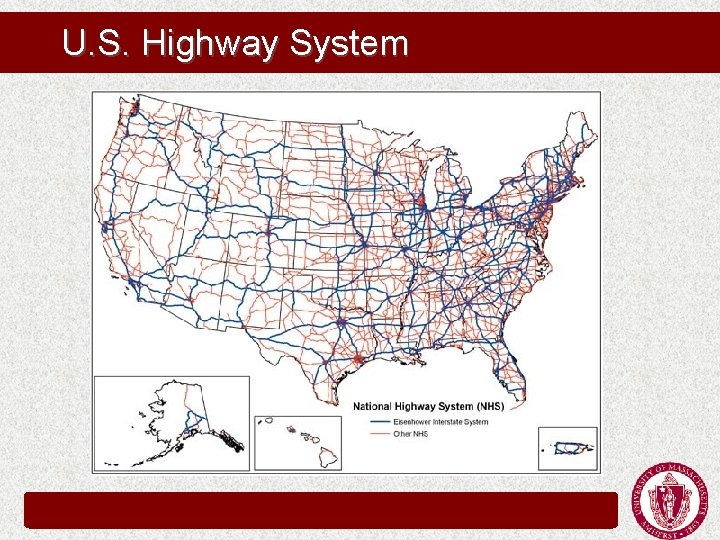
U. S. Highway System
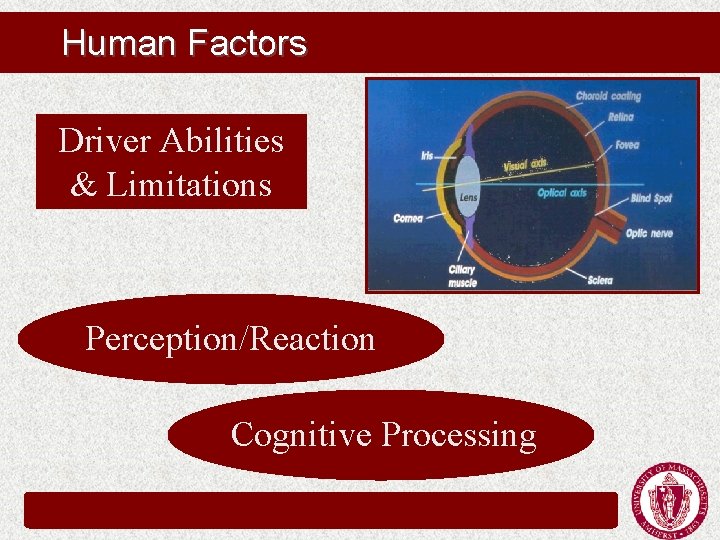
Human Factors Driver Abilities & Limitations Perception/Reaction Cognitive Processing
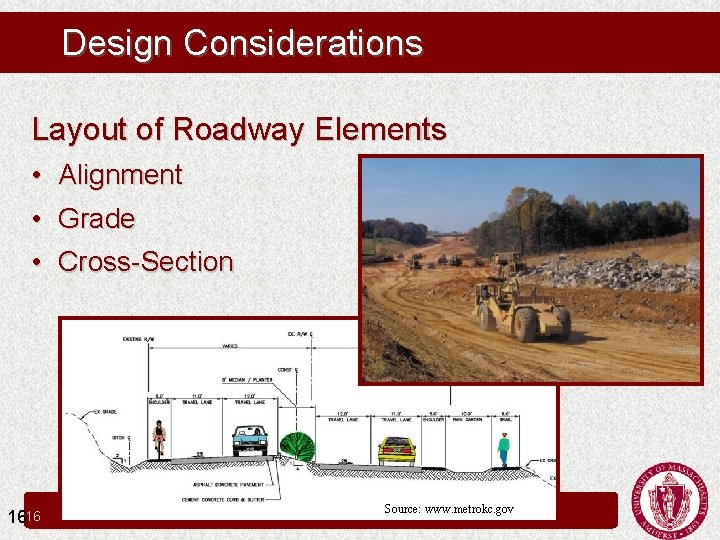
Design Considerations Layout of Roadway Elements • Alignment • Grade • Cross-Section 1616 Source: www. metrokc. gov
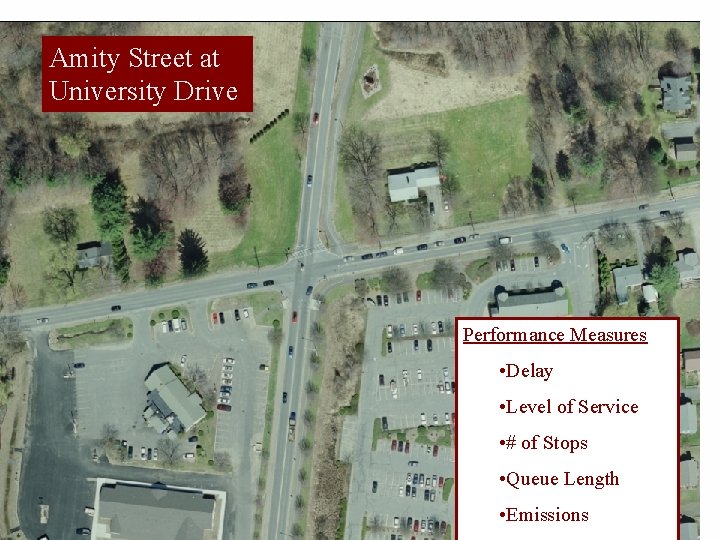
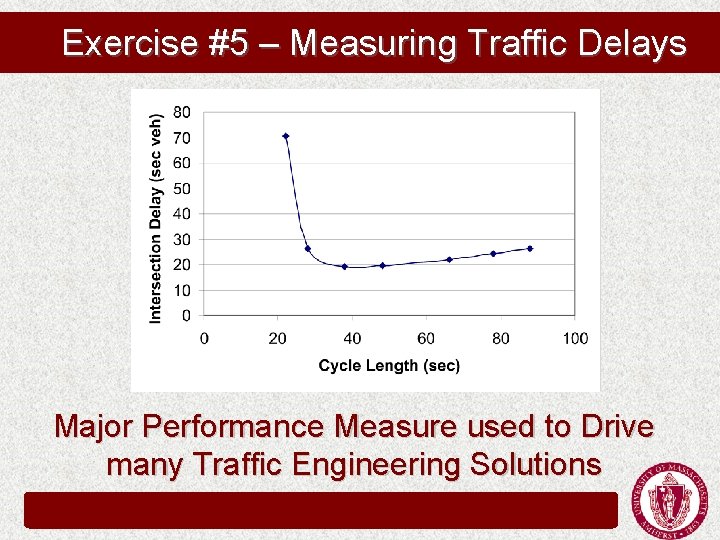
Amity Street at University Drive Performance Measures • Delay • Level of Service • # of Stops • Queue Length • Emissions
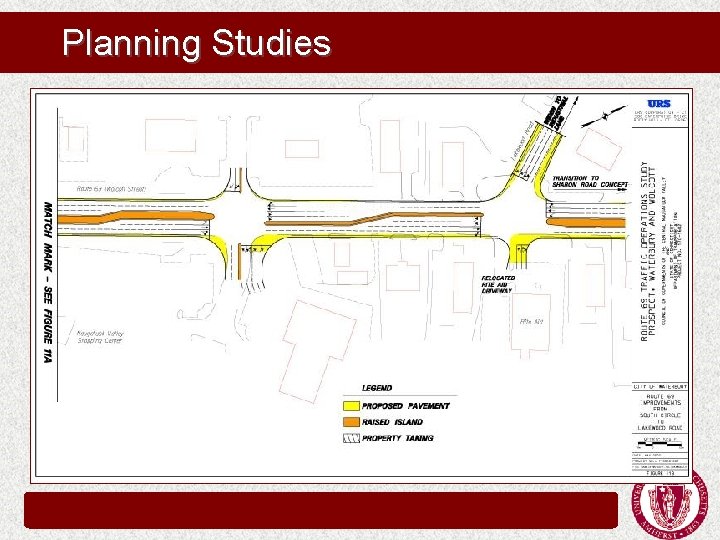
Planning Studies
Planning Studies
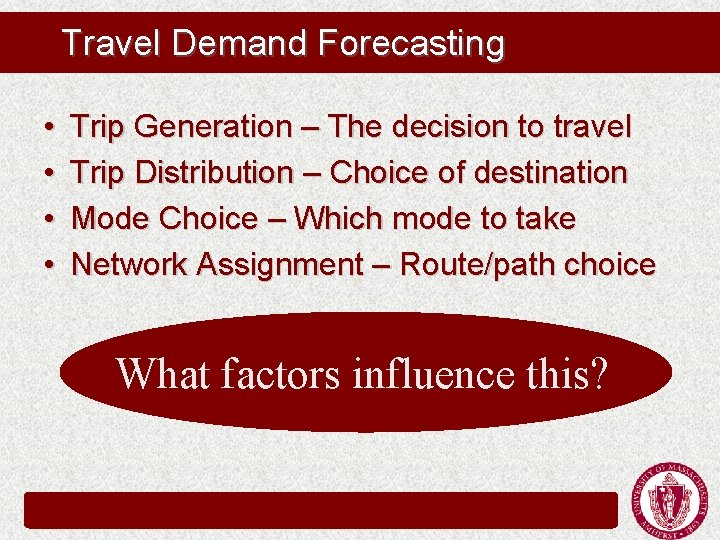
Travel Demand Forecasting • • Trip Generation – The decision to travel Trip Distribution – Choice of destination Mode Choice – Which mode to take Network Assignment – Route/path choice What factors influence this?
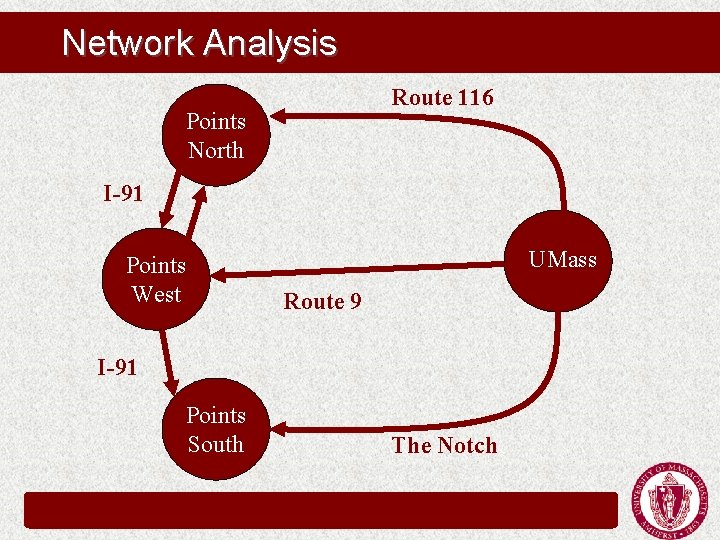
Network Analysis Route 116 Points North I-91 UMass Points West Route 9 I-91 Points South The Notch
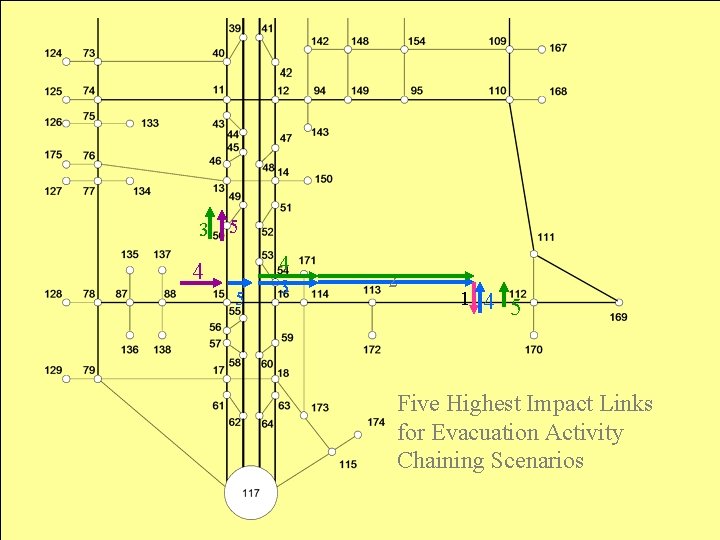
3 5 4 3 2 1 4 5 Five Highest Impact Links for Evacuation Activity Chaining Scenarios
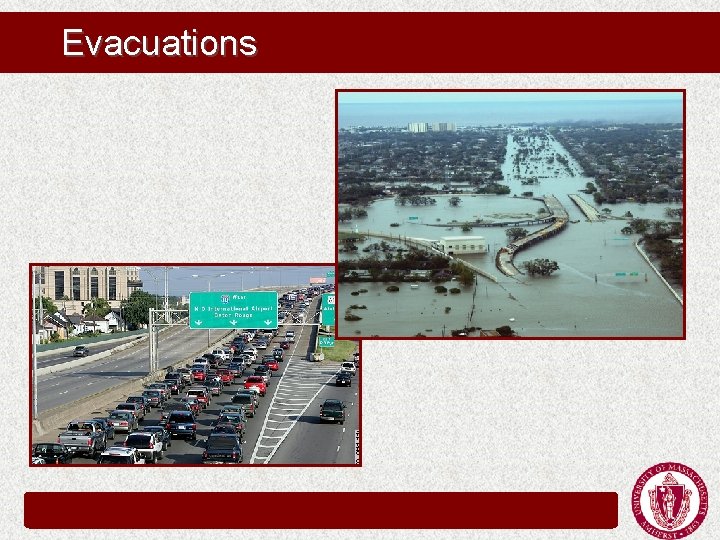
Evacuations
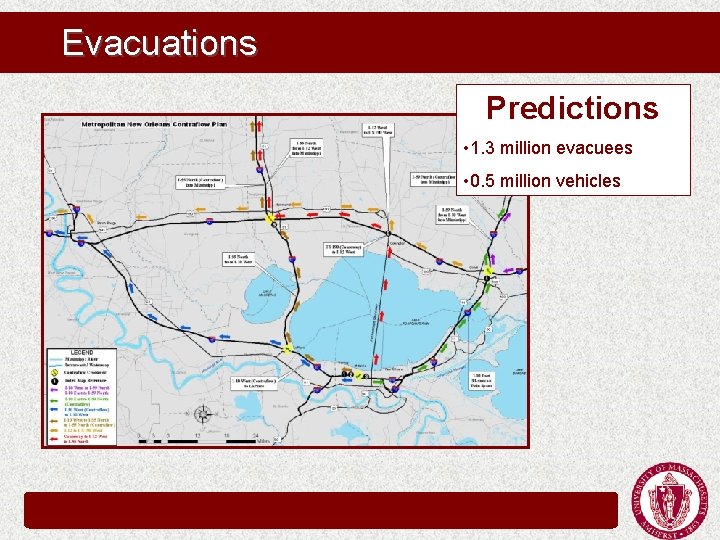
Evacuations Predictions • 1. 3 million evacuees • 0. 5 million vehicles
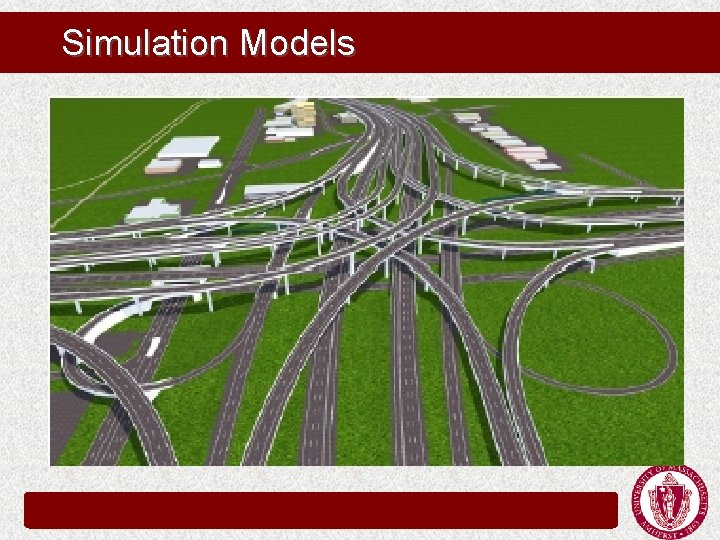
Simulation Models
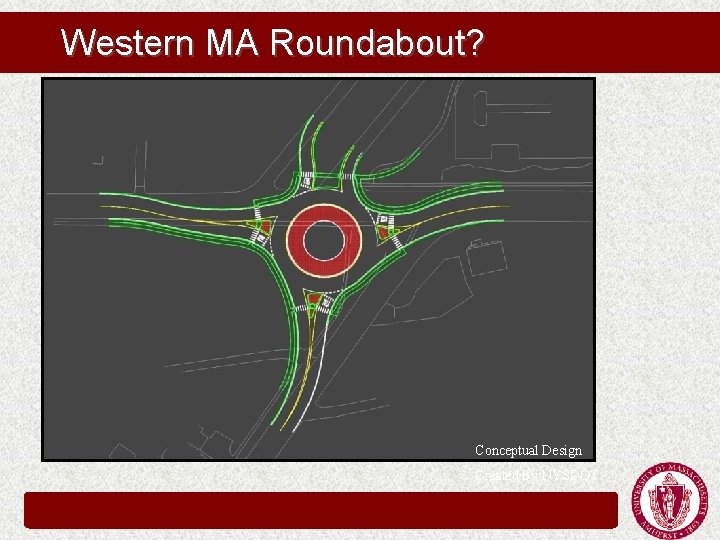
Western MA Roundabout? Conceptual Design Created By NYSDOT
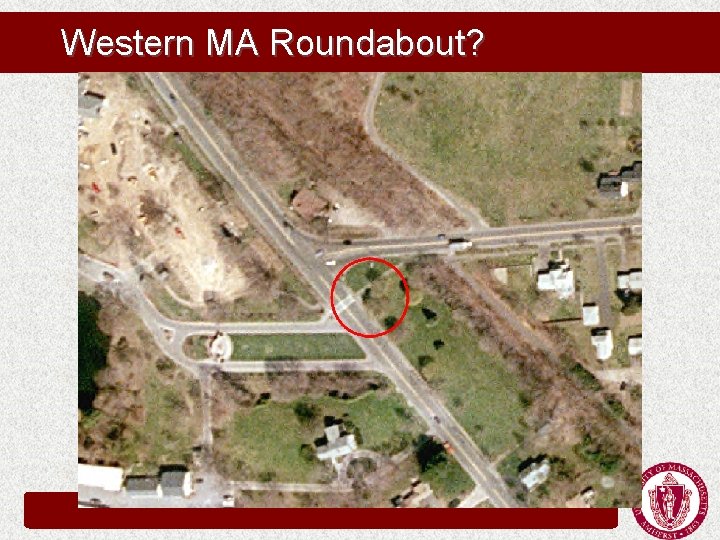
Western MA Roundabout?
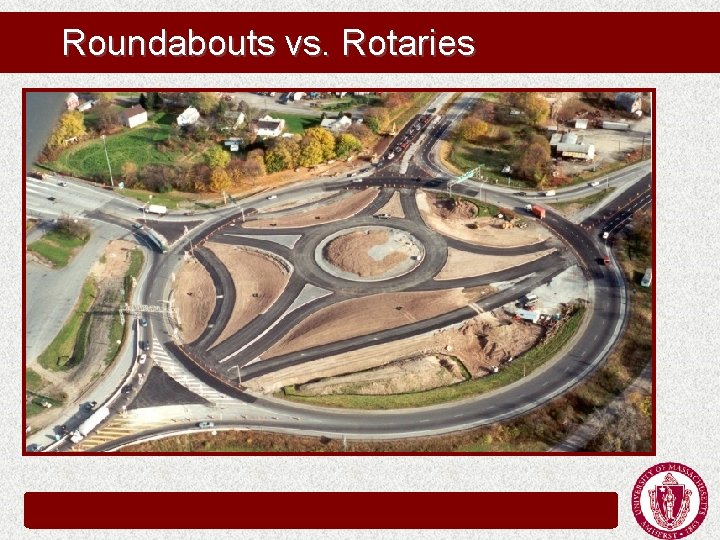
Roundabouts vs. Rotaries
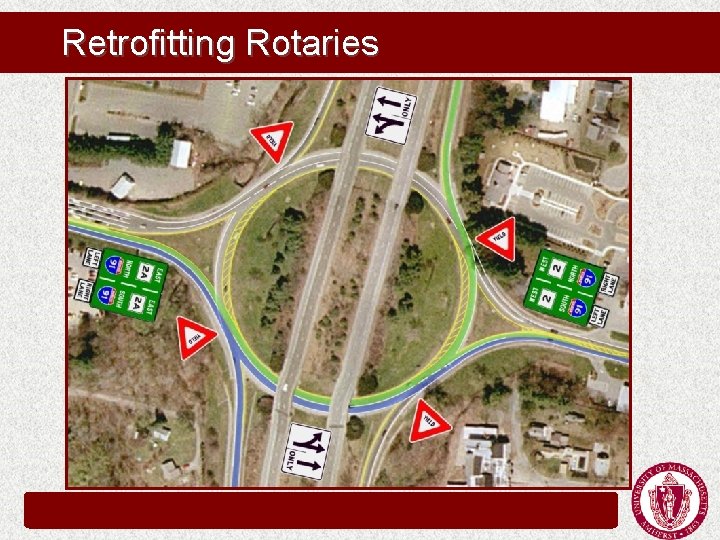
Retrofitting Rotaries
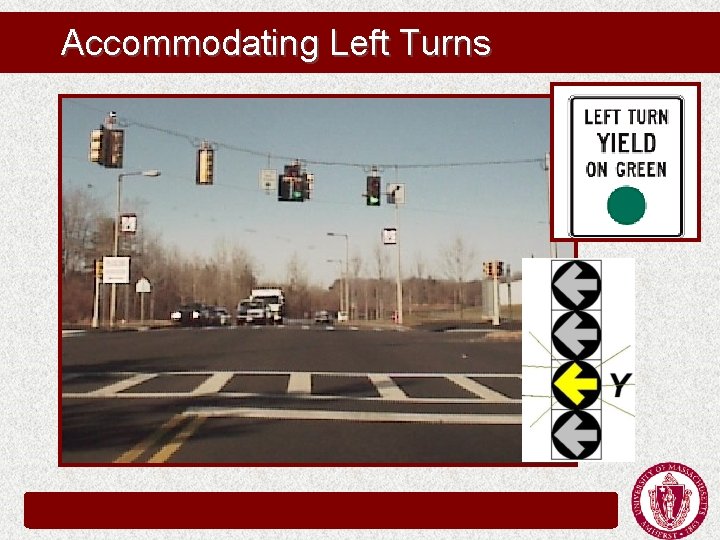
Accommodating Left Turns
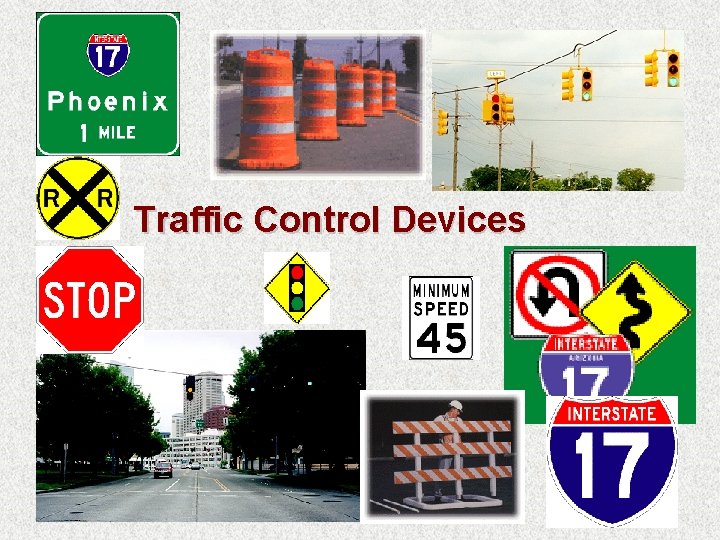
Traffic Control Devices
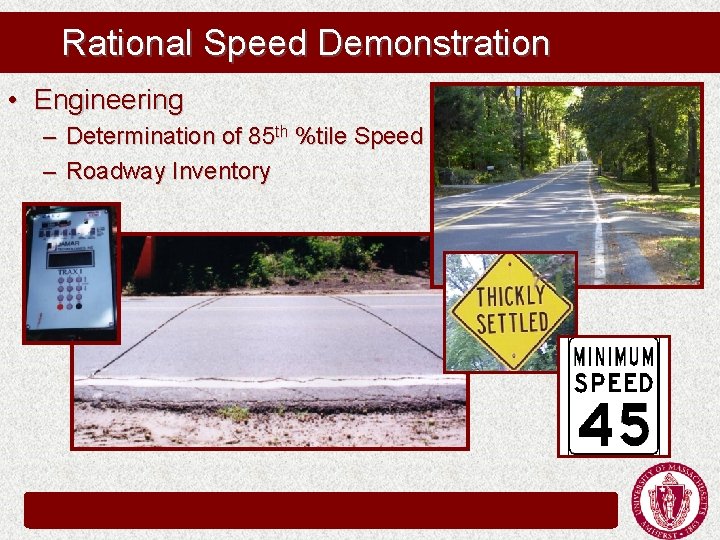
Rational Speed Demonstration • Engineering – Determination of 85 th %tile Speed – Roadway Inventory
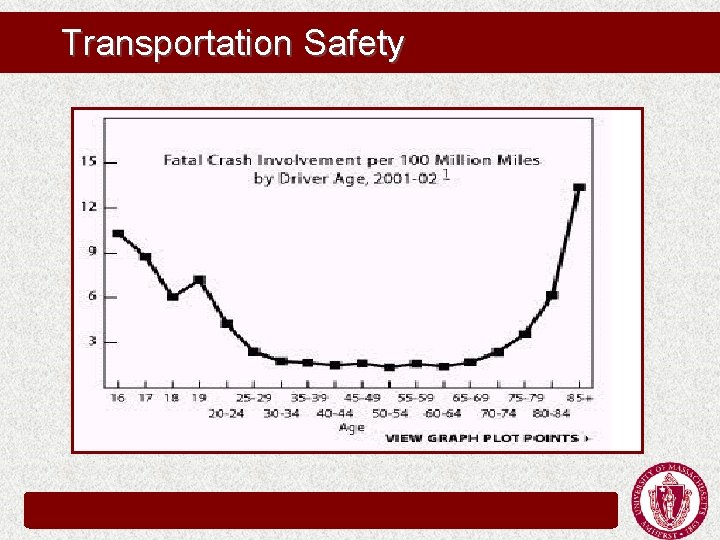
Transportation Safety
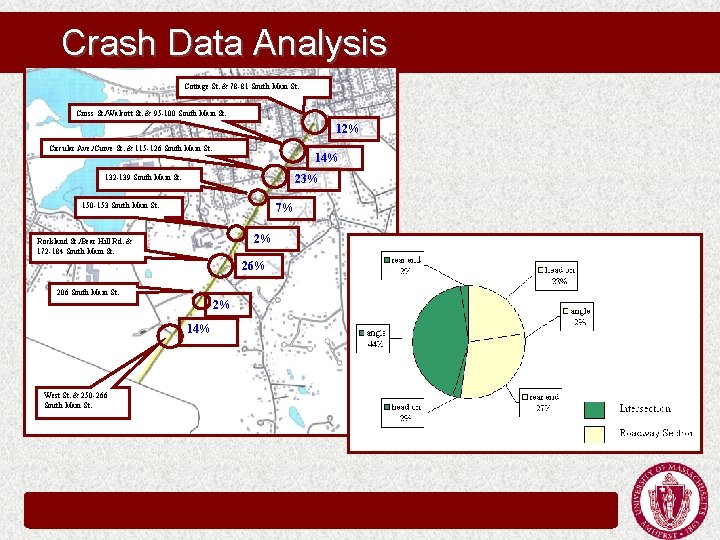
Crash Data Analysis Cottage St. & 78 -81 South Main St. Cross St. /Walcott St. & 95 -100 South Main St. 12% Circular Ave. /Curve St. & 115 -126 South Main St. 14% 132 -139 South Main St. 23% 150 -153 South Main St. 7% 2% Rockland St. /Bear Hill Rd. & 172 -184 South Main St. 26% 206 South Main St. 2% 14% West St. & 250 -266 South Main St.
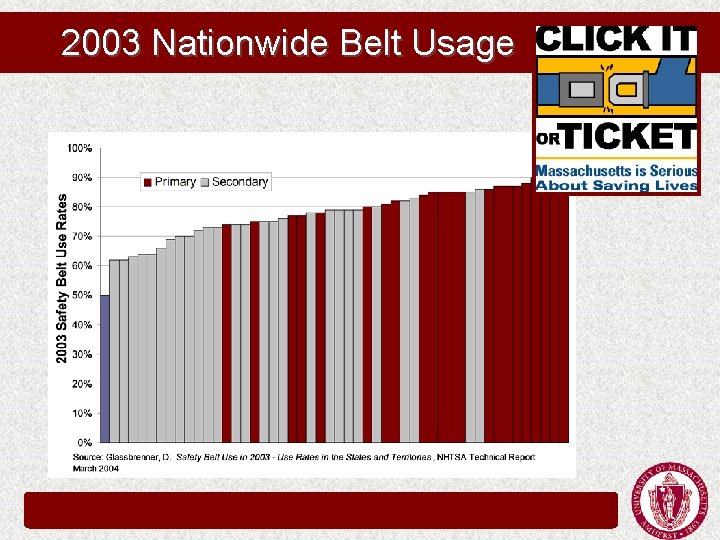
2003 Nationwide Belt Usage
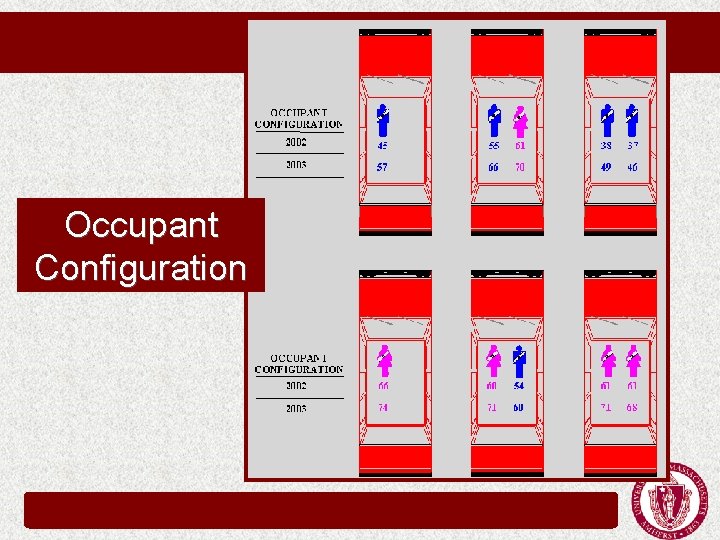
Occupant Configuration
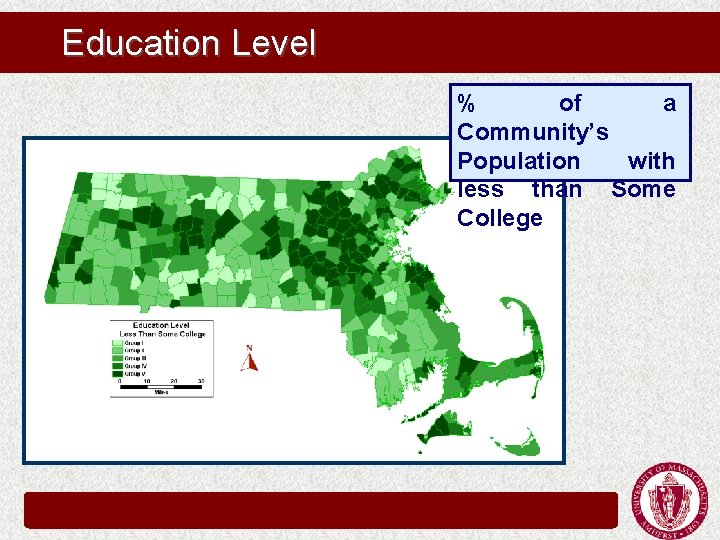
Education Level % of a Community’s Population with less than Some College
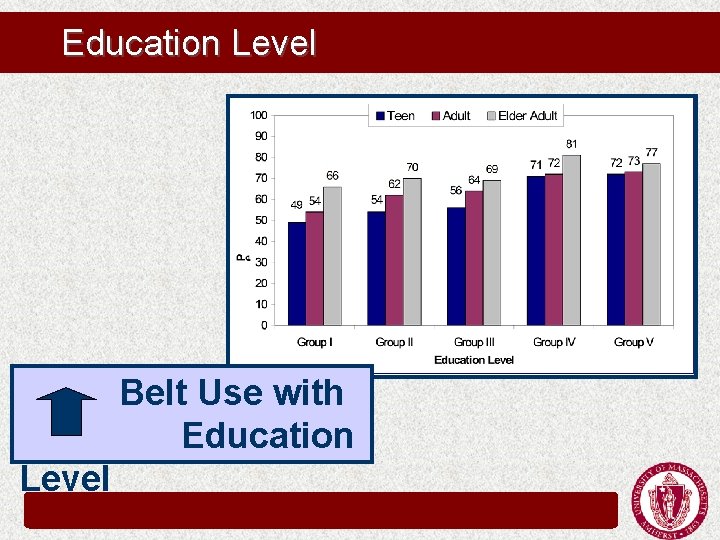
Education Level Belt Use with Education Level
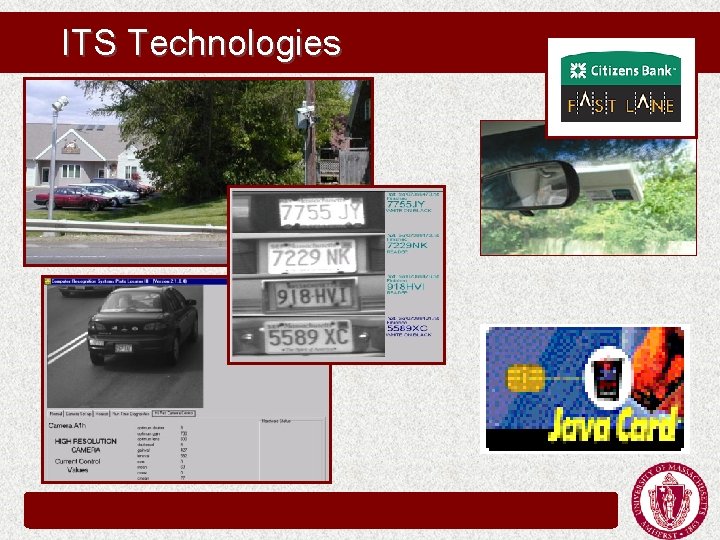
ITS Technologies
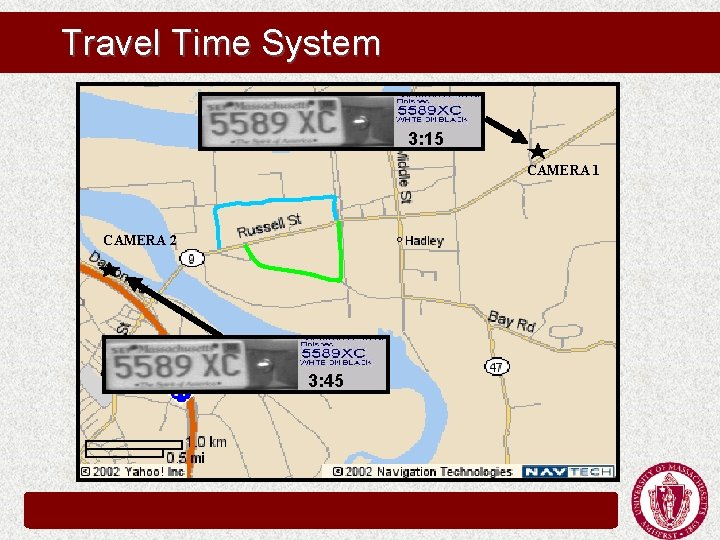
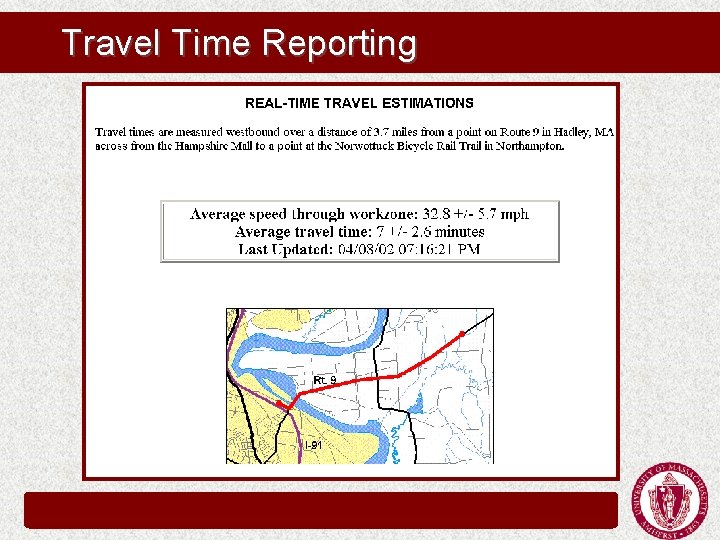
Travel Time System 3: 15 CAMERA 1 CAMERA 2 3: 45
Travel Time Reporting
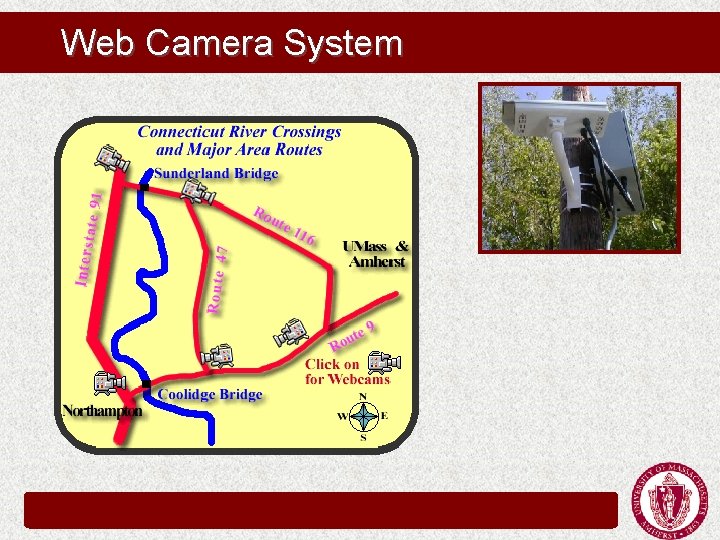
Web Camera System
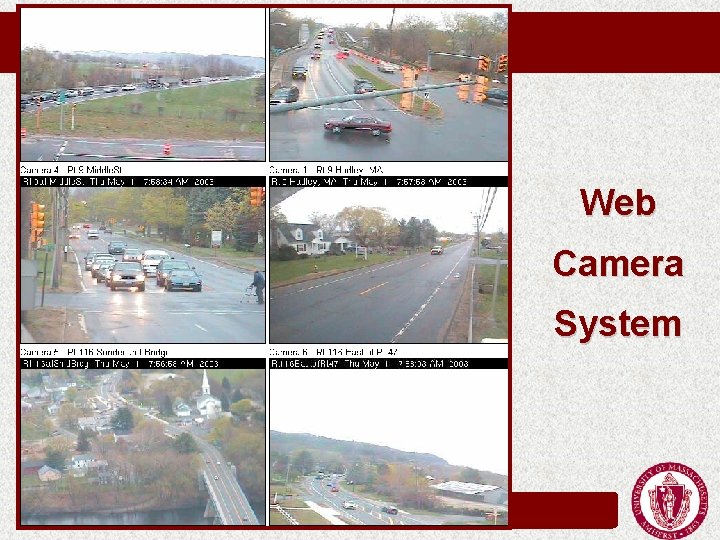
Web Camera System
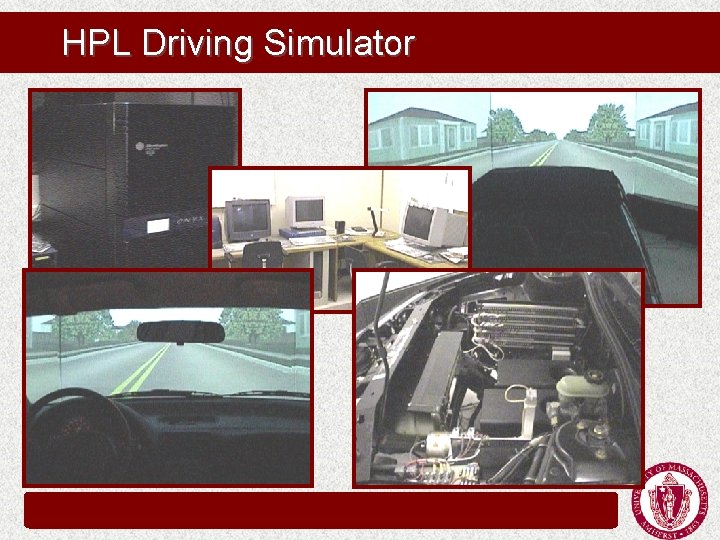
HPL Driving Simulator
Additional Areas of Emphasis • • Transportation Policy Logistics Administration Economics Public Health Psychology / Sociology Transportation Statistics And more!
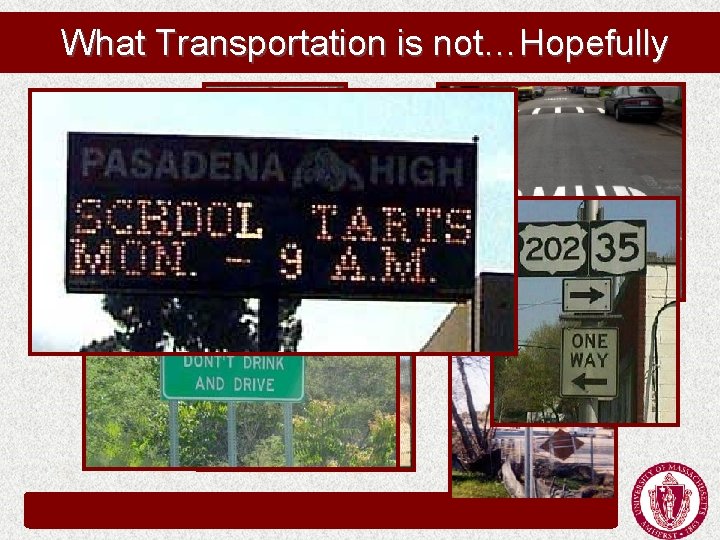
What Transportation is not…Hopefully
Questions
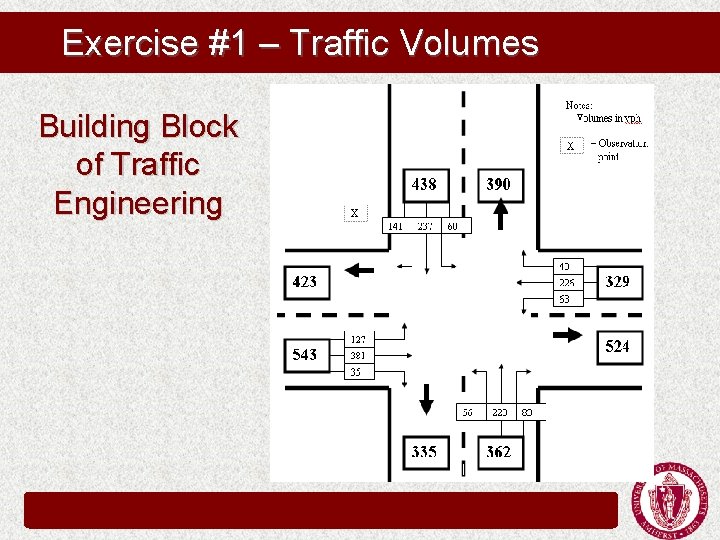
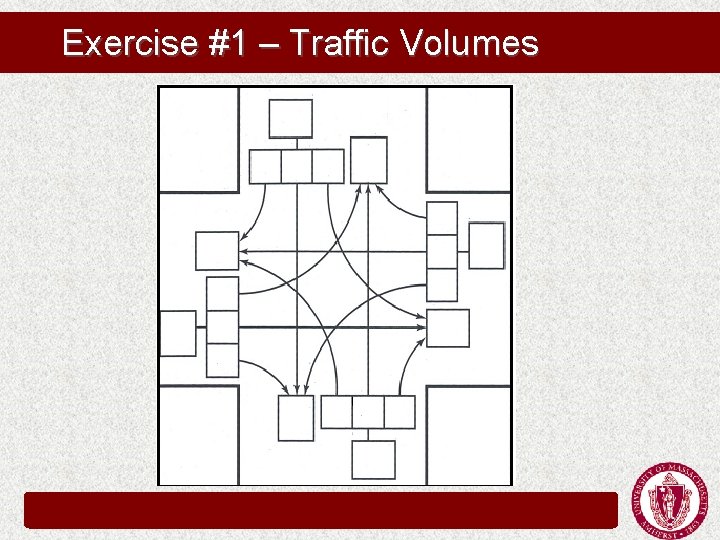
Exercise #1 – Traffic Volumes Building Block of Traffic Engineering
Exercise #1 – Traffic Volumes
Exercise #2 – Speeds • Another Basic Building Block → Speed = Distance / Time • Applications of Concepts for Exercise → Units (e. g. , mph, ft/sec) → Conversions → Scaling • Real World Examples → Pedestrian Crossing Time → Compliance with Speed Limit
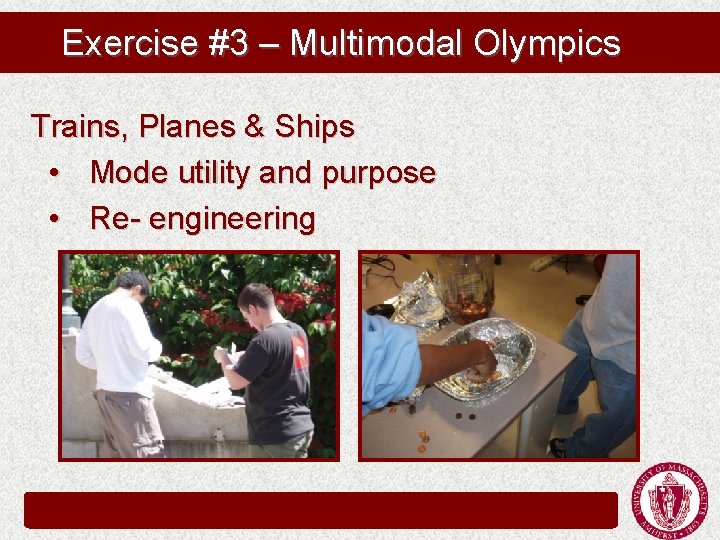
Exercise #3 – Multimodal Olympics Trains, Planes & Ships • Mode utility and purpose • Re- engineering
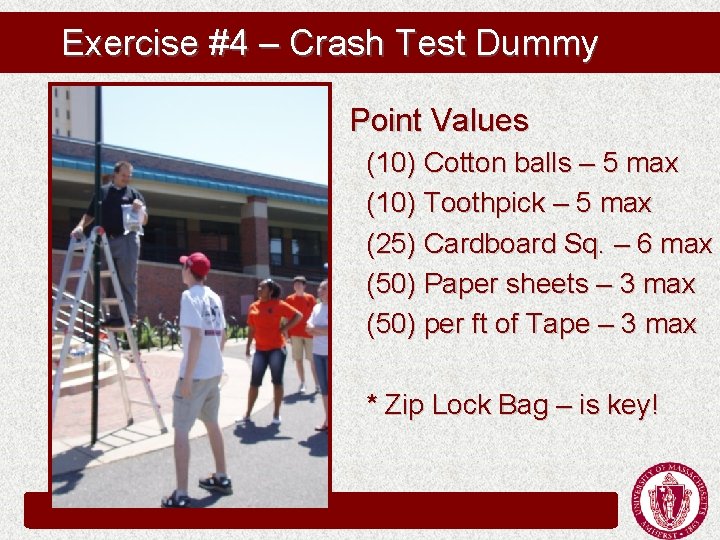
Exercise #4 – Crash Test Dummy Point Values (10) Cotton balls – 5 max (10) Toothpick – 5 max (25) Cardboard Sq. – 6 max (50) Paper sheets – 3 max (50) per ft of Tape – 3 max * Zip Lock Bag – is key!
Exercise #5 – Measuring Traffic Delays Major Performance Measure used to Drive many Traffic Engineering Solutions
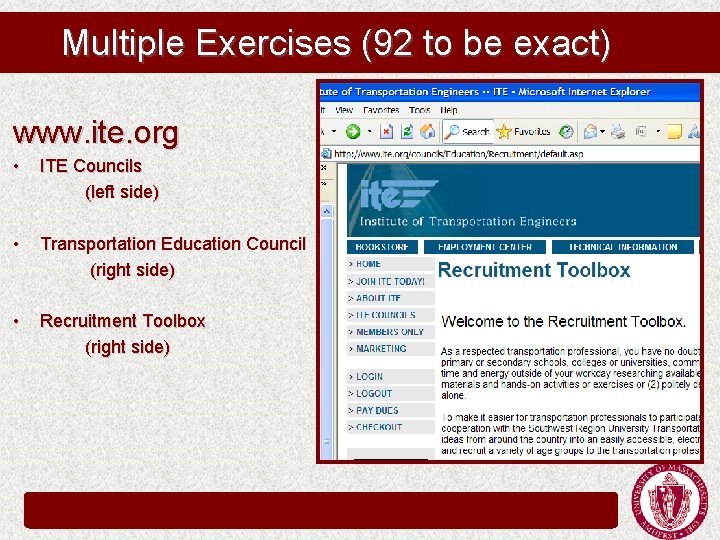
Multiple Exercises (92 to be exact) www. ite. org • ITE Councils (left side) • Transportation Education Council (right side) • Recruitment Toolbox (right side)