
What is Transformation Bacterial chromosome Plasmid Uptake of
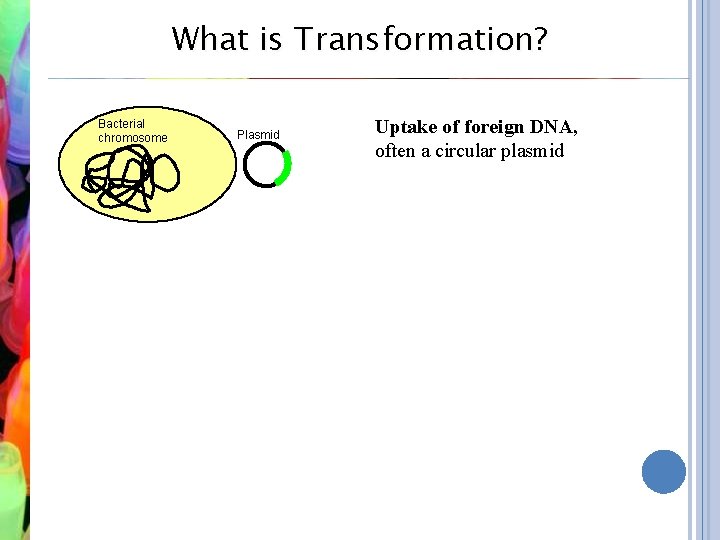
What is Transformation? Bacterial chromosome Plasmid Uptake of foreign DNA, often a circular plasmid
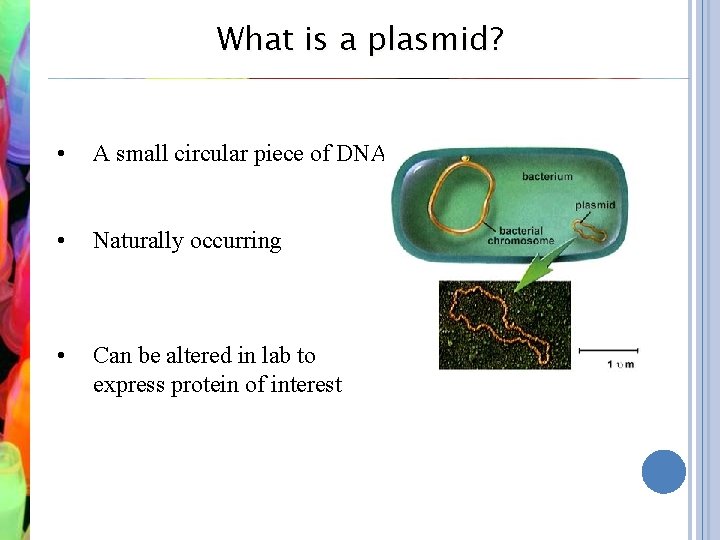
What is a plasmid? • A small circular piece of DNA • Naturally occurring • Can be altered in lab to express protein of interest
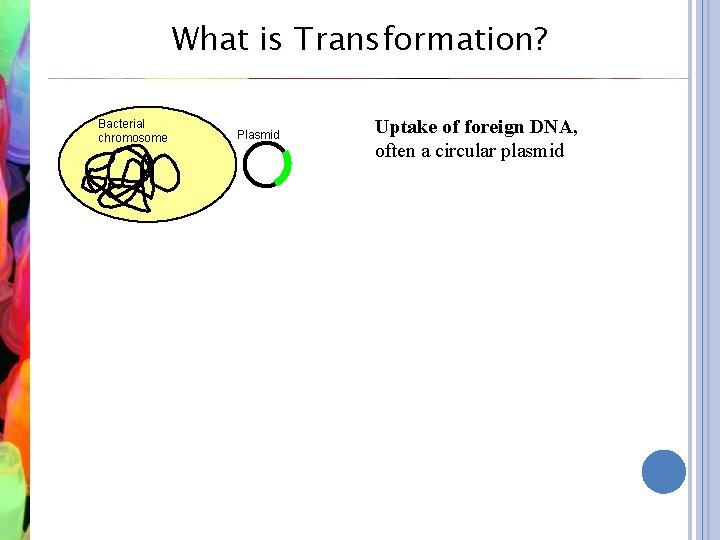
What is Transformation? Bacterial chromosome Plasmid Uptake of foreign DNA, often a circular plasmid
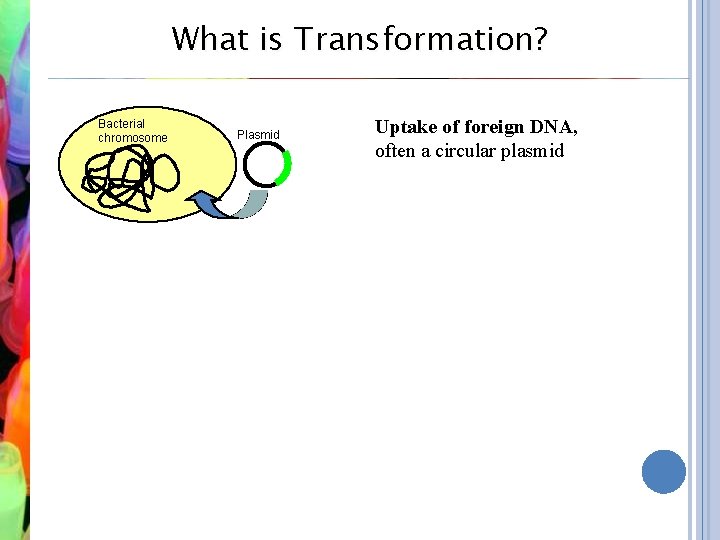
What is Transformation? Bacterial chromosome Plasmid Uptake of foreign DNA, often a circular plasmid

What is Transformation? Bacterial chromosome Uptake of foreign DNA, often a circular plasmid Plasmid Bacterial chromosome Allow bacteria to grow for 1 -3 days on plate with ampicillin.
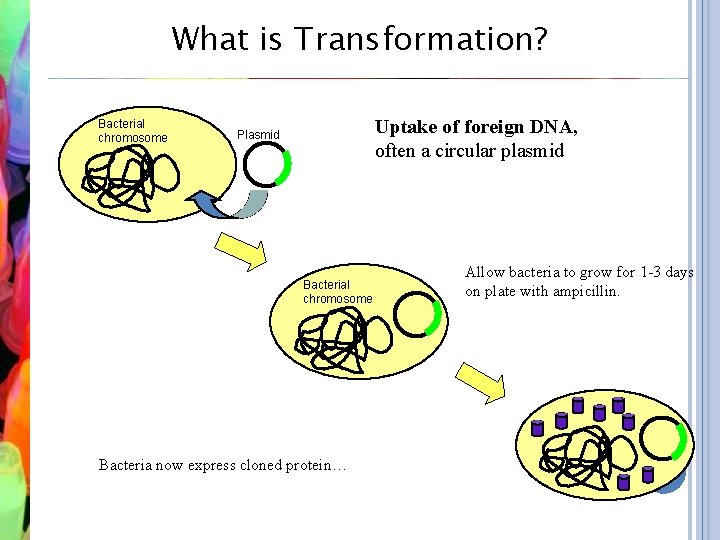
What is Transformation? Bacterial chromosome Uptake of foreign DNA, often a circular plasmid Plasmid Bacterial chromosome Bacteria now express cloned protein… Allow bacteria to grow for 1 -3 days on plate with ampicillin.
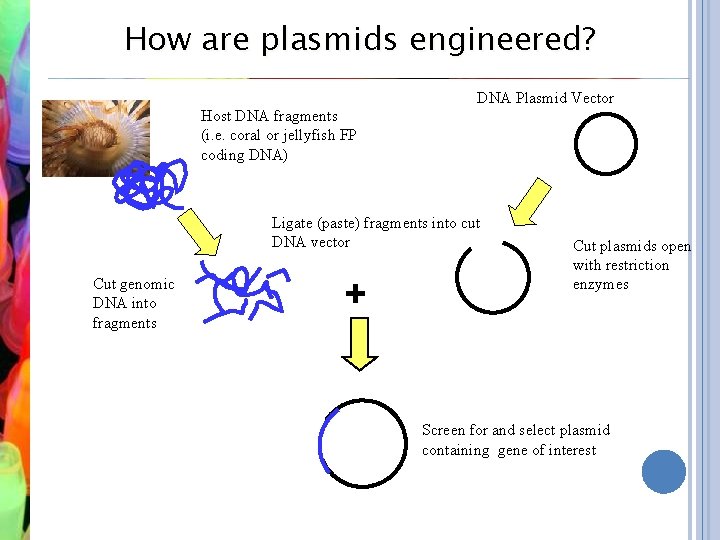
How are plasmids engineered? DNA Plasmid Vector Host DNA fragments (i. e. coral or jellyfish FP coding DNA) Ligate (paste) fragments into cut DNA vector Cut genomic DNA into fragments + Cut plasmids open with restriction enzymes Screen for and select plasmid containing gene of interest
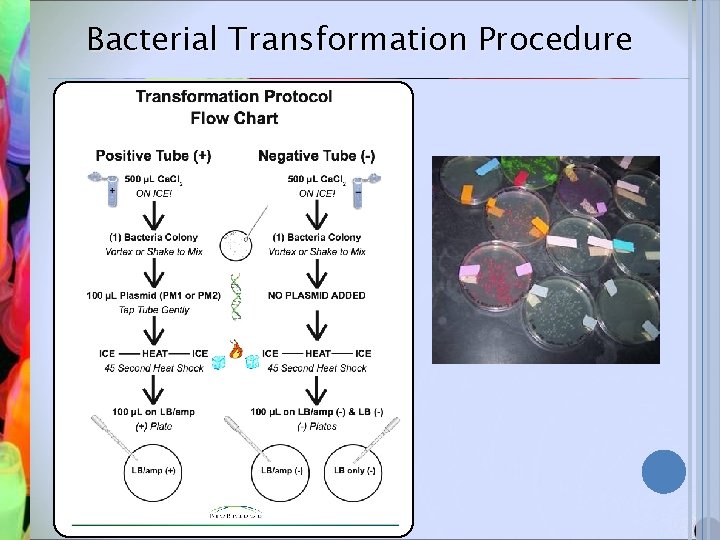
Bacterial Transformation Procedure
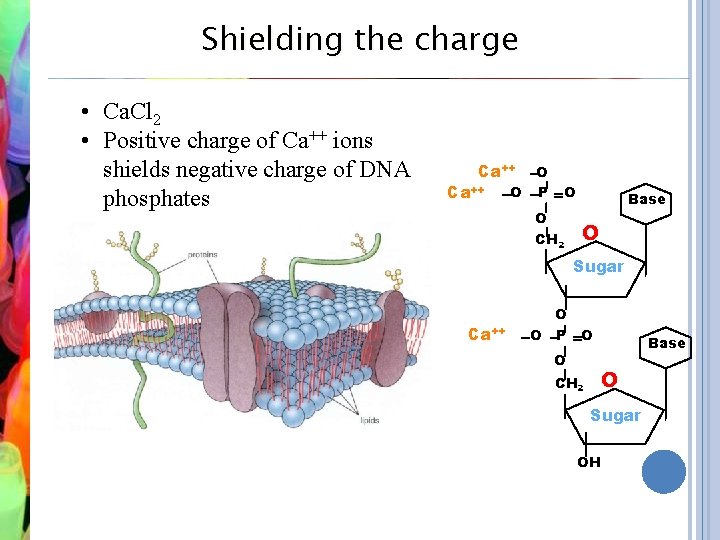
Shielding the charge • Ca. Cl 2 • Positive charge of Ca++ ions shields negative charge of DNA phosphates Ca++ O O P O O CH 2 Base O Sugar Ca++ O O P O O Base O CH 2 Sugar OH
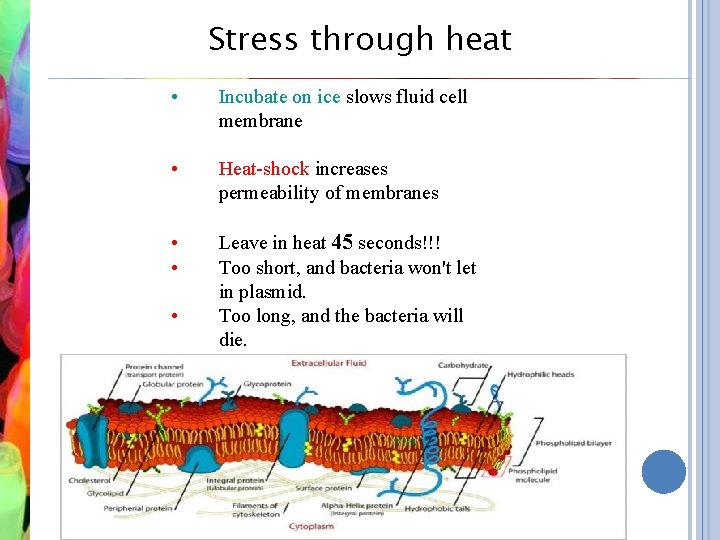
Stress through heat • Incubate on ice slows fluid cell membrane • Heat-shock increases permeability of membranes • • Leave in heat 45 seconds!!! Too short, and bacteria won't let in plasmid. Too long, and the bacteria will die. •
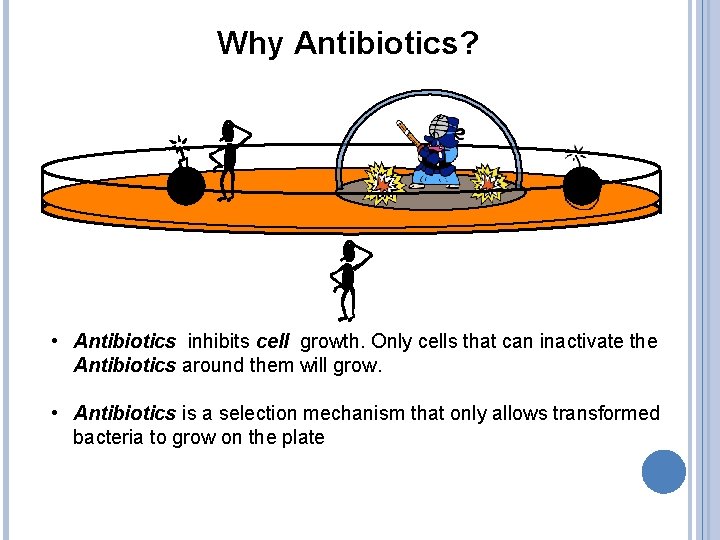
Why Antibiotics? • Antibiotics inhibits cell growth. Only cells that can inactivate the Antibiotics around them will grow. • Antibiotics is a selection mechanism that only allows transformed bacteria to grow on the plate
- Slides: 11