
What is the Spanish personal a and how

- Slides: 29
What is the Spanish personal “a” and how is it used?
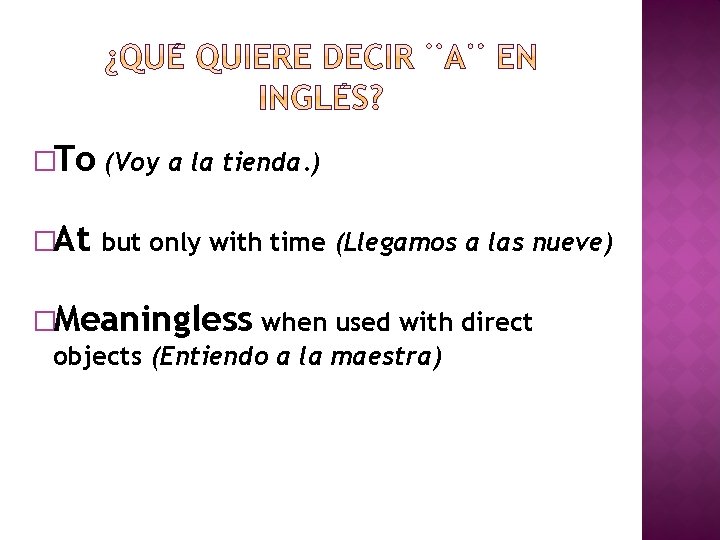
�To (Voy a la tienda. ) �At but only with time (Llegamos a las nueve) �Meaningless when used with direct objects (Entiendo a la maestra)
�Primero, �What �How necesitamos entender: are direct objects? are they used?
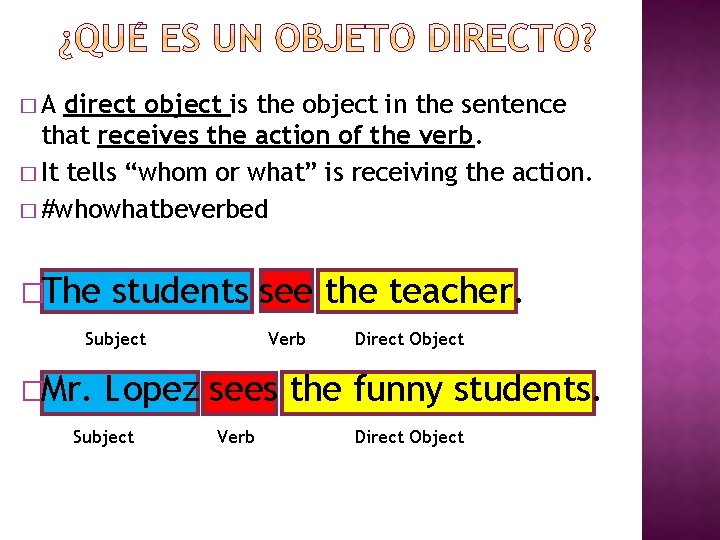
�A direct object is the object in the sentence that receives the action of the verb. � It tells “whom or what” is receiving the action. � #whowhatbeverbed �The students see the teacher. Subject �Mr. Verb Direct Object Lopez sees the funny students. Subject Verb Direct Object
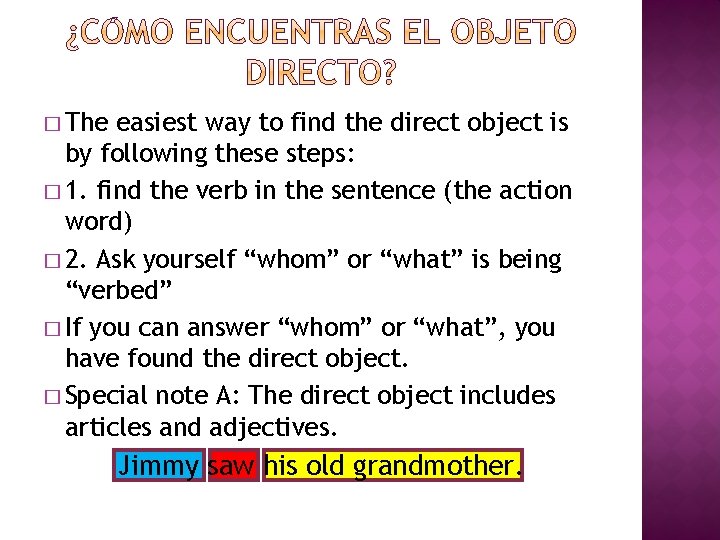
� The easiest way to find the direct object is by following these steps: � 1. find the verb in the sentence (the action word) � 2. Ask yourself “whom” or “what” is being “verbed” � If you can answer “whom” or “what”, you have found the direct object. � Special note A: The direct object includes articles and adjectives. Jimmy saw his old grandmother.
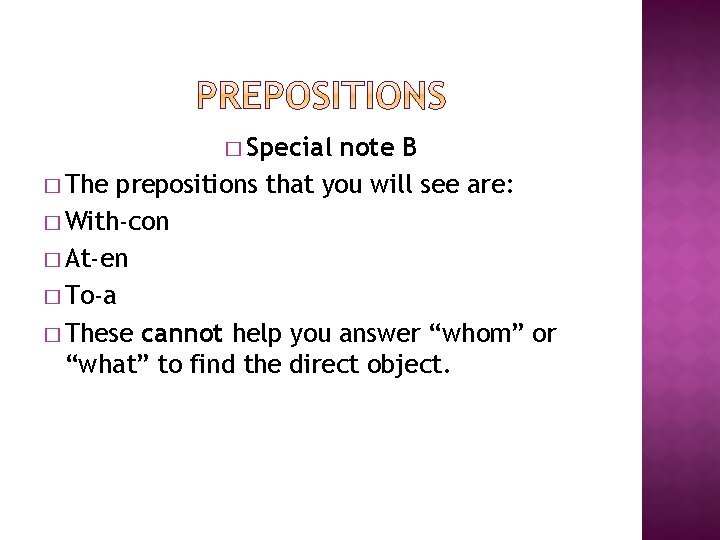
� Special note B � The prepositions that you will see are: � With-con � At-en � To-a � These cannot help you answer “whom” or “what” to find the direct object.
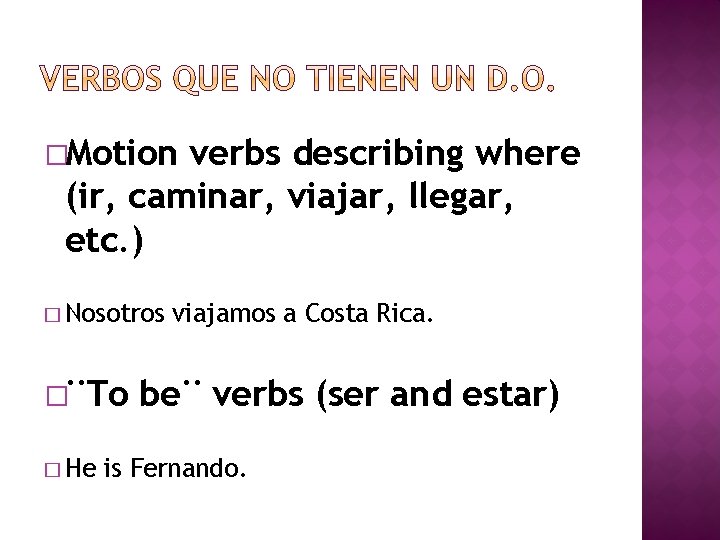
�Motion verbs describing where (ir, caminar, viajar, llegar, etc. ) � Nosotros �¨To � He viajamos a Costa Rica. be¨ verbs (ser and estar) is Fernando.
� Let’s practice in English before we move on to the Spanish. � Give � Find everyone a whiteboard. the direct object in the following sentences.
�They ate a huge sandwich.
�We buy a new house every year.
�We won a new car last year.
� They walk to school.
�I see Mr. Elizalde at the mall every Saturday.
� Do you eat school lunches?
�We walk to school everyday.
� They go to the shopping center.
�Do you eat at school?
�Who is the tall boy?
� How are direct objects identified? � What questions do you ask yourself? � What key word in the sentence do you identify so that you can find the direct object?
� Underline � BOX Subject. verb. � Circle Direct Object.
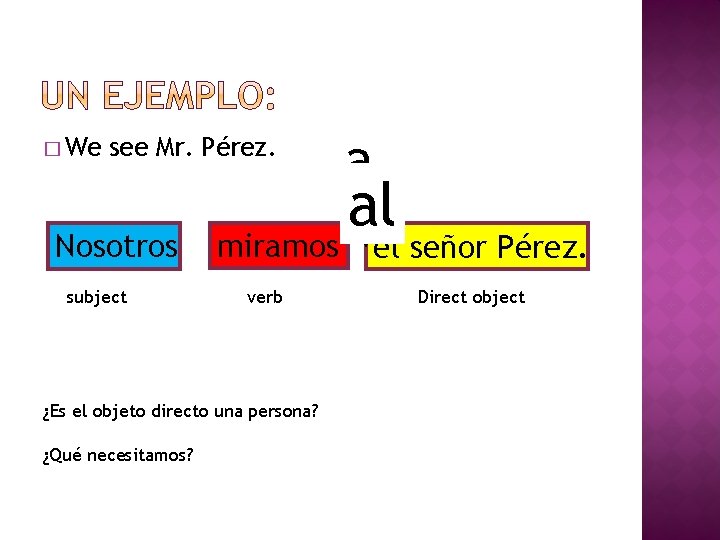
� The personal “a” is used in Spanish when the direct object is a person OR sometimes when it is a pet. � The personal “a” is placed after the verb or right before the direct object (including before articles and adjectives!!!). � “a” contracts with “el” to make “al”
� We see Mr. Pérez. Nosotros subject miramos verb ¿Es el objeto directo una persona? ¿Qué necesitamos? a al el señor Pérez. Direct object
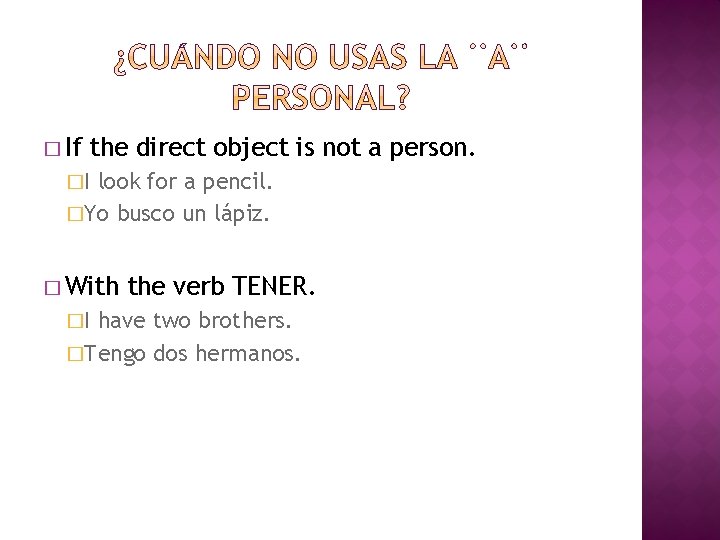
� If the direct object is not a person. �I look for a pencil. �Yo busco un lápiz. � With �I the verb TENER. have two brothers. �Tengo dos hermanos.
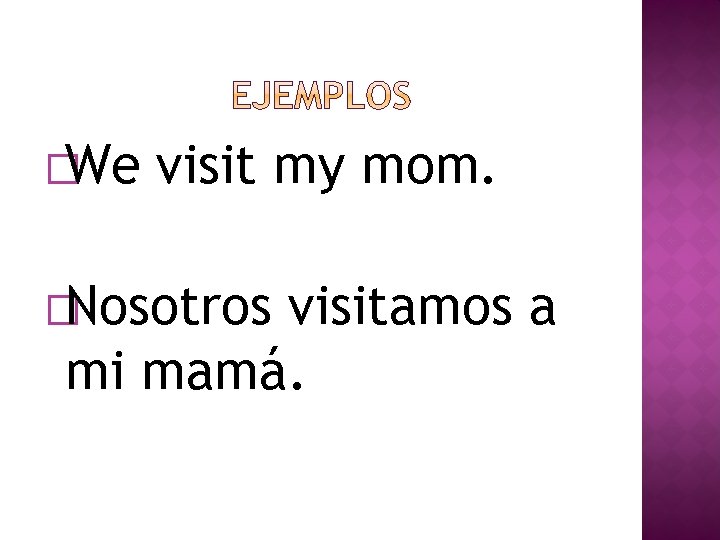
�We visit my mom. �Nosotros visitamos a mi mamá.
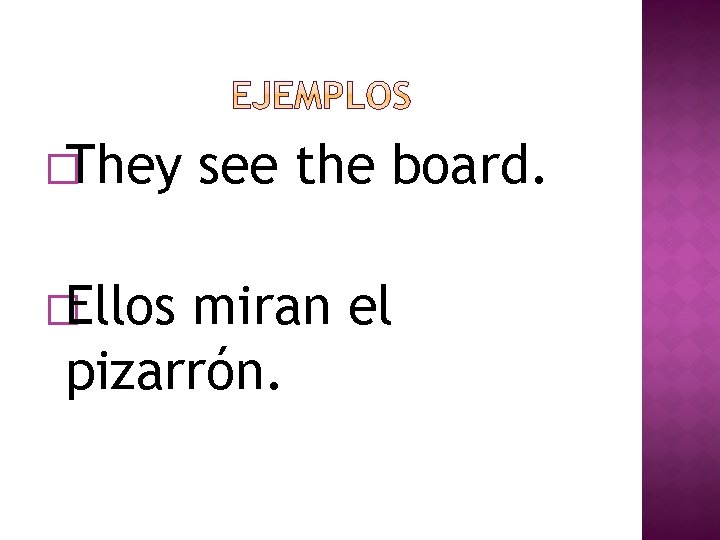
�They �Ellos see the board. miran el pizarrón.
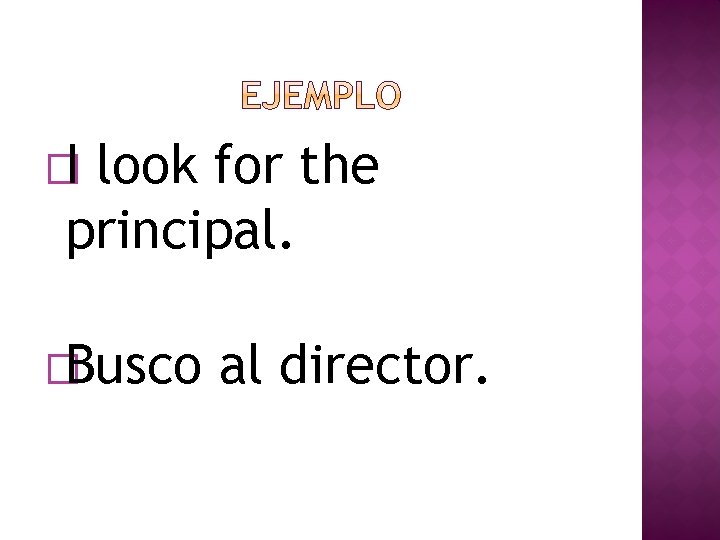
�I look for the principal. �Busco al director.
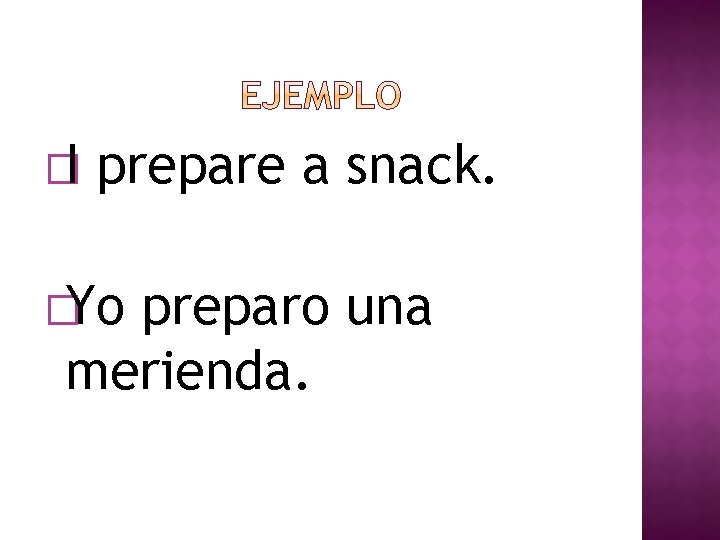
�I prepare a snack. �Yo preparo una merienda.
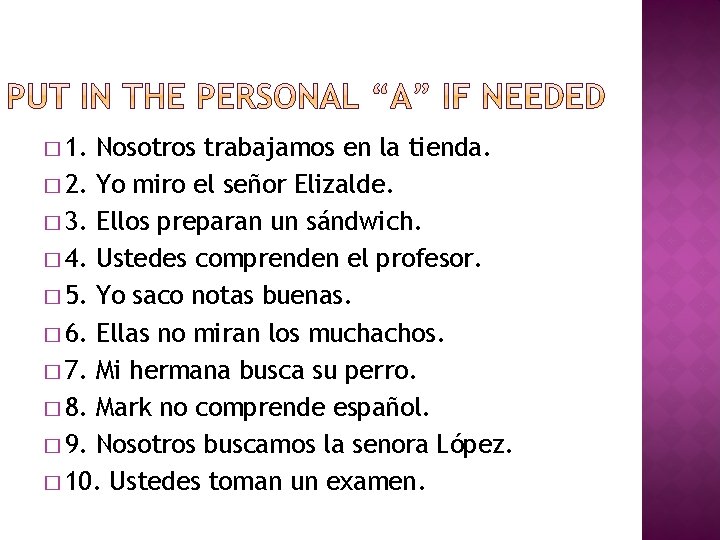
� 1. Nosotros trabajamos en la tienda. � 2. Yo miro el señor Elizalde. � 3. Ellos preparan un sándwich. � 4. Ustedes comprenden el profesor. � 5. Yo saco notas buenas. � 6. Ellas no miran los muchachos. � 7. Mi hermana busca su perro. � 8. Mark no comprende español. � 9. Nosotros buscamos la senora López. � 10. Ustedes toman un examen.
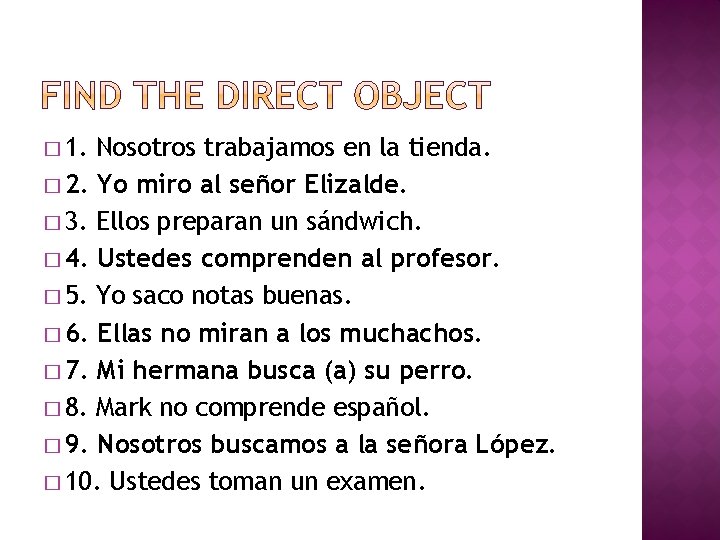
� 1. Nosotros trabajamos en la tienda. � 2. Yo miro al señor Elizalde. � 3. Ellos preparan un sándwich. � 4. Ustedes comprenden al profesor. � 5. Yo saco notas buenas. � 6. Ellas no miran a los muchachos. � 7. Mi hermana busca (a) su perro. � 8. Mark no comprende español. � 9. Nosotros buscamos a la señora López. � 10. Ustedes toman un examen.