
What is the Scientific Method Hypothesis Experiment Variable
What is the Scientific Method?
Hypothesis Experiment Variable (Control, Independent & Dependent) Data Conclusion Publication
The Scientific Method? What’s it all about?
Scientists take time to think logically when they are investigating a question or problem. They break things down into many steps that make sense.
• It is the steps someone takes to: 1) identify a Problem or Question. 2) Form a Guess or Hypothesis 3) Test the hypothesis by doing experiment
Steps of the Scientific Method 4) Analyze Data from experiment 5) Draw a conclusion. • In other words, it’s a way to solve a problem.
1. Ask a QUESTION or identify a problem. 2. Make Observations 3. Form a HYPOTHESIS. 4. Create an EXPERIMENT to test your hypothesis. 5. Collect DATA from your experiment to analyze 6. Draw a CONCLUSION. 7. SHARE your findings.
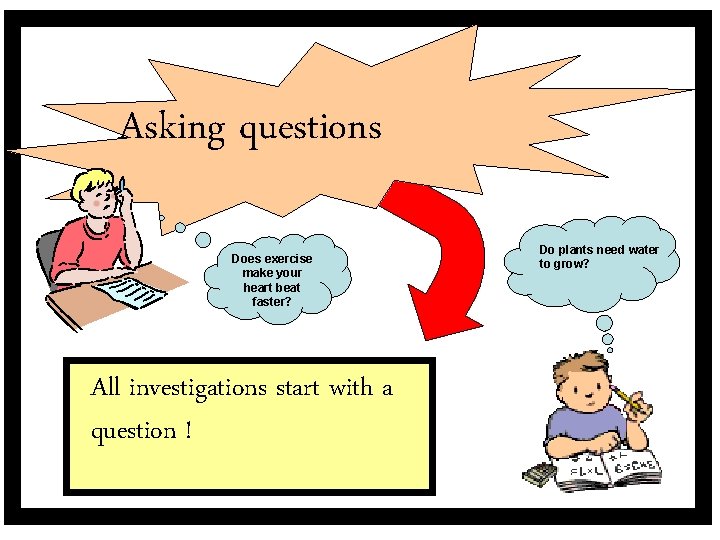
Asking questions Does exercise make your heart beat faster? All investigations start with a question ! Do plants need water to grow?
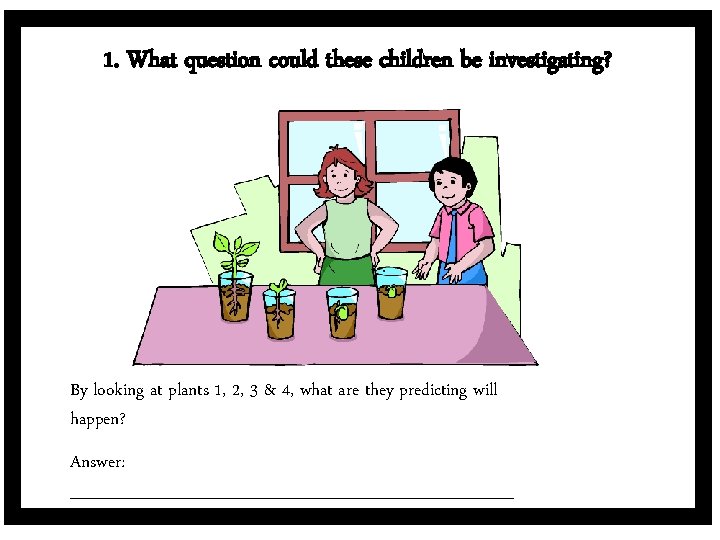
1. What question could these children be investigating? By looking at plants 1, 2, 3 & 4, what are they predicting will happen? Answer: ___________________
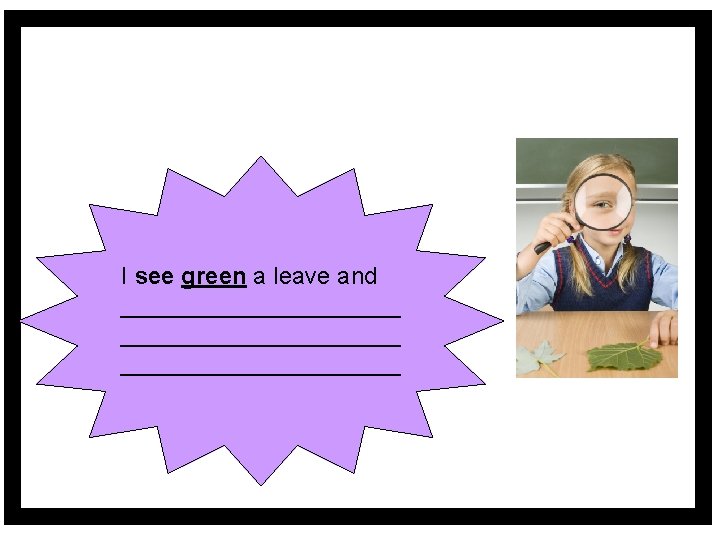
I see green a leave and _____________________
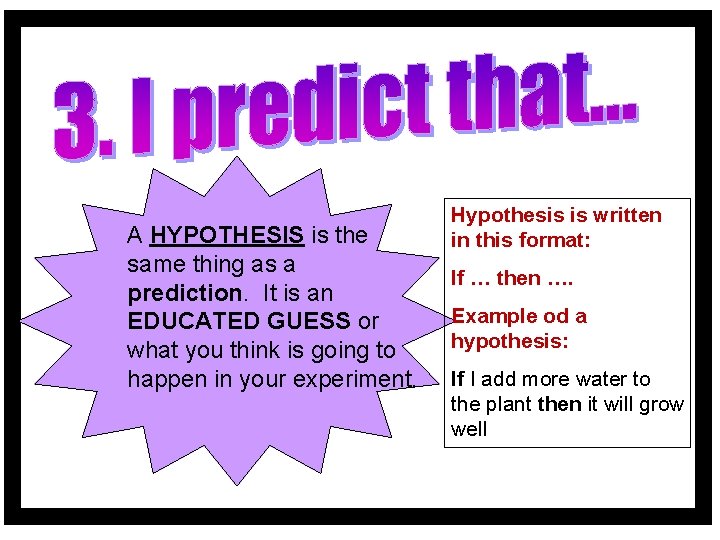
A HYPOTHESIS is the same thing as a prediction. It is an EDUCATED GUESS or what you think is going to happen in your experiment. Hypothesis is written in this format: If … then …. Example od a hypothesis: If I add more water to the plant then it will grow well
You need to give a reason why your hypothesis is correct. Example: …. . because water helps plant to grow.
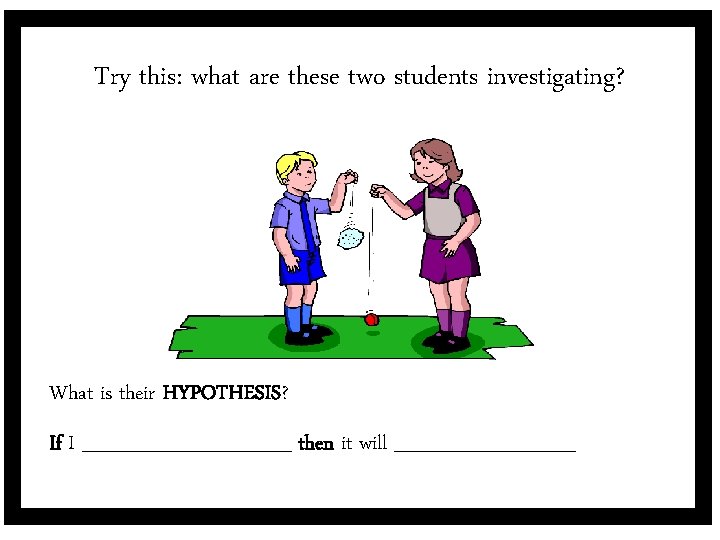
Try this: what are these two students investigating? What is their HYPOTHESIS? If I ________ then it will _______
The next step scientists take is to create and conduct an experiment to test their hypothesis.
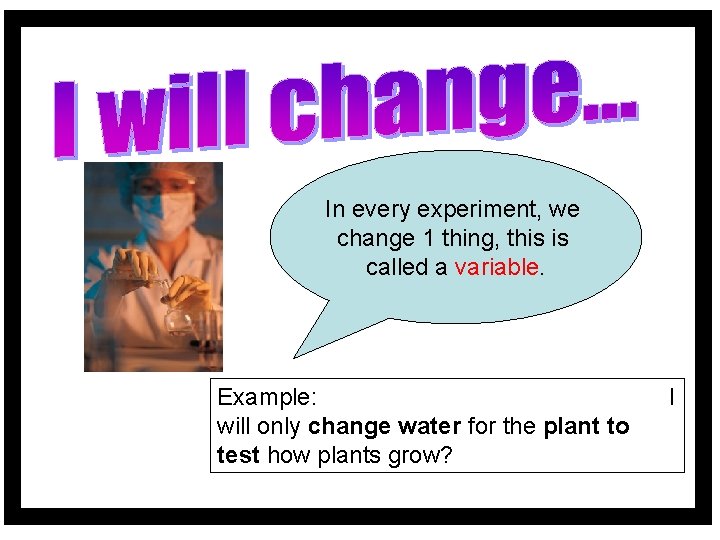
In every experiment, we change 1 thing, this is called a variable. Example: will only change water for the plant to test how plants grow? I
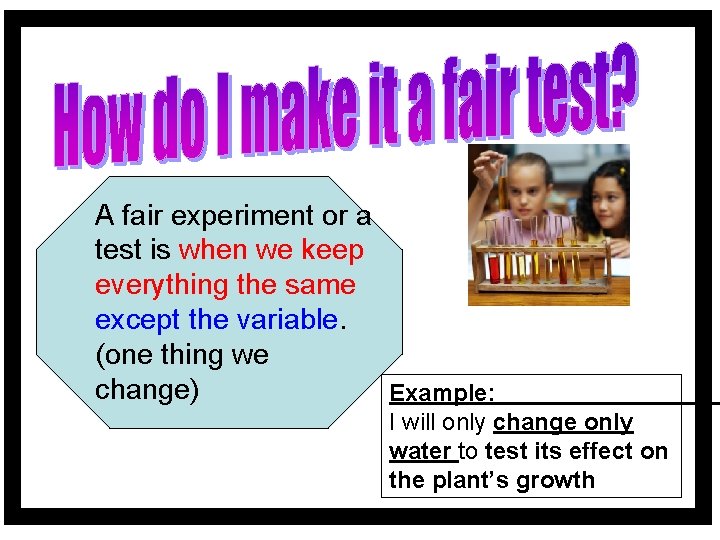
A fair experiment or a test is when we keep everything the same except the variable. (one thing we change) Example: I will only change only water to test its effect on the plant’s growth
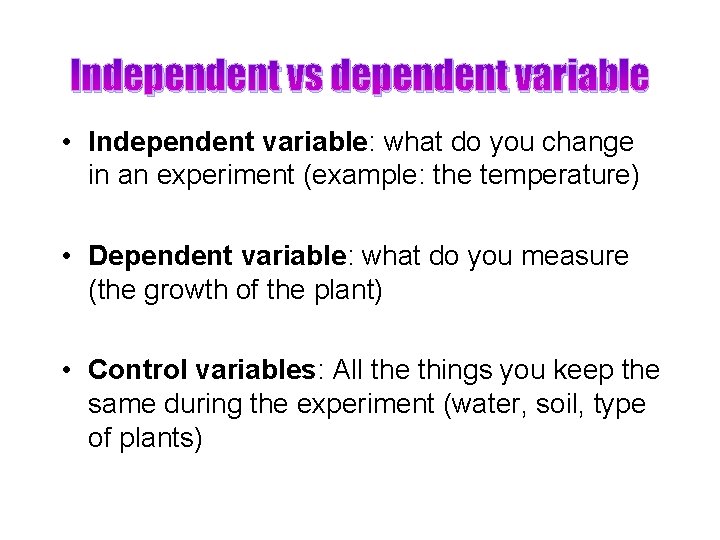
Independent vs dependent variable • Independent variable: what do you change in an experiment (example: the temperature) • Dependent variable: what do you measure (the growth of the plant) • Control variables: All the things you keep the same during the experiment (water, soil, type of plants)
A key to experiments is observing what happens and writing it down. Gathering information or data is very important. Write it down so it is readable and makes sense to other people who read it.
Your hypothesis does not have to be correct!! You need to look back at your HYPOTHESIS and see if you were correct! Example: Are your results what you predicted? Yes, I thought that plants grow well when watered everyday
You need to explain (give reasons why) your hypothesis was right or wrong. Example:
Once a scientist completes an experiment, they often repeat it to see if they get the same findings and results again and again. This is really what we call verification, or checking things out to make sure everything is valid and will happen again and again.
Scientists share their experiments and findings with others. This is step is called Communication or Publication Scientists can learn from each other and often use someone else’s experiences to help them with what they are studying or doing.
- Slides: 22