
What Is the Relationship Between the Population Density
What Is the Relationship Between the Population Density of the Horsetail Plants Compared to the Levels of Arsenic in the Soil in that Area? By Rob Schlegel, Carol Murphy, AJ Mastropietro, and Nolan Hammerquist CVHS Science 2003 -04 First Semester
• Materials: Yard Stick, measuring cup, trowel, plastic bags, GPS consol. • Found a site containing horsetail and determined the density of the plant. • Measured a 2 by 2 yard grid around the horsetail. • Measured 30 cm towards the center of the grid from each corner. • Took a sample from each corner and mixed all four samples together. • Recorded GPS coordinates • Repeated these steps for each site.
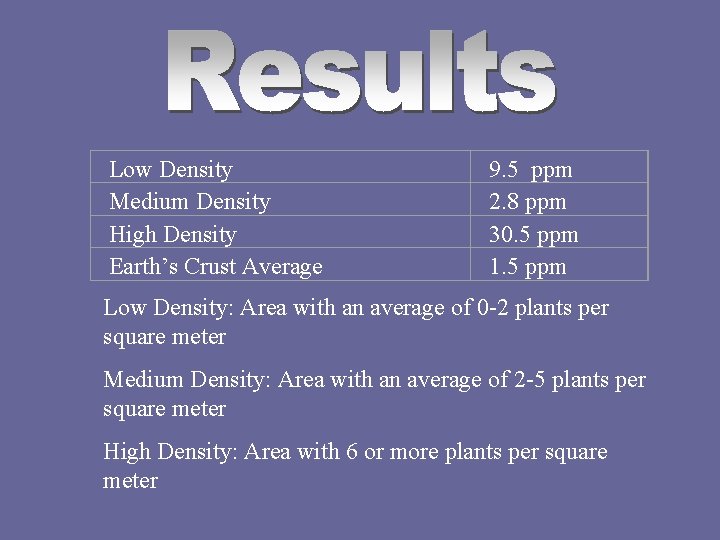
Low Density Medium Density High Density Earth’s Crust Average 9. 5 ppm 2. 8 ppm 30. 5 ppm 1. 5 ppm Low Density: Area with an average of 0 -2 plants per square meter Medium Density: Area with an average of 2 -5 plants per square meter High Density: Area with 6 or more plants per square meter
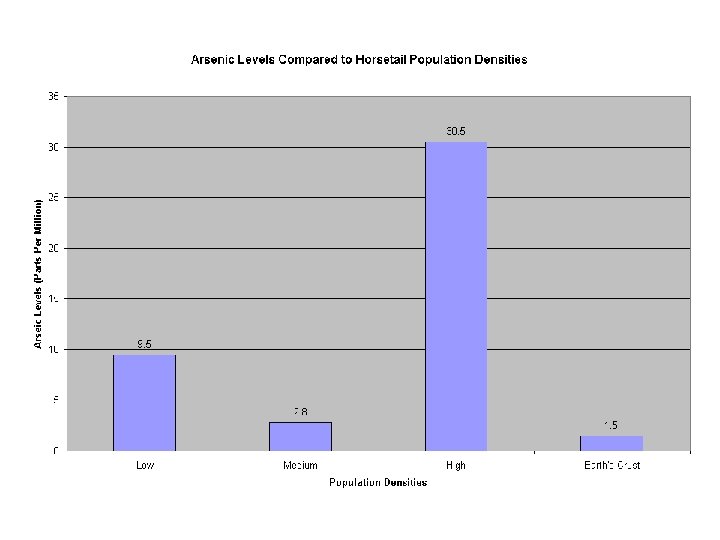
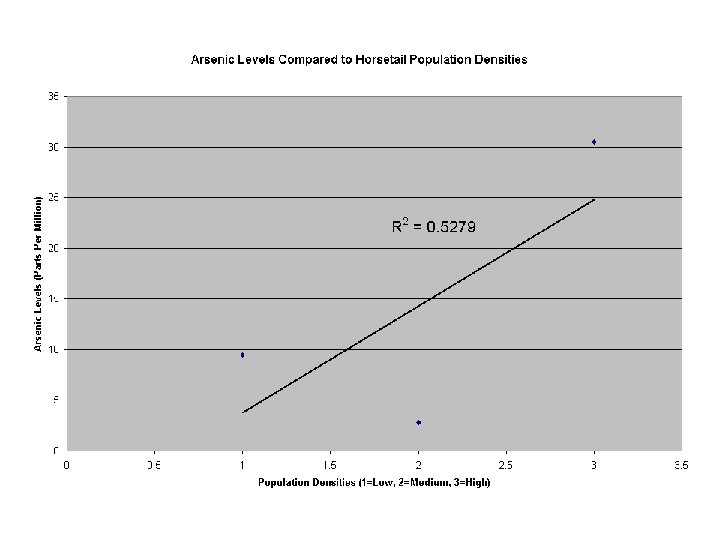
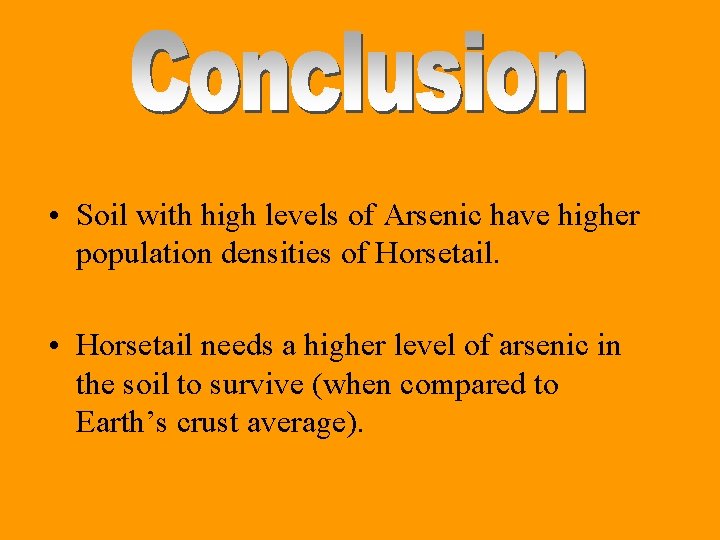
• Soil with high levels of Arsenic have higher population densities of Horsetail. • Horsetail needs a higher level of arsenic in the soil to survive (when compared to Earth’s crust average).
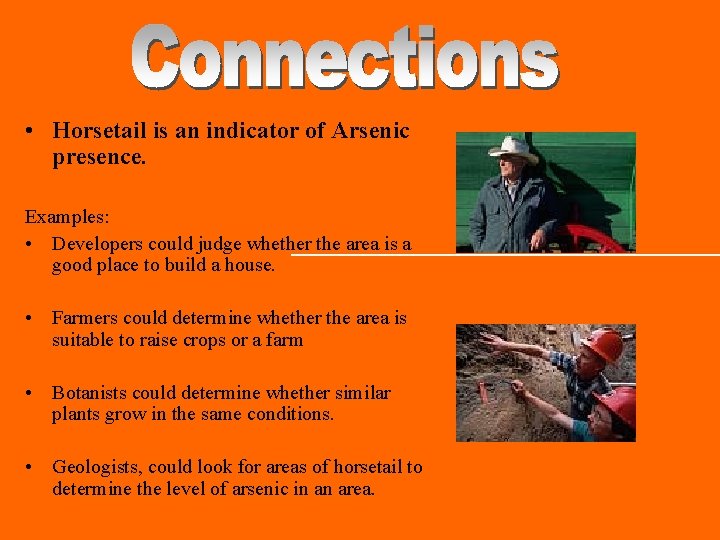
• Horsetail is an indicator of Arsenic presence. Examples: • Developers could judge whether the area is a good place to build a house. • Farmers could determine whether the area is suitable to raise crops or a farm • Botanists could determine whether similar plants grow in the same conditions. • Geologists, could look for areas of horsetail to determine the level of arsenic in an area.
• Do further research to verify conclusion. • Test health of horsetail. • Test other plants. • Look for other affects of other elements on Horsetail. • Find out why horsetail lives in areas of high arsenic.
- Slides: 8