
What is the net force Draw a free

- Slides: 35
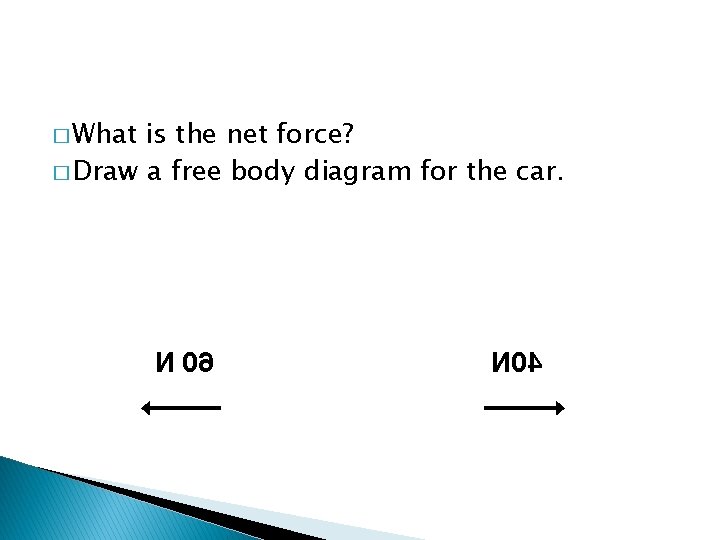
� What is the net force? � Draw a free body diagram for the car. N 06 N 04
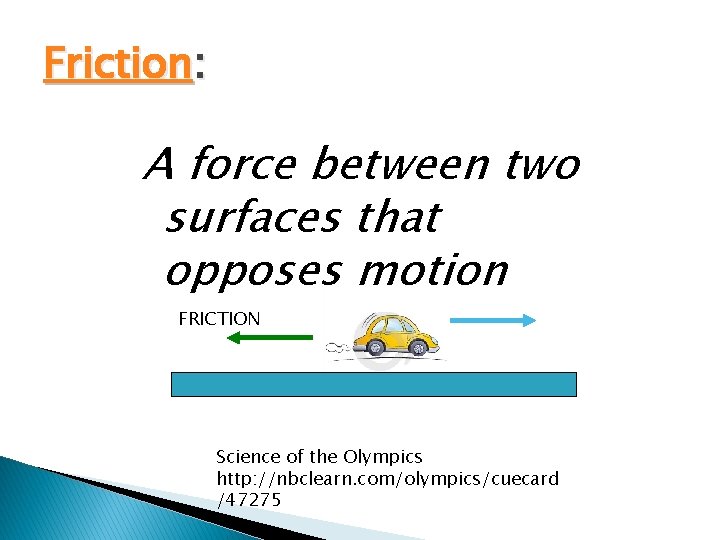
Friction: A force between two surfaces that opposes motion FRICTION Science of the Olympics http: //nbclearn. com/olympics/cuecard /47275
Friction � What stops a ball from rolling across the room forever and ever? � The force is called FRICTION. � Friction is a force that opposes motion between two surfaces that are in contact.
Friction � Friction occurs because the surface of any object is rough. � All surfaces are filled with microscopic hills and valleys that make them rough. � The heavier the object the more force that is exerted on the object and more friction.
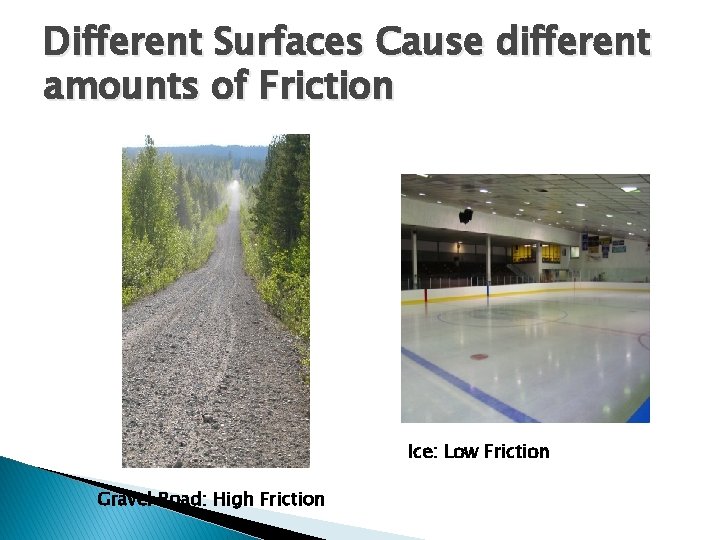
Different Surfaces Cause different amounts of Friction Ice: Low Friction Gravel Road: High Friction
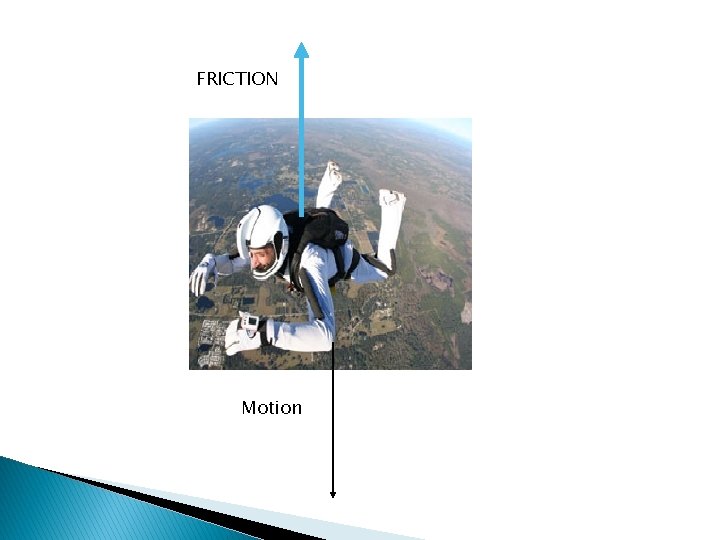
FRICTION Motion
Check for Understanding � Which would have more friction a 2 lb book or a 5 lb book? � Why do objects slow down when moving?
Categories of Friction �Static Friction ◦Stationary �Kinetic Friction ◦Moving
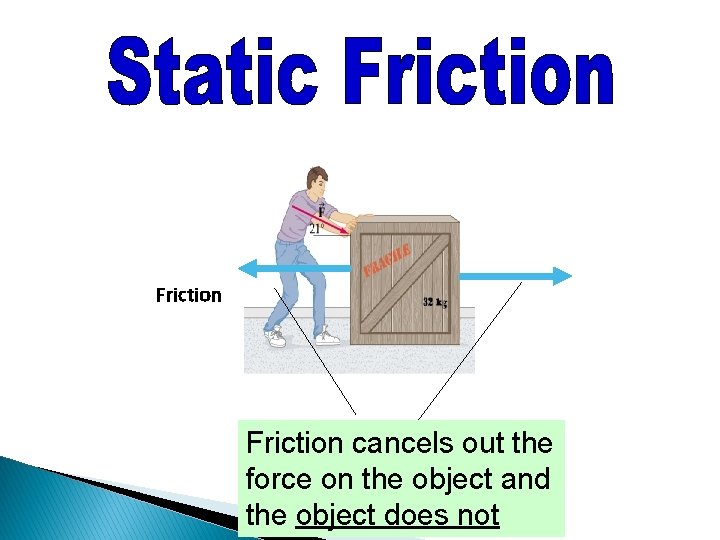
Static Friction � Static friction is the friction of an object that is not moving. � The object does not move because the force of static friction balances the applied force � If you were to get up and push the wall would it move? Why not?
Friction cancels out the force on the object and the object does not
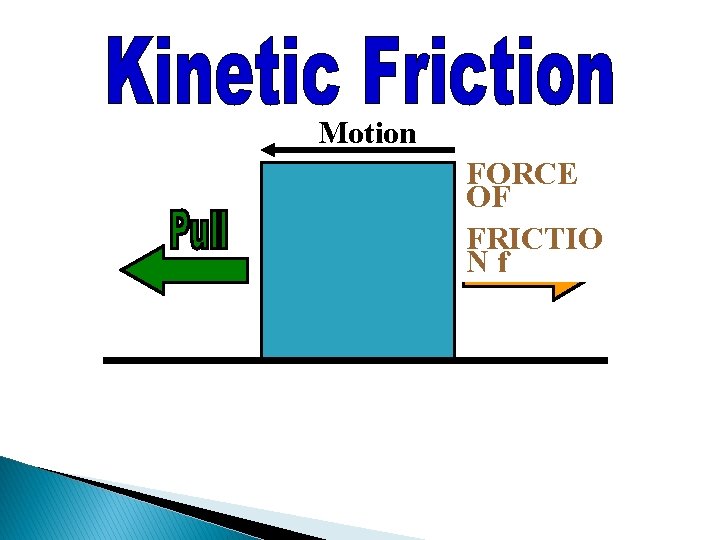
Kinetic Friction � Kinetic Friction is moving friction. � For example rolling or pushing an object produces kinetic friction. � Do you think its easier to push a chair or roll it? Which would have more friction?
Motion FORCE OF FRICTIO Nf
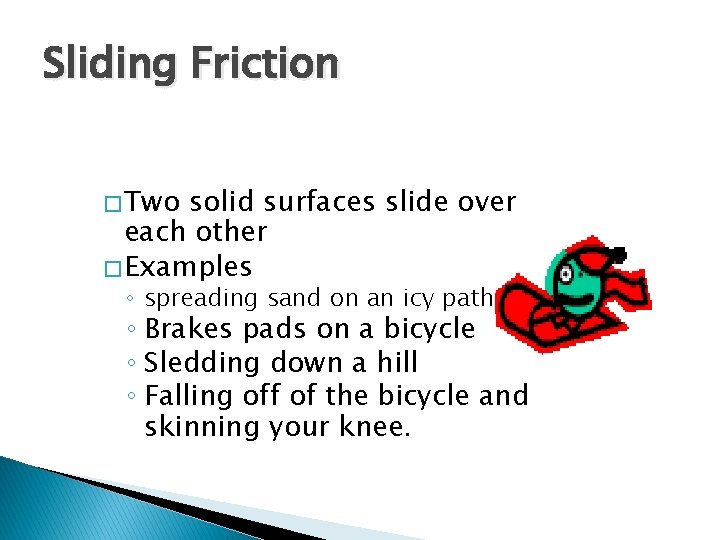
Sliding Friction � Two solid surfaces slide over each other � Examples ◦ spreading sand on an icy path ◦ Brakes pads on a bicycle ◦ Sledding down a hill ◦ Falling off of the bicycle and skinning your knee.
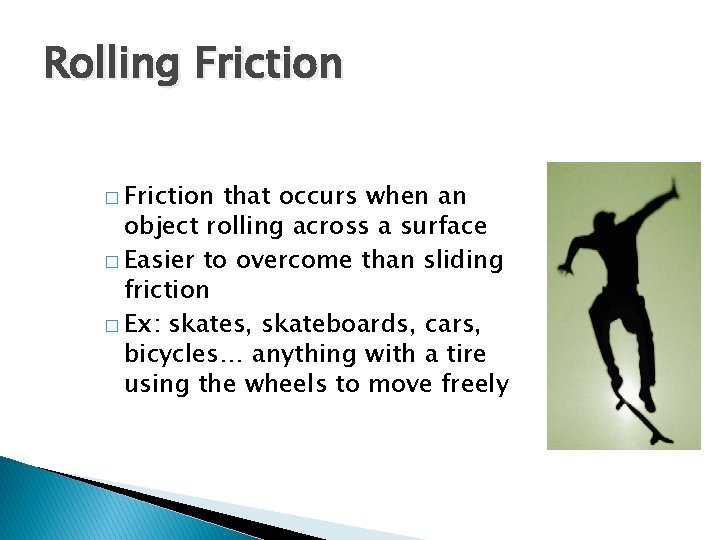
Rolling Friction � Friction that occurs when an object rolling across a surface � Easier to overcome than sliding friction � Ex: skates, skateboards, cars, bicycles… anything with a tire using the wheels to move freely
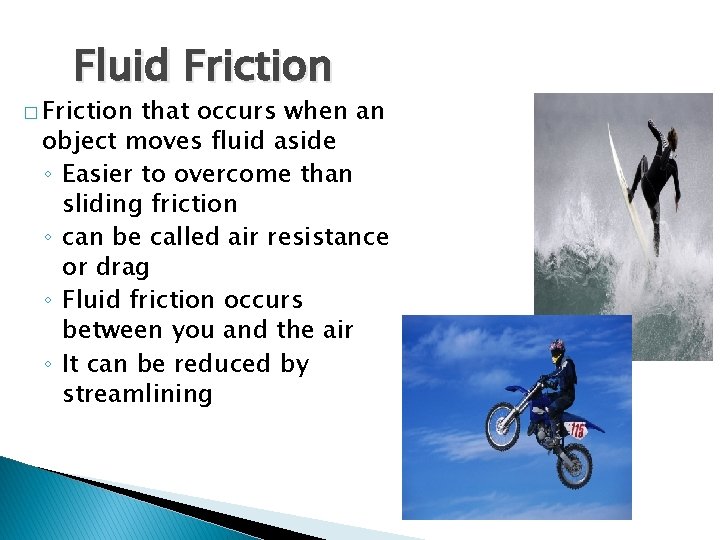
Fluid Friction � Friction that occurs when an object moves fluid aside ◦ Easier to overcome than sliding friction ◦ can be called air resistance or drag ◦ Fluid friction occurs between you and the air ◦ It can be reduced by streamlining
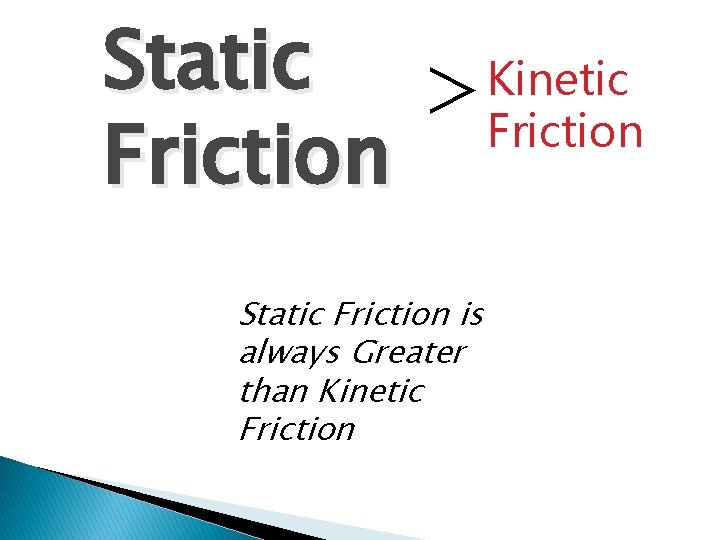
Static > Kinetic Friction Static Friction is always Greater than Kinetic Friction
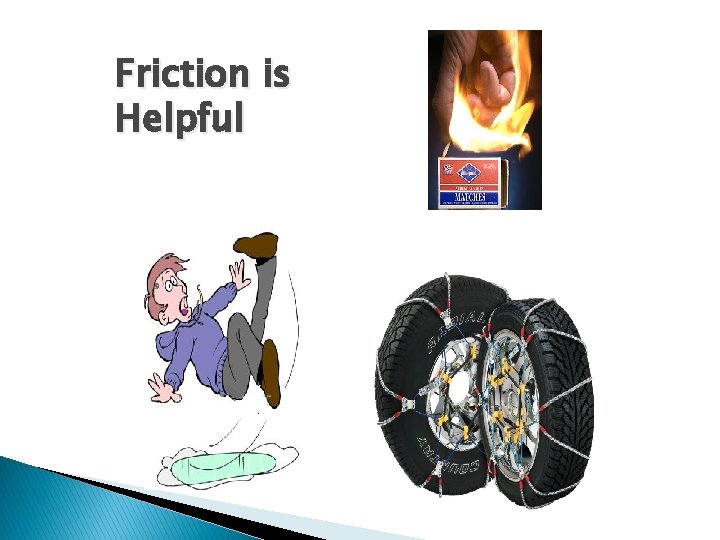
Friction is Helpful
Friction, (Ff) depends on only two things: 1. 2. The type of surface (ice, cement, etc…) The mass of the object
Also… � Friction turns work into heat energy ◦ In every energy transformation, some energy is “lost” as heat due to friction
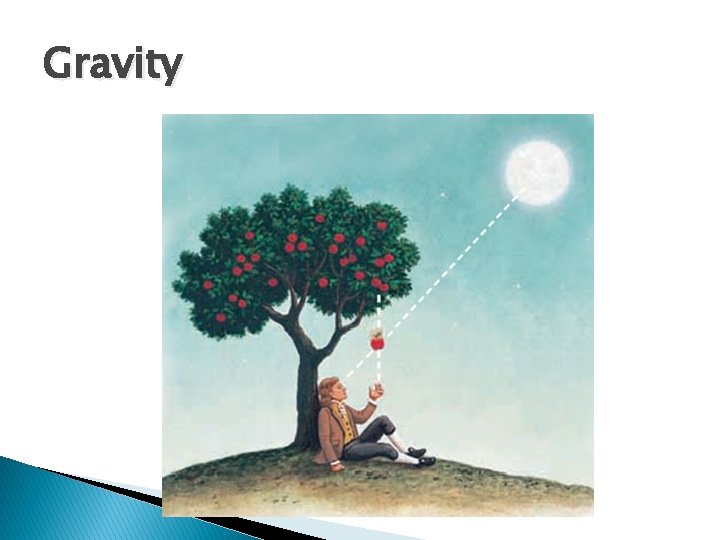
Gravity
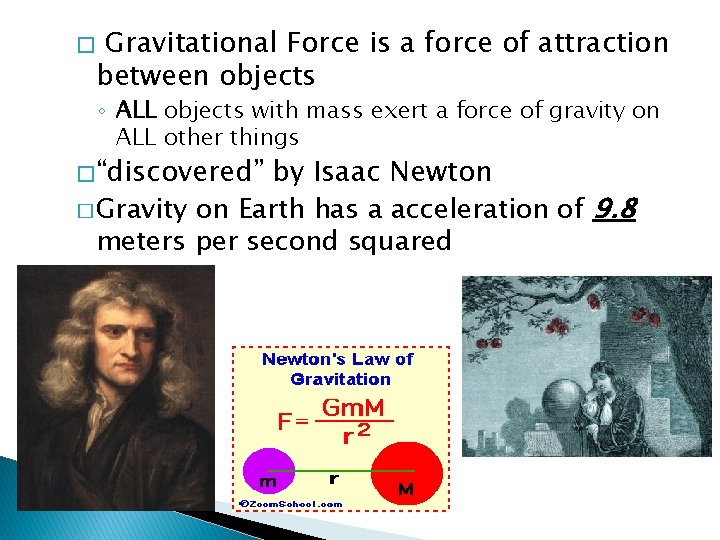
� Gravitational Force is a force of attraction between objects ◦ ALL objects with mass exert a force of gravity on ALL other things � “discovered” by Isaac Newton � Gravity on Earth has a acceleration of 9. 8 meters per second squared
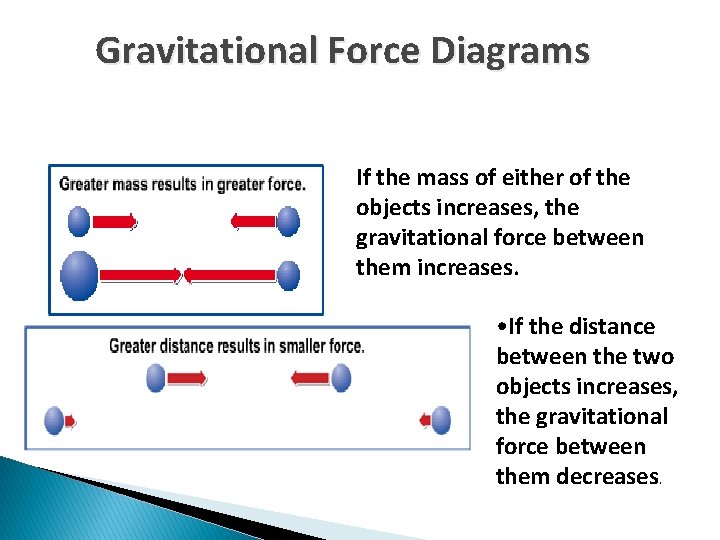
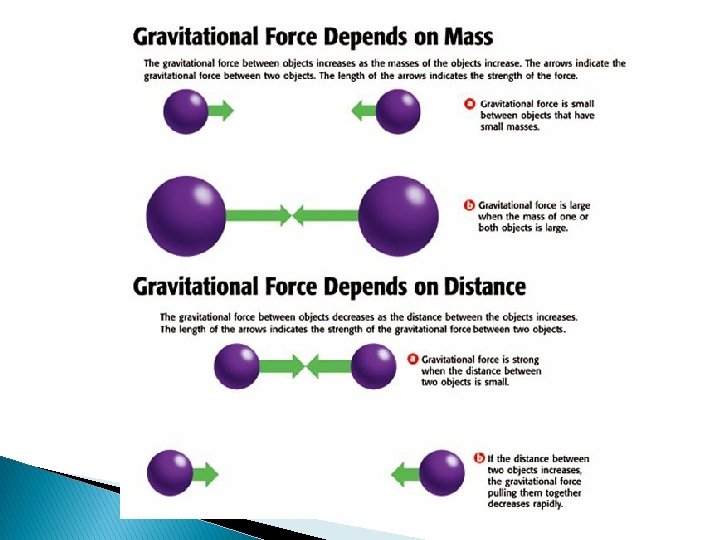
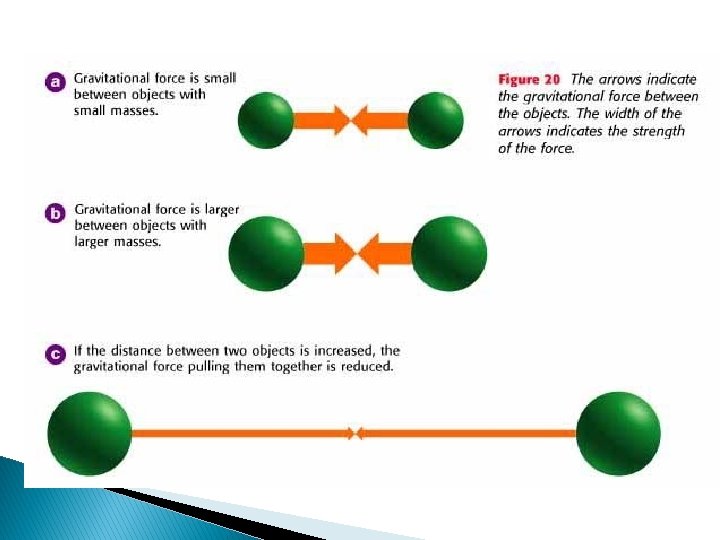
Gravitational Force Diagrams If the mass of either of the objects increases, the gravitational force between them increases. • If the distance between the two objects increases, the gravitational force between them decreases.
� Brain � What Pop Gravity 2 factors affect how strong the force of gravity is between 2 objects?
� Gravity depends on 2 things: �MASS and DISTANCE �Family Guy �Big Bang (2: 54 -3: 30)
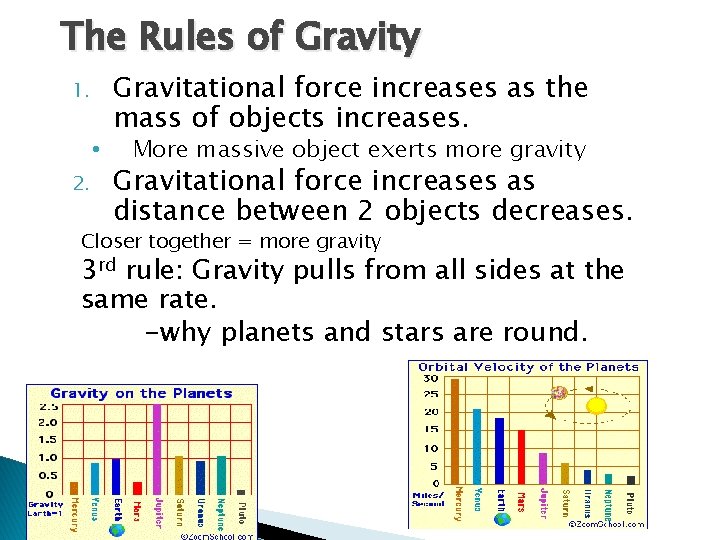
The Rules of Gravity 1. • 2. Gravitational force increases as the mass of objects increases. More massive object exerts more gravity Gravitational force increases as distance between 2 objects decreases. Closer together = more gravity 3 rd rule: Gravity pulls from all sides at the same rate. -why planets and stars are round.
3 rd rule: Gravity pulls from all sides at the same rate. -why planets and stars are round.
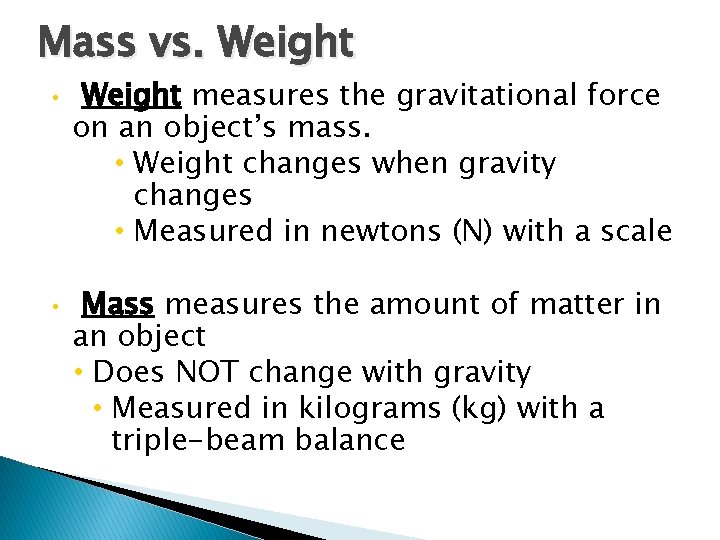
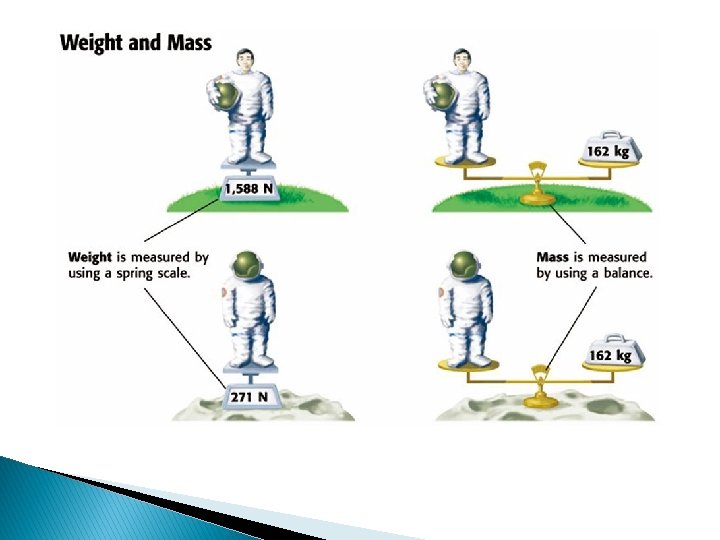
Mass vs. Weight • • Weight measures the gravitational force on an object’s mass. • Weight changes when gravity changes • Measured in newtons (N) with a scale Mass measures the amount of matter in an object • Does NOT change with gravity • Measured in kilograms (kg) with a triple-beam balance
� http: //www. youtube. com/watch? v=xf. Gll 1 REu 2 A � http: //www. exploratorium. edu/ronh/weight/
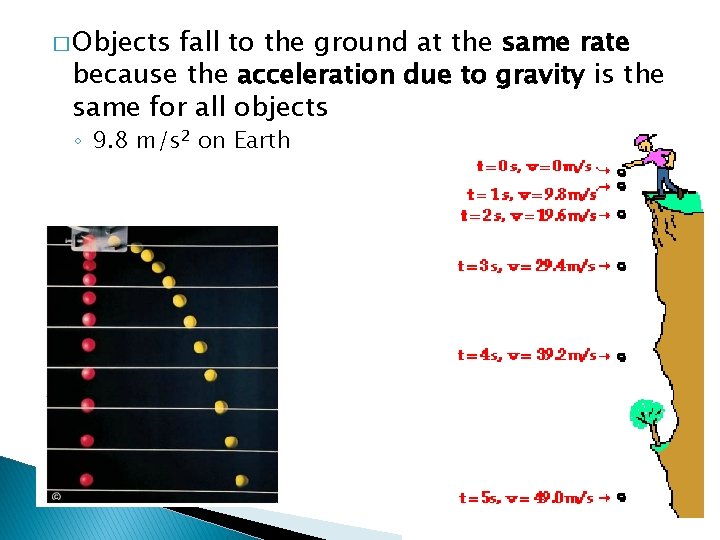
� Objects fall to the ground at the same rate because the acceleration due to gravity is the same for all objects ◦ 9. 8 m/s 2 on Earth
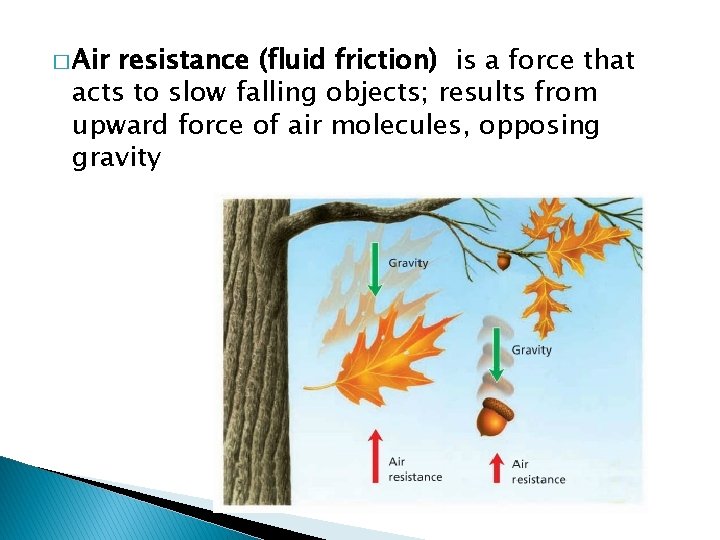
� Air resistance (fluid friction) is a force that acts to slow falling objects; results from upward force of air molecules, opposing gravity
Terminal Velocity � The greatest velocity a falling object reaches is its terminal velocity Net force = 0 N � object stops accelerating and travels at constant speed � drag+buoyant force = gravity � � http: //www. youtube. com/watch? v=p 0 IZsfz. DS 4 s