
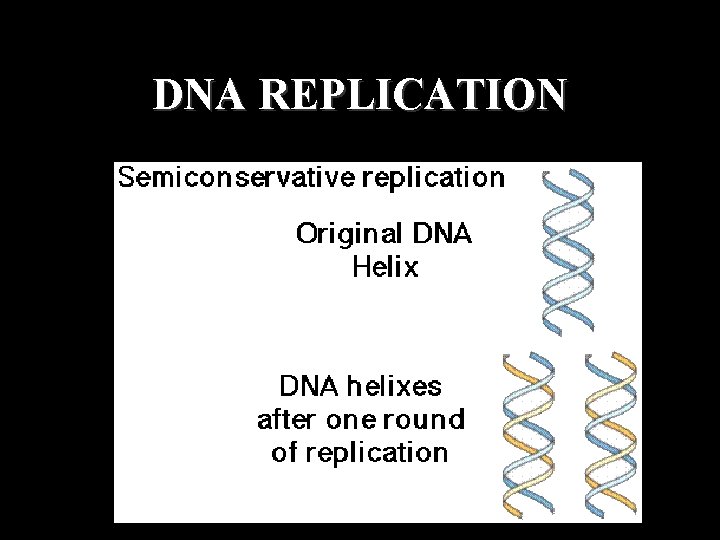
What is the model for DNA replication Semiconservative
- Slides: 39
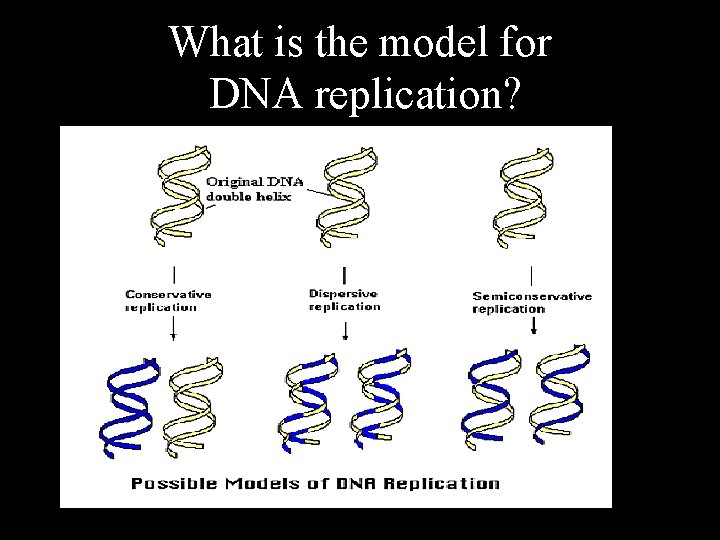
What is the model for DNA replication?
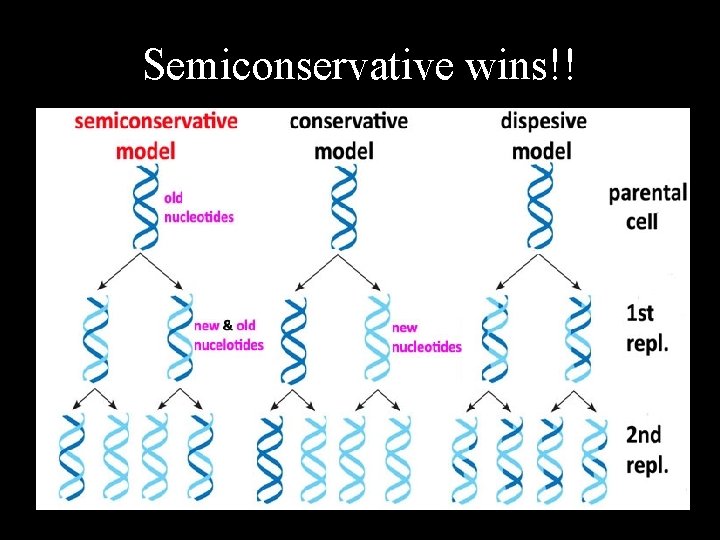
Semiconservative wins!!
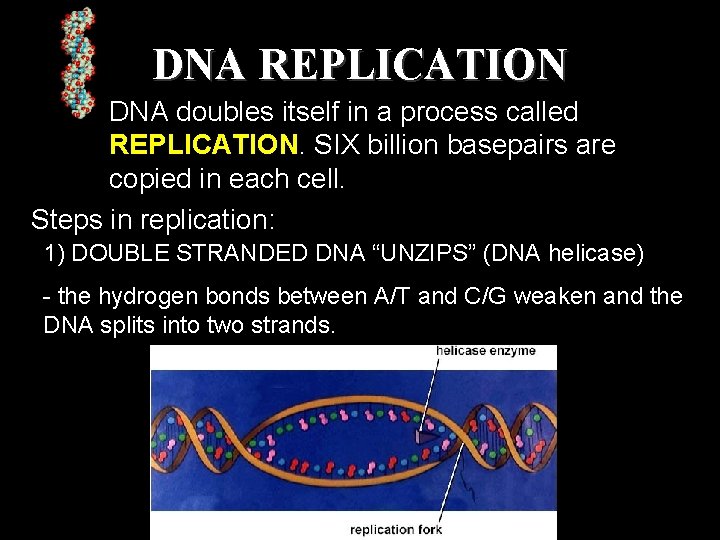
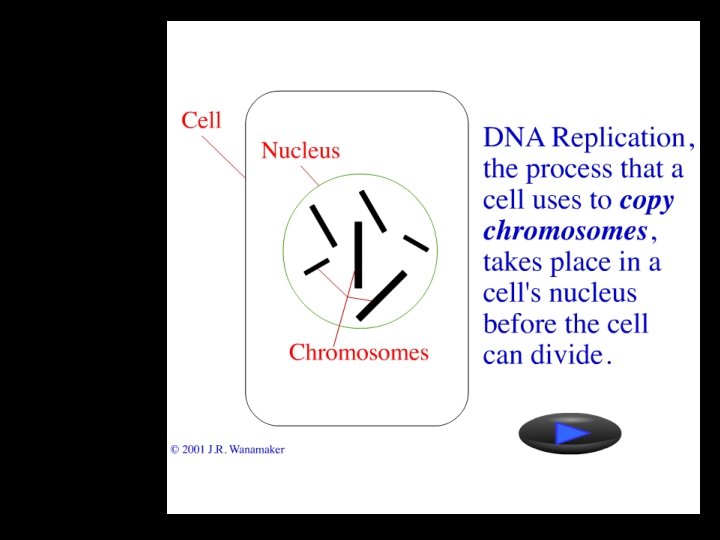
DNA REPLICATION DNA doubles itself in a process called REPLICATION. SIX billion basepairs are copied in each cell. Steps in replication: 1) DOUBLE STRANDED DNA “UNZIPS” (DNA helicase) - the hydrogen bonds between A/T and C/G weaken and the DNA splits into two strands.
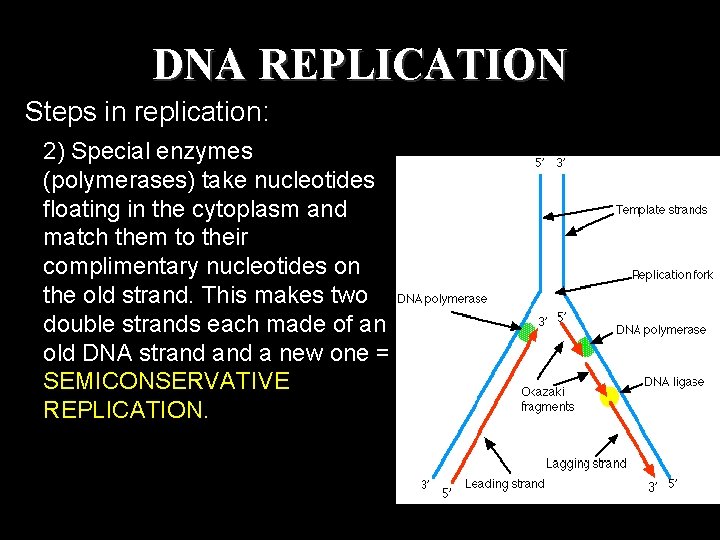
DNA REPLICATION Steps in replication: 2) Special enzymes (polymerases) take nucleotides floating in the cytoplasm and match them to their complimentary nucleotides on the old strand. This makes two double strands each made of an old DNA strand a new one = SEMICONSERVATIVE REPLICATION.
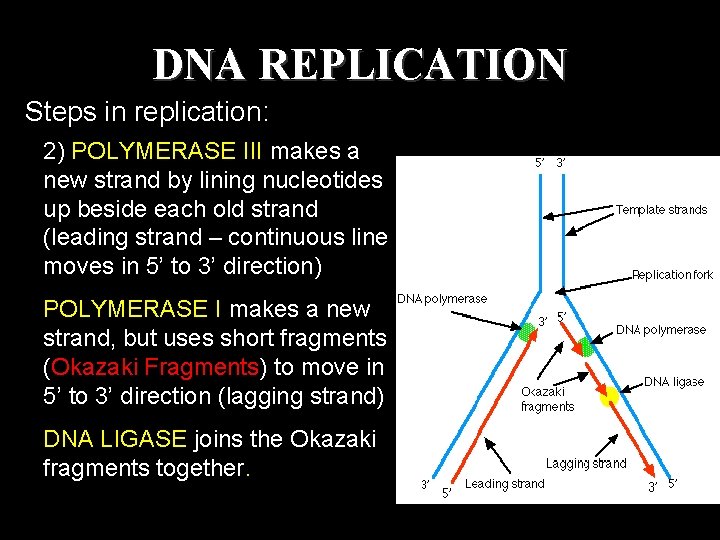
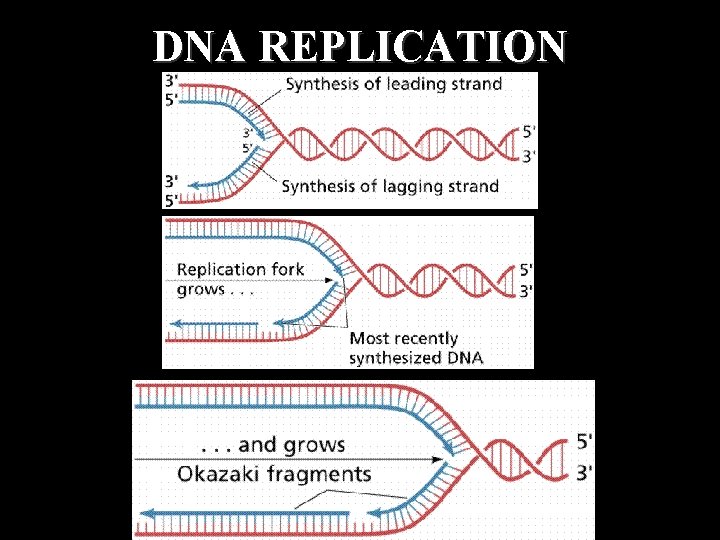
DNA REPLICATION Steps in replication: 2) POLYMERASE III makes a new strand by lining nucleotides up beside each old strand (leading strand – continuous line moves in 5’ to 3’ direction) POLYMERASE I makes a new strand, but uses short fragments (Okazaki Fragments) to move in 5’ to 3’ direction (lagging strand) DNA LIGASE joins the Okazaki fragments together.
DNA REPLICATION
DNA REPLICATION
DNA REPLICATION Steps in replication: 3) ERRORS ARE FIXED. other enzymes check for mistakes in the replication then mistakes are snipped out (by other enzymes) and fixed by Polymerases.
DNA REPLICATION http: //www. emc. maricopa. edu/faculty/farabee/BIOBK/Bio. Book TOC. html http: //www. stolaf. edu/people/giannini/flashanimat/molgeneti cs/dna rna 2. swf 3 d animations DNA LEARNING CENTER SHOW REPLICATION CLIP DNA Replication
DNA Technology Read “Witness for the Prosecution” and answer the questions…. . to be collected on Wednesday.
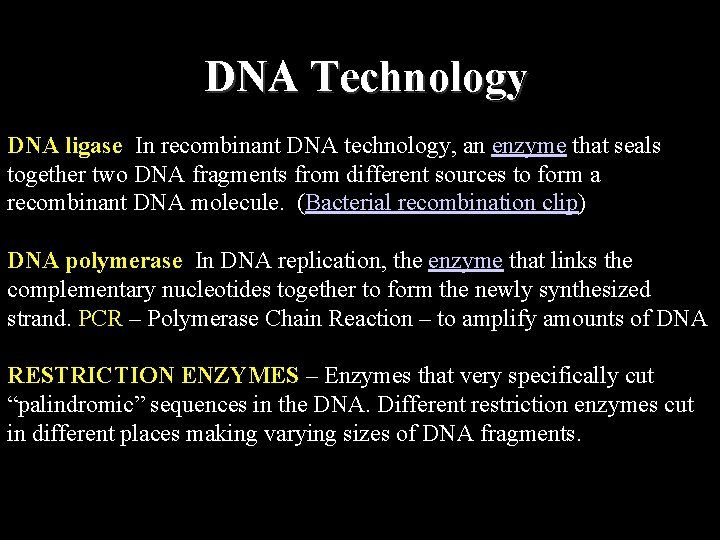
DNA Technology DNA ligase In recombinant DNA technology, an enzyme that seals together two DNA fragments from different sources to form a recombinant DNA molecule. (Bacterial recombination clip) DNA polymerase In DNA replication, the enzyme that links the complementary nucleotides together to form the newly synthesized strand. PCR – Polymerase Chain Reaction – to amplify amounts of DNA RESTRICTION ENZYMES – Enzymes that very specifically cut “palindromic” sequences in the DNA. Different restriction enzymes cut in different places making varying sizes of DNA fragments.
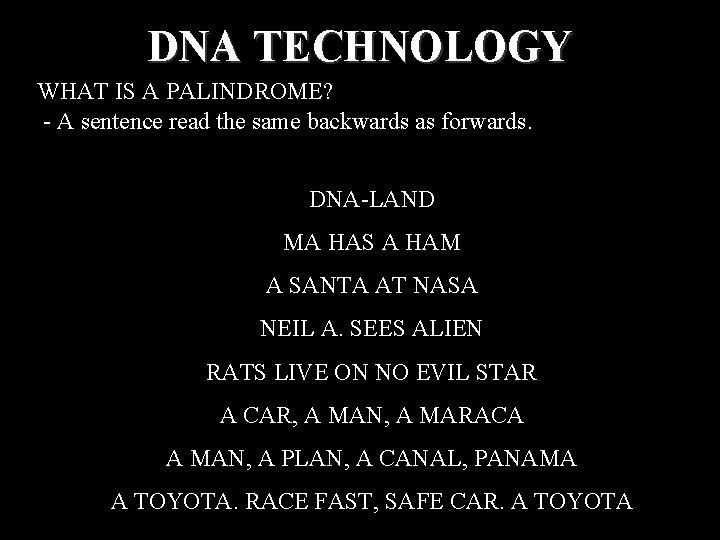
DNA TECHNOLOGY WHAT IS A PALINDROME? A sentence read the same backwards as forwards. DNA LAND MA HAS A HAM A SANTA AT NASA NEIL A. SEES ALIEN RATS LIVE ON NO EVIL STAR A CAR, A MAN, A MARACA A MAN, A PLAN, A CANAL, PANAMA A TOYOTA. RACE FAST, SAFE CAR. A TOYOTA
DNA TECHNOLOGY WHAT IS A PALINDROME? A sentence read the same backwards as forwards. SOME MEN INTERPRET NINE MEMOS. ON A CLOVER, IF ALIVE, ERUPTS A VAST, PURE EVIL, A FIRE VOLCANO. SUBI DURA A RUDIBUS
DNA Technology DNA ligase In recombinant DNA technology, an enzyme that seals together two DNA fragments from different sources to form a recombinant DNA molecule. (Bacterial recombination clip) DNA polymerase In DNA replication, the enzyme that links the complementary nucleotides together to form the newly synthesized strand. PCR – Polymerase Chain Reaction – to amplify amounts of DNA RESTRICTION ENZYMES – Enzymes that very specifically cut “palindromic” sequences in the DNA. Different restriction enzymes cut in different places making varying sizes of DNA fragments.
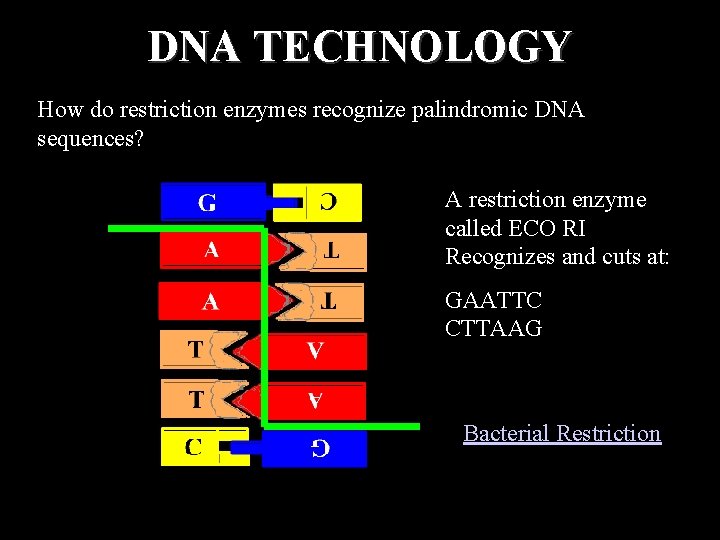
DNA TECHNOLOGY How do restriction enzymes recognize palindromic DNA sequences? A restriction enzyme called ECO RI Recognizes and cuts at: GAATTC CTTAAG Bacterial Restriction
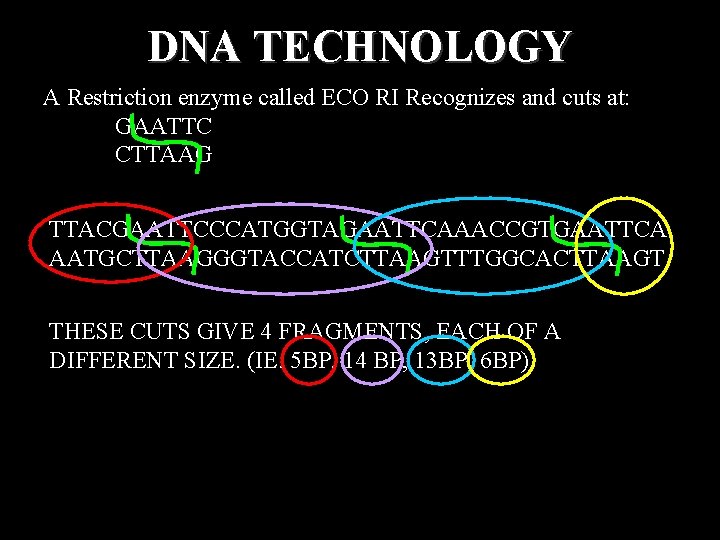
DNA TECHNOLOGY A Restriction enzyme called ECO RI Recognizes and cuts at: GAATTC CTTAAG TTACGAATTCCCATGGTAGAATTCAAACCGTGAATTCA AATGCTTAAGGGTACCATCTTAAGTTTGGCACTTAAGT THESE CUTS GIVE 4 FRAGMENTS, EACH OF A DIFFERENT SIZE. (IE. 5 BP, 14 BP, 13 BP, 6 BP)
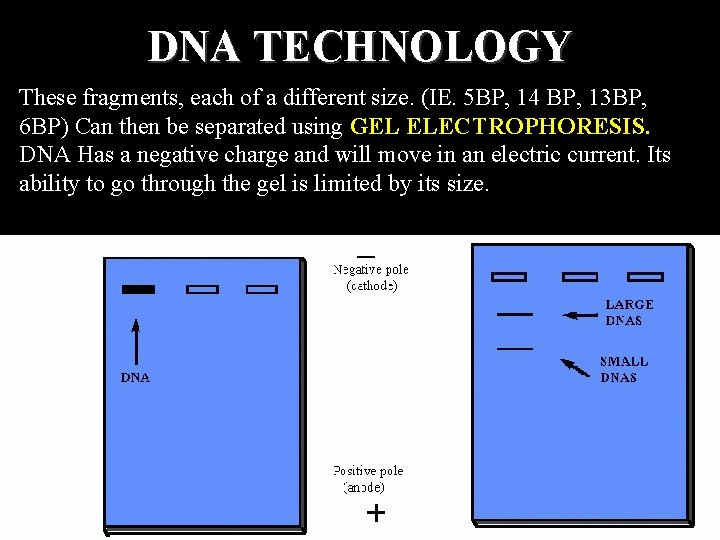
DNA TECHNOLOGY These fragments, each of a different size. (IE. 5 BP, 14 BP, 13 BP, 6 BP) Can then be separated using GEL ELECTROPHORESIS. DNA Has a negative charge and will move in an electric current. Its ability to go through the gel is limited by its size.
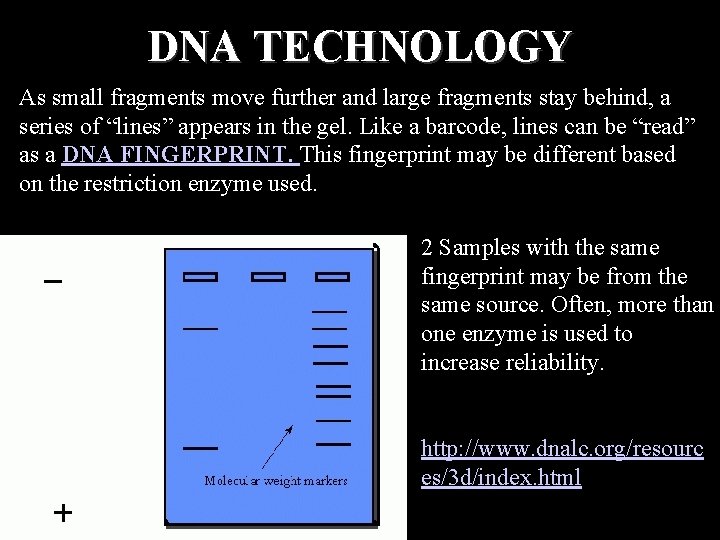
DNA TECHNOLOGY As small fragments move further and large fragments stay behind, a series of “lines” appears in the gel. Like a barcode, lines can be “read” as a DNA FINGERPRINT. This fingerprint may be different based on the restriction enzyme used. 2 Samples with the same fingerprint may be from the same source. Often, more than one enzyme is used to increase reliability. http: //www. dnalc. org/resourc es/3 d/index. html
Gel electrophoresis simulation
What if we need more DNA? PCR – polymerase chain reaction That is the technology answer!! Another one
DO LAB 7 8 – DNA FINGERPRINTING (PARTNERS) DO FORENSIC SCIENCE LAB
The Case of the Murdered Rock Star Late one night, the famous rock star, Rockina, returned to her luxurious apartment from an appearance at a concert. As she entered her locked apartment, she noticed that everything in her apartment was a mess the drawers had been emptied out onto the floor; the cushions on the couch were ripped open; and the safe behind the picture on the wall had been opened. She then noticed that the lights were on in her bedroom.
She stormed into the bedroom and surprised a burglar in the process of removing her magnificent (and expensive) jewelry from its hiding place beneath the mattress. Indignant, she jumped on the burglar and tried to stab the person with her nail file. While she was able to inflict a small wound, she was no match for the assailant's knife. In the subsequent struggle, she was killed, and the murderer escaped with her jewelry.
B. The Investigation When the housekeeper, Casparina, entered her apartment the next day, she saw the body and immediately called the police. When they noted that there had been no signs of a forced entry, the investigation narrowed down to people who knew Rockina and who had a key to enable them to enter her apartment. The suspects were: 1. Casparina, the housekeeper, who had just had a bitter argument with Rockina over a refused raise in salary. 2. Lucifer, her former boyfriend, who she had just jilted for another man. 3. Pinky, the leader of her weight lifting class, who was her new boyfriend. It was rumored that Pinky was insanely jealous of Rockina's fame.
When it was established that all three of the suspects had a key to Rockina's apartment, all had a motive for killing her, and all had no ironclad alibi for the evening that she was killed, the police realized they had a problem. They consequently decided to hire a world famous forensic science team to use DNA fingerprinting to prove which of the suspects was guilty of Rockina's murder.
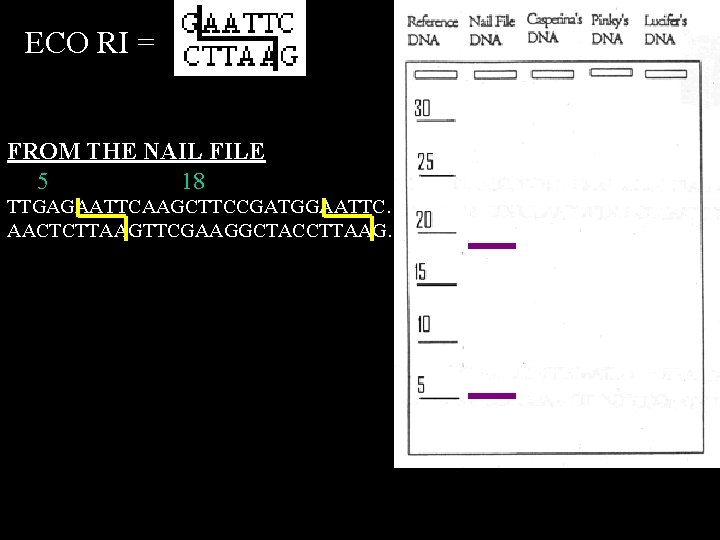
ECO RI = FROM THE NAIL FILE 5 18 TTGAGAATTCAAGCTTCCGATGGAATTC… AACTCTTAAGTTCGAAGGCTACCTTAAG…
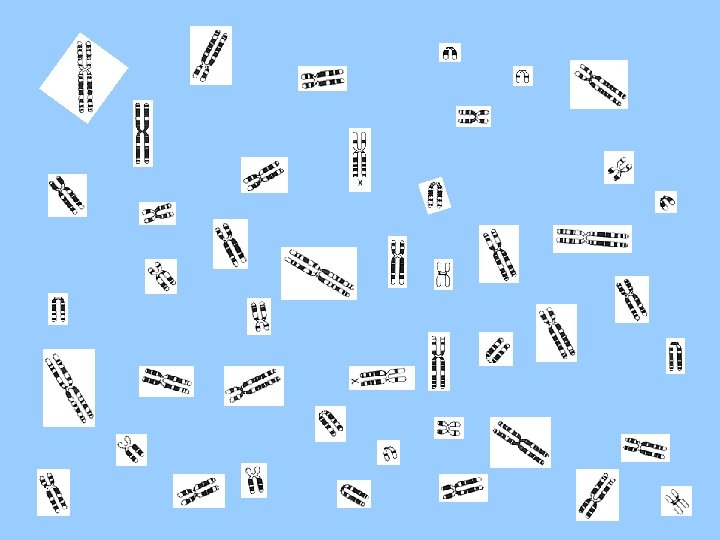
Lab 7 8 Rockina Murder The Falcon Murder: Karyotype the evidence sample. DNA fingerprint
CYNTHIA and ROY – NOT RULED OUT OF O- OR FLAT FOOTED LORI, CAROL, AND JOANNE – COULD BE O- AND ARE FLAT FOOTED
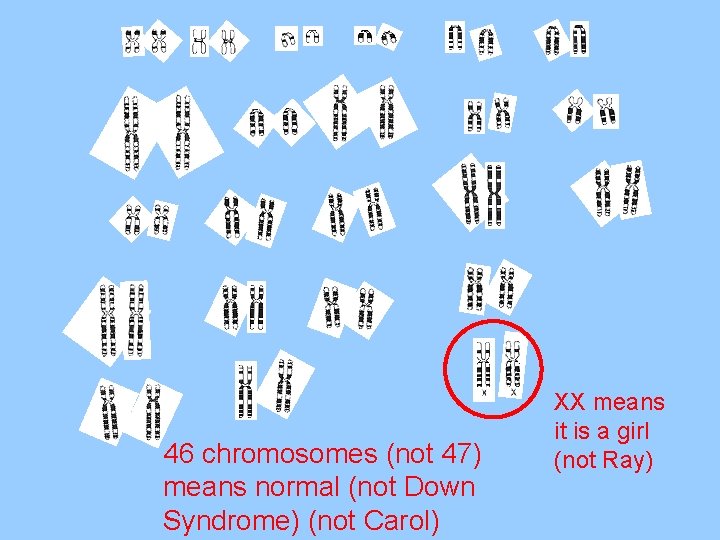
46 chromosomes (not 47) means normal (not Down Syndrome) (not Carol) XX means it is a girl (not Ray)
CYNTHIA– NOT RULED OUT OF O- OR FLAT FOOTED LORI AND JOANNE – COULD BE O- AND ARE FLAT FOOTED
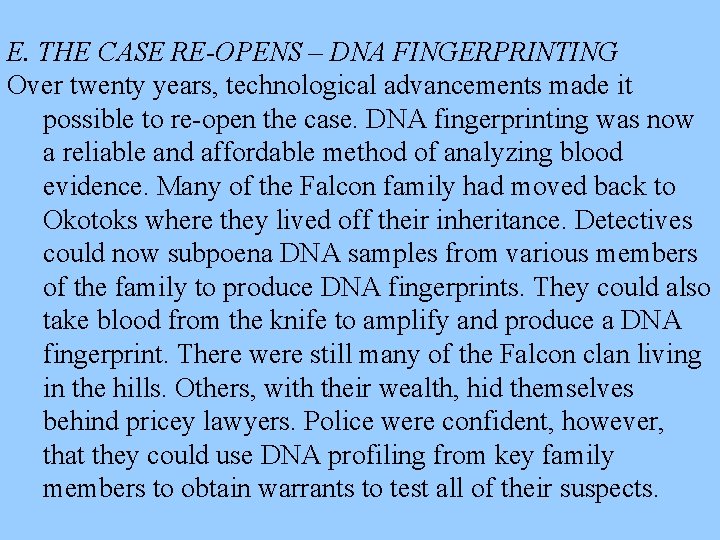
E. THE CASE RE-OPENS – DNA FINGERPRINTING Over twenty years, technological advancements made it possible to re open the case. DNA fingerprinting was now a reliable and affordable method of analyzing blood evidence. Many of the Falcon family had moved back to Okotoks where they lived off their inheritance. Detectives could now subpoena DNA samples from various members of the family to produce DNA fingerprints. They could also take blood from the knife to amplify and produce a DNA fingerprint. There were still many of the Falcon clan living in the hills. Others, with their wealth, hid themselves behind pricey lawyers. Police were confident, however, that they could use DNA profiling from key family members to obtain warrants to test all of their suspects.
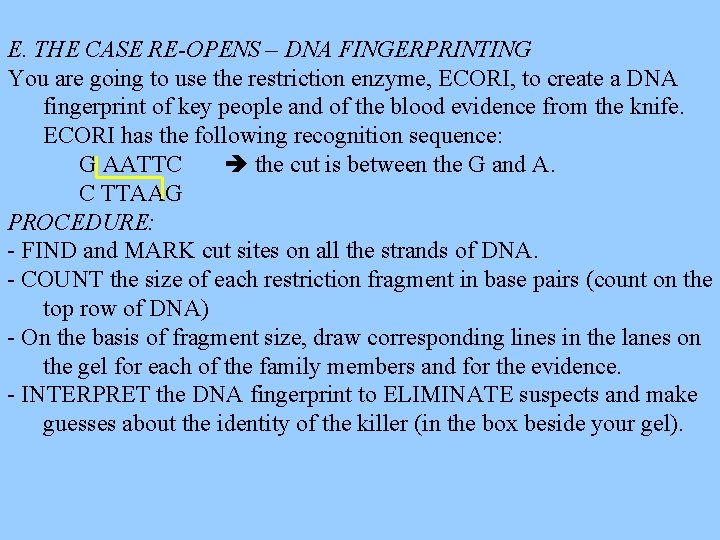
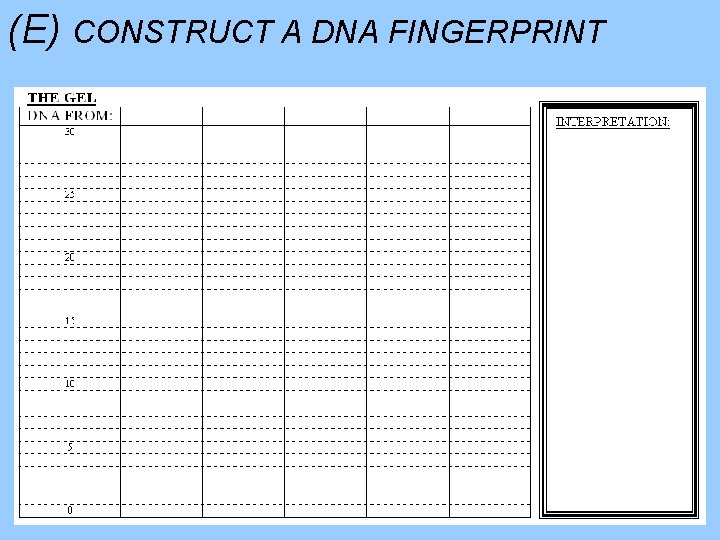
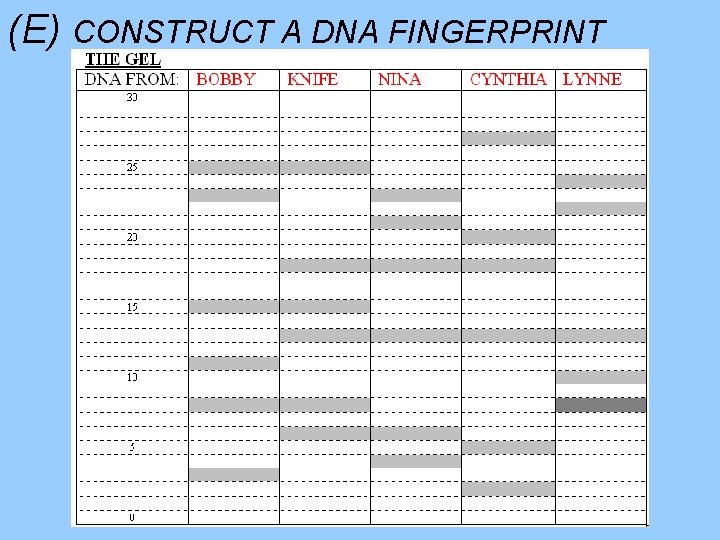
E. THE CASE RE-OPENS – DNA FINGERPRINTING You are going to use the restriction enzyme, ECORI, to create a DNA fingerprint of key people and of the blood evidence from the knife. ECORI has the following recognition sequence: G AATTC the cut is between the G and A. C TTAAG PROCEDURE: FIND and MARK cut sites on all the strands of DNA. COUNT the size of each restriction fragment in base pairs (count on the top row of DNA) On the basis of fragment size, draw corresponding lines in the lanes on the gel for each of the family members and for the evidence. INTERPRET the DNA fingerprint to ELIMINATE suspects and make guesses about the identity of the killer (in the box beside your gel).
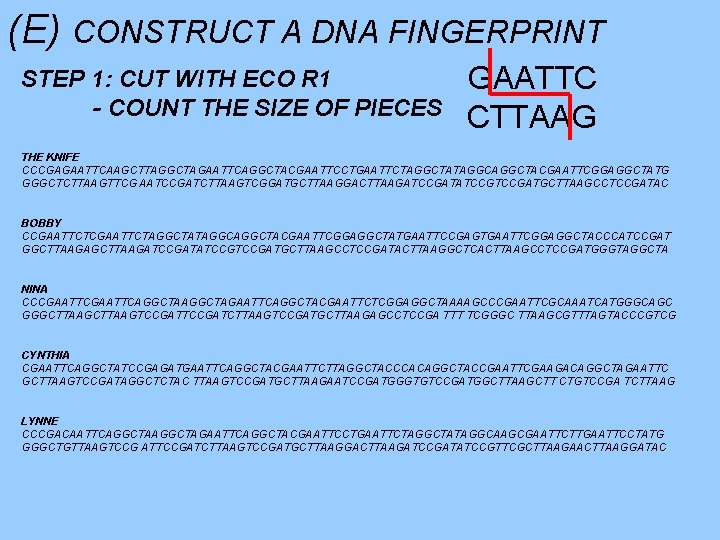
(E) CONSTRUCT A DNA FINGERPRINT STEP 1: CUT WITH ECO R 1 - COUNT THE SIZE OF PIECES GAATTC CTTAAG THE KNIFE CCCGAGAATTCAAGCTTAGGCTAGAATTCAGGCTACGAATTCCTGAATTCTAGGCTATAGGCTACGAATTCGGAGGCTATG GGGCTCTTAAGTTCG AATCCGATCTTAAGTCGGATGCTTAAGGACTTAAGATCCGATATCCGATGCTTAAGCCTCCGATAC BOBBY CCGAATTCTAGGCTATAGGCTACGAATTCGGAGGCTATGAATTCCGAGTGAATTCGGAGGCTACCCATCCGAT GGCTTAAGATCCGATATCCGATGCTTAAGCCTCCGATACTTAAGGCTCACTTAAGCCTCCGATGGGTAGGCTA NINA CCCGAATTCAGGCTAGAATTCAGGCTACGAATTCTCGGAGGCTAAAAGCCCGAATTCGCAAATCATGGGCAGC GGGCTTAAGTCCGATCTTAAGTCCGATGCTTAAGAGCCTCCGA TTT TCGGGC TTAAGCGTTTAGTACCCGTCG CYNTHIA CGAATTCAGGCTATCCGAGATGAATTCAGGCTACGAATTCTTAGGCTACCCACAGGCTACCGAATTCGAAGACAGGCTAGAATTC GCTTAAGTCCGATAGGCTCTAC TTAAGTCCGATGCTTAAGAATCCGATGGGTGTCCGATGGCTTAAGCTT CTGTCCGA TCTTAAG LYNNE CCCGACAATTCAGGCTAGAATTCAGGCTACGAATTCCTGAATTCTAGGCTATAGGCAAGCGAATTCTTGAATTCCTATG GGGCTGTTAAGTCCG ATTCCGATCTTAAGTCCGATGCTTAAGGACTTAAGATCCGATATCCGTTCGCTTAAGAACTTAAGGATAC
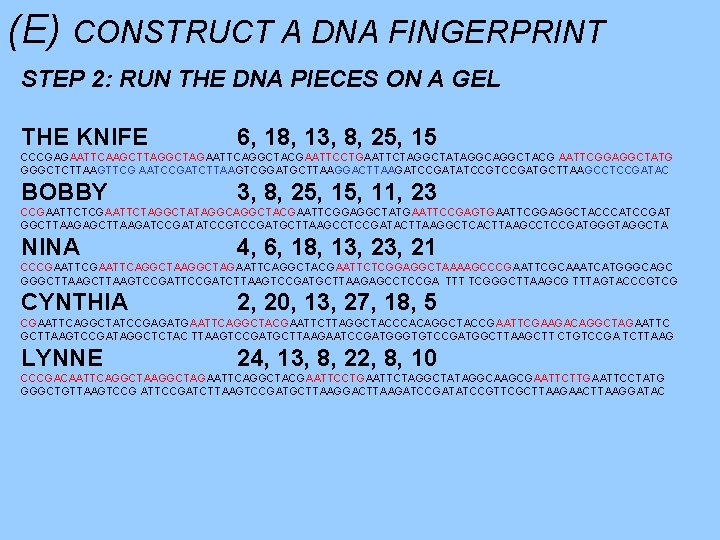
(E) CONSTRUCT A DNA FINGERPRINT STEP 2: RUN THE DNA PIECES ON A GEL THE KNIFE 6, 18, 13, 8, 25, 15 CCCGAGAATTCAAGCTTAGGCTAGAATTCAGGCTACGAATTCCTGAATTCTAGGCTATAGGCTACG AATTCGGAGGCTATG GGGCTCTTAAGTTCG AATCCGATCTTAAGTCGGATGCTTAAGGACTTAAGATCCGATATCCGATGCTTAAGCCTCCGATAC BOBBY 3, 8, 25, 11, 23 CCGAATTCTAGGCTATAGGCTACGAATTCGGAGGCTATGAATTCCGAGTGAATTCGGAGGCTACCCATCCGAT GGCTTAAGATCCGATATCCGATGCTTAAGCCTCCGATACTTAAGGCTCACTTAAGCCTCCGATGGGTAGGCTA NINA 4, 6, 18, 13, 21 CCCGAATTCAGGCTAGAATTCAGGCTACGAATTCTCGGAGGCTAAAAGCCCGAATTCGCAAATCATGGGCAGC GGGCTTAAGTCCGATCTTAAGTCCGATGCTTAAGAGCCTCCGA TTT TCGGGCTTAAGCG TTTAGTACCCGTCG CYNTHIA 2, 20, 13, 27, 18, 5 CGAATTCAGGCTATCCGAGATGAATTCAGGCTACGAATTCTTAGGCTACCCACAGGCTACCGAATTCGAAGACAGGCTAGAATTC GCTTAAGTCCGATAGGCTCTAC TTAAGTCCGATGCTTAAGAATCCGATGGGTGTCCGATGGCTTAAGCTT CTGTCCGA TCTTAAG LYNNE 24, 13, 8, 22, 8, 10 CCCGACAATTCAGGCTAGAATTCAGGCTACGAATTCCTGAATTCTAGGCTATAGGCAAGCGAATTCTTGAATTCCTATG GGGCTGTTAAGTCCG ATTCCGATCTTAAGTCCGATGCTTAAGGACTTAAGATCCGATATCCGTTCGCTTAAGAACTTAAGGATAC
(E) CONSTRUCT A DNA FINGERPRINT
(E) CONSTRUCT A DNA FINGERPRINT
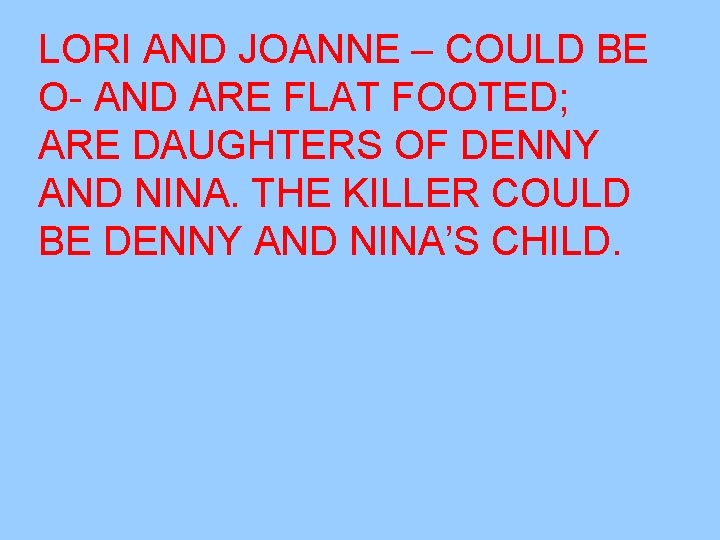
LORI AND JOANNE – COULD BE O- AND ARE FLAT FOOTED; ARE DAUGHTERS OF DENNY AND NINA. THE KILLER COULD BE DENNY AND NINA’S CHILD.