
WHAT IS THE MEDICAID TRANSFORMATION PROJECT HOW WILL
- Slides: 23
WHAT IS THE MEDICAID TRANSFORMATION PROJECT? HOW WILL IT AFFECT MEDICAID SERVICES IN KING COUNTY? AGING AND DISABILITY SERVICES ADVISORY COUNCIL AUGUST 11, 2017 Cathy Knight, Director, Aging and Disability Services Jeff Sakuma, Health Integration Strategist, City of Seattle Human Service Department 1
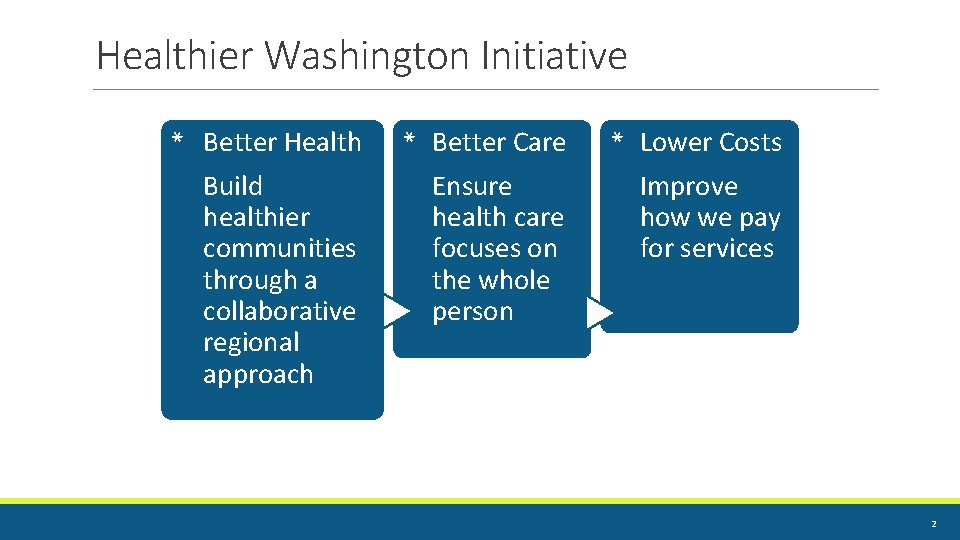
Better Care Ensure health care focuses on the whole person * Better Health Build healthier communities through a collaborative regional approach * * Healthier Washington Initiative Lower Costs Improve how we pay for services 2
What is the Medicaid Demonstration Project? • A contract between the federal government (Centers for Medicare and Medicaid Services) and the state (Health Care Authority) to allow for innovation to improve health outcomes for Medicaid beneficiaries. • A five-year demonstration program (2017 -2021) funded by up to $1. 5 billion in new investment. • Demonstration goals are to: v v Integrate physical and behavioral health purchasing and service delivery Convert 90% of Medicaid provider payments to reward outcomes Implement population health strategies that improve health equity Provide targeted services that address the needs of our aging populations and address the key determinants of health 3
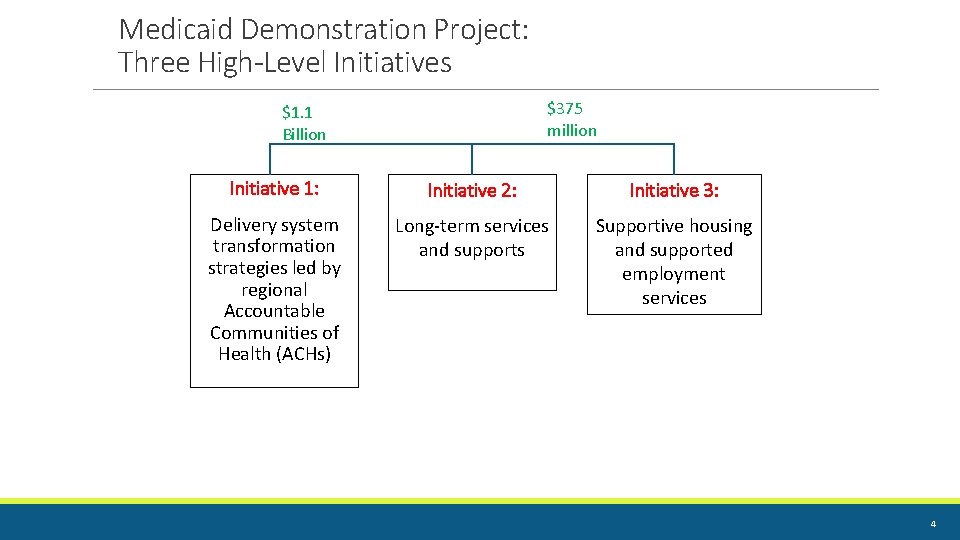
Medicaid Demonstration Project: Three High-Level Initiatives $375 million $1. 1 Billion Initiative 1: Initiative 2: Initiative 3: Delivery system transformation strategies led by regional Accountable Communities of Health (ACHs) Long-term services and supports Supportive housing and supported employment services 4
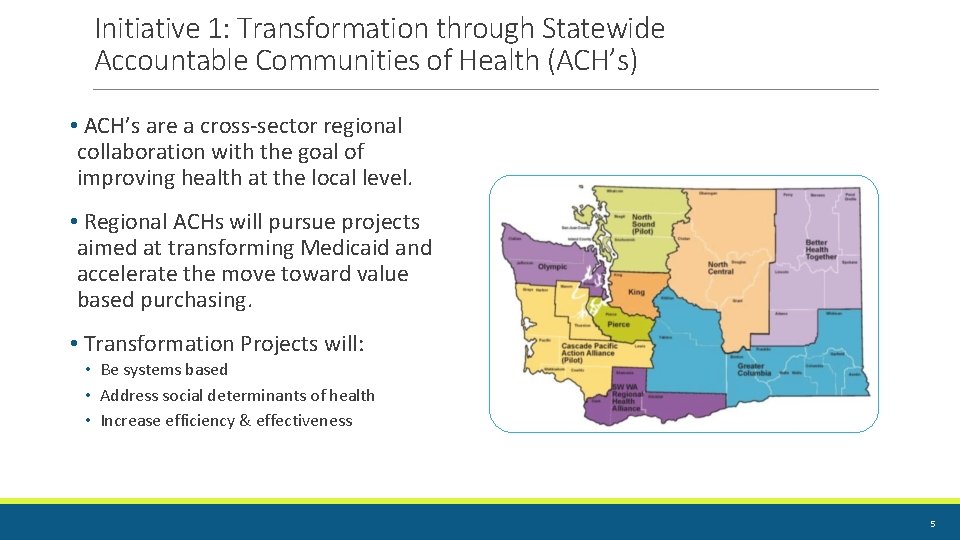
Initiative 1: Transformation through Statewide Accountable Communities of Health (ACH’s) • ACH’s are a cross-sector regional collaboration with the goal of improving health at the local level. • Regional ACHs will pursue projects aimed at transforming Medicaid and accelerate the move toward value based purchasing. • Transformation Projects will: • Be systems based • Address social determinants of health • Increase efficiency & effectiveness 5
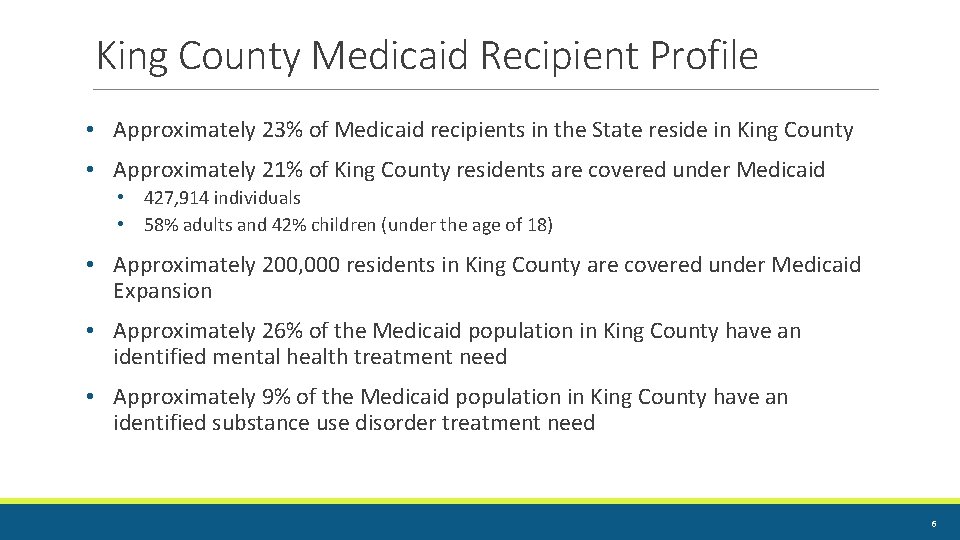
King County Medicaid Recipient Profile • Approximately 23% of Medicaid recipients in the State reside in King County • Approximately 21% of King County residents are covered under Medicaid • 427, 914 individuals • 58% adults and 42% children (under the age of 18) • Approximately 200, 000 residents in King County are covered under Medicaid Expansion • Approximately 26% of the Medicaid population in King County have an identified mental health treatment need • Approximately 9% of the Medicaid population in King County have an identified substance use disorder treatment need 6
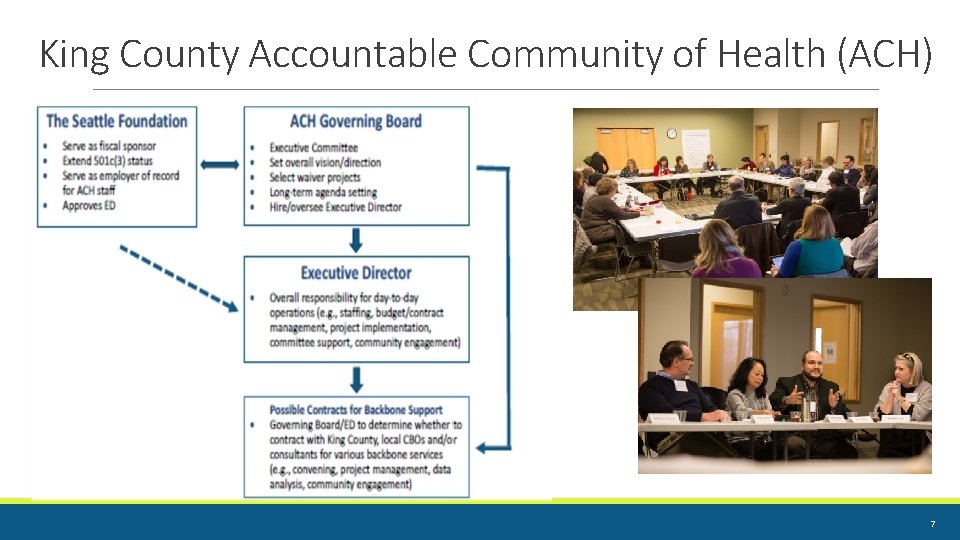
King County Accountable Community of Health (ACH) 7
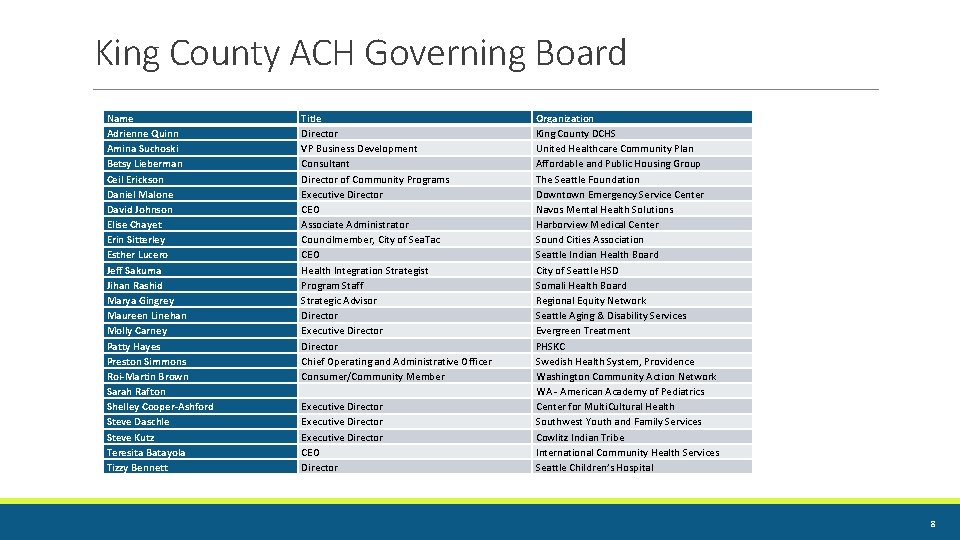
King County ACH Governing Board Name Adrienne Quinn Amina Suchoski Betsy Lieberman Ceil Erickson Daniel Malone David Johnson Elise Chayet Erin Sitterley Esther Lucero Jeff Sakuma Jihan Rashid Marya Gingrey Maureen Linehan Molly Carney Patty Hayes Preston Simmons Roi-Martin Brown Sarah Rafton Shelley Cooper-Ashford Steve Daschle Steve Kutz Teresita Batayola Tizzy Bennett Title Director VP Business Development Consultant Director of Community Programs Executive Director CEO Associate Administrator Councilmember, City of Sea. Tac CEO Health Integration Strategist Program Staff Strategic Advisor Director Executive Director Chief Operating and Administrative Officer Consumer/Community Member Executive Director CEO Director Organization King County DCHS United Healthcare Community Plan Affordable and Public Housing Group The Seattle Foundation Downtown Emergency Service Center Navos Mental Health Solutions Harborview Medical Center Sound Cities Association Seattle Indian Health Board City of Seattle HSD Somali Health Board Regional Equity Network Seattle Aging & Disability Services Evergreen Treatment PHSKC Swedish Health System, Providence Washington Community Action Network WA - American Academy of Pediatrics Center for Multi. Cultural Health Southwest Youth and Family Services Cowlitz Indian Tribe International Community Health Services Seattle Children’s Hospital 8
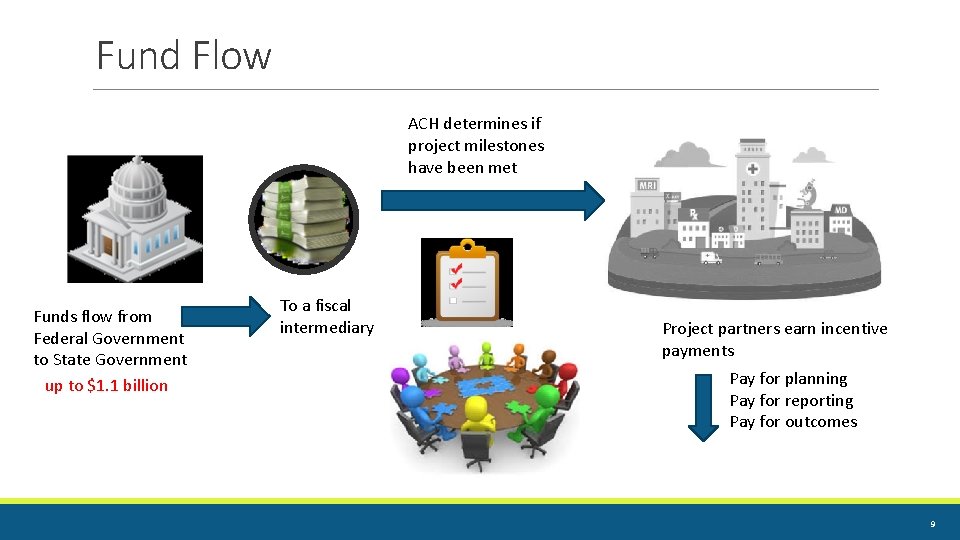
Fund Flow ACH determines if project milestones have been met Funds flow from Federal Government to State Government up to $1. 1 billion To a fiscal intermediary Project partners earn incentive payments Pay for planning Pay for reporting Pay for outcomes 9
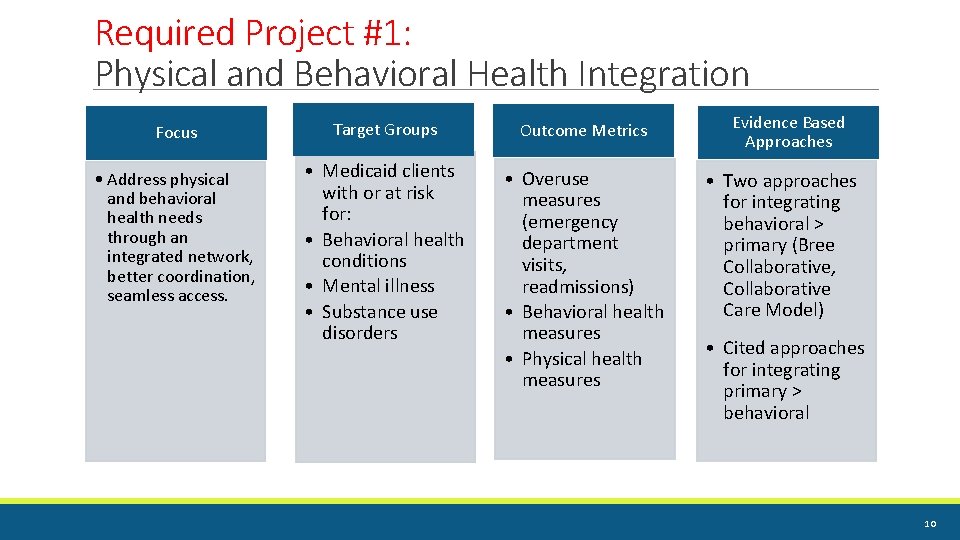
Required Project #1: Physical and Behavioral Health Integration Focus • Address physical and behavioral health needs through an integrated network, better coordination, seamless access. Target Groups Outcome Metrics • Medicaid clients with or at risk for: • Behavioral health conditions • Mental illness • Substance use disorders • Overuse measures (emergency department visits, readmissions) • Behavioral health measures • Physical health measures Evidence Based Approaches • Two approaches for integrating behavioral > primary (Bree Collaborative, Collaborative Care Model) • Cited approaches for integrating primary > behavioral 10
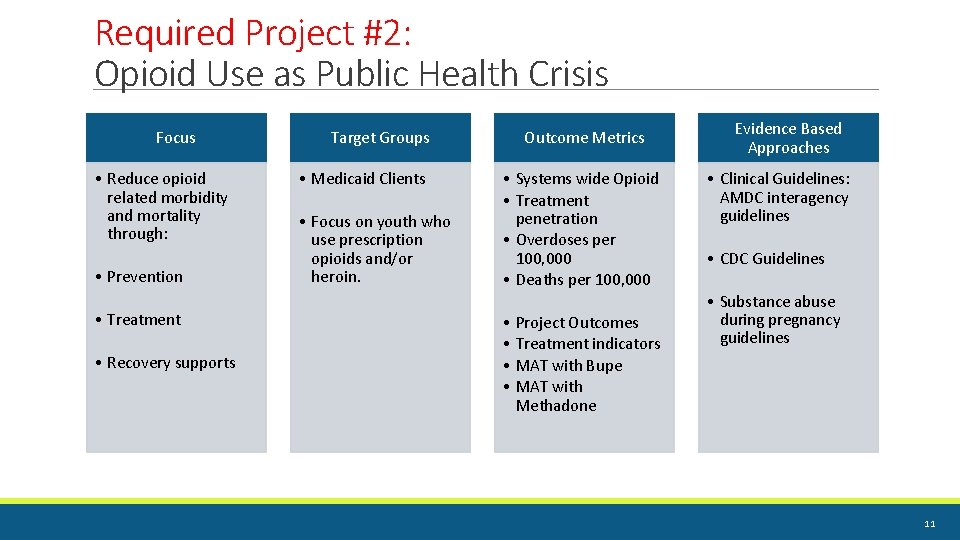
Required Project #2: Opioid Use as Public Health Crisis Focus • Reduce opioid related morbidity and mortality through: • Prevention • Treatment • Recovery supports Target Groups • Medicaid Clients • Focus on youth who use prescription opioids and/or heroin. Outcome Metrics • Systems wide Opioid • Treatment penetration • Overdoses per 100, 000 • Deaths per 100, 000 • Project Outcomes • Treatment indicators • MAT with Bupe • MAT with Methadone Evidence Based Approaches • Clinical Guidelines: AMDC interagency guidelines • CDC Guidelines • Substance abuse during pregnancy guidelines 11
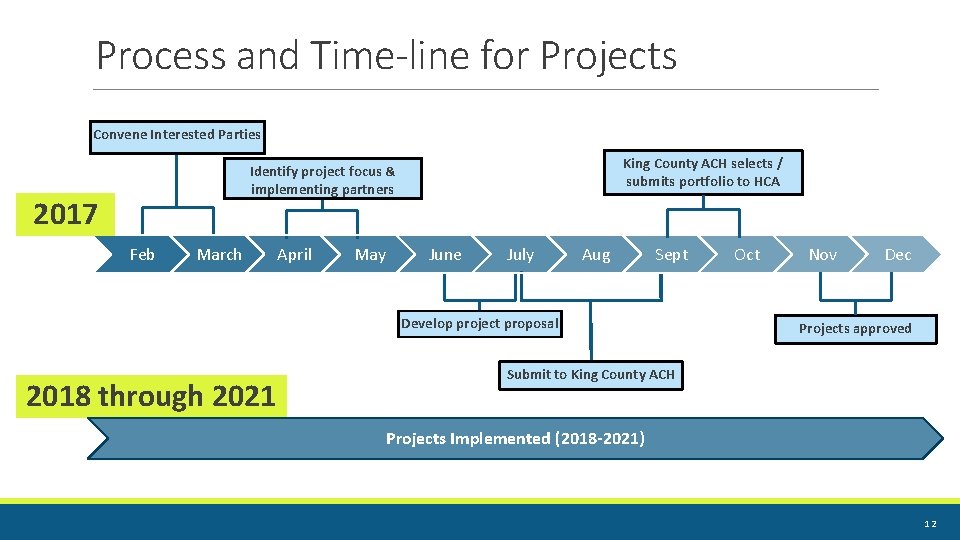
Process and Time-line for Projects Convene Interested Parties 2017 Jan King County ACH selects / submits portfolio to HCA Identify project focus & implementing partners Feb March April May June July Aug Sept Develop project proposal 2018 through 2021 Oct Nov Dec Projects approved Submit to King County ACH Projects Implemented (2018 -2021) 12
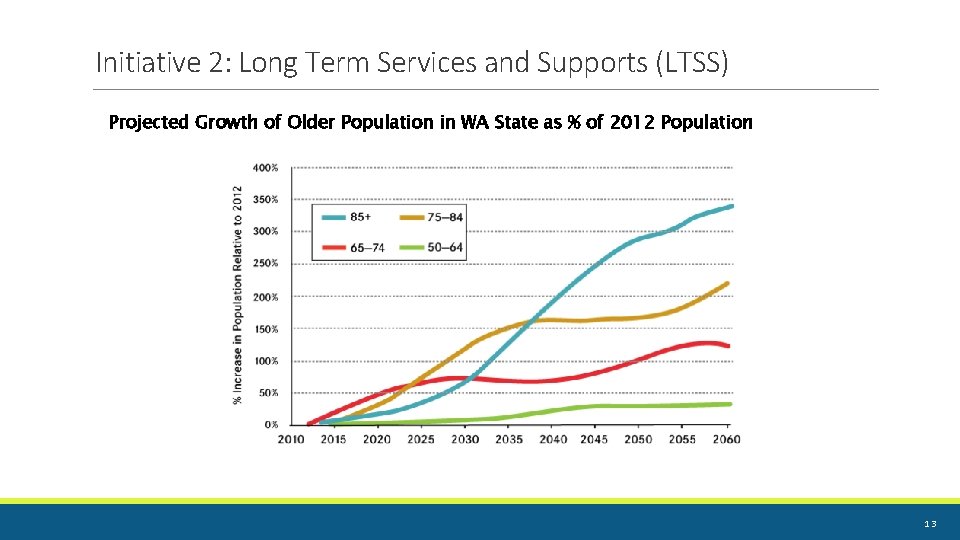
Initiative 2: Long Term Services and Supports (LTSS) Projected Growth of Older Population in WA State as % of 2012 Population 13
Initiative 2: LTSS – Supporting Caregivers • 80% of care statewide is provided by family members and other unpaid caregivers • Unpaid caregiving has an economic impact on families: • • Loss of earning potential Decreased savings for retirement Impacts on ability to provide for their own children’s needs Increased health care costs due to stress and burden • If just 1/5 of unpaid caregivers stopping providing care, it would double the cost of long-term services and supports 14
Initiative 2 - Two New Services: Supporting Caregivers 1. Medicaid Alternative Care (MAC) • A new choice designed to support unpaid caregivers in continuing to provide quality care • Has benefits similar to the state family caregiver program such as respite, counseling, support groups 2. Tailored Supports for Older Adults (TSOA) • A new eligibility group to support individuals who need LTSS and are at risk of spending down to impoverishment. Note: No Co-Pays or Estate Recovery 15
Initiative 2: LTSS – Implementation HSD/ADS staff are engaged in: • Systems development - designing benefit package, testing data systems, working with current providers on contracting • Hiring of staff • • Case Manager - assessment, eligibility review Planner – gather input and Develop policies • Training staff • All HSD/ADS units involved - Planners, Contract Staff, Case Management • Outreach to increase numbers • Target Implementation – August 2017 16
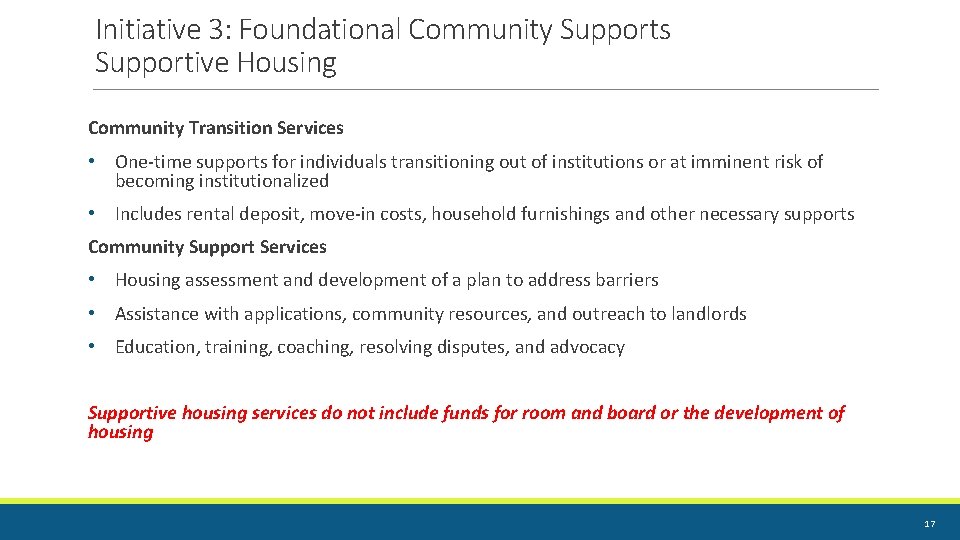
Initiative 3: Foundational Community Supports Supportive Housing Community Transition Services • One-time supports for individuals transitioning out of institutions or at imminent risk of becoming institutionalized • Includes rental deposit, move-in costs, household furnishings and other necessary supports Community Support Services • Housing assessment and development of a plan to address barriers • Assistance with applications, community resources, and outreach to landlords • Education, training, coaching, resolving disputes, and advocacy Supportive housing services do not include funds for room and board or the development of housing 17
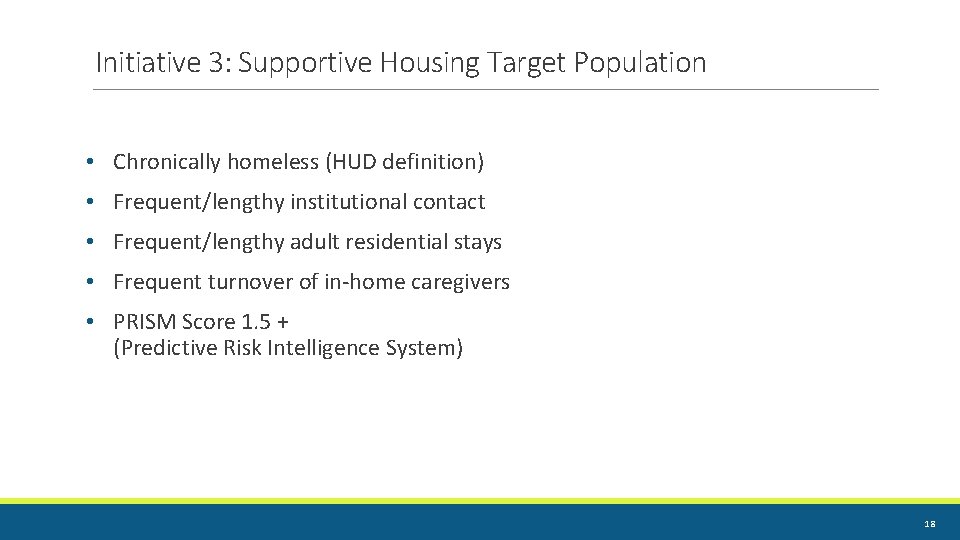
Initiative 3: Supportive Housing Target Population • Chronically homeless (HUD definition) • Frequent/lengthy institutional contact • Frequent/lengthy adult residential stays • Frequent turnover of in-home caregivers • PRISM Score 1. 5 + (Predictive Risk Intelligence System) 18
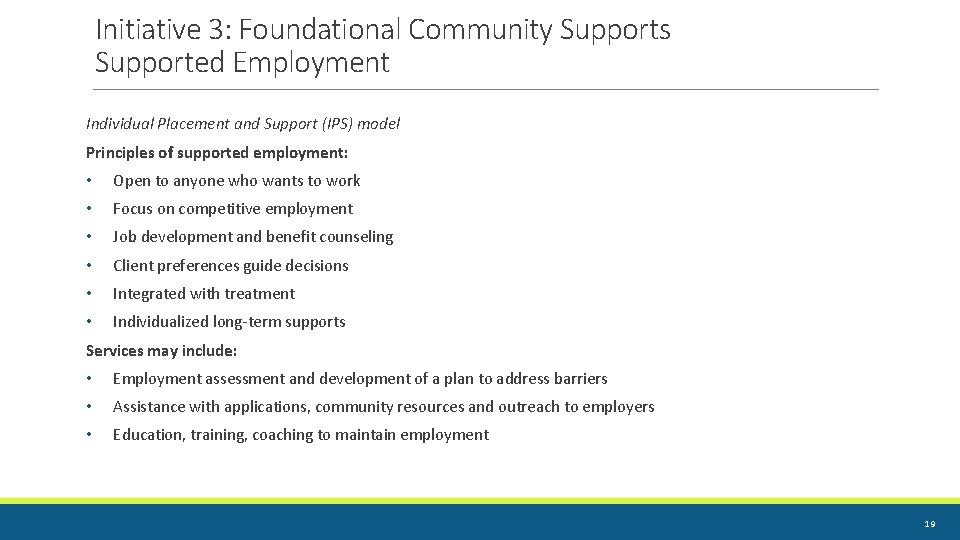
Initiative 3: Foundational Community Supports Supported Employment Individual Placement and Support (IPS) model Principles of supported employment: • Open to anyone who wants to work • Focus on competitive employment • Job development and benefit counseling • Client preferences guide decisions • Integrated with treatment • Individualized long-term supports Services may include: • Employment assessment and development of a plan to address barriers • Assistance with applications, community resources and outreach to employers • Education, training, coaching to maintain employment 19
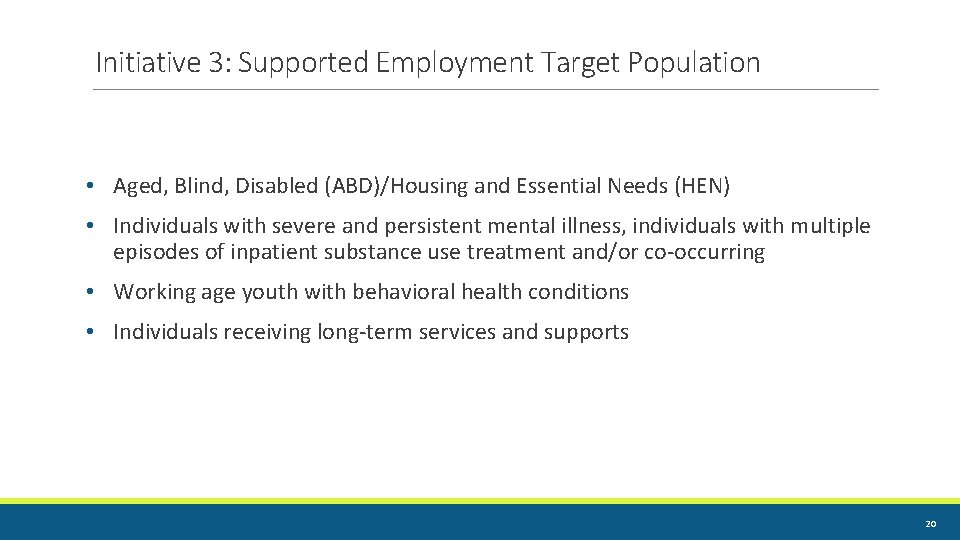
Initiative 3: Supported Employment Target Population • Aged, Blind, Disabled (ABD)/Housing and Essential Needs (HEN) • Individuals with severe and persistent mental illness, individuals with multiple episodes of inpatient substance use treatment and/or co-occurring • Working age youth with behavioral health conditions • Individuals receiving long-term services and supports 20
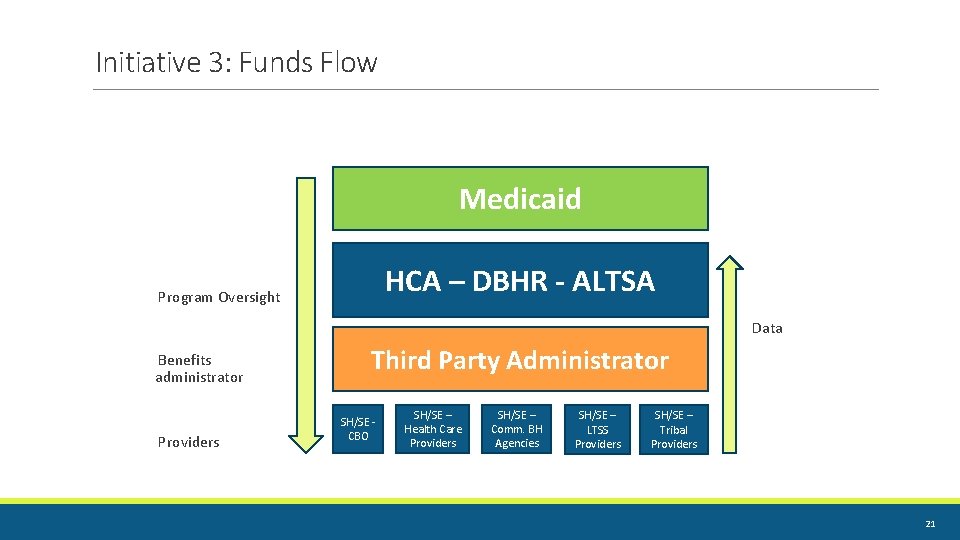
Initiative 3: Funds Flow Medicaid HCA – DBHR - ALTSA Program Oversight Data Benefits administrator Providers Third Party Administrator SH/SE - CBO SH/SE – Health Care Providers SH/SE – Comm. BH Agencies SH/SE – LTSS Providers SH/SE – Tribal Providers 21
WHAT ARE THE EXPECTED OUTCOMES? BETTER HEALTH BETTER CARE LOWER COSTS 22
Questions & Discussion 23