
What is the Impact of Paravalvular Aortic Regurgitation
![Paravalvular AR and Mortality TAVR Patients (AT) None - Trace HR [95% CI] =](https://slidetodoc.com/presentation_image_h/0e5ea11a0f115ac989f0c3649328b9f3/image-7.jpg "Paravalvular AR and Mortality TAVR Patients (AT) None - Trace HR [95% CI] =")
![Mortality in Patients with None-Trace AR TAVR vs AVR TAVR HR [95% CI] =](https://slidetodoc.com/presentation_image_h/0e5ea11a0f115ac989f0c3649328b9f3/image-9.jpg "Mortality in Patients with None-Trace AR TAVR vs AVR TAVR HR [95% CI] =")

- Slides: 42
What is the Impact of Paravalvular Aortic Regurgitation Samir Kapadia, MD Professor of Medicine Director, Cardiac Catheterization Laboratories Cleveland Clinic
Samir Kapadia, MD I/we have no real or apparent conflicts of interest to report.
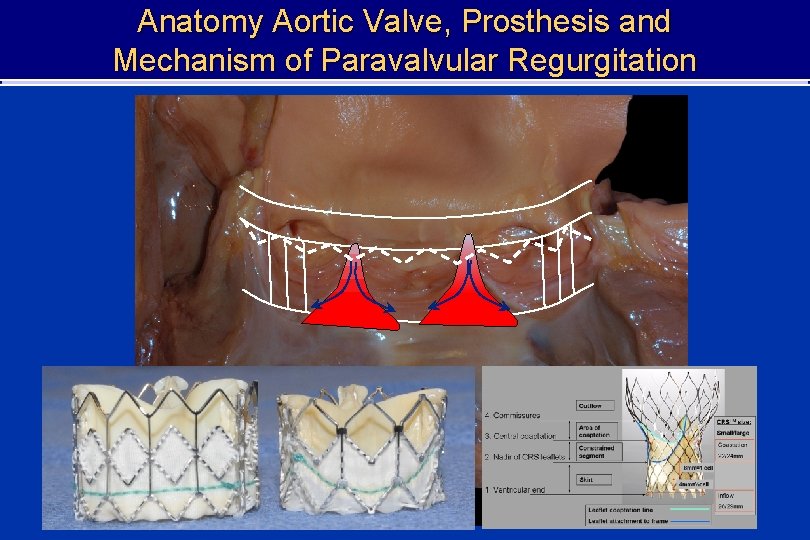
Anatomy Aortic Valve, Prosthesis and Mechanism of Paravalvular Regurgitation
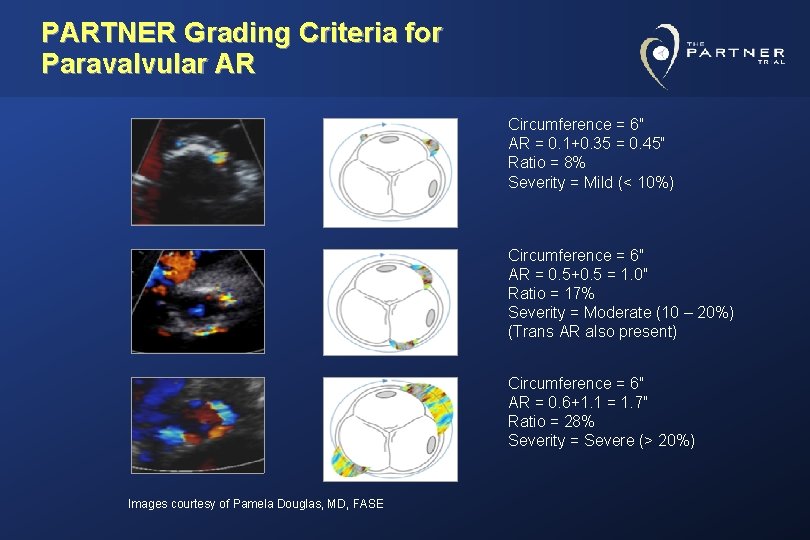
PARTNER Grading Criteria for Paravalvular AR Circumference = 6″ AR = 0. 1+0. 35 = 0. 45″ Ratio = 8% Severity = Mild (< 10%) Circumference = 6″ AR = 0. 5+0. 5 = 1. 0″ Ratio = 17% Severity = Moderate (10 – 20%) (Trans AR also present) Circumference = 6″ AR = 0. 6+1. 1 = 1. 7″ Ratio = 28% Severity = Severe (> 20%) Images courtesy of Pamela Douglas, MD, FASE
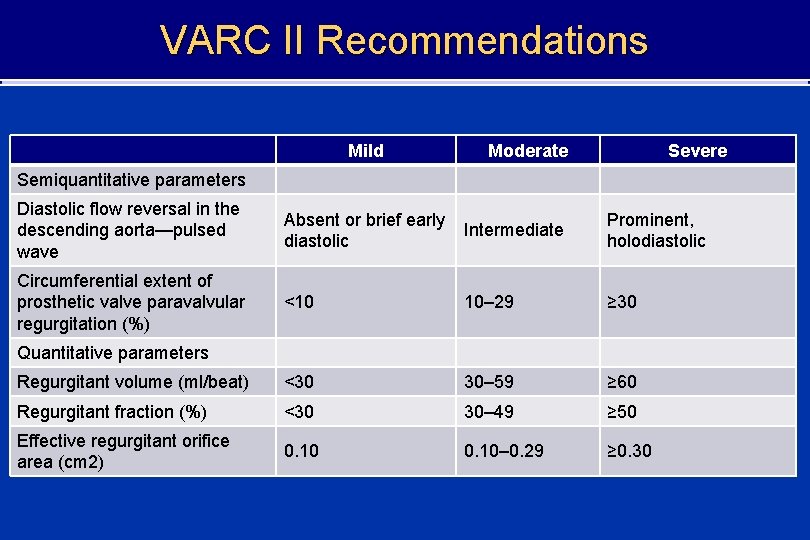
VARC II Recommendations Mild Moderate Severe Semiquantitative parameters Diastolic flow reversal in the descending aorta—pulsed wave Absent or brief early diastolic Intermediate Prominent, holodiastolic Circumferential extent of prosthetic valve paravalvular regurgitation (%) <10 10– 29 ≥ 30 Regurgitant volume (ml/beat) <30 30– 59 ≥ 60 Regurgitant fraction (%) <30 30– 49 ≥ 50 Effective regurgitant orifice area (cm 2) 0. 10– 0. 29 ≥ 0. 30 Quantitative parameters
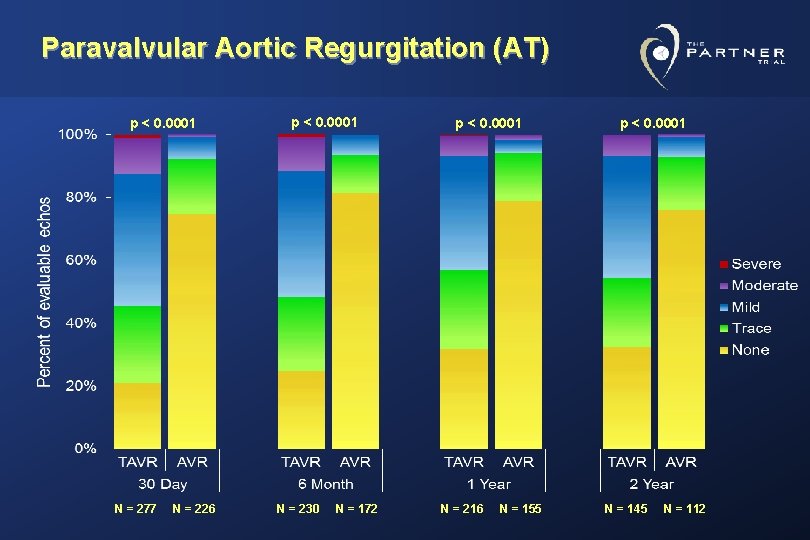
Paravalvular Aortic Regurgitation (AT) p < 0. 0001 N = 277 N = 226 p < 0. 0001 N = 230 N = 172 p < 0. 0001 N = 216 N = 155 p < 0. 0001 N = 145 N = 112
Paravalvular AR and Mortality TAVR Patients (AT) None - Trace HR [95% CI] = 2. 01 [1. 38, 2. 92] p (log rank) = 0. 0002 Mild - Moderate - Severe Mortality 39. 5% 24. 8% 14. 5% Months Post Procedure Numbers at Risk None-Tr 167 149 140 126 87 41 16 Mild-Mod-Sev 160 134 112 101 64 26 12
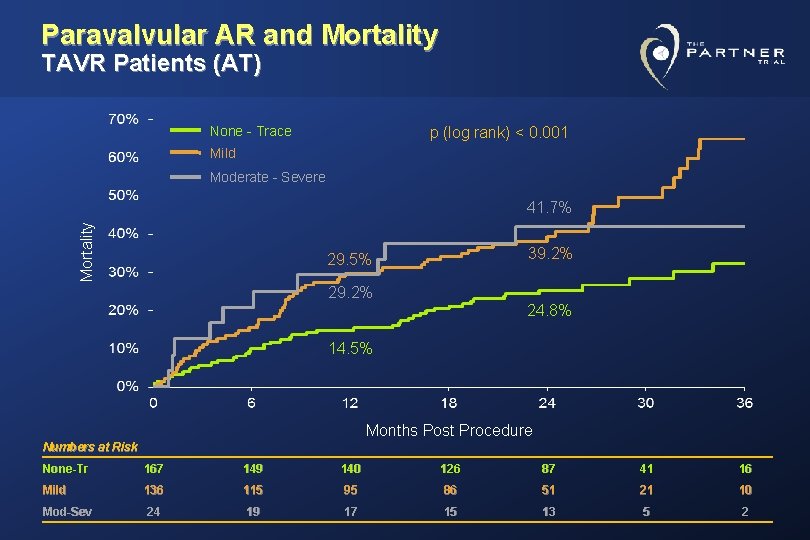
Paravalvular AR and Mortality TAVR Patients (AT) None - Trace p (log rank) < 0. 001 Mild Moderate - Severe Mortality 41. 7% 39. 2% 29. 5% 29. 2% 24. 8% 14. 5% Months Post Procedure Numbers at Risk None-Tr 167 149 140 126 87 41 16 Mild 136 115 95 86 51 21 10 Mod-Sev 24 19 17 15 13 5 2
Mortality in Patients with None-Trace AR TAVR vs AVR TAVR HR [95% CI] = 0. 72 [0. 49, 1. 05] p (log rank) = 0. 090 Mortality AVR 30. 1% 24. 1% 26. 3% 12. 7% Months Post Procedure Numbers at Risk TAVR 135 125 115 101 68 31 11 AVR 252 201 189 176 118 52 22
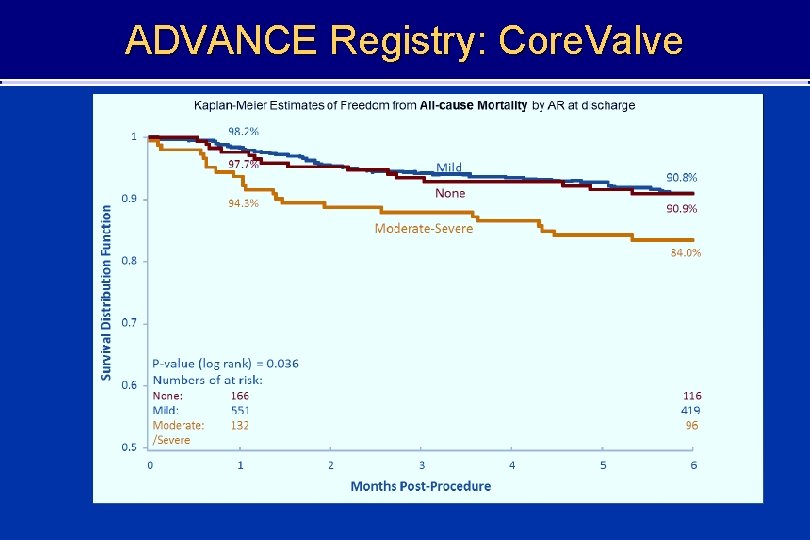
ADVANCE Registry: Core. Valve
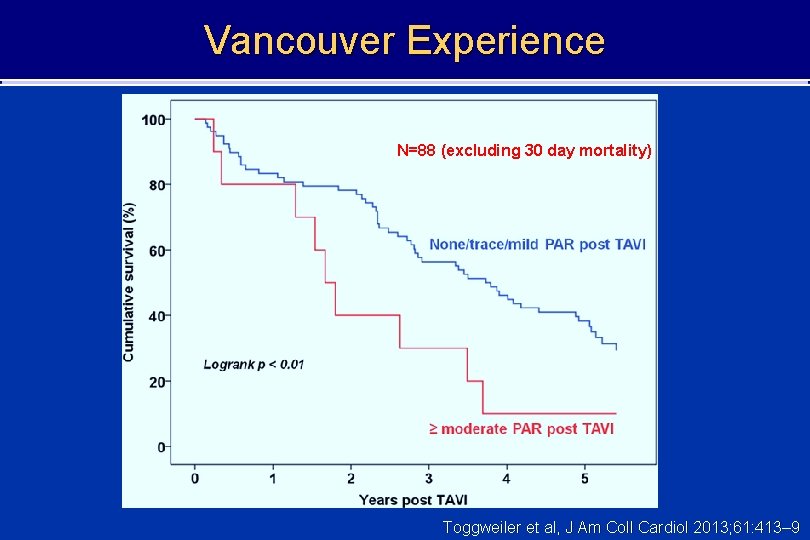
Vancouver Experience N=88 (excluding 30 day mortality) Toggweiler et al, J Am Coll Cardiol 2013; 61: 413– 9
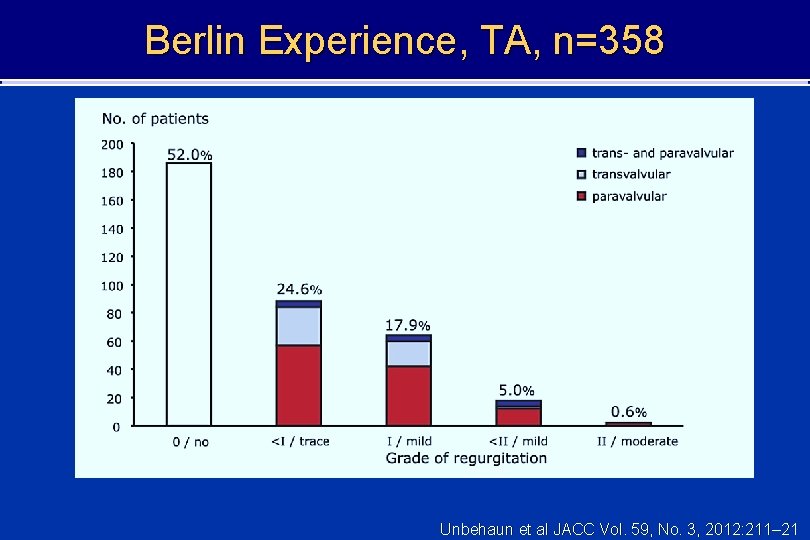
Berlin Experience, TA, n=358 Unbehaun et al JACC Vol. 59, No. 3, 2012: 211– 21
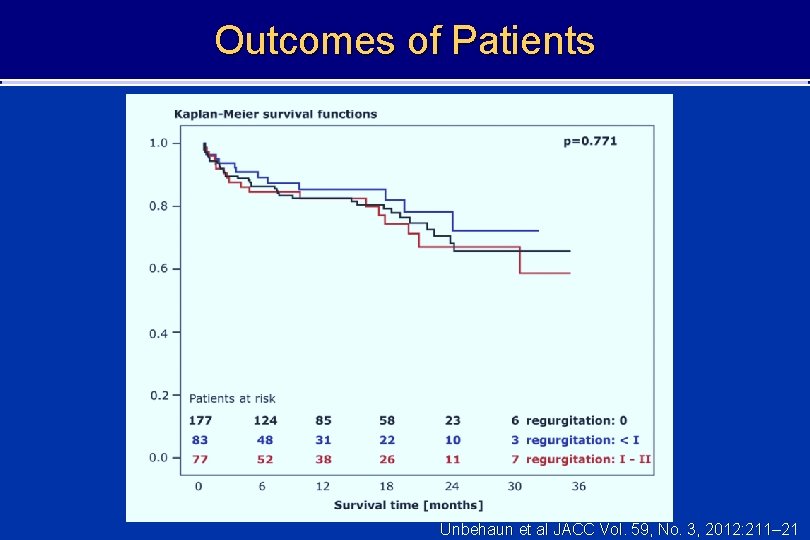
Outcomes of Patients Unbehaun et al JACC Vol. 59, No. 3, 2012: 211– 21
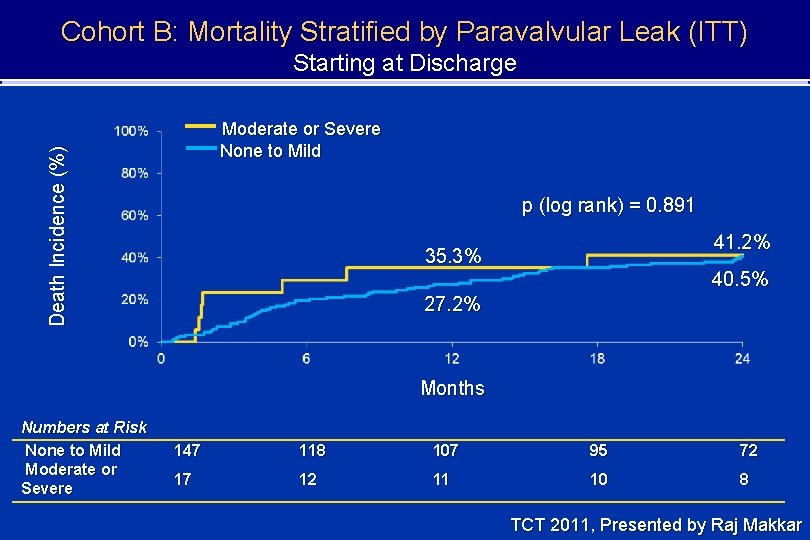
Cohort B: Mortality Stratified by Paravalvular Leak (ITT) Starting at Discharge Death Incidence (%) Moderate or Severe None to Mild p (log rank) = 0. 891 41. 2% 35. 3% 40. 5% 27. 2% Months Numbers at Risk None to Mild Moderate or Severe 147 118 107 95 72 17 12 11 10 8 TCT 2011, Presented by Raj Makkar
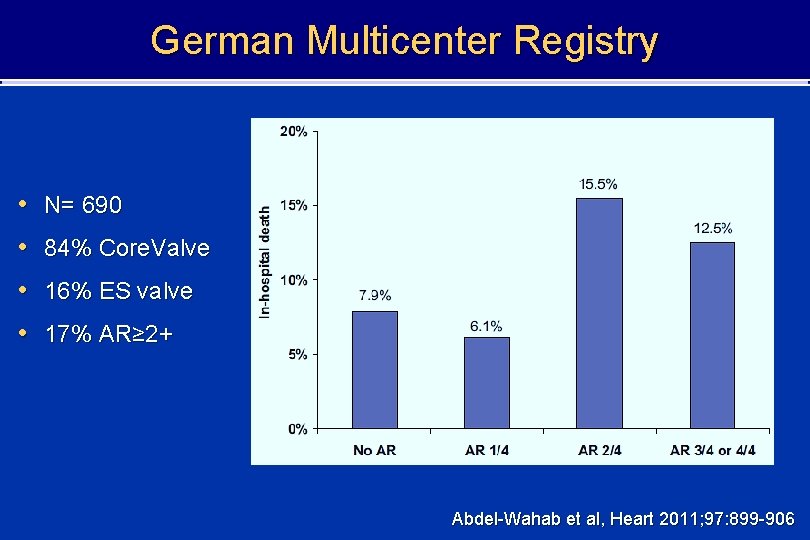
German Multicenter Registry • N= 690 • 84% Core. Valve • 16% ES valve • 17% AR≥ 2+ Abdel-Wahab et al, Heart 2011; 97: 899 -906
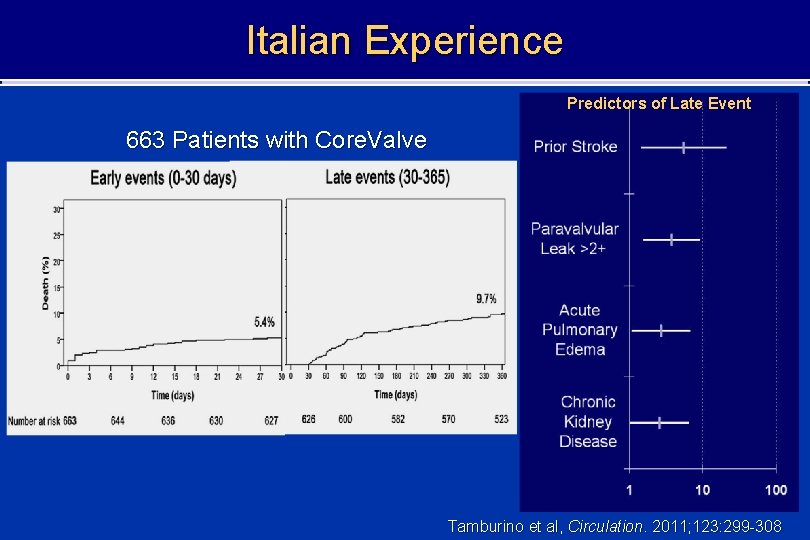
Italian Experience Predictors of Late Event 663 Patients with Core. Valve Tamburino et al, Circulation. 2011; 123: 299 -308
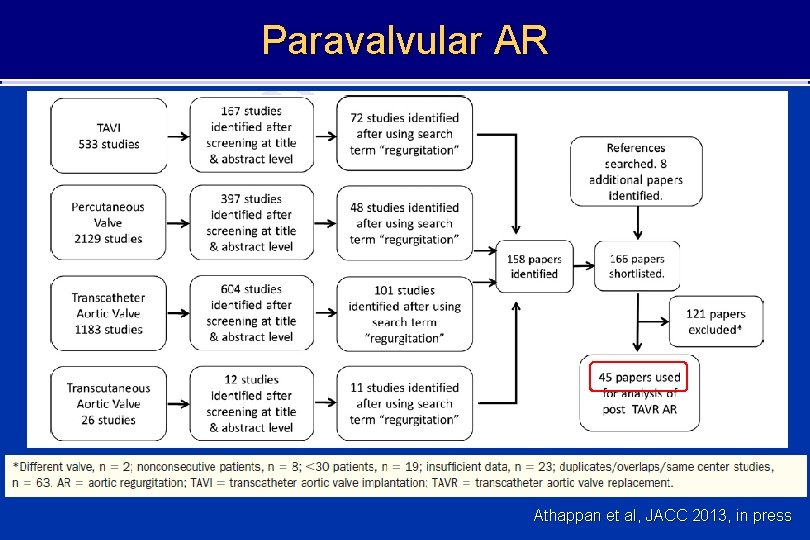
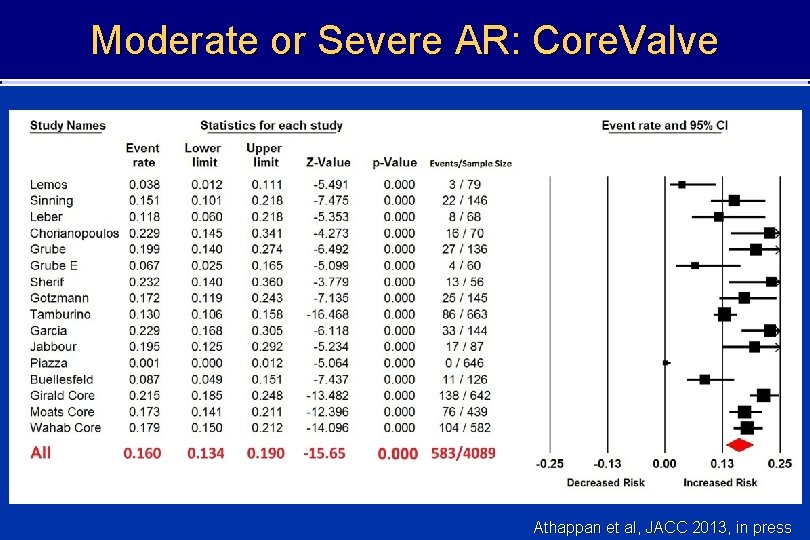
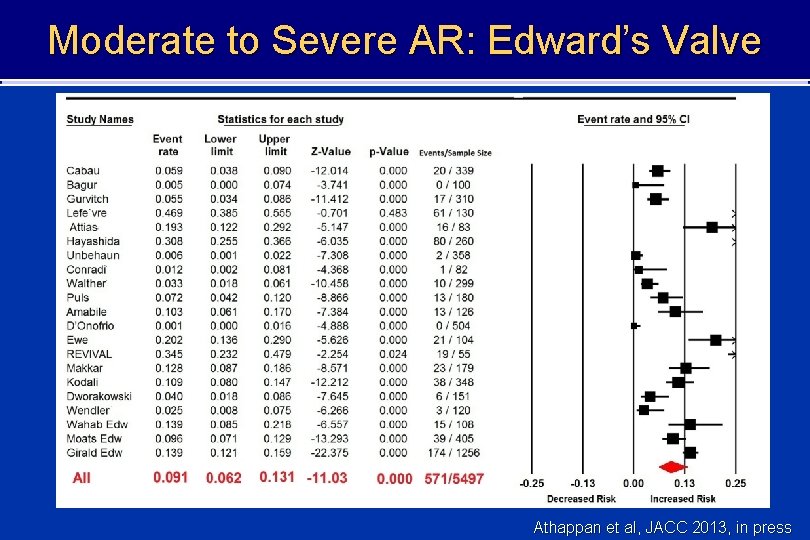
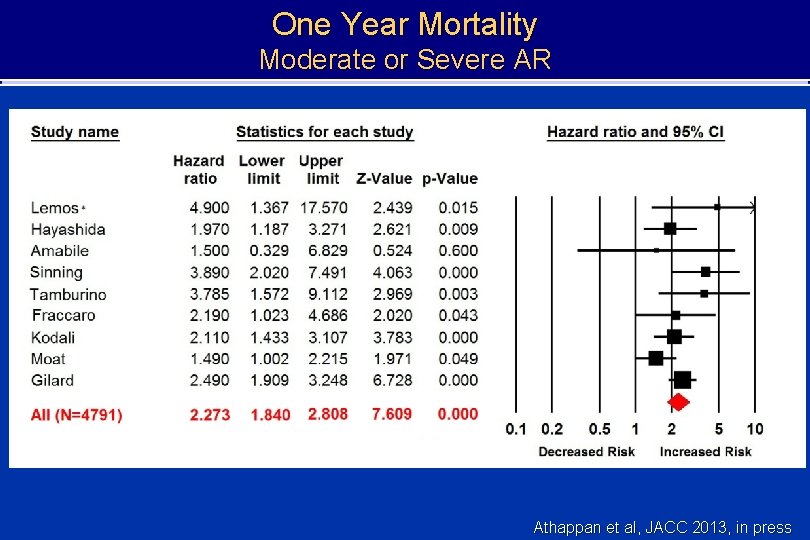
Paravalvular AR Athappan et al, JACC 2013, in press
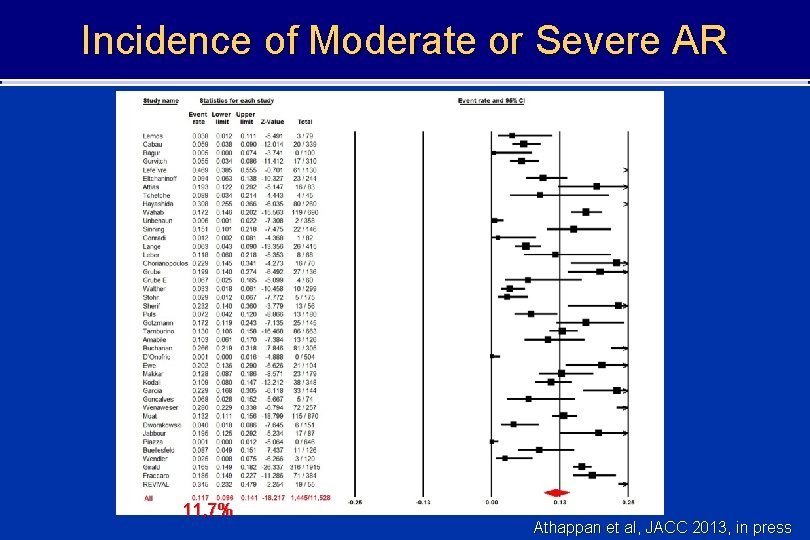
Incidence of Moderate or Severe AR 11, 7% Athappan et al, JACC 2013, in press
Moderate or Severe AR: Core. Valve Athappan et al, JACC 2013, in press
Moderate to Severe AR: Edward’s Valve Athappan et al, JACC 2013, in press
One Year Mortality Moderate or Severe AR Athappan et al, JACC 2013, in press
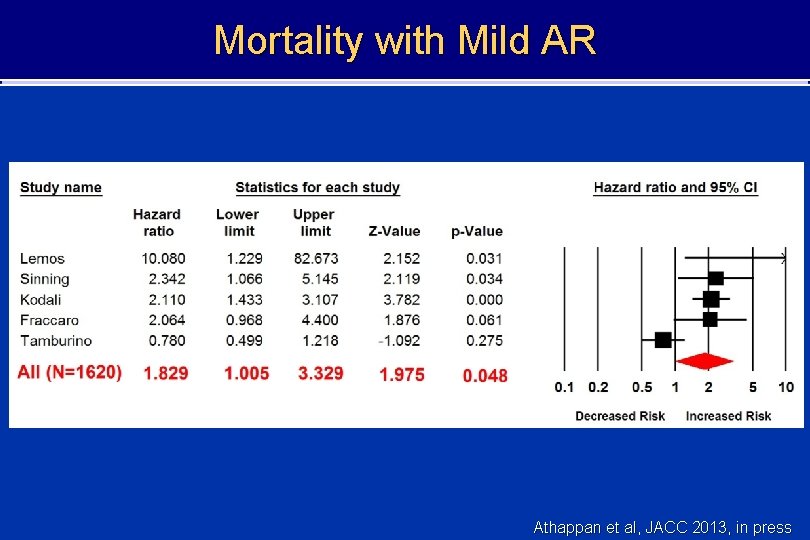
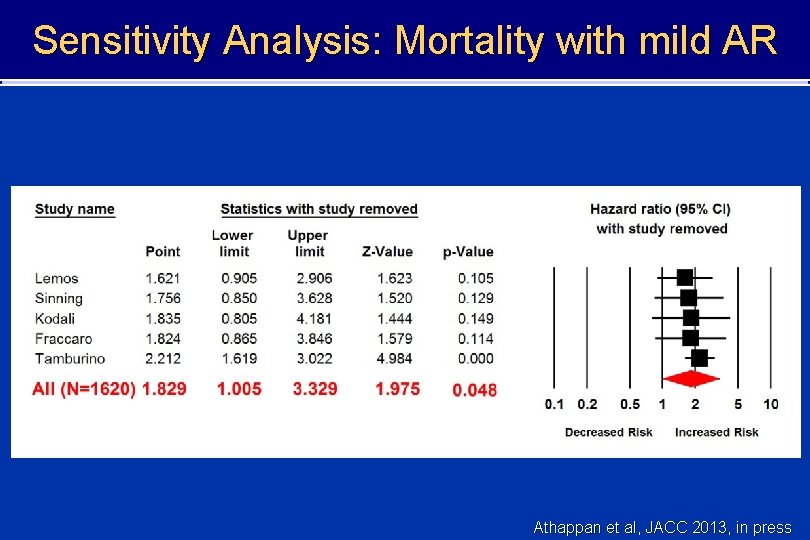
Mortality with Mild AR Athappan et al, JACC 2013, in press
Sensitivity Analysis: Mortality with mild AR Athappan et al, JACC 2013, in press
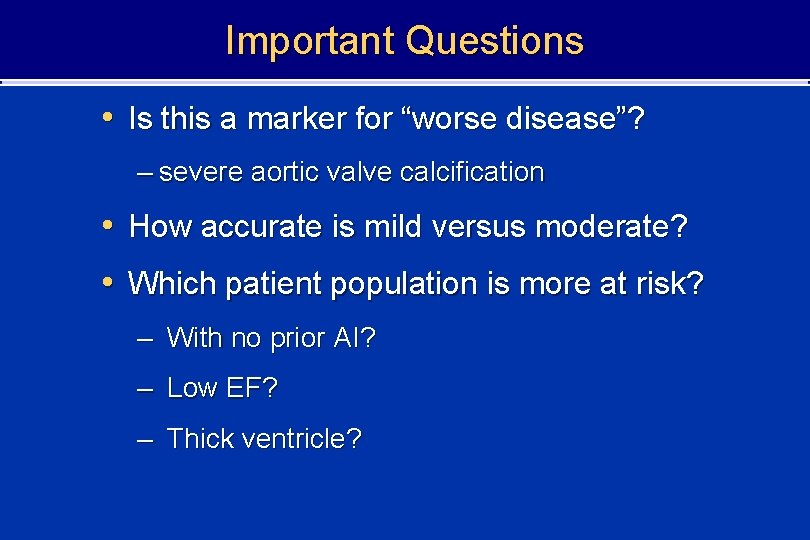
Important Questions • Is this a marker for “worse disease”? – severe aortic valve calcification • How accurate is mild versus moderate? • Which patient population is more at risk? – With no prior AI? – Low EF? – Thick ventricle?
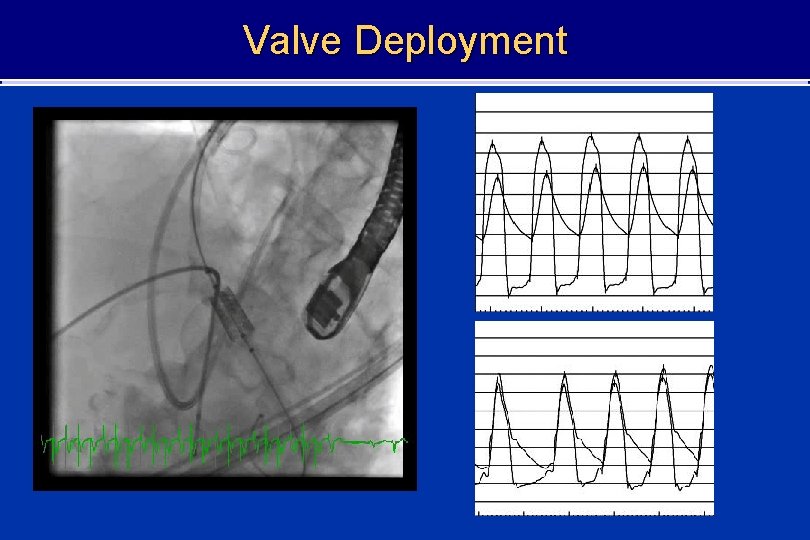
Valve Deployment
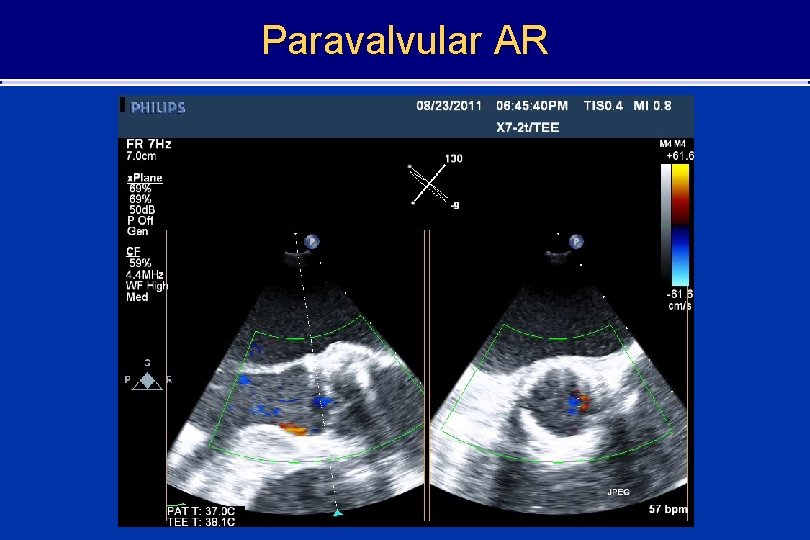
Paravalvular AR
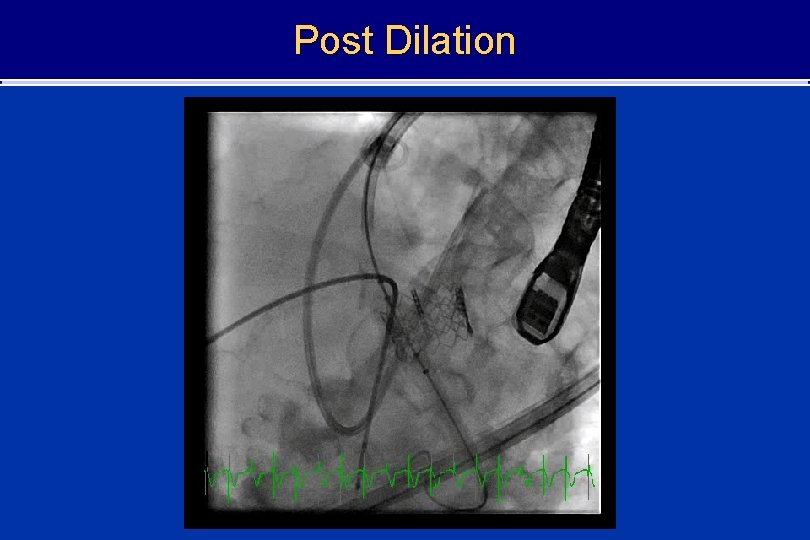
Post Dilation
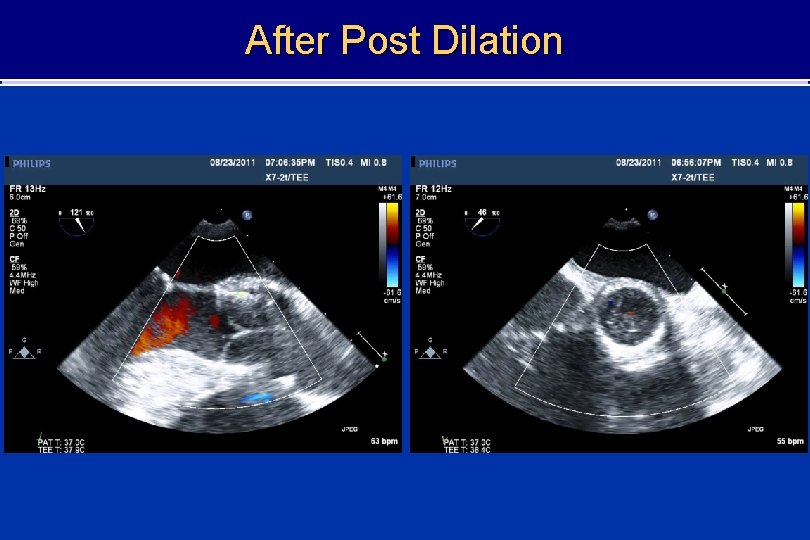
After Post Dilation
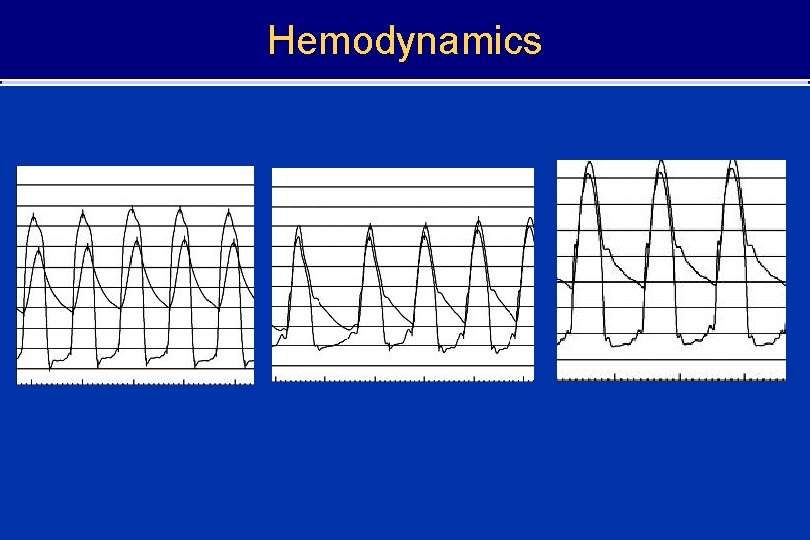
Hemodynamics
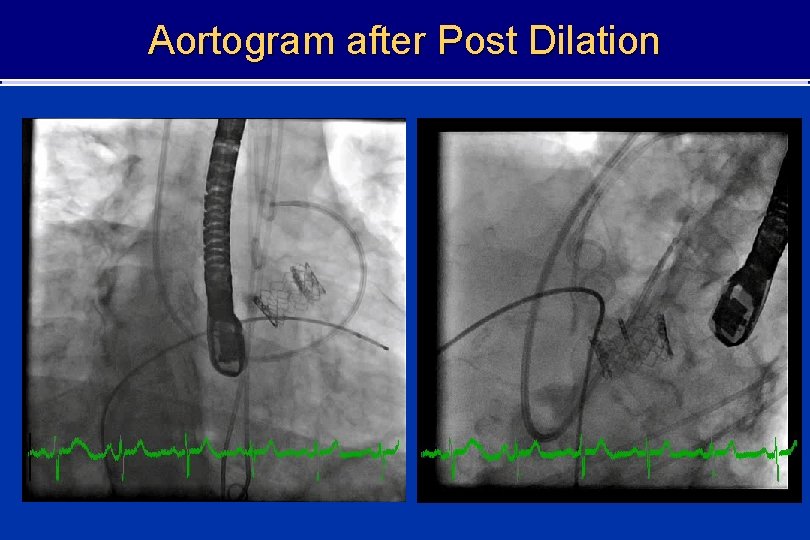
Aortogram after Post Dilation
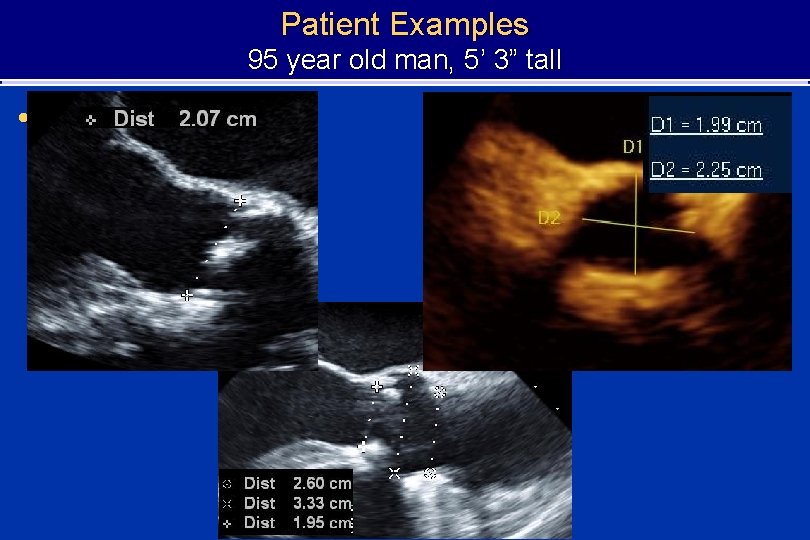
Patient Examples 95 year old man, 5’ 3” tall •
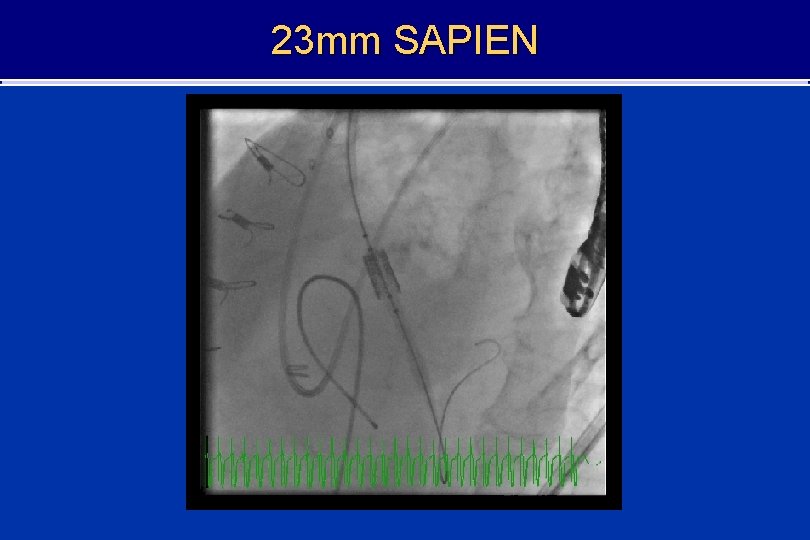
23 mm SAPIEN
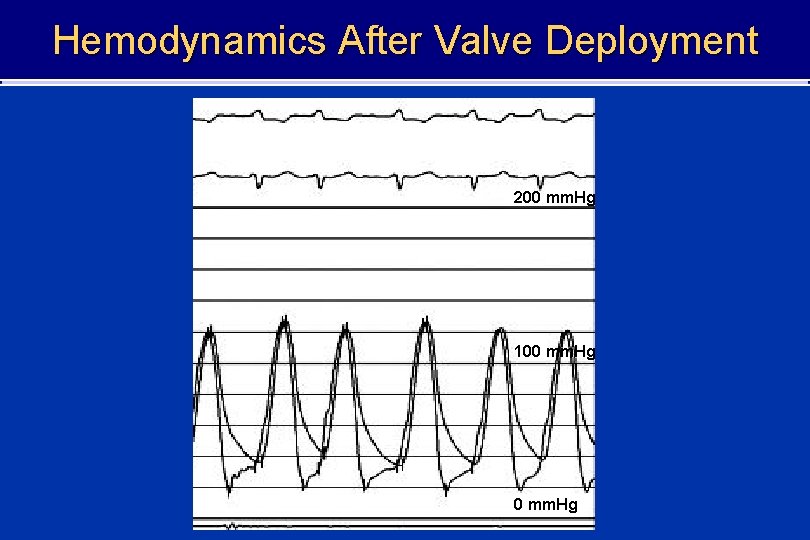
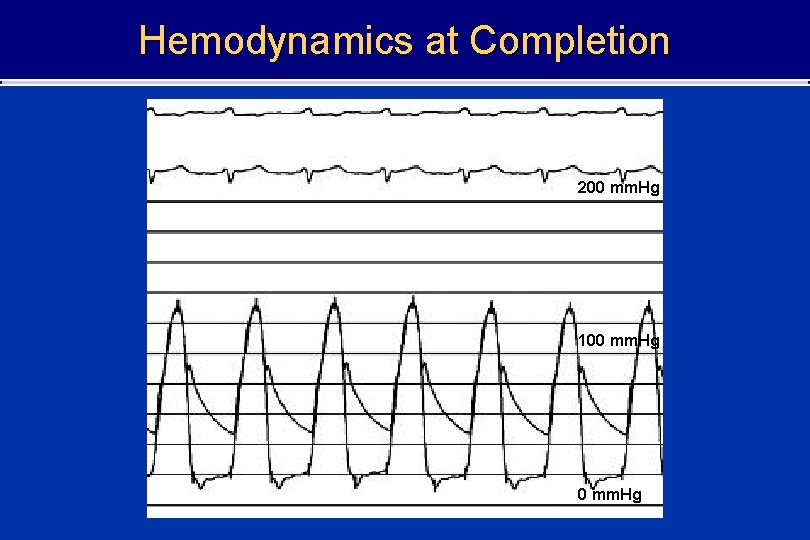
Hemodynamics After Valve Deployment 200 mm. Hg 100 mm. Hg
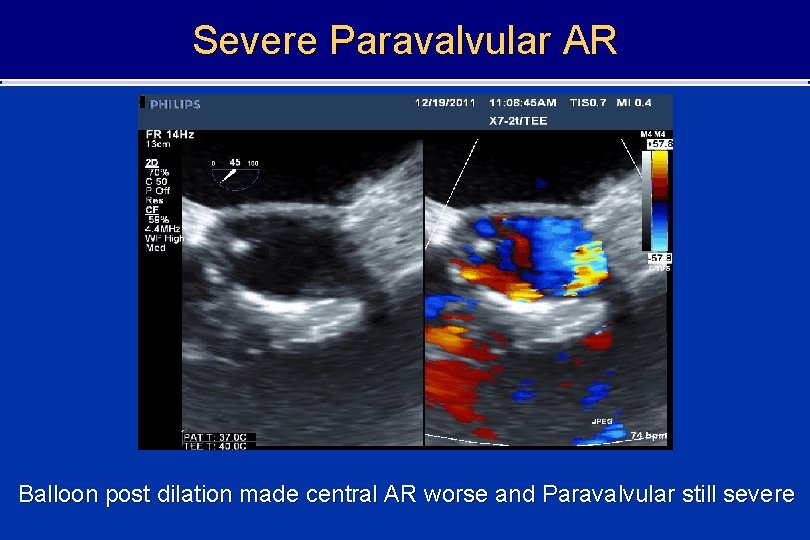
Severe Paravalvular AR Balloon post dilation made central AR worse and Paravalvular still severe
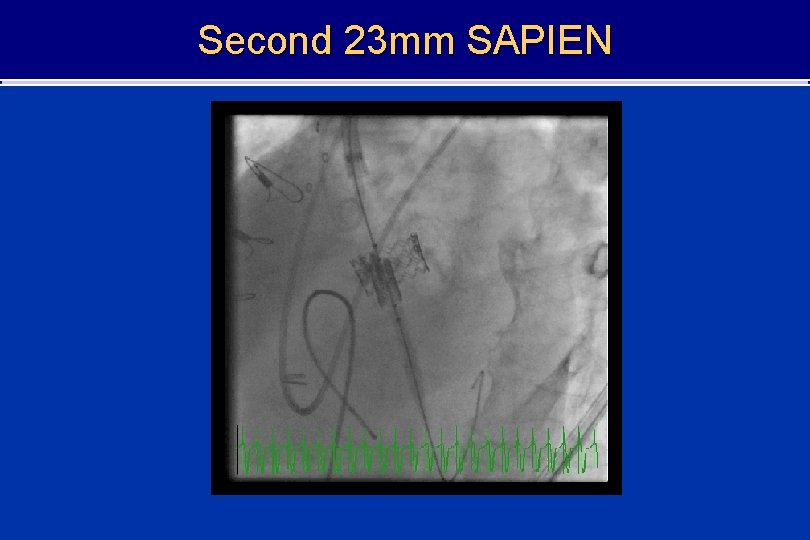
Second 23 mm SAPIEN
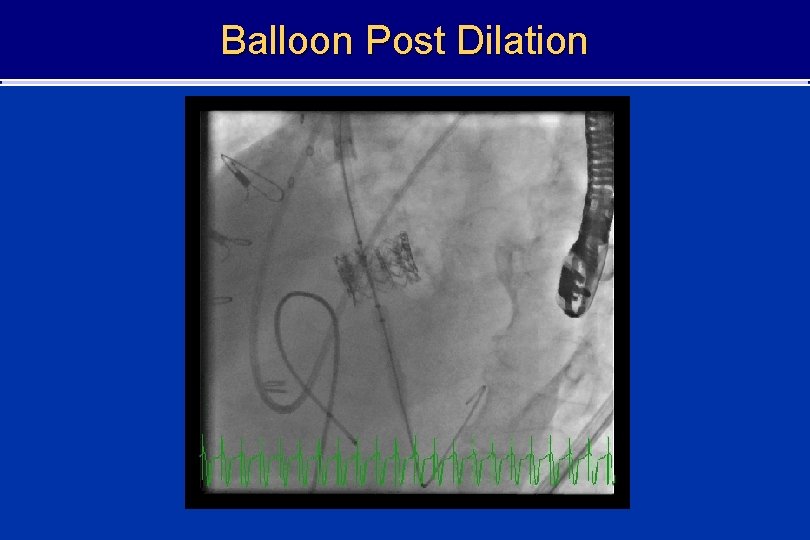
Balloon Post Dilation
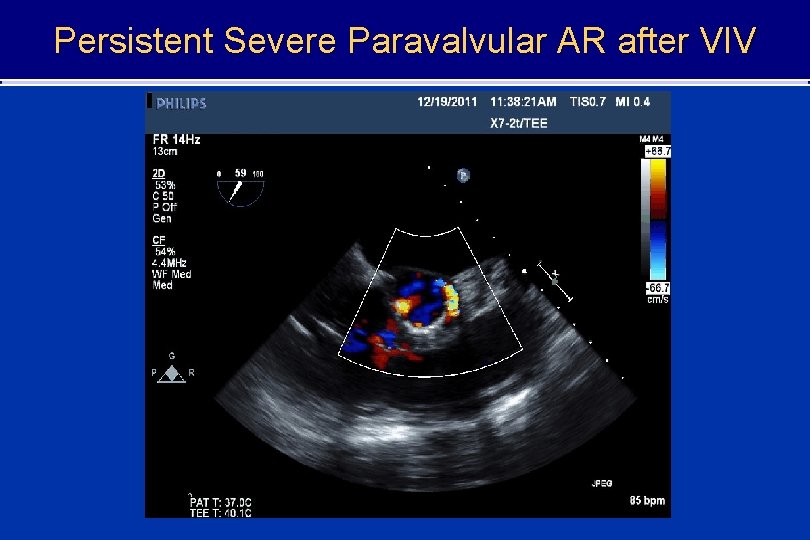
Persistent Severe Paravalvular AR after VIV
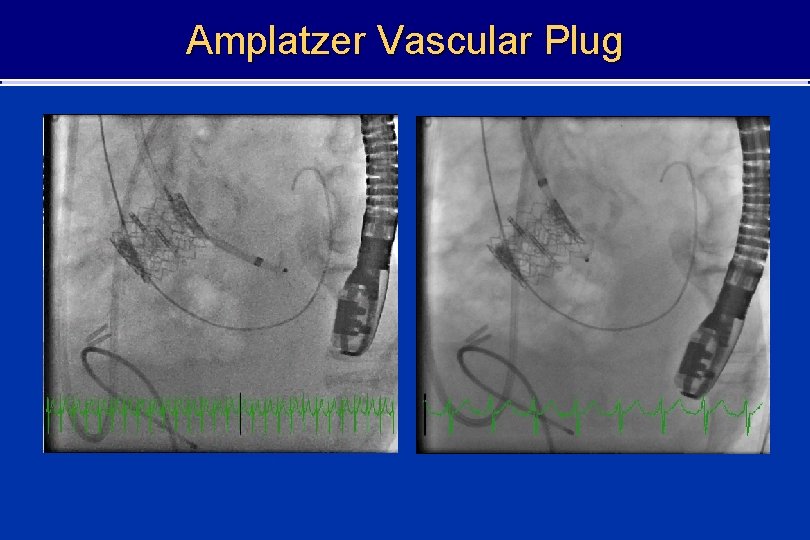
Amplatzer Vascular Plug
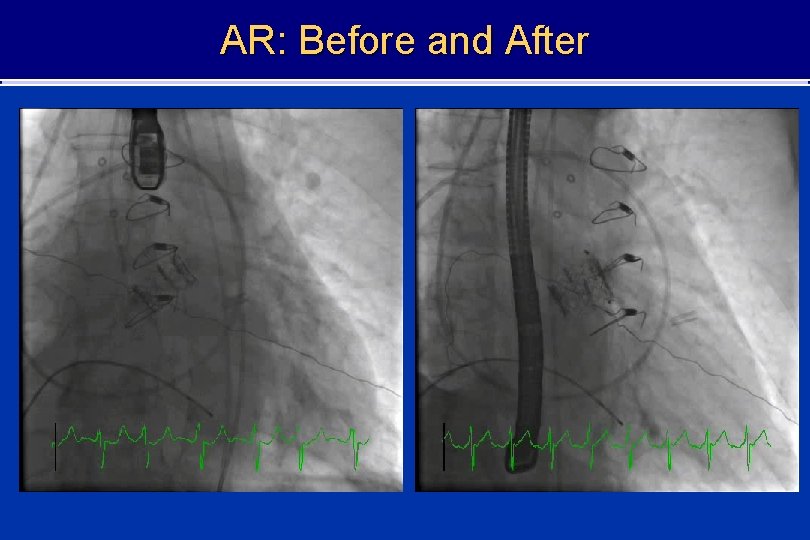
AR: Before and After
Hemodynamics at Completion 200 mm. Hg 100 mm. Hg
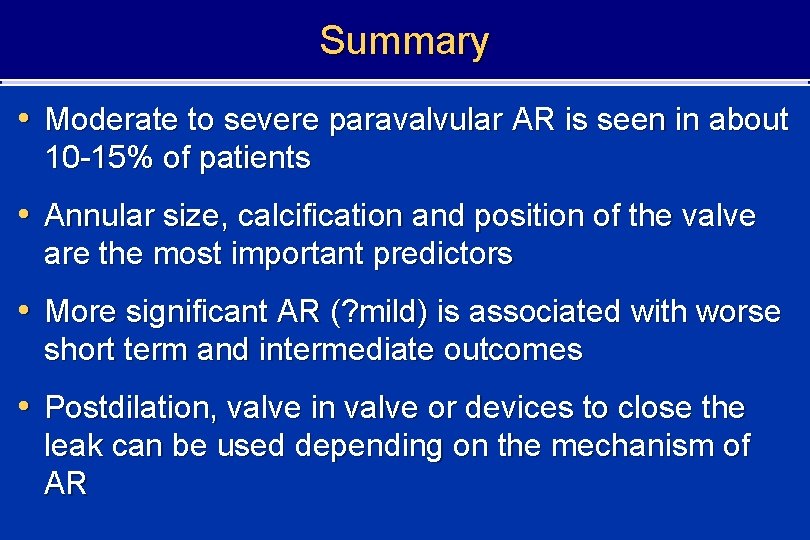
Summary • Moderate to severe paravalvular AR is seen in about 10 -15% of patients • Annular size, calcification and position of the valve are the most important predictors • More significant AR (? mild) is associated with worse short term and intermediate outcomes • Postdilation, valve in valve or devices to close the leak can be used depending on the mechanism of AR
Thank you for attention