
What is the Future of our radioactive waste

- Slides: 59
What is the Future of our radioactive waste? Gabrielle DUPRÉ, Professor University of Orléans, and CNRS - ICARE ORLÉANS, France E-mail : gabrielle. dupre@cnrs-orleans. fr Università del Sannio, Benevento, May 30, 2012
What is the Future of radioactive waste? Before thinking of the future of radioactive waste for the next centuries - and in some cases for the next millenaries -, we have to know: • • some elements of atomic and nuclear physics what is called « radioactive waste » ? the specific properties? their origin? their peculiar treatment? their storing mode? the long-term memory of their storing?
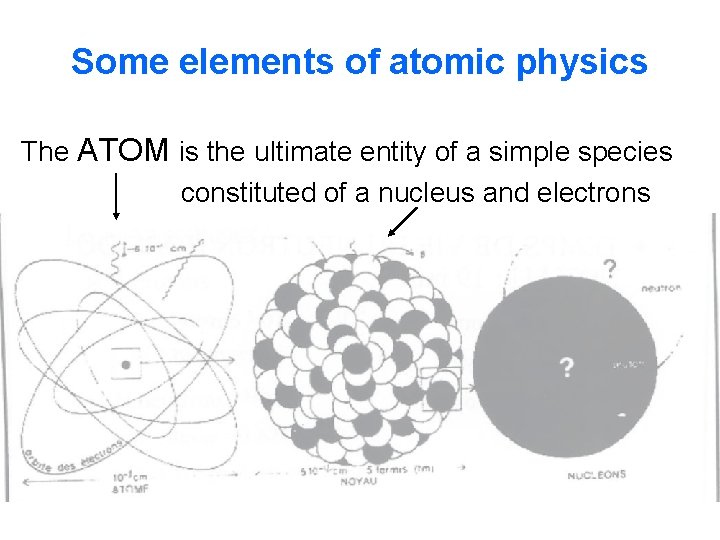
Some elements of atomic physics The ATOM is the ultimate entity of a simple species constituted of a nucleus and electrons
Some elements of atomic physics Atomic Nucleus : - is positively charged (charge = multiple of |e|) - contains the most part of the atom mass in a tiny volume - has no influence on chemical reactions but is fundamental for nuclear reactions - contains A nucleons (nucleons = protons + neutrons) - with a “mass number”: A = Z + N • Z: number of protons – Mass = mp = 1, 6726 x 10 -27 kg > mp – Positive charge = |e| = + 1, 602 x 10 -19 C • N: number of neutrons – Mass = mn = 1, 6749 x 10 -27 kg – Electric charge = 0
Some elements of atomic physics Electrons are gravitating around the atomic nucleus • very low mass: me = 9, 1094 10 -31 kg • negative charge: e = - 1, 602 x 10 -19 C • number: equal to the number of protons = Z • essential for chemical reactions, but not for nuclear reactions Nucleus and electrons, equally but oppositely charged, provide the neutrality of the atom
Some elements of atomic physics Isotopes of a same chemical element are: nuclides with the same number of protons (identical Z) but with a different number of neutrons N and a different mass number A Examples: Isotopes AZX: same Z and different A and N 238 U, 235 U, 234 U constituting the natural U element 92 92 92 1 H , 2 H, 3 U, 4 H constituting the H element 1 1
Stability of the atomic nucleus • Electrons belonging to a given atom are relatively independent: – they can escape from the attractive force of the nucleus, giving a positive ion – or other electron(s) can be attracted by the positively charged nucleus, giving a negative ion • Protons and neutrons - the main constituents of the nucleus - are linked by very strong interactions, making generally the atomic nucleus very stable, although the Z protons having the same positive charge should flee from each other because of repulsion forces. However, – Protons and neutrons stay together within the nucleus – Nucleus mass: mnucleus < Z mp + N mn for a stable nucleus
Stability of the atomic nucleus For a stable atom: mnucleus < Z. mp + N. mn Δm = mnucleus - (Z mp + N mn ) is the “mass deficit” with Δm < 0 – Δm is the equivalent of the formation energy of the nucleus from its constituents: Z protons + N neutrons → nucleus (ΔHf) – According to Einstein: ΔHf = Δm. c 2 (c: speed of light) – Since Δm is < 0, ΔHf is also < 0 – The link energy inside the nucleus EL corresponds to the energy necessary for dissociating the nucleus into its nucleons: EL = - ΔHf > 0
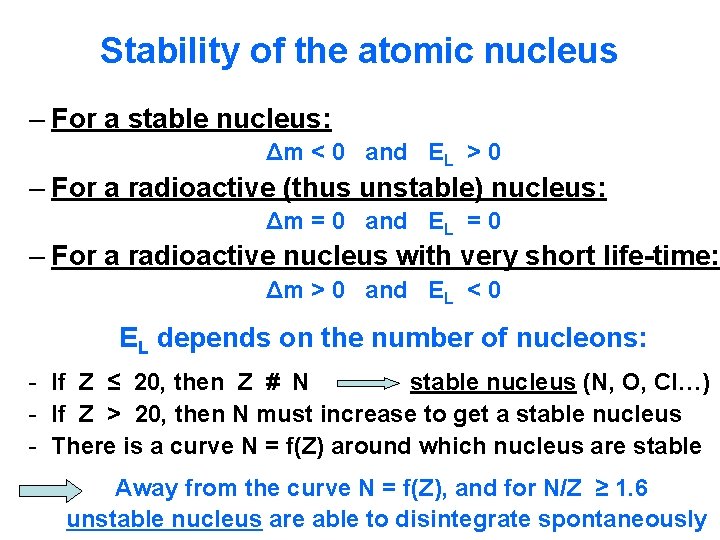
Stability of the atomic nucleus – For a stable nucleus: Δm < 0 and EL > 0 – For a radioactive (thus unstable) nucleus: Δm = 0 and EL = 0 – For a radioactive nucleus with very short life-time: Δm > 0 and EL < 0 EL depends on the number of nucleons: - If Z ≤ 20, then Z # N stable nucleus (N, O, Cl…) - If Z > 20, then N must increase to get a stable nucleus - There is a curve N = f(Z) around which nucleus are stable Away from the curve N = f(Z), and for N/Z ≥ 1. 6 unstable nucleus are able to disintegrate spontaneously
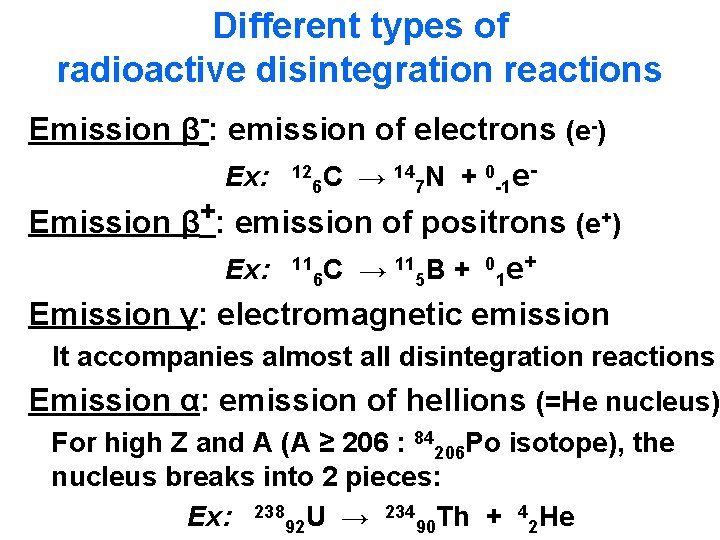
Different types of radioactive disintegration reactions Emission β-: emission of electrons (e-) Ex: 126 C → 147 N + 0 -1 e. Emission β+: emission of positrons (e+) Ex: 116 C → 115 B + 01 e+ Emission γ: electromagnetic emission It accompanies almost all disintegration reactions Emission α: emission of hellions (=He nucleus) For high Z and A (A ≥ 206 : 84206 Po isotope), the nucleus breaks into 2 pieces: Ex: 23892 U → 23490 Th + 42 He
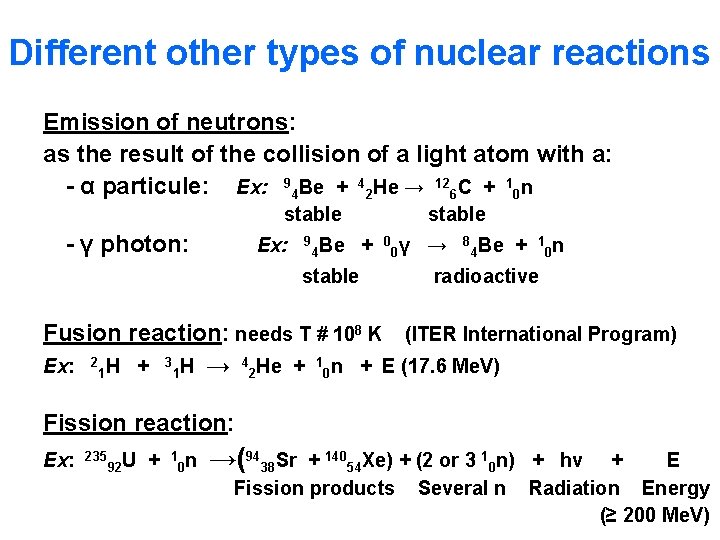
Different other types of nuclear reactions Emission of neutrons: as the result of the collision of a light atom with a: - α particule: Ex: 94 Be + 42 He → 126 C + 10 n stable - γ photon: Ex: 9 4 Be stable + 0 0γ → 8 4 Be + 1 0 n radioactive Fusion reaction: needs T # 108 K (ITER International Program) Ex: 21 H + 31 H → 42 He + 10 n + E (17. 6 Me. V) Fission reaction: Ex: 235 92 U + 1 0 n →(9438 Sr + 14054 Xe) + (2 or 3 10 n) + hν + E Fission products Several n Radiation Energy (≥ 200 Me. V)
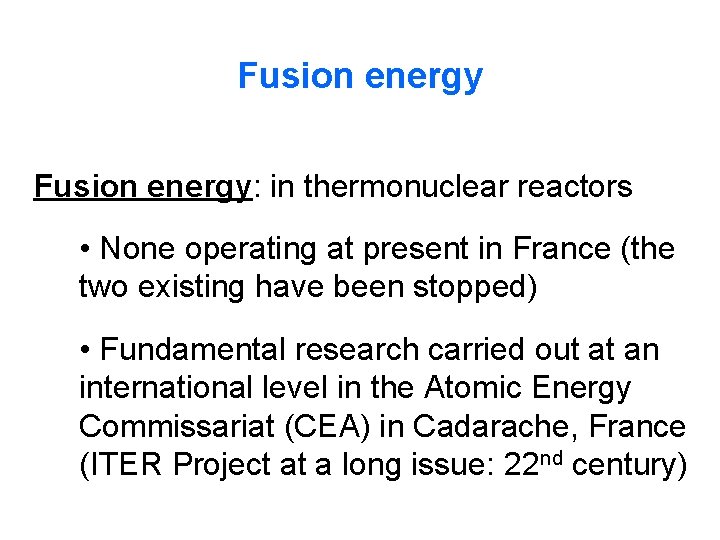
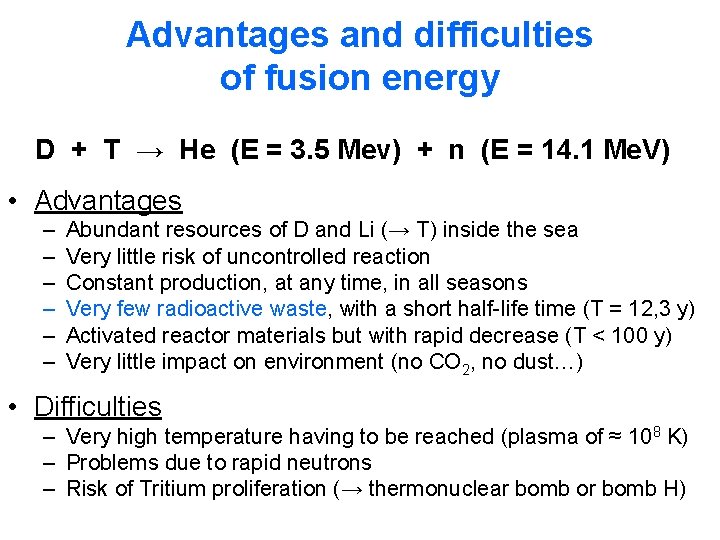
Fusion energy: in thermonuclear reactors • None operating at present in France (the two existing have been stopped) • Fundamental research carried out at an international level in the Atomic Energy Commissariat (CEA) in Cadarache, France (ITER Project at a long issue: 22 nd century)
Advantages and difficulties of fusion energy D + T → He (E = 3. 5 Mev) + n (E = 14. 1 Me. V) • Advantages – – – Abundant resources of D and Li (→ T) inside the sea Very little risk of uncontrolled reaction Constant production, at any time, in all seasons Very few radioactive waste, with a short half-life time (T = 12, 3 y) Activated reactor materials but with rapid decrease (T < 100 y) Very little impact on environment (no CO 2, no dust…) • Difficulties – Very high temperature having to be reached (plasma of ≈ 108 K) – Problems due to rapid neutrons – Risk of Tritium proliferation (→ thermonuclear bomb or bomb H)
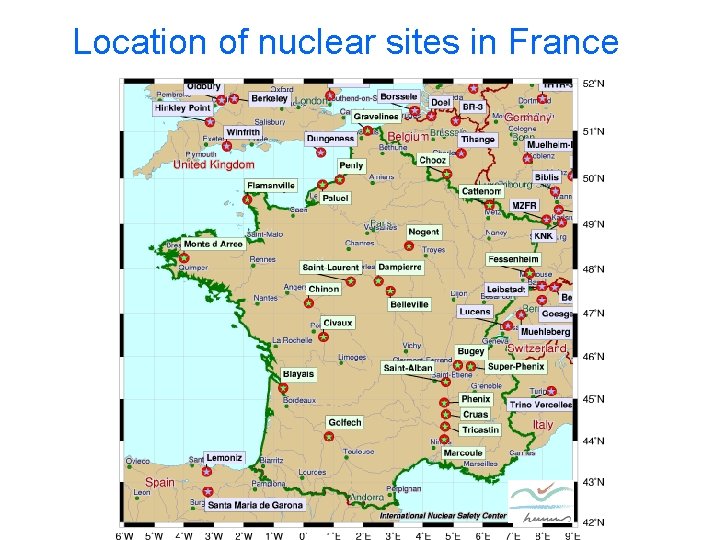
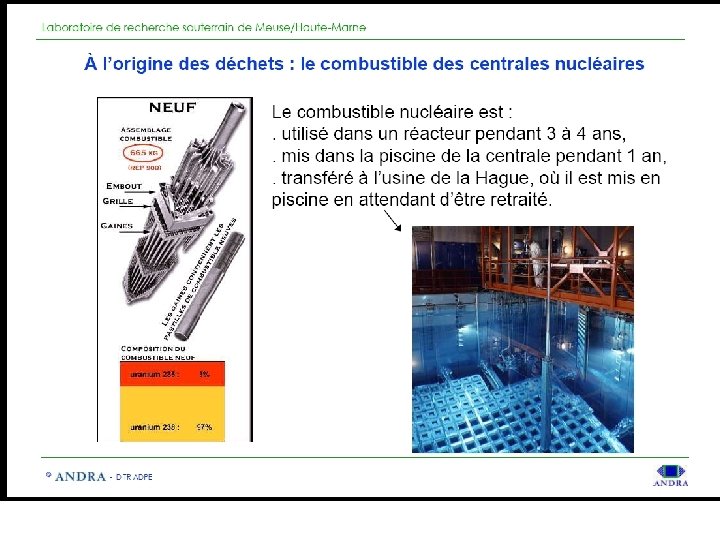
Fission energy: in REP (Reactors with Pressurized Water), based on the fission of natural Uranium enriched with U 235 isotope • REP : the only operating reactors in France at present (58 units on 19 different sites): 2 nd generation of reactors • EPR : 3 rd generation (1 EPR under construction at Flamanville, Normandy; another decided also in Normandy; one being built in Finland; others to be built in India, China…) • 4 th generation (being conceived for 2040 -2050)
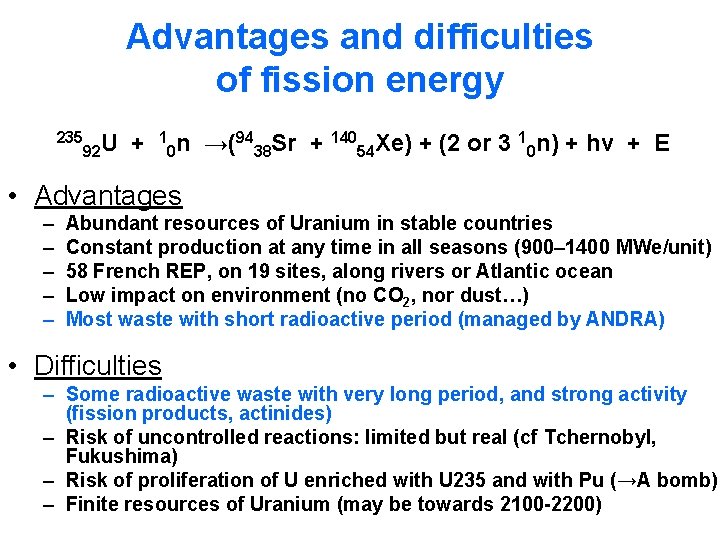
Advantages and difficulties of fission energy 235 92 U + 1 94 Sr + 140 Xe) + (2 or 3 1 n) + hν + E n →( 0 38 54 0 • Advantages – – – Abundant resources of Uranium in stable countries Constant production at any time in all seasons (900– 1400 MWe/unit) 58 French REP, on 19 sites, along rivers or Atlantic ocean Low impact on environment (no CO 2, nor dust…) Most waste with short radioactive period (managed by ANDRA) • Difficulties – Some radioactive waste with very long period, and strong activity (fission products, actinides) – Risk of uncontrolled reactions: limited but real (cf Tchernobyl, Fukushima) – Risk of proliferation of U enriched with U 235 and with Pu (→A bomb) – Finite resources of Uranium (may be towards 2100 -2200)
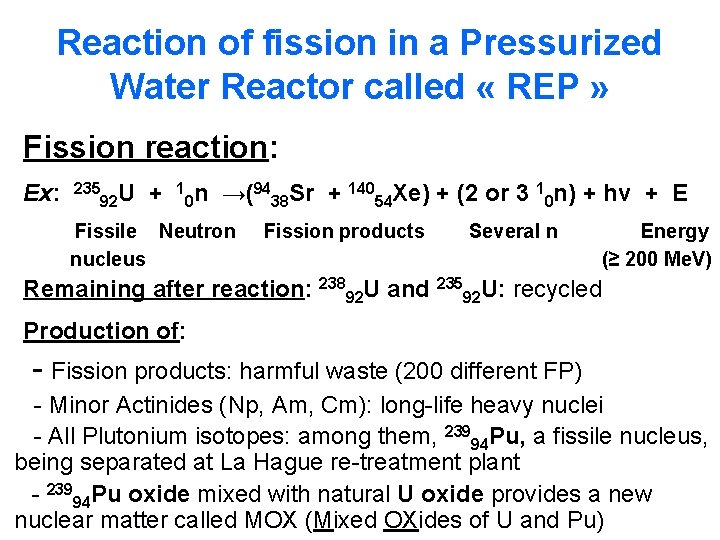
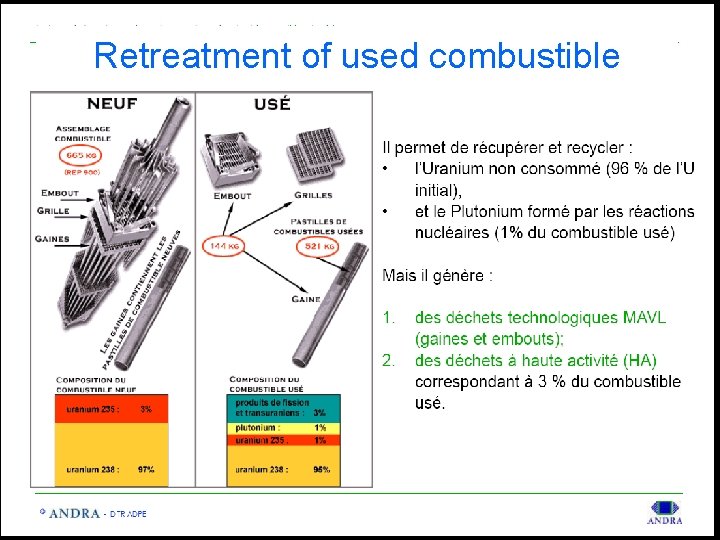
Reaction of fission in a Pressurized Water Reactor called « REP » Fission reaction: Ex: 235 92 U + 1 0 n →(9438 Sr + 14054 Xe) + (2 or 3 10 n) + hν + E Fissile Neutron nucleus Fission products Several n Energy (≥ 200 Me. V) Remaining after reaction: 23892 U and 23592 U: recycled Production of: - Fission products: harmful waste (200 different FP) - Minor Actinides (Np, Am, Cm): long-life heavy nuclei - All Plutonium isotopes: among them, 23994 Pu, a fissile nucleus, being separated at La Hague re-treatment plant - 23994 Pu oxide mixed with natural U oxide provides a new nuclear matter called MOX (Mixed OXides of U and Pu)
Definition of waste, of radioactive waste • A waste is officially “any residue from production, transformation, or utilization processes, any substance, material, product, or more generally any abandoned staff or staff the owner wants to abandon” • A radioactive waste contains radioactive isotopes that are characterized by: – the production of dangerous ionizing radiations of very short wavelength (thus of large energy) – their long term activity and life-time
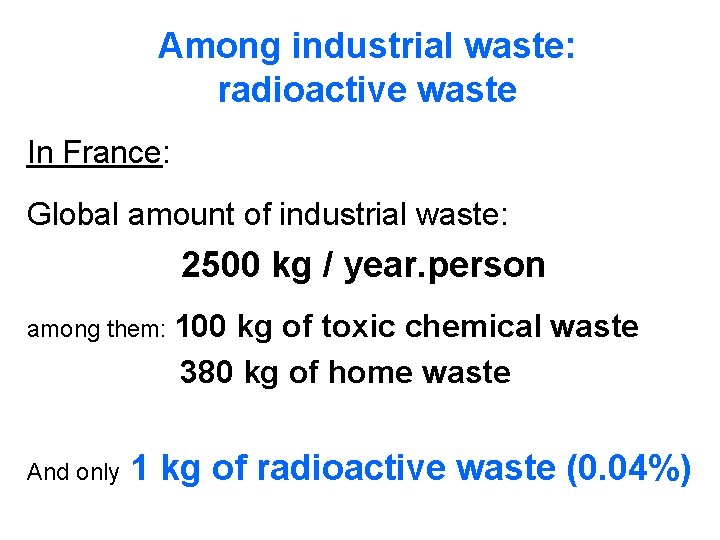
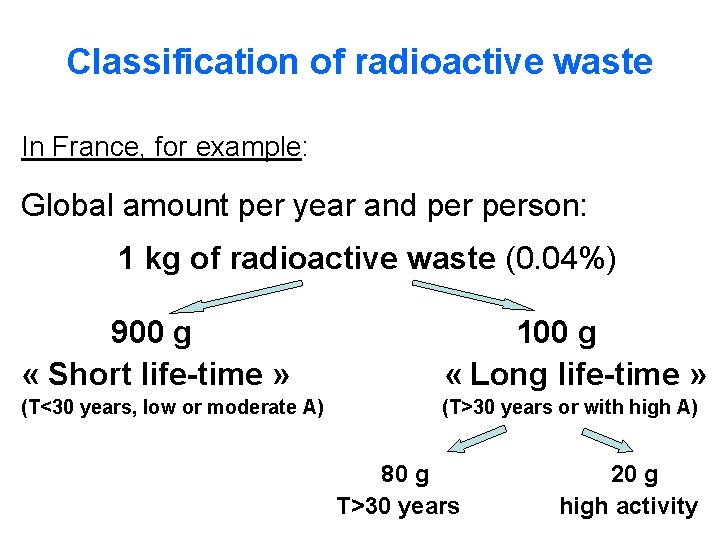
Among industrial waste: radioactive waste In France: Global amount of industrial waste: 2500 kg / year. person among them: 100 kg of toxic chemical waste 380 kg of home waste And only 1 kg of radioactive waste (0. 04%)
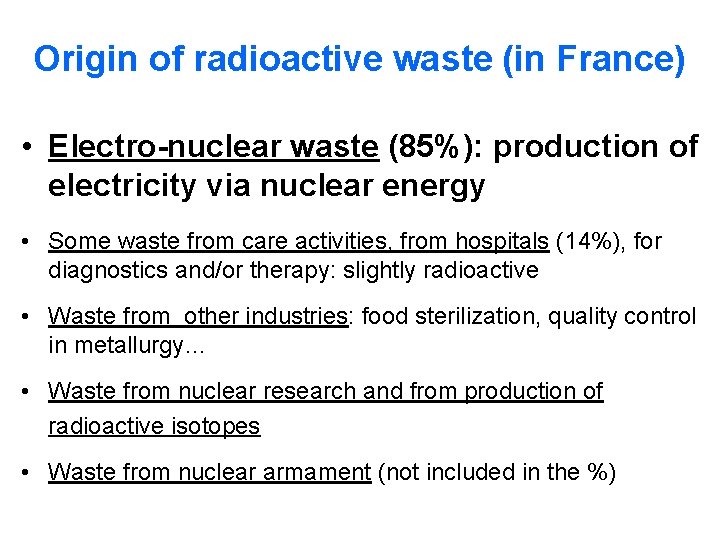
Origin of radioactive waste (in France) • Electro-nuclear waste (85%): production of electricity via nuclear energy • Some waste from care activities, from hospitals (14%), for diagnostics and/or therapy: slightly radioactive • Waste from other industries: food sterilization, quality control in metallurgy… • Waste from nuclear research and from production of radioactive isotopes • Waste from nuclear armament (not included in the %)
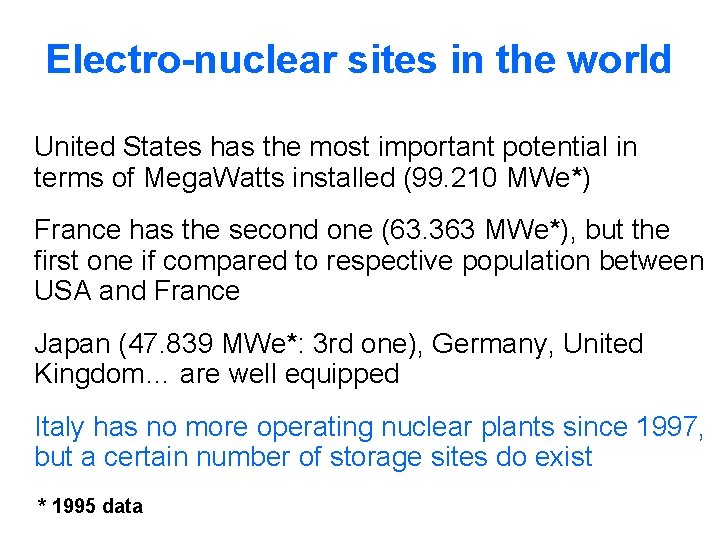
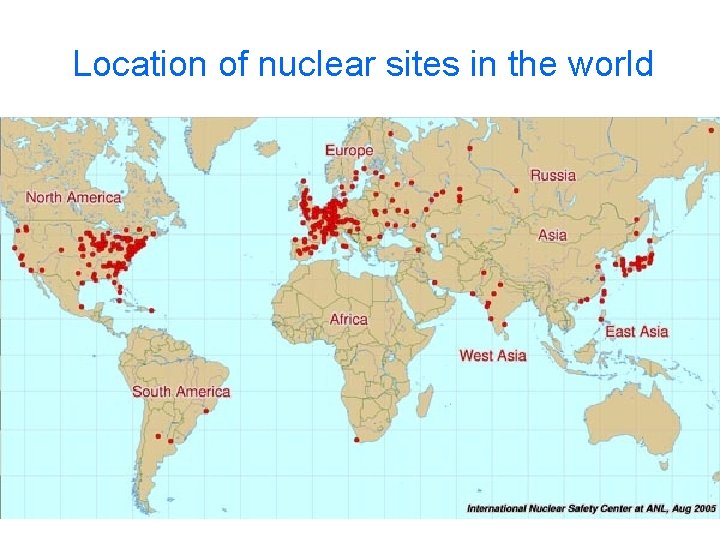
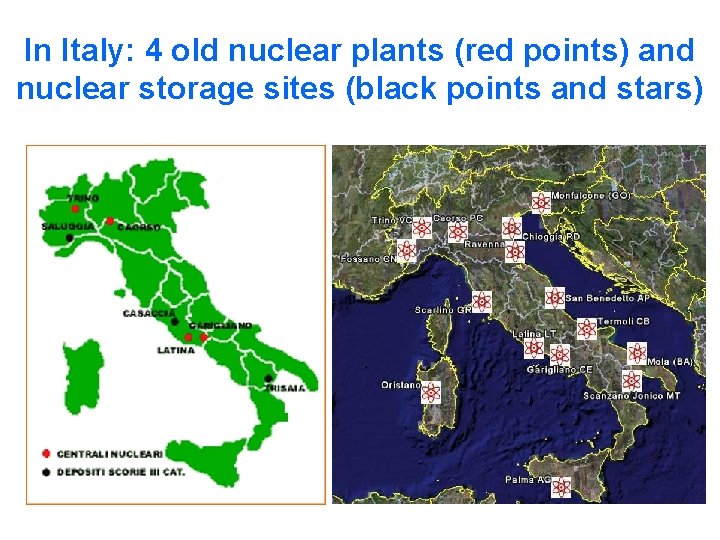
Electro-nuclear sites in the world United States has the most , important potential in terms of Mega. Watts installed (99. 210 MWe*) France has the second one (63. 363 MWe*), but the first one if compared to respective population between USA and France Japan (47. 839 MWe*: 3 rd one), Germany, United Kingdom… are well equipped Italy has no more operating nuclear plants since 1997, but a certain number of storage sites do exist * 1995 data
Location of nuclear sites in the world
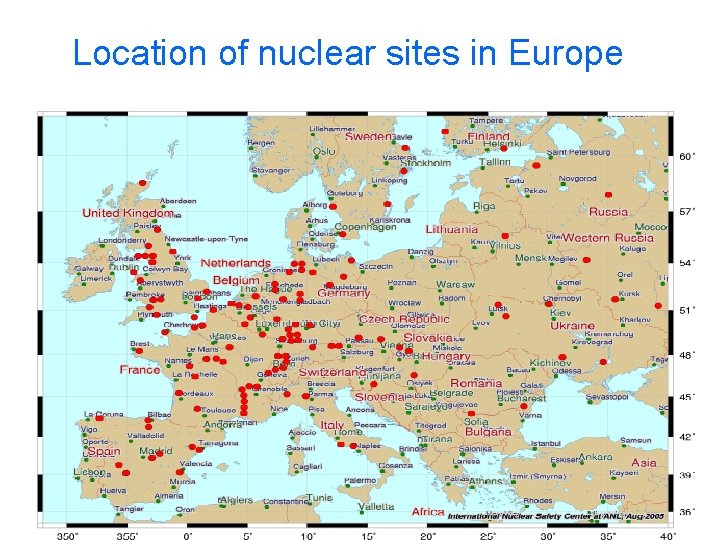
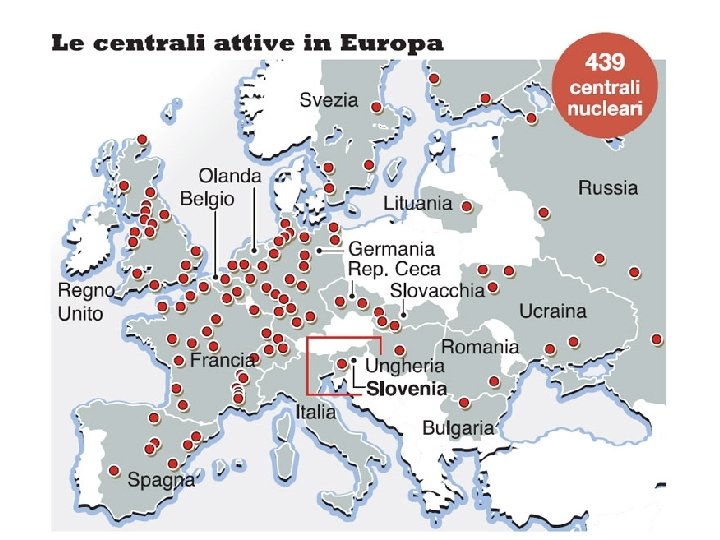
Location of nuclear sites in Europe
Location of nuclear sites in France
In Italy: 4 old nuclear plants (red points) and nuclear storage sites (black points and stars)
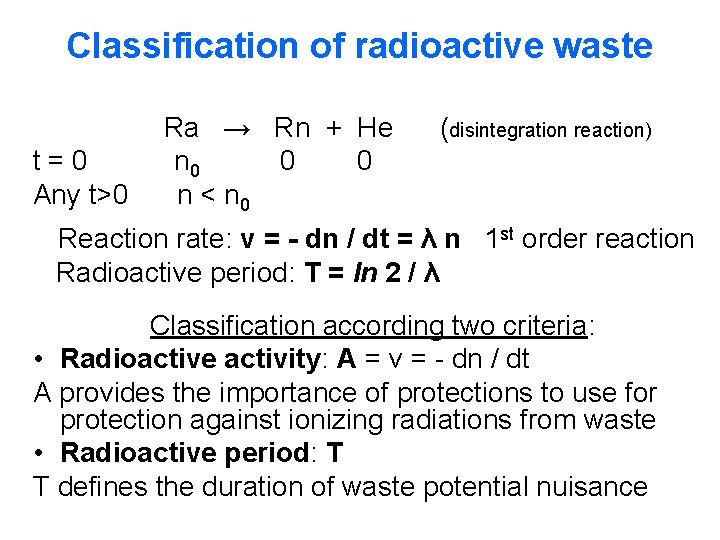
Classification of radioactive waste t=0 Any t>0 Ra → Rn + He n 0 0 0 n < n 0 (disintegration reaction) Reaction rate: v = - dn / dt = λ n 1 st order reaction Radioactive period: T = ln 2 / λ Classification according two criteria: • Radioactive activity: A = v = - dn / dt A provides the importance of protections to use for protection against ionizing radiations from waste • Radioactive period: T T defines the duration of waste potential nuisance
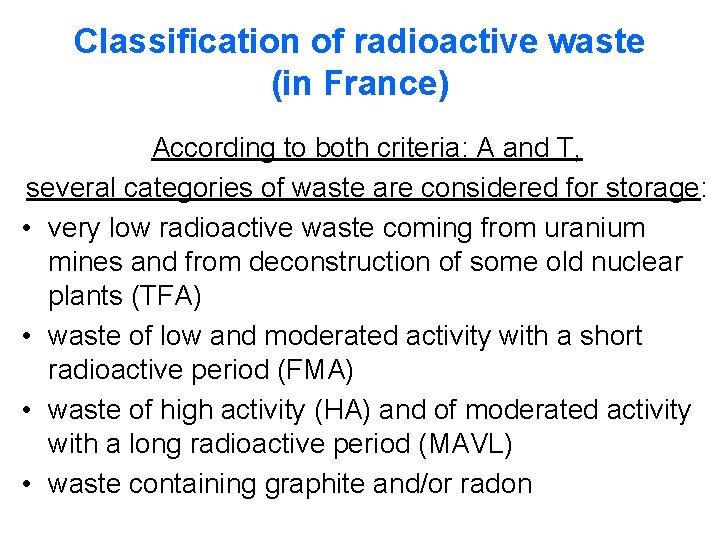
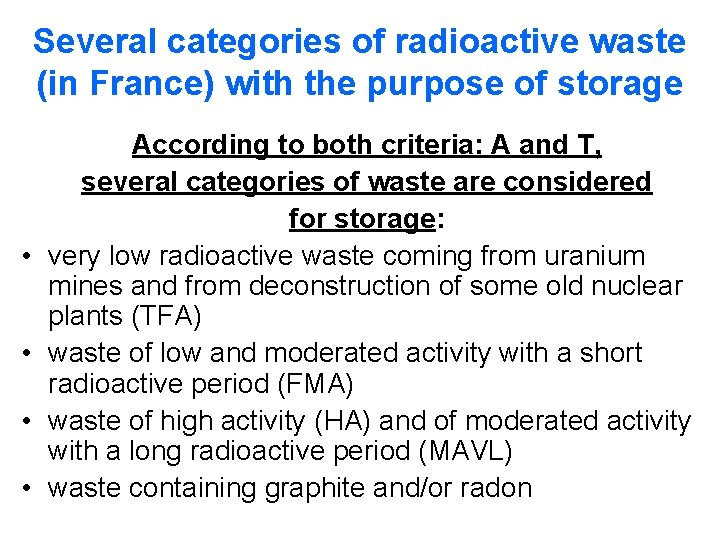
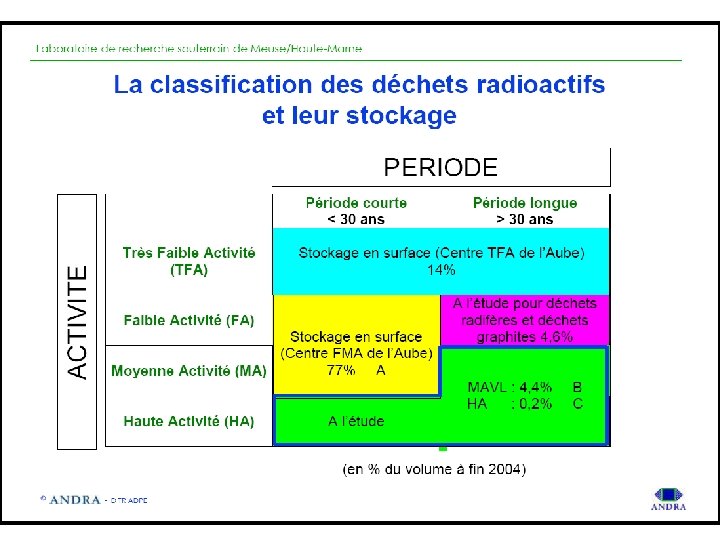
Classification of radioactive waste (in France) According to both criteria: A and T, several categories of waste are considered for storage: • very low radioactive waste coming from uranium mines and from deconstruction of some old nuclear plants (TFA) • waste of low and moderated activity with a short radioactive period (FMA) • waste of high activity (HA) and of moderated activity with a long radioactive period (MAVL) • waste containing graphite and/or radon
Classification of radioactive waste In France, for example: Global amount per year and person: 1 kg of radioactive waste (0. 04%) 900 g « Short life-time » 100 g « Long life-time » (T<30 years, low or moderate A) (T>30 years or with high A) 80 g T>30 years 20 g high activity
Retreatment of used combustible
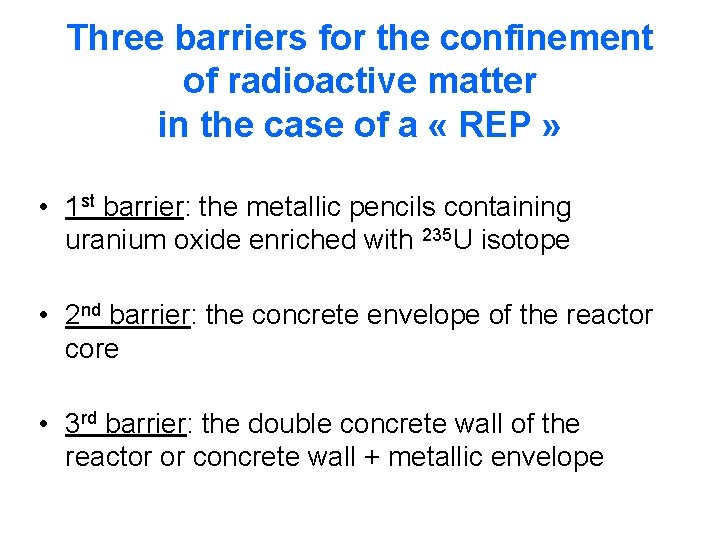
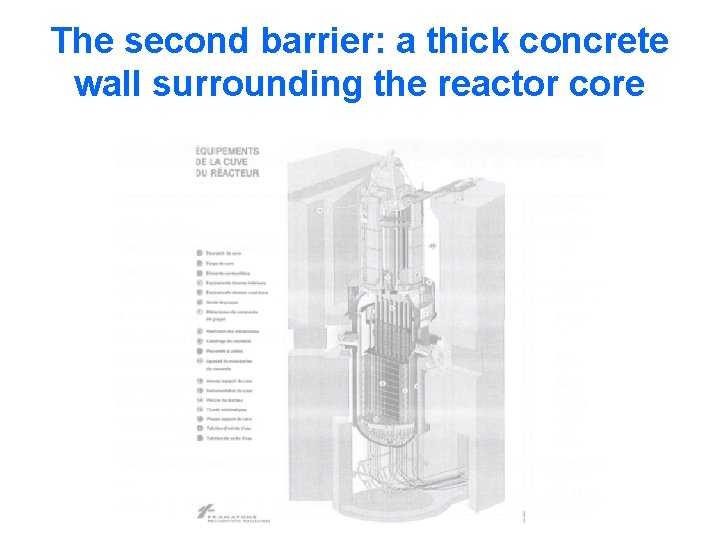
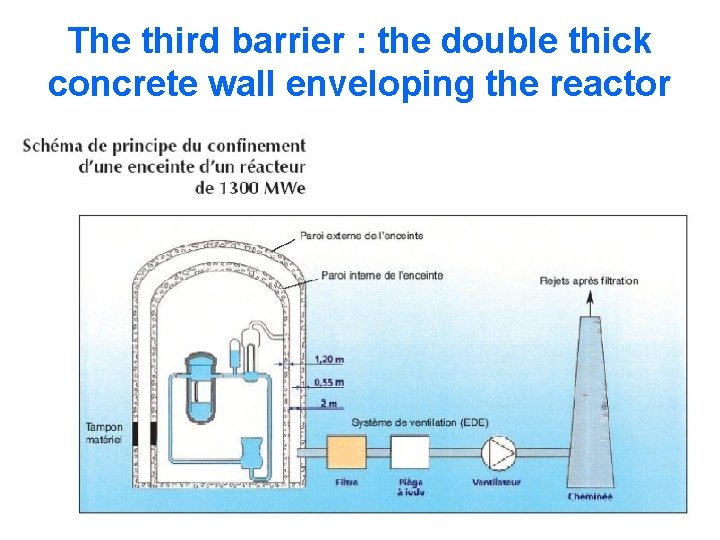
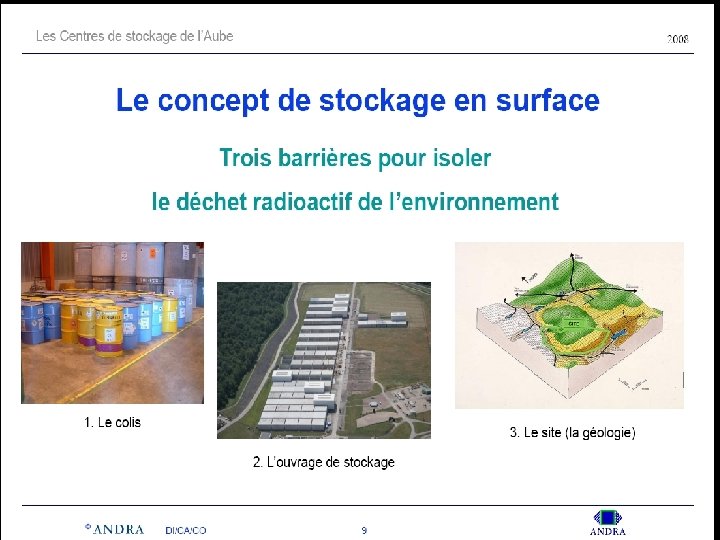
Three barriers for the confinement of radioactive matter in the case of a « REP » • 1 st barrier: the metallic pencils containing uranium oxide enriched with 235 U isotope • 2 nd barrier: the concrete envelope of the reactor core • 3 rd barrier: the double concrete wall of the reactor or concrete wall + metallic envelope
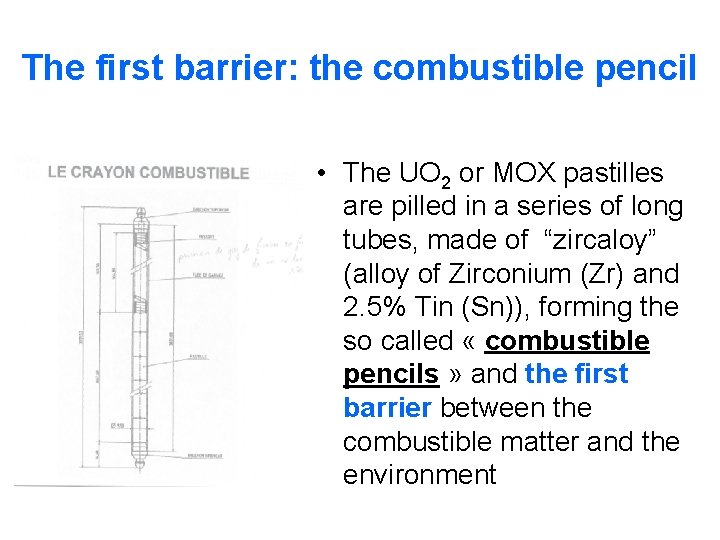
The first barrier: the combustible pencil • The UO 2 or MOX pastilles are pilled in a series of long tubes, made of “zircaloy” (alloy of Zirconium (Zr) and 2. 5% Tin (Sn)), forming the so called « combustible pencils » and the first barrier between the combustible matter and the environment
The second barrier: a thick concrete wall surrounding the reactor core
The third barrier : the double thick concrete wall enveloping the reactor
Storage of nuclear (and other radioactive) waste
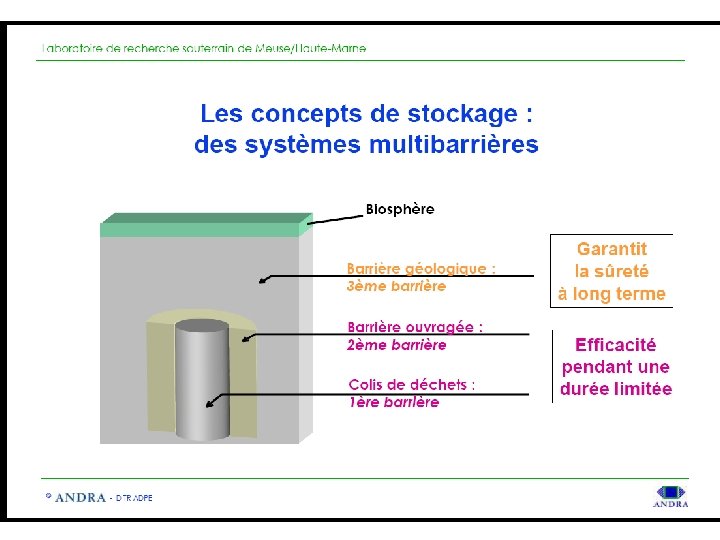
Several categories of radioactive waste (in France) with the purpose of storage • • According to both criteria: A and T, several categories of waste are considered for storage: very low radioactive waste coming from uranium mines and from deconstruction of some old nuclear plants (TFA) waste of low and moderated activity with a short radioactive period (FMA) waste of high activity (HA) and of moderated activity with a long radioactive period (MAVL) waste containing graphite and/or radon
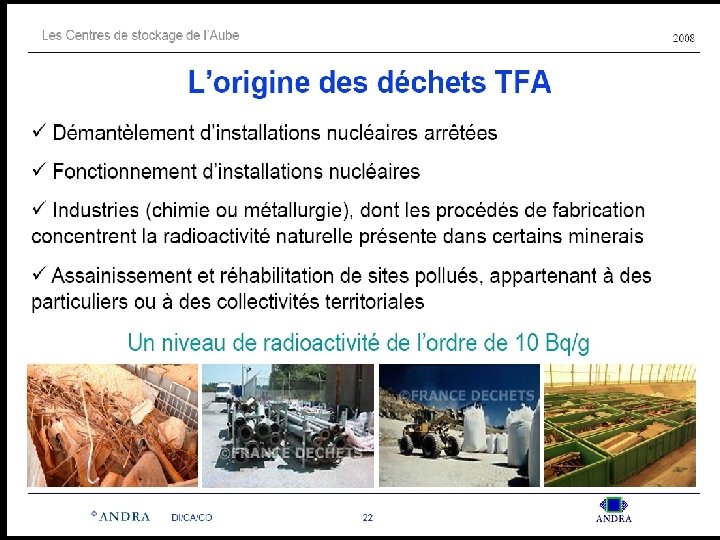
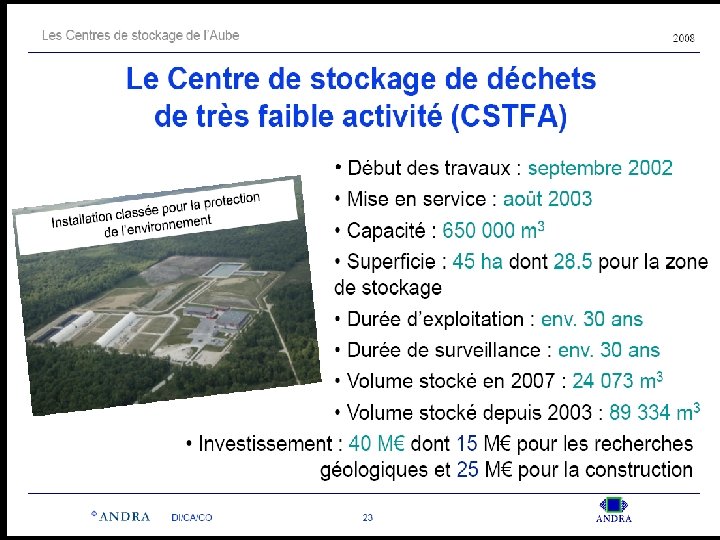
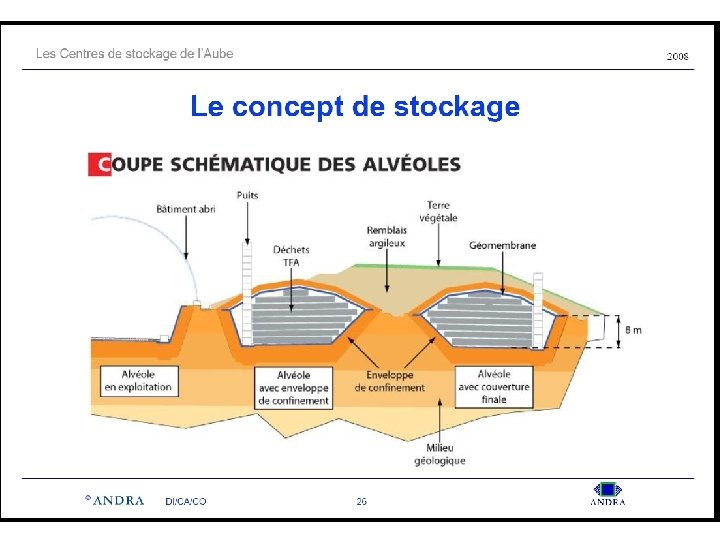
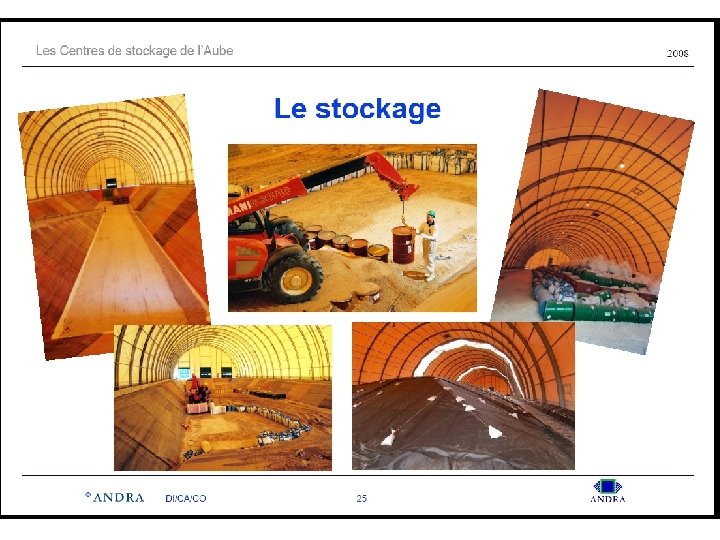
Waste with very low activity (TFA) stored in Morvilliers storage center
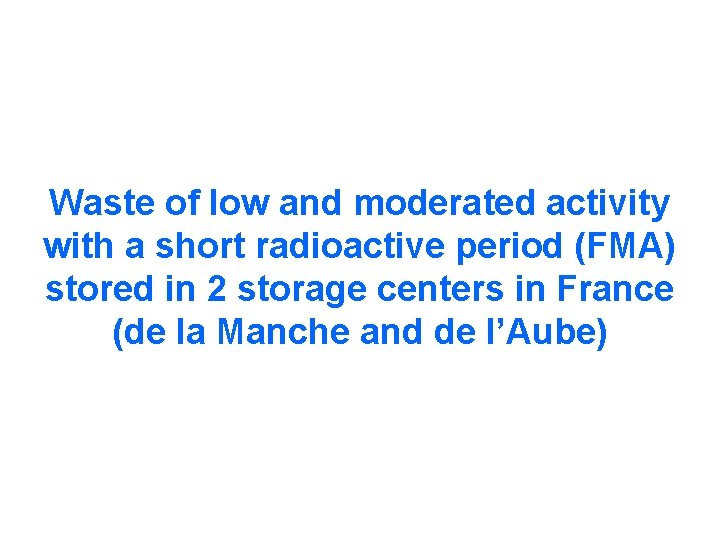
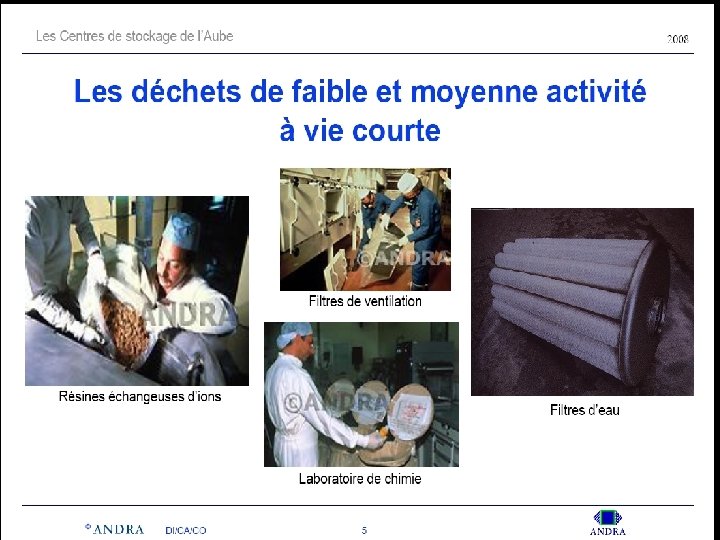
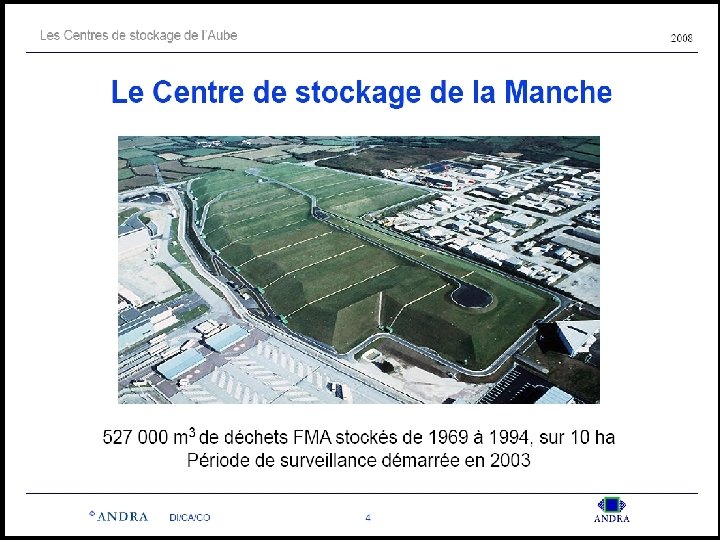
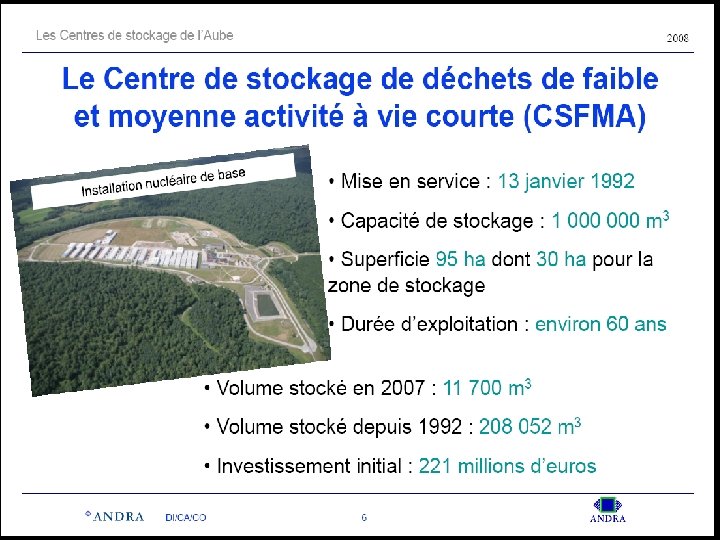
Waste of low and moderated activity with a short radioactive period (FMA) stored in 2 storage centers in France (de la Manche and de l’Aube)
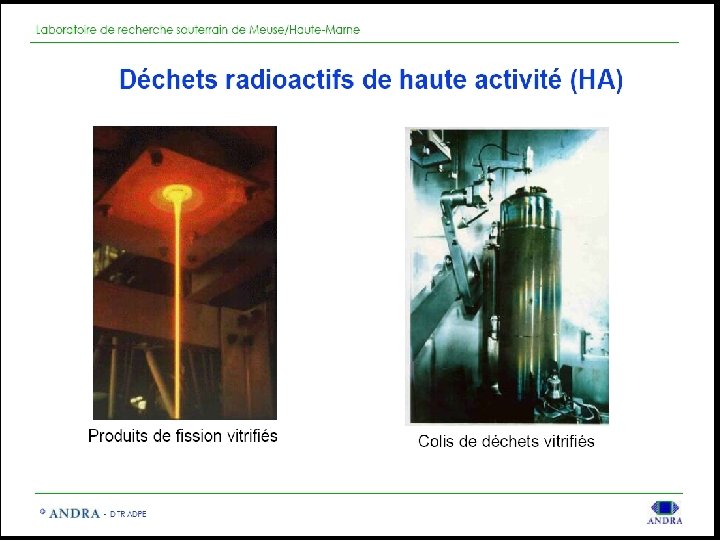
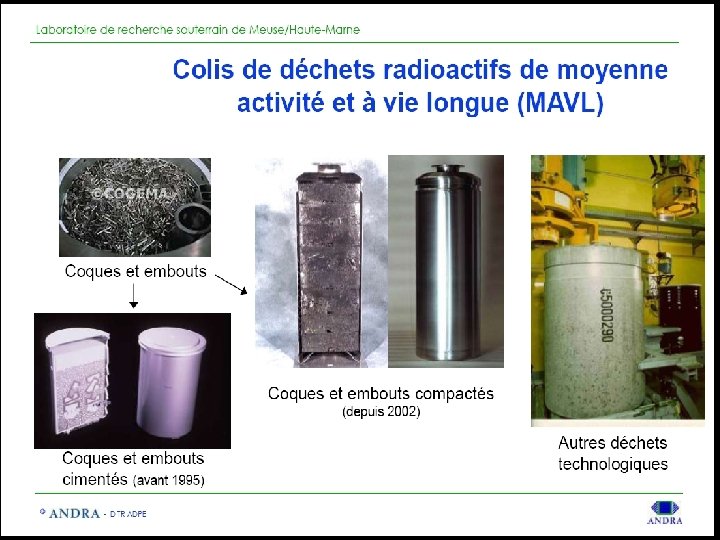
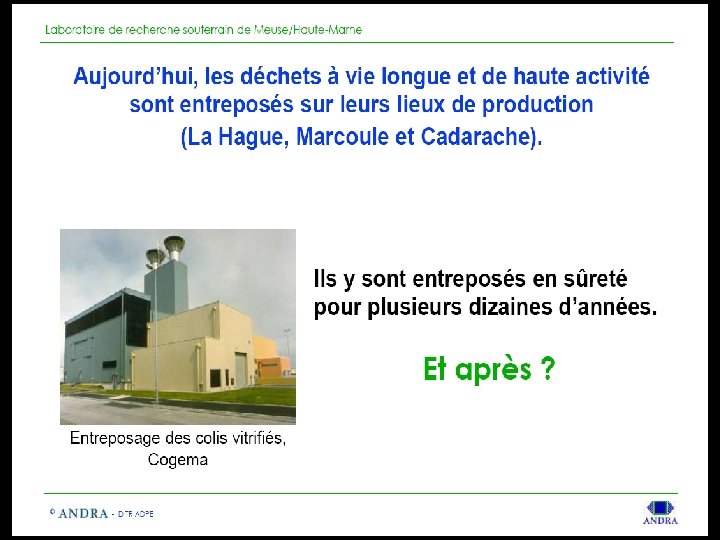
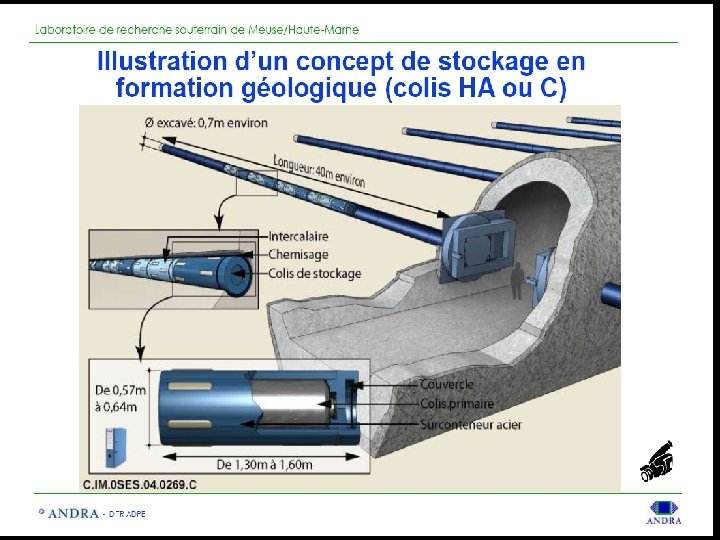
Waste of high activity (HA) and of moderated activity with a long radioactive period (MAVL)
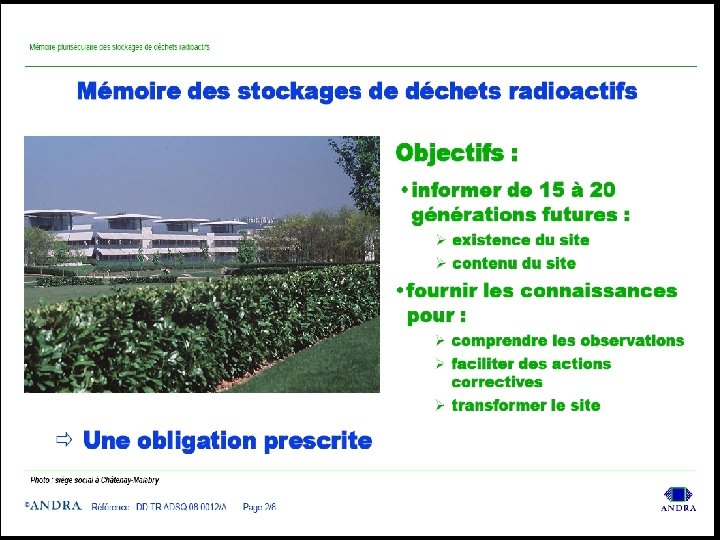
Memory of the storage of radioactive waste
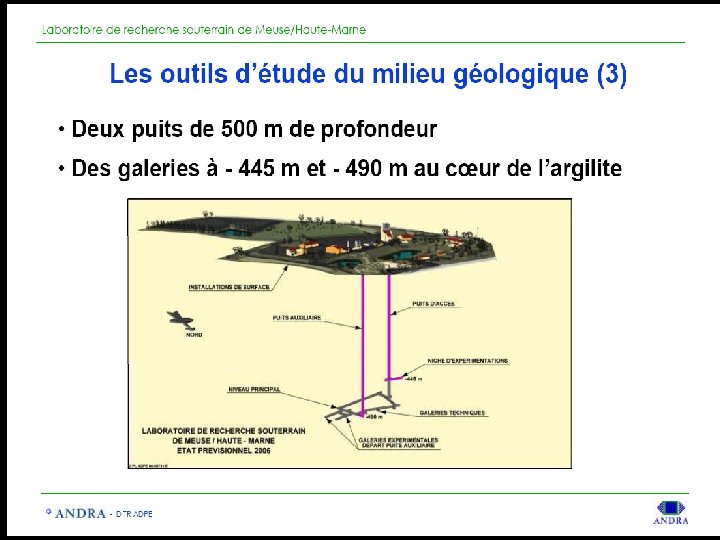
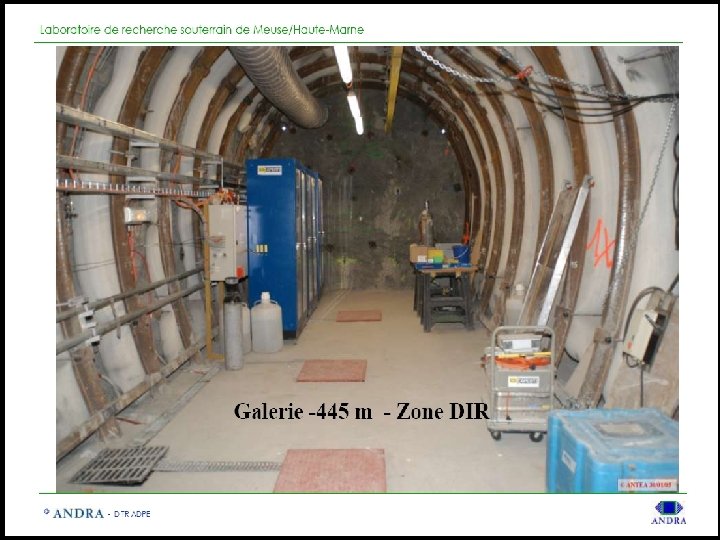
Possible visits of ANDRA radioactive waste sites in France • TFA: in Morvilliers (east of Troyes) • FA/MA and VC: in Soulaines-Dhuys (east of France), in activity since 1992 Another site exists (the 1 st one) in Normandy, at La Hague, near Cherbourg, but it is full, covered, thus not so interesting • HAVC, HAVL: in Bure (east of France) a 490 m-deep laboratory inside special clay has been built and is operating. It can be visited only for a limited number of persons. A reproduction on surface of a part of it can be visited, so as an interesting technical area and museum shows the different machines, tools, containers… they are making for a future adequate deep storing They are now searching for a proper site in the region of Bure for building the real site for a deep storage within 15 -20 years and for at least 100 years or much more