
What is the function of your Digestive System

- Slides: 45
What is the function of your Digestive System? Copyright © 2006 Pearson Education, Inc. , publishing as Benjamin Cummings
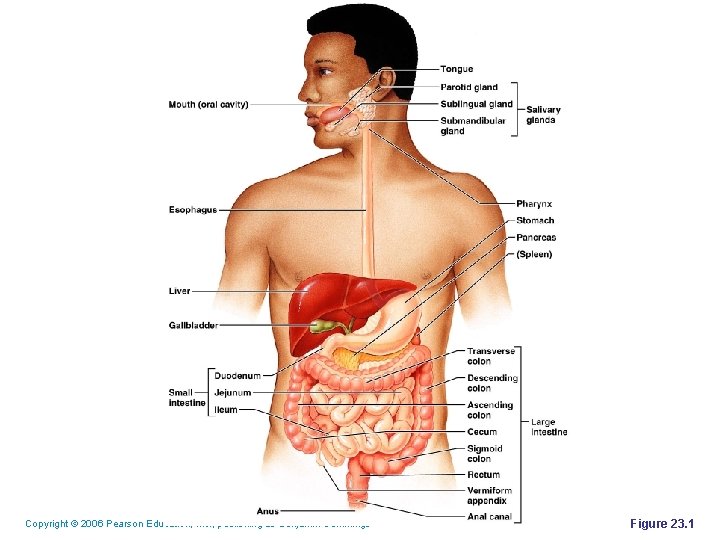
Copyright © 2006 Pearson Education, Inc. , publishing as Benjamin Cummings Figure 23. 1
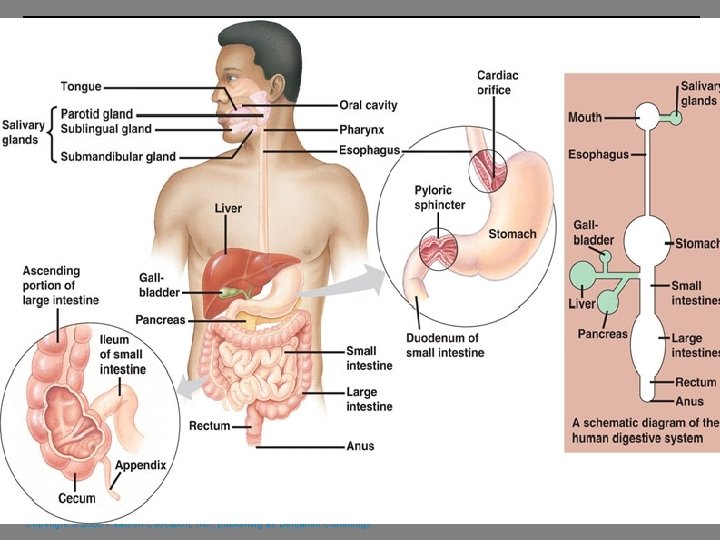
Digestive System Brainstorm what each of the following organs/structures does regarding digestion: § § § The alimentary canal or gastrointestinal (GI) tract digests and absorbs food Alimentary canal consists of – mouth, pharynx, esophagus, stomach, small intestine, and large intestine Accessory digestive organs – teeth, tongue, salivary glands, liver, gallbladder and pancreas Copyright © 2006 Pearson Education, Inc. , publishing as Benjamin Cummings
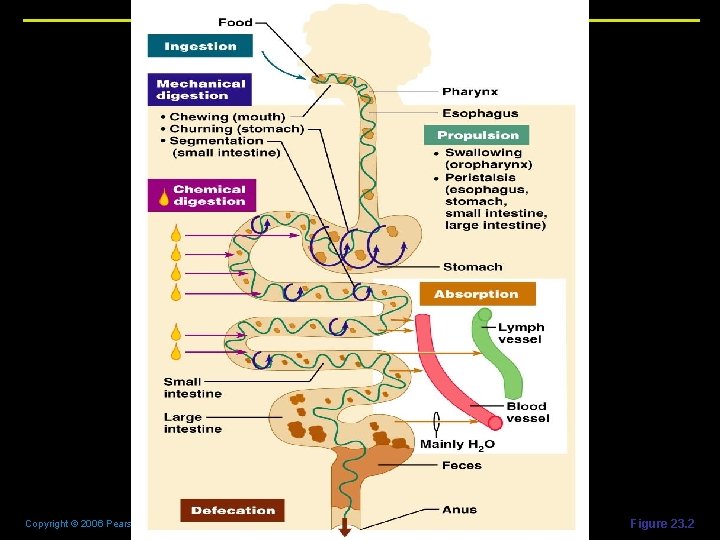
Digestive Process § The GI tract is a “disassembly” line § § Nutrients become more available to the body in each step (example: proteins broken into amino acids) There are six essential activities: 1. Ingestion 2. propulsion by peristalsis 3. mechanical digestion 4. Chemical digestion 5. absorption 6. defecation Copyright © 2006 Pearson Education, Inc. , publishing as Benjamin Cummings
Copyright © 2006 Pearson Education, Inc. , publishing as Benjamin Cummings Figure 23. 2
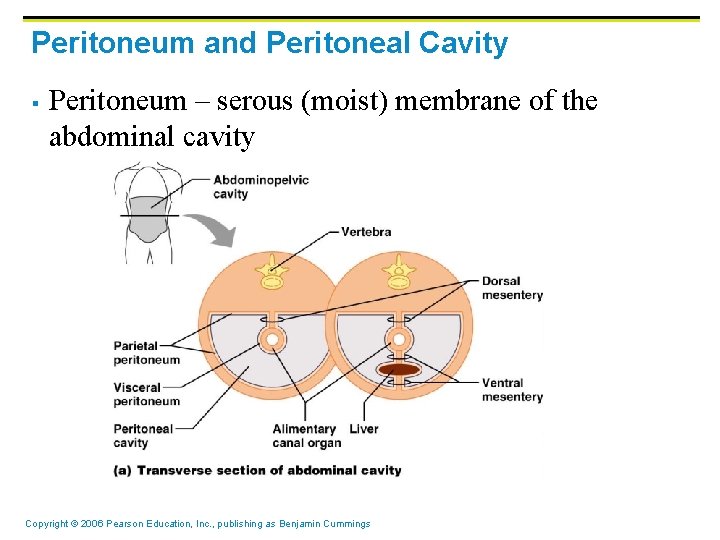
Peritoneum and Peritoneal Cavity § Peritoneum – serous (moist) membrane of the abdominal cavity Copyright © 2006 Pearson Education, Inc. , publishing as Benjamin Cummings
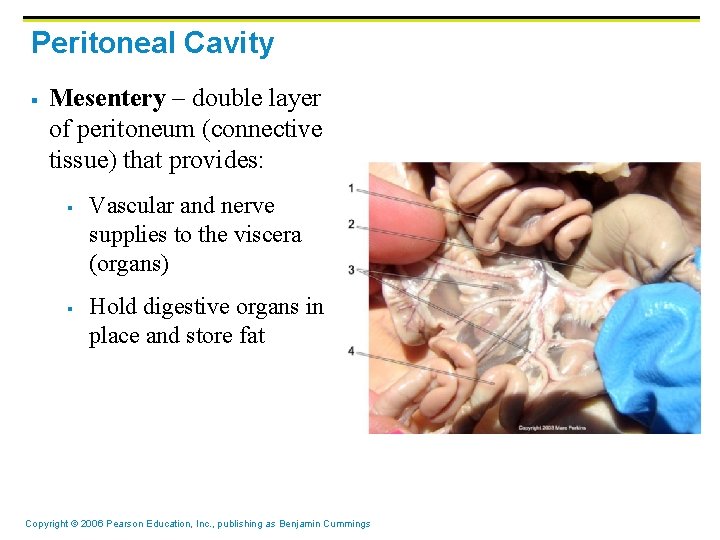
Peritoneal Cavity § Mesentery – double layer of peritoneum (connective tissue) that provides: § § Vascular and nerve supplies to the viscera (organs) Hold digestive organs in place and store fat Copyright © 2006 Pearson Education, Inc. , publishing as Benjamin Cummings
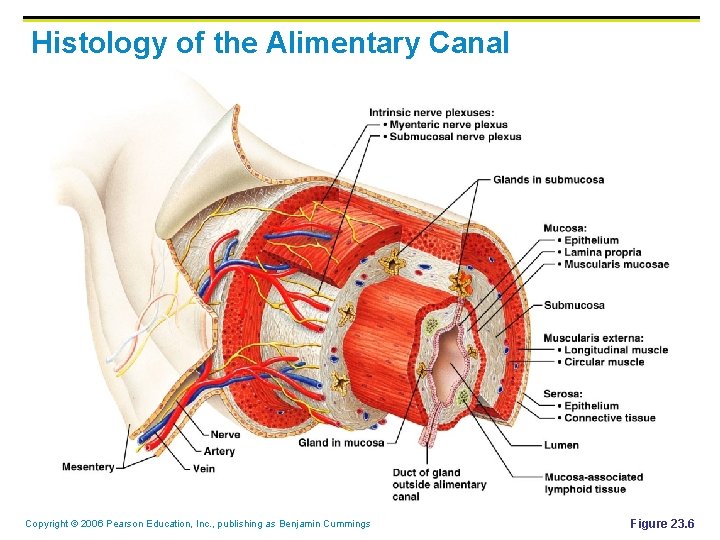
Histology of the Alimentary Canal Copyright © 2006 Pearson Education, Inc. , publishing as Benjamin Cummings Figure 23. 6
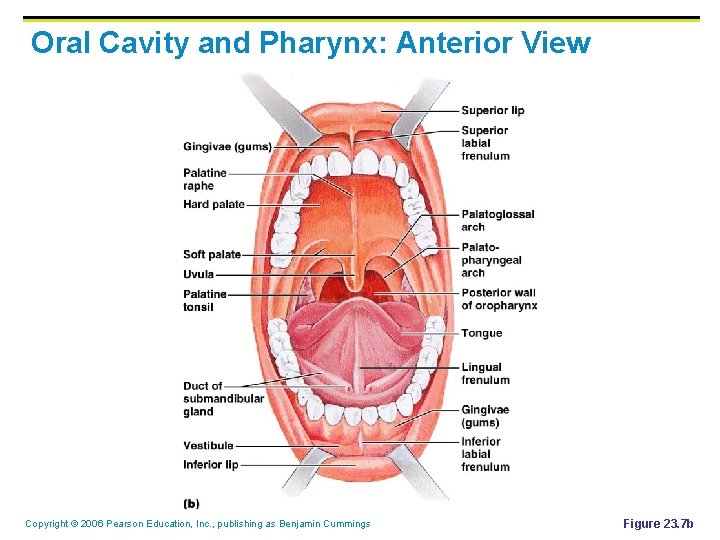
Oral Cavity and Pharynx: Anterior View Copyright © 2006 Pearson Education, Inc. , publishing as Benjamin Cummings Figure 23. 7 b
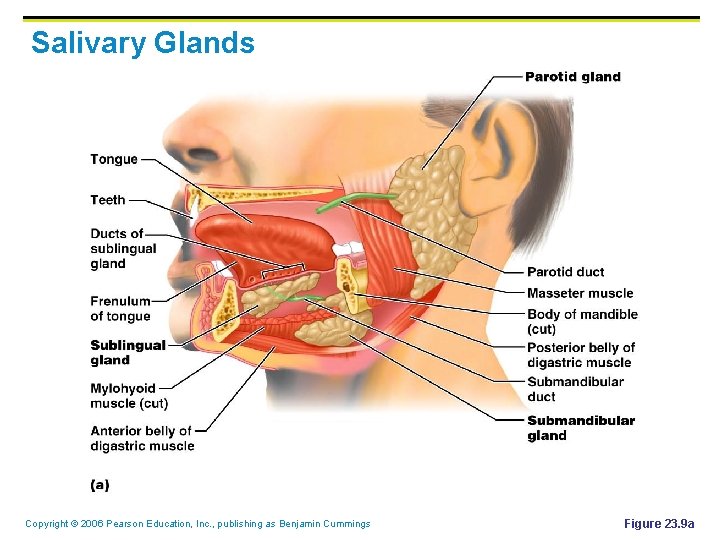
Salivary Glands Copyright © 2006 Pearson Education, Inc. , publishing as Benjamin Cummings Figure 23. 9 a
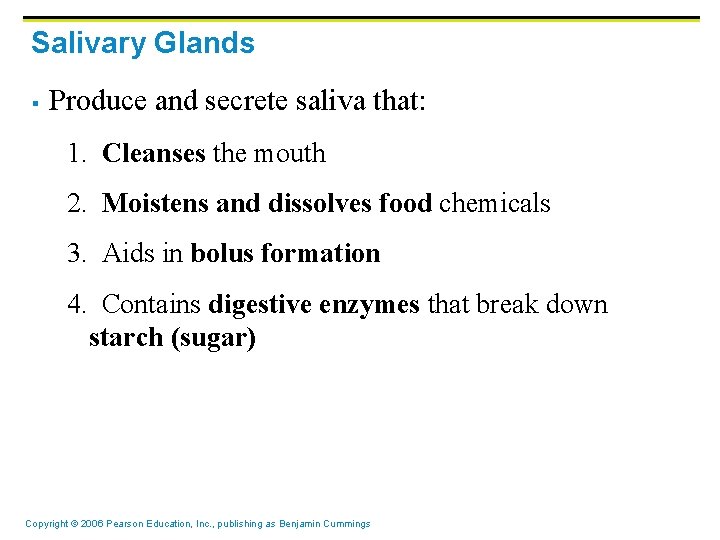
Salivary Glands § Produce and secrete saliva that: 1. Cleanses the mouth 2. Moistens and dissolves food chemicals 3. Aids in bolus formation 4. Contains digestive enzymes that break down starch (sugar) Copyright © 2006 Pearson Education, Inc. , publishing as Benjamin Cummings
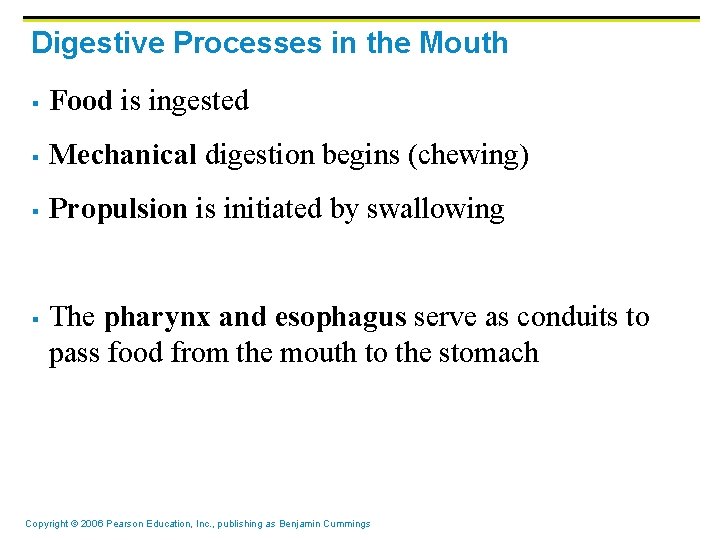
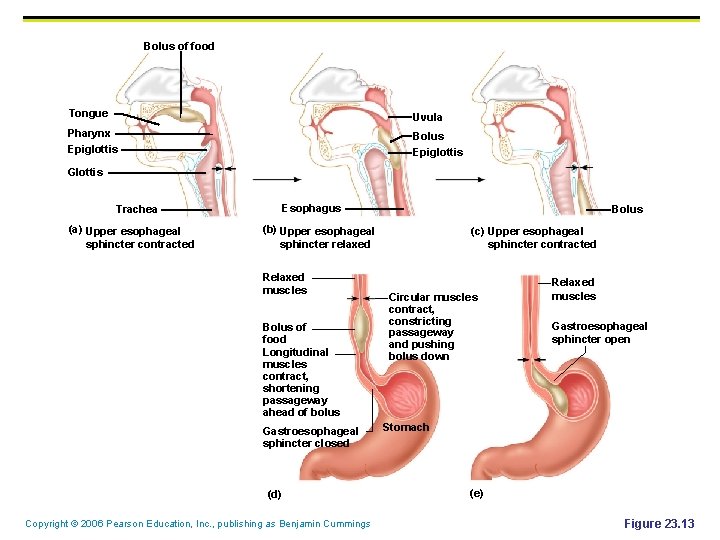
Digestive Processes in the Mouth § Food is ingested § Mechanical digestion begins (chewing) § Propulsion is initiated by swallowing § The pharynx and esophagus serve as conduits to pass food from the mouth to the stomach Copyright © 2006 Pearson Education, Inc. , publishing as Benjamin Cummings
Bolus of food Tongue Uvula Pharynx Epiglottis Bolus Epiglottis Glottis Esophagus Trachea (a) Upper esophageal sphincter contracted Bolus (b) Upper esophageal sphincter relaxed Relaxed muscles Bolus of food Longitudinal muscles contract, shortening passageway ahead of bolus Gastroesophageal sphincter closed (d) Copyright © 2006 Pearson Education, Inc. , publishing as Benjamin Cummings (c) Upper esophageal sphincter contracted Circular muscles contract, constricting passageway and pushing bolus down Relaxed muscles Gastroesophageal sphincter open Stomach (e) Figure 23. 13
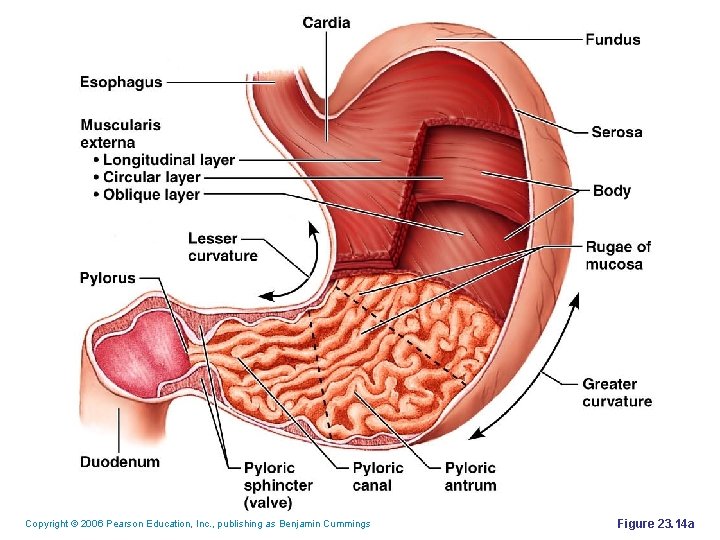
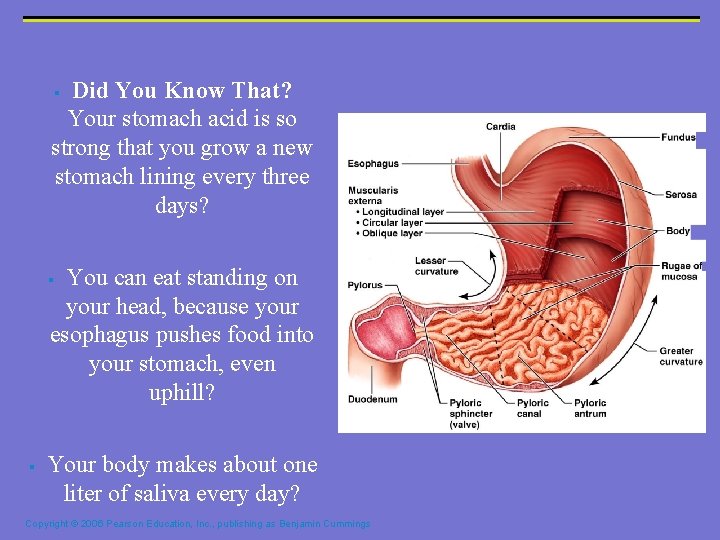
Copyright © 2006 Pearson Education, Inc. , publishing as Benjamin Cummings Figure 23. 14 a
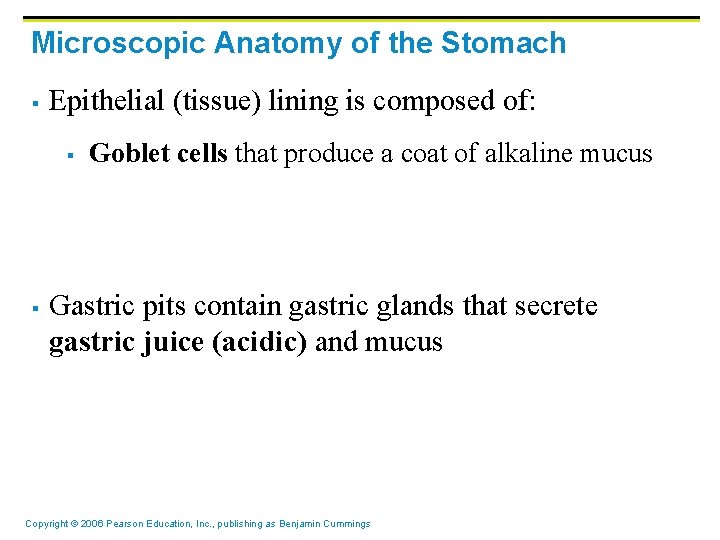
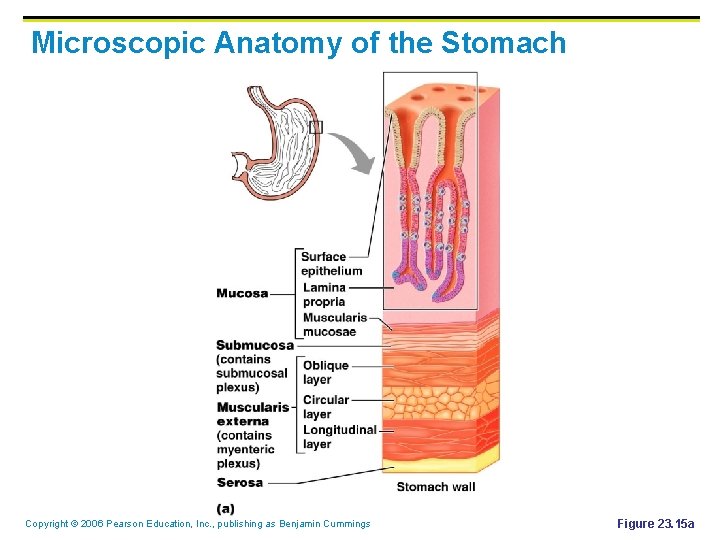
Microscopic Anatomy of the Stomach § Epithelial (tissue) lining is composed of: § § Goblet cells that produce a coat of alkaline mucus Gastric pits contain gastric glands that secrete gastric juice (acidic) and mucus Copyright © 2006 Pearson Education, Inc. , publishing as Benjamin Cummings
Microscopic Anatomy of the Stomach Copyright © 2006 Pearson Education, Inc. , publishing as Benjamin Cummings Figure 23. 15 a
Did You Know That? Your stomach acid is so strong that you grow a new stomach lining every three days? § You can eat standing on your head, because your esophagus pushes food into your stomach, even uphill? § § Your body makes about one liter of saliva every day? Copyright © 2006 Pearson Education, Inc. , publishing as Benjamin Cummings
Digestion in the Stomach § The stomach: § Holds ingested food § Degrades this food both physically and chemically § Delivers chyme to the small intestine § Enzymatically digests proteins with pepsin Copyright © 2006 Pearson Education, Inc. , publishing as Benjamin Cummings
Copyright © 2006 Pearson Education, Inc. , publishing as Benjamin Cummings
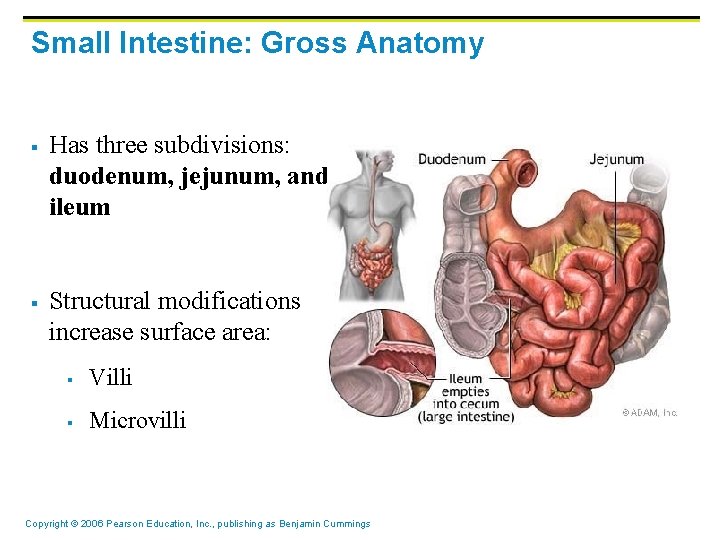
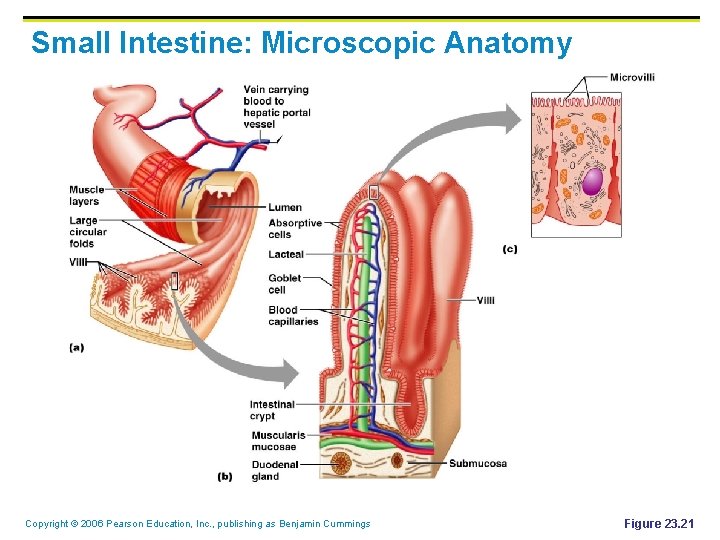
Small Intestine: Gross Anatomy § § Has three subdivisions: duodenum, jejunum, and ileum Structural modifications increase surface area: § Villi § Microvilli Copyright © 2006 Pearson Education, Inc. , publishing as Benjamin Cummings
Small Intestine: Microscopic Anatomy Copyright © 2006 Pearson Education, Inc. , publishing as Benjamin Cummings Figure 23. 21
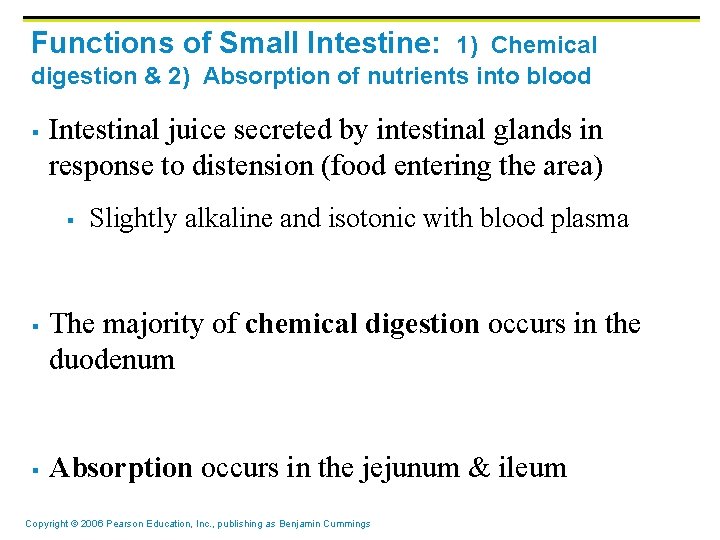
Functions of Small Intestine: 1) Chemical digestion & 2) Absorption of nutrients into blood § Intestinal juice secreted by intestinal glands in response to distension (food entering the area) § § § Slightly alkaline and isotonic with blood plasma The majority of chemical digestion occurs in the duodenum Absorption occurs in the jejunum & ileum Copyright © 2006 Pearson Education, Inc. , publishing as Benjamin Cummings
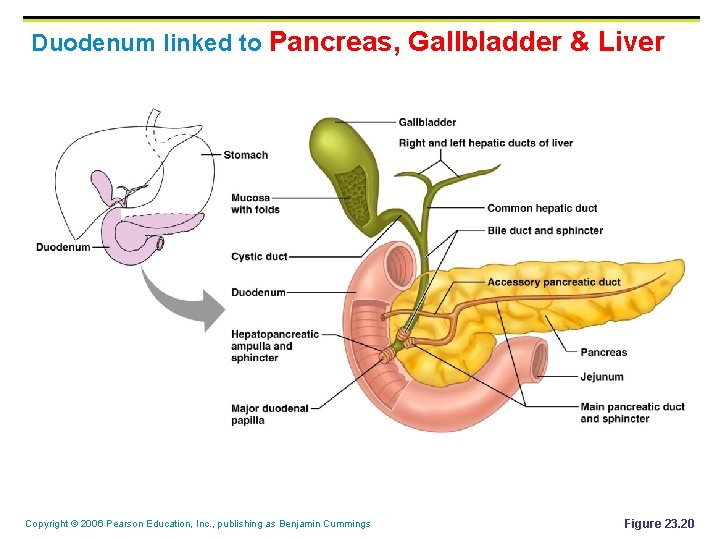
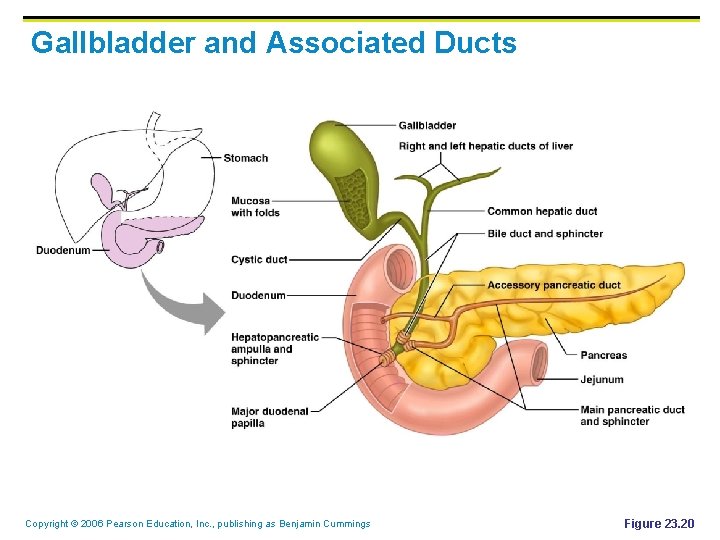
Duodenum linked to Pancreas, Gallbladder & Liver Copyright © 2006 Pearson Education, Inc. , publishing as Benjamin Cummings Figure 23. 20
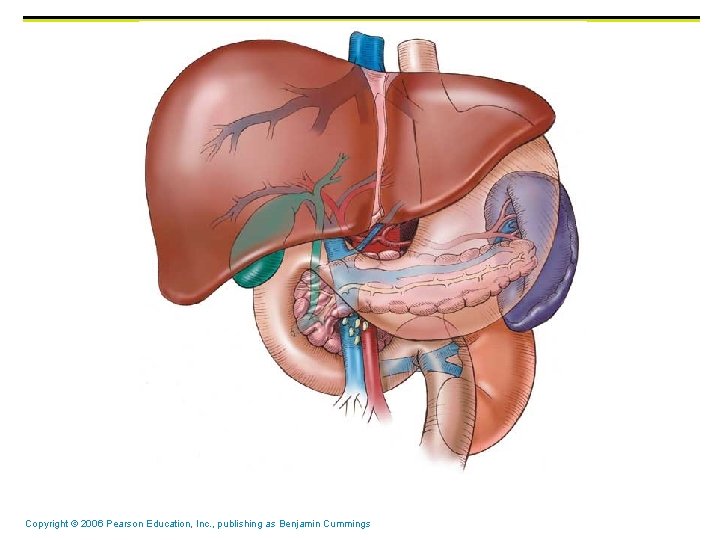
Copyright © 2006 Pearson Education, Inc. , publishing as Benjamin Cummings
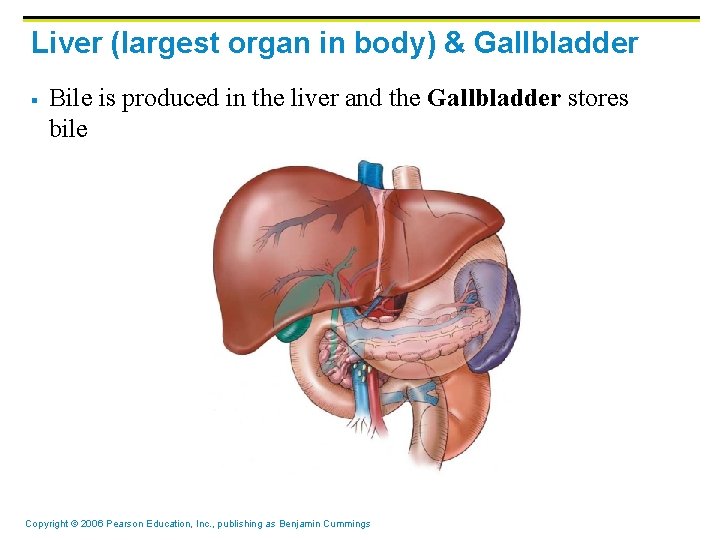
Liver (largest organ in body) & Gallbladder § Bile is produced in the liver and the Gallbladder stores bile Copyright © 2006 Pearson Education, Inc. , publishing as Benjamin Cummings
Gallbladder and Associated Ducts Copyright © 2006 Pearson Education, Inc. , publishing as Benjamin Cummings Figure 23. 20
Composition of Bile § § A yellow-green, alkaline solution containing bile salts, bile pigments, cholesterol, neutral fats, phospholipids, and electrolytes Bile salts are cholesterol derivatives that: § Emulsify fat § Facilitate fat and cholesterol absorption § Help solubilize cholesterol Copyright © 2006 Pearson Education, Inc. , publishing as Benjamin Cummings
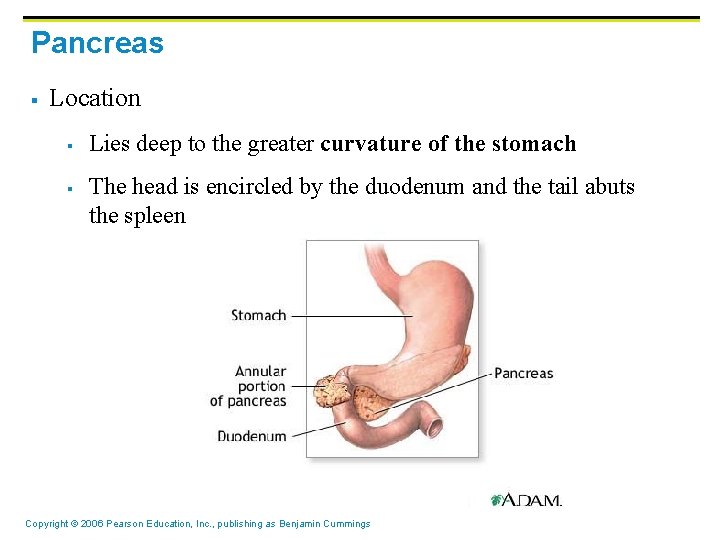
Pancreas § Location § § Lies deep to the greater curvature of the stomach The head is encircled by the duodenum and the tail abuts the spleen Copyright © 2006 Pearson Education, Inc. , publishing as Benjamin Cummings
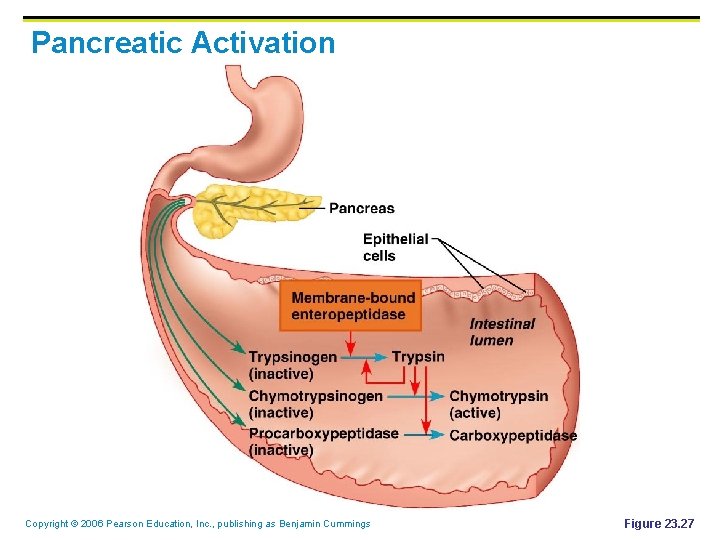
Pancreas § Exocrine function § § Secretes pancreatic juice which breaks down all categories of foodstuff The pancreas also has an endocrine function – release of insulin and glucagon (hormones) Copyright © 2006 Pearson Education, Inc. , publishing as Benjamin Cummings
Pancreatic Activation Copyright © 2006 Pearson Education, Inc. , publishing as Benjamin Cummings Figure 23. 27
Digestion in the Small Intestine § As chyme enters the duodenum: § § Carbohydrates and proteins are only partially digested No fat digestion has taken place Copyright © 2006 Pearson Education, Inc. , publishing as Benjamin Cummings
Digestion in the Small Intestine § Digestion continues in the small intestine § § § Chyme is released slowly into the duodenum Secretions from the Gallbladder and Pancreas aid in the breakdown of chyme (Duodenum) Virtually all nutrient absorption takes place in the small intestine Copyright © 2006 Pearson Education, Inc. , publishing as Benjamin Cummings
Motility in the Small Intestine § After nutrients have been absorbed: § § Peristalsis begins with each wave starting distal to the previous Meal remnants, bacteria, mucosal cells, and debris are moved into the large intestine Copyright © 2006 Pearson Education, Inc. , publishing as Benjamin Cummings
Large Intestine § Has three unique features: 1. three bands of smooth muscle 2. pocketlike sacs 3. fat-filled pouches Copyright © 2006 Pearson Education, Inc. , publishing as Benjamin Cummings
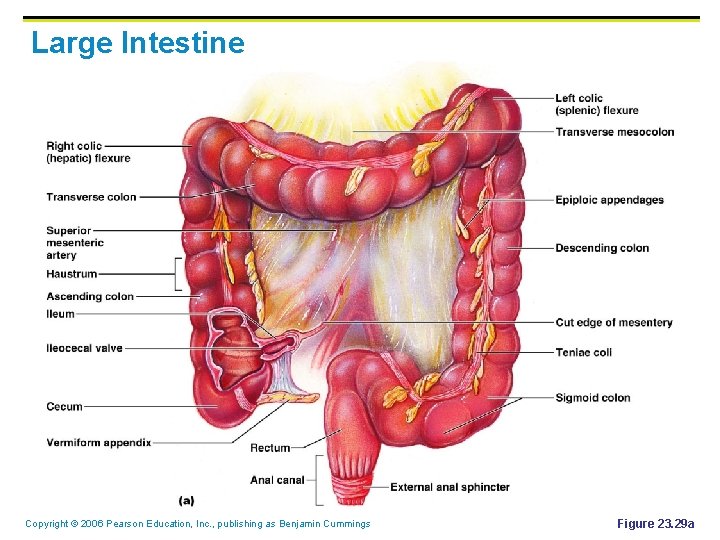
Large Intestine § § Is subdivided into the cecum, appendix, colon, rectum, and anal canal The saclike cecum: § Lies below the ileocecal valve § Contains a wormlike vermiform appendix Copyright © 2006 Pearson Education, Inc. , publishing as Benjamin Cummings
Large Intestine Copyright © 2006 Pearson Education, Inc. , publishing as Benjamin Cummings Figure 23. 29 a
Valves and Sphincters of the Rectum and Anus § Three valves of the rectum stop feces from being passed with gas § The anus has two sphincters: § § § Internal anal sphincter composed of smooth muscle External anal sphincter composed of skeletal muscle These sphincters are closed except during defecation Copyright © 2006 Pearson Education, Inc. , publishing as Benjamin Cummings
Bacterial Flora § The bacterial flora of the large intestine consist of: § § § Bacteria surviving the small intestine that enter the cecum and Those entering via the anus These bacteria: § Colonize the colon § Ferment indigestible carbohydrates § Release irritating acids and gases (flatus) § Synthesize B complex vitamins and vitamin K Copyright © 2006 Pearson Education, Inc. , publishing as Benjamin Cummings
Functions of the Large Intestine § no further digestion takes place 1. Vitamins, water, and electrolytes are reabsorbed 2. Its major function is propulsion of fecal material toward the anus § Though essential for comfort, the colon is not essential for life Copyright © 2006 Pearson Education, Inc. , publishing as Benjamin Cummings
Defecation § § Distension of rectal walls caused by feces: § Stimulates contraction of the rectal walls § Relaxes the internal anal sphincter Voluntary signals stimulate relaxation of the external anal sphincter and defecation occurs Copyright © 2006 Pearson Education, Inc. , publishing as Benjamin Cummings
Developmental Aspects § § Digestive system has few problems until the onset of old age During old age the GI tract activity declines, absorption is less efficient, and peristalsis is slowed Copyright © 2006 Pearson Education, Inc. , publishing as Benjamin Cummings
Cancer § § Stomach and colon cancers rarely have early signs or symptoms Metastasized colon cancers frequently cause secondary liver cancer Copyright © 2006 Pearson Education, Inc. , publishing as Benjamin Cummings
Cancer § § § Colon cancer is the 2 nd largest cause of cancer deaths in males (lung cancer is 1 st) Forms from benign mucosal tumors called polyps whose formation increases with age Regular colon examination should be done for all those over 50 Copyright © 2006 Pearson Education, Inc. , publishing as Benjamin Cummings
Copyright © 2006 Pearson Education, Inc. , publishing as Benjamin Cummings
§ http: //www. mic. stacken. kth. se/Diseases/C 06. html Copyright © 2006 Pearson Education, Inc. , publishing as Benjamin Cummings