
What is the frogs rectus abdominus muscle Frog
What is the frog's rectus abdominus muscle
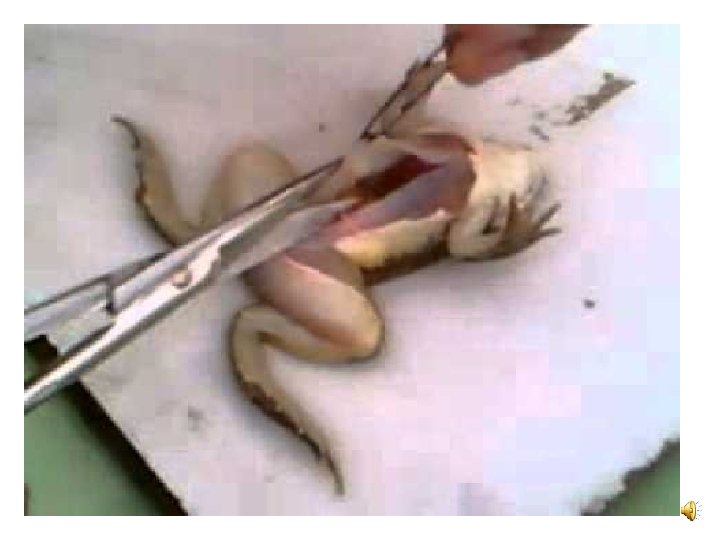


Frog ringer Apparatus Solution Na. Cl: Isotenicity Physiogragh Ca. Cl 2: H 2 O Contraction of muscle Glucose: Energy valve 25 ml Rectus abdominus Valve Oxygen supply (Wash) Na. HCO 3: PH
In vitro Experiments 1) Experimental conditions: An isolated organ or muscle should be bathed in a suitable media that is resemble to the normal condition in the body regarding (p. H, osmolarity, temperature). Therefore, tissue is bathed in solution containing: . 1 - Electrolytes 2 - Nutrients. . 3 - Adjusted Physiological p. H. 4 - Constant temperature 5 - Aeration.

: 2) Physiological Salt Solution • According to different tissue to be used, there is a different physiological solution prepared. • But all or most of them contain the following ingredients at different concentrations: 1 - Nacl → to adjust the isotonicity. 2 - Glucose → nutrient. 3 - Ca+2, K+, sometimes Mg+2 as CL salt → to maintain normal muscle contraction.
3 - Sodium bicarbonate → to adjust p. H similar to that of blood. The commonly used physiological solutions are Tyrode’s, Krebs and Frog ringer solution. N. B. Frog can live at room temperature (25ºC) e. g. frog rectus abdominis (Cold blood).

Drugs used A) Agonist or stimulants of Nm receptors Ø Direct acting agonists: cause contraction ACh which acts by direct interaction with Nm receptors Ø Indirect acting agonists: : cause contraction Physiostigmine Neostigmine They are generally cholinesterase inhibitors and are divided into two major classes B) Antagonists or neuromuscular blocker Ø Competitive (Non-depolarizing) blocker D-tubocurarine, gallamine (flaxidel) : cause relaxation Depolarizing blockers Succenylcholine (Suxamethonium) Dexamethonium Cause initial contraction followed by paralysis 8
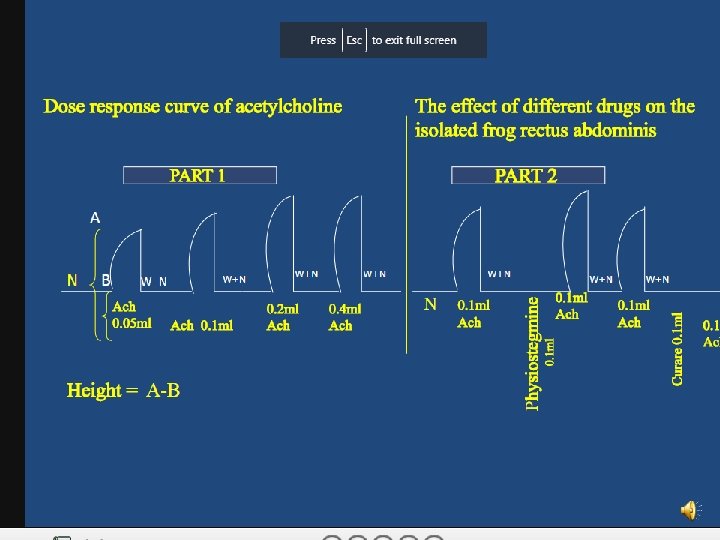

• neostigmine) reverse the action of competitive neuromuscular blockers.
- Slides: 10