
What is the ECDS how will it impact
- Slides: 15
What is the ECDS & how will it impact on Asthma Giles Armstrong, Consultant in Paediatric Emergency Medicine, Royal London Hospital Supported by and delivering for: London’s NHS organisations include all of London’s CCGs, NHS England Health Education
01 What is the ECDS? Transforming London’s health and care together 2
Emergency Care Data Set = ECDS • The Emergency Care Data Set is the new national data set for urgent & emergency care. • Original Timescale: • Implemented in Type 1 & 2 units (Emergency Departments) by Oct 2017 • Implemented in Type 3 & 4 units (UCC & WIC) by Oct 2018 • No current timescale for introduction in Ambulatory Care but under consideration • ECDS includes: • Reason for attendance • Chief complaint • Acuity • Diagnosis 3
02 Why is ECDS needed? Transforming London’s health and care together 4
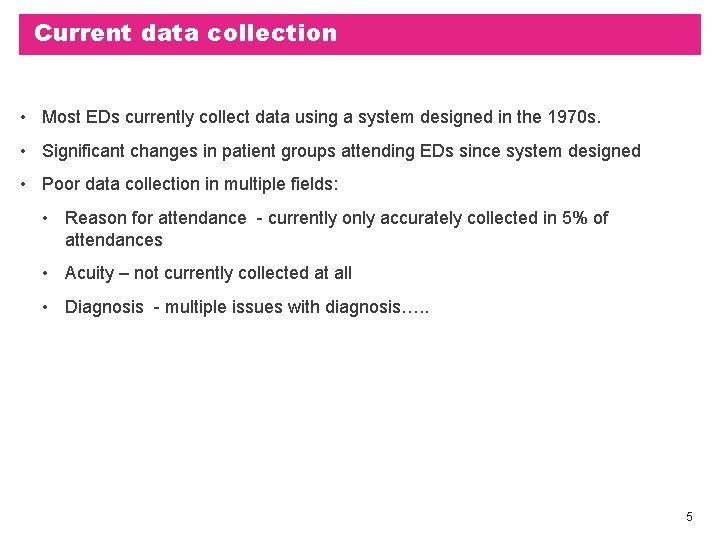
Current data collection • Most EDs currently collect data using a system designed in the 1970 s. • Significant changes in patient groups attending EDs since system designed • Poor data collection in multiple fields: • Reason for attendance - currently only accurately collected in 5% of attendances • Acuity – not currently collected at all • Diagnosis - multiple issues with diagnosis…. . 5
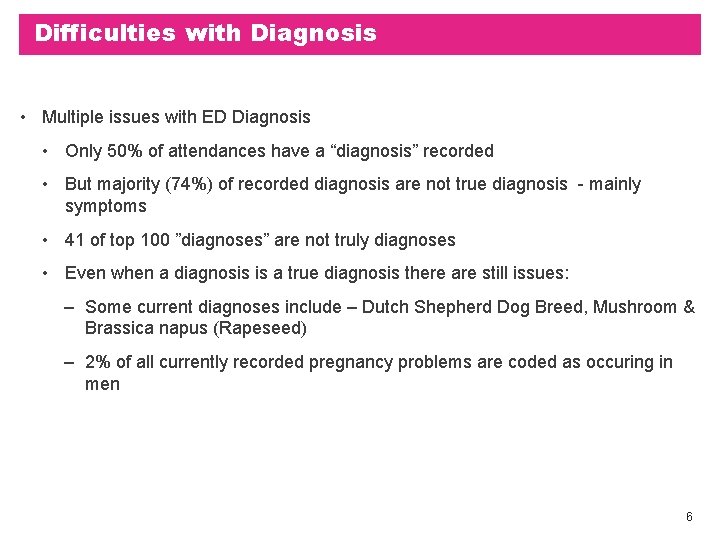
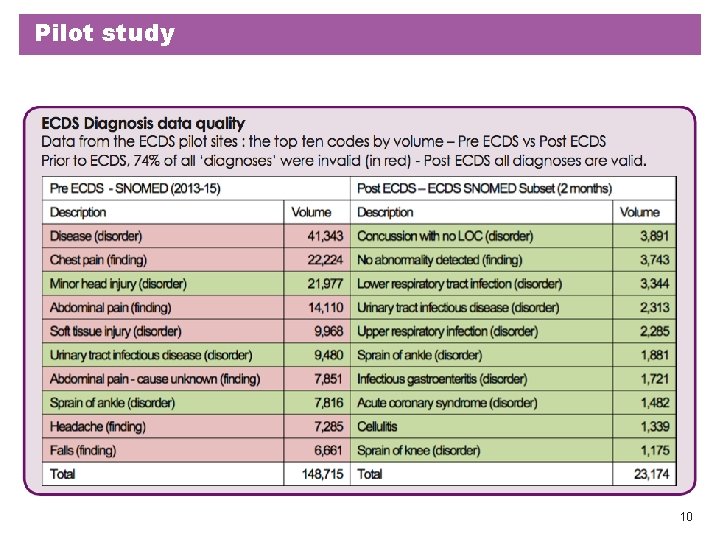
Difficulties with Diagnosis • Multiple issues with ED Diagnosis • Only 50% of attendances have a “diagnosis” recorded • But majority (74%) of recorded diagnosis are not true diagnosis - mainly symptoms • 41 of top 100 ”diagnoses” are not truly diagnoses • Even when a diagnosis is a true diagnosis there are still issues: – Some current diagnoses include – Dutch Shepherd Dog Breed, Mushroom & Brassica napus (Rapeseed) – 2% of all currently recorded pregnancy problems are coded as occuring in men 6
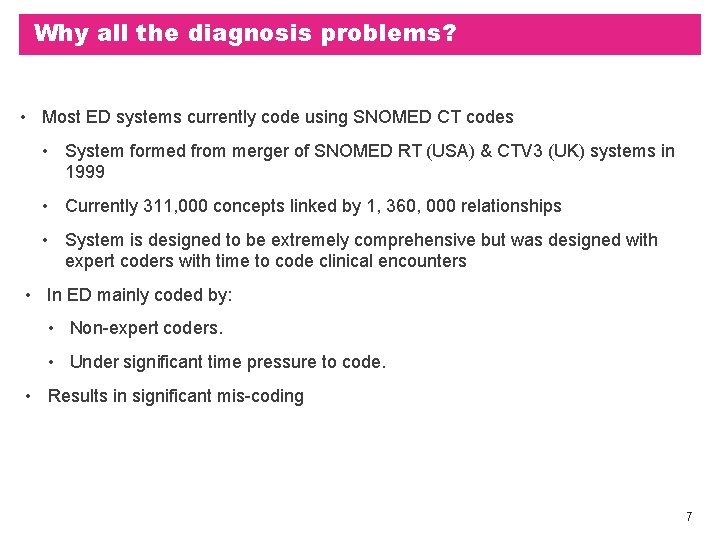
Why all the diagnosis problems? • Most ED systems currently code using SNOMED CT codes • System formed from merger of SNOMED RT (USA) & CTV 3 (UK) systems in 1999 • Currently 311, 000 concepts linked by 1, 360, 000 relationships • System is designed to be extremely comprehensive but was designed with expert coders with time to code clinical encounters • In ED mainly coded by: • Non-expert coders. • Under significant time pressure to code. • Results in significant mis-coding 7
03 How does ECDS improve things? Transforming London’s health and care together 8
Diagnosis under the ECDS • ECDS limits diagnosis to only approximately 750 possible diagnosis • All are true diagnosis • Can be qualified as suspected or confirmed • Devised through work with RCEM 9
Pilot study 10
04 What are the benefits of the ECDS for Asthma? Transforming London’s health and care together 11
Intended benefits of ECDS (in Asthma) • Currently poor quality in coding acute asthma episodes in patients attending ED • One local study found over 60 different SNOMED CT diagnostic codes used to code acute exacerbations of asthma • This leads to poor quality data for commissioners to: • Plan local services • Assess performance of local departments against national standards • Acute wheezy episodes in children can now only be diagnosed as • Asthma • Viral Induced Wheeze • Bronchiolitis 12
Looking forward • Diagnosis of asthma should improve for all ED attendances • Should allow for better planning of local asthma provision • Should allow for better assessment of any system interventions for asthma • Could allow for prospective study of presenting complaint -> diagnosis 13
05 Questions? Transforming London’s health and care together 14
Some issues with implementation of ECDS • Still work in progress • Some specialist diagnoses missing from ECDS • Particularly an issue for paediatrics e. g Kawasaki’s missing from first version • Does rely on how well local IT system search function interfaces with ECDS codes e. g. Kawasaki’s officially listed as acute febrile mucocutaneous lymph node syndrome (disorder) • Can feedback to local ECDS leads and changes can be made. 15