
What is the distinguishing factor between Anatomy and
What is the distinguishing factor between Anatomy and Physiology? § Anatomy: morphology of Structures § Forms and arrangements § Physiology: Describes function of Structures § What body parts do and how they do it. § Ex: 1. Heart… 2. stomach… 3. mandible…
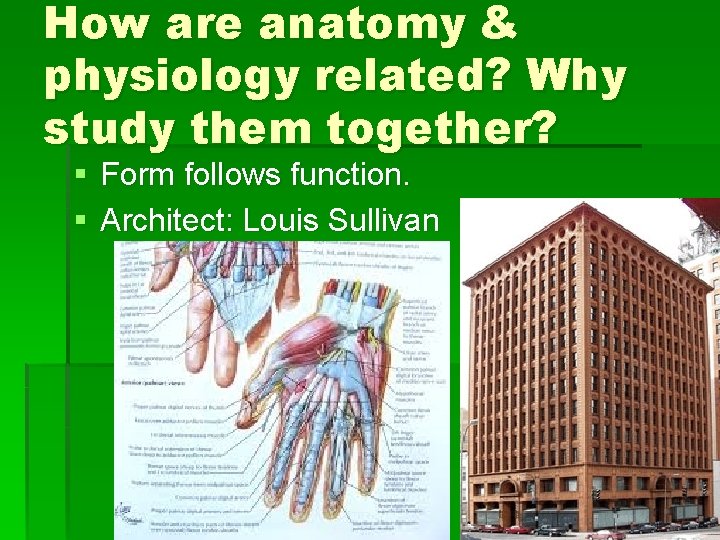
How are anatomy & physiology related? Why study them together? § Form follows function. § Architect: Louis Sullivan

Requirements of Life § Water - required for metabolism, transport, regulation § Food - substances that provide nutrients & energy § Oxygen - used in the release of energy § Heat - a form of energy which helps control metabolic reactions § Pressure - application of force on an object
Homeostatic Mechanisms work to control physiological maintenance. § Homeostatic mechanisms: function to maintain stable environment § Examples § p. H § Oxygen levels § Blood pressure § Temperature § glucose
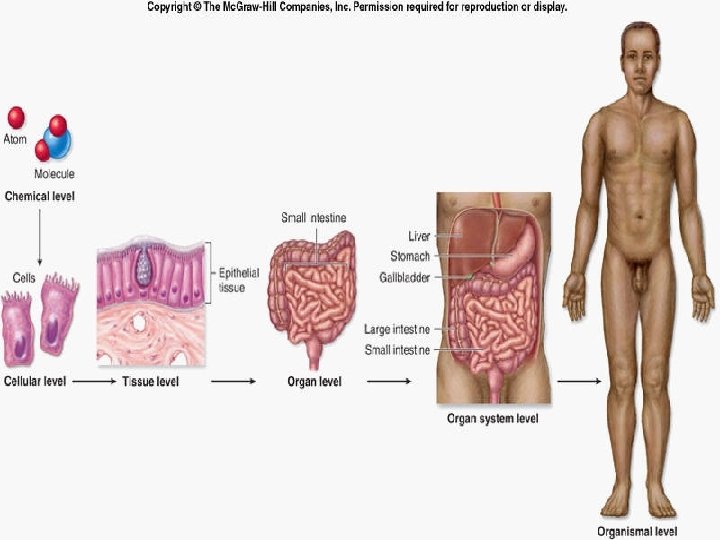
Structural Levels of Organization What is the Smallest unit of all matter? 1. 2. 3. 4. 5. 6. 7. 8. 9. Cells Organs Tissues Macromolecules Atoms Molecule Organ system organism organelles
Levels of Organization § § Atoms Molecules Organelles Cells Tissues Organ System Organism (Body) Define: § Cell § Tissue § Organ System
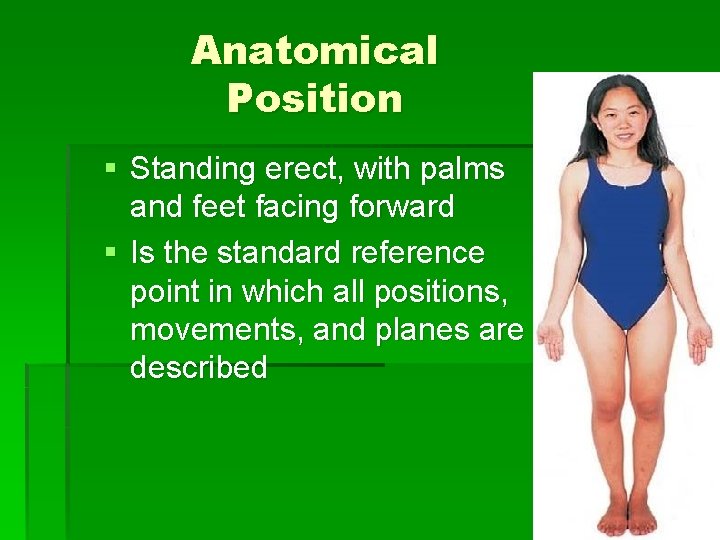
Anatomical Position § Standing erect, with palms and feet facing forward § Is the standard reference point in which all positions, movements, and planes are described
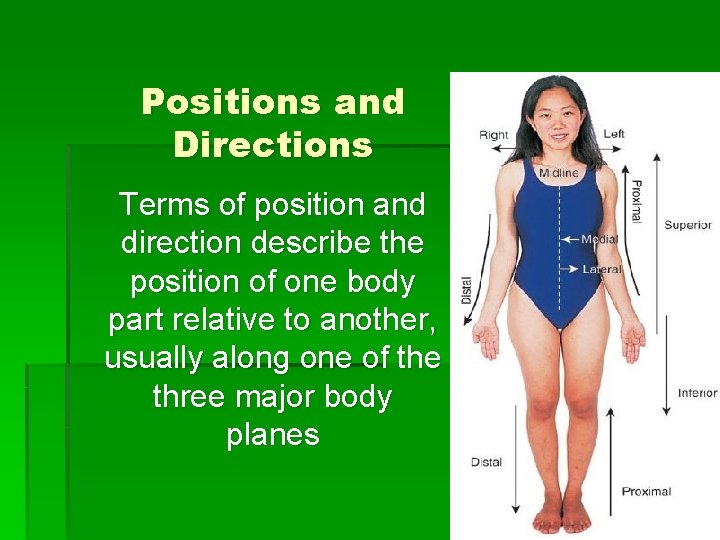
Positions and Directions Terms of position and direction describe the position of one body part relative to another, usually along one of the three major body planes
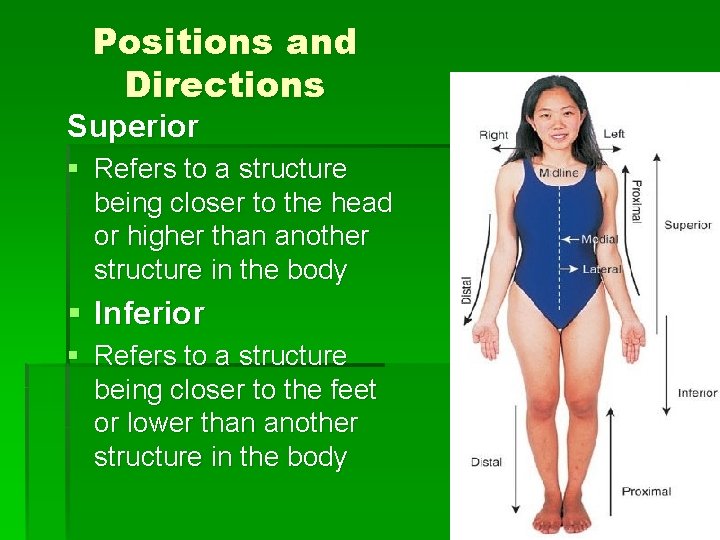
Positions and Directions Superior § Refers to a structure being closer to the head or higher than another structure in the body § Inferior § Refers to a structure being closer to the feet or lower than another structure in the body
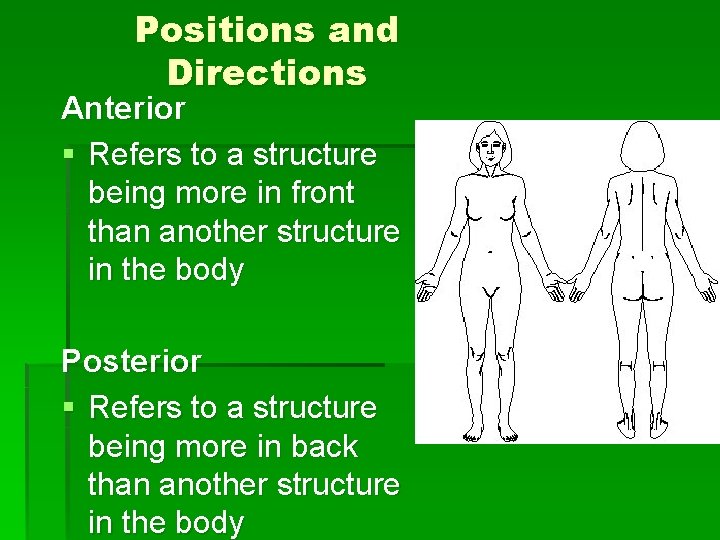
Positions and Directions Anterior § Refers to a structure being more in front than another structure in the body Posterior § Refers to a structure being more in back than another structure in the body
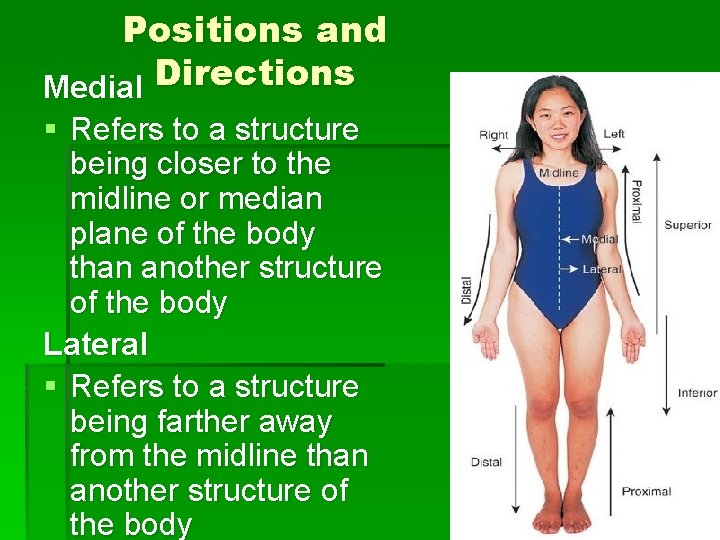
Positions and Medial Directions § Refers to a structure being closer to the midline or median plane of the body than another structure of the body Lateral § Refers to a structure being farther away from the midline than another structure of the body
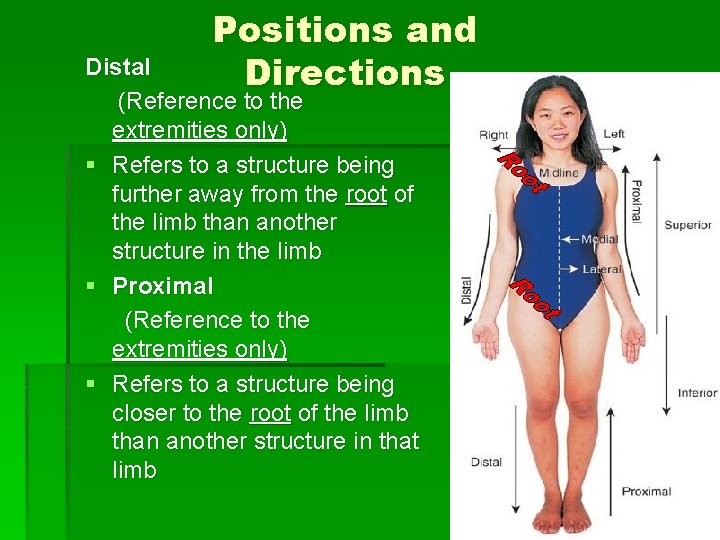
Positions and Directions Distal (Reference to the extremities only) § Refers to a structure being further away from the root of the limb than another structure in the limb § Proximal (Reference to the extremities only) § Refers to a structure being closer to the root of the limb than another structure in that limb
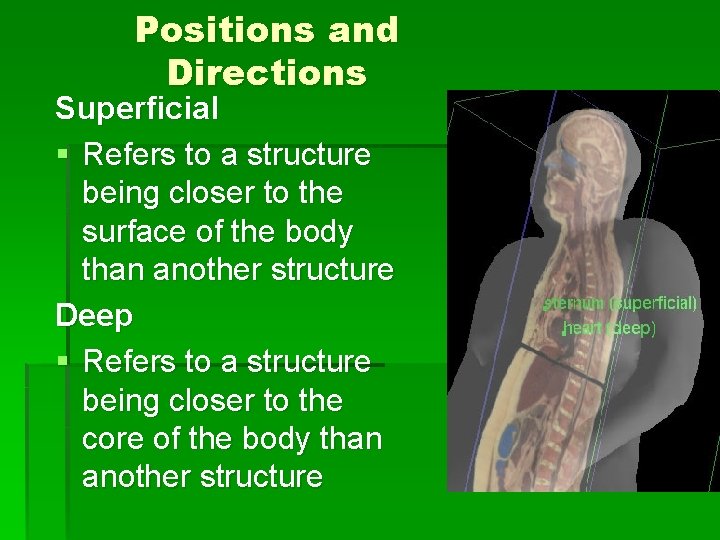
Positions and Directions Superficial § Refers to a structure being closer to the surface of the body than another structure Deep § Refers to a structure being closer to the core of the body than another structure
Organ Systems § § § Integumentary Skeletal Muscular Nervous Endocrine § Cardiovascular § Lymphatic/Immune § § Digestive Respiratory Urinary Reproductive
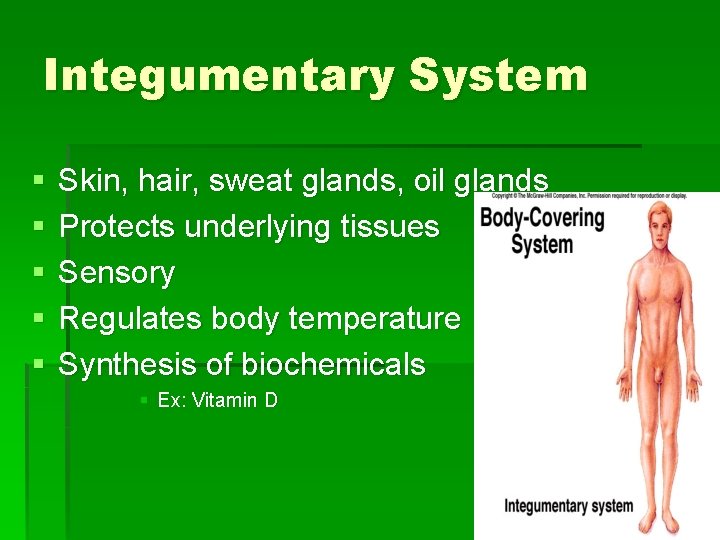
Integumentary System § § § Skin, hair, sweat glands, oil glands Protects underlying tissues Sensory Regulates body temperature Synthesis of biochemicals § Ex: Vitamin D
Skeletal System § § § Bones, ligaments, cartilage, joints Body framework Protection of vital organs Attachment for muscles Blood cell production Storage of inorganic salts (calcium)
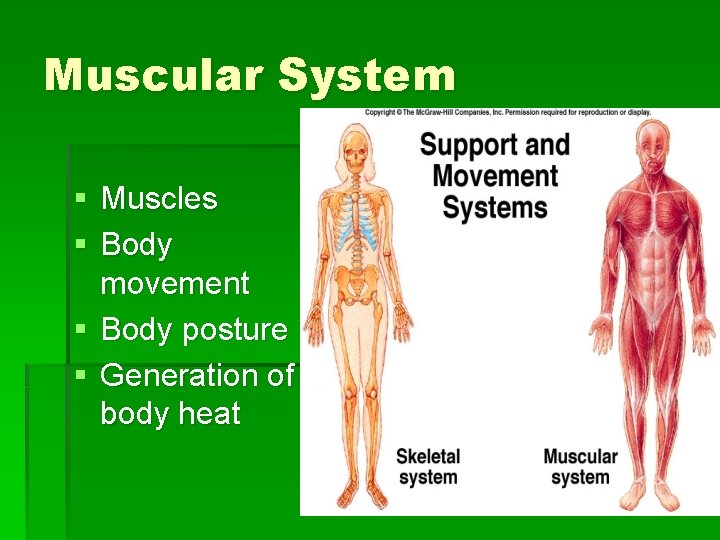
Muscular System § Muscles § Body movement § Body posture § Generation of body heat
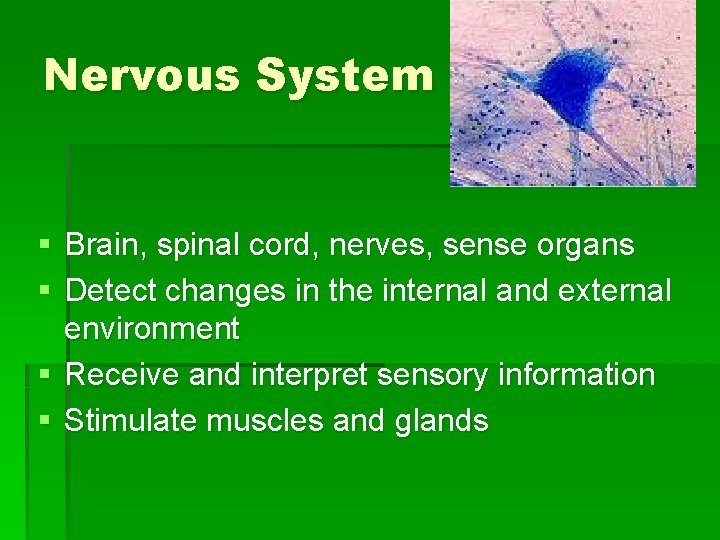
Nervous System § Brain, spinal cord, nerves, sense organs § Detect changes in the internal and external environment § Receive and interpret sensory information § Stimulate muscles and glands
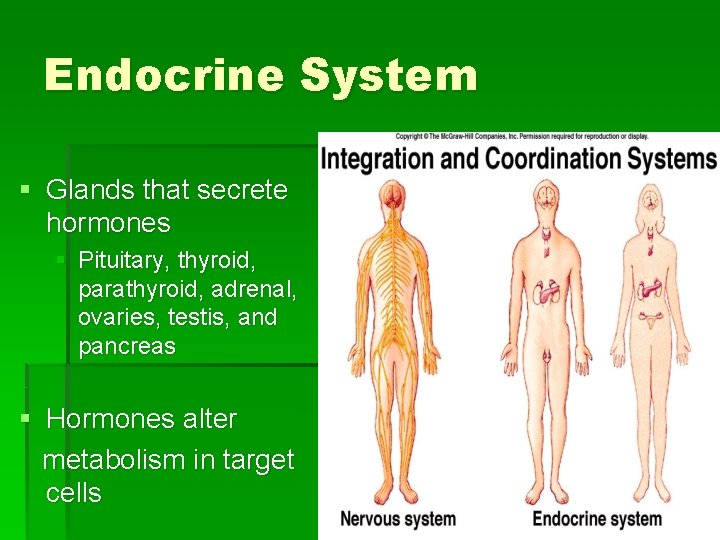
Endocrine System § Glands that secrete hormones § Pituitary, thyroid, parathyroid, adrenal, ovaries, testis, and pancreas § Hormones alter metabolism in target cells
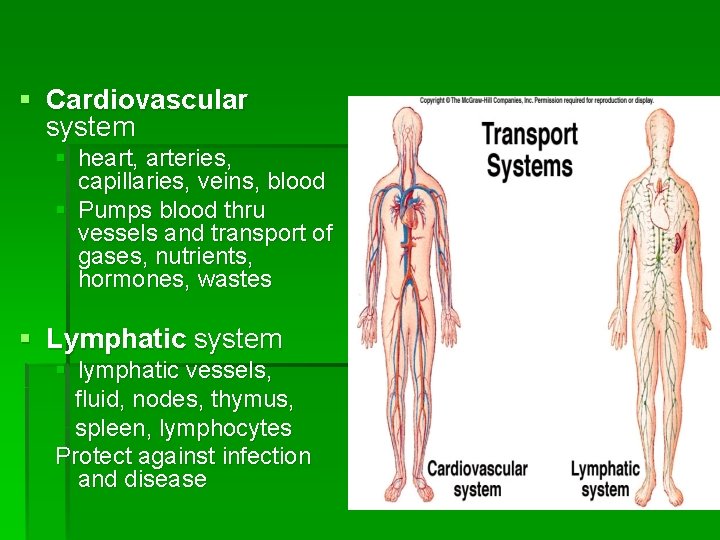
§ Cardiovascular system § heart, arteries, capillaries, veins, blood § Pumps blood thru vessels and transport of gases, nutrients, hormones, wastes § Lymphatic system § lymphatic vessels, fluid, nodes, thymus, spleen, lymphocytes Protect against infection and disease
Digestive System § Mouth, tongue, teeth, salivary glands, pharynx, esophagus, stomach, liver, gallbladder, pancreas, small and large intestine § Ingestion of food § Breakdown of food molecules § Absorption of nutrients http: //kidshealth. org/misc/movie/bodybasics/digestive_system. html
Respiratory System § Nasal cavity, pharynx, larynx, trachea, bronchi, lungs § Movement and exchange of respiratory gases, oxygen and carbon dioxide between air and blood
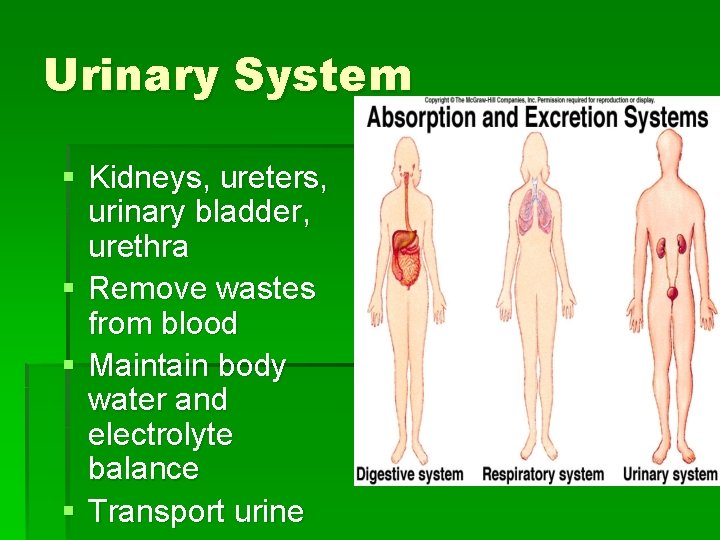
Urinary System § Kidneys, ureters, urinary bladder, urethra § Remove wastes from blood § Maintain body water and electrolyte balance § Transport urine
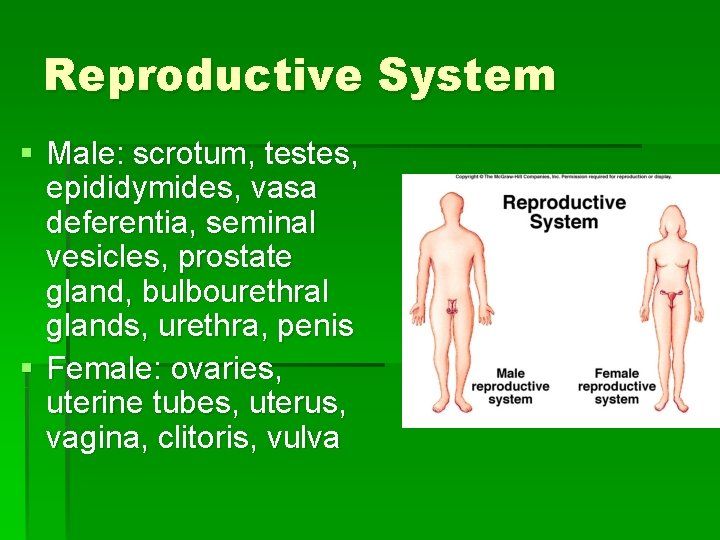
Reproductive System § Male: scrotum, testes, epididymides, vasa deferentia, seminal vesicles, prostate gland, bulbourethral glands, urethra, penis § Female: ovaries, uterine tubes, uterus, vagina, clitoris, vulva
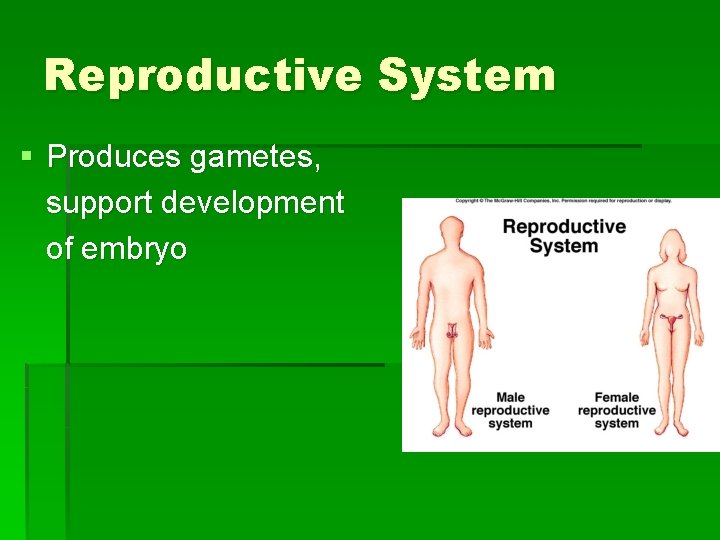
Reproductive System § Produces gametes, support development of embryo
Practice! § Cartilage
Practice! § Blood
Practice! § Controls water balance

Practice! §Eyes
Practice! § Body Heat

Practice! § Sweat Glands
Practice! § Blood Cell Production

Practice! § Trachea
Practice! § Human Growth Hormone

Practice! § Gallbladder

Practice! § Spleen
Practice! § Pancreas

Practice! § Attachment for Muscles
Practice! § Absorption of Nutrients

Practice! § Testes
Practice! § Urethra
- Slides: 42