
What is the difference between Rocks and Minerals
What is the difference between Rocks and Minerals? • A rock is any group of minerals bound together.
ROCKS • IGNEOUS ROCKS • SEDIMENTARY ROCKS • METAMORPHIC ROCKS
Intro to Minerals and Rocks • https: //www. youtube. com/watch? v=XEg_Xu. CMD 2 s
ROCKS ARE CLASSIFIED BY THEIR COMPOSITION AND TEXTURE: • Composition - is the combination of elements or compounds that make up a rock. • Composition is determined by its minerals. Different minerals form under different conditions.
ROCKS ARE CLASSIFIED BY THEIR COMPOSITION AND TEXTURE: • Texture – the size, shape and position of the grains that make up a rock • Each grain in the rock is made from a mineral. • The grains in a rock can be different colours, shapes and sizes.
Porous Texture • Small holes or spaces between the grains in rocks are called PORES • If a rock contains these small holes it is said to be POROUS. • If the holes are connected, then the rock is PERMEABLE and fluids can flow through the rock.
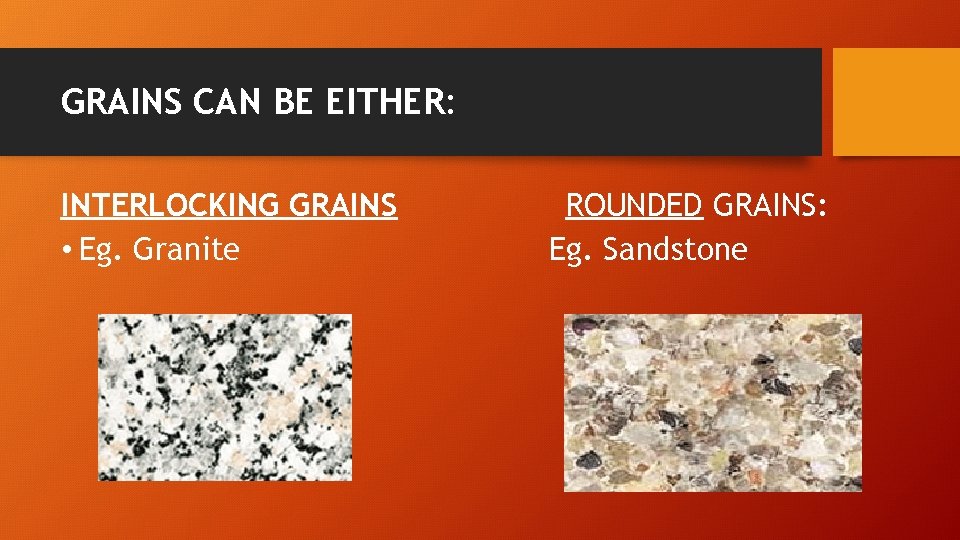
GRAINS CAN BE EITHER: INTERLOCKING GRAINS • Eg. Granite ROUNDED GRAINS: Eg. Sandstone
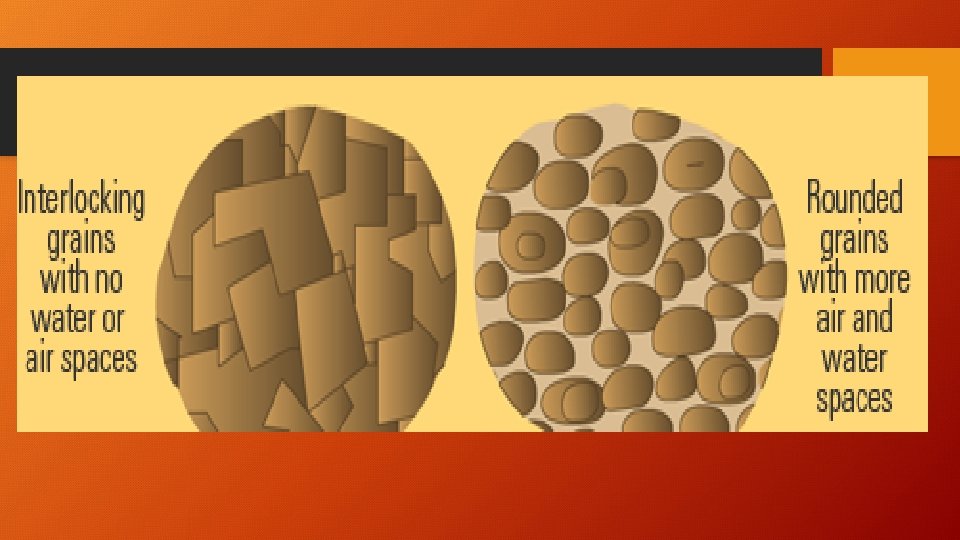
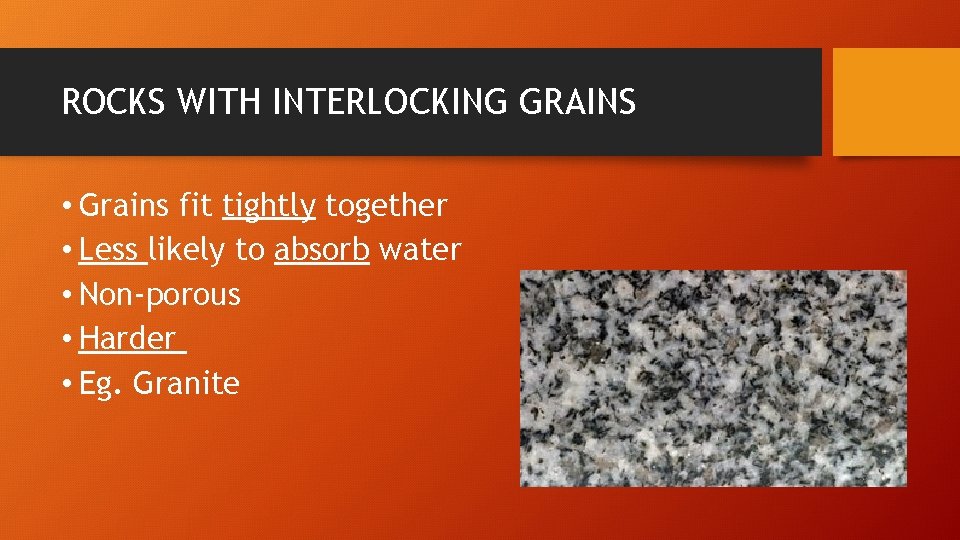
ROCKS WITH INTERLOCKING GRAINS • Grains fit tightly together • Less likely to absorb water • Non-porous • Harder • Eg. Granite
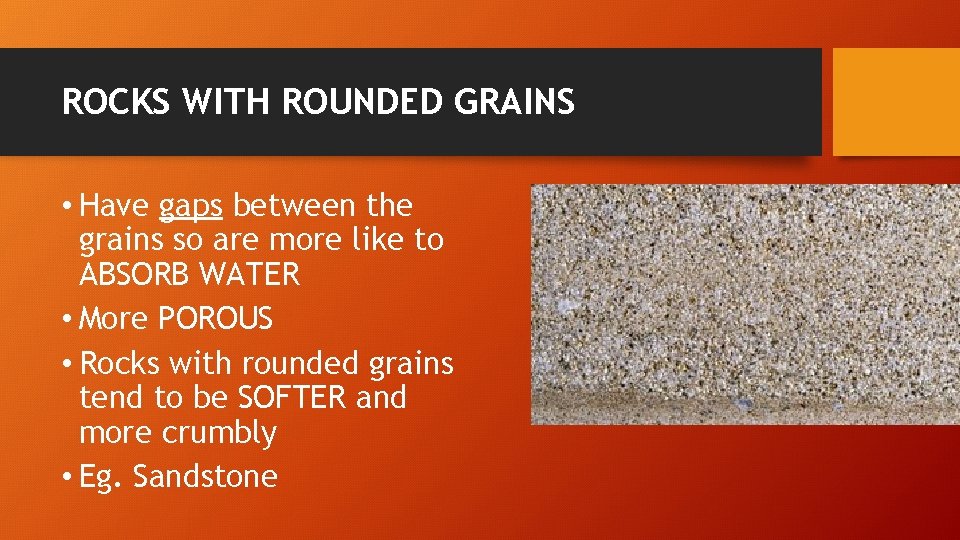
ROCKS WITH ROUNDED GRAINS • Have gaps between the grains so are more like to ABSORB WATER • More POROUS • Rocks with rounded grains tend to be SOFTER and more crumbly • Eg. Sandstone
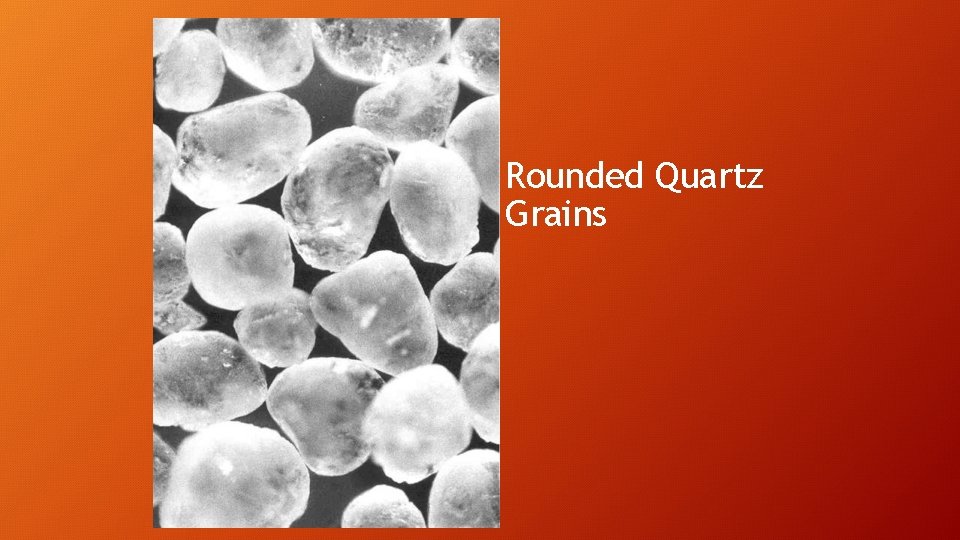
Rounded Quartz Grains

Igneous Rocks
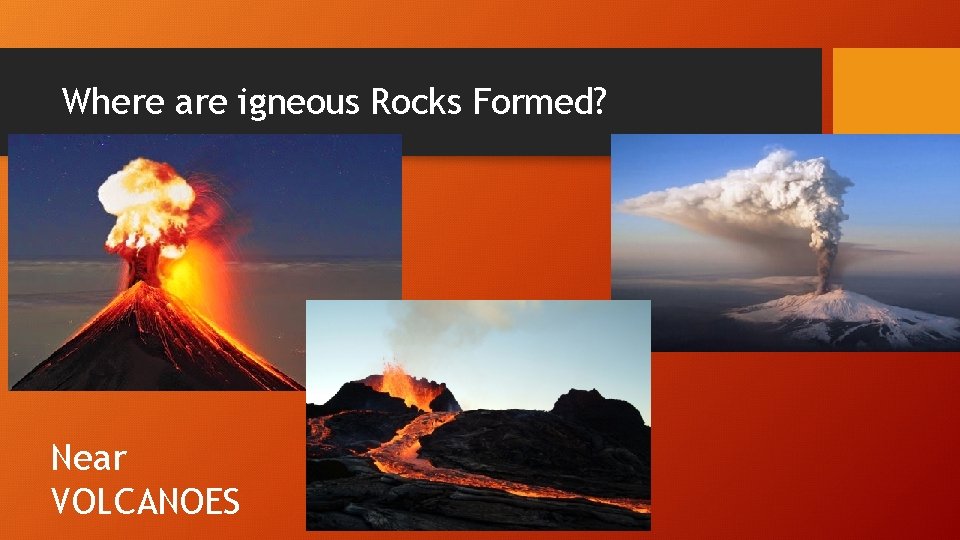
Igneous means “fireey”. Igneous rocks are formed by the COOLING and thus CRYSTALLIZATION of MOLTEN ROCK. Molten rock is often called magma or lava. The difference between magma and lava is…. .
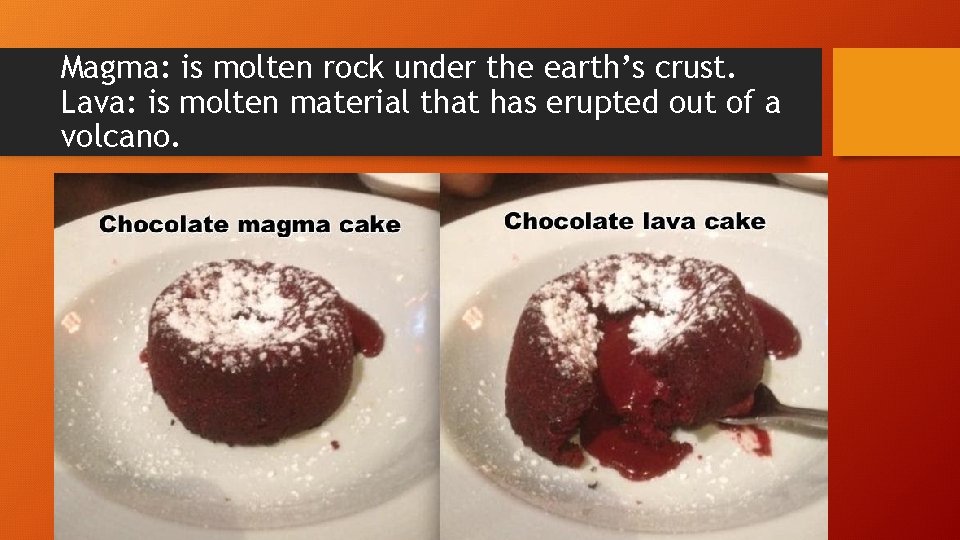
Magma: is molten rock under the earth’s crust. Lava: is molten material that has erupted out of a volcano.
TWO TYPES OF INGNEOUS ROCKS • Igneous rocks are formed from lava or magma. • MAGMA is molten rock that is UNDERGROUND • LAVA is molten rock that erupts out on the SURFACE •
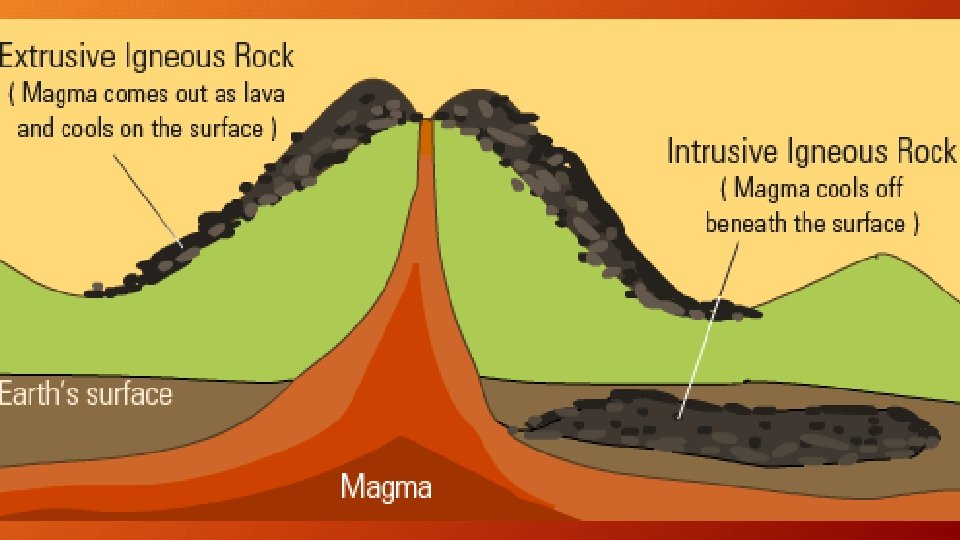
INTRUSIVE OR PLUTONIC IGNEOUS ROCKS: • Form UNDERGROUND • Have DISTINCTIVE mineral grains • very HARD. • Crystals are LARGER • . • Eg Granite.
EXTRUSIVE OR VOLCANIC IGNEOUS ROCKS • Form when lava cools (on the surface) • • Generally LACK distinctive mineral grains. • • Crystals are SMALLER • Eg. Pumice, obsidian.
How are Igneous Rocks Classified? We classify igneous rocks based on two characteristics: Composition and Texture
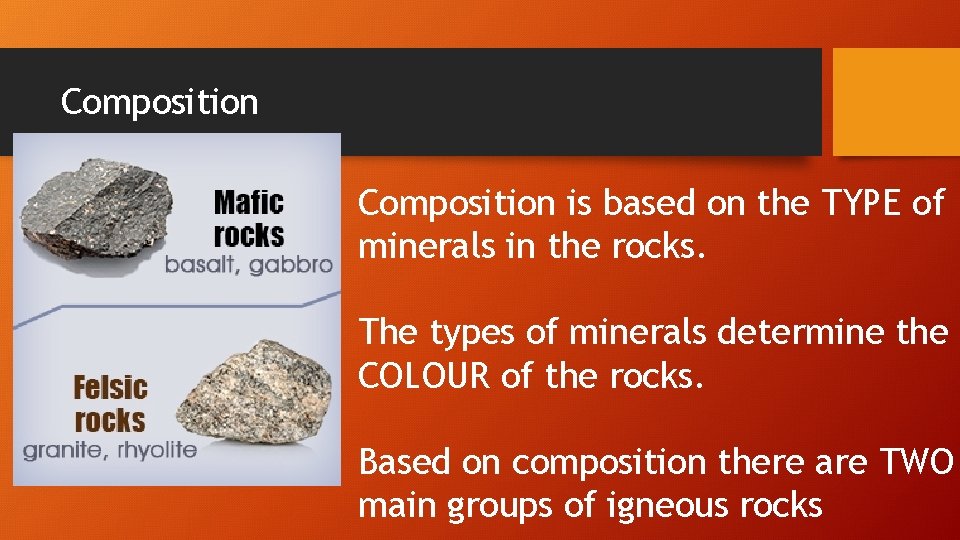
Composition is based on the TYPE of minerals in the rocks. The types of minerals determine the COLOUR of the rocks. Based on composition there are TWO main groups of igneous rocks
TWO MAIN GROUPS OF IGNEOUS ROCKS • MAFIC ROCKS – contain more MAgesium and iron • (MAgesium + FERRIC – refers to iron = MAFIC) • Magnesium and iron are dark minerals so Mafic Igneous Rocks are usually DARK in colour. • FELSIC ROCKS - contain more FELDSPAR and SILICON • These minerals are LIGHTER in colour
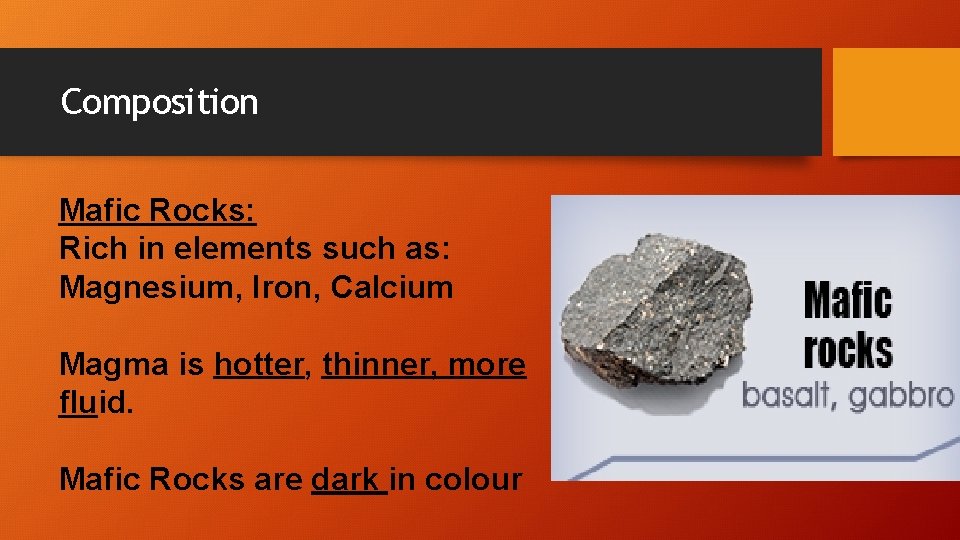
Composition Mafic Rocks: Rich in elements such as: Magnesium, Iron, Calcium Magma is hotter, thinner, more fluid. Mafic Rocks are dark in colour
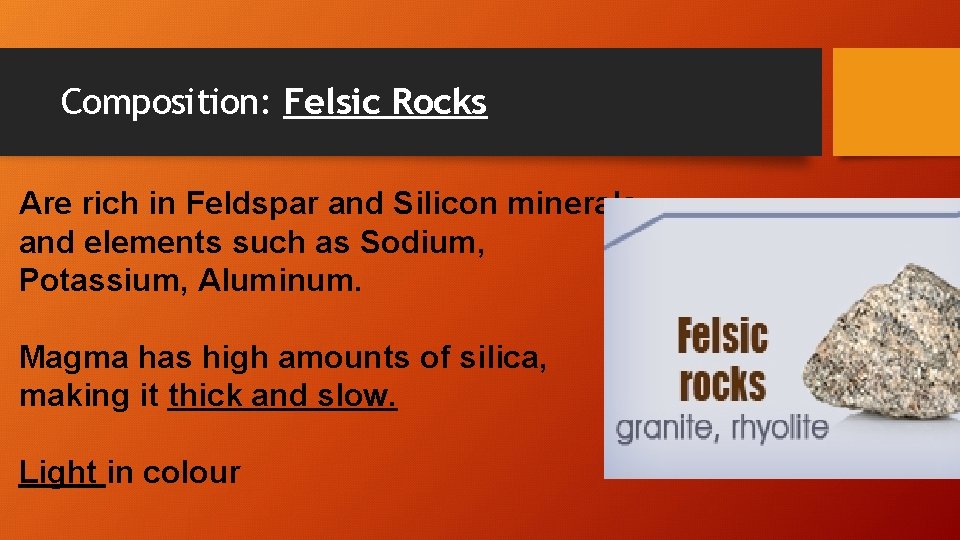
Composition: Felsic Rocks Are rich in Feldspar and Silicon minerals and elements such as Sodium, Potassium, Aluminum. Magma has high amounts of silica, making it thick and slow. Light in colour
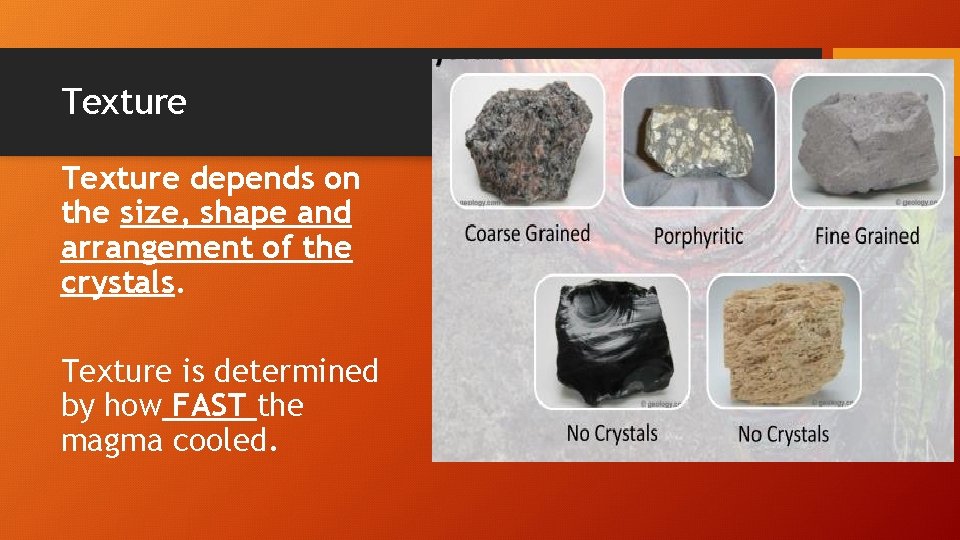
Texture depends on the size, shape and arrangement of the crystals. Texture is determined by how FAST the magma cooled.
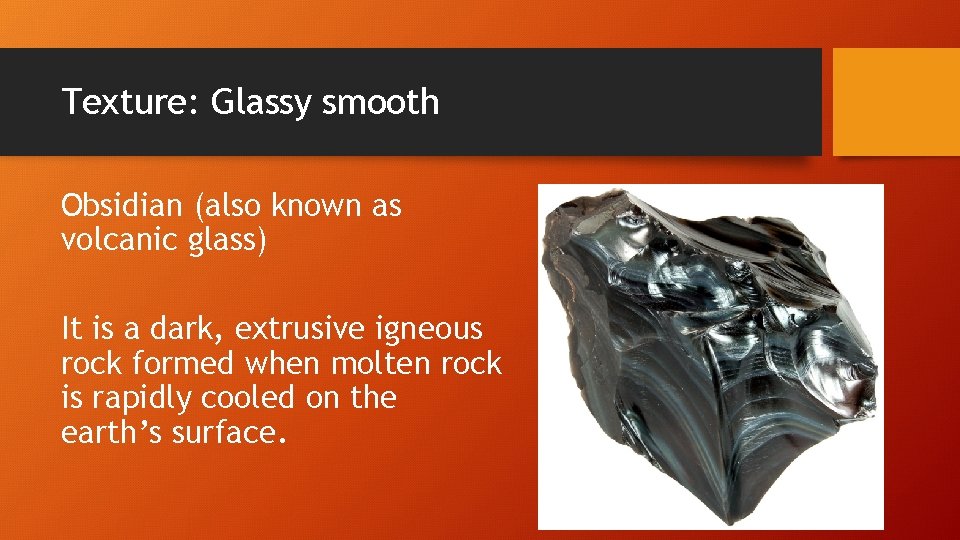
Texture: Glassy smooth Obsidian (also known as volcanic glass) It is a dark, extrusive igneous rock formed when molten rock is rapidly cooled on the earth’s surface.
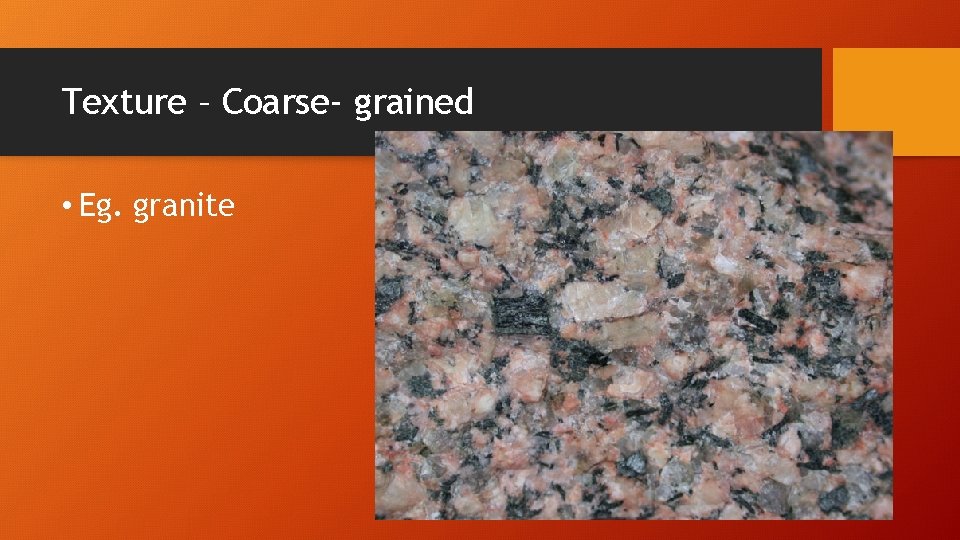
Texture – Coarse- grained • Eg. granite
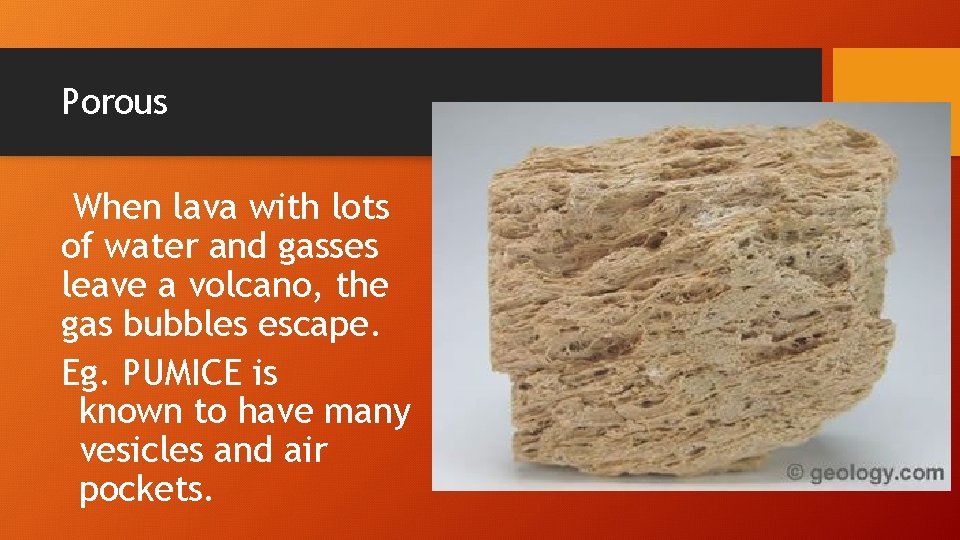
Porous When lava with lots of water and gasses leave a volcano, the gas bubbles escape. Eg. PUMICE is known to have many vesicles and air pockets.
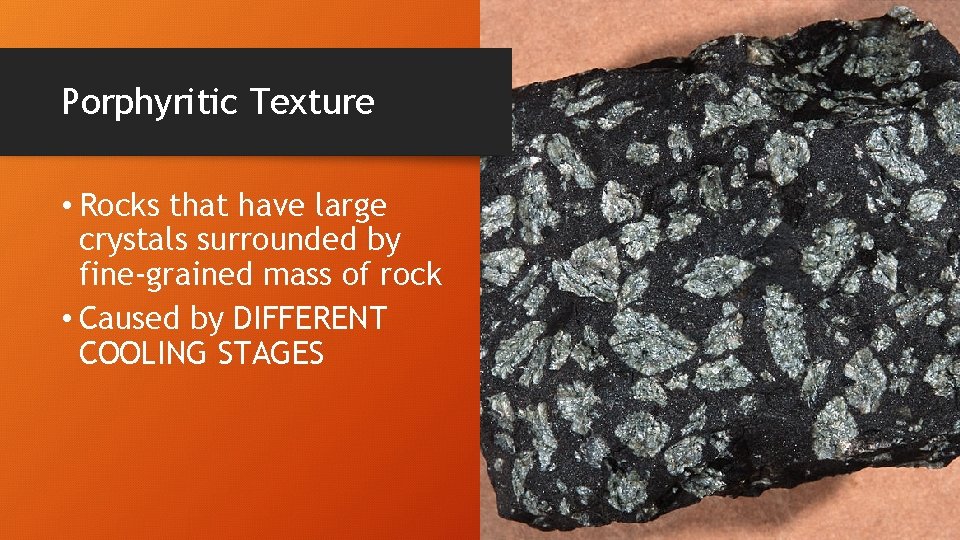
Porphyritic Texture • Rocks that have large crystals surrounded by fine-grained mass of rock • Caused by DIFFERENT COOLING STAGES
Crystal Size • Crystal size is the MOST important factor affecting texture. • What would affect crystal size?
Crystal Size • What would affect crystal size? • the RATE of cooling of magma
Crystal Size • What would affect the RATE of cooling?
Crystal Size • What would affect the rate of cooling? • WHERE the magma cools • Where do we find magma?
Remember: • Magma exists below the Earth’s surface • Sometimes it erupts from volcanoes and then is called LAVA • Which one would cool FASTER?
How do large crystals form • Large Crystals form when melted rock cools SLOWLY • Slow cooling allows MORE time for crystals to form, yielding LARGER crystals.
Rocks with smaller crystals • Smaller Crystals form when melted rock cools QUICKLY, • there is LESS TIME for crystals to form therefore only very small crystals form, giving a fine-grained texture.
What kinds of rocks would have larger crystals? • Intrusive rocks have larger crystals because they form underground, where magma can cool slowly. • Eg. granite
So what kind of rocks would you expect to have smaller crystals?
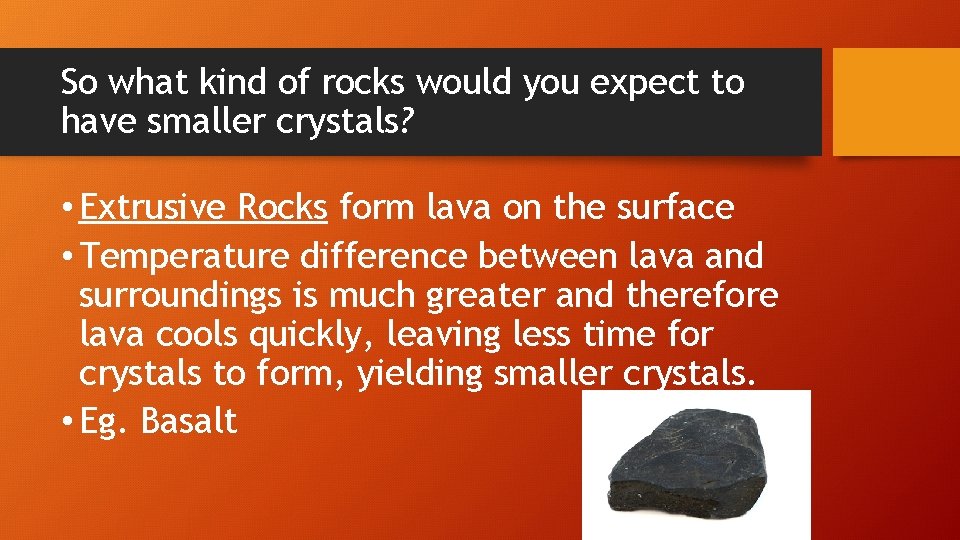
So what kind of rocks would you expect to have smaller crystals? • Extrusive Rocks form lava on the surface • Temperature difference between lava and surroundings is much greater and therefore lava cools quickly, leaving less time for crystals to form, yielding smaller crystals. • Eg. Basalt
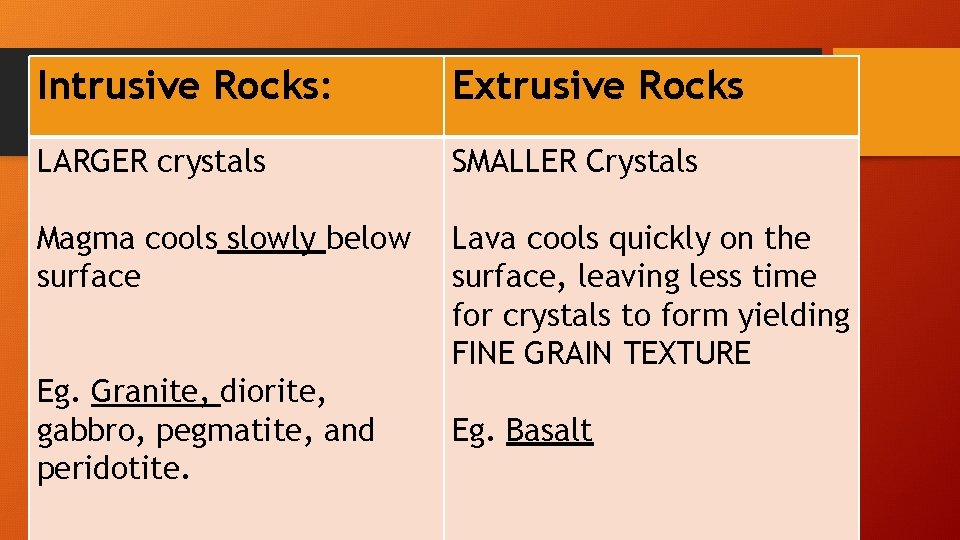
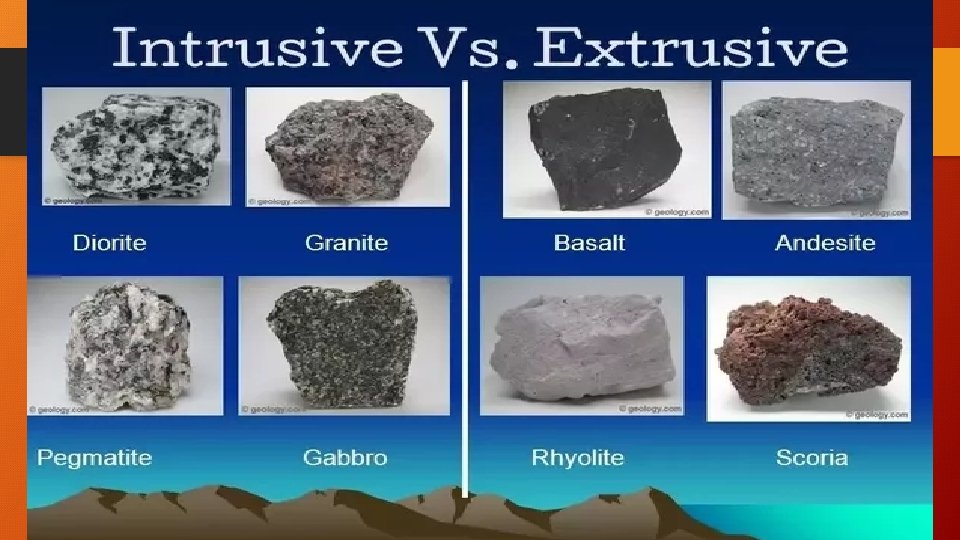
Intrusive Rocks: Crystal Size Extrusive Rocks LARGER crystals SMALLER Crystals • Magma cools slowly below surface Eg. Granite, diorite, gabbro, pegmatite, and peridotite. Lava cools quickly on the surface, leaving less time for crystals to form yielding FINE GRAIN TEXTURE Eg. Basalt
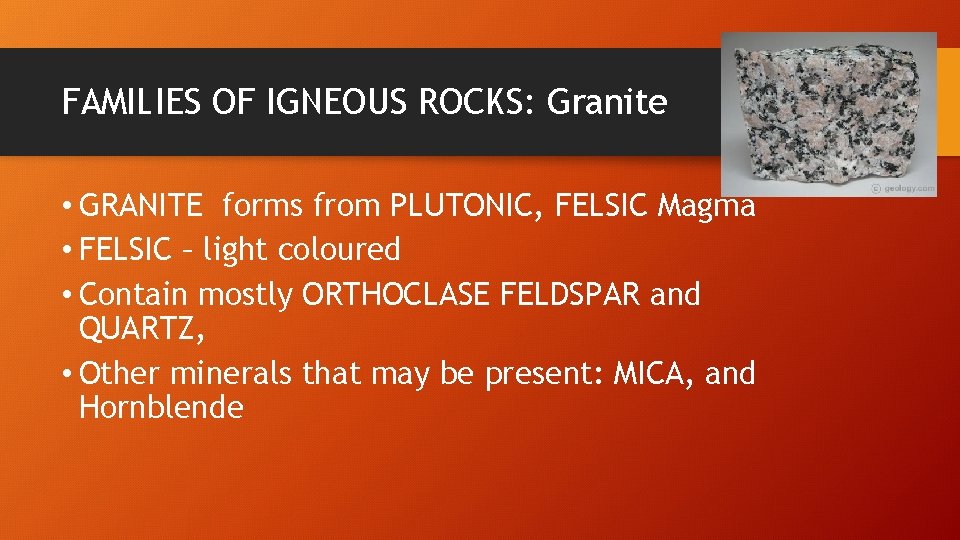
FAMILIES OF IGNEOUS ROCKS: Granite • GRANITE forms from PLUTONIC, FELSIC Magma • FELSIC – light coloured • Contain mostly ORTHOCLASE FELDSPAR and QUARTZ, • Other minerals that may be present: MICA, and Hornblende
FAMILIES OF IGNEOUS ROCKS: GABBRO • GABBRO FAMILY • Magma cools slowly underground (PLUTONIC) • Dark (Mafic), more dense than Granite Family • Most common igneous rocks found on ocean floor • Eg. BASALT
FAMILIES OF IGNEOUS ROCKS: DIORITE FAMILY • This families characteristics are a BLEND of composition and colour somewhere between the other two families • Coarse-grained • Contain less quartz than granite does • Less dark than Gabbro • Eg. Andesite
Where are igneous Rocks Formed? Near VOLCANOES
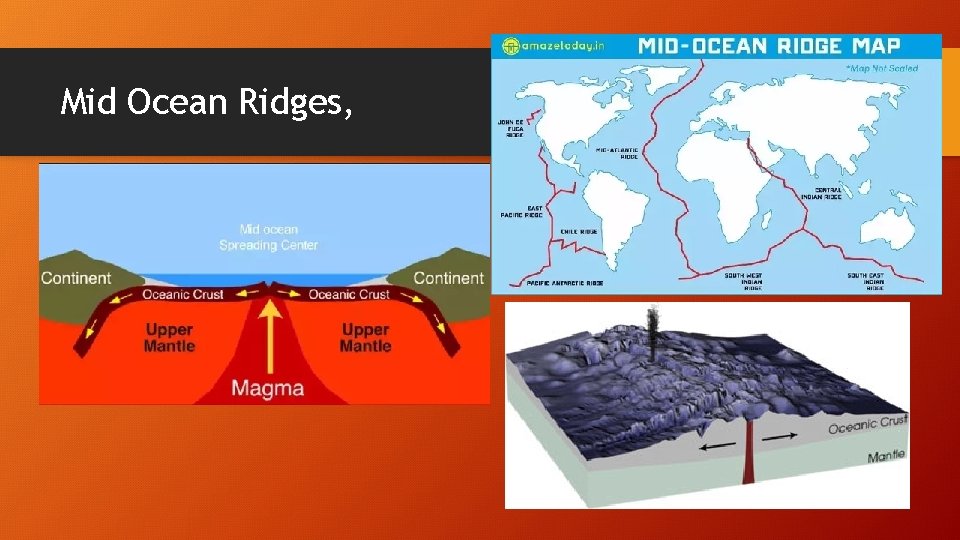
Mid Ocean Ridges,
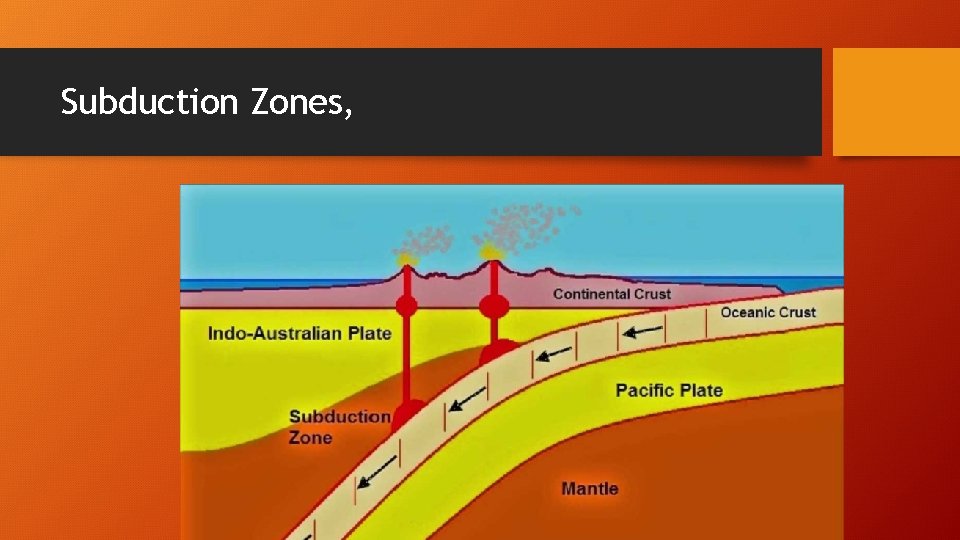
Subduction Zones,
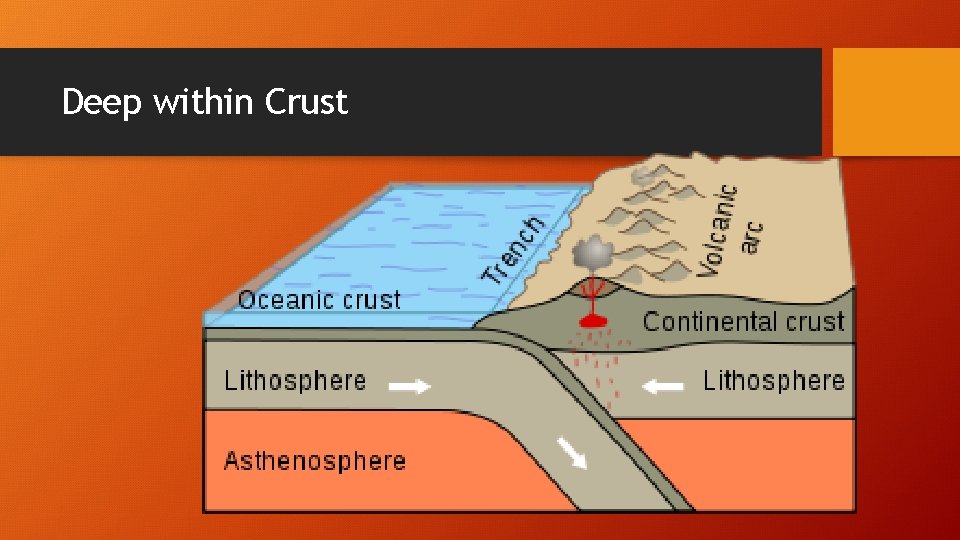
Deep within Crust
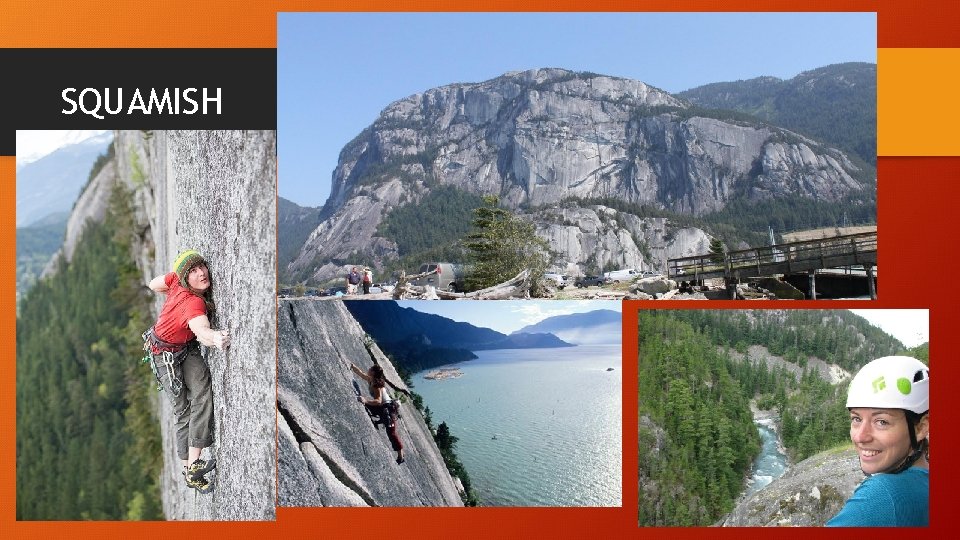
SQUAMISH
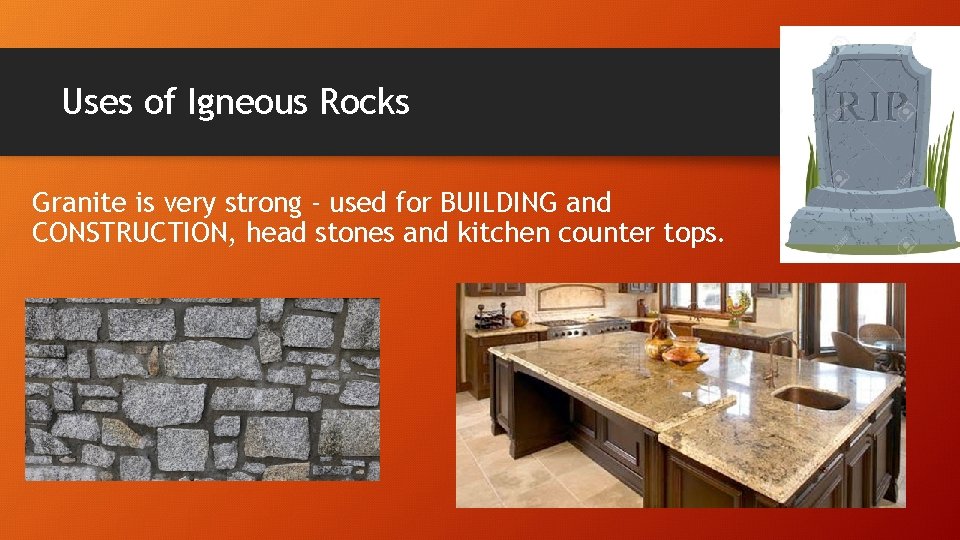
Uses of Igneous Rocks Granite is very strong - used for BUILDING and CONSTRUCTION, head stones and kitchen counter tops.
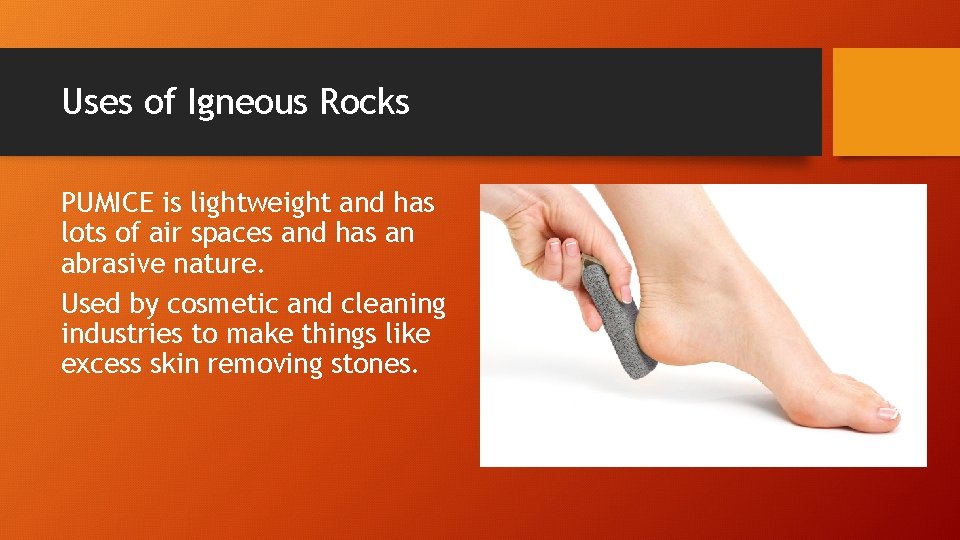
Uses of Igneous Rocks PUMICE is lightweight and has lots of air spaces and has an abrasive nature. Used by cosmetic and cleaning industries to make things like excess skin removing stones.
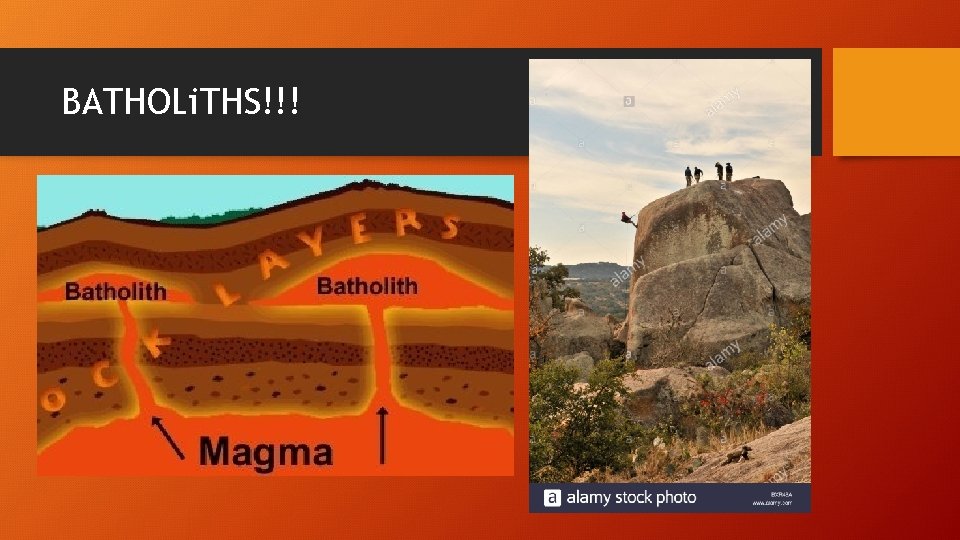
BATHOLi. THS!!!

Homework • Read p 63 -68 • Answer 3, 4, 5, 6, 8
- Slides: 52